Deciding whether to rent or buy a home is a significant financial decision that impacts your life for years to come. As housing prices and rental costs fluctuate, it’s essential to evaluate the pros and cons of each option.
This guide will explore the current housing market, the financial implications of renting versus buying, and offer insights to help you make an informed decision.
Decide Between Renting and Buying
Analyze your finances by comparing rental costs to buying expenses. Include mortgage rates, property taxes, and maintenance costs in your calculations. Consider potential property appreciation when buying. Evaluate your lifestyle and long-term plans. Renting offers flexibility, while buying provides a long-term investment opportunity.
Choose the Right City
Research cities with strong job markets in your field. Compare living costs across different cities, including housing, utilities, and groceries. Evaluate quality of life factors such as climate, crime rates, healthcare options, and recreational activities.
Select the Best Neighborhood
Investigate crime rates in various neighborhoods to ensure safety. Look for areas with good schools, parks, shopping centers, and public transportation. Visit potential neighborhoods to experience the community atmosphere and assess if it matches your lifestyle.
Find the Right Street
Check the proximity of essential services like grocery stores, hospitals, and public transport. Visit the street at different times to gauge noise levels and traffic patterns. Research any planned developments that might affect property values or quality of life in the area.
Use Tools and Resources
Explore real estate websites like Zillow, Rightmove, or Realtor.com to compare properties and gain market insights. Join local community groups on social media platforms for insider information. Consider hiring a real estate agent for expert advice and access to more listings.

George is a seasoned interior designer and property marketing strategist with over 13 years of experience. He specializes in transforming properties into visually stunning spaces, helping clients recognize the potential and beauty in each property. With an impressive international client base of exciting projects throughout Europe and America.

The landscape of the housing market has changed dramatically in recent years. As of now, the average mortgage payment has nearly doubled, and housing affordability is at an all-time low. The income necessary to purchase a median-priced home has risen significantly, leading many to question if buying is still a viable option.
In contrast, rental prices have also increased, but they may not keep pace with the rising costs associated with homeownership. This disparity between renting and buying has led to a growing debate about which option is financially smarter.
The Financial Breakdown of Buying a Home
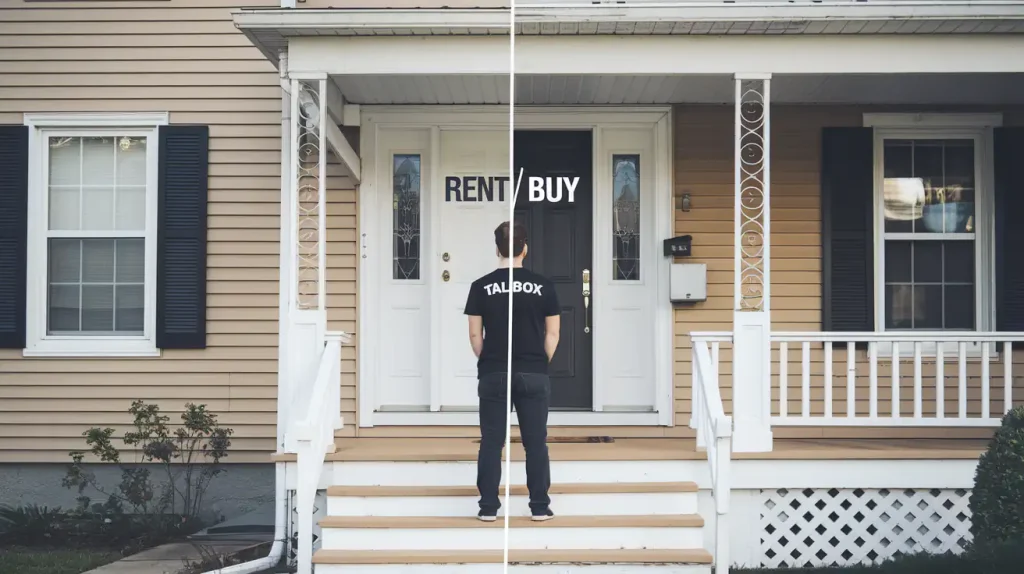
When considering the purchase of a home, it’s crucial to understand the various costs involved beyond just the mortgage payment. Here are the key components to consider:
- Down Payment: Typically, lenders require a down payment of 10-20% of the home’s purchase price. For a $400,000 home, this could mean putting down $40,000 to $80,000.
- Mortgage Interest Rate: Currently, mortgage rates are over 7%, which significantly increases the cost of borrowing.
- Private Mortgage Insurance (PMI): If your down payment is less than 20%, you may need to pay PMI, adding an additional cost to your monthly payments.
- Property Taxes: These are calculated based on your home’s assessed value and can vary widely depending on your location.
- Homeowners Insurance: This is a necessary expense that protects your investment and typically costs about $1,400 to $2,200 annually.
- Repairs and Maintenance: On average, homeowners should budget 1-2% of their home’s value annually for maintenance and repairs.
What are the Monthly Costs of Homeownership?
To illustrate, let’s consider the total monthly costs of owning a $400,000 home in San Diego between Clairemont and Mission Valley, both generally considered safe areas with B+ grades for safety.
Mortgage Payment: Approximately $3,500 to $4,300
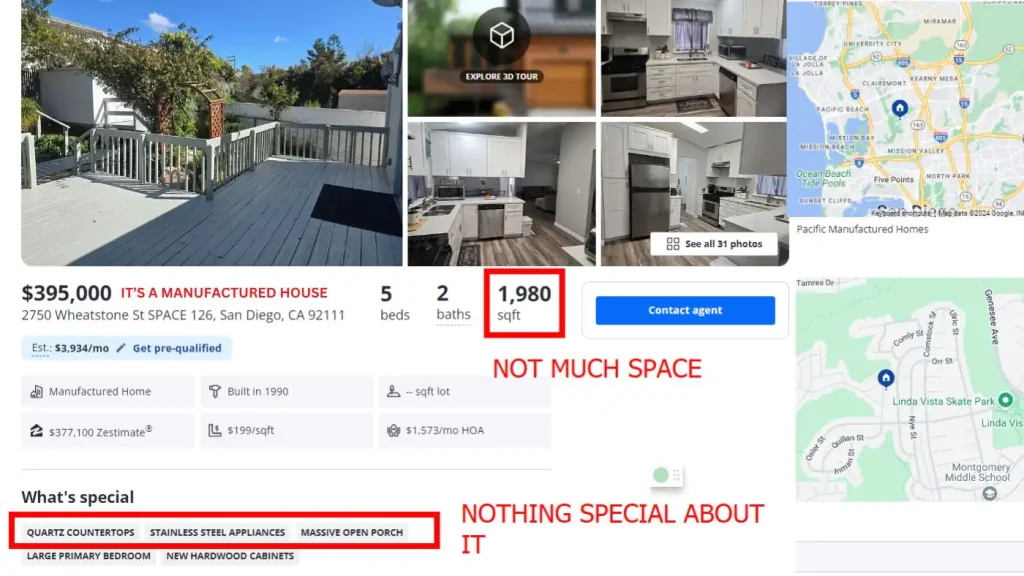
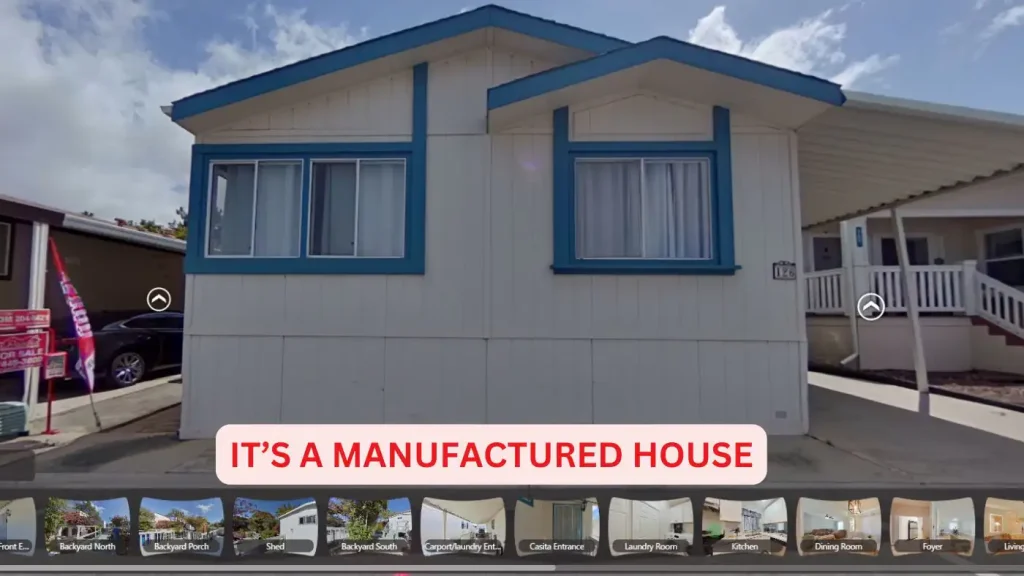
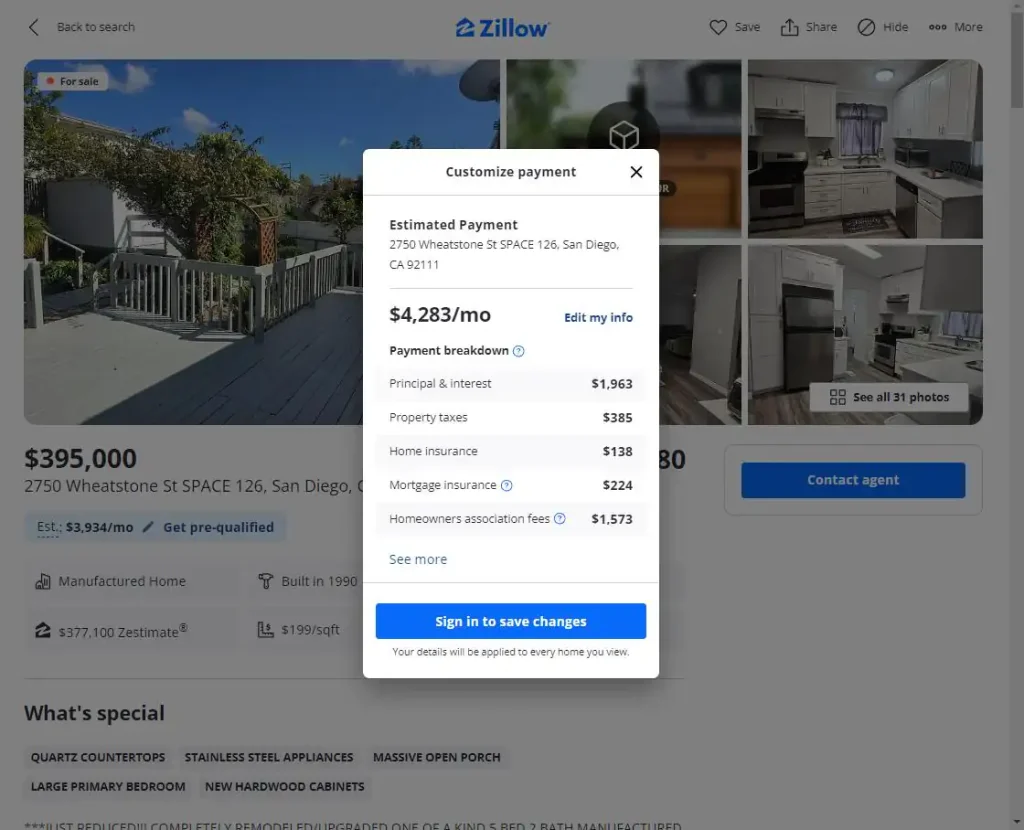
A combination of Principal & Interest near $2,000 ($1,963)
- PMI: Around $150
- Property Taxes: About $385
- Insurance: Estimated at $224
- HOA fees: $1,573
- Repairs: Roughly $330
This brings the total monthly cost of homeownership to approximately $4,763, significantly higher than many rental options.
What to do when buying or renting is equally expensive?
To continue with the example from above, the 5 Bed manufactured house in San Diego for a monthly payment of $4,763 in a not so great area. A 1,599 sqft, 5 beds, 3 baths real house for rent with monthly rent of $4,300 situated in the same area Clairemont.
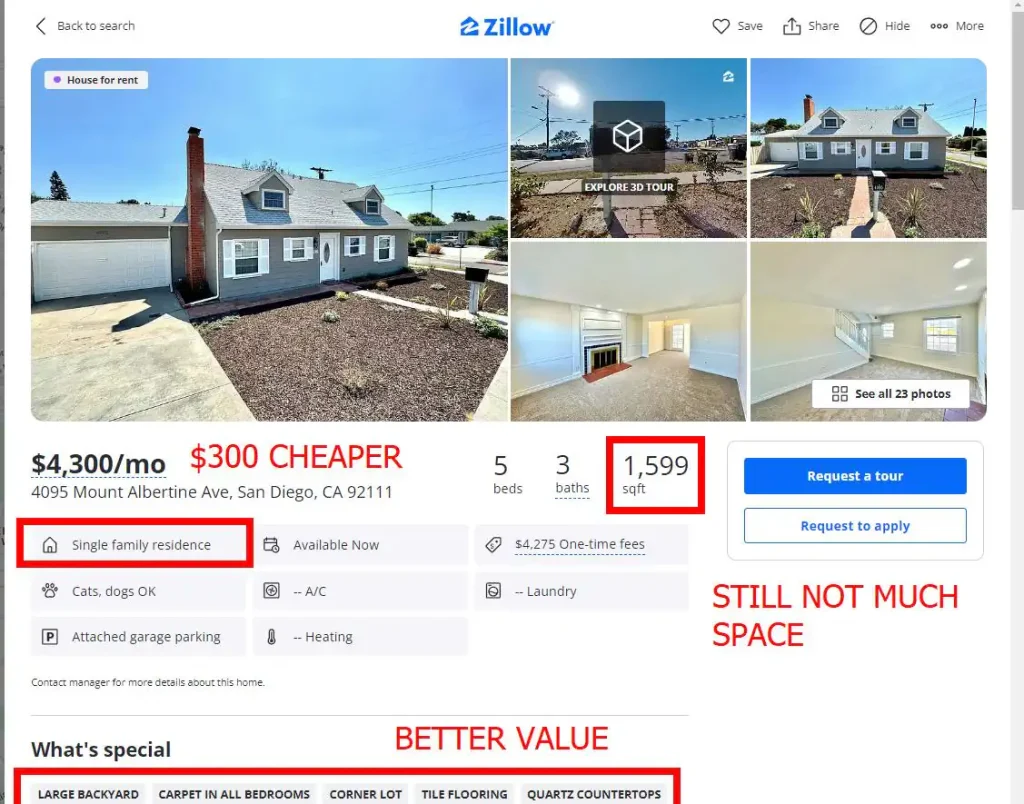
In this case, renting and buying are comparably expensive on a monthly basis. The rental property is $300 cheaper per month and offers an extra bathroom, but it’s also 381 sqft smaller. The rental home appears to be a traditional single-family residence, which may be preferable to some over a manufactured home.
The buying option has higher upfront costs (down payment, closing costs) and ongoing HOA fees, but allows for equity building. The rental requires a significant one-time fee.
Given the similar monthly costs, the choice between renting and buying here would likely depend on factors like long-term plans, preference for building equity vs. flexibility, and the specific location and quality of each property. Neither option presents a clear financial advantage over the other based solely on monthly expenses.
Decision-Making Tips
- Run the Numbers: Use a rent vs. buy calculator to compare the financial aspects.
- Consult a Financial Advisor: They can provide personalized advice based on your financial situation.
- Consider Your Future Plans: Think about where you see yourself in 5-10 years and how each option aligns with those plans.
What is The Argument for Renting?

Renting has often been perceived as throwing money away, but this perspective is evolving. Here are some reasons why renting may be a better option for many:
- Lower Upfront Costs: Renting typically requires a security deposit and the first month’s rent, which is significantly less than a down payment on a home.
- Fixed Monthly Payments: Renters know exactly what they will pay each month, allowing for better budgeting without the uncertainty of fluctuating costs associated with homeownership.
- Flexibility: Renting allows for easier relocation, providing the freedom to move without the burdens of selling a home.
- No Maintenance Costs: Landlords are responsible for repairs and maintenance, relieving renters of unexpected expenses.
- Potential for Investment Growth: Money saved by renting can be invested elsewhere, potentially yielding higher returns than the appreciation of a home.
Comparing Long-Term Rent Costs
To make an informed decision, it’s essential to compare the long-term financial implications of renting versus buying. For example, if you rent a home for $2,100 a month, you could save the difference between the cost of renting and the total cost of homeownership. Assuming you invest that savings, over time, it could accumulate significantly.
In contrast, purchasing a home ties up your capital and incurs ongoing costs that can add up quickly. Many homeowners find that they do not see a substantial return on their investment until they have owned the property for many years.
The Impact of Market Trends on Renting and Buying
Market trends also play a crucial role in the renting versus buying debate. As interest rates rise, the cost of borrowing increases, making homeownership less affordable. Conversely, rental prices may not increase at the same rate, providing an opportunity for renters to benefit from more stable monthly expenses.
Economic factors such as inflation can impact both rental prices and property values. Historical data suggests that while home prices may appreciate, they often do so at a rate that does not significantly outpace inflation.
When Buying Makes Sense?
Despite the current market conditions, there are circumstances where buying a home may be the better choice:
Long-Term Stability: If you plan to stay in one location for at least 10-15 years, buying a home may provide not only stability but also the potential for significant appreciation in value over time. This long-term commitment can lead to a sense of permanence and belonging, allowing you to truly invest in your community. Оwning a home can offer financial security, especially in a market where rental prices may fluctuate or increase over the years. By purchasing property, you can build equity, giving you a solid financial foundation for the future. Тhe pride of ownership can lead to greater satisfaction in your living environment, as you have the freedom to customize and renovate your space to best fit your lifestyle and preferences.
Fixed Costs: One of the significant advantages of homeownership is the ability to lock in your monthly mortgage payment for the long term. This stability is particularly beneficial as it protects you from the unpredictability of rising rent prices that can occur in rental markets. By securing a fixed-rate mortgage, you can effectively budget your finances without the fear of sudden increases in your housing costs, allowing for better financial planning and peace of mind over the years.
Building Equity: As you diligently make your monthly mortgage payments, you are not just paying for a place to live; you are simultaneously building equity in your home. This equity represents your ownership stake in the property and can grow significantly over time, especially in a rising real estate market. This accumulation of equity can be a valuable asset that provides financial security and opens up opportunities for future investments, such as home improvements, refinancing options, or even funding other life goals.
Tax Benefits: Homeownership comes with several potential tax advantages that can be beneficial for your overall financial situation. Homeowners often have the opportunity to take advantage of tax deductions related to mortgage interest, which can significantly reduce the amount of taxable income. Property taxes can also be deductible, further easing the financial burden of homeownership. These tax benefits can contribute to substantial savings over time, making homeownership not only a place to live but also a strategic financial investment.
How to research on a Neighborhood Level to buy or rent?
Researching a neighborhood before you commit to living there, whether renting or buying, is crucial to ensure it meets your needs and preferences.
Online Resources:
- Real Estate Platforms: Websites like Zillow, Realtor.com, Redfin, and Trulia offer information on home values, recent sales, property taxes, school ratings, and sometimes even neighborhood vibes.
- Neighborhood Rating Sites: Niche.com and AreaVibes provide resident reviews, safety ratings, and data on amenities, schools, and demographics.
- Google Maps & Street View: Virtually explore the neighborhood’s layout, street appearance, proximity to parks, businesses, and public transport.
- Local News & Community Forums: Online newspapers and community forums can reveal current events, local issues, and resident sentiments about the neighborhood.
2. On-the-Ground Research:
- Visit at Different Times: Experience the neighborhood’s atmosphere during the day, evening, and weekend to get a feel for noise levels, activity, and safety.
- Talk to Residents: Strike up conversations at local cafes, parks, or shops to gain firsthand insights from people who live there.
- Attend Community Events: Check for farmers’ markets, festivals, or neighborhood meetings – these offer a glimpse into the community spirit.
- Assess “Walkability”: Stroll around to evaluate sidewalk conditions, street lighting, traffic, and how comfortable you feel navigating the area.
3. Key Factors to Consider:
- Safety & Security: Research crime rates, observe street lighting, and talk to residents about their sense of security.
- Schools & Education: Even without kids, strong schools influence property values and attract families, contributing to a vibrant community.
- Amenities & Lifestyle: Evaluate the proximity to parks, restaurants, grocery stores, entertainment, and other amenities that match your lifestyle.
- Commute & Transportation: Consider commute times and options (public transport, walkability, bike lanes) for work, school, or leisure activities.
- Future Development: Research planned construction projects, zoning changes, or new businesses that might impact the neighborhood’s character and value.
Remember: Your goal is to paint a realistic picture of daily life in that neighborhood. Don’t just rely on online data – immerse yourself to truly understand if it aligns with your needs and preferences.
How to research on a street Level to buy or rent?
To make a smart decision about whether to buy or rent a property, getting a detailed understanding of the street and neighborhood is key.
Street-level research complements broader market analysis. Combine your on-the-ground findings with online data to make a well-informed decision about renting or buying.
By taking these steps, you can gain a clear understanding of the street’s livability, amenities, and long-term prospects.
Here’s how to conduct effective street-level research:
Explore the Micro-Neighborhood
Walk the Street: Visit the street at different times of day. Walk or drive to observe daily life, traffic flow, and overall atmosphere.
Evaluate Walkability: Check how easy it is to reach essential services like grocery stores, pharmacies, and public transit stops.
Assess Safety: Talk to locals about safety. Look at the street lighting, upkeep, and general vibe at night.
Measure Noise Levels: Spend time there during peak hours. Are there traffic jams, noisy neighbors, or nearby businesses that could cause disturbances?
Look at Parking: Check if street parking is easy or requires permits. If you drive, this can be a dealbreaker.
Note Local Highlights: Find unique elements like parks, coffee shops, or community spaces that add charm and improve livability.
Get Insight from the Community
Talk to Residents: Chat with people living there. Ask if they enjoy the area and if there are any issues you should know about.
Use Local Forums: Browse platforms like Nextdoor or local Facebook groups for resident feedback and concerns.
Visit at Different Times: See how the street changes during weekdays, weekends, and evenings to get a complete picture.
Observe Property Conditions: Look at how well-maintained other homes are. This reflects neighborhood pride and stability.
Specific Tips for Renters
Talk to Current Tenants: Get insights on the landlord, building management, and any hidden issues.
Check Lease Terms: Review rental agreements carefully. Pay attention to clauses on rent increases, maintenance, and subletting.
How to make the right choice - buy or rent?
The decision to buy or rent a home depends on various factors, including lifestyle, financial situation, and personal preferences. For those who seek flexibility and lower upfront costs, renting may be the better option, while buying offers long-term stability and potential equity growth. Another alternative is exploring how rent to own homes work, which allows individuals to lease a property with the option to purchase it later. This can be a great solution for those who need time to improve their financial standing before committing to homeownership.
Families:
- Stability and Space: Families with children often require more space and stability, making buying a home a more attractive option.
- School Districts: Families may prioritize buying a home in a good school district, which can impact their child’s education and future opportunities.
- Long-term Investment: Buying a home can be a long-term investment for families, as they can build equity and create a stable environment for their children.
- Renting: However, families who are new to an area or have uncertain financial situations may prefer renting to test the waters before committing to a purchase.
Singles:
- Flexibility: Singles often prioritize flexibility and freedom, making renting a more appealing option.
- Lower Upfront Costs: Renting typically requires lower upfront costs, which can be beneficial for singles who may not have a large savings account.
- Urban Lifestyle: Singles may prefer renting in urban areas, where they can enjoy amenities like public transportation, restaurants, and entertainment.
- Buying: However, singles who are established in their careers and have a stable financial situation may consider buying a home as a long-term investment.
Couples:
- Joint Decision: Couples should make a joint decision about buying or renting, considering their shared financial goals and priorities.
- Stability and Security: Couples may prioritize buying a home for stability and security, especially if they’re planning to start a family.
- Location: Couples may consider buying a home in a desirable location, such as a neighborhood with good schools, parks, and community amenities.
- Renting: However, couples who are new to an area or have different priorities may prefer renting to test the waters before committing to a purchase.
Retirees:
- Downsizing: Retirees may consider downsizing to a smaller home or renting to reduce maintenance costs and simplify their lives.
- Flexibility: Renting can provide retirees with flexibility to travel or relocate without being tied to a specific property.
- Lower Costs: Renting can help retirees reduce their living expenses, which can be beneficial for those on a fixed income.
- Buying: However, retirees who have a stable financial situation and want to maintain control over their living situation may consider buying a home in a desirable locatio
Whether you choose to rent or buy, the most important thing is to make a decision that aligns with your financial goals and lifestyle preferences. By staying informed and considering all aspects of the housing market, you can navigate this significant decision with confidence.
Should you hire interior designer if you rent long term?
While hiring an interior designer for a long-term rental can be beneficial, it primarily depends on your budget, design preferences, and personal circumstances.
Pros
- Personalization: An interior designer can help make your rental feel like home, reflecting your personal style.
- Maximizing Space: They can optimize the layout and functionality of your space, especially if it’s small.
- Professional Touch: Designers have access to resources and expertise that can elevate the look and feel of your home.
- Long-Term Enjoyment: If you plan to stay for several years, the investment in a well-designed space can enhance your daily living experience.
Cons
- Cost: Hiring a designer can be expensive, and you might not recoup this investment if you move out.
- Landlord Restrictions: Some landlords may have restrictions on what changes you can make, limiting the designer’s scope.
- Temporary Nature: Since you don’t own the property, extensive customizations might not be practical.
Considerations
- Budget: Ensure you have a clear budget and discuss it with the designer upfront.
- Landlord Approval: Get permission for any significant changes or installations.
- Duration of Stay: The longer you plan to stay, the more worthwhile the investment becomes.
If you value a well-designed space and plan to stay in your rental for a long time, hiring an interior designer can be a worthwhile investment. If you have any specific questions or need further advice, feel free to ask!
Hiring an interior designer for a rental property might not be necessary or financially feasible for everyone. If you have a limited budget, enjoy DIY projects, or prefer to express your own creativity, you can opt to decorate the space yourself.
Before deciding to hire an interior designer for a long-term rental, consider your personal style, preferences, and budget, and discuss your expectations with the designer to ensure they can meet your needs.