How Interior Designers Should Advertise in 2025?
In 2025, interior designers should blend immersive digital experiences with targeted content to stand out. Invest in AR/VR ads that enable virtual tours of design concepts on platforms like Instagram and TikTok. Use short‑form video—such as Reels and Idea Pins—to highlight before‑and‑after transformations. Apply AI‑driven personalization in email and display ads to recommend styles based on user behavior. Partner with micro‑influencers in specific home and lifestyle segments, such as DIY decorators or small-space stylists, to reach focused audiences. Optimize local SEO and run geo‑targeted Google and Facebook ads that feature your showroom or services in specific neighborhoods. This integrated, data‑driven approach increases visibility and attracts qualified leads.
Table of Contents

George Nicola
George is a seasoned interior designer and property marketing strategist with over 13 years of experience. He specializes in transforming properties into visually stunning spaces, helping clients recognize the potential and beauty in each property. With an impressive international client base of exciting projects throughout Europe and America.
Create a 2025 marketing plan for your interior design firm with expert strategies to attract dream clients and grow your brand. Start now!
Did you know that 80 percent of interior design firms operate without a formal marketing plan, often resulting in missed opportunities and inconsistent growth? Creativity is essential, but without a structured approach, even the most visually striking portfolios can go unnoticed.
This strategic guide walks you through eight practical steps to build a focused, results-driven marketing plan for 2025. You’ll learn how to:
- Set clear, measurable goals
- Break those goals into specific, data-informed milestones
- Build a detailed profile of your ideal client, including psychographics
- Define a unique positioning that sets your firm apart
- Develop a marketing strategy tailored to your client’s journey
- Translate your strategy into a detailed 12-month action plan
- Evaluate whether to execute in-house or with agency help
- Continuously improve your plan through regular reviews and adjustments
By the end, you’ll have both the insights and the tools—templates, checklists, and real-world examples—to consistently attract your ideal clients, elevate your reputation, and grow your business with purpose.
Interior Design Firm Marketing Plan
| Component | Strategy | Implementation |
|---|---|---|
| Goal Setting | Define SMART objectives for growth | Example: "Increase monthly sales inquiries from 15 to 30 within 18 months" |
| Data Tracking | Break goals into measurable milestones | Use Google Analytics, Hotjar, and Typeform for monitoring progress |
| Target Customer | Create detailed client personas | Identify beliefs, fears, aspirations and research habits of ideal clients |
| Positioning | Define clear niche and unique value | Example: "Specializing in wellness-focused interiors or pet-friendly family homes" |
| Content Strategy | Develop client-journey focused content | Align content with awareness, consideration, and decision stages |
| 12-Month Plan | Create month-by-month action calendar | Budget $2,500/month for paid advertising, 10-15 hours for organic marketing |
| Execution | Determine in-house vs. agency tasks | Consider outsourcing technical tasks like Google Ads and SEO audits |
| Strategy Review | Implement regular performance checks | Conduct monthly KPI reports and quarterly strategy workshops |
Why Interior Design Firms Need a Marketing Plan?
Without a strategic marketing plan, are you guiding your firm’s growth—or just reacting to the latest trends? A plan gives you control, direction, and the ability to make proactive decisions that align with your long-term vision.
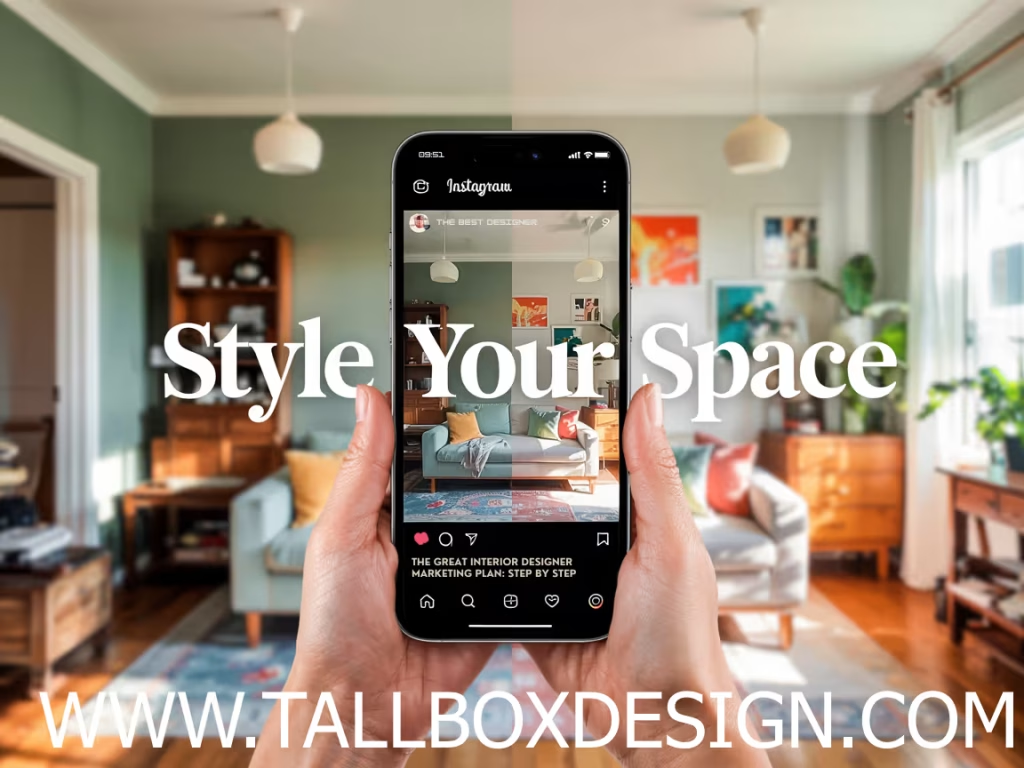
Stand Out in a Saturated Market
With countless firms competing for visibility on platforms like Houzz, Instagram, and Google, how do you rise above the noise? A focused marketing plan helps you choose the right platforms, formats, and strategies to reach clients where they already are—whether through visual storytelling, targeted ads, or SEO.
Target High‑Value Clients Effectively
Which client segments align best with your skills and brand—luxury homeowners, boutique hospitality, or creative office spaces? A clear plan helps you develop messaging that speaks directly to their goals, values, and design needs.
Build Trust and Visibility
When your branding, portfolio, and outreach are consistent across platforms, potential clients see you as reliable and professional. Over time, this consistency builds trust—so they reach out to you instead of browsing competitors.
Drive Sustainable Business Growth
Sustainable growth doesn’t come from guesswork. By setting measurable goals, using data to guide decisions, and regularly assessing performance, you ensure every marketing move leads to tangible results.
Core Components of Your 2025 Marketing Plan
Without a strategic marketing plan, are you guiding your firm’s growth—or just reacting to the latest trends? A plan gives you control, direction, and the ability to make proactive decisions that align with your long-term vision.
Define Your Marketing Goals
Why it matters: When your team knows exactly what success looks like, it becomes easier to prioritize work, measure progress, and stay accountable to results.
Each section in this guide includes actionable tips, brief case examples, and downloadable templates—so you can start applying what you learn immediately.
Examples of SMART goals:
- Attract three new senior designers through targeted employer branding by Q4 2025.
- Improve the firm’s RFP win rate by 20 percent within the next 12 months.
- Increase monthly sales inquiries from 15 to 30 within 18 months.
Quick Tip: Use the SMART framework: Specific, Measurable, Achievable, Relevant, and Time-bound.
Mini-Case: ABC Interiors set a goal to increase their RFP success rate from 25% to 30% by the end of the year. By introducing one personalized RFP template per lead, they met their goal ahead of schedule.
Creating a marketing plan takes time, strategic thinking, and industry experience.
For a more personalized and results-driven approach, feel free to contact us. We’ll assess your business goals, target audience, and competitive landscape to develop a tailored marketing strategy that supports long-term growth and impact.
Use Data to Break Down the Goals
Why it matters: Large goals can feel overwhelming. Data helps you break them into smaller, trackable steps, making progress easier to measure and manage.
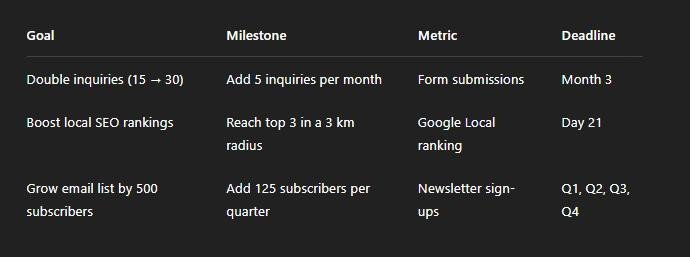
Recommended Tools:
- Google Analytics – Track inquiry and conversion data
- Hotjar scroll maps – Understand user behavior on high‑traffic pages
- Typeform surveys – Collect qualitative insights from site visitors
Quick Tip: Set up automated KPI reports in your analytics dashboard to monitor weekly progress. This helps you identify stalled metrics—like declining page views or lead drop-offs—before they impact overall results.
Identify Your Target Customer
Why it matters: When you understand what your ideal clients believe, fear, and aspire to, you can craft marketing that speaks directly to their emotions and decision-making process.
Persona Template Example:
- Name: “Luxury Laura”
- Age Range: 35–55
- Beliefs: Prioritizes quality and sees design as a form of personal expression
- Fears: Concerned about budget overruns and generic, uninspired results
- Dreams: Envisions a sophisticated home that reflects her unique style
- Daily Habits: Browses Pinterest in the morning for ideas, watches Instagram Stories in the evening for inspiration
Research Methods to Build Real Personas:
- Client Interviews: Schedule informal 20-minute calls with previous clients or warm leads. Ask what frustrated them most in past projects and what influenced their final decisions.
- Social Listening: Track hashtags like #modernfarmhouse or #restaurantdesign to analyze which design elements, color palettes, or space types are consistently liked, shared, or saved.
At TALLBOX we learned that 60 percent of prospects drop off because they can’t visualize the end result—so we now offer mini-video walkthroughs to reduce uncertainty and build trust.
Differentiate Through Positioning
Why it matters: In a crowded market, a clear and specific USP helps potential clients immediately understand what you offer and why you’re the right fit—saving them time and building trust faster.
Examples of Profitable Niches:
- Restaurant & Hospitality Design: Create memorable dining experiences that increase guest retention and Instagram buzz.
- Pet-Friendly Family Homes: Design durable, stylish spaces that cater to both kids and pets.
- Wellness-Focused Interiors: Build calming, functional environments for spas, yoga studios, and meditation rooms.
Sample Positioning Statement:
“At Urban Luxe Studio, we specialize in designing high-end restaurant interiors that delight guests and drive repeat bookings.”
Read also: Developing An Interior Design Team
Quick Tip: Place your USP in the main headline of your homepage. Use analytics tools to track bounce rate and engagement—if bounce rate drops and users spend more time on the site, your messaging is connecting.
Create a Client‑Centric Marketing Strategy
Why it matters: Different stages of the buyer’s journey require different types of communication. When your content and outreach match what clients need at each stage, they’re more likely to stay engaged and take the next step.
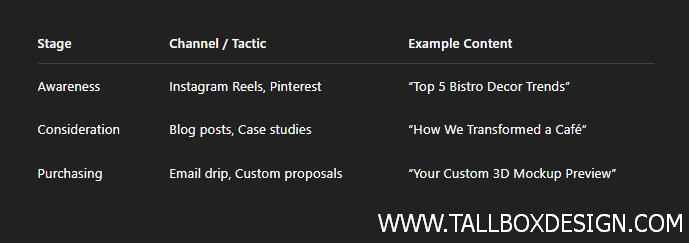
Pre-Sale Research Calls:
Offer short, informal calls early in the process—even before a firm budget is in place. These conversations help you identify client preferences, clarify expectations, and establish trust well before a formal proposal.
Turn Strategy Into a 12‑Month Action Plan
A clear action plan turns ideas into execution. Break down your strategy into monthly themes, budget, and task timelines to stay on track and measure progress.
Key Elements of Your Plan:
- Content Calendar: Assign a distinct focus to each month, such as “Spring Refresh” for seasonal trends or “Holiday Glamour” for festive staging tips. Align all posts and campaigns around these themes.
- Budget Allocation: Set aside $2,500 per month for paid advertising across Google, Instagram, and Pinterest. Dedicate 10–15 hours monthly to organic marketing—such as blog posts, SEO, and community engagement.
- Channel Priorities: Focus efforts in order of impact—start with SEO to build visibility, then drive engagement on Instagram, followed by Houzz and email campaigns.
Recommended Tools:
- Trello: Organize tasks and track campaign deliverables week-by-week.
- Hootsuite: Schedule and manage content across platforms in advance.
- Google Data Studio: Create dashboards to monitor traffic, ad spend, and lead generation in real time.
Monthly Marketing Plan Cost Calculator
Enter your planned volume or budget per channel and see your total monthly spend.
| Channel / Content Type | Cost per Unit (USD) | Units per Month (or Budget for CPC) |
Monthly Cost (USD) |
|---|---|---|---|
| Social Media Post (Organic) | $0.00 | ||
| Social Media Post (Boosted/Sponsored) | $0.00 | ||
| Sponsored Link (Backlink) | $0.00 | ||
| Newsletter Insertion | $0.00 | ||
| Professional Video Production | $0.00 | ||
| Google Ads (CPC) | $0.00 | ||
| Email Marketing (per month) | $0.00 | ||
| SEO Services (per month) | $0.00 | ||
| Digital Magazine Ad (Full Page) | $0.00 | ||
| Digital Magazine Ad (Cover Page) | $0.00 | ||
| Digital Magazine Ad (Double Spread) | $0.00 | ||
| Digital Magazine Ad (Gate Fold) | $0.00 | ||
| Total Monthly Cost | $0.00 | ||
Influencer Marketing

Influencer marketing helps interior design brands expand their visibility among targeted audiences. When businesses partner with creators who regularly engage design-conscious followers, they tap into a trusted source of inspiration. For example, a sponsored Instagram Reel showcasing a living room makeover can drive qualified traffic to a brand’s product page or service inquiry form—turning exposure into measurable results.
Influencer partnerships can also drive stronger audience engagement. When brands collaborate with creators whose style and values match their own, they gain access to followers who are already invested and responsive. For instance, an influencer-led home tour featuring a designer’s work often sparks comments, shares, and direct inquiries—turning passive viewers into active prospects.
Measuring the return on investment (ROI) of influencer marketing is essential, though often difficult to quantify. While sales matter, success can also be reflected in increased engagement—such as comment volume or shares—follower growth, or brand mentions across social platforms.
To assess performance, monitor referral traffic from influencer content and track conversions on campaign-specific landing pages. These data points reveal what’s working, helping you fine-tune future collaborations for stronger reach and return.
Execute Yourself vs. Hire an Agency
Deciding whether to handle marketing in-house or outsource to experts depends on your time, skill set, and business goals. Here’s a quick comparison:
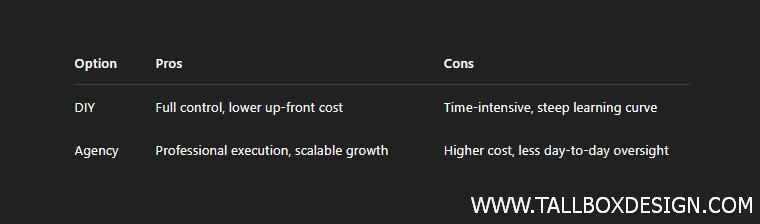
What to Consider Outsourcing (Even If You’re Mostly DIY):
Certain high-skill tasks often take more time and technical know-how than they’re worth to manage internally. Common examples include:
Google Ads Management: Requires regular optimization and platform expertise
Advanced SEO Audits: Involves technical analysis best handled by specialists
Video Editing for Reels/Pins: Time-consuming and requires software fluency for a polished finish
Quick Tip: If you’re spending more than 8 hours per week on marketing tasks, calculate your hourly rate. If an agency or freelancer can complete the same work faster and more efficiently, outsourcing may free up your time for revenue-generating activities.
Nurture the Marketing Strategy
Why it matters: Marketing is not a set-it-and-forget-it effort. Regular reviews and updates help your strategy stay effective as client behaviors, platforms, and competition evolve.
6-Month Review Checklist:
Evaluate these key performance indicators to determine what’s working and what needs adjustment:
Lead conversion rate (inquiries to signed contracts)
Local SEO ranking across top service areas
Social engagement metrics such as saves, shares, and comments
Ongoing Tactics to Keep Strategy Fresh:
Monthly KPI Reports: Spot early signs of decline in traffic, engagement, or conversion
Quarterly Strategy Workshops: Gather your team to assess wins, losses, and shifts in audience behavior
Email Newsletter Spotlights: Showcase recent projects or testimonials to re-engage your list and spark referrals
Top Marketing Trends for Interior Designers in 2025
To stay competitive in 2025, interior designers should adopt these high-impact marketing strategies—each one aligned with evolving client expectations and platform behavior.
1. Video Content:
Use Instagram Reels and Pinterest Idea Pins to feature before‑and‑after transformations, walk-throughs, and styling tips. These formats are highly engaging and drive saves and shares—turning viewers into leads.
2. Storytelling:
Incorporate short-form client testimonials and “designer diaries” into your blog and social content. Sharing the real story behind each project builds trust and humanizes your brand.
3. AI Tools:
Automate personalized email campaigns using behavior-based triggers, and use AI-generated mockups to speed up proposal delivery and client approvals.
4. Influencer Partnerships:
Work with niche home-decor or lifestyle influencers who align with your aesthetic. Their endorsements carry more trust than traditional ads and can lead to higher referral traffic and engagement.
5. Immersive Tech:
Add AR/VR experiences to your website that let clients preview redesigned rooms in real-time. These interactive tools help clients visualize the value of your service—reducing hesitation and improving close rates.
Conclusion & Next Steps
You now have a step-by-step framework to guide your interior design firm’s marketing in 2025:
- Set clear, measurable goals
- Use data to define milestones and track success
- Build detailed client profiles based on real behavior and psychographics
- Define a niche that reflects your unique value
- Align your strategy with the customer journey
- Build a 12-month action plan with content, channels, and budget
- Choose the right balance between DIY execution and outsourced expertise
- Revisit and refine your plan every six months based on results
Bonus ideas:
Use Hyper-Local SEO Goal: Focus on improving search visibility within a 3 km radius by optimizing Google Business profiles, building local backlinks, and publishing location-targeted content. Results often begin to show within 21–30 days when managed actively.
Use Pre-Sale Research Calls: Schedule informal, no-obligation conversations with potential clients—even those without a set budget. These calls help uncover new objections, preferences, and patterns to inform future messaging and services.
Concrete Budget & Time Investment: Plan to invest at least $2,500 per month in paid ads and dedicate 10–15 hours to organic marketing, including blogging, SEO updates, and community interaction. This balance supports both immediate visibility and long-term brand growth.
Extra Niche Positioning: Position your firm as a restaurant design specialist on high-visibility platforms like Houzz. Targeted positioning helps you stand out in category searches and builds authority with industry-specific clients. Showcasing your expertise through completed restaurant design projects helps attract clients actively searching for specialists in that niche. Sharing user-generated content—such as client reviews, tagged photos, or behind-the-scenes videos—can strengthen your credibility and expand your reach, especially on platforms like Instagram and Houzz. Clear, niche-focused positioning builds trust and encourages client relationships that often lead to referrals and repeat engagements.
Put your plan into motion using proven strategies, customizable templates, and practical tools—and position your firm for consistent, meaningful growth in 2025.