
To succeed at guest blogging as an interior designer, you’ll need to target design blogs with domain authority between 30-70 and monthly traffic exceeding 10,000 unique visitors. Start by developing captivating pitches with 2-3 specific topic ideas, supported by your professional credentials and portfolio highlights. Create data-driven content between 1,000-2,000 words, incorporating high-resolution images and engaging social proof. Strategic promotion across LinkedIn, Instagram, and Pinterest can help you reach 82% more potential clients. The following sections outline proven techniques for establishing lasting blog partnerships.
Want to get 3D rendering for your interior design project?

George is a seasoned interior designer and property marketing strategist with over 13 years of experience. He specializes in transforming properties into visually stunning spaces, helping clients recognize the potential and beauty in each property. With an impressive international client base of exciting projects throughout Europe and America.
TALLBOX provides information for educational purposes only and does not offer financial advice; users should consult with qualified professionals before making any investment decisions. TALLBOX and George Nicola are not liable for any losses or damages incurred as a result of relying on the information provided.
How can interior designers identify the most impactful blogs for their guest posting efforts? The process requires systematic research and analysis of potential platforms through multiple data points.
Finding the Right Design Blogs for Guest Posting
George Nicola shares: Start by evaluating design blogs’ domain authority (DA), which should ideally be between 30-70 for ideal exposure. You’ll want to analyze their monthly traffic metrics, focusing on sites that receive at least 10,000 unique visitors per month.
Consider these key factors:
- Engagement rates on existing posts (comments, shares)
- Content quality and editorial standards
- Target audience demographics
- Publication frequency
- Social media presence and following
Use tools like Ahrefs, SEMrush, or Moz to assess these metrics objectively. Cross-reference potential blogs with industry databases, such as Houzz’s top 50 design blogs or Interior Design magazine’s digital rankings, to guarantee you’re targeting reputable platforms within your niche. Most likely publishing a guest post on most design blogs will require an investment that might range from $50 to $500 depending on how authoritative the site is.
Top hint: You do not need access to tools like SemRush, Ahrefs or other, they are expensive and often will provide more data then you need. Manual research can be done and it works as good as the one with tools involved.
Talk to Assistant Chat
Doing design blog research manually
Manual research for guest posting offers a budget-friendly yet in-depth approach to finding the right blogs. Begin by creating a spreadsheet to track potential sites and their key metrics. Visit each blog and thoroughly examine recent posts, noting comment quality and quantity, social media share counts, and overall content style.
Look into the “About Us” page to understand the blog’s mission, target audience, and any guest post guidelines. Search for the blog on social media platforms like Twitter, Instagram, and Facebook to gauge follower count, engagement levels, and community activity. Look for signs of an active and engaged readership, such as frequent comments and social shares, not just the raw numbers.
Pay attention to the blog’s design and user experience—a well-maintained site often indicates higher editorial standards.
Check if the blog has published guest posts before and analyze the quality of those contributions, which can give you a benchmark for your own work. This detailed manual research allows for a nuanced assessment of a blog’s suitability beyond basic metrics, ensuring your guest post reaches a relevant audience.
Crafting the Perfect Guest Blog Pitch
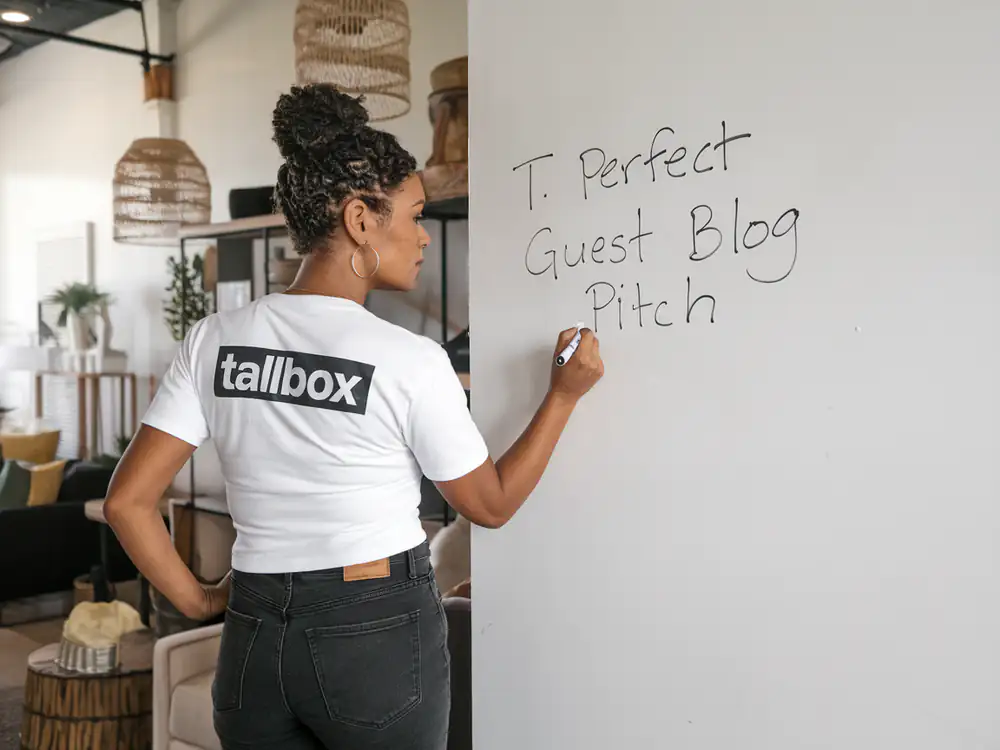
Once you’ve identified suitable design blogs, developing an engaging guest post pitch requires strategic communication that aligns with each publication’s unique editorial requirements. Your pitch should include:
- A captivating subject line that mentions “guest post” and your design specialty
- Professional credentials and portfolio highlights
- 2-3 specific topic ideas with detailed outlines
- Statistics or data supporting your knowledge
- Links to previously published work
Structure your pitch email in three concise paragraphs: introduction, value proposition, and call-to-action.
You’ll want to demonstrate your understanding of the blog’s content style, audience demographics, and editorial calendar. Research shows that tailored pitches receive 50% higher response rates than generic submissions, so you’ll need to reference specific articles or design features from their platform.
Remember to follow each blog’s submission guidelines precisely, including word count requirements and formatting specifications.
Creating High-Quality Design Content That Gets Accepted
Successful guest post acceptance hinges on providing expertly crafted content that meets professional publishing standards. Your design content must demonstrate deep industry knowledge, incorporate current trends, and present actionable observations for the target audience. Go deep and answer a specific question, and not broad but shallow, for best results make sure to research the content on the site you will publish to make sure you will not cannibalize the content.

How to achieve high-quality design context:
To create high-quality design content structure articles with clear headings, subheadings, and bullet points. Include high-resolution images with proper attribution, support claims with credible statistics and research data. Maintain ideal length between 1,000-2,000 words and try to incorporate relevant keywords at a 1-2% density rate.
Focus on developing unique angles that haven’t been extensively covered. For example, instead of basic color theory, analyze how specific paint selections impact property values, backed by real estate data. You can use AI writing tools like Gemini, ChatGPT or even get your research paper written with the help of DoMyEssay services to produce the content, if you are graduating a college for interior design. Regardless of the output you will get, you will require a focused edit, to make sure your point gets across and it’s in your voice.
Remember to follow the host blog’s style guide, formatting requirements, and citation preferences to maximize your acceptance rate.
Maximizing Your Guest Post's Impact and Reach
Getting maximum reach and impact from your interior design guest posts requires strategic promotion across multiple channels, thorough optimization, and sustained engagement with readers.

How to achieve good reach for your guest posts:
Share your guest post strategically and promote across LinkedIn, Instagram, and Pinterest within 48 hours of publication.
Create 3-5 unique social media snippets highlighting key observations, tag relevant industry influencers and design publications.
Optimize for search engines:
- Include 2-3 relevant long-tail keywords in your content
- Structure with H2 and H3 subheadings
- Add 2-4 internal links to authoritative sources
Engage with readers:
- Respond to comments within 24 hours
- Share reader feedback on your social channels
- Create follow-up content addressing common questions
- Track engagement metrics using Google Analytics to measure post performance
Building Long-Term Relationships With Design Blog Owners
Building lasting relationships with design blog owners requires a methodical, data-driven approach that extends beyond single guest post submissions.
You’ll need to track your engagement metrics, maintain consistent communication, and demonstrate reliable value creation across multiple touchpoints.

Follow these strategic steps to nurture strong partnerships:
- Monitor post performance data, sharing perspectives with blog owners every 45-60 days
- Engage with their content consistently, leaving thoughtful comments on 2-3 posts weekly
- Share their content across your social platforms, achieving a 25% reciprocal sharing rate
- Propose collaborative projects every quarter, focusing on data-driven content opportunities
- Provide exclusive industry perspectives or research data in 30% of your communications
Track relationship development using CRM software, documenting interaction frequency, content performance metrics, and mutual benefit indicators to enhance partnership growth systematically.
Conclusion
Like an artfully assembled room, your guest blogging strategy should blend form and function to create lasting impact. You’ll find that consistently providing value-driven content, maintaining professional relationships, and strategically selecting platforms will establish your authority in the design sphere. Track your metrics, modify your approach based on data, and you’ll change from a one-time contributor into a respected voice in the interior design community.


