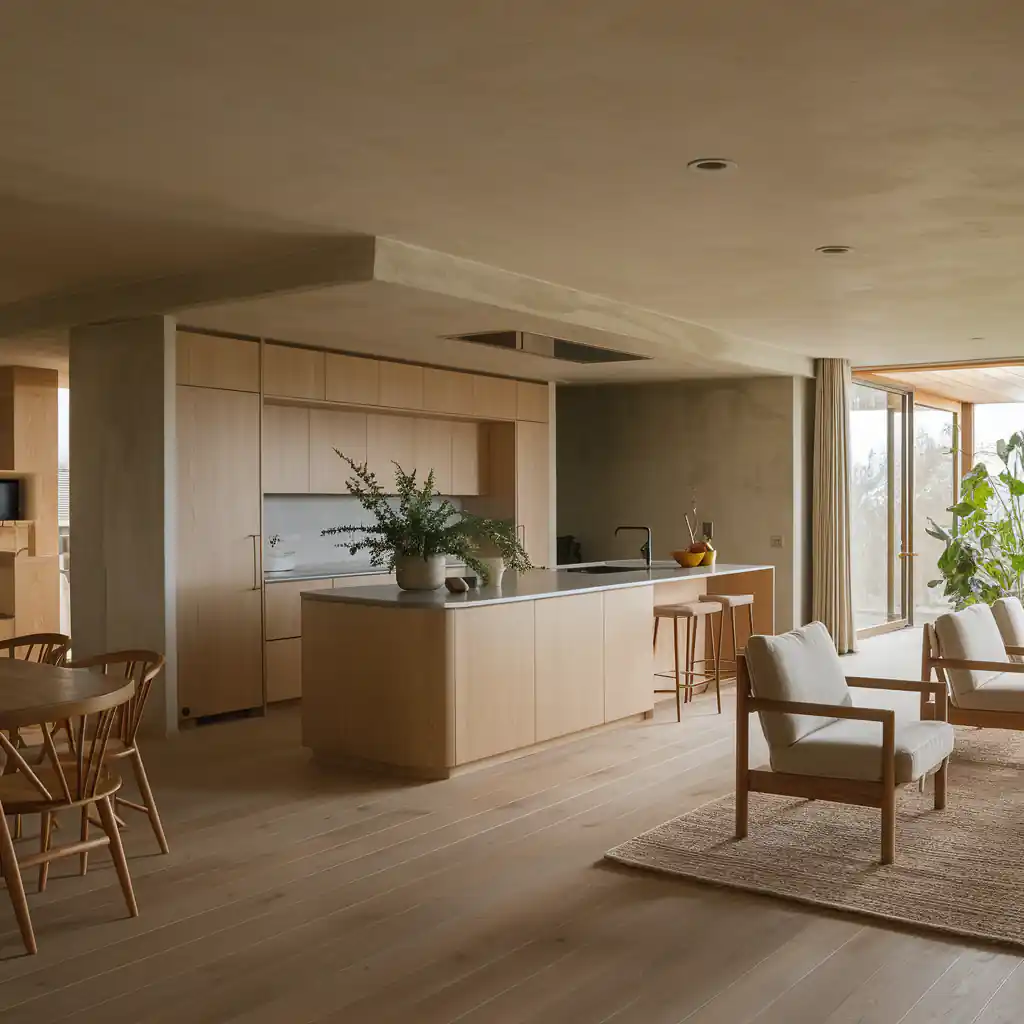
Picture of George Nicola
George Nicola

George is a seasoned interior designer and property marketing strategist with over 13 years of experience. He specializes in transforming properties into visually stunning spaces, helping clients recognize the potential and beauty in each property. With an impressive international client base of exciting projects throughout Europe and America.

Table of Contents

An organic kitchen embodies the principles of organic interior design, creating a space that harmonizes with nature while meeting the functional needs of a modern home. Organic modern kitchens prioritize natural materials with more earthy tones and textures to establish a connection to the outdoors, resulting in a warm, inviting atmosphere that balances strong minimalistic yet natural looking aesthetics.

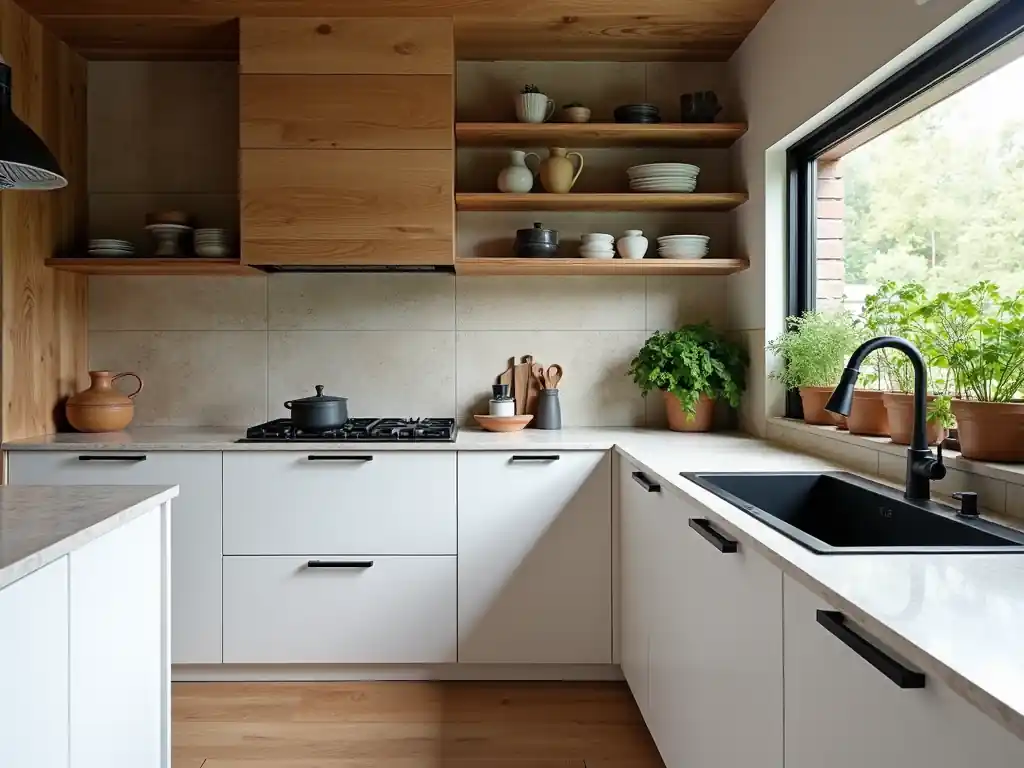
Modern kitchen with white cabinets, wooden shelves, potted plants, and a black faucet by a large window, embodying organic modern kitchen decor.
  1. Natural materials: Wood, stone, and natural fibers dominate
  2. Earthy color palette: Neutral tones with touches of nature-inspired hues
  3. Abundant natural light: Large windows or skylights to bring the outdoors in
  4. Organic shapes: Curved lines and flowing forms in cabinetry and fixtures
  5. Sustainable choices: Eco-friendly appliances and recycled or reclaimed materials
  6. Minimalist approach: Uncluttered spaces with a focus on essential elements
  7. Texture variety: Mixing smooth and rough textures for visual and tactile interest
  8. Indoor plants: Incorporating greenery for a direct connection to nature

Organic kitchens have gained popularity due to their wellness and timeless appeal. There are three main types of organic kitchen designs – modern, rustic, and traditional (Mediterranean). Kitchens designed with an organic minimalist philosophy in mind kitchens create a calming environment, promoting mental well-being in an often stressful space.

The natural materials and neutral palettes offer an enduring style that doesn’t quickly date, while the organic design principles and shapes complement various architectural styles.

A well designed organic kitchen can fulfill a desire to bring the outdoors in, especially in urban environments and allow for personalization through handcrafted elements and natural variations in materials.

Despite their aesthetic focus, organic kitchens are efficient when designed with efficient design in mind. 

The organic kitchen trend reflects a broader shift towards more mindful, nature-connected living spaces. It offers a perfect balance between contemporary functionality and timeless, natural beauty, making it a popular choice for those seeking a kitchen that feels both modern and deeply rooted in the natural world.

What layout organic kitchens are best for?

Organic kitchens work well with several layouts, each offering unique advantages depending on the space and user preferences. Here are some of the best layouts for organic kitchens:

L-shaped layout:

  • Efficient use of corner space
  • Allows for an open feel
  • Provides good workflow between main work areas

U-shaped layout:

  • Maximizes counter space and storage
  • Offers an efficient work triangle
  • Can incorporate a central island for additional workspace

Galley layout:

  • Ideal for narrow spaces
  • Efficient for one or two cooks
  • Allows for a streamlined, minimalist design

Island layout:

  • Adds extra counter space and storage
  • Creates a social hub in the kitchen
  • Can house appliances or a sink to improve workflow

One-wall layout:

  • Perfect for small, open-plan spaces
  • Minimalist and space-efficient
  • Can be combined with an island for added functionality

When choosing a layout for an organic kitchen, consider these factors:

  • Natural light sources
  • Flow with adjacent living spaces
  • Available square footage
  • Number of regular users
  • Desired level of openness

Are modern organic kitchens affordable?

Organic kitchens are affordable if you choose budget-friendly natural materials: bamboo, reclaimed wood, or stone-look laminate, and can become very expensive if you select high-end natural stone countertops like marble, rare granites, soapstone, or rare natural wood that request additional treatment such as Ebony, rosewood, cocobolo, bocote, bubinga, lignum vitae or purpleheart.

To achieve a modern organic kitchen in the 12-15ft range, you can expect to spend $15,000 to $50,000 or more. The final cost depends on the extent of the renovation and the materials you choose.

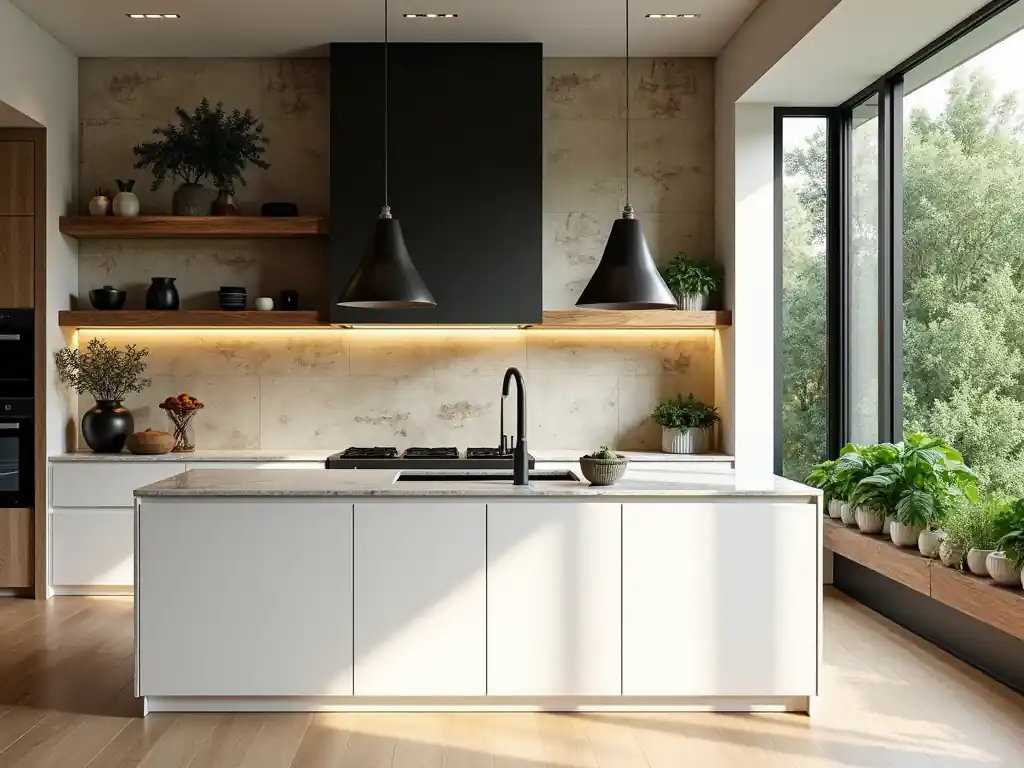
Modern kitchen with white island, black fixtures, large windows, hanging lights, and open shelves with Organic Modern Kitchen Decor and plants.

The affordability of a modern organic kitchen depends on your choices and priorities. Balancing high-impact organic elements with cost-effective alternatives creates a beautiful, nature-inspired space.

  • Extent of renovations needed
  • Quality and rarity of chosen materials
  • Geographic location and local labor costs
  • Current state of the existing kitchen
  • You choose budget-friendly natural materials: bamboo, reclaimed wood, or stone-look laminate
  • You opt for energy-efficient appliances in mid-range prices
  • You incorporate DIY elements, such as painting cabinets or installing open shelving
  • You focus on key organic elements rather than a complete overhaul
  • You source materials and fixtures from local suppliers or during sales
  • You select high-end natural stone countertops like marble or rare granites
  • You install custom, handcrafted cabinetry made from exotic woods
  • You choose top-of-the-line, smart appliances
  • You require extensive structural changes to achieve an open-concept layout
  • You hire premium designers and contractors for the entire project

Cabinets, countertops, appliances, flooring, lighting, and labor are the primary cost factors in a kitchen remodel. Custom cabinets and high-end materials like soapstone can significantly impact the budget.

Consider refacing existing cabinets, opting for stock cabinets, and choosing quartz that mimics soapstone to save on costs. You can also mix high-end finishes with more affordable options and DIY some aspects of the renovation.

The National Kitchen and Bath Association recommends budgeting 15% to 20% of your home’s value for a kitchen remodel. A partial kitchen renovation may cost $60 to $150 per square foot, while a full renovation can range from $150 to $250 per square foot. For a high-end, custom kitchen renovation, costs can reach $250 to $350 per square foot.

Is there a cheap organic modern kitchen option?

Cheap organic modern kitchen options exist, allowing homeowners to achieve a natural, contemporary look on a budget. These options focus on cost-effective materials and strategic design choices.

Affordable timber materials such as bamboo and reclaimed wood are affordable, sustainable option for flooring or countertops and inexpensive for open shelving or accent pieces.

For butcher block it’s another very good looking and cost-effective countertop material with a warm, organic feel, besides the concrete, which is a versatile, relatively cheap option for countertops or flooring.

Laminate is the cheapest of all and the worst looking, but still a good alternative a low-cost option mimicking natural stone or wood.

Modern kitchen with white cabinets, floating wooden shelves adorned with potted plants for an organic modern kitchen decor, black fixtures, and a functional kitchen island.

Design strategies to turn cheap look good

  • Paint existing cabinets in earth tones rather than replacing them
  • Install open shelving instead of upper cabinets
  • Use plants as decor to bring nature indoors affordably
  • Incorporate natural light through windows or skylights
  • Choose energy-efficient appliances in white or stainless steel
Modern kitchen with white cabinets, black hardware, open wooden shelves with plants, and a center island under pendant lights—an exemplary case of Organic Modern Kitchen Decor.

Other cost-saving tips for good looking but cheap organic modern kitchen:

  1. DIY simpler aspects of the renovation
  2. Shop for secondhand or vintage items
  3. Focus on one or two key organic elements rather than a complete overhaul
  4. Use organic materials as accents rather than primary surfaces
  5. Opt for stock cabinets in natural finishes instead of custom options

By combining these affordable materials, design strategies, and cost-saving tips, homeowners create a budget-friendly, organic, modern kitchen. This approach captures the essence of the style without the high-end price tag, making organic design accessible to a wider range of budgets.

Are there any disadvantages of modern organic kitchens?

Modern organic kitchens, while popular and aesthetically pleasing, come with several disadvantages, and the main one is maintenance. Wood and stone often need more maintenance than synthetic alternatives. Every 2 to 3 years, a typical kitchen, based on its use, will require sealing, polishing, and deep cleaning ever more often to protect the surfaces from damage and staining.

Depending on the combination of the materials often it’s too expensive and not durable.
High-quality natural materials and custom-made elements typically cost more than mass-produced synthetic options. The initial investment for an organic kitchen often exceeds that of a conventional kitchen. Some natural materials are softer or more porous than their synthetic counterparts. Wood countertops, for example, scratch and dent more easily than laminate or quartz surfaces.

Organic kitchens are not to be used in high-humidity climates, and the risk of moisture damage is high.In high-humidity areas of the kitchen, natural materials like wood can warp, swell, or develop mold if not properly sealed and maintained.

How to transform a sterile-feeling kitchen into a welcoming heart of the home kitchen?

replacing a laminate countertop with a wooden butcher block and adding a few potted herbs can instantly bring organic warmth to a modern kitchen. To achieve the best outcome, balance these natural elements with sleek, modern appliances and simple cabinetry. This creates a harmonious space that feels both functional and inviting.

Organic modern kitchens aim to create a calm, nature-inspired space without sacrificing modern conveniences.

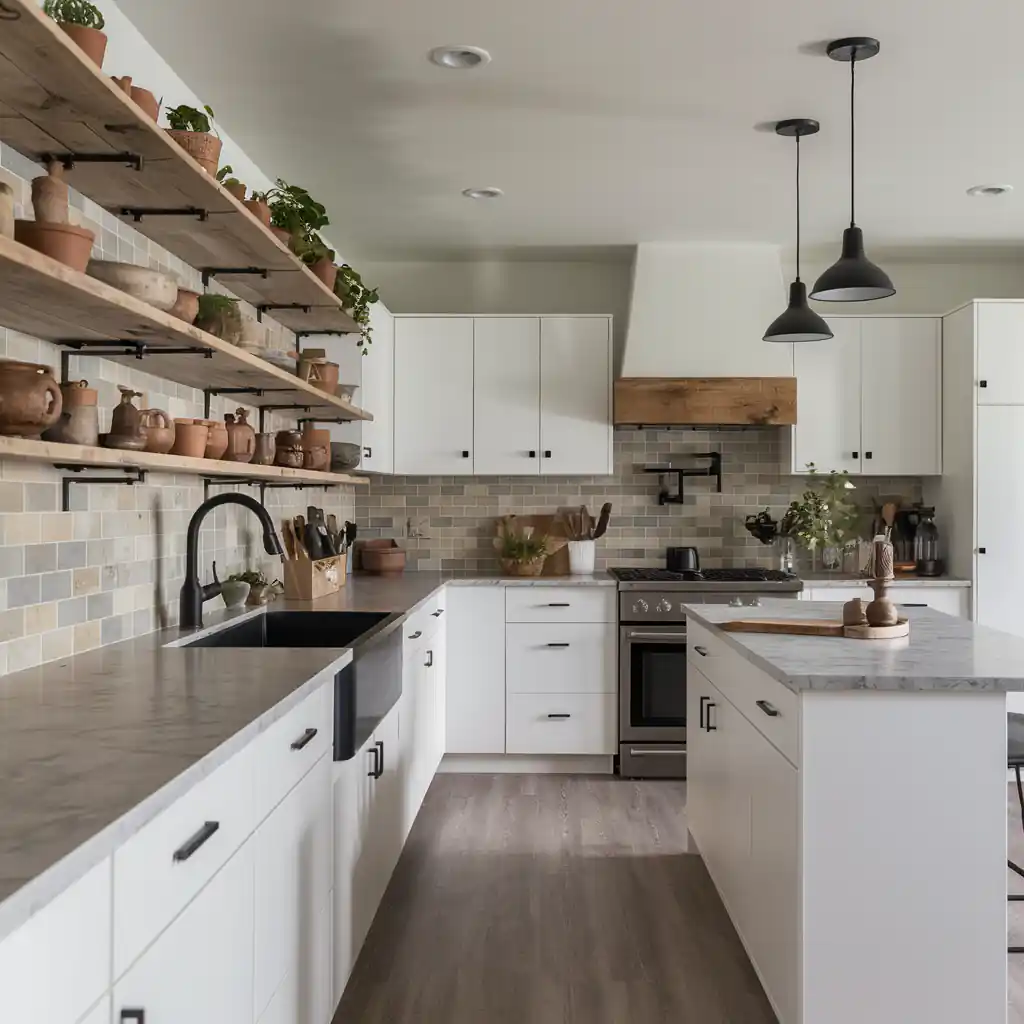
Modern kitchen with white cabinets, black fixtures, tiled backsplash, hanging lights, open wooden shelves, and potted plants that add a touch of Organic Modern Kitchen Decor.

Organic modern kitchens blend natural elements with sleek design. Here’s a simple overview of additions that can easily transform a kitchen into an organic modern space:

  1. Natural materials:
  • Wood: Introduce wooden elements like cutting boards, shelves, or a butcher block countertop
  • Stone: Add stone countertops or backsplashes (granite, marble, or quartz)
  1. Plants:
  • Potted herbs on the windowsill
  • Small indoor plants on countertops or shelves
  1. Neutral color palette:
  • Paint walls in earthy tones (beige, gray, or warm white)
  • Use natural-colored fabrics for curtains or seat cushions
  1. Clean lines:
  • Install simple, handle-free cabinets
  • Choose minimalist light fixtures
  1. Organic shapes:
  • Round or oval dining table
  • Curved faucets or light pendants
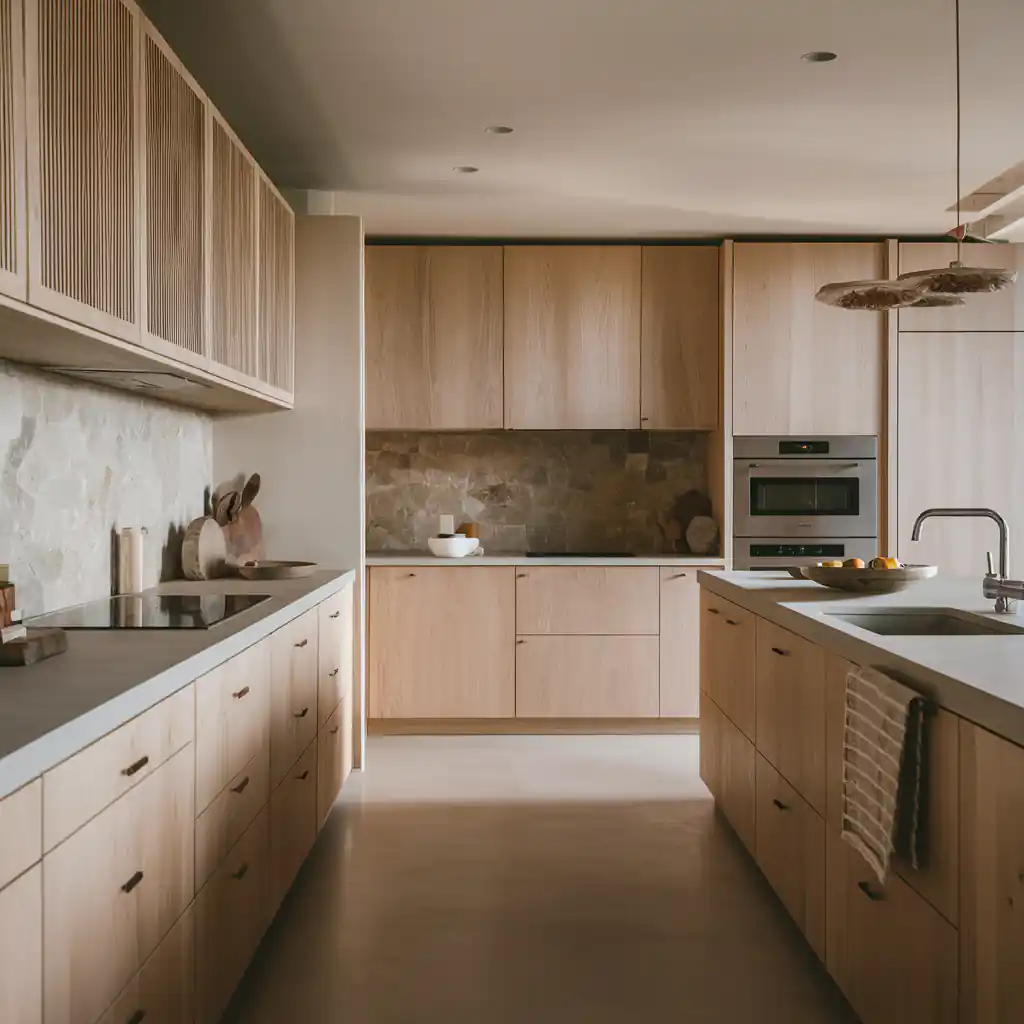
Modern kitchen with wooden cabinets, an island, built-in oven, and minimalist Organic Modern Kitchen Decor. Light streams from a window.

1) Incorporate Reclaimed Wood Shelving

Reclaimed wood shelving adds warmth and character to organic modern kitchens. These rustic elements bring a touch of nature indoors while providing functional storage space.

Look for wooden planks with unique knots, grain patterns, and imperfections. These natural features create visual interest and depth in the kitchen design.

Wooden shelves mounted on a rustic wood wall holding white dishes, bowls, and potted plants offer perfect kitchen decor ideas for an organic modern kitchen design.

Install floating shelves made from reclaimed wood to display dishes, plants, or decorative items. The contrast between sleek modern cabinetry and weathered wood shelves creates a balanced aesthetic.

Consider using reclaimed wood for open shelving units. This allows you to showcase beautiful dishware while maintaining an airy, spacious feel in the kitchen.

Pair reclaimed wood shelves with metal brackets for an industrial-inspired look. The mix of materials adds texture and visual appeal to the space.

When selecting reclaimed wood, opt for pieces with a rich history. Wood from old barns, factories, or ships can infuse your kitchen with stories and character.

Remember to seal and treat the wood properly to ensure it stands up to kitchen humidity and use. This will help preserve its natural beauty for years to come.

2) Choose Matte Black Fixtures

Matte black fixtures add a sleek, modern touch to organic kitchens. They create a bold contrast against natural materials like wood and stone.

Faucets, cabinet handles, and lighting in matte black can tie the space together. These dark elements ground the design and prevent it from feeling too rustic.

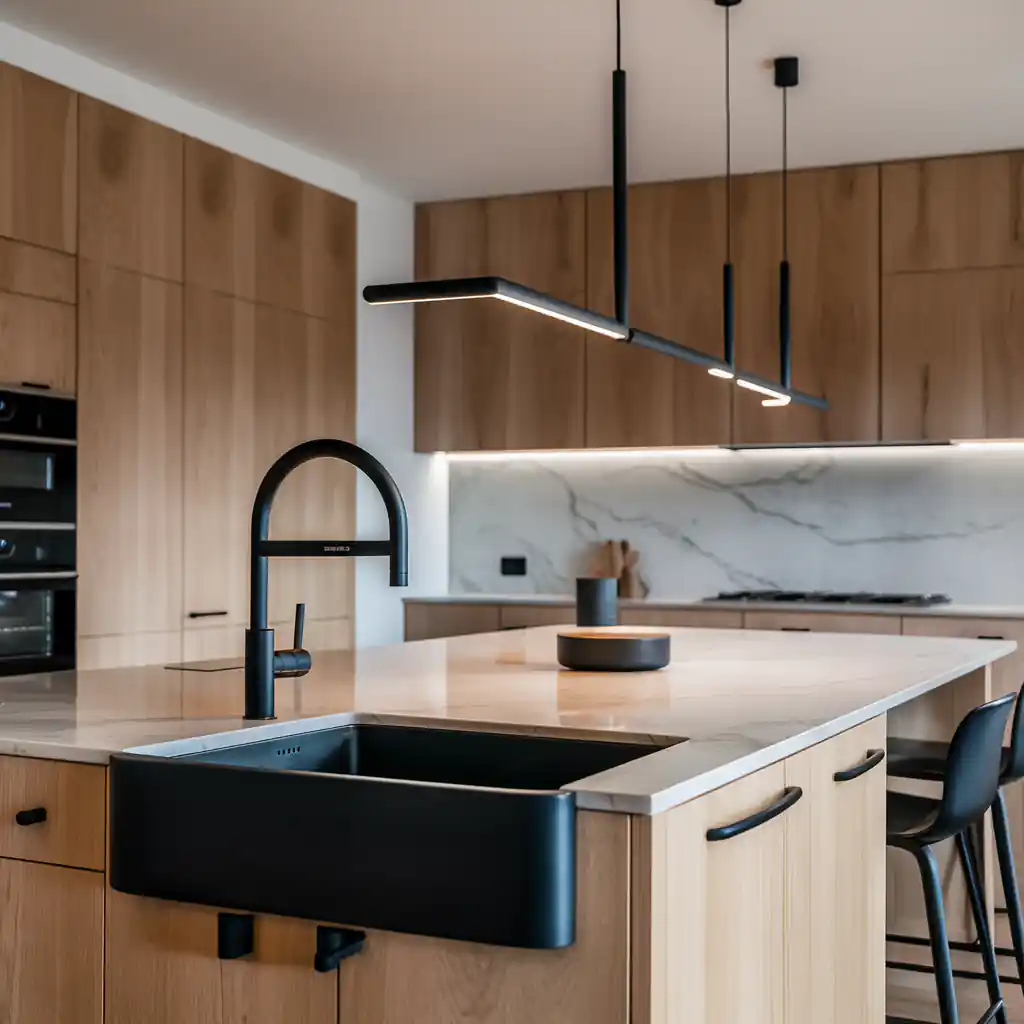
Organic modern kitchen with wooden cabinets, marble countertops, black fixtures, an island with a sink, and minimalistic pendant lights.

When selecting matte black fixtures, opt for simple, clean shapes. Avoid ornate designs that clash with the organic modern aesthetic.

A matte black sink can make a striking focal point. Pair it with matching hardware for a cohesive look.

Black light fixtures above an island or dining area draw the eye upward. This creates visual interest and balances the darker elements below.

Use matte black sparingly to avoid overwhelming the space. A few well-placed fixtures can have a big impact without dominating the kitchen.

Consider mixing matte black with warmer metals like brass or copper for added depth. This combination feels both modern and inviting.

3) Use Earth-Toned Backsplash

Earth-toned backsplashes can add warmth and texture to an organic modern kitchen. They bring a natural element that ties the space together.

Gray tones work well with dark cabinets and light countertops. This combo creates a balanced look that feels grounded and calm.

Earthy browns, beiges, and greens mimic colors found in nature. These shades pair nicely with wood finishes and stone surfaces common in organic modern designs.

Modern kitchen with a large stone tile backsplash, stainless steel stove, wood cabinetry, and an overhead range hood, seamlessly integrating organic modern kitchen decor for a stylish yet natural touch.

Natural stone or brick backsplashes add rustic charm. They create an interesting focal point while keeping with the organic theme.

For a sleek look, large format tiles in earth tones can be used. They provide a clean backdrop that doesn’t compete with other natural elements.

Textured tiles or patterns add visual interest. They can break up solid colors and bring depth to the kitchen design. Interior design with mosaic tiles can create a unique and artistic appeal in any space. The variety of colors, shapes, and sizes available in mosaic tiles allows for endless design possibilities. Whether used as a statement backsplash or a decorative floor feature, mosaic tiles can truly elevate the overall look of a kitchen.

When choosing an earth-toned backsplash, consider how it will interact with other materials in the space. The goal is to create a cohesive look that feels both modern and connected to nature.

4) Display Handmade Pottery

Handmade pottery adds warmth and character to organic modern kitchens. Placing ceramic pieces on open shelves or countertops brings texture and visual interest to the space.

Mix different sizes, shapes, and colors of pottery for a dynamic display. Group items in odd numbers, like three or five, to create a pleasing arrangement.

Wooden shelves with neatly arranged clay and ceramic pots, bowls, and mugs in earthy tones create an inviting Organic Modern kitchen decor.

Showcase functional pottery like bowls, plates, and mugs alongside decorative pieces. This blend of practicality and aesthetics fits well with the organic modern style.

Consider using a wooden crate or farmhouse-style hutch to display your pottery collection. These rustic elements complement the natural feel of handmade ceramics.

Don’t overcrowd your display. Leave some empty space around each piece to let it breathe and stand out. This approach maintains the clean lines typical of modern design.

Rotate your pottery display seasonally or whenever you feel like a change. This keeps the look fresh and allows you to enjoy different pieces throughout the year.

5) Integrate Indoor Herb Garden

An indoor herb garden adds a fresh, organic touch to a modern kitchen. It brings nature inside and provides easy access to flavorful herbs for cooking.

Choose a sunny spot near a window for your herb garden. Many herbs thrive in bright light. If natural light is limited, use grow lights to help your herbs flourish.

Select containers that match your kitchen’s style. Sleek metal planters or minimalist ceramic pots work well in organic modern decor. Make sure the containers have drainage holes to prevent overwatering.

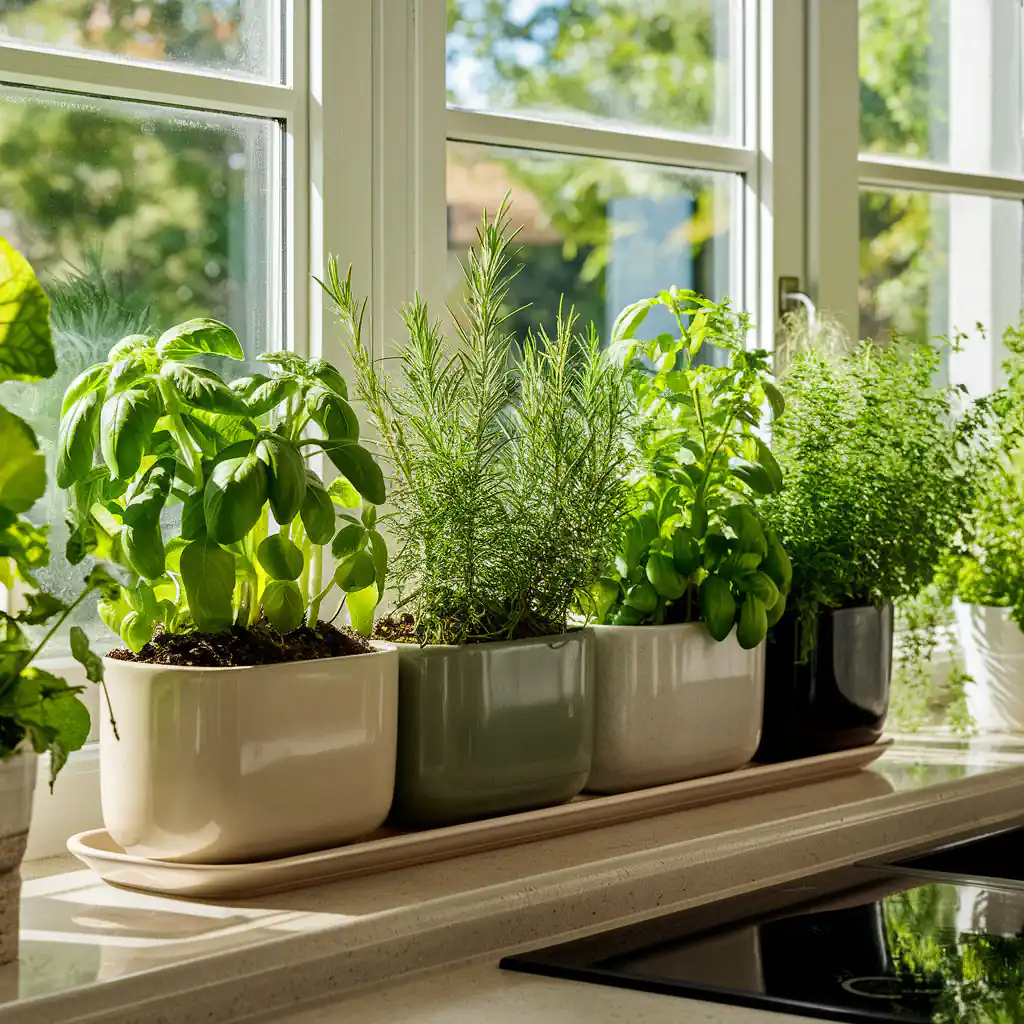
Potted herbs, including basil and rosemary, sitting on a sunny kitchen windowsill with green foliage in the background, create a beautiful touch of organic modern kitchen decor.

Group herbs together in a single large planter or use individual pots. Arrange them on a countertop, windowsill, or floating shelf. This creates a focal point and adds visual interest to your kitchen.

Popular herbs for indoor gardens include basil, mint, thyme, and rosemary. These are easy to grow and useful for cooking. Mix different textures and shades of green for a dynamic display.

Use high-quality potting soil designed for herbs. Water your plants regularly, but avoid overwatering. Trim herbs often to encourage growth and maintain their shape.

An indoor herb garden not only looks great but also provides fresh flavors for your meals. It’s a practical and beautiful addition to any organic modern kitchen.

Understanding Organic Modern Style

Organic modern style blends natural elements with sleek design. It creates warm, inviting spaces that feel fresh and contemporary.

Principles of Organic Modern Design

Organic modern design focuses on simplicity and connection to nature. It uses clean lines and minimal decor. Natural materials like wood and stone are key. The style aims for a calm, uncluttered look.

Colors tend to be neutral and earthy. Think beige, cream, and soft browns. Textures play a big role in adding depth. Rough stone, smooth wood, and nubby fabrics create interest.

Organic shapes are common. Curved furniture and rounded edges soften the modern feel. Plants bring life and color to spaces.

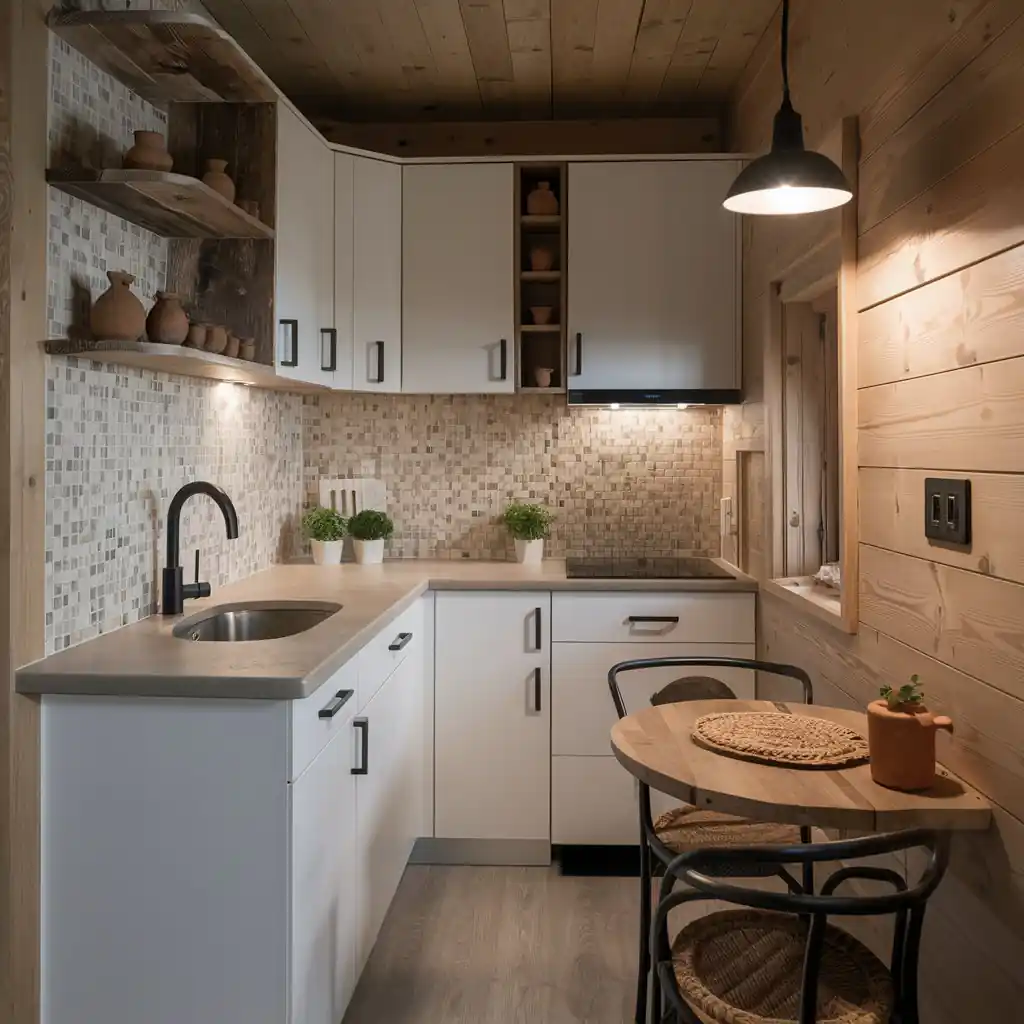
Cozy kitchen with white cabinets, mosaic backsplash, a round dining table, and wooden decor on shelves and walls, exemplifying Organic Modern Kitchen Decor.

Key Elements to Incorporate

To achieve an organic modern look, start with a neutral base. Add warm wood tones through furniture or flooring. Use natural stone for countertops or backsplashes.

Bring in lots of natural light. Large windows or skylights work well. Choose simple window treatments that don’t block views.

Add organic shapes with curved furniture or rounded decor items. Mix textures like smooth leather with rough jute rugs.

Include living plants for a fresh, natural touch. Use woven baskets or ceramic pots as planters.

Pick furniture with clean lines but soft edges. Avoid sharp angles or overly ornate pieces.

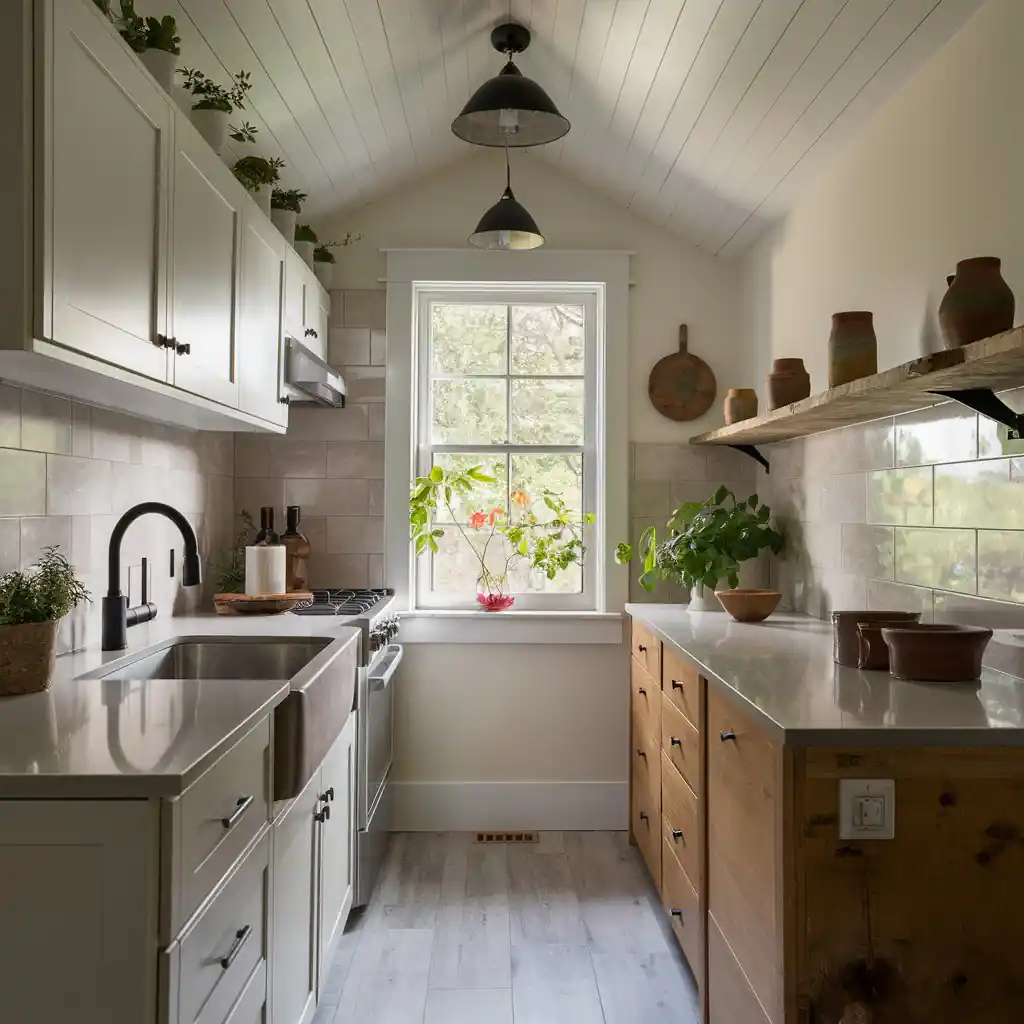
A small kitchen with white cabinets, plants on shelves, a window, a farmhouse sink, and stainless steel appliances exudes modern kitchen decor.

Choosing Sustainable Materials

Sustainable materials are key to creating an eco-friendly organic modern kitchen. They reduce environmental impact while adding natural beauty. Two important areas to focus on are countertops and wood elements.

Eco-Friendly Countertops

Recycled glass countertops offer a stylish and sustainable option. These counters use crushed glass mixed with concrete or resin. The result is a durable surface with unique patterns and colors.

Another choice is bamboo countertops. Bamboo grows quickly and needs few resources. It’s strong and resists water damage. Bamboo counters come in light or dark shades to suit different styles.

A modern kitchen with wooden cabinets, large windows, and a unique resin countertop flowing with colorful patterns embodies the essence of organic modern kitchen decor.

Paperstone is made from recycled paper and non-petroleum resins. It looks like stone but is lighter. This material is heat-resistant and comes in earthy colors.

Cork countertops provide a soft, warm surface. Cork is harvested without harming trees. It’s naturally antimicrobial and resists stains.

A cozy kitchen with bamboo cabinets, potted plants, open shelves, and various pots and bowls on display seamlessly encapsulates Organic Modern Kitchen Decor.

Sustainably Sourced Wood

Look for wood certified by the Forest Stewardship Council (FSC). This ensures the wood comes from responsibly managed forests.

Reclaimed wood adds character to kitchens. Old barns and buildings are sources for this wood. Each piece tells a story through its knots and marks.

Modern kitchen with wooden cabinetry, large island, black countertop, four bar stools, and various potted plants showcasing organic modern kitchen decor.

Bamboo works well for cabinets and flooring. It’s actually a grass, not a wood. Bamboo regrows quickly after harvesting.

Engineered wood uses less timber than solid wood. It’s made by layering thin wood sheets. This process reduces waste and creates stable boards.

Balancing Minimalism with Warmth

Organic modern kitchens blend clean lines with natural elements. The key is mixing simple designs and cozy touches to create a welcoming space.

Integrating Natural Textures

Wood is perfect for adding warmth to a minimal kitchen. Try wood cabinets, shelves, or a butcher block countertop. Stone counters or backsplashes bring organic texture.

Woven baskets and rattan light fixtures add a natural feel. Linen curtains or chair cushions soften hard surfaces. A jute rug under the dining table feels cozy underfoot.

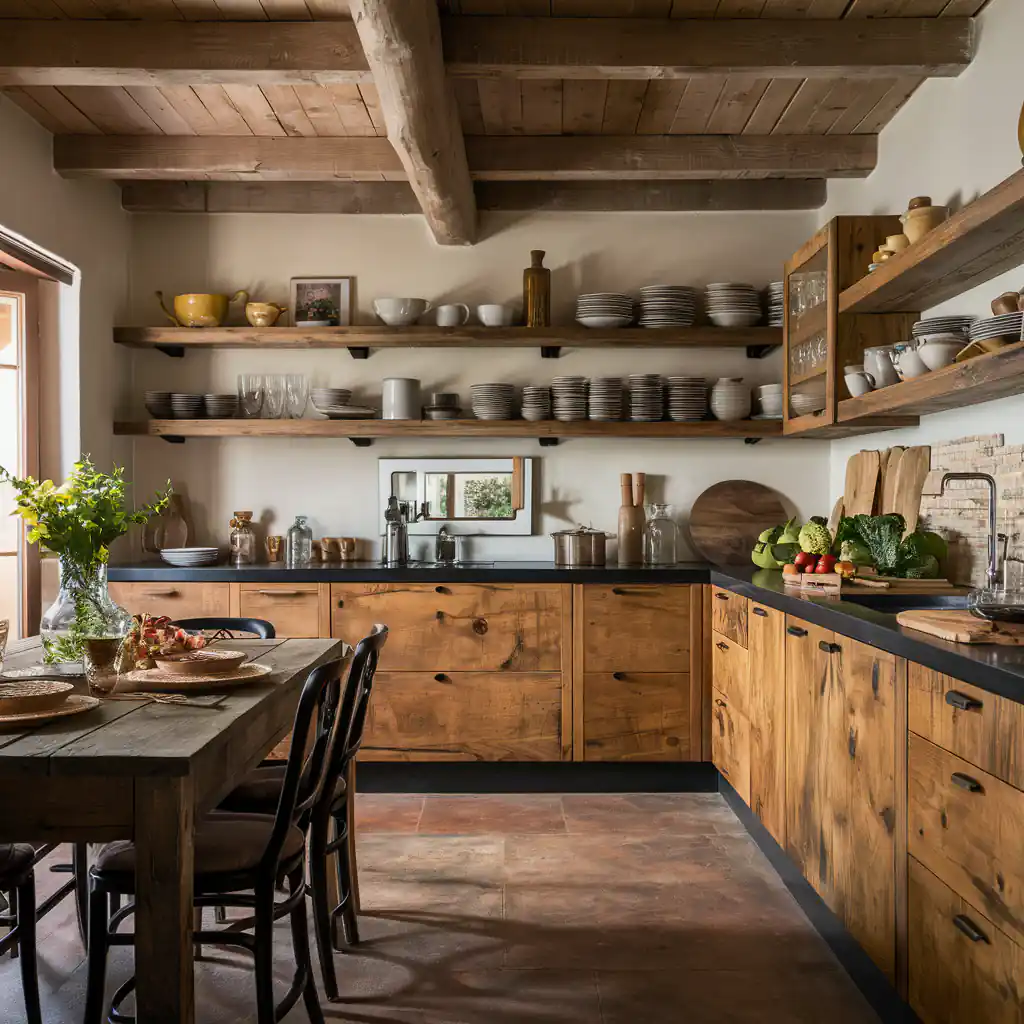
A rustic kitchen with wooden cabinets, open shelves displaying dishes, a dining table with chairs, and a vase of flowers exudes organic modern kitchen decor.

Plants bring life to stark spaces. Put herbs in pots on the counter or hang trailing plants from shelves. A large leafy plant in the corner adds a pop of green.

Utilizing Neutral Color Palettes

Warm neutrals create a calm, inviting vibe. Paint walls in soft white, cream, or light gray. Use darker grays or tans for contrast on lower cabinets or an island.

Add depth with different shades of the same color. Mix white upper cabinets with light wood lowers. Layer various tan tones in counters, backsplash, and floors.

Close-up of a wooden kitchen countertop with a plant and cutting boards in the background, embodying organic modern kitchen decor. Black faucet visible.

Bring in pops of color with small items. Display colorful dishes on open shelves. Add a bright tea kettle or stand mixer. Hang vivid art for visual interest.

Where to start to convert a kitchen in organic style?

To convert a kitchen into an organic style, start with these key steps:

  1. Color palette:
  • Choose earth tones (browns, greens, beiges)
  • Opt for warm whites instead of stark ones
  1. Natural materials:
  • Introduce wooden elements (cabinets, open shelving)
  • Consider stone countertops (granite, marble)
  1. Lighting:
  • Maximize natural light
  • Install warm, soft artificial lighting
  1. Textures:
  • Add natural fiber rugs or curtains
  • Use woven baskets for storage
  1. Plants:
  • Incorporate potted herbs or small indoor plants
A man stands indoors, wearing a black "TALLBOX" t-shirt, pointing toward the camera. The curved architectural background evokes the feel of a warm modern bathroom.

For example, you might begin by painting your walls a warm, earthy tone and replacing synthetic materials with natural ones, like swapping out a laminate countertop for butcher block. To achieve the best outcome, focus on creating a harmonious balance between natural elements and functionality. Start with one or two changes and build from there, ensuring each addition contributes to a cohesive, organic feel.

Minimalist kitchen with light wood cabinets, open shelving, and a kitchen island. Various pottery and modern decor are displayed, seamlessly blending into the organic modern kitchen design.

Converting to an organic style is about bringing nature indoors and creating a warm, inviting space. By starting with these foundational elements, you can gradually transform your kitchen into a more organic environment that feels connected to nature while remaining practical for daily use.

How to incorporate a kitchen to the open space plan in organic interior design?

To incorporate a kitchen into an open space plan with an organic, minimalist interior design, consider these key elements and utilize these complete kitchen remodel solutions to achieve a harmonious and functional space:

  • Seamless flow: Ensure the kitchen blends smoothly with the adjacent living areas by using consistent flooring and a cohesive color palette throughout the space.
Modern open-concept kitchen and living area with wooden furniture, large island, plants, and natural lighting, capturing the essence of organic modern kitchen decor.
  • Natural materials: Opt for organic materials like wood, stone, or bamboo for countertops, cabinets, and flooring. These materials add warmth and texture while maintaining a connection to nature.
  • Neutral color scheme: Stick to a palette of earth tones and muted colors to create a calm, unified look. This could include shades of white, beige, gray, and soft browns.
  • Hidden storage: Maximize storage with sleek, handleless cabinets and integrated appliances to maintain a clean, uncluttered appearance.
Modern open-concept living room and kitchen with wooden floors, plants, a white island, stools, and a cozy sofa area. Embrace the charm of Organic Modern Decor that seamlessly blends natural elements with contemporary design.
  • Island as a focal point: Use a minimalist kitchen island as a central element to define the kitchen space within the open plan. This can serve as a transition between the kitchen and living areas.
  • Open shelving: Incorporate some open shelving to display a few carefully curated items, adding visual interest without cluttering the space.
  • Minimal decor: Keep decorative elements to a minimum, focusing on a few statement pieces that complement the organic theme, such as a sculptural light fixture or a single piece of artwork.
  • Natural light: Maximize natural light with large windows or skylights to enhance the open, airy feel of the space.
  • Green elements: Include some plants or herbs to add life and reinforce the organic design theme.
  • Streamlined appliances: Choose appliances with simple, clean lines and consider built-in or panel-ready options to maintain the minimalist aesthetic.