What is the difference between franchised and non-franchised contractors?
Franchised contractors offers standardized procedures, extensive resources, and brand recognition, while non-franchised contractors often provide more personalized service, local expertise, and flexibility. The main trade-off is between the consistency and corporate backing of franchises versus the potential for more tailored, locally-informed service from independents. The best choice depends on factors like job complexity, insurance requirements, and personal preferences for service style.
Franchised: Often have access to corporate training programs and standardized certifications.
Independent: May have more varied training backgrounds, potentially including specialized local knowledge.
Franchised: Usually equipped with the latest industry-standard technology due to corporate resources.
Independent: Equipment quality can vary; some may invest heavily in cutting-edge tools, while others might use older but reliable equipment.
George is a seasoned interior designer and property marketing strategist with over 13 years of experience. He specializes in transforming properties into visually stunning spaces, helping clients recognize the potential and beauty in each property. With an impressive international client base of exciting projects throughout Europe and America.
Franchised contractors may have higher prices 15-20% or more due to franchise fees and corporate overhead, but can sometimes offer competitive rates due to bulk purchasing power.
Independent: Often have more flexible pricing structures and may offer lower rates, but might charge more for specialized services.
Franchised: Typically have established relationships with major insurance companies, potentially streamlining the claims process.
Independent: May have strong local insurance connections but might require more effort in coordinating with national insurers.
A franchise contractor in a high-visibility vest and hard hat stands between two business buildings at dusk, ensuring better safety standards.
Franchised: Often offer 24/7 service with large teams able to respond quickly to multiple simultaneous jobs.
Independent: Response times can vary; some offer round-the-clock service, while others might have more limited availability.
Franchised: Generally well-equipped to handle large-scale disasters and complex commercial jobs.
Franchised: Follow standardized procedures, which ensures consistency but may limit customization.
Independent: Often more flexible in adapting their approach to unique situations or client preferences.
Independent: May excel at smaller to medium-sized residential jobs, but some can also manage larger projects.
Franchised: Tend to offer more consistent quality across different locations due to standardized practices.
Independent: Quality can vary more widely, ranging from exceptional craftsmanship to potentially subpar work.
Franchised: May have broader industry knowledge but potentially less specific local expertise.
Independent: Often possess deep understanding of local building practices, climate considerations, and common regional issues.
Franchised: Typically offer professional, systematic customer service, but it may feel less personal.
Independent: Often provide more personalized attention, with direct access to owners or senior management.
Do not compare only the price side between two contractors. Consider your specific needs, the scale of the damage, your insurance situation, and your preferences for service style. Always verify credentials, read reviews, and ask for references regardless of which type you choose.
Comparing business models for success
Choosing between a franchise and an independent business is a big decision for entrepreneurs. Franchises offer a proven business model and brand recognition, while independent businesses provide more freedom and control. Both options have their pros and cons.
Franchises can be easier to finance and start up. Banks often see them as less risky than new independent businesses. They also benefit from group buying power, which can lower costs. But franchises come with rules and fees set by the franchisor.
Independent businesses allow owners more creativity and flexibility in how they run things. There are no franchise fees to pay or strict guidelines to follow. But independent owners miss out on the support and established systems that franchises provide. They have to build their brand and customer base from scratch.
Two men in a workshop wearing blue overalls; one smiles with arms crossed, the other holds a hammer, embodying the spirit of better franchise contractors. A "Brand" sign is displayed behind them.
Franchise Contracting
Franchise contracting shapes the business relationship between franchisors and franchisees. It sets the rules for using brand names, business systems, and support services.
Two franchise contractors signing a document on a desk with a pen, while a plant and stacks of coins sit in the background, ensuring better business prospects.
Definition of Franchise Contracting
Franchise contracting is a legal agreement that lets someone run a business using another company’s name and methods. The owner of the brand is called the franchisor. The person who buys the right to use it is the franchisee.
These contracts spell out what each side must do. They cover things like:
How long the deal lasts
Fees the franchisee pays
Rules for running the business
Training and support offered
Franchise contracts aim to keep the brand consistent across all locations. They make sure customers get the same experience no matter which store they visit.
Franchising started in the 1850s when Singer Sewing Machines let people sell their products. But it really took off in the 1950s and 1960s.
Fast food chains like McDonald’s made franchising popular. They showed how one business model could work in many places.
Key moments in franchise history:
1960s: Laws passed to protect franchisees
1970s: More rules about what franchisors must tell potential buyers
1980s-1990s: Franchising spreads to more types of businesses
Today, franchises are common in many industries. They range from restaurants to hotels to car repair shops.
The rules for franchising keep changing. New laws try to make things fair for both sides.
A construction worker in a reflective vest stands at a crossroads with two pathways, both labeled "Your Business Name Here," symbolizing the choice between better franchise contractors for your next project.
Benefits of Franchising for Contractors
Franchising offers several key advantages for contractors looking to grow their business. It provides access to established brands, proven systems, training resources, and cost savings through economies of scale.
Brand Recognition and Trust
Joining a franchise gives contractors instant name recognition. Well-known franchise brands such as:
have built trust with customers over many years. This makes it easier for franchisees to attract new clients. Contractors can leverage the franchise’s marketing and advertising to boost their local presence. They don’t have to spend years building a reputation from scratch.
The franchise’s positive image helps contractors stand out from independent competitors. Customers often feel more comfortable hiring a contractor affiliated with a major brand. This can lead to more job opportunities and higher-value projects.
Access to Established Business Models
Franchises provide contractors with proven systems and processes. These have been refined over time to maximize efficiency and profits. Contractors don’t have to figure everything out on their own through trial and error.
The franchise model includes:
Detailed operations manuals
Pricing guidelines
Customer service standards
Project management tools
Financial benchmarks
This roadmap helps contractors avoid common pitfalls and scale their business faster. They can focus on executing the work rather than reinventing the wheel.
Franchise contractors vs Independent Joe's
Training and Support Systems
Franchisors offer in-depth training programs for contractors. These cover both technical skills and business management. Ongoing support ensures franchisees stay up-to-date on industry trends and best practices.
Training often includes:
Initial classroom and hands-on instruction
Online learning modules
Regional workshops and conferences
One-on-one mentoring
Contractors gain access to a network of peers facing similar challenges. They can share advice and learn from each other’s experiences. This support system is especially valuable for new business owners.
Economies of Scale
Franchising allows contractors to benefit from the buying power of a larger organization. Franchisors negotiate discounts with suppliers for equipment, materials, and services. These savings get passed on to franchisees.
Bulk purchasing leads to lower costs for:
Tools and machinery
Building supplies
Insurance policies
Software licenses
Contractors can price their services more competitively while maintaining healthy profit margins. The franchise may also have relationships with lenders to help franchisees secure financing on better terms.
Franchise Opportunities
Careful assessment of franchise options is crucial for success. Key factors include brand strength, financial requirements, and market potential. A thorough evaluation helps potential franchisees make informed decisions.
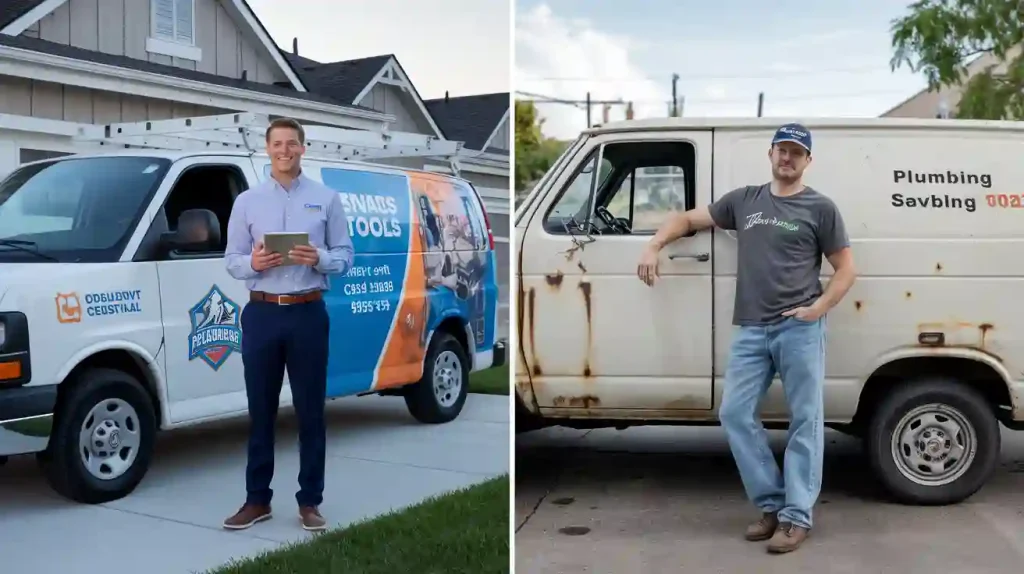
Two side-by-side images of plumbers. Left: a franchise contractor in uniform by a new van. Right: a man in casual clothes by an old van.
Due Diligence Strategies
Start by researching the franchise’s history and reputation. Look at how long they’ve been operating and their track record. Check online reviews and talk to current franchisees about their experiences.
Ask for the Franchise Disclosure Document (FDD). This important file contains details on costs, obligations, and financial performance. Read it carefully and seek help from a lawyer or accountant if needed.
Visit existing franchise locations. Observe operations, customer flow, and staff interactions. This hands-on approach gives valuable insights into daily business realities.
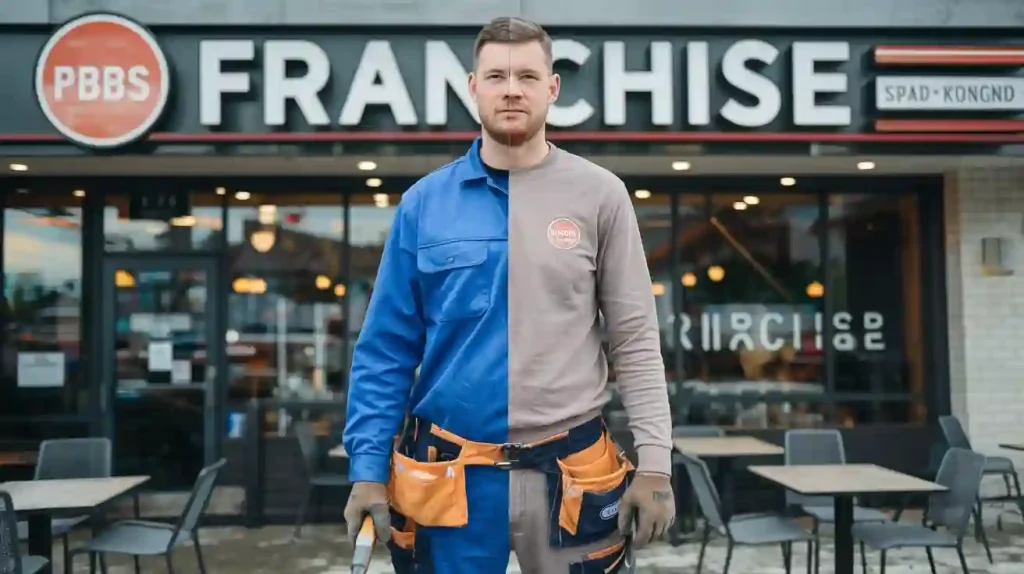
Two men, cut in half, stand side by side; one in casual clothes and the other in workwear with a tool belt, embodying the transformation that better franchise contractors bring to any project.
Understanding Franchise Agreements
Franchise agreements outline the legal relationship between franchisor and franchisee. They cover key terms like contract length, renewal options, and territory rights.
Pay attention to restrictions on how you run the business. Some agreements may limit suppliers, pricing, or marketing choices.
Look for clauses about support and training. Good franchisors offer ongoing assistance to help franchisees succeed.
Review termination conditions carefully. Know what could end your agreement and any penalties involved.
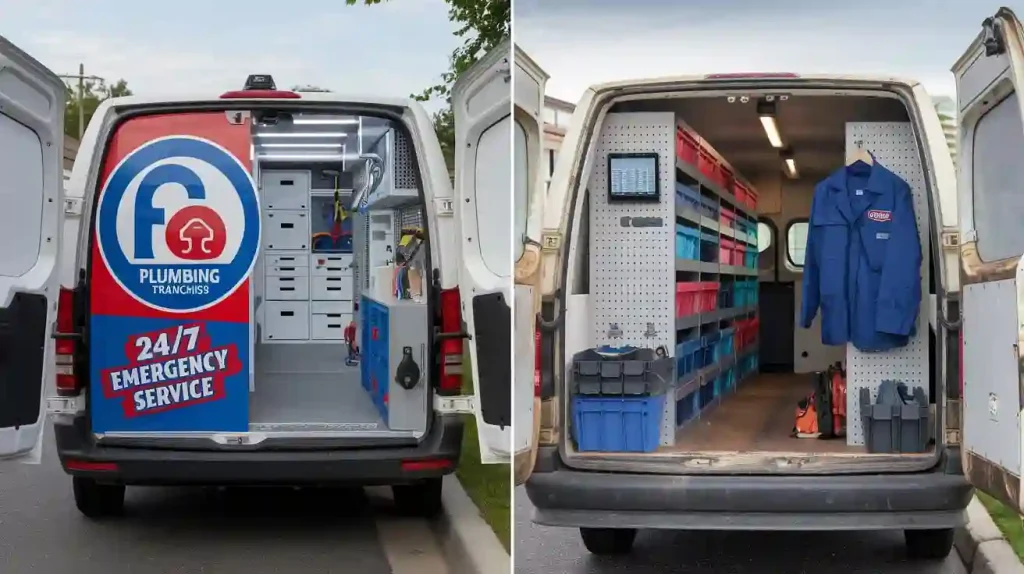
Comparison of two vans: An organized, clean van with labeled tools on the left, often seen with better contractors, and a messy, cluttered van on the right.
Assessing Franchise Costs and Earnings Potential
Initial investment costs vary widely among franchises. Common expenses include franchise fees, equipment, inventory, and location setup.
Consider ongoing costs like royalties, marketing fees, and inventory restocking. These affect your long-term profitability.
Examine earnings claims in the FDD, if provided. Remember these are estimates, not guarantees. Compare them with information from current franchisees.
Factor in local market conditions. Research population trends, competition, and economic factors that could impact your success.
Prepare a detailed business plan. Include projected income, expenses, and break-even point. This helps gauge the franchise’s financial viability.
Franchise Challenges and Considerations
Franchisees face several key hurdles when operating their businesses. These include financial risks, following strict rules, and having less control over decisions.
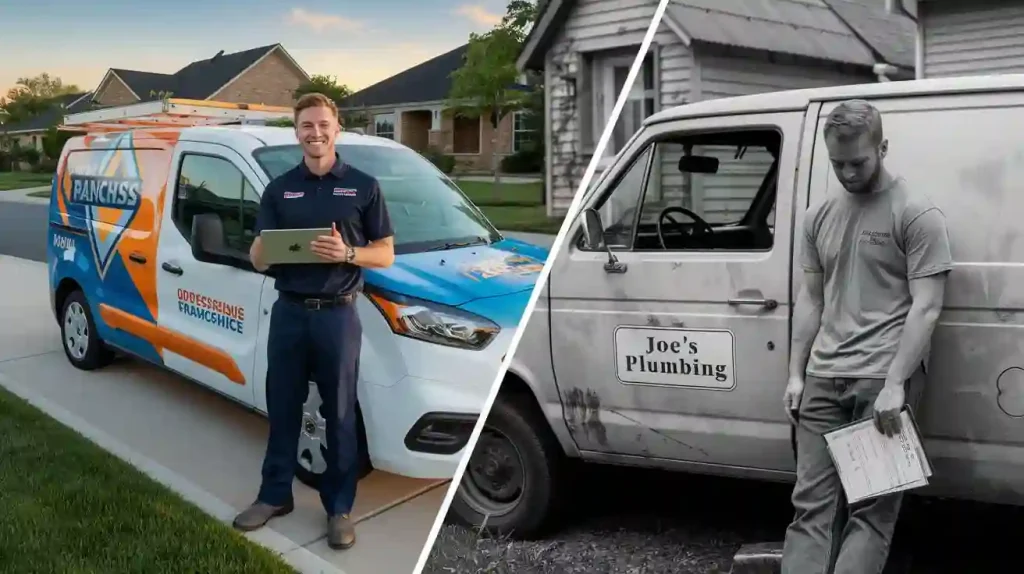
Two plumbers, each standing by their work vans—one with a tablet and the other with a clipboard—both looking confidently at the camera, exemplify efficient franchise contractors.
Financial Commitment and Risk
Starting a franchise requires a big money investment. Franchisees must pay an upfront fee to use the brand name and business model. This can range from $10,000 to over $1 million. They also need money for rent, equipment, and staff.
Ongoing costs add up too. Franchisees pay royalty fees, often 4-8% of sales. They may also owe marketing fees. These payments eat into profits.
There’s no guarantee of success. The business could fail, leaving the franchisee in debt. Economic downturns or changes in consumer taste can hurt sales.
Two photos of the back of organized plumbing service vans with shelves, tools, and emergency service signs, showcasing the efficiency and professionalism that come from working with franchise contractors.
Compliance with Franchise Policies
Franchisees must follow strict rules set by the franchisor. This helps keep the brand consistent across locations. But it can feel restrictive.
Rules may cover:
Menu items and prices
Decor and uniforms
Operating hours
Supplier choices
Marketing campaigns
Breaking these rules can lead to fines or loss of the franchise. Franchisees have less room to adapt to local needs or try new ideas.
Regular inspections check for compliance. This adds stress and takes time away from running the business.
Two men standing in front of service vans, each holding a clipboard. One wears a dark uniform; the other wears a beige t-shirt, representing their roles as franchise contractors committed to delivering top-notch service.
Limitations on Business Autonomy
Franchisees don’t have full control over their businesses. They can’t change core parts of the operation without approval.
This limits their ability to:
Expand to new locations
Add or remove products
Set prices
Choose suppliers
Decide on marketing strategies
The franchisor may make big decisions that affect all locations. These might not work well for every franchisee’s market.
Selling the business can be hard too. The franchisor often has the right to approve new owners. This can make it tough to exit if things aren’t going well.
Franchise vs. Independent Contracting
Contractors face a key choice between joining a franchise or starting their own independent business. Each option has unique traits that affect daily operations, growth potential, and financial outcomes.
Side by side: clean van with smiling franchise technician holding a tablet, and worn van with plumber holding a clipboard.
Comparing Business Models
Franchises offer a ready-made business model. Contractors get access to an established brand, proven systems, and ongoing support. They follow set rules on pricing, marketing, and operations.
Independent contractors create their own business model. They have full control over their services, pricing, and how they run things. This freedom allows for more creativity and customization.
Franchises often have higher startup costs due to franchise fees. Independent contractors may spend less to get started, but might face more challenges building their brand.
Pros and Cons for Contractors
Franchise pros:
Built-in customer base
Training and support
Marketing assistance
Proven business model
Franchise cons:
Less control
Ongoing fees
Strict rules to follow
Independent pros:
Full autonomy
Keep all profits
Flexible growth options
Create unique brand
Independent cons:
No built-in support
Must build reputation
Higher risk of failure
Decision-Making Factors
Money matters play a big role. Franchises often need more upfront cash but may offer quicker profits. Independent businesses can be cheaper to start but may take longer to become profitable.
Personal goals are key. Contractors who want lots of freedom might prefer going solo. Those seeking a more structured path may like franchises better.
Skills and experience count too. Franchises can be good for new contractors. Seasoned pros might do well on their own.
Local market conditions matter. Some areas may have too many franchises already. Others might lack certain services, creating openings for independent contractors.
This website uses cookies to improve your experience. We'll assume you're ok with this, but you can opt-out if you wish.Accept
Privacy & Cookies Policy
Privacy Overview
This website uses cookies to improve your experience while you navigate through the website. Out of these cookies, the cookies that are categorized as necessary are stored on your browser as they are as essential for the working of basic functionalities of the website. We also use third-party cookies that help us analyze and understand how you use this website. These cookies will be stored in your browser only with your consent. You also have the option to opt-out of these cookies. But opting out of some of these cookies may have an effect on your browsing experience.
Necessary cookies are absolutely essential for the website to function properly. This category only includes cookies that ensures basic functionalities and security features of the website. These cookies do not store any personal information.