According to TALLBOX to pay for a renovation, you can use both Home Equity Loans and Home Improvement Loans. Home Equity Loans use your home as collateral, offering lower interest rates over a longer period for repayment. Choose this option if you have significant equity in your home. The equity of a home is the difference between the current market value of the home and the outstanding balance of any liens or mortgages on the property.
Home Improvement Loans are unsecured, providing quicker access to funds. Opt for this if you need flexibility and faster approval. Home Equity Loans suit larger projects due to their higher loan amounts. Renovation home loans work well for smaller, immediate needs up to $25,000 and in some specific instances amounts up to $100,000. To finance a renovation, consider your financial situation, project scope, and time frame to decide the best option.
Want to get 3D rendering for your new house project?
Table of Contents

George is a seasoned interior designer and property marketing strategist with over 13 years of experience. He specializes in transforming properties into visually stunning spaces, helping clients recognize the potential and beauty in each property. With an impressive international client base of exciting projects throughout Europe and America.

George Nicola (Expert Interior Designer from TALLBOX) shares: Renovations or Full GUT remodels don’t have to be paid outright with the rainy day cash fund; financing home renovations by leveraging loans or credit is also an option.
Use a home loan with renovation only for small to average improvement projects (kitchen, bathroom, or up to two rooms); with this financing option, borrowers don’t risk their homes and protect the property’s equity. Renovation loans are an unsecured personal financing option specifically designed for home improvements. You receive a lump sum and repay it with fixed monthly payments over a set term. Improvement financing has higher interest rates, the APR ranges from 7.5% to 36% (Q4 2024) and it’s connected to the credit score of the person taking out the loan.
Home Equity Loan or (HEL), it’s better for substantial full GUT remodels; HEL is a lump sum loan secured by the equity you’ve built in your home. You receive the money upfront and repay it with fixed monthly payments over a set term against your property’s value. Generally, HELs offer lower interest rates, as low as 6.63% at the time of writing (Q4 2024), over 5 to 15 or even 30 years; compared to home improvement loans, it’s a cheaper option but also a riskier as your home secures them, but if something goes wrong, you risk looking at the entire property.
Home equity lending has risen to its highest level since 2008, with many homeowners preferring to keep their existing low mortgage rates while accessing equity through these loans. Interest rates are expected to decline further in late 2024 as the Federal Reserve considers additional rate cuts.
What are the most common renovation financing methods?

There are more than ten different ways to finance a home renovation. The two most popular are collateral-based loan risks, aka. secured loans and unsecured loans or in short HEL and Personal Loan for Renovations. Near 23% of Americans renovated their homes with secured loans from $50 to nearly $200,000 by the end of 2023 in a study by 2024 U.S. Houzz and Home Study.
Home Equity Loan (HEL): A lump-sum loan secured by your home’s equity, offering lower interest rates and larger amounts. Ideal for major renovations and requires minimum 20% equity in home, HEL Can help recoup investment when selling the property.
Home Improvement Loan (Personal Loan for Renovations): An unsecured personal loan specifically for home improvements, offering faster approval and no collateral requirement but typically higher interest rates. Suitable for smaller projects or those with limited equity.
Besides the HEL and direct renovation loan, there are twelve more financing options. The third most common is Home Equity Line of Credit (HELOC). HELOC is similar to a HEL but functions like a credit card, allowing you to borrow against your equity as needed during a draw period, paying interest only on what you use. Offers flexibility, but interest rates are variable.
Homeowners with good equity in their property often use Cash-Out Refinance to fund larger renovations such as first-floor extensions, total layout remodeling, or loft extensions. Cash-out means refinancing your existing mortgage for a larger amount and taking the difference in cash. Allows you to access equity while potentially getting a lower interest rate, but comes with refinancing costs.
Construction Loan: A short-term loan specifically for major construction projects (e.g., building an addition). Typically converted into a traditional mortgage once construction is complete.

The least used options for project financing are the Credit Cards. Credit card lines can be used for smaller projects if you have a high credit limit and can pay off the balance quickly. However, they often carry high interest rates if the balance isn’t paid in full each month.
Savings/Cash: Using your own funds is the most cost-effective method as it avoids interest payments. However, it can deplete your savings and may not be feasible for large projects.
Government Programs: Some government programs offer grants or loans for specific types of renovations, such as energy efficiency improvements or accessibility modifications. Explore local and federal options.
FHA Title 1 Loans: Government-insured loans for home improvements. They may have more lenient credit requirements but typically have lower loan limits.
Specialized Renovation Loans (e.g., Fannie Mae HomeStyle, FHA 203(k)): These loans combine the renovation costs with the purchase price (or refinancing) of a home, allowing you to borrow based on the future value of the improved property.
Retirement Account Loans (401k/IRA): Some retirement plans allow borrowing, but this is generally not recommended due to potential penalties and the risk of depleting retirement savings. Use with caution and consult a financial advisor.
Borrowing from Family/Friends: Can be an option if you have trusted individuals willing to lend you money, but it’s crucial to formalize the agreement with clear terms and repayment schedules to avoid strained relationships.
Manufacturer Financing/Retailer Credit: Some home improvement stores or contractors offer financing options, which can be convenient but may have higher interest rates or specific terms.
Sweat Equity: Contributing your own labor to the project can save on contractor costs, but it requires time, skills, and potentially permits/inspections.
It’s imperative to chose the right method depends, consider the size and scope of your project, if it’s a minor repair vs. major renovations.
Your financial situation will determine what type of financing you can access and directly your Credit score, Income, Debt-to-Income ratio and Home Equity.
Your risk tolerance: Comfort with secured vs. unsecured loans, variable interest rates, potential foreclosure.
Timeframe: How quickly you need the funds.
Comparing home renovation loans: Home Equity and Home Improvement Loan For Remodels
Option 1: Home Improvement Loan (Personal Loan for Renovations)
A home improvement loan is an unsecured personal loan designed specifically for home renovation projects. These loans have fixed interest rates and are typically paid off over 1-7 years. The loan amount depends on the borrower’s income and assets, and approval is based on their creditworthiness and financial profile.
Benefits and key features of home improvement loans include:
- Quick approval and funding: The application process is faster than a home equity loan, and funds can be disbursed within days rather than weeks.
- No risk to your home (Colleteral): Since home improvement loans are unsecured, your home is not at risk if you can’t repay the loan.
- Suitable for smaller projects: Home improvement loans are ideal for smaller projects, especially if you don’t have substantial home equity or prefer not to borrow against it.
Drawbacks of home improvement loans include:
Higher interest rates: Unsecured loans have higher interest rates than secured loans like home equity loans. Interest rates for home improvement loans can range from around 7.5% to 36%, which means Good to excellent credit scores are needed for favorable rates.
Stats: APR range: 7.49% to 35.99% with average rates by credit score (the higher score the lower the interest rate is) Excellent (720-850): 11.11%; Good (690-719): 14.35%; Fair (630-689): 17.46%;
Bad (300-629): 22.37% and over up to 36%.
Securing home improvement loans with bad credit is still possible via alternative lenders. They can remove financial obstacles and make your renovation dreams real.
Shorter repayment terms: Home improvement loans typically have shorter repayment terms, which can result in higher monthly payments.
Option 2: Home Equity Loans
A home equity loan allows homeowners who have built significant equity in their homes to borrow against that equity for various expenses, including home renovations. Home equity refers to the portion of the house owned outright, which is the overall worth of the home minus the mortgage. Home equity loans are second mortgages, with the home serving as collateral for the debt. Most lenders will allow borrowers to take out up to 85% of their home’s value, and they can receive the funds in a lump sum payment. HEL’s are suitable for extensive or luxury remodels requiring significant funds.
Benefits of home equity loans include:
- Lower interest rates: Home equity loans typically have interest rates closer to mortgage rates, which are currently averaging around as low as 6.63% to an average of 8.5 to 8.7% to average maximum of 10.11%. For example, to take an Equity Loan with Third Federal on a mortgage balance of $265,000 with property value at $300,000 for a loan amount of $100,000, the APR will be 7.29% on a 5-year repayment plan, with est. Monthly payment of $1,993, all based on credit score over 780.
- Tax deductibility: If the loan is used for home improvements, the interest may be tax-deductible for those who itemize on their tax returns.
- Larger loan amounts: Homeowners with substantial equity may be able to borrow larger sums for major renovations, which can range from upper five figures to six figures.
- Repayment Terms: Fixed monthly payments over a set period, usually 5 to 30 years.
Drawbacks of home equity loans include:
- Risk of losing your home: If you default on the loan, your home is at risk of foreclosure since it serves as collateral for the loan.
- Longer approval process: The application process for a home equity loan can be lengthy, taking up to 2-8 weeks.
- Closing costs: Home equity loans may require borrowers to cover appraisals and other closing costs.
Assessing Your Renovation Needs and Budget
According to the Joint Center for Housing Studies, 52% of American homeowners plan to renovate their homes in 2025. Before you start renovating, take a step back and consider what you want to change in your home. Start by listing all the areas that need attention. Do you want to update your kitchen, refresh the bathroom, or add a new room? Specific goals can help you avoid extra expenses and stress.
Once you have a list, it’s time to create a realistic budget. Look at your current financial situation, including your mandatory expenses, income, and savings. Set a clear budget to keep yourself from overspending and set priorities. We have gathered a checklist of how to improve the house wisely:
- Focus on renovations that add the most value to your home. Kitchens and bathrooms usually offer the highest return on investment.
- Instead of a complete overhaul, think about making smaller changes that matter. For example, repaint cabinets instead of replacing them so that you can refresh your kitchen cheaply.
- Tackle some projects yourself to save labor costs.
- DIY projects only if you have appropriate skills to avoid costly mistakes.
- Compare offers from several contractors if you hire professionals. Then, you will be sure you’re getting a fair price.
How to Renovate a House with No Money?
There are various funding options for remodeling projects that can help you proceed with your renovation. Each one has some benefits and drawbacks, so let us check them in detail. The home equity loan is one of the most common funding options for remodeling projects and allows you to borrow against the equity in your home. This can be a good option if you have a significant amount of equity built up and are comfortable taking on additional debt. In case equity is not available or the owner does not want to use it, getting a personal loan is an option, too, which can be used for a wide range of purposes, including home remodeling. However, personal loans come with higher interest rates. The bridge loan options can provide short-term financing for homeowners who are in the process of selling their current home and buying a new one, offering a practical solution to manage cash flow during the transition while ensuring that the remodeling project can still move forward without financial strain.
Personal Loans
Personal loans are unsecured loans that don’t require collateral. They are a popular choice for home renovations because they have flexible terms of up to 60 months and can be approved in 1 business day. You can borrow from $25,000 to $100,000. But, interest rates may be higher than those on secured loans, especially with a low credit score.
Home Equity Loans
With home equity loans for renovations, you can borrow money backed by your house’s value. They usually offer lower interest rates because your home serves as collateral. This option is ideal if you have great equity and are comfortable using your home as security.
Home Equity Lines of Credit (HELOCs)
A HELOC works similarly to a credit card. It provides a line of credit based on the equity you have in your home. You can borrow as much or as little as you need, up to a set limit. This makes it a flexible option for renovations that may require funding over time.
FHA 203(k) Loans
FHA 203(k) loans are affordable home renovation loans offered by the Federal Housing Administration. They are made for homebuyers and homeowners who want to finance both buying and renovating a home. Since these loans are insured by the government, they may be easier to qualify for, even if you have a lower credit score.
Credit Cards
For smaller projects, using these credit options for home upgrades might be a good solution. Some cards offer introductory 0% APR periods, which can be beneficial if you can pay off the balance quickly. However, high interest rates after the promotional period can lead to significant overpayment.
Cash-Out Refinancing
It means getting a new mortgage for more than what you currently owe on your home. You take the extra amount as cash, which can be used for renovations or other expenses. While it can be a convenient option, it may extend the length of your mortgage and increase its total cost. Additionally, closing costs may be included.
Government Loans and Grants
Various government programs offer loans and grants for home improvements. They focus on energy-efficient upgrades and low-income homeowners.
How to Finance Home Remodeling with Bad Credit?
A poor credit score can make securing a loan more challenging, but it doesn’t drop your options. Here are specific financing solutions tailored for homeowners with bad credit:
Secured Loans
Offering collateral can increase your chances of approval. When you try to obtain a loan backed by an asset like your home or car, lenders have the assurance they can recover their funds if you default. This security may also lead to better interest rates.
Credit Unions
Credit unions are member-owned financial institutions that often offer more personalized services. They may have more flexible lending criteria and lower rates than banks. So, they are a good option for those with bad credit, provided that you’re a member of a certain credit union..
Peer-to-Peer Lending
These are online platforms that connect borrowers directly with individual investors. Peer-to-peer lending networks may have more lenient credit requirements and competitive rates.
Co-Signer Loans
Having a co-signer with good credit can make your loan application look more reliable. The co-signer agrees to take responsibility if you default, reducing the lender’s risk.
Government Programs
Programs like the FHA Title I Property Improvement Loan suit those with lower credit scores. These loans don’t require you to have equity in your home and can be used for various improvement projects.
Home Equity Loans with Bad Credit
If you have large equity in your home, some lenders might approve a home equity loan despite a low credit score. Yet, be cautious, as your home is at risk if you fail to repay.
How to Improve Creditworthiness?
Although bad credit loan options still exist, having a good credit score always comes with better loan terms. Here are tips to help you improve your creditworthiness:
- Review your credit report: get a free copy of your credit report from each of the major credit bureaus and check it for errors;
- Pay bills on time: payment history affects your credit score significantly, so set up automatic payments or reminders to stick to the due dates;
- Reduce debt: high balances on credit cards can hurt your credit. Try to pay down existing debts to improve it;
- Avoid new credit applications: each new credit inquiry can temporarily lower your score;
- Keep old accounts open: the length of your credit history truly matters, so don’t close your old accounts to maintain a good score.
Energy-Efficient Financing for Home Improvements

Many people upgrade their houses to energy-efficient features. This is a great way to increase your home’s value, lower your utility bills, and help the ecology. Some projects, such as solar panels or energy-saving appliances, can save a lot of money and positively impact the surroundings. The USA Government also suggests a few useful ways to be assisted.
Loans for energy-efficient home improvements include:
Green Loans
Some financial institutions offer loans specifically for energy-efficient home improvements. These green loans often have lower rates and better terms. They aim to encourage sustainable practices.
Government Rebates and Incentives
You may find rebates or tax credits for energy-efficient upgrades. They may come from federal, state, or local governments. For example, the Federal Residential Renewable Energy Tax Credit gives a big tax credit for solar energy systems.
PACE Financing
Property Assessed Clean Energy (PACE) financing lets homeowners fund energy-efficient upgrades. They repay the costs over time via an assessment added to their property tax bill.
Utility Company Programs
Many utility companies offer low-interest loans designed for customers who want to improve their home’s energy efficiency. Check with your local utility provider for available programs.
Long-Term Financing Strategies for Future Home Remodel
You should prepare for renovations to be ready when the time comes. Let’s check the main strategies to face this period with peace of mind:
- Set up a savings plan: open a separate account specifically for home improvements.
- Create an emergency fund: it protects you from unexpected costs that could ruin your plans.
- Budget wisely: review and adjust your budget on a regular basis to identify areas where you can cut back.
- Consider home warranty plans: they can cover the cost of repairs or replacements of major home systems and appliances.
- Build your credit score: it will help you to qualify for better financing options with lower interest rates in the future.
Let’s Summarize
Renovating your dream home is an achievable goal with the right approach. If you have bad credit or want a cheap way to finance your home improvements, multiple solutions are available. Remember, planning continues beyond the current project. Financial issues shouldn’t stop you from creating the home you’ve always wanted and make it a safe place to live in. Explore all available resources to find the financing that best fits your situation.
Choose a Home Improvement Loan if:
You have limited equity in your home: You can still access funds without needing significant equity.
You need a smaller loan amount: For minor renovations, a personal loan may suffice.
You want a faster approval process: This is ideal if you need the funds quickly.
You don’t want to risk losing your home: The loan is unsecured, protecting your home.
You don’t qualify for a HEL or prefer a simpler process: This is a good option if you don’t want the complexity of a HEL.
Choose a Home Equity Loan (HEL) if:
You have substantial equity in your home: This allows you to borrow a larger amount.
You need a large loan amount: For major renovations, a HEL can provide the necessary funds.
You qualify for a low interest rate: This can save you money over the life of the loan.
You want the potential tax benefits: If eligible, you can deduct the interest.
You are comfortable with the risk of foreclosure: You must be confident in your ability to repay the loan.
Other factors to consider:
Your credit score: A good credit score will help you secure a lower interest rate on both types of loans.
Your income and debt-to-income ratio: Lenders will assess your ability to repay the loan.
The size and scope of your renovation: Larger projects may necessitate a HEL, while smaller projects can be financed with a personal loan.
Your risk tolerance: Consider your comfort level with using your home as collateral.
Want to get 3D rendering for your new house project?
Long-term vs. short-term - taking a loan for investment?
Definition: Long-term improvements involve substantial renovations or additions that enhance the property’s structural integrity, energy efficiency, or overall livability over an extended period. These projects are designed to increase the property’s value and appeal for years to come. Long-term low-interest secured loans are typically taken for larger properties where the investor plans to upgrade and keep the real estate as an asset over at least 5 to 10 years.
The choice between long-term and short-term real estate investments for property improvements typically depends on an investor’s goals, risk tolerance, and financial situation. Long-term investments provide benefits such as appreciation, passive income potential, and reduced transaction costs. They also allow investors to take advantage of additional tax benefits, inflation hedge, and the ability to build equity over time.
Long-term financial products are good for substantial projects being done to the property such as adding extra bedrooms, bathrooms, or living areas. Foundation repairs, roof replacements, upgrading plumbing and electrical systems or installing new insulation, energy-efficient windows, solar panels.
Disadvantages:
- Higher Upfront Costs: Requires a larger financial investment and potentially financing options.
- Longer Project Timelines: Extensive renovations take more time, possibly delaying returns.
- Market Risk Exposure: Longer timelines may increase vulnerability to market fluctuations.
- Complexity: More likely to encounter permitting issues and require professional contractors.
Best For:
- Buy-and-Hold Investors: Planning to retain the property for long-term appreciation or rental income.
- Equity Builders: Looking to build substantial equity over time through property improvements.
- Experienced Investors: Comfortable managing larger projects and navigating potential complications.
- Properties in Growth Markets: Locations where long-term appreciation is expected.
However, long-term investments require a larger commitment to hold the property for an extended period, usually in the form of several years.
Definition: Short-term improvements are quick, cost-effective upgrades intended to enhance a property’s appeal and functionality in a brief period.
These are often cosmetic changes that can increase marketability and attract buyers or renters without significant time or financial investment. First-time investors often take credit-based personal loans that are short-term, as they plan to remodel or renovate the property, known as fixer-upper project, or flip and sell it at a profit.
Disadvantages:
- Limited Value Increase: May not significantly boost property value compared to more extensive renovations.
- Surface-Level Impact: Doesn’t address underlying issues that could affect long-term value.
- Short-Term Solution: May require additional improvements sooner, leading to more expenses over time.
Best For:
- Fix-and-Flip Investors: Those aiming to renovate and sell quickly for a profit.
- Rental Property Owners: Seeking to attract tenants promptly to minimize vacancy periods.
- Budget-Conscious Investors: Working with limited funds or looking to minimize financial risk.
- Testing the Market: Determining buyer or tenant interest before committing to larger investments.
What are the most used short-term invest markets in real estate?
| Investment Option | Price Range |
|---|---|
| Vacation Rentals | $180 - $630 per night |
| Short-Term Rentals | $8000 - $35000 per month |
| Airbnb Investments | $25000 - Over $1000000 (varies by location and property type) |
| Fix-and-Flip | $18000 - $82000 |
Short-term rentals are experiencing significant growth, with industry revenue expected to exceed $21 billion by 2028. The market outlook is optimistic, with AirDNA predicting growth in revenue per available room (RevPAR) in 2024.
Key success factors for short-term investments include:
- Location in tourist destinations or high-demand areas
- Proximity to attractions (national parks, historical sites, etc.)
- Seasonal considerations for occupancy rates
- Local regulations and tax requirements
The most promising markets in 2024 are concentrated in states like:
- Florida (7 top markets)
- Ohio (2 top markets)
- South Carolina (2 top markets)
Investment Property Showcase: Winter Haven, Florida
A promising investment opportunity exists at Winter Haven, Florida – a property listed at $167,400. This location stands out due to its:
- 62% occupancy rate
- $206 average daily rate
- $31,000 potential annual revenue
- 5.9% cap rate
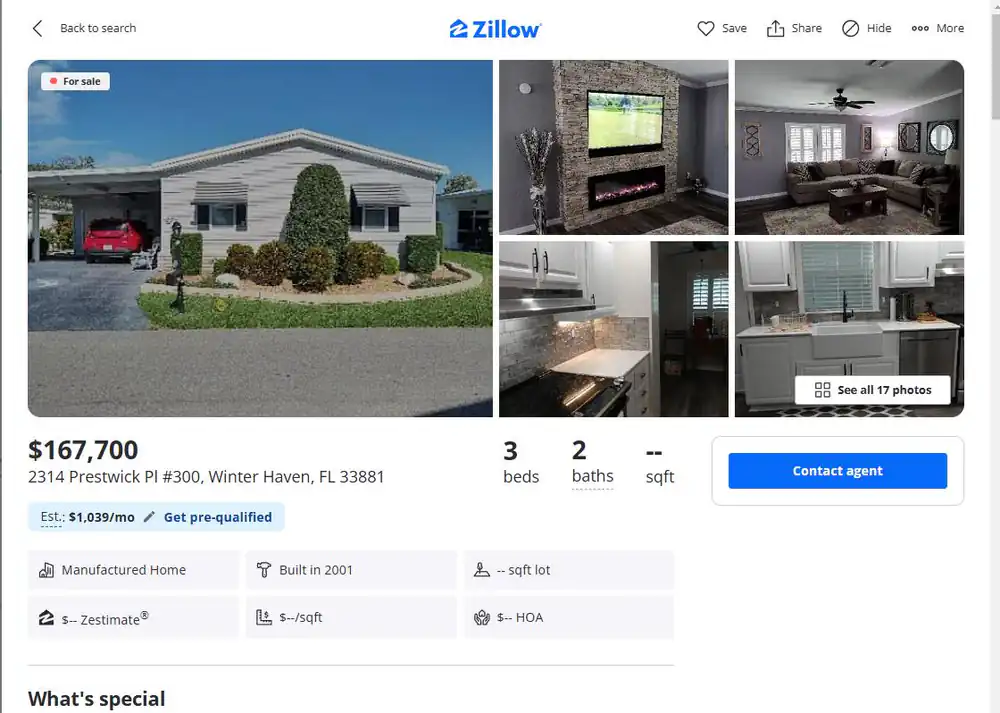
Renovation Budget Breakdown:
- Interior gutting and remodel: $15,000
- Kitchen upgrade: $14,550
- Bathroom renovation: $6,600
- New HVAC: $11,500
- Flooring and paint: $7,000
Total Investment Analysis:
- Property Purchase: $167,700
- Renovation Costs: $54,650
- Total Investment: $222,350
This property’s proximity to LEGOLAND just 27 mins drive, or 15 mins drive from Haines City and 20 mins drive to Winter Haven downtown, all a family-friendly downtown locations particularly attractive for short-term rentals. With the current market metrics and post-renovation potential, this investment could yield approximately $31,000 annual revenue, with potential for growth given Winter Haven’s emerging status as an affordable alternative to more expensive Florida markets.