Why do people use roller shutters?
Homeowners primarily install roller shutters for security and environmental control. Security is the foundational reason with roller shutters creating a physical barrier that deters break-ins and protects property integrity.
Energy efficiency as another critical motivation, as quality roller shutters reduce thermal transfer, potentially lowering heating and cooling costs by 40%. Weather protection capabilities further enhance their appeal, particularly in coastal regions or areas prone to extreme conditions. The protective function extends to noise reduction, with roller shutters blocking approximately half of external sound interference.
Property value enhancement occurs when professional-grade shutters are installed, whereas DIY or low-quality installations may diminish architectural appeal. Modern roller shutters feature smart integration capabilities, allowing for programmable operation through home automation systems.

George is a seasoned interior designer and property marketing strategist with over 13 years of experience. He specializes in transforming properties into visually stunning spaces, helping clients recognize the potential and beauty in each property. With an impressive international client base of exciting projects throughout Europe and America.
Roller shutters represent modern, adaptable coverings for windows and doors, engineered with interlocking horizontal slats that neatly coil around a drum when raised.
These sophisticated systems offer homeowners a comprehensive solution for multiple concerns: enhanced home security, improved thermal insulation, and superior protection against environmental elements. What distinguishes roller shutters from conventional window treatments is their ability to provide a substantial physical barrier while simultaneously complementing contemporary architectural designs.
As both functional installations and aesthetic enhancements, roller shutters have revolutionized how homeowners approach window protection and home efficiency.
Where roller shutters are most used?
Roller shutters dominate in coastal regions and urban centers where security concerns intersect with weather protection needs. Europeans embrace them extensively, particularly in Mediterranean climates, whereas North Americans traditionally favor less robust window treatments. Usage patterns vary dramatically depending on climate severity, with hurricane-prone locations requiring reinforced models unlike the decorative varieties found in temperate zones.
How many types of roller shutters exist?
Roller shutters exist in three positional configurations that define their structural integration with buildings. Built-in shutters disappear completely into wall cavities during construction, creating seamless facades unlike surface-mounted variants that attach externally to existing structures.
Semi-recessed options represent middle-ground solutions with housing boxes partially embedded within wall openings. Installation positioning varies depending on architectural constraints, with historic buildings often requiring non-invasive surface mounts whereas new construction permits invisible built-in integration.
Recessed systems exemplify architectural harmony while external installations prioritize functional retrofitting over aesthetic concealment.
Benefits of Roller Shutters
Roller shutters create a formidable physical barrier against break-ins with materials like aluminum that resist tampering. Many modern designs incorporate anti-theft technology, including tamper-proof locks, reinforced slats, and intrusion-detection sensors that integrate with home security systems.
Energy Efficiency
One of the most significant advantages of roller shutters is their insulating properties. They can reduce thermal bridging and improve insulation, potentially lowering HVAC usage by up to 40%. This translates to noticeable energy savings year-round, making them an eco-friendly choice for environmentally conscious homeowners.
Weather Protection
Roller shutters provide exceptional protection against extreme weather conditions:
- Shield windows from storms, hail, and high winds
- Protect interiors from harmful UV rays that can fade furniture and flooring
- Create an additional barrier during extreme temperature events
- Offer storm-proof designs with specialized coatings for coastal areas
Noise Reduction
Living in a busy neighborhood or near a high-traffic area? Roller shutters can block up to 50% of external noise from traffic, construction, or other environmental sources, creating a more peaceful indoor environment.
Privacy Control
With roller shutters, you gain complete control over light and visual privacy. Unlike curtains which can be seen through when illuminated from behind, roller shutters provide total seclusion when closed while still allowing full visibility when open.
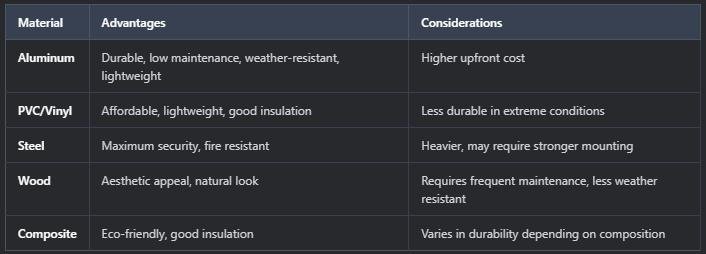
Roller Shutters Types and Materials

Notable Brands and Recommendations
Several manufacturers stand out for quality, innovation, and customer service:
- Somfy: Leader in motorization and smart integration
- Rollac: Extensive range of customizable options
- Rehau: Pioneer in sustainable and recycled materials
- Alulux: Premium German engineering and durability
- Heroal: High-end security features and weather resistance
When selecting a brand, consider warranty coverage (look for 5+ years). Available service network in your area is always the better choice. If you have already a smart home system compatibility with existing home systems is a must.
Operational Systems
Manual Operation
Crank Handle: Ideal for smaller shutters; budget-friendly but requires physical effort
Strap Winder: Simple to use, affordable option for standard-sized windows
Spring-Assisted: Easier operation with partial mechanical assistance
Motorized Operation
Basic Motor: Remote-controlled convenience
Smart Motors: Compatible with home automation systems
Solar-Powered: Off-grid operation with long-lasting batteries (8–20 year lifespan)
Cost Factors and Pricing (2025)
Material and Size Costs
- Basic PVC/Vinyl: $25-$300 per window
- Standard Aluminum: $300-$1,000 per shutter
- Premium Steel/Custom: $700-$1,500+ per unit
- Motorization: Additional $700-$2,000 per shutter
Installation Costs
- Professional Labor: $65-$100 per hour
- Average Installation: $175-$840 per window
- Full Home (8-10 windows): $2,200-$12,000 for materials and professional installation
Cost-Influencing Factors
- Window Size: Larger windows require more material and labor
- Material Quality: Premium materials increase durability but also cost
- Automation Features: Smart home integration adds to initial investment
- Installation Complexity: Multi-story buildings or unusual configurations require specialized installation
- Customization: Custom colors, finishes, and designs typically cost more
Installation Process
Professional Installation
- Assessment: Professional measures windows and evaluates mounting requirements
- Manufacturing: Custom shutters are manufactured (2-3 week lead time)
- Preparation: Mounting areas are prepared and supports installed
- Installation: Box housing and side guides are secured
- Testing: Operation is verified and adjusted as needed
- Completion: Final adjustments and customer demonstration
DIY Considerations
While DIY installation can save on labor costs, it comes with significant considerations:
- Requires precise measurements and appropriate tools
- No warranty protection if errors occur
- Time-intensive (8+ hours per window for novices)
- May void manufacturer guarantees
- Complex for motorized or smart-enabled systems
DIY vs. Professional Comparison
Roller Shutter Maintenance
Proper roller shutter maintenance requires consistent attention across several timeframes. Weekly cycling keeps weather stripping supple, while monthly track clearing prevents operational issues. Seasonal inspections after storms are essential for identifying potential damage.
Proper cleaning involves a three-step process: first vacuuming tracks and slats to remove dust, then washing with gentle detergents and soft brushes to preserve finishes, and finally ensuring thorough drying before operation.
For smooth movement, apply silicone-based lubricants sparingly to tracks and moving components, deliberately avoiding oil-based products that collect debris. Motorized systems benefit from annual professional inspections that evaluate mounting hardware integrity, motor functionality, control system responsiveness, and weather seal condition. This comprehensive maintenance approach extends shutter lifespan while preserving operational reliability through the seasons.
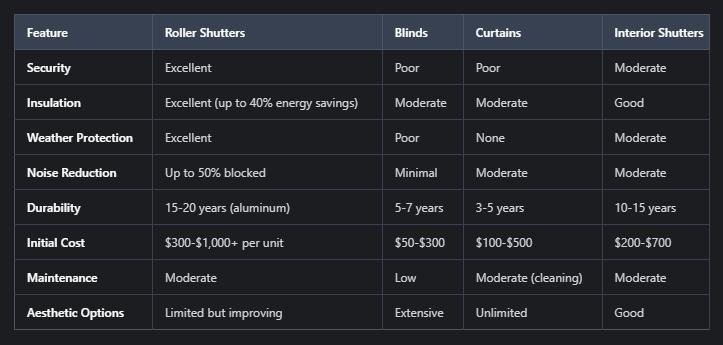
Comparison with Other Window Treatments
Latest Innovations in Roller Shutter Design
Smart Home Integration
- Voice Control: Operation via Amazon Alexa, Google Assistant, and Apple HomeKit
- Mobile Apps: Remote control and scheduling from anywhere
- Sensor-Based Automation: Integration with light, temperature, and security sensors
- Scene Settings: Coordination with other smart home elements (lighting, HVAC)
Sustainable Materials
- Recycled Components: Shutters made from recycled polypropylene and aluminum
- Energy Efficiency: Enhanced thermal barriers and insulation properties
- Solar Power: Off-grid operation reduces carbon footprint
- Low-Impact Manufacturing: Eco-profiles reducing material waste
Design Trends
- Anthracite Finishes: RAL 7016 anthracite color dominates modern installations since 2020
- Custom Aesthetics: Expanded color and finish options to match architectural styles
- Minimalist Profiles: Sleeker designs that blend with contemporary architecture
Size limitations of outdoor roller shutters
Outdoor roller shutters have specific size restrictions based on their slat profiles and construction materials. Most standard residential shutters max out at reasonable dimensions while specialized models handle larger openings
The common 42mm slat profiles (available in both Single and Double Line designs) typically accommodate windows up to 3600mm wide and 2600mm tall. These represent the most popular residential option for average-sized windows and doors, balancing affordability with functionality.
Larger openings require widespan profiles – the 55mm slats support moderately larger widths, while the substantial 77mm Widespan profiles handle significantly bigger openings often found in commercial settings or oversized patio doors.
For specialty applications, extruded aluminum slats offer different capabilities. The 36mm Extruded profile works for smaller standard windows, while the 50mm Extruded Vision (with perforations) suits applications requiring some light penetration even when closed.
Size limitations of indoor roller shutters
Indoor roller shutters are generally smaller and lighter than their outdoor counterparts since they don’t need to withstand extreme weather. Most indoor roller shutters have specific size boundaries based on their materials and design.
Standard indoor roller shutters typically max out at about 2400mm (8 feet) wide and 2100mm (7 feet) tall for residential windows. These dimensions work well for most standard windows and doorways inside homes. For anything bigger, you might need special custom options.
The size limits change depending on what the shutters are made of. Aluminum indoor shutters can usually go a bit wider than PVC or fabric-based options because they’re stronger but still lightweight. Heavy-duty indoor security shutters that use thicker materials might be limited to smaller sizes due to their weight.
Unlike outdoor shutters that come in various slat sizes (42mm, 55mm, 77mm), indoor shutters usually only offer 1-2 profile options, typically ranging from 37-45mm. The smaller indoor profiles can’t span as wide as their bulkier outdoor counterparts.
Installation location affects what size you can get too. Doorways between rooms might use narrower shutters than closet openings or room dividers. Cabinet enclosures use the smallest indoor roller shutters, sometimes as narrow as 400mm wide.
Keep in mind that very wide indoor shutters might sag in the middle without proper support, which outdoor versions avoid through stronger guide tracks and reinforced slats.
Design Tips for Incorporating Roller Shutters
Exterior Considerations
- Color Coordination: Match or complement your home’s exterior color scheme
- Box Concealment: Consider recessed installations for a cleaner facade
- Partial Deployment: Install on sun-facing windows only for targeted protection
Interior Design Impact
- Light Control: Use partially closed shutters for ambient light filtering
- Seasonal Adjustment: Change settings based on seasonal sun patterns
- Room Darkening: Consider blackout options for bedrooms and media rooms
Conclusion
Roller shutters represent a significant investment in your home’s security, energy efficiency, and comfort. While the initial costs exceed those of traditional window treatments, their multifunctional benefits and durability provide excellent long-term value.
For homeowners in areas prone to extreme weather, security concerns, or high noise levels, roller shutters offer unmatched protection. Modern innovations continue to enhance their functionality, with smart home integration and sustainable materials making them increasingly relevant for contemporary homes.
Whether you choose professional installation or a DIY approach depends on your comfort level, budget constraints, and the complexity of your project. In either case, proper maintenance will ensure your roller shutters provide decades of reliable service while enhancing your home’s value and livability.
As with any home improvement project, thorough research and multiple quotes from reputable providers will help you find the best solution for your specific needs and budget.
Why it's called roller shutter?
Roller shutters derive their descriptive name from their fundamental mechanical action of rolling. The hinged horizontal slats or panels physically roll around a cylindrical drum or axle positioned above the window or doorway when retracted. This distinct rolling motion distinguishes them from other window coverings that fold, stack, or draw aside.
The “roller” component directly references this cylindrical coiling mechanism that efficiently stores the shutter material in a compact space when not deployed. Unlike accordion-style or sliding shutters that move laterally, roller shutters travel vertically along tracks while wrapping around the drum – creating literal rolling movement.
The “shutter” element indicates their primary function as protective barriers that can completely close off openings, similar to traditional hinged shutters but employing different mechanical principles. This rolling functionality enables remarkable space efficiency compared to swing-out designs, making roller shutters particularly practical for areas with spatial constraints.
Who invented the roller shutters, when, where?
Roller shutters emerged from mid-19th century European innovation with the first documented designs appearing in Germany around 1841. Friedrich Albert Bremme, a German craftsman from Berlin, developed early wooden roller systems primarily for commercial storefronts, though his exact contribution remains somewhat contested by historians.
The technology evolved significantly during the industrial revolution when metal manufacturing advances allowed for more durable and practical designs. These industrial-age improvements transformed shutters from purely security-focused installations into solutions addressing multiple needs including weather protection and insulation.
French inventor Charles Depienne received a formal patent in 1889 for significant roller shutter improvements, particularly metal slat designs with interlocking mechanisms that enhanced durability and functionality. This French contribution accelerated widespread adoption throughout continental Europe, especially in Mediterranean regions where climate control benefits were particularly valuable.
Unlike modern automated systems, these Victorian-era shutters relied entirely on manual operation through straps, cranks, or pulley systems. The motorization that defines contemporary premium roller shutters wouldn’t appear until the post-WWII era when residential automation technologies became commercially viable.
What is weak spot of roller shutters?
Roller shutters have vulnerable areas that compromise their effectiveness when not properly addressed. Their primary weak spot is the guide track system where shutters slide, which can become damaged or misaligned during forceful wind events.
Security limitations exist at the top housing box, which offers less resistance than the metal slats themselves. Determined intruders target this component unlike the more visible slats below. Manual override mechanisms represent another vulnerability, varying significantly depending on quality, with budget systems featuring easily compromised locks unlike premium alternatives with reinforced security features.
Weather sealing weaknesses develop where shutters meet window frames, allowing water infiltration during heavy rain. This isn’t an issue with properly maintained shutters but becomes problematic when rubber seals deteriorate. Motor reliability represents a technological vulnerability, particularly with budget models lacking backup systems that higher-end installations include for power outage situations.