The push for net-zero building goals is reshaping architecture, with one overlooked element taking center stage: the roof.
No longer just a protective cover, roofs are becoming central to sustainability through innovations like bio-solar roofs—hybrid systems that combine vegetation and solar panels to boost energy efficiency.
While shaping a building’s visual identity, roofs enhance sustainability by shielding, absorbing, reflecting, and supporting critical systems. Their influence on energy efficiency, durability, and environmental performance is significant yet often overlooked. For example, green roofs can reduce cooling energy use by up to 65% in hot climates, illustrating their potential to transform a building’s environmental interaction.
Roofs are essential to sustainable design. They help regulate indoor temperatures, manage stormwater, and generate power.
This article explores how roofing materials, design choices, and system integration can reduce carbon footprints and improve building performance. It’s time to recognize roofs as a priority in sustainability planning.
Table of Contents

George Nicola
George is a seasoned interior designer and property marketing strategist with over 13 years of experience. He specializes in transforming properties into visually stunning spaces, helping clients recognize the potential and beauty in each property. With an impressive international client base of exciting projects throughout Europe and America.
Note: Data points are sourced from studies like MDPI (2023) and real-world examples like CopenHill and EPA projects, ensuring credibility and relevance to 2025 sustainability trends.
Material Selection and Embodied Impact
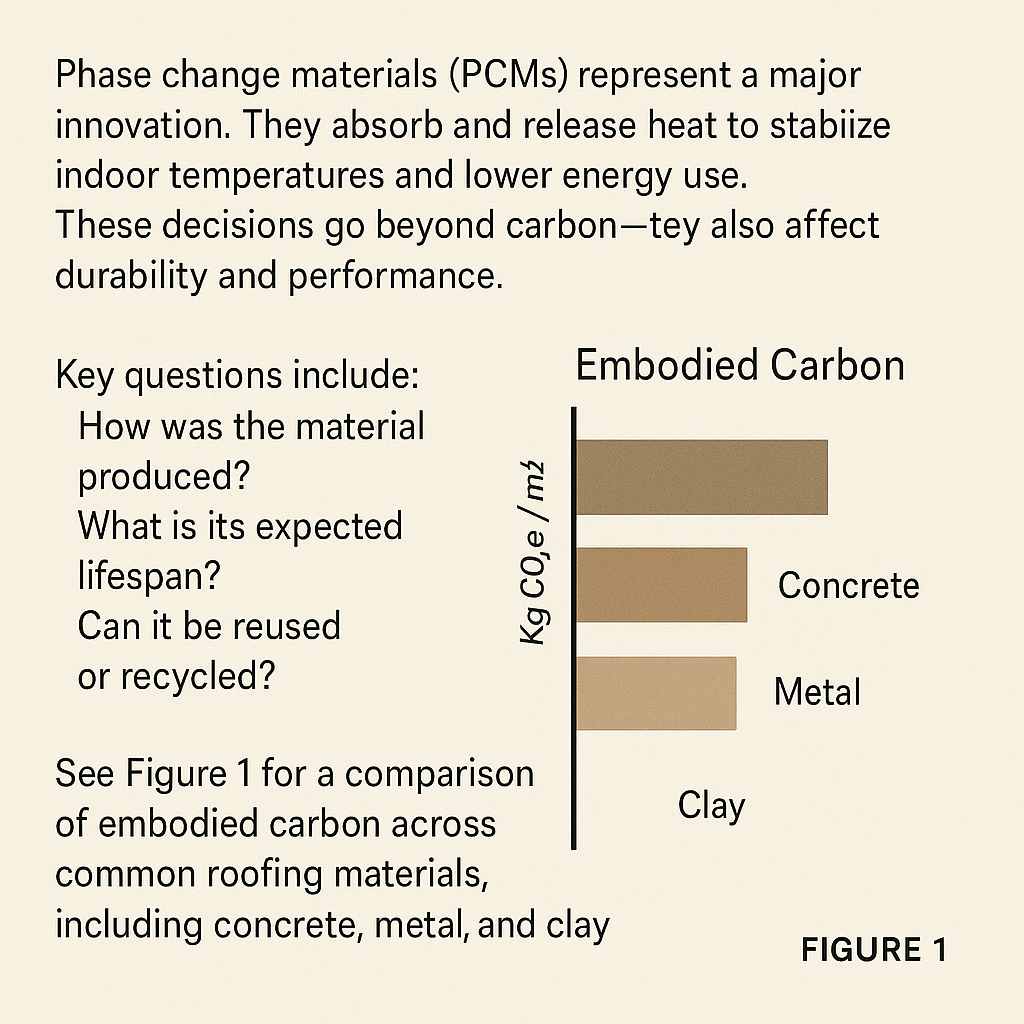
The environmental cost of roofing materials—embodied carbon—covers the full lifecycle from extraction to disposal, making material selection a key sustainability factor. High-impact materials like concrete or asphalt emit about 250 kg of CO₂ per retrofit, while lower-impact options such as recycled metal can reduce emissions by up to 50% (MDPI, 2023).
Clay tiles, with a lifespan of up to 100 years, are fully recyclable and support circular economy goals. Using locally sourced materials lowers transport emissions, and non-toxic choices help prevent chemical runoff.
This “embodied carbon” represents the upfront carbon footprint of a material before a building is even occupied. It contrasts with “operational carbon,” which refers to emissions during the building’s use, such as from heating, cooling, and lighting. The main difference lies in their timing and source; embodied carbon is locked in once the building is constructed, while operational carbon accrues over time. Understanding this distinction is vital because, as buildings become more energy-efficient in their operation, the proportion of their total lifecycle carbon attributed to embodied carbon grows substantially.
Phase change materials (PCMs) represent a major innovation. They absorb and release heat to stabilize indoor temperatures and lower energy use. These decisions go beyond carbon—they also affect durability and performance.
Key questions include: How was the material produced? What is its expected lifespan? Can it be reused or recycled?
See Figure 1 for a comparison of embodied carbon across common roofing materials, including concrete, metal, and clay
Form and Function: How Roof Design Shapes Sustainability
Roof shape, orientation, and ventilation directly affect energy use, water management, and system integration.
Steep slopes are effective in high-rainfall areas by channeling runoff efficiently, while flat roofs in arid regions optimize solar panel performance. White reflective roofs can reduce cooling demands by up to 71% in hot climates, while insulated green roofs help retain heat in colder environments. Orientation is critical—south-facing roofs with a 30° pitch can increase solar gain by 15%.
See Figure 2 for a diagram showing how roof pitch and orientation influence solar gain and water runoff, tailored to different climate conditions.

Ventilation is often overlooked but essential. Ridge vents can reduce cooling energy use by 10–15% by expelling hot air. A notable example is CopenHill in Copenhagen (video below), a waste-to-energy plant with a sloped green roof that also functions as a public ski slope—an innovative combination of utility and recreation.
CopenHill, with its expansive and engineered surface, demonstrates how a roof’s form directly manages runoff and contributes to the building’s overall balance, as described. Its integration of green spaces, visible on parts of the slope, touches upon the idea of roofs offering space for gardens or vegetation, even when not entirely flat. The deliberate design of CopenHill’s roof showcases how it functions beyond mere shelter, actively engaging with environmental factors like water management, a key aspect highlighted in the provided text.
The main rule is a good roof design is crucial for sustainability, transforming a structural necessity into a dynamic component of building performance.
Steep slopes allow faster rainwater runoff. Flat or low-pitched roofs offer space for gardens, solar panels, or reflective coatings. Orientation also plays a role. South-facing slopes can increase solar gain, while overhangs help reduce heat inside.
Ventilation is another key factor. Gaps under the roofline, ridge vents, or breathable membranes allow trapped heat to escape. This improves insulation and reduces the need for cooling systems.
For homes that require performance under both hot and cold conditions, DynamiteUtah.com specializes in roof systems that support durability, efficiency, and smart drainage. Experts can incorporate features that align with regional climate demands and long-term energy goals.
Every element—pitch, curve, drainage path—has purpose. Good design turns the roof into an active climate tool. It controls exposure, manages runoff, and contributes to the overall balance of the building.
Thermal Efficiency and Durability
Roofs are the first line of defense against heat flow, and their design can make or break energy efficiency. Reflective coatings, or “cool roofs,” lower indoor temperatures by 2-3°C, slashing cooling costs by 20%. Insulation adds another layer of savings, while durable materials like metal—lasting up to 50 years—outperform asphalt’s 15-20-year lifespan, reducing replacement costs and waste.
Water resistance is equally critical; leaks compromise insulation and spike energy use. Innovations like bio-solar roofs, which pair vegetation with solar panels, enhance photovoltaic efficiency by 3-5% by cooling the panels naturally. See Figure 3: A graph comparing energy savings across reflective, green, and traditional roofs, revealing the tangible benefits of sustainable choices.

Supporting Broader Building Systems
Roofs aren’t standalone features; they integrate with solar panels, water collection, HVAC systems, and green roofs to amplify sustainability. South-facing roofs at a 30° pitch boost solar output by 15%, while green roofs absorb 50-80% of stormwater, curbing urban flooding risks. In Chicago, green roofs remove 1,700 kg of pollutants annually, improving air quality.

They also reduce HVAC loads by stabilizing temperatures, cutting overall energy use. A cross-sectional view can help visualize this synergy—see Figure 4: A diagram of a green roof’s layers (vegetation, substrate, drainage, membrane), showing how each component supports broader building goals like water retention and insulation.
Addressing Roofing Challenges

Despite their potential, sustainable roofs face hurdles: high upfront costs, knowledge gaps, regulatory barriers, material availability, and climate mismatches. Solutions exist, though. U.S. federal tax credits, for instance, cover up to 30% of solar roof installation costs. Early collaboration with local code officials can shorten approval times by 20%. Partnering with regional suppliers ensures material access, especially in remote areas, while climate-specific designs—like reflective coatings for deserts—tackle environmental mismatch.
Education is key; training programs for architects and builders can bridge knowledge gaps.
Green Roofs
Green roofs, categorized as extensive (lightweight, low-maintenance) or intensive (thicker, plant-diverse), offer unique benefits. Extensive green roofs reduce cooling energy by 4.75% in Mediterranean climates, while intensive ones support lush gardens. They enhance insulation, manage stormwater, and boost biodiversity—supporting native pollinators like bees and increasing urban biodiversity by 10-20%.
Challenges include maintenance and irrigation, but smart systems cut water use by 30% in arid regions. A standout example is the EPA Region 8 Headquarters in Denver, where a green roof mitigates heat islands and manages runoff. See Figure 6: A case study spotlight on this project, with a diagram detailing its layered design and environmental impact.
Aesthetics and Market Appeal
Sustainable roofing isn’t just functional—it’s visually compelling. Clay tiles evoke Mediterranean charm, while metal delivers modern or industrial vibes, appealing to architects and homeowners alike. This aesthetic versatility enhances market value; homes with sustainable roofs see a 3-5% increase in resale price, reflecting growing demand for eco-conscious design.
Roofing as a Sustainability Driver
Roofs are unsung heroes of sustainable architecture, slashing energy use by 20-65% and CO2 emissions by hundreds of tons annually (Kansas City study, 2020). They manage heat, water, and power while enhancing building longevity and appeal. By 2030, net-zero buildings will lean on roofs as primary systems for energy and water management. Architects and builders must prioritize roofs to meet 2025 sustainability mandates, embracing innovations like bio-solar designs and PCMs. The data is clear: sustainable roofs aren’t optional—they’re essential. Let’s elevate their role in design and build a greener future from the top down.