Why are more people turning to acoustic slat wood wall panels?
They offer both visual appeal and functional benefits. These panels enhance a room’s warmth and texture while absorbing sound to reduce noise and echo. This creates a more comfortable environment. Whether used in a home office or a commercial space, acoustic slat panels provide a smart design solution that blends style with performance. We spent 20 hours comparing the prices of wooden wall slats with all other alternatives available in the US market.
Table of Contents

George Nicola
George is a seasoned interior designer and property marketing strategist with over 13 years of experience. He specializes in transforming properties into visually stunning spaces, helping clients recognize the potential and beauty in each property. With an impressive international client base of exciting projects throughout Europe and America.
Wood slat panels carry aesthetic appeal with acoustic functionality

Wood slat wall panels are visually appealing due to their clean lines and natural finishes. Beneath the surface, they provide effective acoustic performance.
The panels feature vertical wooden slats mounted on an acoustic base made from felt or foam. The slats diffuse sound waves, while the base absorbs them, reducing echo and overall noise.
This design suits environments like home theaters, recording studios, office meeting rooms, and restaurants. In contrast to plain foam or fabric panels, wood slat panels add natural warmth and texture. Options are available for various design preferences, including rustic and modern styles, with finishes such as walnut, oak, grey tones, and custom stains.
Wood slat panels are flexible, stylish, and easy to install
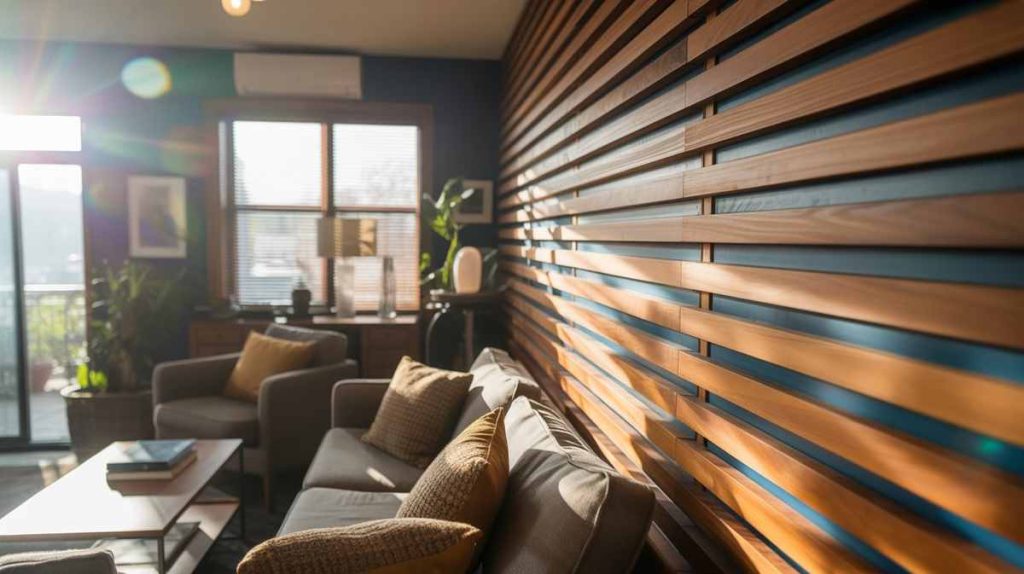
Wood slat wall panels are known for their versatility.
They come in a range of wood types and slat patterns, making them suitable for various interior styles. These panels are commonly used as hallway accents, full feature walls in living rooms, or sound-treated surfaces in offices.
Design options include uniform slats and geometric patterns such as hexagons, mosaics, triangles, and tangram-inspired layouts. Some configurations focus on aesthetics, while others are engineered for acoustic performance, with Noise Reduction Coefficient (NRC) ratings up to 0.85, meaning they absorb 85% of reflected sound.
In contrast, open-cell foam acoustic panels—often used in studios—typically have NRC values between 0.70 and 1.00, absorbing 70% to 100% of reflected sound, but they offer limited design appeal. Fabric-wrapped fiberglass panels also perform well acoustically, with NRC ratings around 0.80 to 0.95, but are generally seen as utilitarian and better suited to corporate or institutional settings.
Unlike these options, wood slat panels combine reliable sound absorption with a more visually refined surface, making them ideal for environments where both design and acoustics matter.
Installation is straightforward, using adhesive backings or modular mounting systems. Maintenance typically requires only light dusting or occasional wiping.
Wood slats are smart alternative to traditional acoustic solutions
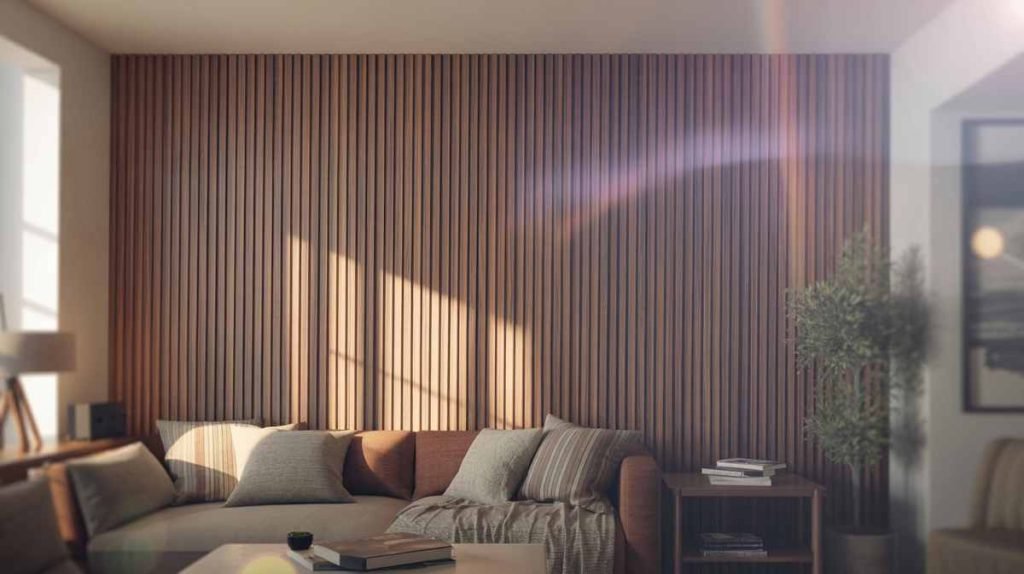
They provide effective sound control while enhancing interior aesthetics. Foam panels, such as open-cell polyurethane, absorb sound well (with NRC ratings between 0.70 and 1.00) but often appear industrial and clash with residential or design-focused spaces.
Fabric-covered fiberglass panels, while available in various colors and textures, typically reach NRC ratings of 0.80–0.95 but lack the natural warmth and depth of wood surfaces. Acoustic diffusers, such as QRD or skyline diffusers, scatter sound to improve clarity but do little to reduce overall noise levels.
In contrast, wood slat panels combine both absorption and diffusion. The slatted wood front diffuses sound, while the felt or foam backing absorbs it, achieving NRC ratings up to 0.85. This dual-functionality, along with finishes like walnut, oak, and custom stains, makes them suitable for modern, rustic, and transitional designs.
Constructed from durable MDF or responsibly sourced hardwoods, they offer long-term performance and support environmentally conscious building practices.
Alternatives to wood slat wall panels
There are several effective alternatives to wood slat wall panels, each offering different benefits depending on acoustic needs and aesthetic preferences.
The most popular modern option are wood slat wall panels, offering both acoustic performance and visual appeal. For those exploring alternatives, the following are some of the most commonly used acoustic treatments.
Acoustic foam panels made from open-cell polyurethane are a common choice for sound absorption. With Noise Reduction Coefficient (NRC) ratings ranging from 0.70 to 1.00, they are lightweight, highly effective at minimizing echo, and relatively affordable. However, their industrial appearance often clashes with residential or design-conscious interiors, making them more suitable for home studios, vocal booths, or podcast rooms.

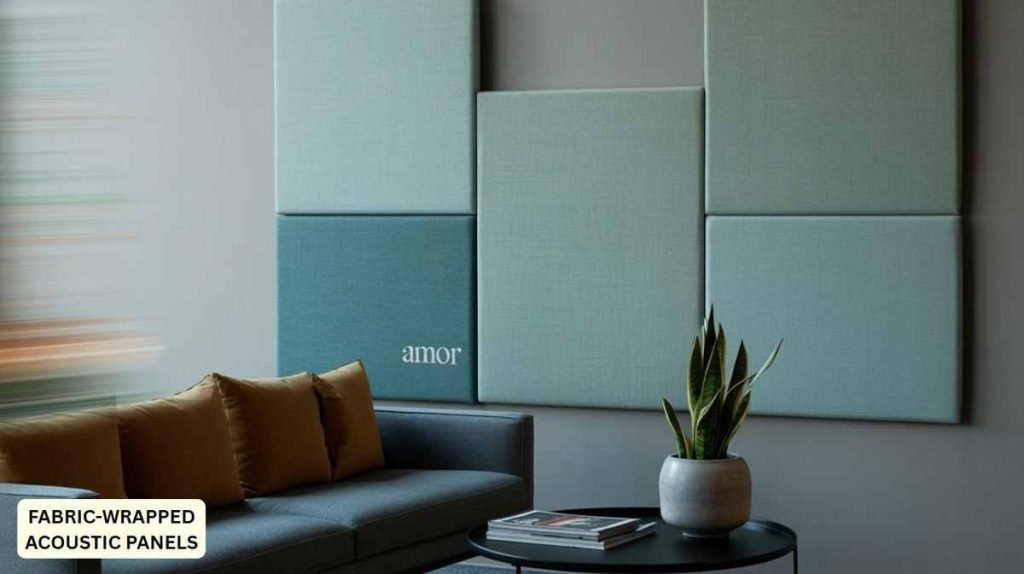
Fabric-wrapped acoustic panels feature a fiberglass or mineral wool core enclosed in a fabric covering. These panels typically provide high sound absorption, with NRC ratings between 0.80 and 0.95. They are available in a variety of fabric textures and colors, making them more versatile than foam in appearance, though they still tend to suit corporate or institutional settings better than decorative environments. They’re ideal for offices, classrooms, and conference rooms.
Acoustic felt panels, often made from recycled polyester, strike a balance between performance and design flexibility. While their sound absorption is moderate (NRC around 0.60 to 0.85), they are lightweight and can be cut into custom shapes and patterns. Their customizable look makes them a popular choice for modern interiors and creative office spaces, though they may not be as durable as other options like wood or fiberglass.
Acoustic diffusers, such as quadratic residue (QRD) or skyline-style panels, work differently from absorbers. Rather than soaking up sound, they scatter it to enhance clarity and maintain liveliness in a room. Typically made from wood, plastic, or foam, these are best suited for music rooms, home theaters, and performance spaces. However, since they don’t reduce overall noise levels, they’re often used in combination with absorptive materials.
Perforated wood panels are another option for controlling sound while maintaining a natural finish. These are constructed from wood or MDF with precision-drilled holes backed by acoustic fabric or foam. With proper backing, they offer good absorption and a clean, architectural look. Though they’re less decorative than slatted wood panels, they perform well in auditoriums, boardrooms, and upscale commercial interiors.
Acoustic ceiling tiles made from mineral fiber, fiberglass, or compressed wood fibers are designed for overhead installations. They effectively absorb sound across large areas, with NRC ratings typically between 0.70 and 0.95. While their visual impact is modest, they are commonly used in offices, schools, and healthcare facilities where broad acoustic coverage is needed.
Price comparison between wooden wall slats and alternatives
🎵 Acoustic Wall Panels Price Comparison (US, 2025)
Wooden Acoustic Wall Panels
| Product & Source | Dimensions | Price (USD) | Notes |
|---|---|---|---|
| Luxury American White Oak Acoustic Slat | 94.5" x 23.625" (2-pack) | $159.75 | Real wood veneer, acoustic felt backing, eco-friendly |
| Luxury American Walnut Acoustic Slat | 94.5" x 23.625" (2-pack) | $159.75 | As above, walnut finish |
| Koto Gray/Modern Gray & Black Wood Slat | 94" x 24" | $49.00 | Real wood veneer, eco-friendly |
| Luxury American Acoustic Wood, Walnut | 2' x 9' | $99.90 $149.90 | 3D design, premium eco-friendly wood, easy install |
| Classic Oak Slat Wall Panel | Not specified | $175.50–$233.90 | Scandinavian design, acoustic felt, multiple finishes |
| Rustic Grey Oak/Diamond Walnut Slat | Not specified | $284.95–$369.95 | High-end finishes, acoustic felt |
Non-Wooden (Fabric, Felt, PVC, Foam) Acoustic Wall Panels
| Product & Source | Dimensions | Price (USD) | Notes |
|---|---|---|---|
| ATS Acoustics Hexagon Panel | 12" (hexagon) | ~$50 per panel | Fiberglass core, fabric cover, Class A fire rating |
| ATS Acoustic Panel 24x48x2 | 24" x 48" x 2" | ~$88 per panel | Guilford of Maine fabric, wood frame |
| UA-acoustics Wave Panel (4-pack) | Not specified | ~$169 (4 pack) | Acoustic foam, wave design |
| TroyStudio Acoustic Sound Diffuser (PVC, 12-pack) | Not specified | ~$68 (12 pack) | PVC, geometric diffusers |
| MuffleWall Fabric Acoustic Panel - Square | Not specified | From $131.68/panel | Fabric, sold in packs |
| MufflePanel Felt Acoustic Wall Panel (3-pack) | Not specified | $182.82 (3 pack) | Felt, geometric shapes |
| MufflePanel Geometric Felt Panel (5-pack) | Not specified | $139.70 (5 pack) | Felt, geometric shapes |
| MufflePanel Geometric Felt Panel (20-pack, hexagon) | Not specified | $558.80 (20 pack) | Felt, hexagon shapes |
| MuffleRib Felt 3D Wall Panel (2-pack) | Not specified | $201.74 (2 pack) | 3D felt, modern design |
| MuffleGrille Acoustic Slat Wall Panel | Not specified | $228.03 | Slat design, felt |
| MuffleStripe 3D Felt Acoustic Wall Panel | Not specified | $301.07 | 3D felt |
Price Ranges Summary (2025, US Market)
| Panel Type | Price Range (USD) | Typical Use |
|---|---|---|
| Wood Slat (Entry-Level) | $49–$100 per panel | Home, office, feature walls |
| Wood Slat (Luxury) | $150–$370 per panel | High-end home, commercial |
| Fabric/Felt (Basic) | $50–$90 per panel | Studios, home theaters, offices |
| Fabric/Felt (Designer) | $130–$300 per panel | Premium interiors, offices |
| Foam/PVC (Pack) | $68–$170 per pack | Budget soundproofing, studios |
💡 Key Observations
- Entry-level wood veneer slat panels start at $49 per panel
- Mid-range luxury wood panels range from $99.90 to $159.75
- High-end designer panels can reach $175–$370 per panel
- Most include felt or recycled plastic backing for sound absorption
- Basic fabric/felt panels start around $50–$88 per panel
- Foam or felt geometric panel packs cost $130–$560
- PVC diffuser panels cost around $68 for a 12-pack
- Premium fabric panels cost $130–$300 per panel
2025 Trends: Rising demand for high-end, sustainable, and customizable wood panels. Non-wooden options growing in popularity due to versatility and cost-efficiency.
Endnote: Are the wall slat panels better?
That depends on the priorities of your space. If you’re looking for a solution that combines effective sound absorption with a modern, natural aesthetic, wood slat wall panels offer a strong advantage over many traditional acoustic treatments.
While foam and fabric panels may outperform them slightly in pure acoustic absorption, they often fall short in visual design. Wood slat panels strike a balance—delivering both function and form—making them a preferred choice for spaces where both performance and appearance matter.
Wooden acoustic panels offer a high-end aesthetic and range in price from $49 to $370, depending on finish and material. Non-wooden options—fabric, felt, foam, and PVC—are generally more cost-effective, with single panels starting at $50 and multi-packs providing broader coverage. Both categories support varied design preferences, budgets, and acoustic performance requirements.