George is a seasoned interior designer and property marketing strategist with over 13 years of experience. He specializes in transforming properties into visually stunning spaces, helping clients recognize the potential and beauty in each property. With an impressive international client base of exciting projects throughout Europe and America.
George Nicola, Interior Designer and 3D rendering specialist from TALLBOX:
Your kitchen does a lot of heavy lifting. It’s where people gather, where things spill, where dishes break,
and where you probably spend more time than you realize. So when it comes to flooring, it needs to be
more than just nice to look at—it has to hold up to everything you (and your family) throw at it. Whether
your style leans farmhouse, modern, or something a little more offbeat, here are a few of the best kitchen
flooring options out there and what to keep in mind with each one.
Ceramic or Porcelain Tile
One of the most popular kitchen flooring materials, tile is a great option for several reasons. It’s incredibly durable, withstanding things like heat, water, and heavy foot traffic with ease. Many types are non-porous, which is key in a moisture-prone area like a kitchen. Both ceramic and porcelain tiles are solid choices, although porcelain tends to be harder and less likely to absorb spills. Ceramic, on the other hand, is typically the cheaper option.
The main downside of tile is that it can put more pressure on your legs and back if you’re spending long hours in the kitchen. It can also be colder underfoot, but using rugs or installing underfloor heating can make it more comfortable.
Engineered Hardwood
For a classic look that’ll add value to your home, engineered hardwood is a perfect pick. It gives the same aesthetic of regular hardwood but is more forgiving for a kitchen environment.
With a genuine wood veneer on top paired with a more stable core underneath, it’s far less prone to warping due to moisture or temperature variations. It’s also warmer than other flooring types like tile or stone, so it’s a better option if you’ll be on your feet cooking and cleaning a lot.
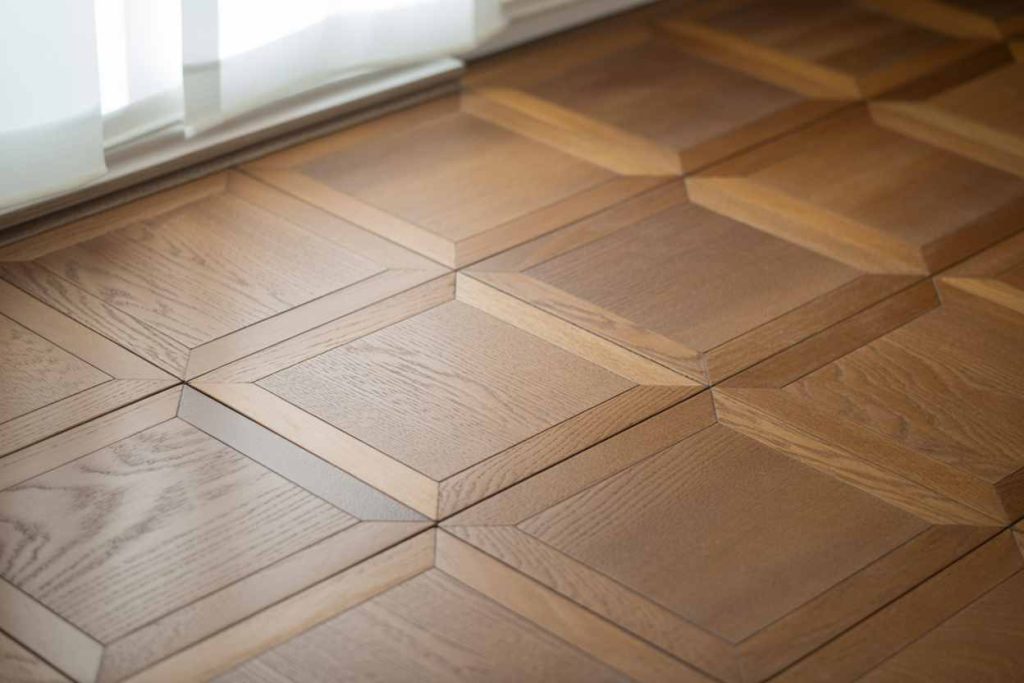
One thing to keep in mind with engineered wood is that, despite its hardiness, it still needs to be properly maintained. To keep it looking great and ensure it lasts as long as possible, you’ll need to place mats in areas that get more use, and promptly wipe up any spills.
Luxury Vinyl Plank
Luxury vinyl plank (LVP) has come a long way in the last few years. It’s water-resistant (sometimes even being fully waterproof) and a lot softer underfoot than tile, which makes it more comfortable if you are standing for long stretches.
A lot of options do a surprisingly good job of mimicking the look of wood or stone, and since vinyl plank installation is pretty straightforward, it can be a budget-friendly option.

It’s ideal for busy kitchens, especially if you want something that’s low-maintenance and holds up well to everyday wear. It’s important to note that not all LVP is created equal. Cheaper versions can look a bit plasticky, and the surface can scratch if you’re sliding heavy stuff across it.
What to Do with the Old Stuff
If you’re replacing old flooring, especially tile or anything glued down, the demo can get messy fast. It’s a good idea to line up a lowboy dumpster rental (easy on your back) or roll-off dumpster ahead of time so you’re not stuck with piles of debris taking over your space. Having a plan for waste removal makes things run a lot more smoothly, especially if you’re juggling contractors, deliveries, and everything else going on at home.

Conclusion
As you are narrowing things down, keep in mind that how a floor looks is only part of the equation. What really matters is how it holds up after years of everyday use. Think about how you actually live in your kitchen, and pick something that’ll truly fit your lifestyle.