Your roof protects your home from weather and affects energy efficiency. If it’s been more than 25-30 years since your roof was installed possibly it’s time to replace your roof when you notice leaks during heavy rain, increased energy bills, or visible damage to shingles missing, cracked, or curling pieces signal the roof is nearing the end of its serviceable life.
Eco-friendly roofing materials provide superior insulation that keeps interiors warmer in winter and cooler in summer. These materials last two to three times longer than asphalt shingles and often incorporate recycled or renewable materials. The combination of longer lifespan and better insulation makes sustainable roofing a cost-effective choice despite higher initial investment.

George is a seasoned interior designer and property marketing strategist with over 13 years of experience. He specializes in transforming properties into visually stunning spaces, helping clients recognize the potential and beauty in each property. With an impressive international client base of exciting projects throughout Europe and America.
Natural Wool Insulation
Natural wool insulation delivers thermal performance while improving indoor air quality. Sheep’s wool absorbs up to 35 percent of its weight in water vapor without losing insulating effectiveness a moisture management capability that exceeds synthetic insulation materials.
This hygroscopic property enables wool to regulate indoor humidity. The material absorbs excess moisture during humid periods and releases it when conditions become drier. This natural regulation maintains balanced humidity levels that protect structural components and occupant health.
Wool contains no volatile organic compounds, formaldehyde, or flame retardants. Studies show wool reduces formaldehyde concentration by 89 percent within three days under typical indoor conditions. This air purification capability transforms wool insulation into a passive system that removes harmful substances from your home’s atmosphere.
Natural wool suits pitched roof upgrades in attics and upper floors where temperature extremes and moisture management prove most challenging. The material provides R-3.5 to R-4.0 per inch thermal resistance, positioning it competitively with fiberglass and cellulose options. Wool ignites at 1,100 degrees Fahrenheit and self-extinguishes when flame sources are removed.
Rubber Roofing (EPDM)
EPDM rubber roofing represents a cost-effective solution for flat or low-slope roofs. This synthetic rubber membrane has proven reliable over decades of real-world performance.
EPDM installations cost $4 to $12 per square foot including materials and labor. For a standard 10,000-square-foot flat roof, total project costs range from $40,000 to $120,000 depending on membrane thickness and installation method.
Properly installed EPDM systems last 40 to 50 years, placing EPDM among the most durable commercial roofing materials. The material resists ultraviolet radiation, ozone exposure, and temperatures from -40°F to 300°F. This temperature range covers virtually all climate conditions.
The large sheet format reduces seams compared to other roofing systems, minimizing potential leak points and simplifying installation. Mechanically fastened installations provide the quickest approach, while fully adhered systems deliver superior wind uplift resistance for hurricane-prone regions. Projects often complete within days rather than weeks.
EPDM pairs well with skylight additions during flat roof replacement. The flexible membrane accommodates skylight integration while maintaining weatherproofing integrity. Adding skylights improves natural light admission to ground-floor extensions, converted garages, or interior rooms that receive limited daylight.
Slate Roofing
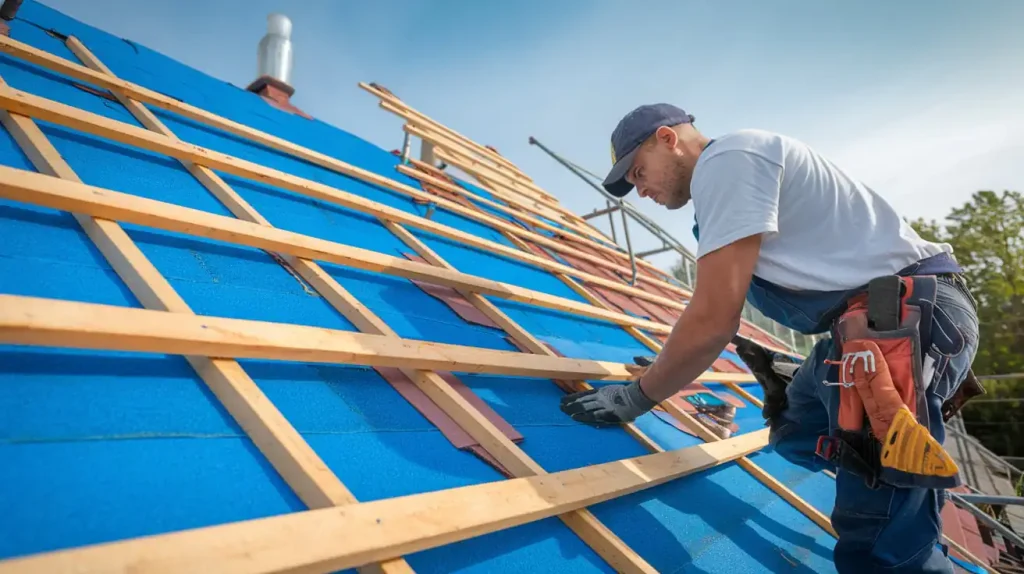
Slate roofing delivers unmatched longevity and maintains traditional aesthetics. Properly installed slate roofs achieve operational lifespans exceeding 75 years, with premium hard slate varieties documented to last 100 to 200 years. A single slate roof installation outlasts five to seven complete cycles of asphalt shingle replacement.
Slate requires periodic inspection, debris cleaning, and occasional replacement of damaged individual tiles. These maintenance demands compare favorably to organic materials prone to rot and rapid deterioration. The non-porous nature of properly fired slate prevents water absorption that causes freeze-thaw damage in lesser materials. The stone’s mineral composition provides resistance to biological growth, insect damage, and environmental degradation.
Natural slate occurs in blacks, grays, greens, purples, and reds determined by mineral composition and geological conditions during formation. This color variation combined with the subtle texture inherent in natural stone creates distinctive appearances. Slate roofing suits Tudor, Victorian, Gothic Revival, and Colonial homes. Studies demonstrate that premium roofing materials like slate contribute substantial value premiums compared to properties with standard materials.
Clay Tile Roofing
Clay tile combines weather resistance with style variety. Contemporary clay tiles achieve Class A fire ratings and absorb less than one percent moisture. The tiles withstand winds exceeding 150 miles per hour when properly installed.
The fired ceramic structure creates nearly impervious surfaces that shed water rapidly while resisting freeze-thaw cycles that damage more porous materials. The low porosity prevents moisture infiltration that leads to biological growth or structural degradation. The rigid, hard surface resists impact from hail and falling debris. The substantial weight of clay tile assemblies provides wind resistance that supplements mechanical fastening.
Clay tiles are completely non-combustible, providing fire protection for properties in wildfire-prone regions. Traditional barrel tiles create Mediterranean and Spanish Colonial aesthetics, while flat shingles suit other architectural styles. Natural terracotta colors provide classic warmth. Glazed tiles offer expanded color palettes including blues, greens, and custom hues.
Green Roofs
Green roofs convert conventional roofs into living, insulated surfaces. These vegetated systems turn unused roof space into ecological assets while addressing multiple building performance objectives.
Green roof surfaces run 30 to 40 degrees Fahrenheit cooler than conventional black roofs during summer conditions. This temperature reduction translates into reduced cooling loads and improved interior comfort. Research documents cooling energy demand reductions exceeding 75 percent during peak summer months.
The vegetated surface creates habitat for pollinators, birds, and beneficial insects. Studies in Switzerland documented 172 separate species on just 11 surveyed green rooftops. For urban homeowners seeking to incorporate natural elements despite space constraints, green roofs offer opportunities to cultivate plants, create outdoor retreats, and support local ecosystems.
The growing medium layer provides thermal mass that moderates temperature fluctuations and improves the thermal performance of the roof assembly. The combination of environmental benefits, energy savings, and aesthetic enhancement makes green roofs attractive for homeowners committed to sustainable building practices.
Cool Roofs
Cool roofing technology uses reflective coatings or light-colored materials that alter the thermal dynamics of roof assemblies. This approach delivers immediate benefits through reduced heat gain.
Conventional dark roofs reach surface temperatures exceeding 150 degrees Fahrenheit during summer afternoons. Cool roofs under identical conditions maintain temperatures 50 degrees cooler through high solar reflectance. This temperature reduction decreases heat transfer into buildings. Studies document cooling energy consumption reductions of 10 to 35 percent depending on climate conditions and building characteristics.
Cool roof coatings apply over existing substrates including EPDM, TPO, metal roofs, and modified bitumen. The coatings provide renewed waterproofing protection and cooling benefits in a single application. Installation requires minimal specialized equipment—many coatings suit application using conventional brushes, rollers, or spray equipment. Some products become rain-safe within 15 minutes of application.
Lower roof surface temperatures decrease thermal stress on air conditioning equipment, reducing maintenance requirements and extending equipment service life. The reduction in building cooling loads during peak afternoon hours helps minimize utility demand charges. For residential applications, the cumulative cooling energy savings over the roof’s service life can amount to hundreds or thousands of dollars.
Solar Shingles/Tiles
Solar shingles enable homeowners to upgrade from aged conventional roofing while generating clean renewable energy. These building-integrated photovoltaic products serve dual functions: weather protection and power generation.
Rather than installing a conventional roof and adding solar panels later requiring two separate projects solar shingles integrate both functions into one installation. This consolidation streamlines project execution, reduces disruption, and ensures weather protection and energy generation systems work together from initial installation.
The flush-mounted profile and design continuity with conventional roofing materials create understated appearances that integrate seamlessly with architectural styles. This aesthetic advantage proves valuable in communities with restrictive homeowners association covenants that prohibit visible solar panel installations. Solar shingles’ integrated appearance often receives more favorable consideration from architectural review committees.
Federal tax incentives provide 30 percent credits on solar installation costs through 2032. These incentives apply equally to solar shingles and traditional panels. The incremental cost difference between premium conventional roofing and solar shingles becomes more manageable when the alternative comparison includes both new roof installation and separate solar panel addition.
Flat Roof Skylights
If you have selected to proceed with a flat roof, consider a flat roof skylights. This type of architectural feature improves the natural light admission while creating transformative effects on interior spaces and adds value to the property. Adding skylights during roof replacement proves more economical and practical than retrofitting skylights after new roofing installation.
Skylights during flat roof replacement introduce daylight that fundamentally alters the character of affected spaces. The overhead orientation captures light unavailable to vertical windows, introducing illumination deep into interior rooms. Natural daylight exposure improves mood, enhances sleep patterns through circadian rhythm regulation, and increases productivity.
Skylights prove valuable for adding light to kitchen extensions, hallways, or converted loft spaces. Kitchen extensions benefit from overhead natural light that illuminates work surfaces and creates bright environments for food preparation. The natural light beautifully highlights architectural features while reducing reliance on artificial lighting during daylight hours, generating energy savings throughout the roof’s service life.
Converted loft spaces gain advantage from skylight integration. These spaces often lack adequate vertical window area due to roof slope constraints. Skylights positioned strategically provide essential natural light that makes these spaces genuinely habitable.
Operable skylights in loft conversions enable natural ventilation that helps manage heat buildup during summer months, creating comfortable conditions without excessive air conditioning while providing fresh air circulation.
Best and Worst Roofing Materials for the UK Climate
The UK climate is characterized by frequent rain, high humidity, moderate temperatures, frost cycles, and persistent moisture this demands roofing materials that resist water infiltration, freeze-thaw damage, and biological growth.
Best Roofing Materials for the UK
Slate stands as the optimal choice for UK conditions. The non-porous stone handles rain exceptionally well, resists frost damage, and maintains structural integrity for 75 to 200 years. Welsh slate has protected UK buildings for centuries, proving its suitability for the climate. The material sheds water rapidly and prevents moisture absorption that damages lesser materials.
Clay tiles rank second for UK roofing. The low porosity (less than one percent moisture absorption) prevents freeze-thaw damage common in the UK’s winter conditions. Clay tiles last 60 to 80 years and resist algae and moss growth. Traditional clay tiles suit the architectural heritage of UK properties.
EPDM rubber roofing performs well on flat roofs in UK conditions. The material resists temperatures from -40°F to 300°F and handles the UK’s wet climate effectively. The 40 to 50-year lifespan and cost of $4 to $12 per square foot make EPDM practical for flat roof replacements.
Worst Roofing Materials for the UK
Asphalt shingles perform poorly in UK conditions. The material suits areas with modest precipitation, low humidity, and minimal extreme weather—the opposite of UK climate characteristics. Asphalt shingles perform best in the drier southeast regions but struggle in wetter areas of Scotland, Wales, and northern England where persistent moisture reduces their 20 to 30-year lifespan.
Wood shingles prove unsuitable for UK weather. Moisture causes wood to swell, warp, and rot, significantly reducing lifespan and effectiveness. The UK’s persistent damp conditions accelerate deterioration and require frequent maintenance.
For UK homeowners replacing roofs, slate and clay tiles deliver the best long-term performance despite higher initial costs. EPDM suits flat roof applications. Avoid asphalt shingles and wood materials unless in exceptionally dry microclimates. The UK’s rain, frost, and humidity favor non-porous materials that shed water rapidly and resist biological growth.