Most shelter sheds sold in the US are marketed like they can do everything: storage, home office, guest room, “studio,” you name it. In reality, they’re usually thin, under‑insulated boxes that are brilliant at a few jobs and terrible at others.
The fundamental problem begins with market economics. Insulation and weatherproofing infrastructure cost real money in materials and labor, while customers shopping for sheds primarily compare “10×12” versus price rather than thermal specifications. Retailers profit by selling cheap boxes designed to be “just good enough” for storage, not for people. Understanding this reality forms the foundation for realistic expectations about what prefab sheds can reliably deliver.
This article cuts through the fantasy and covers:
- What shelter sheds are genuinely great for.
- Where they fail hard (comfort, insulation, and sensitive storage).
- Smart, realistic upgrades that make them work better without pretending they’re a second home.

George is a seasoned interior designer and property marketing strategist with over 13 years of experience. He specializes in transforming properties into visually stunning spaces, helping clients recognize the potential and beauty in each property. With an impressive international client base of exciting projects throughout Europe and America.
What We Mean by "Shelter Shed" (And Why Most Are So Basic)?

A shelter shed, means a prefabricated, panelized structure from big-box stores or local manufacturers. These structures are intended as outdoor storage or light-use space-emphatically not code-compliant living units. Typical construction features thin framing, minimal roof structure, OSB or thin timber cladding, metal or plastic skin, and critically: no insulation, minimal air-sealing, cheap doors, and cheap windows.
Why are they built this way? Cost pressure dominates. Most shed buyers care about square footage and price, not thermal specifications. Insulation plus proper envelopes genuinely cost real money, so manufacturers who want to compete on price omit these features entirely. The perception persists that “it’s just a shed” for storage, not for people, a mental model that drives design decisions throughout the industry.
Start by assuming your shelter shed is a bare shell, not a room. This mental reset prevents disappointment later.
What Shelter Sheds Are Genuinely Great For?
Shelter sheds are genuinely great for providing storage, creating a workspace or hobby area, offering protection for plants or animals, serving as outdoor entertainment spaces, and acting as emergency shelters.
Tough, Weather-Protected Storage (Where Temperature Doesn't Matter)
Shelter sheds excel at their original purpose: keeping mowers, trimmers, blowers, gardening tools, soil, pots, fertilizer, ladders, DIY equipment, and spare building materials dry and organized. Rain and UV protection matter more than perfect temperature. A basic shed keeps bulk items off kitchen floors and garage shelves where they’d otherwise accumulate.
Smart layout strategies amplify this. French cleats, wall hooks, and pegboards keep tools visible and accessible without consuming floor space. High shelving organized into clear zones “garden / DIY / seasonal” prevents the chaos where items disappear into darkness. The uninsulated nature of these structures becomes irrelevant when you’re storing shovels, not people.
2. Seasonal & Outdoor Gear Parking
Bikes, kayaks, paddleboards, camping gear, sports equipment, coolers, and folding chairs all live outside anyway, a shed simply adds security and organization. This use category requires accessibility rather than comfort. Weekend projects might need quick access to specific equipment, but occupants aren’t spending hours in the space.
Simple upgrades amplify utility: bike rails, hanging racks for seasonal items, locking hasps for security, and robust flooring that tolerates mud and grit. The shed’s lack of insulation becomes irrelevant because nothing stored here cares about temperature swings.

3. "Messy" Hobbies and Projects (Weekends, Fair Weather)
Woodworking, DIY benches, painting, spraying, sanding, dirty repair work, gardening prep, and seed starting work in uninsulated sheds despite the lack of thermal control. Nobody requires 72°F perfection to sand a board or pot plants. Being uncomfortable for a couple of hours remains acceptable for occasional hobby work.
A simple workbench along one wall, tool wall plus open middle floor, durable sweepable surfaces (plywood plus paint, rubber tiles in work zones) these basics support real work without requiring climate control. The limiting factor becomes hours of occupancy rather than temperature itself. Users tolerate two-hour sessions; day-long work becomes problematic.
4. Backyard Overflow: Staging Area for the House
Uninsulated sheds excel as buffer zones for bulk household items people don’t want to see: big bags, boxes, duplicate furniture. Seasonal decorations (boxed properly for temp swings) occupy less-accessible storage. Labeled shelving with clear aisles prevents these spaces from becoming black holes where items vanish forever.
Where Shelter Sheds Are Terrible?
Shelter sheds are terrible in situations where they are poorly constructed, lack proper insulation, or are not built with durable materials, especially if you do not invest heavily in quality, as they can quickly become weathered, unstable, or ineffective for long-term use.
Are Shelter Sheds Good for Full-Time Home Offices?
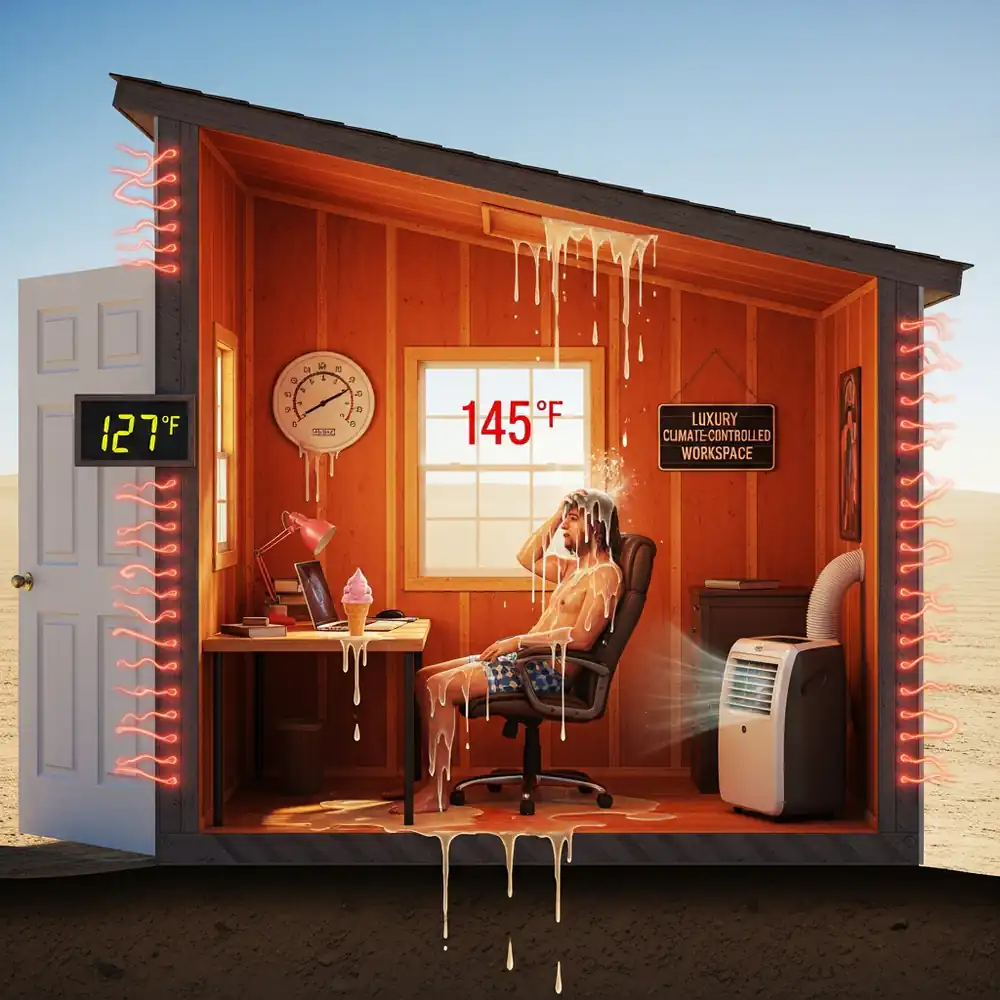
Shelter sheds can be suitable for full-time home offices if they are well-designed, properly insulated, soundproofed, and equipped with reliable electricity and internet connections; however, without significant investment in these features, they may not provide the comfort and functionality needed for daily work.
Instagram serves endless photos of shed offices. The fantasy: work 8 hours daily in a year-round Instagram-ready structure. Reality proves far different.
In most US climates, uninsulated sheds become:
- Brutal in summer: essentially ovens reaching 90+ degrees Fahrenheit during peak heating periods
- Miserable in winter: near outdoor temperature, often colder with wind-chill effects
- Prone to condensation and internal drafts
Electronics dislike extreme swings. Monitor performance degrades in excessive heat. Laptop batteries age prematurely under thermal stress. Productivity plummets when occupants abandon sweat-soaked offices mid-morning or can’t find feeling in their fingers during winter afternoons.
The minimal threshold for viability requires:
- Proper insulation (walls, roof, floor)
- Air-sealing around doors and windows
- Active heating and cooling (not just fans or single space heaters)
Real users consistently report that uninsulated shed offices become unused storage structures within 1-2 years. One UK homeowner spent $18,000 on a garden office with only a single electric heater, discovering it was “really cold” in winter and “too hot in summer”—ultimately abandoning the space despite the substantial investment. This pattern repeats across climates and geographic regions, suggesting thermodynamic inevitability rather than personal preference variation.
Bottom line: Standard shelter sheds aren’t turn-key offices. They require serious, expensive upgrades before supporting year-round work.
Are Shelter Sheds Good for Guest Rooms or "Tiny Houses"?
Shelter sheds can be suitable for guest rooms or “tiny houses” if they are properly insulated, ventilated, and equipped with essential amenities like electricity, plumbing, and heating; however, achieving this level of comfort and functionality typically requires a significant investment in construction and finishing.
The fantasy: guests sleep comfortably in an accessory dwelling. Reality checks quickly.
Problems include:
- Comfort: Guests remember freezing nights or sweat-soaked summers. Temperature swings damage comfort and health.
- Moisture: Temperature cycling plus humidity create condensation that damages mattresses, fabrics, and lungs
- Safety: Cheap doors and windows, minimal fire separation, no egress design
Even with decent interior fit-out, if you haven’t fixed insulation and air-tightness, it’s just a dressed-up uncontrolled box. Real users report that converting uninsulated sheds to sleeping quarters creates condensation problems leading to visible mold growth and mildew smells within 1-3 years of occupancy, particularly in humid climates. The structure itself generates the moisture problem through poor thermal design, not occupant activity.
Suggested stance: Use shelter sheds for day-use hangouts, not genuine sleeping units unless you’re ready to treat the structure as a serious build with proper envelope and services.
Are Shelter Sheds Good for Storing Anything You'd Be Upset to Lose?
High-risk categories in uninsulated, poorly sealed sheds:
- Instruments and audio gear
- Artwork, books, photos, important documents
- High-value collectibles (cards, comics, wine, sneakers)
- Fine furniture, leather goods, real wood pieces
Issues include:
- Heat warp, glue failures
- Mold and mildew
- Condensation corrosion
If you’d store something in a climate-controlled room indoors, don’t park it in a basic shelter shed.
Any Use Assuming "House-Like" Performance
Examples include:
- Yoga and meditation rooms you want usable every morning at 6am year-round
- Editing suites, recording studios, or serious content studios
- Kids’ playrooms for long winter stretches
Without insulation plus real conditioning, you end up using the space a few weeks per year and resenting it the rest.
Why Shelter Sheds Are So Poorly Insulated?
Accept your shed as 3-season or fair-weather by default.
Good strategies:
- In hot states: Use early morning (pre-heat) and evening for work
- In cold states: Spring through fall gardening; summer hobby space
- Treat it as outdoor room with roof, not second living room
This mental reset prevents the disappointment that derives from expecting year-round performance from structures designed for basic storage.
Smart Ways to Work With Limitations (Without Pretending They're Houses)
Accept your shed as 3-season or fair-weather by default.
Good strategies:
- In hot states: Use early morning (pre-heat) and evening for work
- In cold states: Spring through fall gardening; summer hobby space
- Treat it as outdoor room with roof, not second living room
This mental reset prevents the disappointment that derives from expecting year-round performance from structures designed for basic storage.
For small commercial operations: A shelter shed is ideal for seasonal businesses, community halls, exhibition centers, and even gyms. A landscaping company might use a shed for spring-to-fall equipment maintenance and tool sharpening, knowing winter weather will naturally reduce demand. A florist could stage seasonal arrangements in a shed workspace during peak holiday periods (Valentine’s, Mother’s Day, Christmas) without needing year-round climate control. Pet groomers, photographers running seasonal portrait sessions, or craft makers working craft fair schedules can structure operations around seasons rather than fighting thermal reality.
Simple Comfort Upgrades That Work
Without going full “tiny house”:
- Shade: Pergolas, trees, exterior shade sails reduce solar gain
- Ventilation: Roof vents, gable vents, operable windows
- Draft control: Weatherstripping, sealing obvious gaps
- Light: Decent LED lighting and task lighting over benches
These don’t solve insulation—but they make short occupancy far more pleasant. Shade fabric alone can reduce interior temperatures by 10-15 degrees in direct sun.
For commercial use: Small business operators benefit from these upgrades proportionally to their time investment. A freelance carpenter who spends 15-20 hours weekly in a shed workshop justifies weatherstripping and a ventilation upgrade. A small cosmetics reseller or Etsy shop operator assembling orders 10-12 hours weekly finds that improved lighting and basic draft control dramatically increases productivity and reduces fatigue.
Real-world example: A small handmade soap business operating from a shed found that adding roof vents plus weatherstripping reduced summer heat by 12 degrees, extending comfortable working hours from 6-hour sessions to 8-hour sessions, a 33% productivity increase requiring roughly $400 in upgrades. That investment pays for itself within a few months for operations running 20+ hours weekly.
Targeted Insulation Where It Pays Off
If someone wants to upgrade, suggest focused interventions:
- Roof/ceiling first: Biggest comfort gain for heat management (heat rises)
- Floor insulation: For workshop areas where standing takes hours
- One or two walls: North/west-facing in harsh climates
When insulation budgets start approaching proper outbuilding costs, that money probably belongs in better structures from the start.
Layout & Finish Ideas Respecting the Envelope
Ideas that work even in underinsulated sheds:
- Lining lower walls with plywood for durability plus hanging storage
- Creating work wall and storage wall instead of chaos
- Using modular shelving so space pivots between uses
- Finishes: Painted wood, metal, resin surfaces that tolerate swings
- Avoid: Delicate finishes and glued floor systems failing under heat/cold cycling
When a Shelter Shed Is the Wrong Tool?
When you need year-round comfort, expect people to spend more than a few hours inside, or are protecting high-value or sensitive items, a basic shelter shed is probably not the right tool, and you should consider purpose-built studios, insulated garden rooms, proper garage bays, or interior home renovations instead.
Scenarios demanding alternatives:
- Do you need year-round comfort?
- Will people spend more than a few hours inside?
- Are you protecting high-value or sensitive items?
If “yes” to those questions, a basic shelter shed is probably wrong from the start. Consider:
- Purpose-built studios and garden rooms with proper insulation
- Proper garage bays or carports for covered equipment storage
- Home additions or interior replanning if the space need is substantial
Respect the Box, Don't Romanticize It
Shelter sheds are useful. They are emphatically not magic.
Poor insulation isn’t a bug it’s how they hit a price point and market segment. The win comes from using them where they’re strong: storage, messy hobbies, seasonal projects. The loss comes from forcing them into roles they weren’t built for (guest houses, year-round offices) without serious upgrades.
Think of sheds as part of a wider backyard strategy: storage in one place, work in another, play in a third. Each space in the right kind of structure delivers far more value than one underinsulated box attempting everything.