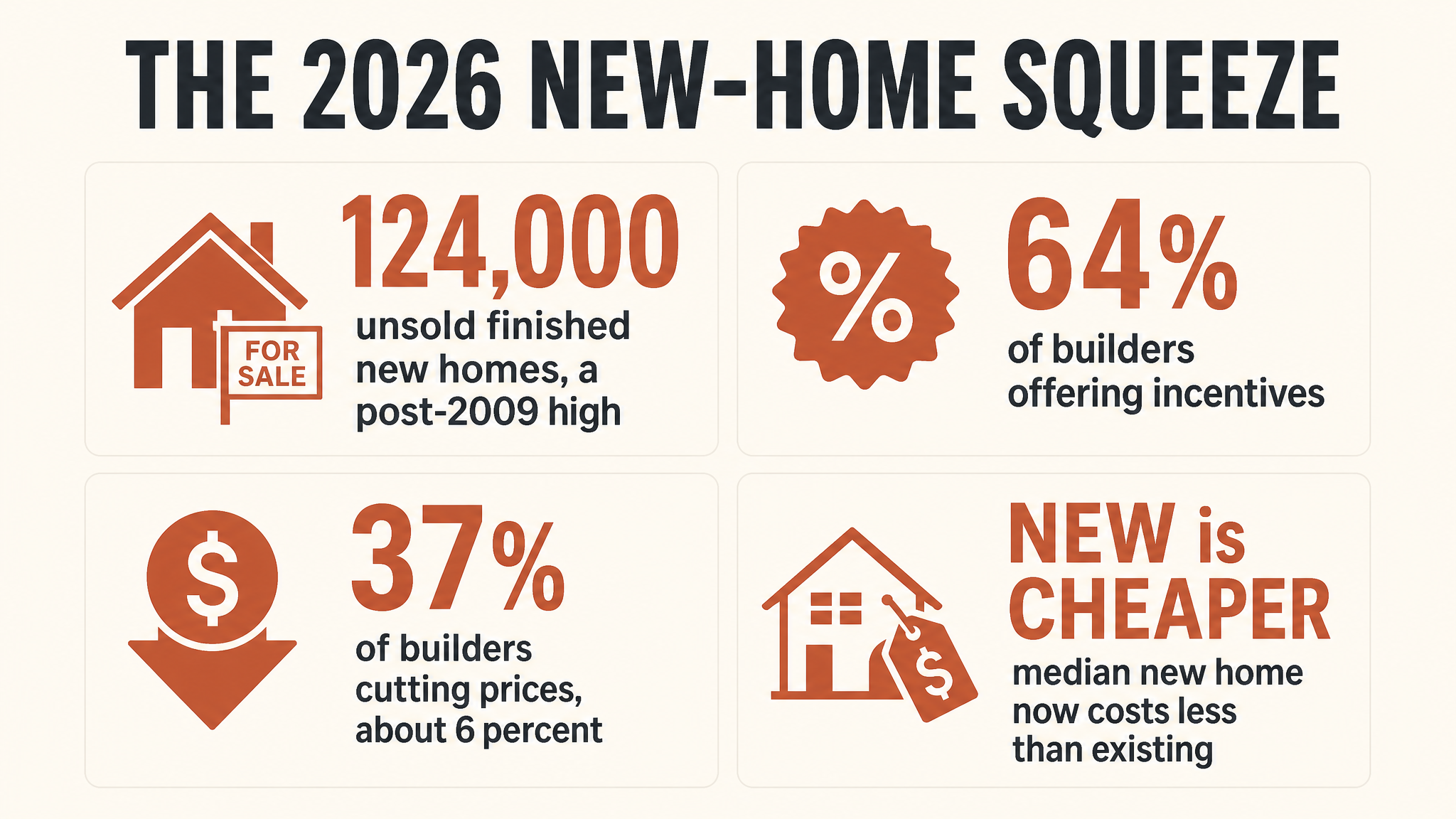
America’s builders are sitting on about 124,000 finished, unsold homes, the most since the 2009 crash. To move them, 64 percent are offering incentives and 37 percent are cutting prices. The builders who avoid that trap do one thing differently: they sell the house before they build it.
New-home construction fell 15.4 percent in May 2026 as a 6.36 percent mortgage rate priced buyers out. For the third quarter running, a typical new home now costs less than an existing one, $405,300 against $414,900. A finished home that sits is pure cost: taxes, interest, and a deeper discount every month.
Why Build-to-Order Beats Building on Spec
A spec home is built on a bet: the builder finishes it, then hopes a buyer appears. Every month it stands empty, the builder pays the carrying cost and the discount grows, which is exactly the trap 124,000 unsold homes represent.
Builders broke ground in 2023 and 2024 betting rates would ease. Instead a 6.36 percent mortgage thinned the buyer pool just as those houses were finishing, leaving completed inventory with no buyer, the most expensive kind of home to hold.
Build-to-order reverses the sequence: the home sells off a design first, then gets built. The buyer’s deposit funds construction, there is no standing inventory to carry or discount, and the margin holds. The one catch is that the buyer has to commit to a home that does not physically exist yet.
Source: compiled from 2026 US new-home market and builder-margin reports. Figures describe general market behavior, not a single builder.
You Cannot Photograph a House That Isn’t Built
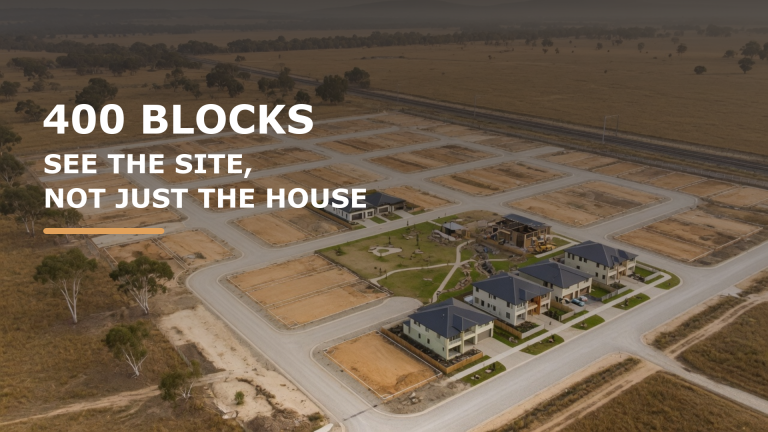
Selling off a design depends on the one thing a construction site cannot give a buyer: a look at the finished home. There is nothing to photograph but a foundation, framing, and a muddy lot, and a camera cannot show what does not exist.
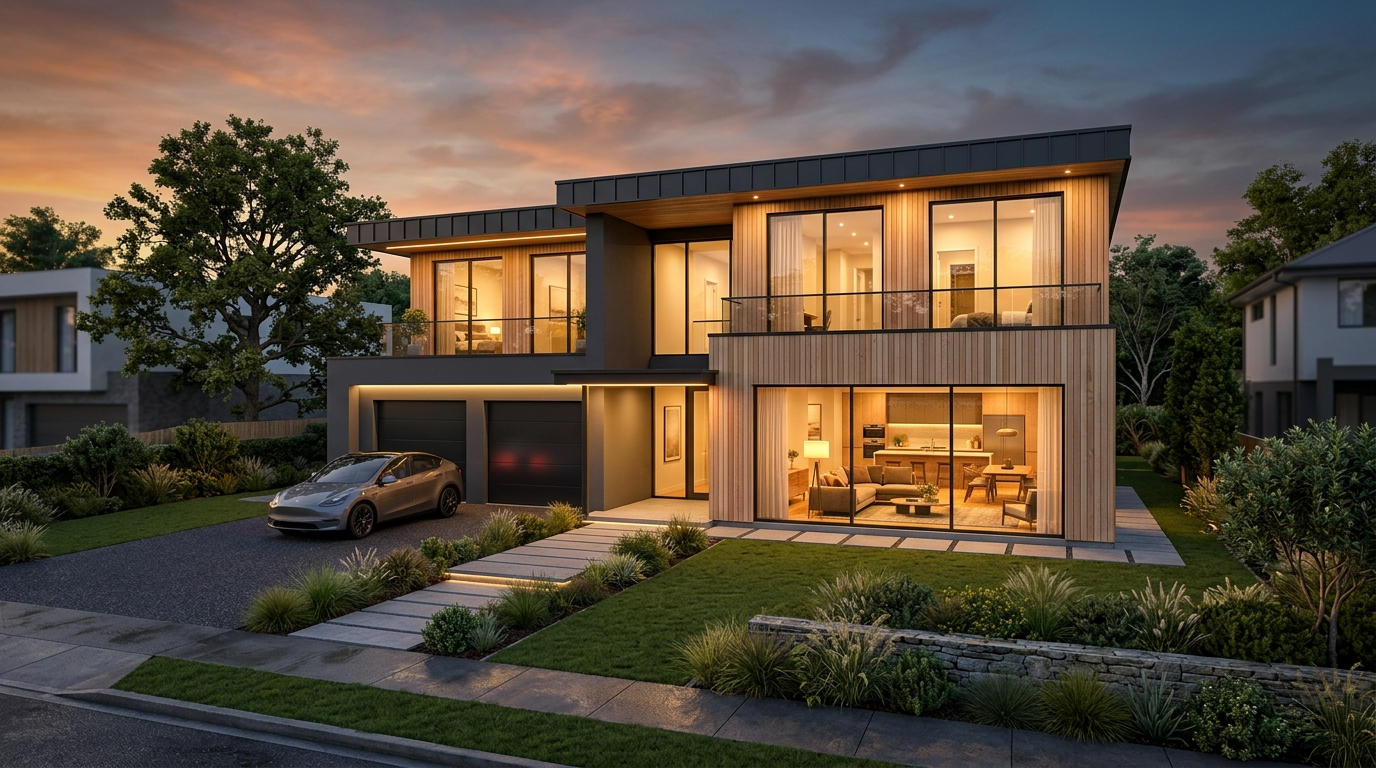
A photoreal 3D architectural rendering builds the finished house before a shovel hits the ground. Because it is a true 3D model with real light and geometry, the buyer walks the kitchen, checks how the afternoon sun lands, and signs on a home that will match what they were shown. That trust is what closes an off-plan sale.
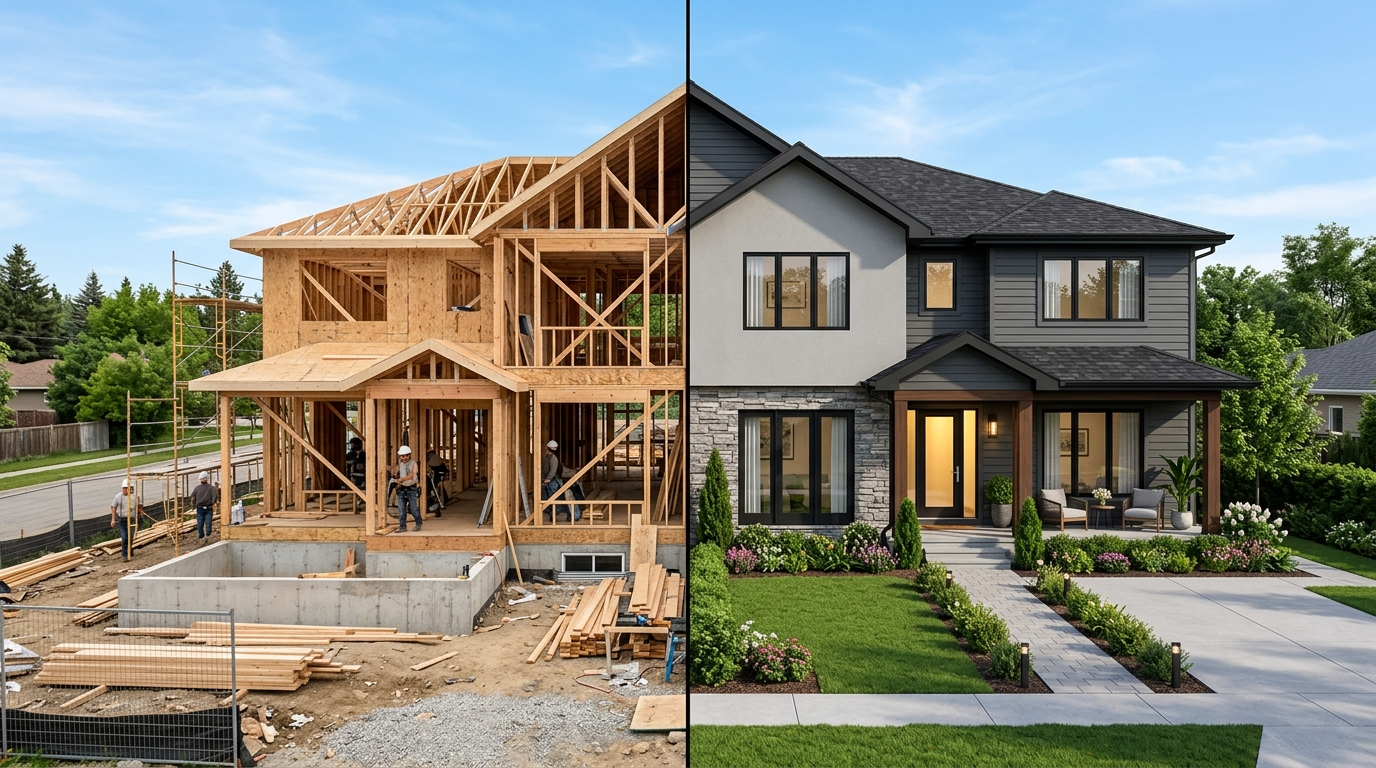
A pre-sell render only works if it is honest. The materials, room dimensions, ceiling heights, and the way daylight actually enters have to match the plan, because the buyer will hold the finished home against the image they signed on. A render that oversells becomes a dispute at the walkthrough, the same trap as an over-edited listing photo.
A render costs a few hundred dollars per image, while a finished spec home that sits for six months costs far more in interest and a six percent price cut, which is where the return on visualization shows up against inventory that stalls.
What the Glut Means If You Are Buying
For a buyer, 124,000 unsold homes is leverage. New homes are cheaper than existing ones for the first time in years, and builders are stacking rate buydowns and price cuts on standing inventory to clear it before the carrying cost eats the margin.
Buying off a rendering means judging a home you cannot walk, so get the finishes in writing. Confirm what is standard versus an upgrade, and treat the render as the promise it is, the same care you would bring to any new-construction material choice.
Ask for the buydown, not just the discount. A builder covering two or three points of your mortgage rate for the first years is often worth more than the equivalent price cut, and on standing inventory they are motivated to offer both. The next construction report lands July 17; if starts keep falling, that leverage holds.
And If You Are Selling an Existing Home
For the first time in years, a buyer can get a brand-new home with a rate buydown for less than a resale down the street. Existing-home sellers now compete with builder incentives they cannot match on price alone.
When a resale cannot win on price or newness, presentation is what is left. Strong listing photos and honest visuals do the work a discount used to, which matters more in a market where the discounted new home next door is already move-in ready and photographs like a magazine.
A weekend of decluttering and a professional photo set cost a fraction of a single price cut, and they are often the difference between a booked showing and a scroll past the listing.
Common Questions About the New-Home Market
QAre new homes cheaper than existing homes in 2026?
Yes, for the third quarter running. The median new single-family home ran $405,300 against $414,900 for a typical existing home. Builders are pricing to move a glut of finished inventory, so the usual new-home premium has flipped.
QWhat does build-to-order or off-plan mean?
Build-to-order means the home is sold before it is built. The buyer commits from a design and a deposit, and construction starts against that sale. The builder avoids carrying an empty finished house, and the buyer often locks in a price and finishes early.
QHow does a builder sell a home that isn’t built yet?
With photoreal 3D renderings of the finished home. A rendering builds the house as a 3D model, so buyers can see the rooms, materials, and light before construction, and decide from something that looks like the home they will actually receive.
QIs now a good time to buy a new home?
For a buyer who can carry a 6.36 percent rate, the leverage is real: new homes are cheaper than existing ones and builders are stacking incentives to clear finished stock. The risk is buying off-plan sight unseen, so lean toward move-in-ready inventory, or a builder whose renderings you can hold them to at the walkthrough.
The Takeaway
The glut of 124,000 unsold homes is the cost of building on a bet. Construction fell 15.4 percent, new homes now undercut existing ones, and finished inventory bleeds a builder’s margin every month it sits with taxes, interest, and a deeper discount.
The builders staying out of the trap sell first and build second, which only works if the buyer can see the home before it exists. That is the quiet job a 3D rendering does: it turns an unbuilt house into one a buyer will sign for.