A front porch is a smart investment for most US homeowners, increasing both resale value and everyday enjoyment. To maximize that return, make sure your porch has design elements that match your home’s style—such as similar trim or materials—and include features buyers often look for, like comfortable seating, good lighting, or weather protection.
A basic covered porch with a roof but no walls typically costs between $4,000 and $10,000 when installed by a company. Enclosed or more elaborate designs—such as screened-in porches, sunrooms, or porches with built-in seating—can range from $15,000 to over $30,000.
Porches often add the most value in warmer regions like Texas, Georgia, and Florida, or in parts of the Midwest where outdoor living is common during spring, summer, and fall.
If you live in a sunny state, you can enhance your porch and potentially increase your home’s value for under $200 by adding DIY elements like curtains, potted plants, or a small swing.
If you don’t already have a porch, building one yourself could bring strong returns. For example, spending $4,000 on a front porch for a $250,000 home, your return on investment (ROI) could range from 212.5% to 525%.
On a $350,000 home, the same $4,000 investment could yield an ROI between 337.5% and 775%, depending on design, materials, and local market appeal.
Want to get 3D rendering for your warehouse project?

George is a seasoned interior designer and property marketing strategist with over 13 years of experience. He specializes in transforming properties into visually stunning spaces, helping clients recognize the potential and beauty in each property. With an impressive international client base of exciting projects throughout Europe and America.
If you plan on building a porch from zero, these 3 porch styles will give you most ROI.
Covered or Open Traditional Porch: This universally appealing style enhances curb appeal and works well with homes like Colonial, Cape Cod, and Ranch. It typically yields a 60–80% return on investment (ROI) when build by a company or up 800% when DIYed, especially in neighborhoods where outdoor aesthetics are valued.
Craftsman-Style Porch: The craftsman known for its detailed woodwork and tapered columns, appeals strongly in historic neighborhoods—such as older districts in Portland or Asheville—and to buyers who appreciate authentic architectural detail, offering a high ROI.
Farmhouse or Wraparound Porch: The wraparound often seen in rural and suburban homes, are associated with comfort, family gatherings, and hospitality. Because they enhance lifestyle appeal, they tend to deliver strong returns, particularly in areas where outdoor living is part of daily life.
Don’t worry if you’re on a limited budget, here are a few simple ideas you can do on a budget under $200 or to be precise $182.99 for curtain, plants, paint, rugs, swing and screening material all DIY.
George Nicola (Expert Interior Designer from TALLBOX) shares: The cost to renovate a front porch can vary significantly based on factors such as the size of the porch, materials used, labor costs, and the extent of renovations required.
Basic renovations (painting, refinishing) will end up costing $2,500 – $5,000 if you hire a firm. If you aim at Moderate Upgrades such as new railings, roof replacement will cost around $5,000 to $30,000, while the High-End Overhauls can set you back $30,000+ (premium materials, custom designs). Labor costs typically range from $12 to $40 per square foot.
The type of materials used for flooring (wood, composite, concrete), railings, and roofing significantly impact the total cost.
Wood flooring can range from $14.50 to $50 per square foot. Adding features like screens, steps, or railings can increase costs. For instance, adding screens costs an additional $10 to $25 per square foot
Replacing a Front Porch: Replacing a porch entirely can range from $6,800 to $30,000 depending on size and materials.
Is it better to replace an old porch or simply repair it?
Repair minor wear for less, but opt for replacement if there’s major damage, safety concerns, or if you’re planning a sale and want to maximize value.
When to Repair (Often Best For):
- Minor Issues: If the primary damage is cosmetic (peeling paint, loose railings, broken steps) and the main structure (support beams, foundation) is sound.
- Budget Constraints: When you’re on a tight budget and only need the porch to last a few more years.
- Matching Style: If the existing porch style still complements your home’s aesthetics and curb appeal.
- Cost: Repairs are generally significantly less expensive than a full replacement.
When to Replace (Usually Smarter For):
- Structural Damage: If there is significant rot in supports, a sagging roof, a wobbly foundation, or other instability issues.
- Safety Concerns: Unstable railings, loose posts, or other hazards that compromise safety.
- Outdated Appearance: If the porch is severely outdated and detracts from your home’s overall appearance or value.
- Major Changes: If you aim to drastically alter the porch’s style, size, or function (e.g., converting an open porch to a screened-in one, or making it larger).
- End of Lifespan: When the materials have reached the end of their useful life (e.g., decades-old rotted wood).
- Benefits of Replacement: New materials offer less maintenance, you get an opportunity to upgrade style and usability, and a new porch typically provides a stronger ROI at resale as buyers are often wary of old, patched structures.
- Cost: While higher upfront, a replacement offers long-term durability, safety, and enhanced curb appeal.
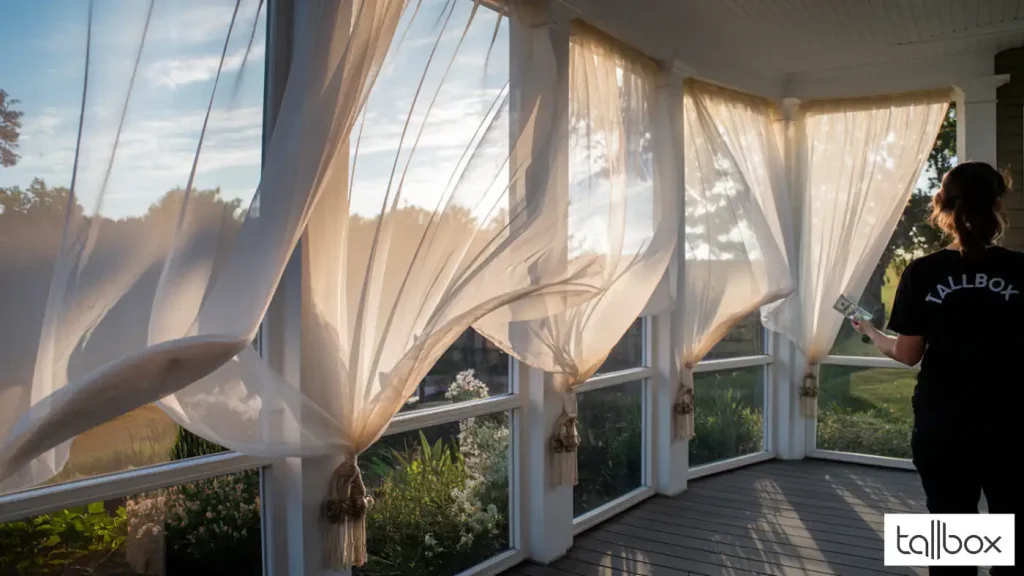
Get Curtains
Adding curtains to your front porch can enhance privacy and aesthetic appeal.
You’re wrong if you think curtains are suitable for indoors uses only. If you have some windows on the front porch and you want some privacy, invest in curtains and you’ll give your little entry a nice makeover too.
Standard Outdoor Curtains, typically range from $20 to $100 per panel, depending on fabric quality and features like UV resistance or waterproofing. For tailored designs, expect to pay between $100 and $500 per panel, influenced by fabric choice and customization level.
Outfitting a compact porch may require 2-4 panels, totaling approximately $40 to $400.
More extensive spaces might need 6-10 panels, with costs ranging from $120 to $1,000.
Installation:
DIY Installation: Purchasing and installing hardware yourself can be cost-effective, with hardware kits priced between $20 and $100.
Professional Installation: Hiring professionals may add $100 to $300 to your total expenses, depending on complexity and local labor rates.
- Tie-Backs and Weights: Accessories to secure curtains in windy conditions can add $10 to $50.
- Weatherproofing Treatments: Applying protective coatings may cost an additional $20 to $50.
- Measure Accurately: Ensure precise measurements to avoid purchasing excess material.
- Shop Sales: Look for discounts at home improvement stores or online retailers.
- Consider DIY: Installing curtains yourself can save on labor costs.
Total Estimated Costs to add curtains to a front porch. For a small porch with standard curtains and DIY installation, expect to spend between $60 and $200. For a larger porch with custom curtains and professional installation, costs can range from $500 to $1,500 or more.
This isn’t all about privacy, but also about giving your porch some personality. Think about materials based on whether or not the porch is insulated, not to mention the climate. For more convenience, it pays off investing in no-drill curtains brackets. They can be tapped and attached without drilling anything.
Turn the Porch Into a Jungle
The porch is often overlooked and doesn’t have much value for homeowners. Most people stick their shoes in there, maybe some coats or the leads for their dogs. The porch could also be a relaxing place to chill, especially if it’s big and spacious.
A small setup with a few annuals and perennials might cost between $50 and $150.
A more elaborate setup with larger or more expensive plants (like climbing vines or custom planters) could range from $200 to $500 or more, especially if you include decorative pots or planters.
If your porch looks too empty, turn it into a jungle for a more personalized style. Get some hanging pots here and there. Consider using vertical gardening techniques, such as wall-mounted planters or cascading vines, to maximize space and make a dramatic impact.
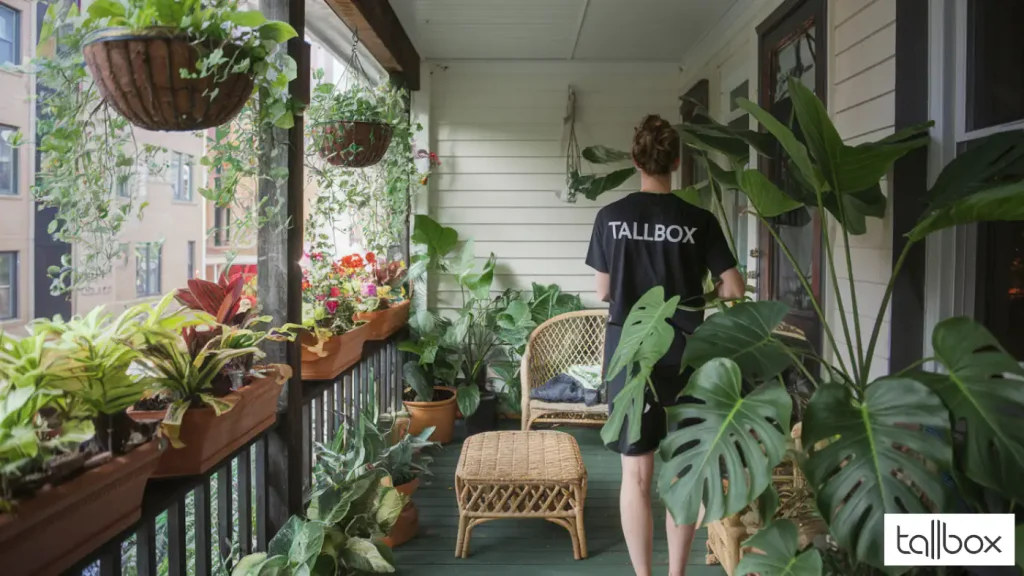
Price Ranges for Outdoor Porch Plants
Small Annuals (e.g., Petunias, Verbena): $5 to $15 per plant or pack.
Example: A 6-pack of Wave Red Petunias costs around $10 at Walmart.
Perennials (e.g., Lavender, Butterfly Bush): $15 to $40 per plant.
Example: English Lavender is priced at $31 at Home Depot.
Example: Violet Butterfly Bush costs $32 at Home Depot.
Climbing Plants (e.g., Star Jasmine): $59 to $120 per plant.
Example: Star Jasmine is priced at $59 at The Sill.
Example: Alder & Oak Star Jasmine Potted Plant costs $120 at Williams Sonoma.
Ferns and Ivy (e.g., Boston Fern, English Ivy): $8 to $25 per plant.
Example: Boston Fern costs around $18 at Home Depot
Example: Glacier English Ivy is priced at $8 to $18 depending on the retailer
Incorporate natural elements like bamboo furniture or stone accents to enhance the theme and provide comfortable seating options. Get some big pots in the corners as well. Small plants on the windowsill or on a table will also add to the décor.
Obviously, you’ll need to look after all these, but the environment could be very refreshing in the summertime.
Bring Some Colors
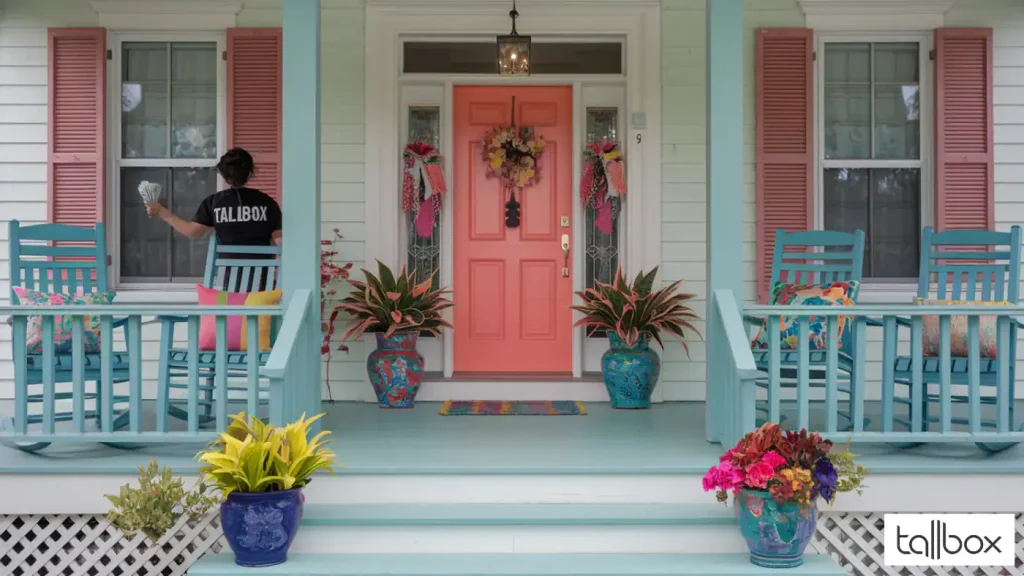
Add a bit of color to your porch if you think it’s dull and boring. This way, you’ll turn a dead porch into a more livable place. Obviously, you should also get a seat in there, maybe even a coffee table if you have plenty of space.
To repaint a front porch it will set up back by $200 to $750 or $2 to $5 per square foot, depending on several factors such as the size of the porch, the condition of the surface, and the number of coats required.
A Basic Porch Repainting will end up $200 to $500 for smaller porches (around 100 square feet). While for a Larger Porches (200 square feet) $400 to $1,000.
Painting porch columns costs an extra $20 to $100 per column and Painting railings can add $2 to $8 per linear foot.
You have countless options when it comes to adding colors. For example, you can repaint the front door, so everything looks different. Repaint the rail too, maybe even the decking. If you want to bring some seats in, get some colorful pillows and throws too.
Factors Affecting Repainting Costs
Surface Condition: If the porch requires extensive prep work, such as sanding or repairs, costs can increase.
Number of Coats: More coats of paint or sealant will also raise the price.
Labor Costs: Hiring professionals typically costs between $20 and $50 per hour, depending on your location and the complexity of the job
Average Cost of Outdoor Paint
Standard Exterior Paint typically costs between $30 and $60 per gallon, with higher-end paints reaching up to $100 per gallon. Specialty Paints (e.g., weather-resistant or anti-slip coatings): Can cost between $50 and $120 per gallon, depending on the brand and features
- Economy Paints: Approximately $20 to $40 per gallon.
- Mid-Range Paints: Around $40 to $60 per gallon.
- Premium Paints: Between $60 and $100 per gallon.
Additional Considerations:
- Surface Area: Larger porches will require more paint and labor, increasing costs.
- Paint Quality: Investing in higher-quality paint can enhance durability and longevity, potentially reducing future maintenance expenses.
- Regional Variations: Labor and material costs can vary by region; urban areas may have higher rates than rural locations.
Recycle Old Rugs
Buying a new rug instead of using an old one, you can expect to pay anywhere from $28 to $300+ for outdoor rugs.
Most people chuck their old rugs to the bin when they buy something new. After all, what can you do with a rug that looks worn and its colors are gone? Instead of spending money on making the porch look warmer, how about finding a new purpose for an old rug?
The area is exposed to different elements anyway, so you don’t really need a new rug because it’ll wear out in no time. Instead, use an old carpet and your place will suddenly look better and warmer. You can keep it in place with porch furniture or some heavy pots.

When selecting an outdoor rug, consider factors such as durability, weather resistance, and ease of maintenance to ensure it meets your needs and complements your outdoor space, here are how much it will set you back if you buy a new rug:
Budget-Friendly Options:
Clearance outdoor rugs can be found for as low as $27.99 to $55.99 for smaller or mid-sized rugs on sale. Rugs USA offers clearance prices starting at $27.99, with discounts on various sizes and designs.
Mid-Range Options:
Popular outdoor rugs from well-known brands typically range from $30 to $150. A nuLOOM Outdoor Geometric Area Rug is priced at $33 to $63, depending on the retailer or Magnolia Home by Joanna Gaines x Loloi Charlie Collection Area Rug is available for $81.
High-End Options:
Premium outdoor rugs, especially larger sizes or those made with high-quality materials, can cost between $100 and $300+. West Elm Woven Cable Indoor/Outdoor Rug starts at $149 or Ruggable Outdoor Plaza Desert Jade Rug is priced at $129 and up, depending on size.
Additional Considerations:
Size: Larger rugs will generally cost more.
Material: Natural fibers like jute or bamboo may be more expensive than synthetic options.
Brand and Design: Designer brands or custom patterns can increase the price.
Before using that old rug on your porch, give it a good wash to make it look fresh and inviting. You can even layer a few rugs together to add some texture and create a cozy, unique look for your outdoor space. If the rug is too worn to use on the floor, turn it into cushion covers or a rustic wall hanging.
Get Some Lighting
While pretty much every porch out there has one main source of light, you can redecorate the place and make it warmer by adding some accent lighting as well. It doesn’t mean you’ll have to invest in new lamps all around the porch.
Instead, get some string lights and hang them around the porch. Get a model with a small solar panel, so they’ll turn on automatically every night without using any electricity.
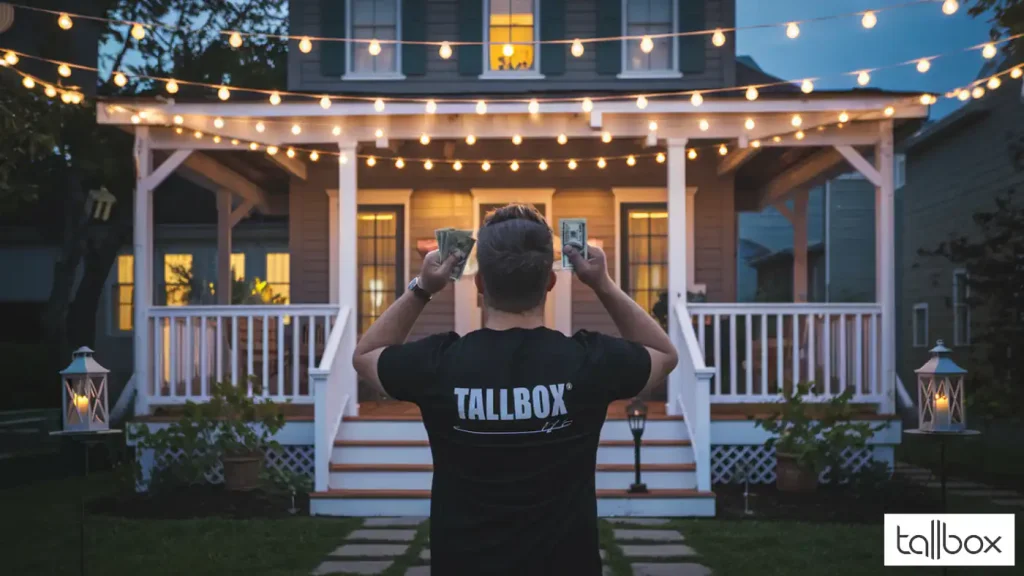

Besides string lights, think about adding lanterns or LED candles. Pathway lights are also nice to guide guests and create a peaceful vibe during evening hangouts.
Installation Costs for outdoor porch lighting
Labor rates vary but typically range from $50 to $100 per hour. Complex installations may require several hours of work or $400-$550 for the entire porch.
Keep Nasty Creatures Away and Screen the Porch

Building a porch from scratch? A screened porch construction can keep things like insects, snails and slugs away. But if you already have a porch and it’s not screened, you can turn it into a more livable space by screening it yourself.
Screens come in all kinds of designs, patterns, shapes and sizes, so it’s impossible to fail at finding something suitable. But remember, this isn’t all about the practical purpose of the porch. Opt for something that looks good too, especially if you plan to spend time in there.
The cost to screen a front porch varies depending on factors such as the size of the porch, materials used, and whether you’re adding screens to an existing porch or building a new one. Adding screens to an existing porch typically costs between $3 to $5 per square foot for materials only or $10 to $25 per square foot for materials and labor.
On average, it is as low as $450 for basic DIY kits on small porches 100 sqft. space or over $3,200 for larger over 150 sqft. or more complex projects added to an existing porch. While constructing a new screened-in porch, including the foundation, framing, roofing, and screening, typically ranges from $15,000 to $30,000, with most homeowners spending around $20,000, this equates to approximately $60 to $80 per square foot.
Roofing (if needed): Adding or upgrading a roof can cost between $4 and $30 per square foot depending on the material (e.g., asphalt shingles or aluminum panels)
Here’s a detailed price list
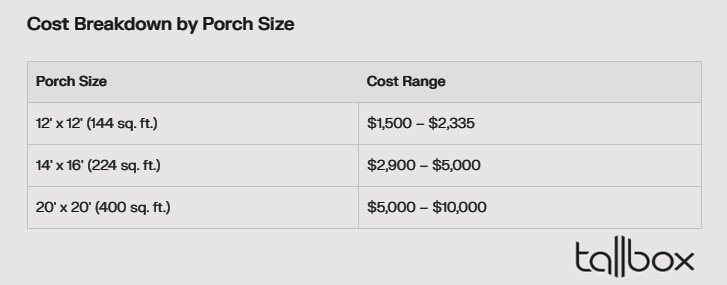
Material Costs to screen a front porch
Fiberglass Screens are the least expensive, $0.25 to $0.50 per square foot; Aluminum Screens are cheap too, $0.35 to $0.70 per square foot, while the average is considered Solar Screens: $0.75 to $1.50 per square foot, and more expensive are Retractable Screens, around $2,000 to $4,000 per unit for motorized options.
Rescreening Maintenance: Rescreening every 6–8 years costs between $800 and $5,200, with an average of around $2,900
Cost to Build a New Screened-In Porch
If you need to build a new porch from scratch, it will end up at least $10,000 to $35,000 or about $50 to $175 per square foot, with the average for 80% of the projects consing $60 to $80 per square foot for materials and labor.
Another effective way to keep pesky bugs away from your porch is to use natural repellents like citronella candles or essential oils. Other natural options include planting insect-repelling herbs like basil or lemongrass around your porch.
Additional Considerations
- Screen Material: The type of screen material affects cost. Fiberglass screens are more affordable, while options like copper or bronze are more expensive.
- Labor Rates: Labor costs vary by region and complexity of the project. It’s advisable to obtain multiple quotes from local contractors.
- Permits and Regulations: Depending on local building codes, permits may be required, adding to the overall cost.
Add a Swing

Nothing’s more relaxing than chilling in the porch on a hot Sunday afternoon in the summertime. It’s nice and warm, but you’re comfy in the shade. Throw in a swing and you have the perfect scenario.
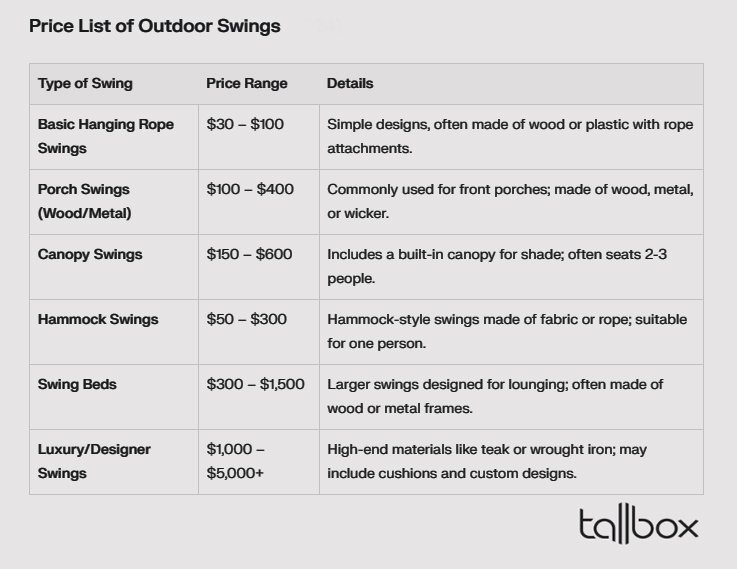
Outdoor swings can range from as low as $30 for basic models to over $5,000 for luxury designer swings, with most mid-range options falling between $100 and $600, depending on style and features. Professional installation can add $100 to $500, depending on complexity. Cushions, covers, and mounting hardware may incur extra costs.
When picking a swing for your porch, make sure it fits your space. If your porch is small, consider a compact swing or a hanging chair. Larger porches can hold bigger bench swings. You can either buy a new swing or hang around some antique shops. You’ll be surprised by what you can find in there.
Porch swings and canopy swings are particularly popular. Porch swings are cherished for their timeless appeal and ability to enhance the charm of a home’s exterior. Canopy swings are favored for their versatility and the added comfort of shade, making them suitable for various outdoor settings.
Outdoor swings come in various types, each offering unique features and benefits. Here’s an overview:
Porch Swings: Typically suspended from a porch ceiling, these swings provide a relaxing seating option for two or more people. They are popular for their classic design and ability to enhance outdoor living spaces.
Canopy Swings: Freestanding swings equipped with an overhead canopy to provide shade. Ideal for patios or gardens, they offer comfort and protection from the sun.
Hammock Swings: Combining the features of a hammock and a swing, these are usually single-person seats made from fabric or netting. They are favored for their comfort and ease of installation.
Swing Sets for Children: Structures that include multiple swings and often additional play features like slides or climbing frames. Common in backyards, they provide entertainment and physical activity for kids.
Egg Chairs: Stylish, enclosed swings with a cocoon-like design, suitable for one person. They are popular for their modern aesthetic and comfort.
Daybed Swings: Larger swings designed for lounging, often accommodating multiple people. They are ideal for those looking to create a luxurious outdoor relaxation area.
To successfully sell a warehouse in any market, pricing the property competitively won’t cut it if it lacks good visual marketing with realistic assessment of its condition. Showcase its best features and potential through high-quality marketing materials, including professional photography and virtual tours, while highlighting its advantages to attract target buyers.
How cheap is it to renovate a front porch?
A Budget Breakdown
You can give your front porch a complete makeover for under $200 using the most budget-friendly options available. Here’s a detailed breakdown of the minimum costs:
For a typical 100 sq.ft porch, let’s consider standard dimensions:
- Assuming a 10ft x 10ft porch
- Standard porch height of 8ft
- Three sides to screen (since one side is attached to house)
Calculating wall area to be screened:
- Front wall: 10ft × 8ft = 80 sq.ft
- Two side walls: (10ft × 8ft) × 2 = 160 sq.ft
- Total area to be screened: 240 sq.ft
Using the cheapest screening option:
- Fiberglass screens at $0.25 per square foot
- 240 sq.ft × $0.25 = $60 for screening material
Updated total for all cheapest options:
- Curtains (2 panels): $40
- Plants (1 plant): $5
- Paint (1 gallon): $20
- Rug: $27.99
- Basic swing: $30
- Screening material: $60
New total: $182.99
This price only includes materials at their absolute minimum and assumes DIY installation to keep costs down. It’s also worth noting that you might need slightly more materials to account for waste and mistakes during installation, but this gives you the baseline minimum cost using the cheapest options available.
| Item | Specifications | Cost |
|---|---|---|
| Outdoor Curtains | 2 standard panels | $40 |
| Plants | 1 small annual (e.g. Petunias) | $5 |
| Exterior Paint | 1 gallon economy grade | $20 |
| Outdoor Rug | Basic clearance option | $27.99 |
| Basic Porch Swing | Entry-level model | $30 |
| Screening Material | Fiberglass (240 sq.ft for 100 sq.ft porch) | $60 |
Money-Saving Tips:
- Install everything yourself to avoid labor costs
- Watch for seasonal sales and clearance items
- Consider repurposing existing materials when possible
- Start with essential items and add others gradually
- Check local hardware stores for discounted or damaged items that can be easily fixed
What steps to take to design a new front porch?
Want to get 3D rendering for your porch project?
To design a new front porch, begin by assessing your home’s architectural style and determining the porch’s intended function, such as providing shelter, enhancing curb appeal, or creating outdoor living space.
Next, consult with a professional architect or designer to develop a plan that aligns with your goals, complies with local building codes, and complements your home’s aesthetics.
Designing a new front porch is an exciting project that can enhance your home’s curb appeal and provide a welcoming space for relaxation and socializing.
Here’s a step-by-step guide to help you plan and design your new front porch:
1. Define Your Goals and Purpose
- Functional Use: Determine how you intend to use the porch. Will it be a place for sitting and enjoying the outdoors, a space for greeting guests, or purely decorative?
- Aesthetic Vision: Consider the look you want to achieve. Do you prefer a classic, rustic, modern, or traditional style that complements your home’s architecture?
2. Set a Budget
- Estimate Costs: Include expenses for materials, labor, permits, and furnishings.
- Prioritize Features: Decide which elements are essential and which are optional based on your budget constraints.
3. Research Local Building Codes and Regulations
- Permits and Approvals: Check with your local building department to understand the requirements for constructing a porch.
- Zoning Laws: Be aware of setback requirements, height restrictions, and other zoning regulations that may affect your design.
4. Assess Your Home’s Structure
- Existing Conditions: Examine the front of your house to determine how the porch will attach and what structural support is needed.
- Foundation Requirements: Decide if your porch will need a new foundation or can be built on an existing one.
5. Choose a Design Style
- Architectural Harmony: Select a porch design that complements the style of your home (e.g., Victorian, Craftsman, Colonial).
- Roofing Options: Decide if the porch will be covered and what type of roof (gable, shed, flat) suits your design.
- Materials Selection: Choose materials for flooring, columns, railings, and roofing that match your aesthetic and are suitable for your climate.
6. Create a Detailed Plan
- Sketch Your Ideas: Draw rough sketches to visualize the layout, size, and features of your porch.
- Professional Assistance: Consider hiring an architect or designer to create detailed blueprints, especially for complex designs.
- Structural Details: Plan for key structural elements like support beams, joists, and footings.
7. Plan for Utilities and Lighting
- Electrical Needs: Determine if you need electrical outlets for lighting, ceiling fans, or other electrical features.
- Lighting Design: Incorporate ambient, task, and accent lighting to enhance functionality and ambiance.
- Safety Considerations: Ensure lighting illuminates steps and entryways to prevent accidents.
8. Consider Comfort and Amenities
- Seating Arrangements: Plan space for chairs, benches, swings, or built-in seating.
- Climate Control: Think about adding ceiling fans for cooling or screens to protect against insects.
- Decorative Elements: Include space for plants, rugs, curtains, or other decorative items that add personality.
9. Address Accessibility and Safety
- Stairways and Ramps: Design steps or ramps that comply with safety codes and are convenient for all users.
- Railings and Balustrades: Install railings where necessary to prevent falls and enhance the look of your porch.
- Non-Slip Surfaces: Choose flooring materials with textures that reduce the risk of slipping, especially in wet conditions.
10. Obtain Quotes and Select Contractors
- Gather Estimates: Contact multiple contractors to compare prices and services.
- Check References: Look for reviews or ask for references to ensure quality workmanship.
- License and Insurance: Verify that the contractor is licensed and insured to protect yourself legally and financially.
11. Acquire Necessary Permits
- Submit Plans: Provide detailed plans to your local building authority for approval.
- Inspections: Prepare for inspections at various stages of construction to ensure compliance with building codes.
12. Prepare the Construction Site
- Site Clearance: Remove any obstructions, landscaping, or existing structures where the new porch will be built.
- Utility Checks: Before digging, have utility companies mark underground lines to prevent damage.
13. Begin Construction
- Foundation Work: Lay the foundation according to plan, whether it’s concrete piers, slabs, or footings.
- Framework Erection: Build the structural frame, including posts, beams, and decking supports.
- Roof Installation: If applicable, construct the roof structure and install roofing materials.
14. Add Finishing Touches
- Install Flooring: Lay down the chosen flooring materials, ensuring a level and secure surface.
- Attach Railings and Columns: Install railings, balusters, and columns as per design specifications.
- Paint and Stain: Apply paint or stain to protect materials and achieve the desired look.
- Landscaping: Enhance the surrounding area with plants, flowers, or shrubs to integrate the porch with your yard.
15. Furnish and Decorate
- Select Furniture: Choose weather-resistant furniture that fits the space and your comfort needs.
- Add Accessories: Incorporate rugs, pillows, artwork, and other accessories to personalize your porch.
- Lighting Fixtures: Install the planned lighting and test all electrical components.
16. Final Inspection and Enjoyment
- Compliance Check: Have the local building inspector conduct a final review to ensure everything meets code.
- Maintenance Plan: Establish a routine for cleaning and maintaining your porch to prolong its lifespan.
- Enjoy Your New Space: Sit back, relax, and take pleasure in the new addition to your home.