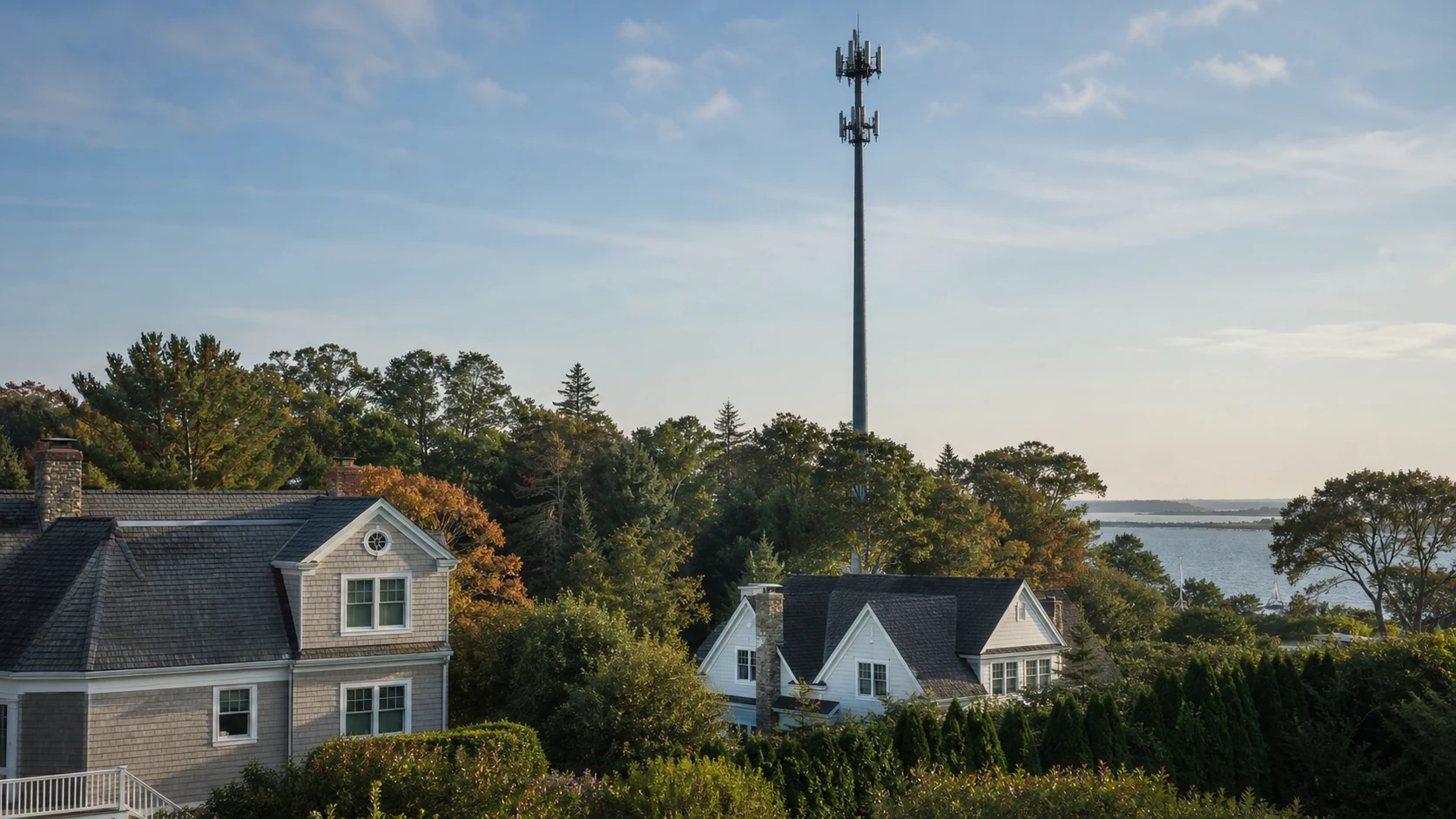
A proposed 140-foot wireless communications tower at The Knox School in Nissequogue, New York, has turned a coverage gap into a fight over waterfront views and nearby homes. The Planning Board denied the permit. LI Smart Solutions sued on May 1, 2026, and the tower proposal remains unresolved.
The Nissequogue cell-tower dispute matters beyond Long Island because concealment is presented as a compromise. A monopine, flagpole, steeple, or rooftop screen changes the structure’s appearance, but property value still depends on what buyers can see and what local transactions reveal.
Quick answer: Camouflage reduces visual contrast, but it cannot guarantee that a 140-foot tower disappears or nearby values hold. Test verified height, viewpoint-matched simulations, seasonal sightlines, permit status, and local comparable sales. Research reports negative, limited, and statistically insignificant effects, so no national percentage can price one property.
Can camouflage protect the view from a 140-foot cell tower?
Not completely. Cell-tower camouflage reduces visual contrast from selected viewpoints, but a concealed structure remains visible wherever its height, crown, antennas, or equipment rise above surrounding cover.
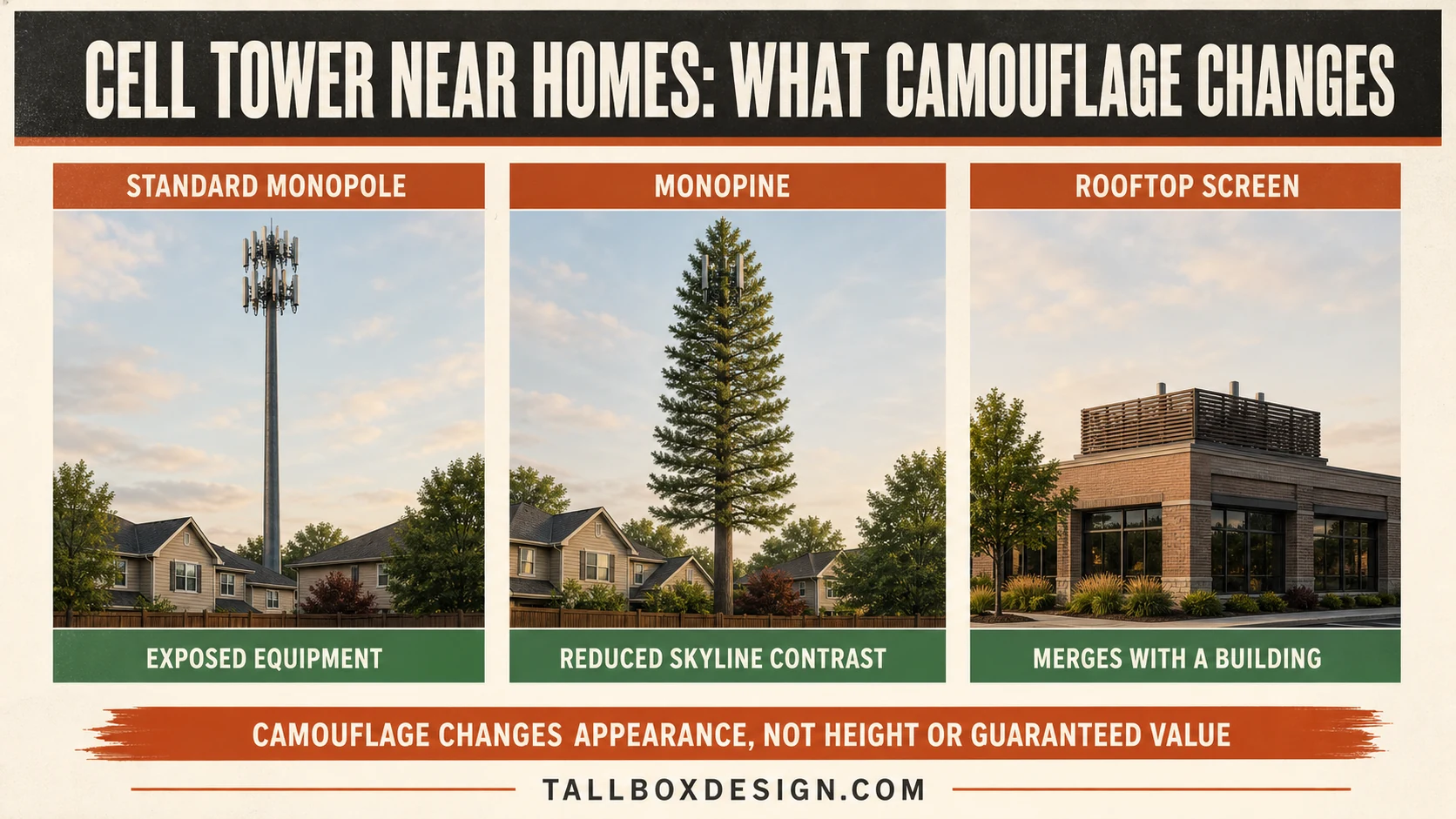
A standard monopole contrasts with the skyline. A monopine masks part of that outline with an artificial trunk and branches, while a rooftop screen hides antennas within a building silhouette.
Concealment must match the setting. A faux pine can blend against evergreens yet stand out above winter trees, while a flagpole form can look oversized beside low roofs.
The useful question is whether the proposed concealment lowers visibility from the homes, roads, waterfronts, and public spaces that people use, not whether the tower merely looks like a tree.
What does property-value research say about visible cell towers?
Property-value research does not establish a universal cell-tower discount. Studies reach different results because tower type, visibility, distance, housing stock, buyer attitudes, and local publicity change from one market to another.
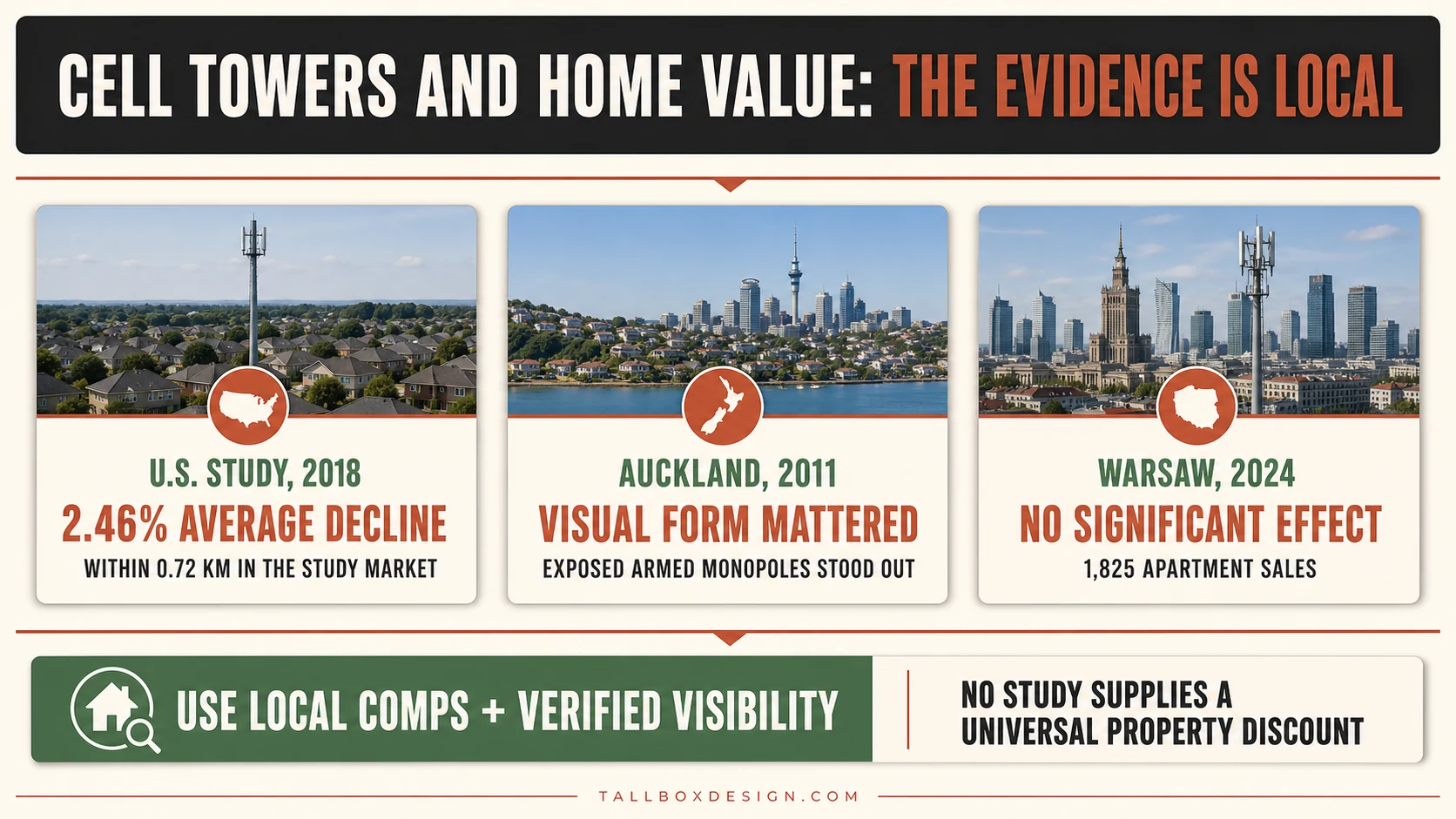
Affuso, Cummings, and Le reported an average 2.46% decline within 0.72 kilometers of the closest tower in 2018. Their study estimated declines up to 9.78% within tower visibility range, but those study-specific figures are not automatic adjustments for other markets.
A 2024 Warsaw study examined 1,825 apartment sales from 2016 through 2021 and found no statistically significant price effect from base-station proximity or 5G introduction. A 2011 Auckland analysis covered 55,775 transactions near 521 base stations and found no general relationship except for exposed poles with attached antennas in residential areas.
Fannie Mae requires appraisers to address adverse site conditions or market resistance and assess any effect on value and marketability. Tallbox’s guide to factors that lower property value applies the same rule: use market evidence, not a borrowed percentage.
How should homeowners test the real view before construction?
To test a home’s real view before construction, start with verified site geometry rather than a marketing rendering. A viewshed identifies where the proposed tower is visible from selected observation points. Terrain, vegetation, and buildings change the result when the model represents them.
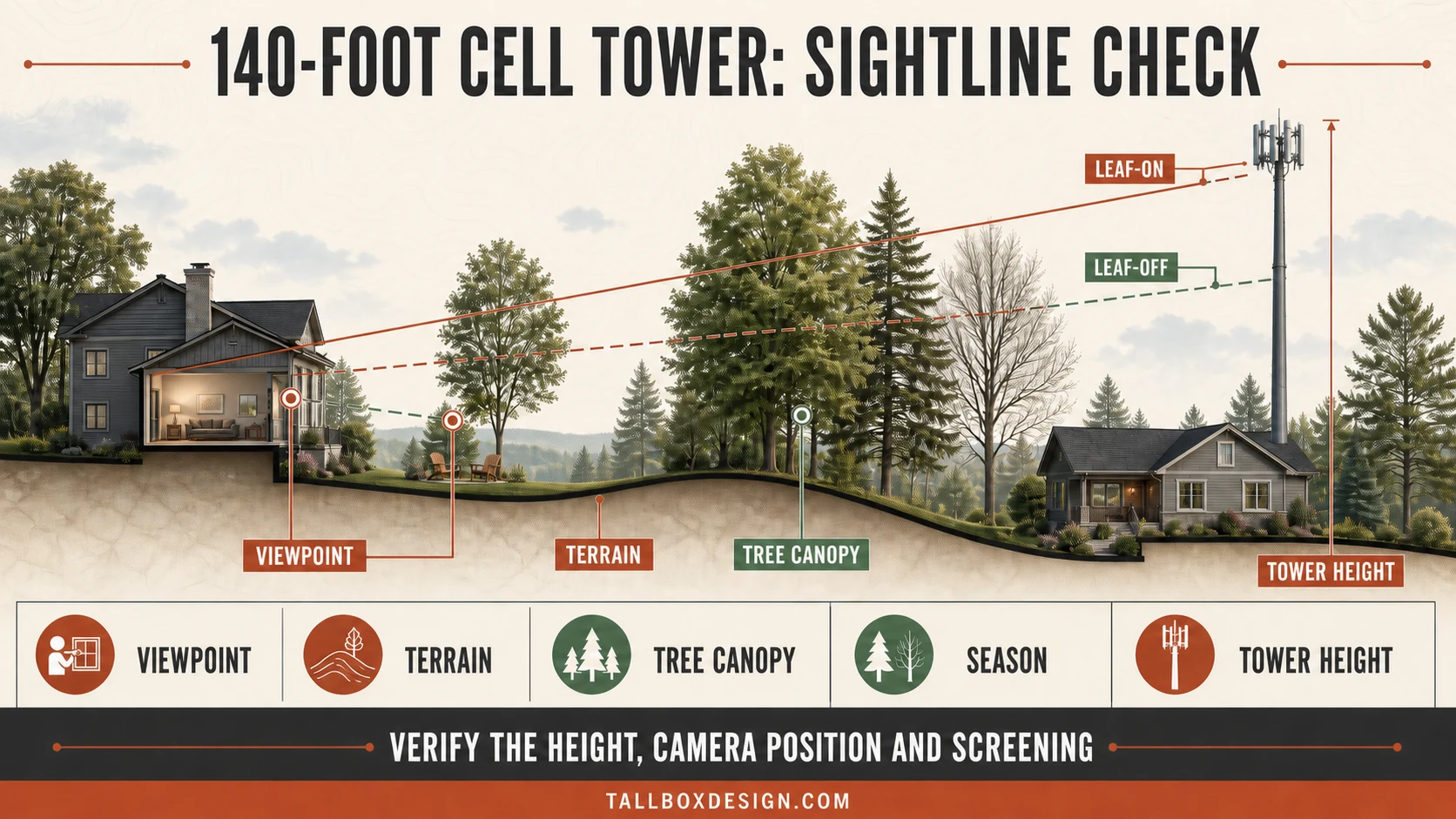
The five visual checks below turn a proposed tower height into evidence a homeowner can inspect.
- Confirm the permit dimensions. Record the tower base elevation, total height, antenna crown, equipment compound, access road, lighting, and tree-removal plan.
- Demand a height demonstration. A balloon, crane, or temporary mast placed at the proposed location shows the target height from surrounding streets and properties.
- Fix the observation points. Photograph primary windows, patios, gardens, approach roads, and valued public views with camera location, lens, direction, and date recorded.
- Match the photo simulation. Composite the proposed structure at the correct scale, position, and lens perspective instead of shrinking it or hiding it behind a convenient foreground object.
- Repeat the seasonal view. Leaf-on and leaf-off photographs reveal whether screening works all year or only during summer foliage.
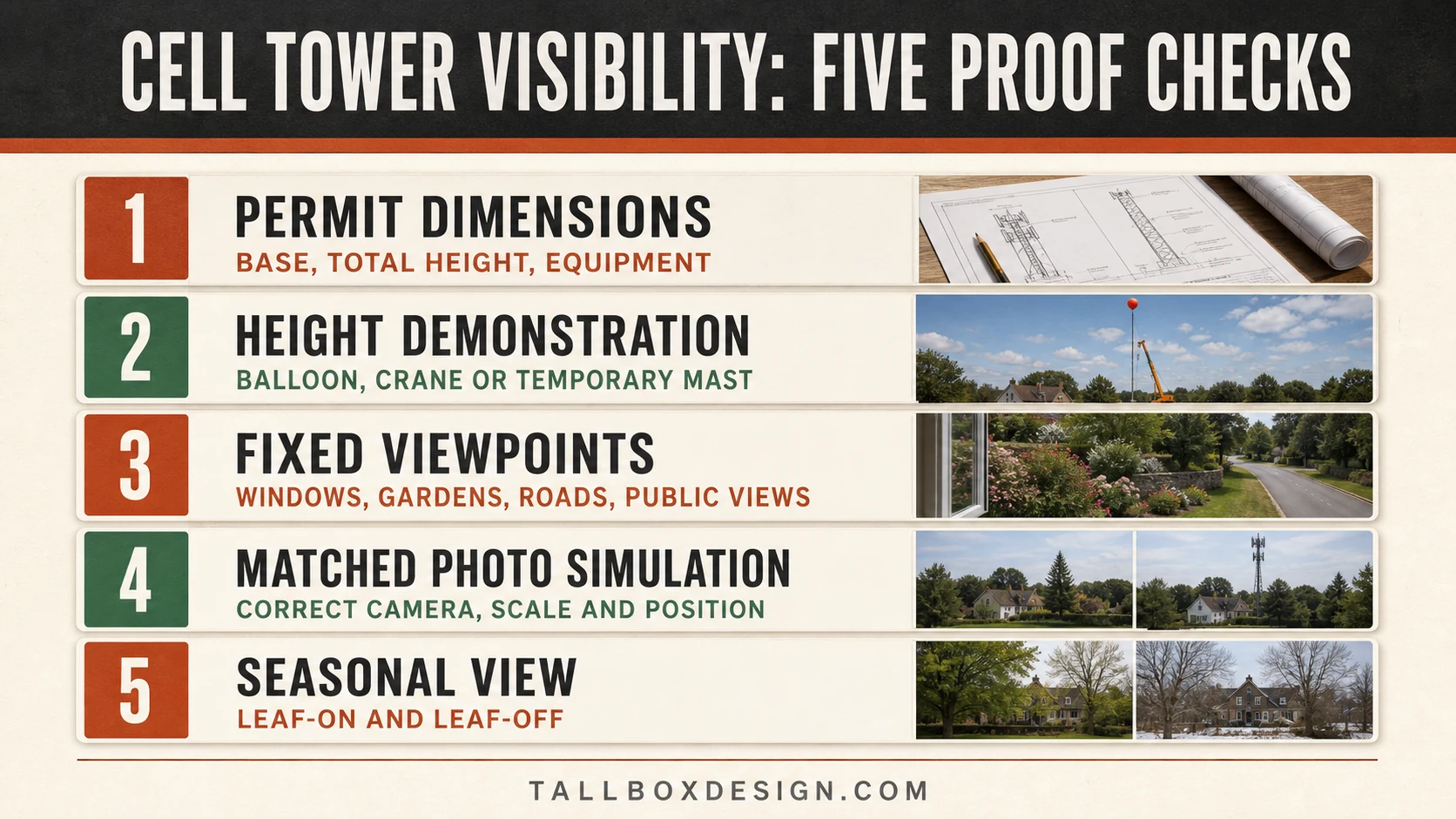
Fairfax County pairs photo simulations with an on-site balloon or crane test when a new-tower review requires height testing. Visualizing external flood-risk conditions follows the same rule: preserve the real site relationship before using a model for property decisions.
Which records matter when a cell-tower permit is disputed?
The permit decision, written record, and current court docket matter because a tower application can be challenged in court or revised after a denial. In Nissequogue, public notices document the LI Smart Solutions special-use-permit process, and the federal complaint was filed on May 1, 2026.
The latest freely accessible docket for LI Smart Solutions, LLC v. Village of Nissequogue was retrieved on June 29, 2026. A June 26 order said the parties expected to produce the administrative record by July 24. The federal lawsuit therefore remained pending, with neither side recorded as the winner.
Federal law preserves state and local authority over wireless-facility placement, construction, and modification, subject to limits. Under 47 U.S.C. 332(c)(7), a denial must be written and supported by substantial evidence in a written record, while local rules cannot effectively prohibit wireless service.
Homeowners should save the application, drawings, staff reports, meeting minutes, written decision, revised plans, and docket updates. Those records identify the proposed structure and status; they do not replace advice from a local land-use lawyer.
What should buyers and sellers document before a price decision?
Buyers and sellers should document visibility and local market reaction before changing an offer or list price. The evidence package should connect the proposed tower to the subject home’s actual view and to comparable transactions with similar exposure.
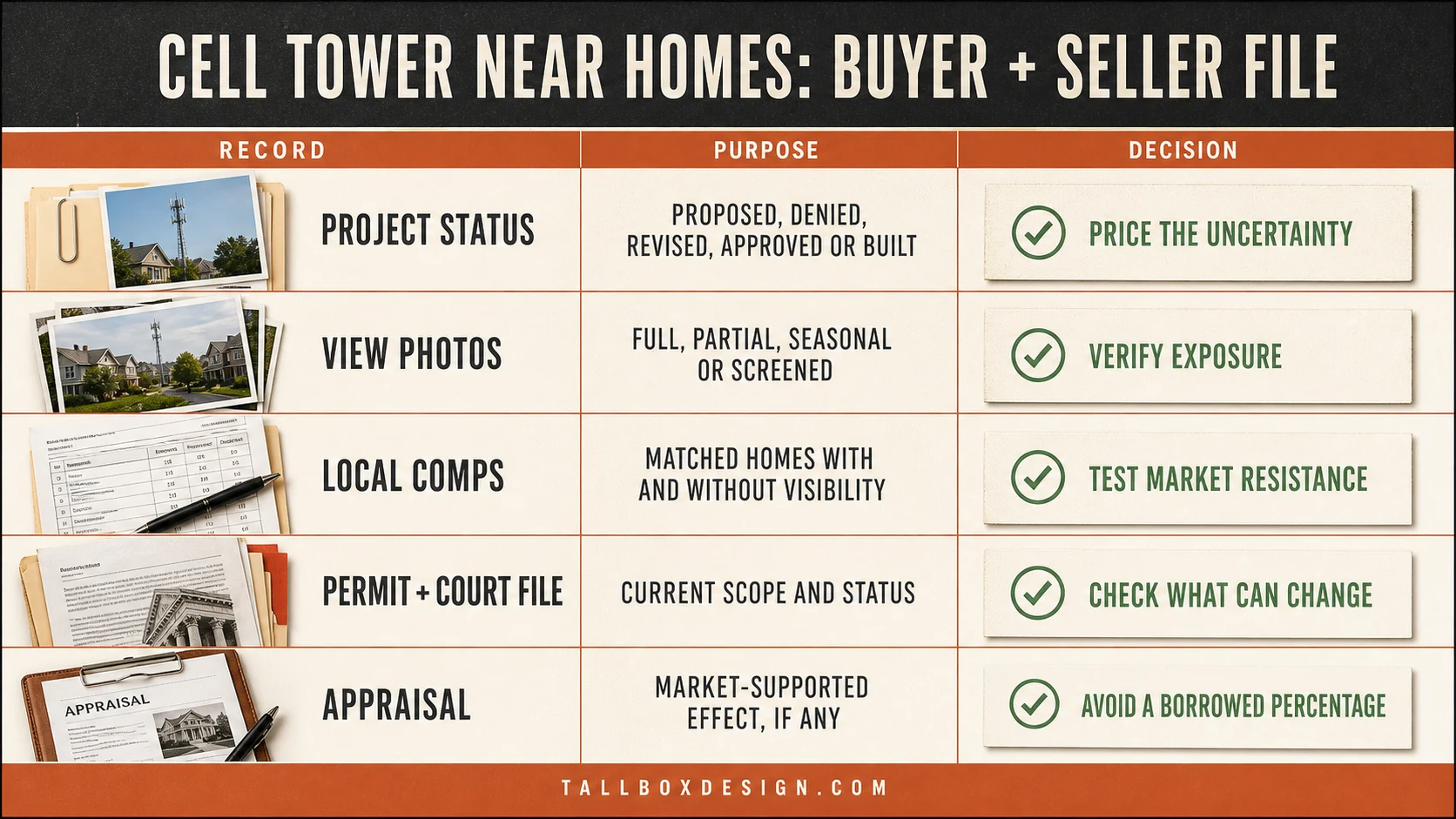
- Map the cell-tower project’s status. Separate proposed, denied, revised, litigated, approved, and constructed stages because each carries different uncertainty.
- Record the subject home’s cell-tower exposure. Note full, partial, seasonal, or screened visibility from primary living areas and outdoor spaces.
- Compare matched sales. Ask an appraiser or experienced local agent for similar homes with and without tower visibility, then compare sale price, marketing time, reductions, and concessions.
- Check disclosure duties. Local law and contract practice determine what a seller must disclose, so obtain jurisdiction-specific advice rather than assuming one national rule.
- Preserve dated evidence. Keep permit documents, photographs, simulations, and comparable-sale research with the transaction file.
Online search can locate a proposal but cannot verify the sightline or legal status from a listing page. Tallbox’s AI home-search buyer checklist explains why planning records, permits, and property evidence still require direct verification.
Camouflage is a design treatment, not a valuation warranty. A 140-foot cell tower should be evaluated through verified sightlines, a current permit record, and local comparable sales that show whether buyers resisted the visible structure.
Sources and current status
The Nissequogue cell-tower case, federal siting framework, visual methods, and valuation guidance were checked against the following sources.
- Realtor.com Knox School tower report
- Village of Nissequogue public notices
- Nissequogue federal court docket
- 47 U.S.C. 332(c)(7) wireless-facility siting framework
- 2024 Warsaw property-value study
- 2018 U.S. tower-value study
- 2011 Auckland cell-tower property-value study
- USGS explanation of viewshed analysis
- Fairfax County telecommunications visual guidance
- Fannie Mae site appraisal requirements