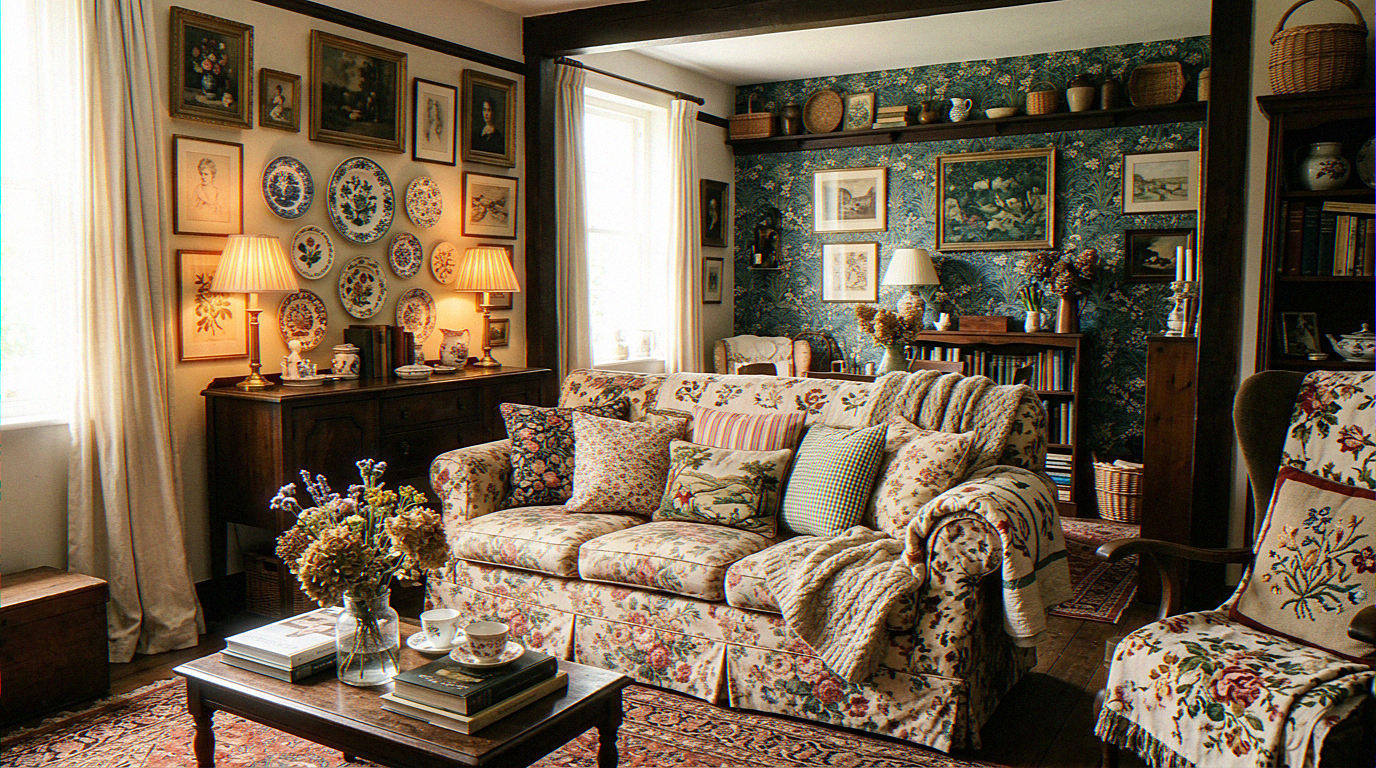
Grandmacore, the layered and deeply personal look once dismissed as fussy, has become the interior style younger homeowners most want to recreate. The clearest signal is restoration: interest in reviving old furniture and heirlooms jumped almost 2,700 percent in a single year. A room done well reads collected, not cluttered, and that line is harder to hold than it looks.
That 2,697 percent figure comes from Yelp’s 2026 Summer Home Trends report, which compares what homeowners search and book on its platform year over year. Those numbers matter here because they track people actively hiring pros, not just saving inspiration, so they preview what gets built and restored next. The same report names grandmacore and grandmillennial rooms as a defining look of the season.
Why did grandmacore go from dated to aspirational?
For years, open-plan minimalism set the default, and inherited furniture read as clutter to clear out. That has flipped. A home layered over decades by someone with strong taste now signals care and personality that a showroom set cannot buy.
Younger buyers are driving the revival. They want vintage and antique pieces precisely because those pieces carry character, craftsmanship, and a story, the opposite of flat-pack sameness. Restoration turns a hand-me-down that would once have been discarded into the anchor of a room, which is why the warm earth-tone palettes leading 2026 suit the style so well.
Resale is the other pull. A room that feels curated and personal photographs with warmth that an empty, gray-boxed space cannot match, and that warmth reads to buyers as a home rather than a listing.
The signatures that read as grandmacore
A handful of recurring elements do most of the work. Recognizing them makes the look easy to add in small, reversible steps rather than one full redecoration.
- Chintz and floral prints on upholstery, curtains, and cushions
- Needlepoint, crewel, and embroidered textiles, often inherited
- Skirted sofas and armchairs with a soft, tailored edge
- Plate walls and displayed ceramics that turn a collection into art
- Brass, warm wood, and patinated metal in place of cold chrome
- Patterned or scenic wallpaper, sometimes on a single accent wall
- Ruffled or pleated lampshades and layered, low lighting
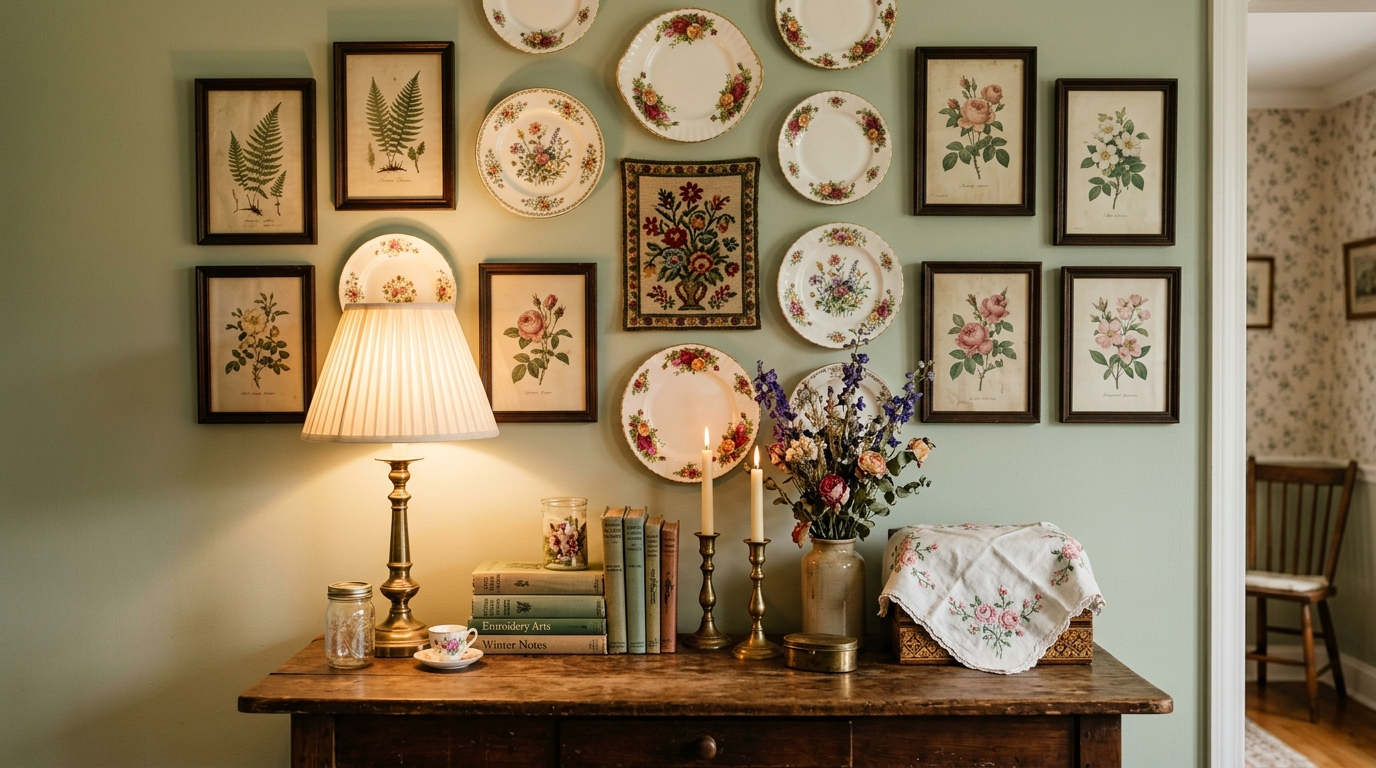
Collected versus cluttered: the line designers watch
Every layered room sits somewhere between collected and cluttered. The difference is rarely the number of objects; it is palette, pattern scale, and how much the room has been edited. The table below is the quick diagnostic a designer runs before adding one more piece.
Framework compiled from 2026 grandmillennial and collected-interior design guides; principles for judgment, not fixed rules.
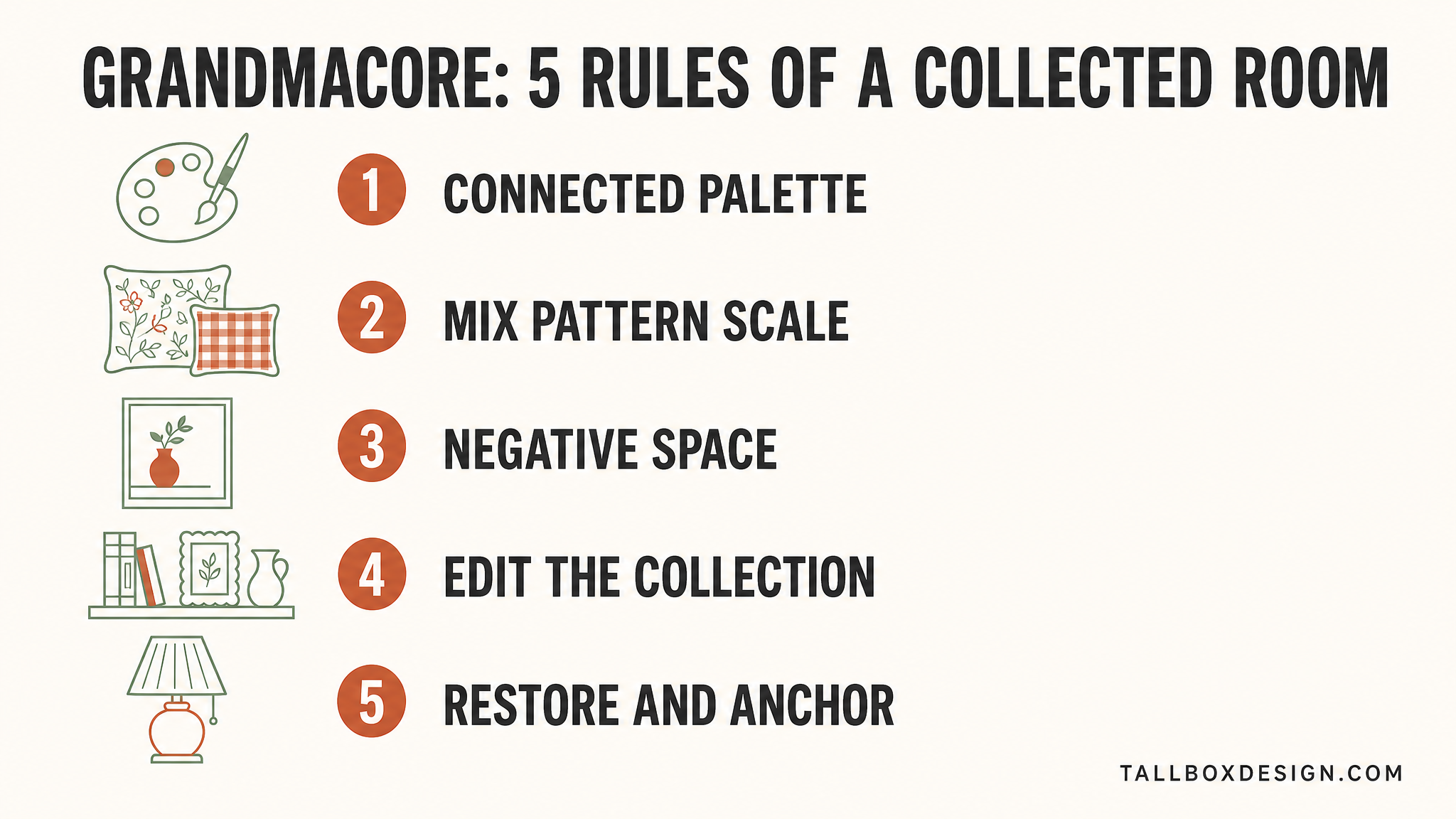
How to build a grandmacore room that reads intentional
A collected room is assembled in an order, not thrown together. These five moves are the ones that keep the layers legible instead of loud, and they work whether you are furnishing from scratch or folding a few inherited pieces into a room you already live in.
- 1Set one connected palette first. Choose a warm neutral base, then let two or three repeating colors travel across textiles, art, and walls so every layer feels related. How light falls in the room changes those colors, so test them where they will live.
- 2Mix pattern scale, not pattern count. Pair a small floral with a larger stripe or check; matching scales compete, while contrasting scales read as depth.
- 3Leave breathing room. Keep some surfaces and wall space clear so the pieces you love actually register instead of blurring together.
- 4Edit the collection. Group and rotate rather than display everything; a shelf of the best ten beats a shelf of forty.
- 5Restore, then anchor. Have one inherited or flea-market piece professionally restored and build the room outward from it.
Where to find grandmacore pieces
Grandmacore is friendly to a small budget because its raw material is secondhand. Estate sales, flea markets, thrift stores, and family attics supply the wood furniture, brass, framed art, and embroidered linens the look is built on. The spend that is rising is restoration, where a professional brings a worn heirloom back to daily use.
Restoration is where the budget goes. A found piece is cheap, but reupholstery, refinishing, or reweaving is the real cost, so restore the one or two pieces that will anchor the room and leave the rest as honest, lived-in finds.
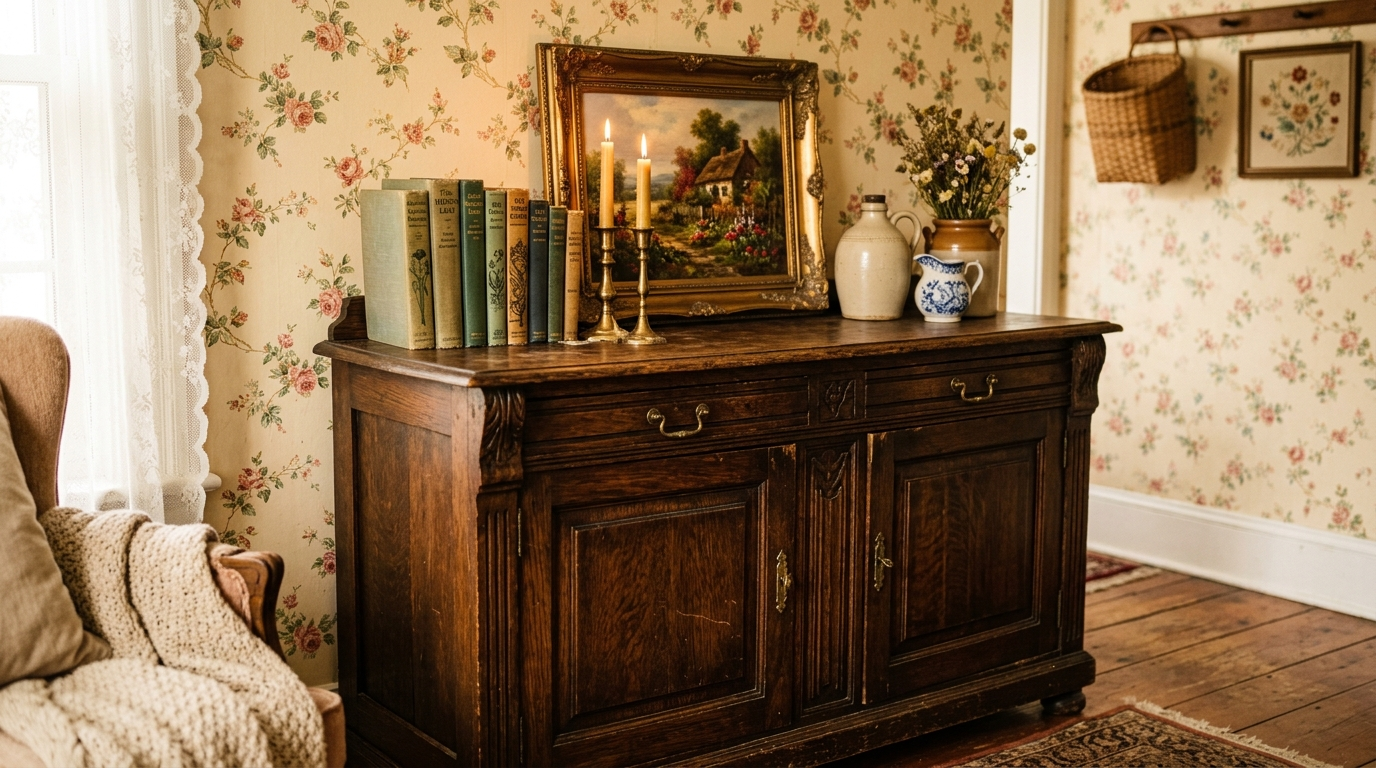
Test a collected scheme before you buy
The failure mode of grandmacore is spatial: patterns that clashed in a corner, or a beloved cabinet that overwhelms the wall it landed on. In our work as a visualization studio, layered interiors are the schemes clients most want to see first, because scale and palette conflicts are obvious in an image and expensive to discover after the pieces are home.
Testing a collected scheme as a 3D interior visualization lets you move an heirloom, swap a wallpaper, or thin the layers before a single purchase, and it makes the pattern-scale and palette calls from the table above concrete instead of guessed. It is the same instinct behind styling a room to read well to buyers, the logic covered in our guide to interior choices that help a home sell faster.
Grandmacore questions, answered
QWhat is grandmacore?
Grandmacore is a warm, layered interior style built from vintage furniture, mixed patterns, and heirlooms so a room feels collected over time rather than bought in one trip.
QIs grandmacore the same as grandmillennial?
Largely, yes. Grandmillennial is the millennial-driven version, mixing the same antiques, chintz, and needlepoint with modern comfort, and 2026 design coverage uses the two terms interchangeably.
QHow do I keep a collected room from looking cluttered?
Hold one connected color palette, contrast pattern scales, leave deliberate empty space, and edit each collection down to the pieces that carry a story.
QIs grandmacore expensive?
No. The furniture is mostly secondhand from estate sales and flea markets; the main optional cost is professional restoration of one standout piece.
QWill grandmacore date quickly?
Less than most trends. The look is built on antiques and craftsmanship that predate the label, and restored pieces tend to gain character with age rather than lose it, so a well-edited room ages gently.
The takeaway
Grandmacore rewards restraint more than it rewards stuff. A connected palette, contrasting pattern scale, and honest editing are what separate a room with soul from a busy one.
Start with one restored piece you love, build outward, and check the layers before you commit. The collected look is a decision, not an accident.