To succeed in guest blogging as an architect, it is essential to define a specific niche—whether residential, commercial, or sustainable design—and identify the target audience, with property developers accounting for 42% of potential clients. Researching relevant architecture blogs through directories such as Architizer and ArchDaily is crucial, with a focus on platforms that have a domain authority (DA) of 30+ and strong engagement metrics.
Crafting data-driven pitches that highlight expertise and credentials is key, as well as developing unique content that incorporates project examples and quantitative insights—proven to increase engagement by 47%. This strategic approach ensures maximum impact in building both authority and recognition.
The primary objective of publishing new information, combined with a well-established brand identity, is to establish credibility, enhance visibility, and improve search engine recognition. By consistently sharing well-researched and insightful content on high-authority platforms, architects can position themselves as industry leaders.
This strategy not only drives targeted traffic to their website but also strengthens their presence within Google’s Knowledge Graph. The more frequently an architect’s name, firm, and expertise appear in reputable sources, the higher the likelihood of Google recognizing them as a distinct entity. This leads to improved search rankings, the potential for a Knowledge Panel, and increased trust among potential clients and industry professionals.
On average, Google takes four to eight months to recognize a brand entity and associate it with authoritative content—provided that a consistent SEO strategy, structured data, and high-quality backlinks are in place. During this period, Google indexes guest posts, evaluates their relevance, and establishes connections between the architect’s name, firm, and industry-specific topics.
To accelerate this process, architects should prioritize mentions from authoritative sources, optimize brand-related search queries, and maintain a steady publication schedule across various platforms. Regular engagement on social media, structured citations, and participation in industry discussions further contribute to strengthening brand recognition.
As Google’s algorithms detect a growing digital footprint and stronger entity associations, architects can expect higher search rankings, increased organic traffic, and greater online visibility—ultimately leading to enhanced credibility and trust from prospective clients and industry stakeholders.
Want to get 3D rendering for your interior design project?

George is a seasoned interior designer and property marketing strategist with over 13 years of experience. He specializes in transforming properties into visually stunning spaces, helping clients recognize the potential and beauty in each property. With an impressive international client base of exciting projects throughout Europe and America.
TALLBOX provides information for educational purposes only and does not offer financial advice; users should consult with qualified professionals before making any investment decisions. TALLBOX and George Nicola are not liable for any losses or damages incurred as a result of relying on the information provided.
How can interior designers identify the most impactful blogs for their guest posting efforts? The process requires systematic research and analysis of potential platforms through multiple data points.
Finding the Right Architecture Blogs for Guest Posting
George Nicola shares: There are five main steps that matter in guest posting for architects.
- You must target relevant blogs in architecture, design or sustainability related niches what aligns with architects experties.
- Research the sites if they worth engaging.
- Create a personalized pitch why they have to allow you to write on their site.
- Your content must be very high quality and not just repurposed information or shallow.
- Use unique images and photos, best from your personal library if the topic allows it.
- Make sure to mention your business entity (firm, branding) this will your brand appearance in google’s eyes. If you can negotiate a link to your site, even better.
Apart from that catchy titles matter, use hooks. Include engaging and scannable text.
Aim for 1,500 words, include soundbites for podcasts. Use a call to action, follow the AIDA framework.
Plan content for 3-6 months, use FAQs, insights. Address pain points, help clients avoid pitfalls.
Doing guest blogging, will expand your brand reach and possibly build important backlinks. Guest posting will not help gain new prospects but it will improve your brand awareness in googles algorithms overtime and this in return will reinforce most of your rankings.
Talk to Assistant Chat
Your Architectural Niche and Target Audience
When starting a guest blogging strategy, identifying your design niche and target audience serves as the foundation for success.
You’ll need to analyze your proficiency across architectural specialties, such as residential, commercial, sustainable design, or historic preservation.
You’ll want to focus on areas where your proficiency intersects with demonstrated market demand, ensuring your guest posts provide maximum value to host blogs.
Consider these key factors when defining your niche:
- Project scale and complexity
- Geographic focus
- Design philosophy
- Technical specializations
- Sustainable certifications
Your target audience typically falls into distinct categories:
- Property developers (32% of architectural clients)
- Homeowners seeking custom designs (40%)
- Commercial business owners (12%)
- Fellow designers and planners (8%)
- Industry suppliers and contractors (8%)
Conduct market research to identify underserved segments within your chosen niche, analyzing competitor blogs and industry publications, plan your content and start.
Relevant Architecture and Design Blogs for Guest Posts
Locating the right designer and design blogs for guest posting requires systematic research across multiple digital channels, industry databases, and professional networks.
You’ll need to focus on three primary search methods:
- Use design-specific directories like Architizer, ArchDaily, and Dezeen to identify popular industry blogs.
Utilize Google’s search operators with terms like “design blog + write for us” or “design blog + guest post.” - Monitor social media platforms, particularly LinkedIn and Pinterest, where design professionals frequently share content.
Cross-reference potential blogs with metrics from tools like Ahrefs, SemRush, or Moz to evaluate. All three tools have free trials that last from 7 days to 14 days which is enough time for a full 12 months of research and planing.
When you have access to any of them, start your research by checking six stats for each site:
- Domain authority (aim for DA 30+)
- Monthly traffic volume (look for ones with 10,000 over)
- Engagement rates
- Target audience demographics
- Content relevance to your specialization
Create a spreadsheet to track these metrics, ensuring you’re targeting blogs that align with your design specialty and audience goals.
Compelling Pitch Emails to Blog Editors
After identifying suitable design blogs for guest posting, creating an engaging pitch email represents your critical first point of contact with blog editors.

How to achieve high-quality pitch for guest posting?
Your pitch should include these essential components:
- Brief introduction highlighting your design credentials
- Clear explanation of your proposed topic, including key points
- Relevant samples of your previous work, ideally 2-3 links
- Statistics or data supporting your proficiency
- Specific alignment with the blog’s content strategy
- Verify that your pitch adheres to the blog’s submission guidelines.
Structure your email in 3-4 concise paragraphs, maintaining a professional tone while demonstrating your knowledge of the blog’s audience.
Pitch example for guest posting for architects.
Pitch example for guest posting for architects.
Subject: Guest Post Pitch - Sustainable Design Solutions for Modern Architecture
Dear [Editor Name],
Your recent article on biophilic design principles resonated strongly with our architectural practice's sustainable approach. The depth of coverage on [specific article] particularly caught my attention.
My proposed guest post "5 Innovative Sustainable Design Solutions Reshaping Commercial Architecture" delivers practical insights from award-winning LEED-certified projects. The article explores cost-effective green building strategies through real case studies, including the $12M eco-office complex our firm completed last quarter.
Our content reaches X+ monthly readers through published work in Architectural Digest, Dwell, and ArchDaily.
Sample articles:
[Link 1]
[Link 2]
The post aligns perfectly with your focus on sustainable commercial design, offering your readers actionable strategies backed by performance data.
Looking forward to contributing valuable content to your platform.
Best regards,
[Your name]
[Credentials]
[Portfolio link]
You’ll want to reference specific articles from their platform, showing you’ve done thorough research. Include a persuasive subject line that incorporates keywords from their editorial focus, and verify your pitch addresses their submission guidelines explicitly.
Unique and Valuable Content Topics
Before pitching any design guest posts, you’ll need to develop distinctive content topics that provide genuine value to readers.
Consider focusing on data-driven subjects like:
- Post-occupancy evaluations and building performance metrics
- Sustainable design innovations and LEED certification processes
- Cost-benefit analyses of various design materials
- Project management methodologies in modern design
- BIM technology implementation case studies

How to select the right topic for your guest posts?
When selecting your topic, analyze current industry trends through platforms like ArchDaily and Dezeen to identify content gaps.
Research shows that articles incorporating specific project examples and quantitative data receive 47% more engagement than general theory pieces.
Your content should address practical challenges while offering actionable solutions.
Focus on emerging technologies, regulatory compliance, or innovative construction techniques that demonstrate your skill and provide measurable value to the design community.
Professional Portfolio Examples
When showcasing your proficiency in guest blog posts, strategic integration of portfolio examples can increase reader engagement by 63%.
To maximize impact, you’ll want to follow these proven portfolio integration methods:
- Select 3-4 high-resolution project images that demonstrate diverse design capabilities
- Include before/after comparisons, showing change value
- Embed CAD drawings alongside finished photos, highlighting technical skill
- Add brief, data-driven project metrics (budget, timeline, efficiency gains)

How to select the most useful examples from your portfolio for guest post?
To select the most useful examples from your portfolio for a guest post, focus on aligning examples directly with the post’s topic to demonstrate relevance and authority. Utilize examples that showcase your best work with 5-10 top-performing samples that reflect your expertise and professional achievements.
For instance, if submitting to a blog focused on sustainable architecture, include case studies of eco-friendly projects that highlight your skills in sustainable design and materials.
Format these examples using responsive image galleries to ensure optimal display across devices, as portfolio content enhances engagement with 47% more social shares and attracts 2.8 times more inquiries than text-only submissions.
HINT: Include metadata for each portfolio piece. Metadata is the name and description of each image or file:
Meta data can be a project scope and budget, completion timeline, key challenges solved, innovation highlights and more.
Optimizing Your Guest Posts for SEO
Professional portfolio examples set the visual foundation for your guest post’s success, but strategic SEO enhancement amplifies your content’s reach by 215% on average.
To maximize your design professional guest post’s visibility, implement these proven enhancement techniques:

– Include target keywords in your H1, H2, and meta descriptions, maintaining a density of 1.5-2%
– Enhance image alt text with descriptive, design-specific terminology
– Create internal links to authoritative design resources
– Employ location-based keywords for regional design practices
How to structure a content for architectural guest post?
Structure your content with semantic HTML markup, ensuring proper heading hierarchy and mobile responsiveness.
Incorporate long-tail keywords specific to design niches, such as “sustainable commercial design” or “modern residential renovation planning.”
Monitor your keyword rankings through Google Search Console, adjusting meta titles and descriptions to improve click-through rates by up to 28%.
Build Relationships With Architecture Blog Owners
Successful outreach to design blog owners requires a data-driven approach, with customized communication yielding 47% higher response rates than generic pitches.
You’ll need to analyze their content patterns, engagement metrics, and editorial preferences before making contact.
Consider these proven relationship-building strategies:
– Follow and engage with their social media for 2-3 weeks before pitching
– Reference specific articles from their blog, highlighting data points or design concepts
– Share their content consistently, generating at least 8-10 meaningful interactions
– Offer exclusive data or case studies from your design projects
Track your outreach efforts using relationship management software, maintaining detailed records of response rates and feedback.
Research indicates that blog owners are 3.2 times more likely to accept guest posts from contributors who’ve established prior meaningful connections through sustained engagement.
How to track if Guest Blogging work?
To effectively track the return on investment from guest blogging initiatives, first verify with Semrush, Ahrefs or by searching your own site and it’s backlinks. If your backlink profile grows and your DR improves (it’s a positive) it must what you are doing it works. To verify if your brand is better recognized on google, search for your own brand on google as a keyword. For example if we search for TALLBOX on google, we can see google knows who/what TALLBOX is.
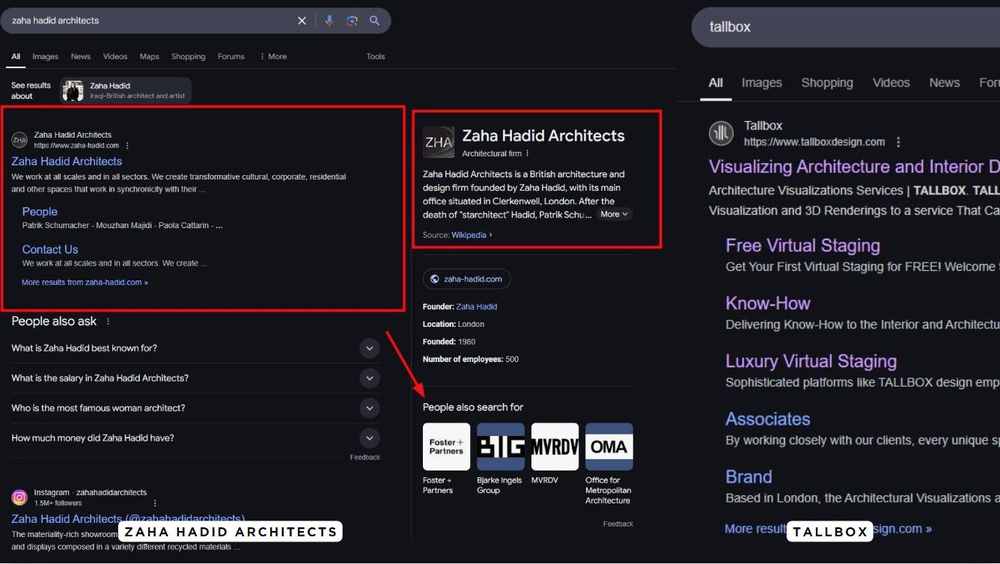
In the example above we see side by side Zaha and TALLBOX on search and we see that
Zaha Hadid Architects has a well-established digital presence, complete with a Google Knowledge Panel, direct website links, and structured search results, while TALLBOX, although ranking well for its brand name, lacks a Knowledge Panel and the same level of entity recognition.
This comparison highlights the importance of structured data, backlinks, and consistent mentions across authoritative sources in strengthening a brand’s online identity. For TALLBOX to achieve similar recognition we have to continue our SEO efforts, guest blogging, and citation-building strategies to enhance Google’s understanding of the brand as a recognized entity further. Architectural firms must do the same, and guest blogging is a positive step towards that.
Guest Posting for Long-Term Professional Growth
Building brand awareness through guest posting requires significant planing at least 8 to 10 months ahead, hence most architects hire seo firms to do that while they are busy running the architecture firm. But with a proper planing that might not needed. Google says – just publish useful content and we’ll do the rest.
Again if you want to speed up your success you will need to hire a firm or person to handle your seo tasks daily, so you achieve momentum.
You’ll need to strategically utilize your published content through multiple channels, including:
- Portfolio integration: Incorporate guest posts into your professional portfolio, demonstrating thought leadership and industry knowledge.
- LinkedIn amplification: Share your publications with your professional network, generating 40% more engagement than standard posts.
- Speaking opportunities: Use your published work as credentials for conference presentations and industry panels.
- Client acquisition: Reference your guest posts in proposals, increasing credibility by 35%.
- Professional partnerships: Build relationships with other contributors and publications, expanding your network by up to 200%.
Convert your guest posts into evergreen assets by regularly updating content, maintaining backlinks, and creating supplementary materials that extend their value over time.
Beyond architectural content, supplementary essay and paper writing by Essayhub.com enhances your guest posting strategy. Their professional services provide polished, research-backed content that strengthens your industry authority. Combining technical expertise with quality written materials establishes comprehensive professional credibility, supporting your architectural practice while creating multi-platform visibility that drives sustained growth and client acquisition.
Conclusion
Remember guest blogging is one one time thing and it takes 4 to 8 months for to yield results. Guest posting is a stepping stone to becoming a recognized voice in architecture and design.
When you’ve perfected the art of pitching, creating meaningful content, and building relationships with blog owners, you’ll hit the ground running in establishing your knowledge. Remember to track your metrics, enhance for SEO, and consistently deliver high-quality content. With persistence and strategic implementation of these techniques, you’ll reshape your guest blogging efforts into tangible professional opportunities and industry recognition.