You’ve found it—the perfect new construction home. The floor plan is exactly what you dreamed of, the finishes are modern, and you can almost smell the fresh paint. But then comes the big question: is the $450,000 price tag justified for this neighborhood?
This is a critical moment in your journey of buying a new home, a moment where excitement meets financial prudence. How do you find out if the price the builder is asking for is truly on point for the location and the quality of the build?Buying a new construction home isn’t like buying an existing property. It involves a unique set of pricing dynamics, premiums, and considerations that require a specialized evaluation method.
You aren’t just buying a house; you’re investing in a product, a builder’s reputation, and the future of a developing area. This guide is designed to give you the clarity you need. We will show you exactly how to determine if your new construction home’s price aligns with its true market value and the standards of the location.
By learning the professional techniques to evaluate new construction pricing before you sign on the dotted line, you can potentially save thousands of dollars and, more importantly, gain the confidence that you’re making a sound investment in your future.

George is a seasoned interior designer and property marketing strategist with over 13 years of experience. He specializes in transforming properties into visually stunning spaces, helping clients recognize the potential and beauty in each property. With an impressive international client base of exciting projects throughout Europe and America.
This comprehensive guide is designed for you: the client who is currently dealing with a failing project or the savvy homeowner looking to prevent these issues from the start.
We will walk you through the common ways contractors cause project breakdowns, how to spot the warning signs, and what you can do to reclaim control. We’ll explore everything from communication strategies and legal remedies to a bulletproof vetting process, providing actionable solutions to protect your investment and your peace of mind.
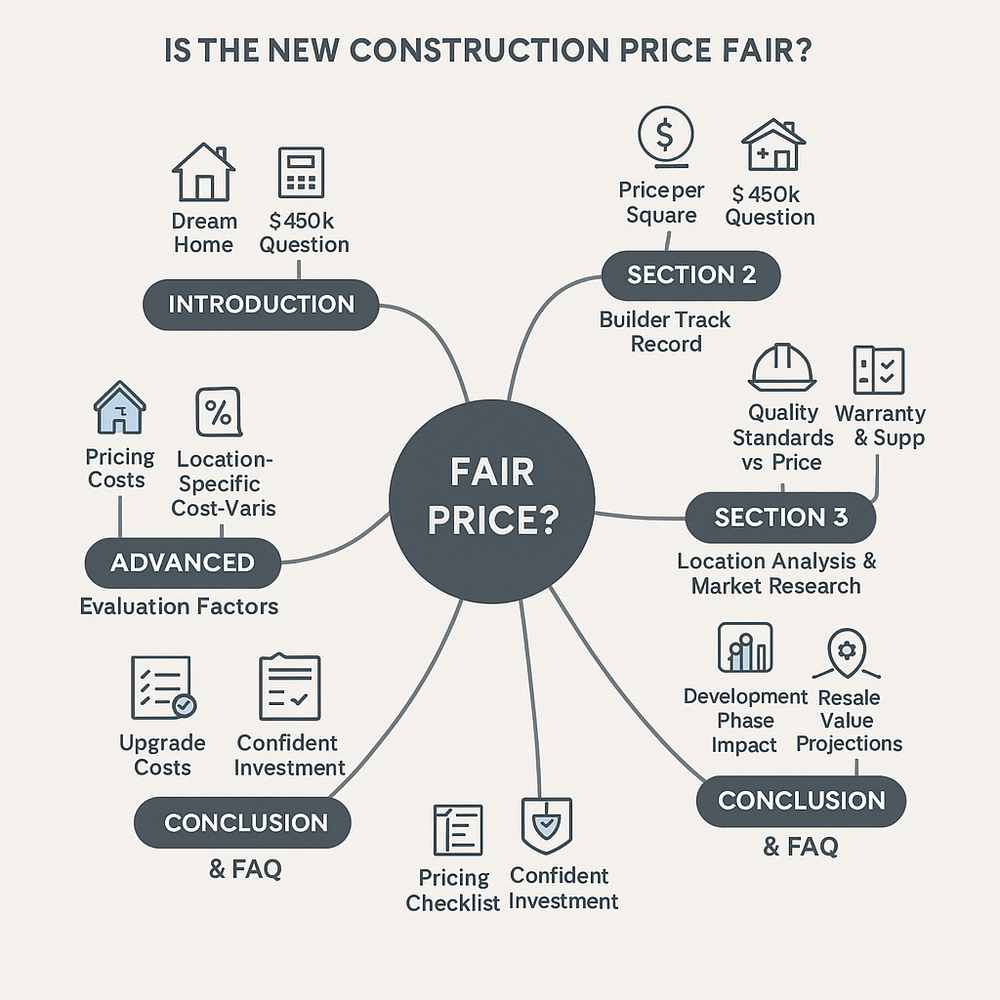
Section 1: Understanding New Construction Pricing vs. Market Value
The first step in determining if a new build’s price is fair is to break down the numbers beyond the sticker price. New construction homes often come with a “premium,” but it’s your job to verify if that premium is warranted. This involves a mix of objective calculations and an understanding of the subtle factors that influence cost.
Price Per Square Foot Analysis Methods
One of the most common metrics for comparing property values is the price per square foot. However, for new construction, a simple comparison to existing homes can be misleading. Here’s a more nuanced approach:
- Isolate the New Construction Comps: Instead of comparing your potential home to a 20-year-old house down the street, find other new or recently built homes (under 2-3 years old) in the same or a very similar neighborhood. Calculate their price per square foot by dividing the final sale price by the home’s square footage.
- Compare Builder to Builder: If possible, analyze the price per square foot for different homes within the same development and by the same builder. Are there discrepancies? Also, compare these figures to those of competing builders in nearby new developments. This helps you understand if the builder’s pricing is competitive within the new construction market itself.
- Account for Basements and Garages: Be consistent. When calculating square footage, know whether finished basements, garages, or outdoor living spaces are included in the total. Appraisers often value these spaces differently, so for an accurate comparison, try to use the “above-grade” living area as your primary metric.
Using these price per square foot comparison metrics allows you to create a baseline. If your target home is priced at $225 per square foot, while comparable new builds are selling for $205-$215, it’s a clear signal to investigate further.
New Construction Premium Factors

Modern Building Codes & Safety Standards: Newer homes are built to the latest codes, often incorporating advanced fire safety, electrical, and structural requirements. This can increase construction costs but offers long-term peace of mind.
Energy Efficiency: Modern windows, insulation, and high-efficiency HVAC systems result in lower utility bills. An Energy Star-certified new home can be up to 30% more efficient than an older home, a value you’ll realize every month.
New Everything: From the roof to the water heater and appliances, everything is brand new and under warranty. This significantly reduces the likelihood of major repair bills in the first 5-10 years of ownership, a major financial risk with older homes.
Customization: The ability to choose your own finishes, fixtures, and even floor plan modifications is a significant draw for which builders charge a premium.
A typical new construction premium can range from 10% to 20% over a comparable older home. When you see a higher price, ask yourself if these factors justify the difference.
Location-Specific Cost Variations
The adage “location, location, location” is doubly true for new construction. The base cost to build a home is not uniform across the country, or even across a single metropolitan area. These geographic pricing variations are crucial to understanding the final price.
Land Costs: The price of the raw land is one of the biggest variables. A lot in a desirable, established suburb will cost exponentially more than one in an undeveloped rural area, and that cost is passed directly on to you.
Labor and Material Costs: Construction labor rates and the cost of materials like lumber, concrete, and drywall fluctuate based on regional demand and supply chains. A builder in a booming city with a labor shortage will have higher costs than one in a region with a surplus of skilled tradespeople.
Permitting and Impact Fees: Municipalities charge builders fees to connect to public utilities, fund local schools, and improve roads. These fees can vary by tens of thousands of dollars from one town to the next, directly impacting the home’s final list price.
Understanding these foundational costs helps you see why an identical home model can have a different price just a few miles away. When assessing if your new home’s price is fair for the location, you’re not just evaluating the house itself, but the entire economic ecosystem it’s built in.
Section 2: Evaluating Builder Reputation and Pricing Strategy
The price tag on a new construction home is as much about the builder as it is about the building. A home built by a reputable company with high standards and excellent post-sale support holds its value better and provides a superior ownership experience. Therefore, determining if the price is fair requires a deep dive into the builder behind the home.
Builder Track Record Assessment
Before you fall in love with a floor plan, you should investigate the builder’s history. A builder with a solid track record is a cornerstone of a fair new construction deal.
- Online Reviews and Testimonials: Look beyond the curated reviews on the builder’s website. Search for reviews on independent platforms like Google, Trustpilot, and the Better Business Bureau. Look for patterns in complaints—are they about timeline delays, quality issues, or warranty claims?
- Talk to Current Residents: The best source of information is people who already live in the builder’s homes. Visit one of their completed communities and knock on a few doors. Ask homeowners about their experience during and after the build. Were they satisfied with the quality? How did the builder handle issues that arose?
- Check for Licenses and Litigation: Verify that the builder is licensed and insured in your state. A public records search for lawsuits against the builder can also be revealing. A history of litigation with subcontractors or homeowners is a major red flag.
A premium price might be justifiable for a builder with a stellar, decades-long reputation for quality and customer satisfaction. Conversely, a low price from a builder with a checkered past might not be a bargain at all.
Quality Standards vs. Price Point
Not all new homes are created equal. The price should directly reflect the quality of the materials and craftsmanship. It’s essential to perform construction quality benchmarking to know if you’re getting what you pay for.
- Visit the Design Center: Pay close attention to the “standard” finishes versus the “upgrades.” A builder might advertise a low base price but use builder-grade, low-quality materials as the standard, forcing you into expensive upgrades. High-quality standard inclusions (e.g., reputable window brands, solid-core doors, quality flooring) are a sign of a better value proposition.
- Inspect a Home Under Construction: Ask to walk through a home at various stages of construction. Look at the framing—is the lumber straight and well-joined? Observe the insulation and a/c duct work installation. Is it neat and thorough? The quality of what’s behind the walls is often more important than the cosmetic finishes.
- Compare to Competitors: Visit model homes from other builders in a similar price range. Take detailed notes and photos of the brands of appliances, windows (e.g., Pella vs. a generic brand), HVAC systems (e.g., Trane vs. an off-brand), and the quality of the cabinetry and trim work. This direct comparison will help you gauge whether your builder’s quality standards align with their price point.
A key indicator of a builder’s quality—and a justification for their pricing—is a proven track record in handling complex projects. While many builders can construct a house on a flat, easy-to-build-on lot, specialists who master difficult terrains often set a benchmark for quality.
For example, a builder who excels at creating homes on challenging, sloping sites, like the award-winning designs by Montgomery Homes, demonstrates a higher level of engineering and design expertise. This established expertise is a tangible part of their value proposition, assuring buyers that the price reflects a superior, more resilient end product.
Warranty Value and Post-Construction Support
A new construction home’s warranty is a significant part of its value proposition. A strong warranty and responsive support system can save you from costly headaches down the road.
- Understand the Coverage: A typical builder warranty is a “2-10” warranty. This usually covers workmanship and materials for the first year, systems (plumbing, electrical, HVAC) for two years, and major structural defects for ten years. Read the fine print carefully. What is excluded? What is the process for filing a claim?
- Evaluate the Warranty Provider: Is the warranty directly from the builder or backed by a third-party insurer? A third-party warranty can offer more protection if the builder goes out of business. Research the reputation of the warranty company itself.
- Assess the Support System: How does the builder handle warranty claims? Do they have a dedicated customer service portal and team, or do you have to chase down the site supervisor? Ask current residents about their experience with warranty repairs. A builder who stands behind their product with prompt, professional service adds real value to the home’s price.
A comprehensive, well-supported warranty is a key component in assessing if the price of your new construction is fair for the total package you are receiving.
Section 3: Location Value Analysis and Market Research
While the builder controls the quality of the house, the location dictates its long-term value. A fair price today should also represent a wise investment for tomorrow. Conducting thorough market research on the location is non-negotiable when buying a new home.
Comparative Market Analysis Techniques
A Comparative Market Analysis (CMA) for new construction requires a forward-looking perspective. You’re not just looking at past sales but trying to establish the market value for a home that may not even be complete.
- Focus on New Construction Comps: As mentioned before, prioritize comparing your home to other new builds. Look at recent “pending” sales in the development, as these are the most current indicators of what buyers are willing to pay.
- Factor in Lot Premiums: In most new developments, not all lots are priced equally. A lot backing onto a conservation area, a corner lot, or one in a cul-de-sac will have a lot premium. Ask the builder for a plat map that shows these premiums. If your home is on a standard lot, it shouldn’t be priced the same as one on a premium $30,000 lot.
- Adjust for Upgrades: When comparing your potential home to a recently sold new build, try to determine the level of upgrades in the sold home. A home with $50,000 in high-end upgrades will have a higher sale price, and you need to account for that difference when evaluating the price of your home with its selected finishes.
Neighborhood Development Phase Impact
The timing of your purchase within a new community’s lifecycle can significantly influence price and immediate equity.
- Phase 1 (Pioneering Phase): Early buyers often get the lowest prices. Builders offer introductory pricing to generate buzz and sales momentum. However, these buyers also endure the most construction noise, dust, and uncertainty about the final look and feel of the neighborhood.
- Mid-Phases (Momentum Phase): As the community becomes more established and amenities are completed, prices steadily rise. The builder has proven demand and reduces incentives. You have a better sense of the community’s character, but you’ll pay more than the pioneers.
- Final Phase (Close-Out Phase): In the final phase, builders are motivated to sell their remaining inventory lots and move on to the next project. This can be an opportunity to negotiate, especially on standing inventory homes. However, lot selection will be limited.
Undestand which phase the development is in helps you assess if the current price reflects the associated risks and benefits. An early-phase price should be lower to compensate for the inconveniences and unknowns.
Future Resale Value Projections
A fair price isn’t just about the present; it’s about the future. Your home is an investment, and you need to evaluate its potential for appreciation.
- Community Master Plan: Look at the master plan for the entire development and the surrounding area. Are new schools, parks, or commercial centers like grocery stores and restaurants planned? Future amenities can significantly boost property values.
- Local Economic Growth: Research the economic health of the city or county. Is the area attracting new jobs and businesses? Population and job growth are strong drivers of housing demand and, consequently, value appreciation.
- Infrastructure Projects: Are there planned road improvements or public transit expansions? Improved accessibility can make a neighborhood more desirable over time.
By conducting these investment return calculations—or at least a qualitative assessment—you can better judge if the new construction price is fair not just for the house today, but for the asset it will become in the future.
Advanced New Construction Evaluation Factors
Beyond the core pillars of price, builder, and location, several other critical factors play into whether a new construction home’s price is truly fair. These details can have a significant impact on your final cost and overall satisfaction.
- Upgrade and Customization Costs Evaluation: Builders make a substantial portion of their profit from upgrades. Scrutinize the design center price list. A $5,000 credit might sound generous, but it may not cover much if a basic countertop upgrade costs $4,000. Get a detailed breakdown of costs for your desired customizations before signing a contract to avoid surprises.
- Timeline Delays and Cost Escalation Clauses: Review the contract for clauses related to construction delays and cost increases. Many contracts now include an escalation clause, allowing the builder to pass on unexpected increases in material or labor costs. Understand the cap on this clause. A fair contract will have a reasonable limit, while an unfair one could leave you with an unexpectedly higher final price.
- Included Features and Standard Specifications: Create a checklist to compare the standard features of different builders. One builder’s “standard” might include granite countertops and stainless steel appliances, while another’s is laminate and basic white appliances. These differences are a huge component of value. Don’t be swayed by a lower base price if it means you’ll have to pay thousands more to get the features that are standard elsewhere.
- Financing and Appraisal Considerations: When you seek financing, the bank will order an appraisal. If the home appraises for less than your contract price, you will be responsible for covering the difference out of pocket. This is the market’s ultimate reality check. Ask the builder if they have had recent appraisal issues in the neighborhood. Using a builder’s preferred lender might offer some benefits, but always compare rates with outside lenders to ensure you’re getting a competitive deal.
CONCLUSION
Figuring out if the price of your new build home is fair for the area can be tricky, but it’s really important. It’s more than just dividing the price by the square footage.
By looking at three key things—what similar homes are going for, the builder’s reputation, and the potential of the location—you can make a smarter decision. A fair price is where a quality home, a trusted builder, and a good location all come together to give you real value.
Your action items are clear: create a pricing evaluation checklist based on the factors in this guide. Diligently research comparable new construction sales and builder track records.
Don’t be afraid to ask tough questions and negotiate from a position of knowledge. Armed with this comprehensive approach, you can be confident that the price you agree to is fair and that your new house will be a wonderful home and a sound investment for years to come.
FAQ
How much extra should I expect to pay for a new construction home?Usually, new builds cost about 10% to 20% more than similar existing homes in the same area. This extra cost covers modern standards, energy efficiency, everything being brand new and under warranty, and the option to customize finishes. The exact amount can change depending on the local market, the builder’s quality, and how popular the new community is.
How can I compare new construction prices to existing homes?The best way is to find an existing home that’s as similar as possible in age, size, style, and location. Then, adjust its price upwards to include the value of new systems like the roof and HVAC, as well as any renovations it might need to match the quality of a new build. Also, remember that new homes usually have lower utility bills and maintenance costs in the first few years. Making these adjustments helps you compare more fairly instead of just looking at list prices.
How do I tell if a builder’s prices are competitive?Compare their price per square foot to other new builders in the area, not older homes. Visit model homes from different builders, get their price lists, and check what’s included as standard. Be sure to look at the quality of those features. A builder might have a lower starting price but might also require costly upgrades or have lower-quality standard features, which could make it less of a deal overall.
What location factors matter most for new construction value?
Key factors include the quality of local schools, how close the community is to jobs, shopping, parks, and other amenities, and whether there are plans for future development like new roads or commercial centers. The specific lot also matters—lots with good views, privacy, or on cul-de-sacs often add extra value.
Should I wait until the neighborhood is finished before buying new construction?
There are advantages and disadvantages. Buying early (pre-construction or in the first phases) can mean a lower price, but it also means dealing with construction noise and uncertainty about how the neighborhood will turn out. Waiting until the area is nearly complete means you see exactly what you’re getting, with amenities in place and less disruption. But prices are usually higher, and your options for lots and floor plans are more limited. It depends on your comfort with risk and what matters most to you.