A bar chair is a type of elevated seating designed specifically for counters and islands, typically ranging in height from 24 to 32 inches. According to the National Kitchen & Bath Association (NKBA), the correct stool height and style can increase ergonomic efficiency by up to 35% in daily use. There are five main bar chair styles tailored to match distinct kitchen aesthetics—modern, rustic, industrial, Scandinavian, and farmhouse—each emphasizing different materials, finishes, and design philosophies.
“The key is aligning the bar chair’s function with the kitchen’s form,” says interior specialist George Nicola of TallboxDesign Studio. “When you get the proportion, material, and usage right, it becomes part of the flow rather than just furniture.”

George is a seasoned interior designer and property marketing strategist with over 13 years of experience. He specializes in transforming properties into visually stunning spaces, helping clients recognize the potential and beauty in each property. With an impressive international client base of exciting projects throughout Europe and America.
Well-selected bar chairs enhance spatial harmony, support long-term posture health, and reinforce your kitchen’s thematic tone. Their effectiveness is measured by how well they balance three benchmarks: style congruence, comfort under repeated use, and durability relative to daily wear. To improve efficiency, always start by identifying the kitchen’s counter height, user demographics (e.g., children vs. adults), and clearance space between seating and walkways.
Avoid defaulting to appearance alone—prioritize ergonomics, materials suited for kitchen climates (humidity, spills, heat), and finishes that coordinate with cabinetry, hardware, or countertops. This strategic approach ensures your bar chairs are not only visually integrated but also long-lasting and ergonomically sound.
Why Kitchen Bar Chairs Matter?
Bar chairs bridge kitchen function and social life. Poor choices cause discomfort, style clashes, and wasted space.
Your bar chairs affect three core areas:
Daily comfort: Weak ergonomics make meals and conversations tiring
Visual cohesion: Mismatched styles break design flow
Space efficiency: Wrong proportions crowd walkways or leave gaps
The most common mistake? Choosing on appearance alone and ignoring style and functional requirements.
Step 1: Identify Your Kitchen Style
Match chair style to your kitchen’s dominant design language. Modern favors sleek lines, rustic favors natural textures, and industrial favors raw materials.
Modern Kitchen → Sleek, Minimal Chairs

Key characteristics: Clean lines, neutral colors (white, black, gray), handleless cabinets, quartz or concrete countertops.
Best chair matches:
- Powder-coated metal stools in matte black or white
- Molded plastic chairs with geometric shapes
- Chrome or brushed steel swivel stools
- Transparent acrylic for visual lightness
Avoid: Heavy upholstery, ornate details, warm wood tones that compete with cool surfaces.
Rustic Kitchen → Wooden, Natural Textures
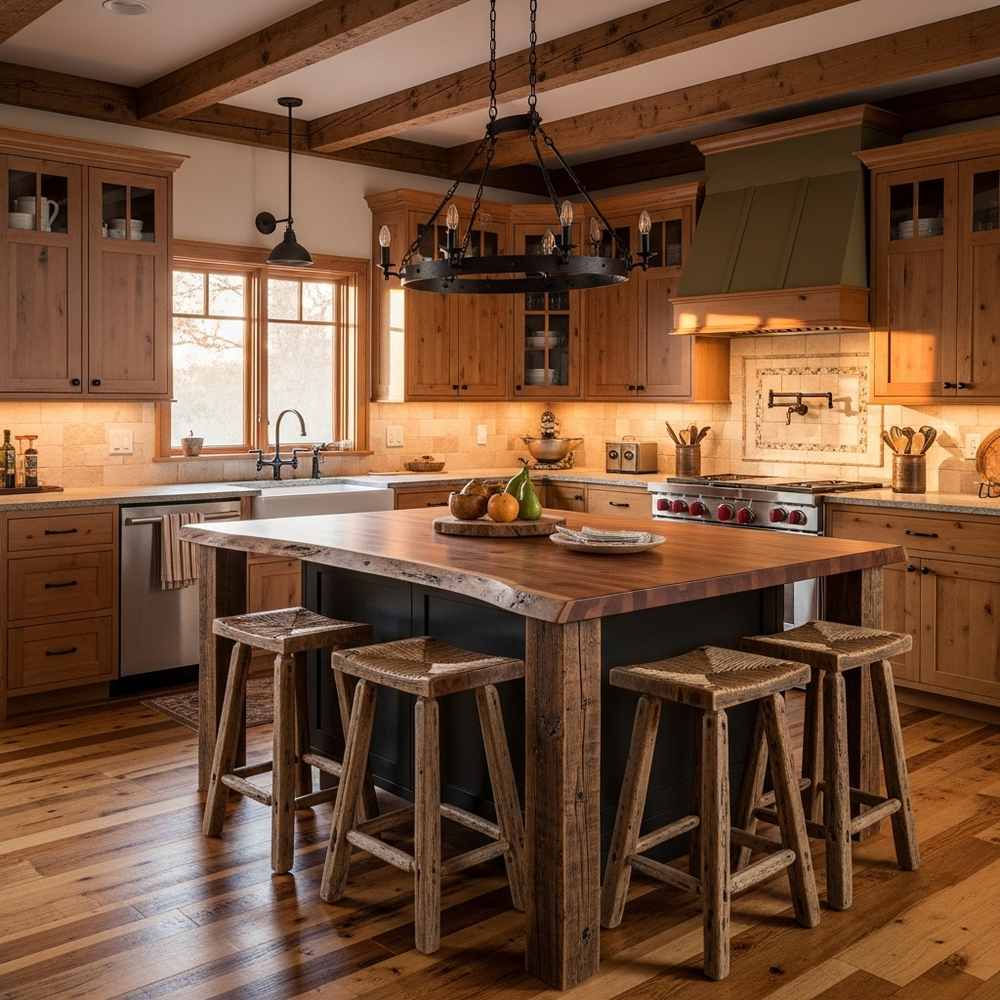
Key characteristics: Natural wood cabinets, stone or butcher block counters, exposed beams, warm earth tones.
Best chair matches:
- Solid wood stools in oak, pine, or reclaimed barnwood
- Live-edge seats with natural grain
- Woven rush or rattan tops
- Distressed finishes that show character
Avoid: Chrome or polished metals, synthetic shells, overly geometric shapes.
Industrial Kitchen → Metal, Raw Finishes

Key characteristics: Exposed brick, stainless appliances, concrete floors, Edison lighting, dark palettes.
Best chair matches:
- Steel stools with rivets
- Cast-iron bases with wood seats
- Weathered finishes (gunmetal, raw steel)
- Vintage factory styles with adjustable height
Avoid: Soft pastels, delicate fabrics, ornate details.
Scandinavian/Minimal → Light Wood, Clean Lines
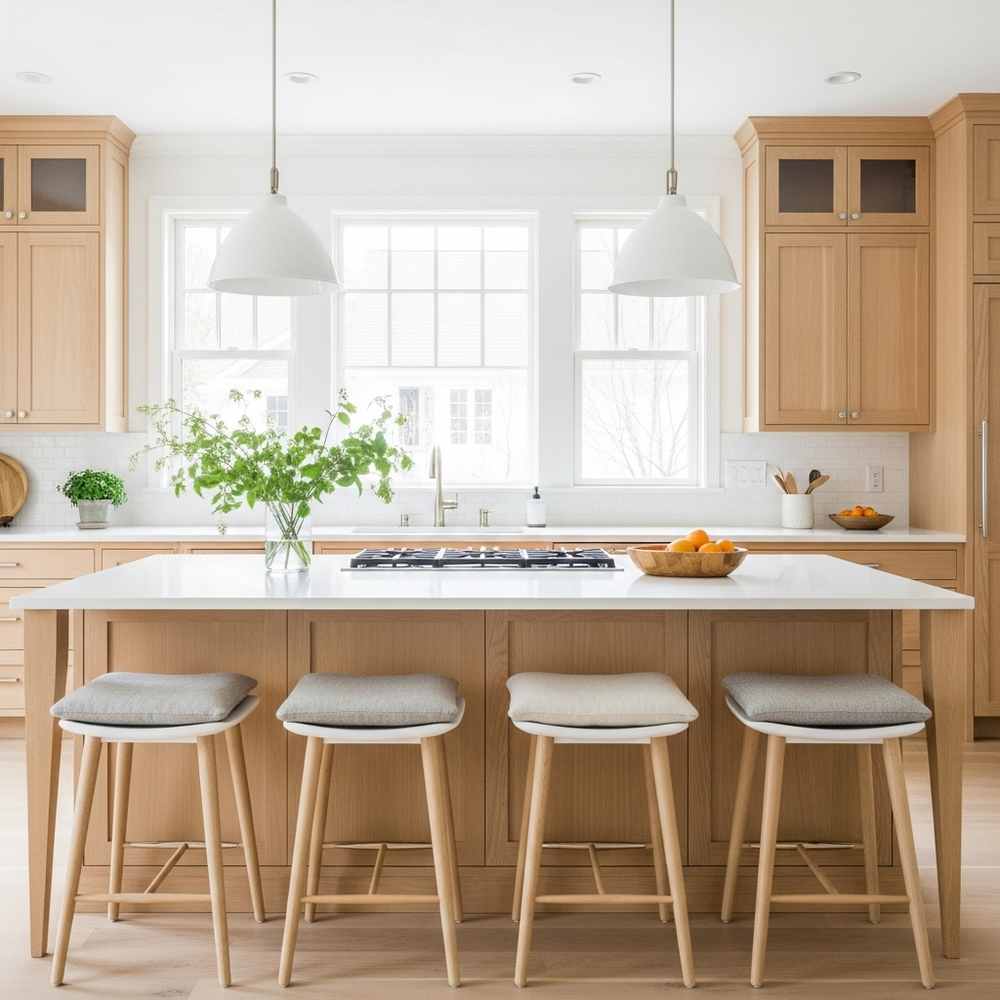
Key characteristics: Light wood (birch, ash), white walls, simple hardware, abundant natural light, function-first design.
Best chair matches:
- Blonde wood stools with tapered legs
- White or light gray seats
- Simple geometric silhouettes
- Natural-fiber cushions (linen, wool)
Avoid: Dark woods, heavy ornament, bold colors that overwhelm.
Farmhouse → Upholstered, Cozy Seating
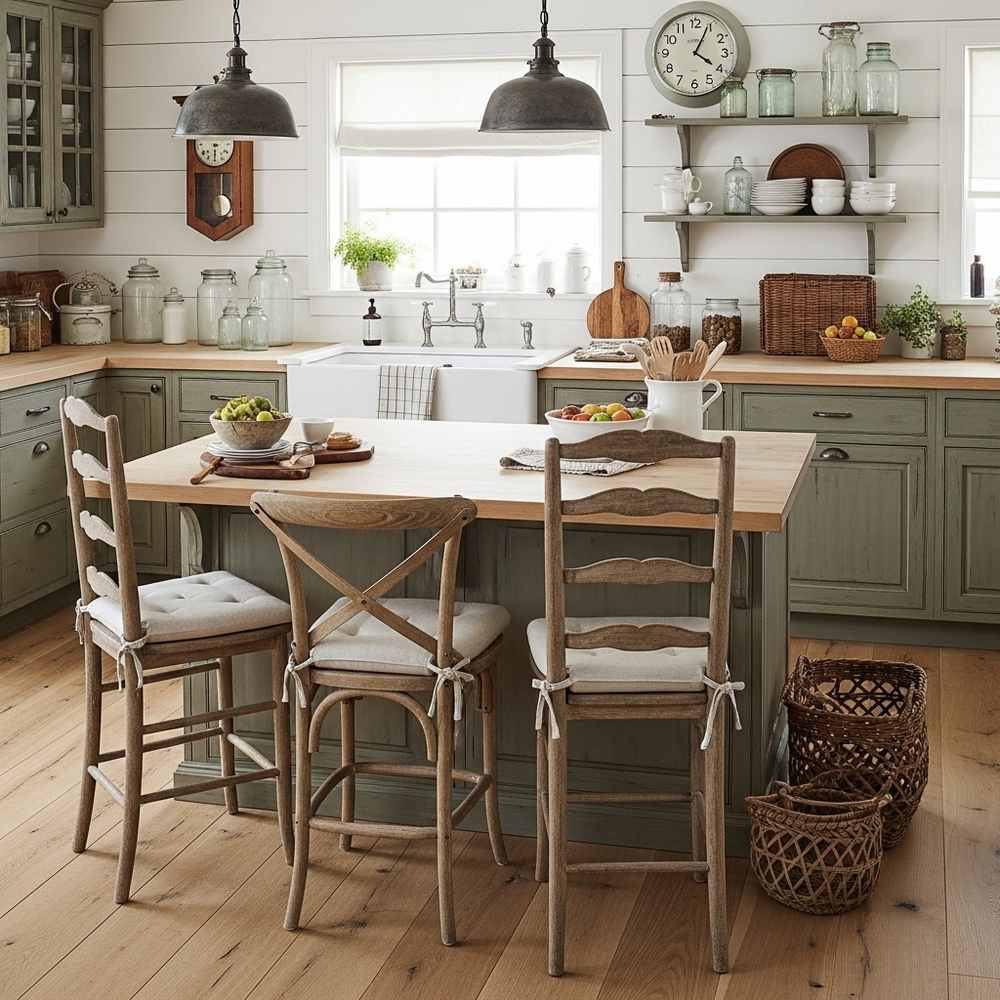
Key characteristics: Painted wood cabinets, apron-front sinks, shiplap, vintage accents, warm and welcoming feel.
Best chair matches:
- Upholstered seats in linen or cotton
- Ladder-back wood chairs
- Cross-back designs with cushions
- Mixed materials (wood base, fabric seat)
Avoid: Ultra-modern plastics, cold metals without wood, stark geometric forms.
Step 2: Understand Bar Chair Types
Decide on backrest support, height adjustment, swivel, and armrests. Each affects comfort and function.
Bar Stool vs. Bar Chair with Backrest
Bar stool (backless):
- Pros: Compact, tucks fully under counters, easy to move, often cheaper
- Cons: Minimal back support, less comfortable for meals
- Best for: Occasional use, small spaces, modern aesthetics
Bar chair (with backrest):
- Pros: Better ergonomics, comfortable for longer sitting, supportive for older users
- Cons: Needs more clearance, usually pricier, may not fit under counters
- Best for: Daily dining, families, long conversations
Adjustable vs. Fixed Height
Adjustable height:
- Pros: Fits multiple counter heights, accommodates users, flexible for renovations
- Cons: Moving parts can wear, typically pricier, potential wobble over time
- Best for: Multi-use spaces, varied user heights, rentals
Fixed height:
- Pros: Stable, simple, often cheaper, clean look
- Cons: Must match counter height, less versatile
- Best for: Permanent setups, consistent heights, minimalism
Swivel vs. Static
Swivel:
- Pros: Easier entry/exit, better conversation flow, allows movement
- Cons: Encourages fidgeting, can wear out, kids may overuse
- Best for: Social spaces, kitchen islands, entertaining
Static:
- Pros: Stable, low maintenance, often cheaper, fewer distractions
- Cons: Less flexible positions, harder entry/exit in tight spots
- Best for: Formal dining, narrow counters, traditional looks
Armrest vs. No Armrest
With armrests:
- Pros: Added comfort and support, more formal, helpful for older users
- Cons: Requires more space, may not slide under counters, limits flexibility
- Best for: Dedicated dining areas, larger kitchens, comfort-first setups
Without armrests:
- Pros: Space-efficient, easier to tuck in, flexible seating
- Cons: Less support for long sessions
- Best for: Compact kitchens, casual dining, frequent movement
Step 3: Match Height & Proportions
Maintain 10–12 inches between seat and counter bottom for legroom. Counter stools (24–26″) suit 34–36″ counters; bar stools (28–32″) suit 40–43″ surfaces.
Standard Counter Height vs. Bar Height
Counter height:
- Counter surface: 34–36 inches
- Seat height: 24–26 inches
- Leg clearance: 10–12 inches
Best for: Prep areas, standard islands, accessibility
Bar height:
- Counter surface: 40–43 inches
- Seat height: 28–32 inches
- Leg clearance: 10–12 inches
Best for: Entertainment areas, breakfast bars, social zones
Correct Spacing Measurements
Seat to counter:
- Minimum: 10 inches
- Comfort: 12 inches
- Generous: 14 inches
Between chairs:
- Tight: 6 inches center-to-center
- Recommended: 8–10 inches center-to-center
- Spacious: 12+ inches center-to-center
From counter edge:
Allow 12–15 inches from counter edge to chair back for walkways
Ensure chairs slide fully under the counter when stored
Ergonomics: Daily vs. Occasional Use
Daily breakfast and casual dining:
- Back support with 15–20° recline
- Footrests 7–10 inches below seat
- Seat depth 16–18 inches
- Cushioning for longer sessions
Occasional entertaining:
- Backless stools are fine for short periods
- Favor easy storage and movement
- Prioritize looks over maximum comfort
- Harder surfaces are acceptable briefly
Step 4: Choose Materials & Finishes
Select materials for durability and style. Wood adds warmth, metal adds strength and modern appeal, and upholstery adds comfort but needs more care.
Solid hardwoods:
Oak: Durable, takes stain well, 20+ year potential
Maple: Light, hard, dent-resistant, great painted
Walnut: Rich tone, premium look, moisture-resistant
Pine: Budget-friendly, accepts distressing, softer surface
Engineered alternatives:
Plywood: Strong, consistent, affordable
Bamboo: Sustainable, ~20% harder than oak, naturally antimicrobial
Reclaimed wood: Unique character, eco-friendly, variable quality
Maintenance:
- Oil or wax unfinished surfaces annually
- Wipe spills immediately
- Tighten joints regularly
- Avoid direct sun to limit fading
Steel:
Powder-coated: Durable, scratch-resistant, many colors
Stainless: Commercial-grade, easy to clean, matches appliances
Raw: Industrial look, patinas over time, needs sealing
Other metals:
Aluminum: Light, rust-resistant, good for mechanisms
Cast iron: Very durable, vintage appeal, heavy and stable
Chrome: High-shine, modern, shows fingerprints
Care:
- Clean weekly with proper metal cleaners
- Inspect welds and joints yearly
- Touch up chips to prevent rust
- Add floor pads to protect surfaces
Performance fabrics:
Vinyl: Easiest to clean, stain-resistant, wide colors, 5–7 years
Leather: Luxurious, improves with age, needs conditioning, 10+ years
Microfiber: Soft, stain-resistant, machine washable, affordable
Olefin: Fade- and moisture-resistant, commercial durability
Natural fibers:
Cotton canvas: Breathable, washable, moderate durability
Linen: Elegant, breathable, wrinkles, needs care
Wool: Naturally stain-resistant, durable, pricier, pro cleaning
Maintenance:
- Daily spot cleaning for kitchens
- Professional cleaning every 1–2 years for fabric
- Dark colors or patterns hide minor stains
- Removable, washable covers add convenience but narrow style options
Step 5: Focus on Comfort & Ergonomics
Preparing for Home Appraisal
For 30+ minutes of sitting, prioritize back support, include footrests, and choose easy-clean surfaces. Comfort pays off daily.
Back Support for Extended Sitting
For extended sitting, optimal back support includes lumbar support 6–8 inches above the seat with a 15–20° recline matching the spine’s curvature, supporting the lower back without restricting shoulders, using effective materials such as contoured wood, mesh, or padded zones that adapt to posture, while backless stools are acceptable for sessions under 20–30 minutes, with frequent standing and movement, space constraints, or a preference for a strong
Footrest Importance
A footrest positioned 7–10 inches below the seat with a depth of 3–4 inches and seat-width or wider, angled flat or with a slight forward tilt of 5–10°, provides benefits such as reduced thigh pressure, improved circulation, stability during entry and exit, and accommodation for different heights, with designs including built-in rings for stability, adjustable bars for height changes, H-stretchers for multiple foot positions, and larger
Cushioning for Frequent Use
For frequent use, cushioning options vary in durability with high-density foam lasting over 5 years and holding shape at moderate cost, memory foam conforming for 3–5 years at a higher price, gel inserts providing cooling for 3–4 years and pairing well with leather, and down alternatives offering softness for 2–3 years that require fluffing and are budget-friendly; thickness levels from 1–2 inches offering minimal change, 2–3 inches providing noticeable comfort and serving as a daily-use sweet spot, 3–4 inches delivering maximum comfort with seat-height adjustments, and over 4 inches potentially feeling unstable and bulky, with care involving weekly rotation, monthly fluffing, annual deep cleaning, and immediate spill
Step 6: Balance Aesthetics with Practicality
Match chair finishes to hardware or countertops for harmony, but prioritize function over perfect matches. Comfort beats photo-only perfection.
Match Colors with Kitchen Cabinetry
Match kitchen cabinetry and seating by using monochromatic schemes (e.g., light oak cabinets with darker oak stools), choosing analogous hues (e.g., warm gray cabinets with beige seats), adding a neutral bridge (e.g., natural wood or black chairs), coordinating hardware by aligning chair metal finishes with pulls and handles, matching brushed finishes, and mixing warm and cool metals with one dominant, and balancing visual weight at 60% cabinets, 30% chairs, and 10% accents.
Mix Materials for Visual Interest
For visual interest, combine materials—wood with metal for industrial warmth, leather with wood for classic sophistication, metal with upholstery for modern comfort, and natural with synthetic for practical contrast—limit selections to two or three materials, repeat them for cohesion, vary textures within one palette, balance rough and smooth plus matte and shiny, and avoid clashing wood tones, more than two metal finishes, formal-with-casual mismatches, and disregard for existing materials.
Use Chairs as Design Accents
Use 2–3 high-quality chairs as design accents by incorporating bold colors in neutral kitchens, contrasting textures such as smooth leather with rough stone, sculptural shapes in minimal spaces, or subtle patterns in solid rooms, pulling colors from adjacent areas, considering seasonality to prevent fatigue, balancing dramatic pieces with calmer surroundings, placing them where they are visible from main paths, coordinating with art or accessories, and evaluating how they read.
Step 7: Budget & Buying Guide
Quality bar chairs range from $75–$150 for basics to $300–$800 for premium designs. Invest more in seats you use often, and favor durable frames over short-lived trends.
Affordable chairs, priced between $75–$150 and made from materials like powder-coated steel, engineered wood, and basic vinyl, offer fixed height and minimal adjustability with a durability of 3–5 years for moderate use, typically available at retailers like IKEA and Target.
Mid-range options, costing $150–$300 with solid wood, quality steel, and better fabrics, feature height adjustability, swivel, and moderate cushioning, lasting 5–8 years with regular use from stores like West Elm and CB2, while luxury chairs, priced $300–$800+ with premium hardwoods, top-grain leather, and full adjustability, provide superior ergonomics and designer aesthetics, lasting over 10 years even with heavy use, from high-end retailers like Design Within Reach and Room & Board, with value considerations including price per expected year of use, frequency of use, replacement hassle, and potential
Final Selection Tips
A well-chosen set of commercial wooden bar stools anchors a venue’s personality while meeting the demands of daily service. Selecting a matching set of bar chairs or stools for a kitchen carries the same importance. It balances style, fit, daily function, with durability. Measure counter height and clearance, take a photo of your kitchen’s design language, then make a selection. Prioritize comfort for daily use, and set a budget aligned with expected lifespan while avoiding common mistakes like choosing style over measurement or trends over function.
Your next step is to identify your style, list priorities, set a realistic budget, test options when possible, and select from reputable manufacturers offering detailed specs, fair returns, and clear warranties to ensure seating that performs beautifully every day.