What Are Rent to Own Homes and Why Are They Gaining Popularity?
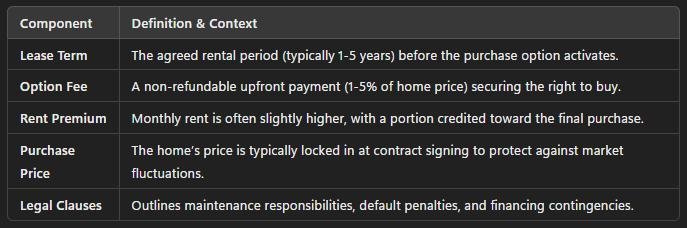
Rent to own homes, also referred to as lease-to-own properties, provide a structured pathway to homeownership for renters who want to secure a future home purchase while living in the property. Unlike traditional renting, where monthly payments solely cover occupancy, the rent-to-own concept is based on agreements that allow tenants to build equity by applying a portion of rent toward the home’s final purchase price.
For individuals facing credit challenges, limited savings, or mortgage qualification delays, rent-to-own financing serves as a viable alternative to traditional home loans. By offering a lease period (typically 1-5 years) before the purchase, this model gives buyers time to prepare financially, improve credit scores, and secure mortgage approval.

George is a seasoned interior designer and property marketing strategist with over 13 years of experience. He specializes in transforming properties into visually stunning spaces, helping clients recognize the potential and beauty in each property. With an impressive international client base of exciting projects throughout Europe and America.
TALLBOX provides information for educational purposes only and does not offer financial advice; users should consult with qualified professionals before making any investment decisions. TALLBOX and George Nicola are not liable for any losses or damages incurred as a result of relying on the information provided.
Who Benefits from Rent to Own Homes?
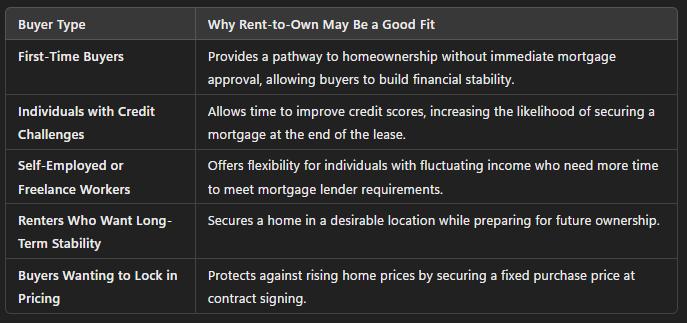
- First-time buyers who need time to qualify for a mortgage
- Renters with low credit scores looking to improve financial standing
- Self-employed individuals with fluctuating income needing longer mortgage preparation
- Buyers who want to lock in today’s home price while preparing for homeownership
What Are Rent to Own Homes?
A rent-to-own home, also called a lease-to-own contract or rent-to-buy agreement, is a hybrid housing model that allows renters to lease a property while securing an option to purchase it in the future. Unlike a standard rental, a portion of each rent payment may be credited toward the purchase price, helping tenants gradually build equity while living in the home.
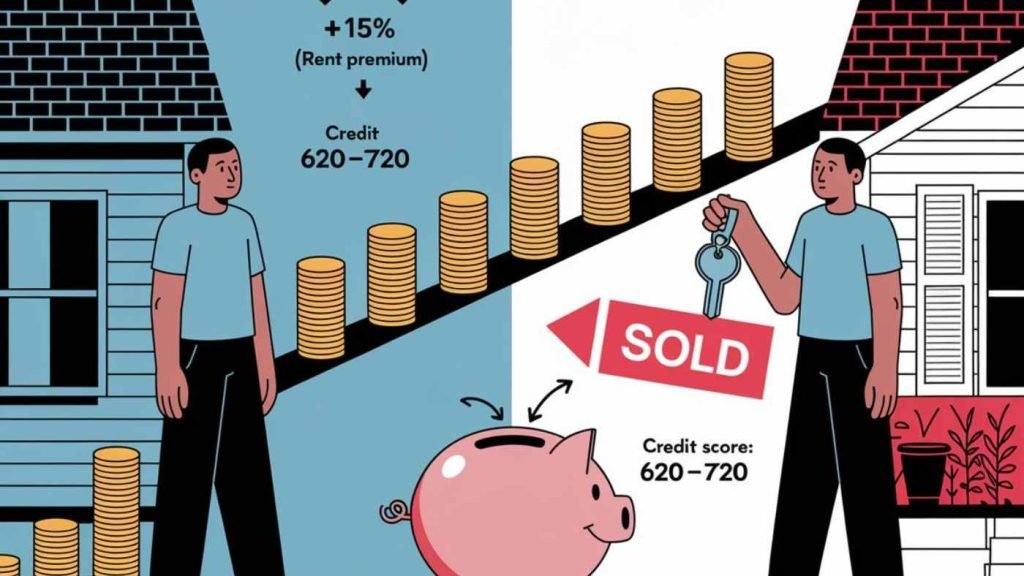
Key Features of Rent to Own Homes:
- Combines renting and ownership in one agreement
- Offers financial flexibility for buyers not ready for a mortgage
- Allows rent credits to contribute to the purchase price
- Locks in a pre-agreed purchase price at contract signing
How a Rent-to-Own Agreement Works?
Embedded Chat
Lease Purchase vs. Lease Option – Understanding the Difference
Not all rent-to-own agreements function the same way. There are two primary types:
Lease Option grants the right, but not the obligation, to purchase at the end of the lease.
Lease Purchase is a binding contract requiring the renter to complete the purchase.
Which One is Right for You?
- Choose Lease Option if you want flexibility but are not 100% sure about buying.
- Choose Lease Purchase if you are fully committed to homeownership and have a clear financial plan.
Who Sets the Purchase Price in a Rent-to-Own Agreement?
In most rent-to-own contracts, the home’s purchase price is set at the beginning of the lease, protecting renters from market fluctuations. However, some agreements allow price adjustments based on property appraisals at the time of purchase.
How Purchase Pricing Works:
- Buyers benefit when market values rise, as they lock in a lower price.
- Sellers may charge a premium to offset potential future appreciation.
- Some contracts include price adjustment clauses based on property valuations.
Can You Negotiate Rent-to-Own Contract Terms?
Many rent-to-own terms are negotiable, including:
- Option Fee Amount (Lowering upfront costs)
- Rent Credit Allocation (Increasing how much applies toward purchase)
- Maintenance Responsibilities (Determining who covers repairs)
- Final Purchase Price Terms
Benefits & Risks of Rent to Own Homes
Why Consider a Rent-to-Own Home?
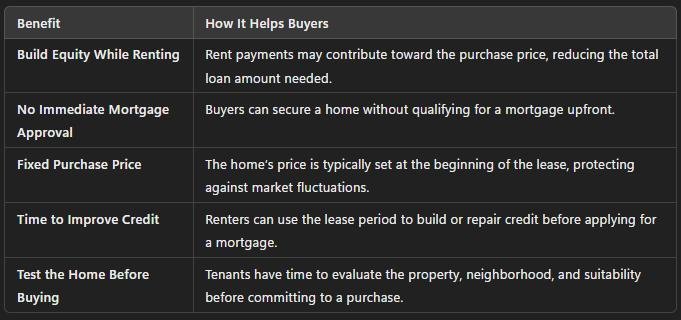
Rent to own homes, also known as lease-to-own agreements, provide a structured homeownership pathway for individuals seeking flexible financing alternatives. Unlike traditional mortgages, these contracts allow tenants to build equity while leasing, often applying a portion of their rent toward the final purchase price. This model benefits first-time buyers, self-employed individuals, and those working to improve their credit scores.
For many, the greatest challenge in homeownership is meeting mortgage qualification requirements due to credit history, employment status, or insufficient savings for a down payment. A rent-to-own agreement allows tenants to secure a home while continuing to build financial stability, offering a transitional solution before committing to full ownership.
While this model provides a unique opportunity, it also carries risks that buyers should evaluate before entering a contract.
Advantages of Rent to Own Homes
For renters who anticipate improved financial circumstances within a few years, rent-to-own agreements offer a viable alternative to traditional homebuying, providing the security of a future purchase while allowing time to prepare for long-term ownership.
Potential Risks & Drawbacks
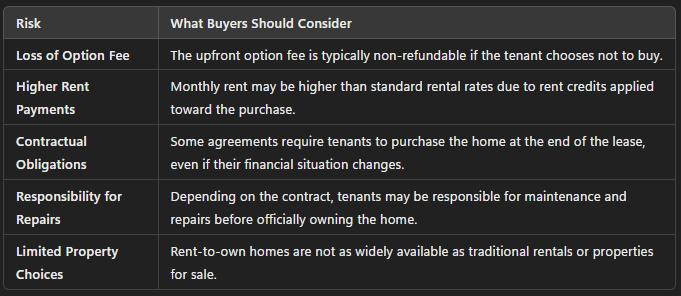
A rent-to-own home can be an effective way to transition into homeownership, but buyers must fully understand their contractual obligations. Reviewing the lease terms, financial commitments, and market conditions before signing an agreement is essential to making an informed decision.
Is Rent to Own the Right Choice for You?
Rent-to-own homes can be a valuable option for individuals committed to eventual homeownership but not yet financially prepared for a traditional mortgage.
Success in this arrangement depends on:
- Understanding contract terms, including lease period, purchase price, and rent credit allocations.
- Assessing financial readiness, including income stability, credit score improvements, and mortgage pre-qualification.
- Working with a professional advisor to negotiate fair terms and avoid unfavorable agreements.
What Happens If I Change My Mind?
If a buyer decides not to purchase the home at the end of the lease, the option fee and any rent credits may be forfeited, depending on the contract. Buyers should evaluate exit clauses before signing to ensure they have the flexibility needed to adjust their homeownership plans if circumstances change.
Who Should Consider Rent to Own Homes?
Is Rent to Own the Right Fit for Your Financial Situation?
A rent-to-own home is ideal for individuals who aspire to homeownership but require additional time to meet mortgage qualification standards. This model provides an opportunity to secure a property while actively working toward financial readiness.
Potential buyers should assess their financial stability, long-term housing goals, and ability to fulfill the contract’s terms before committing to a lease-to-own agreement.
Who Benefits Most from a Rent-to-Own Agreement?
While rent-to-own homes can benefit a wide range of buyers, those who anticipate stable income growth and long-term homeownership commitment stand to gain the most from this model.
Key Factors to Consider Before Choosing Rent to Own
While rent-to-own agreements can be beneficial, they are not suitable for everyone. Buyers should evaluate several factors to determine if this model aligns with their financial plans.
1. Can You Afford the Option Fee and Higher Rent Costs?
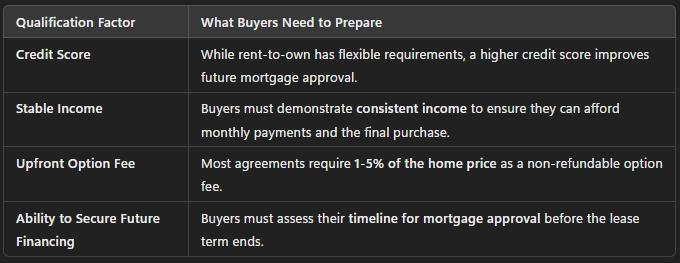
Rent-to-own agreements typically require an upfront option fee, which can range from 1% to 5% of the home’s price. Additionally, rent payments are often higher than market rates due to the rent credit applied toward the purchase. Buyers should assess their ability to handle these costs without financial strain.
2. Will You Be Ready for a Mortgage at the End of the Lease?
At the end of the lease period, renters must secure financing to complete the home purchase. Individuals should evaluate their progress in improving their credit, increasing income, and saving for closing costs to ensure they can transition into ownership.
3. Are You Comfortable with the Terms of the Lease-to-Own Agreement?
Contracts vary, and some agreements may obligate the renter to purchase the home, while others provide a purchase option. Buyers should carefully review the legal terms, rent credit allocation, maintenance responsibilities, and potential penalties for breaking the agreement.
Rent to Own Homes vs. Traditional Mortgages
How Does Rent to Own Compare to a Traditional Mortgage?
Rent to own homes provide an alternative homeownership path for buyers who may not immediately qualify for a traditional mortgage. Unlike conventional home financing, where buyers secure loan approval before purchasing, lease-to-own agreements allow tenants to rent a property with the option to buy at a later date. This structured approach benefits first-time buyers, those improving credit, and individuals without immediate down payment savings.
Both financing models enable homeownership, but they differ significantly in terms of equity-building, financial commitment, and contract structure.
Key Differences Between Rent-to-Own and a Mortgage
For buyers who need time to improve financial standing, rent-to-own agreements provide a structured transition toward homeownership. For those with strong credit and savings, securing a mortgage immediately allows for direct equity accumulation and long-term cost savings.
When is Rent to Own a Better Option?
Rent-to-own agreements are most beneficial for buyers who:
- Need time to improve credit scores before applying for a mortgage
- Lack a large down payment but want to secure a home for future purchase
- Are self-employed or have fluctuating income, making mortgage approval more difficult
- Want to test a home and neighborhood before committing to a purchase
This model provides an opportunity to transition into homeownership without immediate mortgage pressure while allowing buyers to work toward long-term financial readiness.
When is a Traditional Mortgage the Better Choice?
A mortgage is often the better option for buyers who:
- Have strong credit and steady income to qualify for a home loan
- Can afford a down payment and closing costs without financial strain
- Want to start building equity immediately instead of waiting through a lease term
- Prefer long-term financial stability with predictable mortgage payments
While rent-to-own homes provide flexibility, buyers who meet mortgage qualifications may benefit from securing financing immediately, avoiding the risks associated with lease agreements.
How to Find & Qualify for Rent to Own Homes
Where Can You Find Rent to Own Homes?
Rent-to-own properties are less common than traditional home listings, requiring buyers to explore specialized platforms and alternative real estate channels. Unlike conventional home purchases, lease-to-own agreements often involve private sellers, investor-owned properties, or dedicated rent-to-own listing services.
1. Online Rent-to-Own Listings
Several websites specialize in rent-to-own home searches, featuring verified listings across various markets. These platforms provide property details, contract terms, and pricing information to help buyers make informed decisions.
2. Local Real Estate Agents
Working with an experienced real estate agent familiar with lease-to-own agreements helps buyers navigate legitimate rent-to-own opportunities while ensuring fair contract terms. Agents can also negotiate pricing and rent credit allocations to maximize financial benefits for buyers.
3. Homeowners Offering Lease-to-Own Deals
Some sellers offer rent-to-own agreements privately, especially in slower real estate markets. Buyers interested in this approach should carefully review contract terms and work with legal professionals to ensure the agreement is structured fairly.
How to Qualify for a Rent-to-Own Agreement?
Unlike traditional mortgages, rent-to-own agreements provide buyers with time to strengthen their financial profile. However, planning ahead ensures that buyers are prepared to finalize the home purchase when the lease period concludes.
Steps to Successfully Enter a Rent-to-Own Agreement
Step 1: Assess Financial Readiness
Before considering rent-to-own, buyers should evaluate:
- Current income stability and job security
- Credit score status and potential improvement timeline
- Ability to save for an option fee and potential higher rent costs
Step 2: Research Available Rent-to-Own Listings
Exploring online platforms, local real estate networks, and private listings helps buyers identify the best opportunities in their desired location.
Step 3: Review the Lease Agreement Carefully
Buyers should carefully examine:
- Rent credits and how they apply toward the purchase price
- Option fee structure and refundability terms
- Maintenance and repair responsibilities
Step 4: Work with a Real Estate Professional
A knowledgeable real estate agent or rent-to-own specialist can guide buyers through contract negotiations, financing strategies, and property evaluations to ensure a fair and secure agreement.
Step 5: Plan for Mortgage Approval
Since most rent-to-own agreements require finalizing a mortgage at the end of the lease, buyers should:
- Monitor their credit score and improve it if needed
- Save for closing costs and down payment requirements
- Research loan options and pre-qualification timelines
Common Pitfalls to Avoid in Rent-to-Own Agreements
Buyers considering rent-to-own should be aware of potential challenges:
- Not verifying contract terms – Ensuring the agreement clearly outlines purchase price, rent credits, and legal protections.
- Failing to prepare for financing – Buyers must actively work toward mortgage approval to complete the purchase.
- Overpaying in a declining market – Locking in a fixed price could result in paying more than the market value if home prices drop.
The key factors in rent-to-own agreements ensures buyers make informed decisions and successfully transition into homeownership.
Alternatives to Rent to Own Homes
For some buyers, a rent-to-own agreement may not be the best option. Alternative pathways to homeownership include:
- FHA or VA Loans: Programs designed to assist first-time buyers and military veterans with low down payments and flexible credit requirements.
- Down Payment Assistance Programs: State and federal initiatives that provide financial assistance to buyers struggling to save for a down payment.
- Owner Financing: An arrangement where the seller finances the purchase, eliminating the need for a traditional mortgage.
- Shared Equity Programs: Partnerships that allow buyers to co-invest in property ownership with a government entity or private investor.
Each alternative comes with its own advantages and eligibility requirements, making it essential for buyers to compare options before committing to a rent-to-own agreement.