Navigating the sale of a probate house can be a complex endeavor due to its unique legal requirements, estate planning, and emotional considerations. It is essential for individuals involved in buying or selling in this context to understand the distinctions that set a probate house apart from traditional residential properties and the intricacies of the probate process.
This guide will offer practical tips and insights covering various aspects, including the preparation of the house for sale—addressing legal considerations, necessary home repairs, home staging, and effective staging—as well as guidance on finding the right buyer and successfully closing the deal.
Trusts can provide an effective way to avoid probate, but they are not the “easiest” way and depend on individual circumstances. A trust can be more complex and expensive to set up than a will, but it offers greater flexibility, privacy, and control over the distribution of assets. In contrast, a will is simpler and less expensive to create but may require probate, which can be time-consuming and costly.
By exploring this information, readers can better understand how to facilitate a smoother and more successful transaction process, harmonizing interests between heirs and potential buyers.
Want to get 3D rendering for your probate project?

George is a seasoned interior designer and property marketing strategist with over 13 years of experience. He specializes in transforming properties into visually stunning spaces, helping clients recognize the potential and beauty in each property. With an impressive international client base of exciting projects throughout Europe and America.
George Nicola (Expert Interior Designer from TALLBOX) shares:
Understanding probate houses is crucial for individuals engaged in the probate process, as these properties are associated with the estate of a deceased individual.
A probate house generally refers to real estate that is included in a decedent’s estate, which may be sold or transferred to heirs or beneficiaries.
The executor of the estate has a fiduciary duty to manage the property, ensuring that appropriate legal documentation is prepared, appraisals are conducted, and that the estate sale adheres to probate court requirements.
Familiarity with these elements can substantially influence the financial implications and responsibilities related to the estate.
In short, property ownership structures significantly impact how assets transfer after death, with each type offering distinct advantages and limitations for estate planning. Probate avoidance remains a key goal in estate planning, offering significant benefits in time, cost, and privacy.
Understanding the available methods helps property owners make informed decisions about their estate distribution. It is recommended that the property deeds be reviewed and the total value of the estate be assessed to determine if it qualifies for simplified transfer procedures under state law.
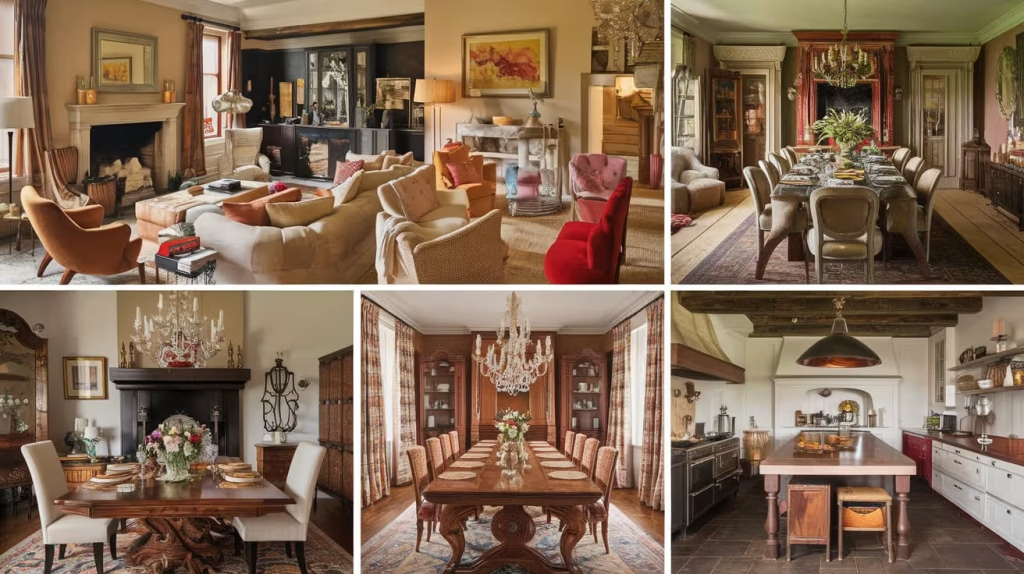
What is a Probate House?
A probate house refers to a property that is included in a decedent’s estate and is managed under the probate process to facilitate the distribution of assets to beneficiaries.
These properties often require thorough property evaluation, as they may possess specific characteristics such as outdated home repairs or existing financial encumbrances, which can impact their marketability and influence their listing price.
The process typically involves the court overseeing the transfer of title, wherein the executor—appointed to manage the estate—must navigate various legal requirements to ensure the property is properly conveyed to the rightful heirs.
Executors bear significant responsibilities, including inventorying the estate, settling debts, and managing negotiations during the sale of the property. This structured approach not only protects the interests of beneficiaries but also upholds the integrity of estate management throughout the real estate process.
Why are they Different from Regular Houses?
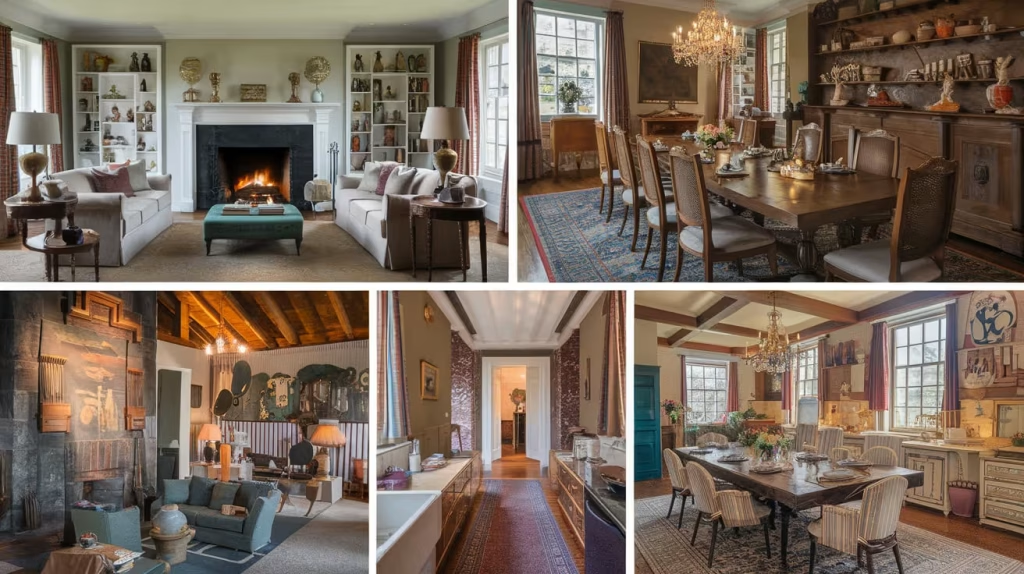
Probate houses are distinct from conventional residential properties primarily due to their connection with the probate process, which encompasses specific legal requirements, title transfer, and financial implications for the estate.
In this context, the estate must undergo a legal validation that often necessitates court involvement, thereby introducing a layer of complexity not typically encountered in standard home transactions.
Heirs and beneficiaries play designated roles throughout this process, frequently responsible for navigating legal documentation, such as tax implications and property taxes, and fulfilling obligations such as settling outstanding debts or taxes associated with the inherited property.
These financial responsibilities can incur additional costs that are not ordinarily factored into traditional home sales. The timeline for selling a probate house may be prolonged, as court approvals can delay proceedings.
Regardless of the method, there are two important steps to address for quickest possible sale: Home Inspection and Cosmetic Refreshes. Walk through your property with a critical eye and make a list of any issues, from tiny cracks in the walls to doors that don’t close properly. Consider enlisting a home inspector to identify areas that may require professional attention, at the end a fresh coat of paint in neutral colours, cleaned carpets, and polished floors can instantly lift the look and feel of your home without breaking the bank.
It is, therefore, essential for potential buyers to comprehend these unique factors, including potential foreclosure when considering a probate property.
Property ownership types
Below is an examination of the primary forms of property ownership and their inheritance implications.
Individual Ownership
- Represents the simplest form of property ownership
- One person holds complete rights and control over the property
- Transfers according to the owner’s will or state laws if no will exists
- Typically requires probate process for transfer after death
Joint Tenancy with Right of Survivorship
- Multiple owners share equal ownership rights
- When one owner dies, their share automatically transfers to surviving owners
- Bypasses probate process for smoother transition
- Commonly used between spouses or family members
Tenancy in Common
- Multiple owners hold separate, divisible interests
- Each owner can transfer their share independently
- Ownership shares can be unequal
- Owner’s share passes to their heirs, not other owners
- Requires probate for the deceased owner’s share
Community Property
- Applies in specific states for married couples
- Both spouses own equal shares of property acquired during marriage
- Each spouse can control their half through estate planning
- Special tax benefits may apply for surviving spouse
Living Trust Ownership
- Property held by a trust rather than individuals
- Offers flexibility in managing property during life and after death
- Avoids probate process entirely
- Allows for more complex distribution arrangements
- Provides privacy in property transfers
Understanding these ownership structures helps inform estate planning decisions and ensures property transfers align with your intentions. Each type offers different levels of control, tax implications, and transfer efficiency.
Different methods for transferring property without probate
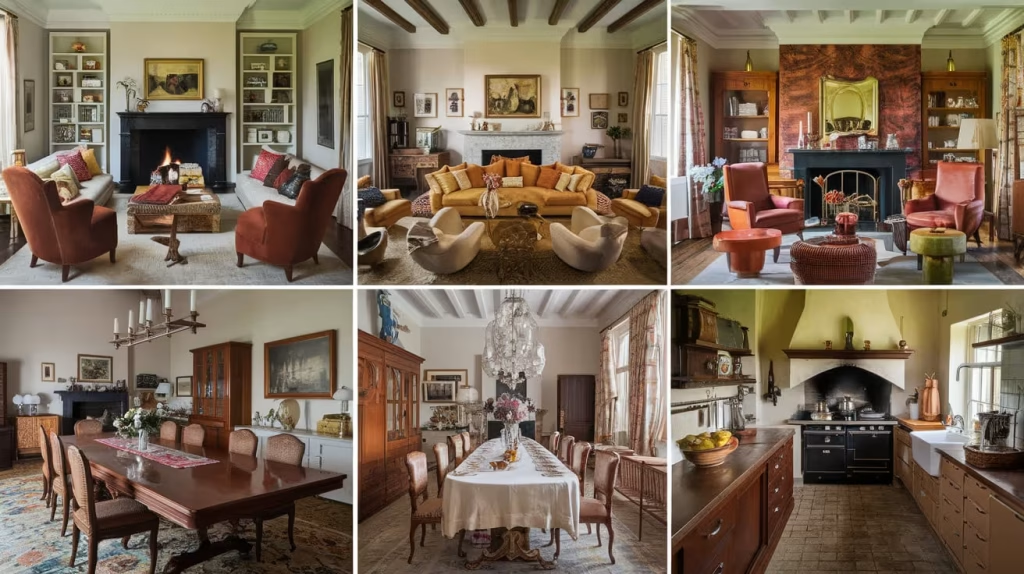
Joint Tenancy with Right of Survivorship (JTWROS)
Property automatically passes to surviving owner(s) upon death
No court intervention required
Commonly used for:
- Real estate
- Bank accounts
- Investment accounts
Key consideration: All joint owners have immediate equal rights to property
Transfer-on-Death (TOD) Arrangements
Property transfers automatically at death while maintaining full control during life
Available forms include:
- TOD deeds for real estate (where state law permits)
- POD (payable on death) designations for bank accounts
- TOD registrations for vehicles
- TOD designations for investment accounts
Benefits:
- Simple to set up
- Revocable during life
- No impact on current property rights
Small Estate Affidavits
Simplified process for estates under state-specified value limits
Requirements typically include:
- Estate value below threshold (varies by state)
- No outstanding debts
- Agreement among heirs
Process:
- Submit affidavit with death certificate
- Present to institutions holding assets
- Receive transfer without full probate
Living Trusts
Comprehensive solution for probate avoidance
Features:
- Property owned by trust rather than individual
- Trustee manages assets according to trust terms
- Flexible distribution options
Benefits:
- Privacy maintained
- Smooth transition at death
- Can handle complex family situations
- Useful for ongoing asset management
Beneficiary Designations
Direct transfer to named beneficiaries
Commonly used for:
- Life insurance policies
- Retirement accounts
- Annuities
Important: Keep designations updated after life changes
Lady Bird Deeds (Enhanced Life Estate Deeds)
Available in some states
Allows property transfer while retaining:
- Full control during life
- Right to sell or mortgage
- Tax benefits
Automatically transfers at death without probate
Each method offers distinct advantages and considerations. The best choice depends on:
Type of property involved:
- State laws
- Family situation
- Estate planning goals
- Tax implications
Joint Tenancy with Right of Survivorship (JTWROS)
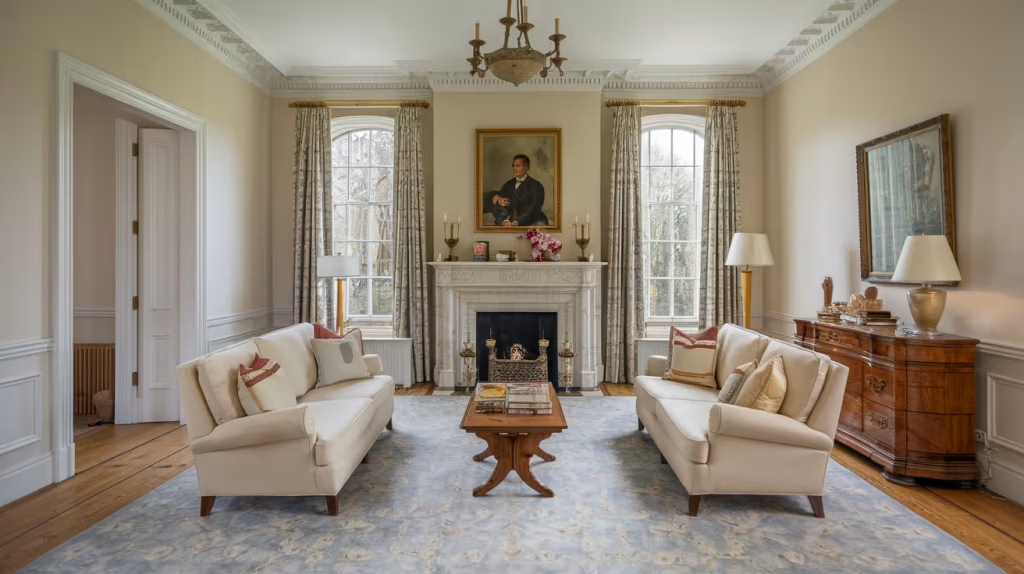
Joint Tenancy with Right of Survivorship (JTWROS) represents a specific form of property co-ownership that provides unique advantages and limitations for property transfer. Joint tenancy properties have some key features that distinguish them from other ownership types and affect how they pass between owners during life and after death.
When people own property as joint tenants, they each have equal ownership rights and equal ability to use the entire property, despite sharing ownership with others. Joint tenants must acquire their ownership interests at the same time through the same deed. This unity of time and title helps establish the joint tenancy relationship and its special attributes.
The defining characteristic of joint tenancy comes from its right of survivorship feature. When one joint tenant dies, their ownership share automatically transfers to the surviving joint tenants without going through probate. The surviving owners need only record a death certificate to update property records. This automatic transfer continues until only one owner remains, who then holds the property individually.
Joint tenancy provides a straightforward way to transfer property at death while avoiding probate costs and delays. However, owners should carefully consider its limitations. Joint tenants lose the ability to pass their share to chosen heirs since the property must go to survivors. Additionally, any joint tenant can sell their interest during life, which converts the arrangement to a tenancy in common for the remaining owners.
Many property owners choose joint tenancy for its simplicity in transferring property at death and avoiding probate. Common uses include shared ownership between spouses, family vacation homes, and investment properties. But the automatic transfer and loss of individual control may not align with all estate planning goals.
Transfer-on-Death Deeds
Transfer-on-death deeds provide property owners a simple way to pass real estate directly to chosen beneficiaries while avoiding probate. These deeds have gained popularity as an estate planning tool since they offer significant advantages over traditional property transfers.
With a transfer-on-death deed, property owners maintain complete control of their property during their lifetime. They can sell it, mortgage it, or change beneficiaries at any time. The deed only takes effect when the owner dies, automatically transferring the property to the named beneficiary without probate involvement.
The process works similarly to a payable-on-death designation on a bank account. The owner records the deed with the county, identifying who should receive the property at death. When the owner dies, the beneficiary files a death certificate and paperwork to claim ownership. This simplified process saves time and money compared to probate proceedings.
However, transfer-on-death deeds have some limitations. Not all states allow them, so property owners should verify their state’s laws. Additionally, if the named beneficiary dies before the owner, the property may still need to go through probate unless alternate beneficiaries were named on the deed.
For children inheriting property, it’s worth checking if their parent used a transfer-on-death deed. This could explain why probate wasn’t required and confirm their right to the property. The county recorder’s office can verify if such a deed exists in the property records.
Small Estate Affidavits
Small estate affidavits offer an efficient way to transfer property when the total estate value falls below state-specified limits. This simplified process helps families avoid the time and expense of formal probate proceedings while still legally transferring assets.
Each state sets different value thresholds for using small estate procedures. These limits typically range from $25,000 to $100,000 of total estate value. Some states exclude certain assets, like real estate or vehicles, when calculating this value. Checking your state’s specific rules helps determine if an estate qualifies.
Using a small estate affidavit involves filing a simple form with basic information about the deceased person, their assets, and the rightful heirs. Once filed, this document allows heirs to collect property, close accounts, and transfer assets without going through full probate. Banks, investment firms, and other institutions typically accept these affidavits as legal authority for transfers.
However, small estate procedures have limitations. They usually work best for simple estates with clear heirs and minimal debts. If creditors make claims or heirs disagree about distribution, formal probate might still be necessary. Additionally, some assets, like certain real estate transfers, may require different procedures even in small estates.
Before pursuing a small estate affidavit, carefully assess the total value of all assets. Include bank accounts, investments, vehicles, and personal property. This evaluation helps determine if the estate qualifies for simplified procedures under your state’s laws.
Trusts
Trusts provide a powerful way to transfer property outside of probate while offering flexibility in asset management and distribution. These legal arrangements let property owners maintain control during life while ensuring smooth transition after death.
When someone creates a trust, they transfer property ownership from themselves individually to the trust entity. The trustee manages this property according to the trust documents. While living, most people serve as their own trustee, maintaining full control of trust assets. After death, a designated successor trustee takes over without court involvement.
Trusts offer several key advantages for property transfers. They avoid probate entirely, maintain privacy of asset transfers, and can handle complex distribution plans. The successor trustee can quickly take control of assets and manage them according to the trust’s instructions. This often proves especially valuable for real estate, as the trustee can immediately handle property maintenance and eventual sale.
Trusts require proper setup and funding to work effectively. Property must be formally transferred into the trust during the owner’s lifetime. Trusts also involve higher initial costs than other transfer methods, though these costs often balance against probate savings. Additionally, trustee selection requires careful consideration since they’ll have significant control over assets.
If you’re dealing with inherited property, check if it was held in a trust. The county recorder’s office can verify trust ownership of real estate. If a trust exists, contact the successor trustee who has legal authority to manage and transfer the property.
When is Probate Generally Required?
Sole ownership of property without special transfer arrangements typically requires probate to change ownership after death. This common situation affects many estates and impacts how quickly heirs can sell or transfer inherited property.
When someone owns property individually, with no co-owners or designated beneficiaries, their death creates a legal gap in property ownership. The deceased person can no longer transfer title, yet their heirs don’t automatically receive ownership rights. This situation triggers the need for probate court involvement.
Probate serves as the legal process to bridge this ownership gap. The court reviews the will (if one exists), confirms the rightful heirs, and supervises property transfer. This oversight protects creditors’ rights and ensures proper distribution according to law or the deceased’s wishes.
The probate requirement significantly affects property sale timing. Heirs cannot legally sell the property until the court appoints an executor or administrator. Even then, the sale may need court approval, especially if multiple heirs have inheritance rights. This process often adds months or even years before a sale can proceed.
Without advance planning through joint ownership, trusts, or transfer-on-death arrangements, probate becomes necessary to establish clear title. This requirement affects everything from accessing the property to maintaining insurance coverage during the transfer process.
Legal Considerations
Legal considerations are of utmost importance when preparing a probate house for sale, as various legal documents must be meticulously managed throughout the process.
These documents include the death certificate, the will, and the letters testamentary, which officially appoint the executor to act on behalf of the estate. Understanding the intricacies of these documents is essential to ensure compliance with probate laws, as any oversight may result in legal complications or delays.
A probate attorney plays a critical role in guiding the executor through these necessary steps, ensuring that all filings are completed accurately and promptly.
Sellers must also be cognizant of closing costs and the significance of title insurance, which serves to protect against potential claims against the property. This further underscores the necessity for meticulous attention to detail during this legally sensitive phase.
How can you speed up probate or avoid it?
To sell deceased parents’ house without probate depends on several factors, including the property’s ownership structure, if it was held jointly with rights of survivorship, the surviving owner typically inherits the property automatically, allowing for a sale without probate. If the property was solely owned by your parent, probate is generally required to transfer ownership and proceed with the sale.
How to avoid probate entirely?
Planning ahead helps avoid probate delays and gives property owners more control over asset transfers. Here are key strategies to speed up or completely bypass probate.
Immediate Actions to Speed Up Probate
- Gather important documents before death
- File probate petition quickly after death
- Get all heirs to sign waivers of notice
- Request expedited processing if available
- Use small estate procedures when possible
Advance Planning to Avoid Probate
- Create a living trust and transfer property into it
- Add joint owners with right of survivorship
- Record transfer-on-death deeds where allowed
- Use beneficiary designations for financial accounts
- Gift property during life to reduce estate size
Want to get 3D rendering for your probate project to sell quickly?
Each strategy has different costs and benefits to consider. Setting up a trust costs more initially but saves time and money later. Joint ownership provides simplicity but reduces control. Transfer-on-death deeds balance control and simplicity but aren’t available everywhere.
The best approach depends on:
- Property value and type
- State laws where property is located
- Family situation and relationships
- Cost considerations
- Desired level of control
Preparing a Probate House for Sale
Preparing a probate property for sale entails a series of essential steps aimed at attracting potential buyers and maximizing the market value of the asset.
The process commences with a thorough assessment of the property’s condition, which may involve necessary cleaning and repairs to enhance its overall appeal.
Executors typically work in conjunction with a probate attorney and real estate agents to navigate the legal requirements associated with the sale and to implement effective marketing strategies. These may include staging the home and leveraging online listings.
Such efforts can have a substantial impact on the eventual sale price and the overall success of the estate sale.
Address Maintenance and Repairs
Cleaning and repairs are essential steps in preparing a probate property for sale, as these actions directly impact potential buyers’ first impressions and the overall market value of the home. Along with standard cleaning procedures, addressing maintenance issues—such as leaky faucets, squeaky doors, or worn flooring—can significantly enhance the property’s appeal.
To ensure your home is appealing to potential buyers, conduct a comprehensive examination of the property. This thorough review is essential for identifying any hidden issues that might discourage buyers and allows them to imagine themselves in a well-maintained environment.
Focus on Key Areas: Kitchens, bathrooms, and entryways are often the deciding factors for buyers. Ensure these areas are in excellent condition, as they will be subject to close scrutiny. Minor upgrades, such as replacing old cabinet hardware or adding fresh caulk, can make a significant difference.
Cosmetic Enhancements: Apply a fresh coat of paint in neutral colors, clean the carpets, and polish the floors to instantly improve the appearance and feel of your home without incurring significant costs.
Examples of high-impact areas include:
- Kitchens: Replace outdated fixtures and ensure all appliances are in good working order.
- Bathrooms: Update the lighting and fixtures, and ensure the area is spotless.
- Entryways: Make a good first impression with a clean and well-maintained entrance.
By focusing on these areas, you can present your property effectively, attracting more interest and potentially leading to a quicker sale at a favorable price.
How to Present probate Home for Maximum Appeal?
To present a probate home for maximum appeal, there are several simple and cost-effective ways to enhance its value and attract potential buyers.
Begin by improving the curb appeal by giving the house a fresh coat of paint, investing in affordable plants, and cleaning up the yard.
Decluttering and de-personalizing the home can also help potential buyers imagine themselves living in the property, so remove excess furniture, personal photos, and sentimental items. Essential maintenance, such as repairing leaky faucets and fixing holes in walls, can make a big difference to a property’s value.
As most potential buyers will first see the property online, it’s important to create an impressive virtual showcase with high-quality photos, comprehensive descriptions, and virtual staging.
Want to improve a probate property for sale digital furnishing?
Making inexpensive sustainable upgrades, such as installing low-flow showerheads and using native plants, can attract a wider audience and increase the property’s value. Finally, a thorough cleaning of the home, including professional carpet cleaning and deep cleaning of kitchen appliances, can make the property look well-cared for and attract generous offers from potential buyers.
Professional Photography and Marketing
Quality photography and a strong online presence are essential for selling a home.
Poor-quality photos or a lack of appealing descriptions can fail to capture the true essence of your property, limiting interest and keeping serious buyers at bay.
Investing in good marketing can maximize exposure and attract more potential buyers.
Hire a Professional Photographer: Experienced property photographers know how to highlight a home’s best features, using angles, lighting, and techniques that showcase your property in its best light. High-quality images make a listing stand out and can generate more interest.
Craft an Engaging Listing Description: A well-written, detailed description should highlight key aspects of the home, such as unique features, recent upgrades, and location benefits. This is your chance to tell the story of the property and attract buyers who will appreciate what it has to offer.
Use Multiple Marketing Channels: Consider listing your property on various real estate websites, social media platforms, and local advertising boards to reach a wider audience. The more visibility your property has, the greater the chance of attracting qualified buyers.
Staging and Marketing A Probate Sale
Effectively staging and marketing a probate property can significantly impact its sale price and attract potential buyers during open house events.
By creating an inviting atmosphere and presenting the home in its optimal condition, sellers can evoke positive emotions that enable prospective buyers to envision themselves living in the space. Thoughtful furniture arrangement is crucial; each area should be designed to highlight its potential while facilitating a smooth flow throughout the home. Selecting neutral and appealing decor choices can enhance the property’s natural features without overwhelming them, allowing buyers to concentrate on the property itself.
Implementing robust marketing strategies such as online listings and engaging social media campaigns is vital for expanding reach and visibility. It is essential for sellers to leverage these tools in order to connect with a broader audience effectively.
How to Price a Probate for Sale Competitively?
Pricing a probate property for sale involves unique considerations distinct from traditional real estate transactions. To price the property competitively while adhering to probate regulations, it’s essential to understand the probate process, legal obligations, and buyer perceptions specific to probate sales.
Below are probate-focused ideas to help you determine the most competitive and fair price for a probate property.
Get a Professional Appraisal: The court often requires an appraisal to determine the fair market value of the property. This appraisal will serve as a basis for the listing price.
Transparency and Disclosure
Pricing Below Market Value
Clear Disclosure: Ensure that the listing clearly discloses the property’s condition and the fact that it is being sold through probate. This transparency can help manage buyer expectations and reduce the risk of disputes.
Discounted Pricing: Probate properties often sell for less than market value due to the complexities and length of the probate process. Pricing the property 10% to 15% below market value can attract more buyers and generate more interest.
As-Is Sales
As-Is Condition: Probate properties are typically sold “as-is,” meaning the seller is not responsible for repairs or renovations. This should be factored into the pricing, as buyers will need to consider the potential costs of any necessary repairs.
Bidding Process
Anticipate Bidding Wars: Probate sales often involve a bidding process where other buyers can outbid the initial offer. Be prepared for this by understanding the minimum overbid requirements, which can vary by state. For instance, in some states, the minimum overbid is calculated based on a formula that includes a percentage of the original bid.
Marketing Strategy
Targeted Marketing: Since probate properties may not be listed on the usual real estate platforms, it is crucial to use targeted marketing strategies to reach potential buyers who are familiar with or interested in probate sales. This could include working with real estate agents experienced in probate sales and advertising in specific channels where such buyers are likely to see the listing.
Deposit Requirements
Higher Deposit: Buyers typically need to put down a 10% deposit when making an offer on a probate property, which can be a significant factor in pricing and attracting serious buyers. This deposit can be part of the down payment but is usually required upfront.
Pro Tip: Overpricing can cause a listing to become “stale,” making potential buyers less willing to negotiate or offer a fair price.
Negotiating and Closing the Probate Sale
Negotiating and concluding the sale of a probate property necessitates meticulous consideration of offers, earnest money, and the terms specified in the sale agreement.
To effectively navigate this intricate process, it is imperative to establish contingencies, such as appraisal contingency and buyer financing, that safeguard the interests of both the seller and the buyer. These contingencies may encompass financial approvals or home inspections, ensuring that all parties possess a clear pathway to proceed.
The formulation of a concise and unequivocal closing statement is essential, as it encapsulates the key terms of the transaction and mitigates any potential misunderstandings.
By adhering to these critical steps, individuals can facilitate a smooth negotiation process, thereby minimizing the likelihood of disputes and ensuring a successful closing that addresses the needs of all parties involved.
Common Challenges and How to Overcome Them
Common challenges in selling a probate property include navigating probate fees, understanding the buyer’s market versus the seller’s market, and effectively negotiating offers with contingent or cash buyers.
These obstacles can prove particularly daunting for individuals who are unfamiliar with the complexities of real estate transactions and the probate process. Probate fees frequently affect the net proceeds from the sale, making it essential to have a comprehensive understanding of the associated costs, such as court-related expenses and attorney fees, as well as closing costs and tax implications.
Want to get 3D rendering for your probate project?