Facing a challenging situation with your property? Whether it’s foreclosure, divorce, inheritance, relocation, or simply a need for a quick sale, stress and urgency often dominate the experience.
Selling a house fast for cash (Immediate sale) to a We Buy Houses company or downsizing couple can be an appealing option; it provides a faster and hassle-free way to close the sale, eliminates the need for repairs or renovations, allows you to bypass lengthy traditional selling processes by receiving on lump-sum upfront payment in cash. This can be especially beneficial in chain-free sellers and emergencies such as financial difficulties or personal transitions.
Thousands of homeowners face similar situations each year, and we’re here to help. In this guide, we’ll explore how you can sell your house fast for cash, regardless of its condition. We’ll cover everything from understanding your options to finding reputable cash buyers and navigating the process smoothly.
Want to get 3D rendering for your new house project?

George is a seasoned interior designer and property marketing strategist with over 13 years of experience. He specializes in transforming properties into visually stunning spaces, helping clients recognize the potential and beauty in each property. With an impressive international client base of exciting projects throughout Europe and America.
George Nicola (Expert Interior Designer from TALLBOX) shares that: a cash house sale is when a seller or owner sells a property for a direct money transaction, avoiding lengthy mortgage approval processes, financing contingencies, and the delays associated with traditional bank loans, resulting in a faster and more straightforward closing. Buyers most often are investors or downsizing couples, as they are typically in a position to pay cash and are motivated by the desire to secure properties quickly, either for investment purposes, such as flipping or renting, or to simplify their living situation without the burden of a mortgage.
There are many benefits to selling cash; one of the biggest advantages is the speed of the transaction. Traditional home sales can take months, but direct cash deal can often close in as little as a week. This is ideal if you need to relocate quickly or face financial difficulties and major life-changing events.
Cash buyers typically purchase homes “as-is,” meaning you don’t have to invest time or money in repairs or renovations. This can be particularly beneficial if your home needs significant work.
Accepting an “as-is” sale generally means the buyer is willing to take on these issues and expects a discounted price in return. Cash buyers (often investors or flippers) are motivated by profit and factor the cost of repairs into their offer. As a result, sellers will likely receive a lower offer compared to what they could get if the home were in better condition, which ultimately affects the overall financial return from the sale.
Immediate sale (cash sales) often come with fewer contingencies, such as financing or appraisal requirements, which can streamline the process and reduce the risk of the deal falling through.
Selling directly for money can mean fewer fees, especially if you’re dealing with a company that doesn’t require real estate agent commissions. This can help you keep more of your earnings.
The cons of selling cash are a view, too; a major drawback is cash buyers, including investors and companies, always offer less than market value because they are taking on the risk and cost of repairs and renovations.
Selling for cash might limit your pool of potential buyers, as not everyone has the liquidity to make a cash purchase.
It’s important to do your due diligence when dealing with cash buyers, as some may offer substantially less money, assuming you are in distress.

Why Choose a Cash Sale?
Selling a house is a significant decision that involves considering various factors such as timing, financial implications, and the complexity of the sale process. Opting for a direct transaction money sale can offer several advantages that make it an appealing choice for many homeowners.
Cash buyers typically target “problematic” properties because they often represent opportunities to buy below market value, resolve the issues, and either resell for a profit or rent them out. This is a type of owner-sale process, and for sellers, direct buyers offer a solution to quickly dispose of properties that would otherwise be challenging to sell due to being outdated, structural, environmental, or legal complexities.

Financial Benefits
Below is an outline detailing the reasons why choosing a cash sale might be beneficial:
Fast Closing: Cash sales are often referred to as immediate house sales and can close in as little as 7 days compared to the traditional 30-60 days.
Quick Sale Process: Cash buyers provide offers on the same day or 24-48 hours after viewing the property. It’s a streamlined process without lengthy negotiations.
No Waiting: Avoids delays caused by buyer financing contingencies or mortgage approvals. Cash sales reduce the risk of deals falling through due to financing issues.
Cash sales offer financial benefits, as properties are purchased “As-Is,” meaning they are in their current condition, saving time and money on repairs. Cash transactions eliminate the cost of staging or improving the home to attract buyers or any pre-sale upgrades.
Often, sellers have no closing costs as cash buyers may cover closing costs, further increasing savings for the seller. Direct money sales often do not require formal appraisals, which is an additional benefit.
Reduced Stress and Simplified Process
Cash transaction sales have minimal paperwork and simplified documentation. Fewer forms and disclosures compared to traditional sales.
Easier Transactions with less complexity leads to a smoother sale process.
Controlled Timeline: Sellers can often choose the closing date that best fits their schedule.
Stress-Free Relocation: Quick sales facilitate faster relocation without worrying about the property’s status.
Privacy Maintained: Cash buyers often do not require multiple showings and open houses, limiting the number of strangers entering the home.
Cash sales is Ideal for Challenging Situations, Financial Distress, Life Events and Problematic Properties
Quick cash sales can prevent foreclosure by settling debts promptly thus avoiding foreclosure.
Handling Mortgage Arrears: Provides immediate funds to pay off outstanding mortgage payments.
Addressing Tax Liens and Bankruptcy: Fast access to cash helps resolve financial obligations.
Life Events
Divorce Settlements: Facilitates equitable and swift division of assets.
Inheritance and Probate: Simplifies the process of selling inherited property, especially for out-of-town heirs.
Urgent Relocation: Eases the transition during job transfers or family emergencies.
Problematic Properties
Cash buyers are often interested in properties that are challenging to sell through traditional means. These homes typically have unique structural, environmental, or legal concerns that may deter conventional buyers but appeal to cash buyers willing to invest in them for a quick transaction. Below is a list of different property conditions that fit into this “problematic” category:
Structural Issues
- Foundation Problems: Homes with foundational issues, such as cracks, sinking, or shifting, may scare off buyers needing financing due to safety concerns or appraisal issues. Cash buyers, however, are typically less deterred by these problems and consider them an opportunity for renovation and resale.
- Bad Roof: Roofs with severe damage or nearing the end of their useful life can lead to leaks and interior damage. While most buyers see this as a major concern, cash buyers see it as a negotiable point to lower the purchase price.
- Water Damage: Properties with past or current water damage can result in weakened structural integrity and costly repairs. Cash buyers consider the risks but often negotiate a significantly lower price to accommodate remediation.
- Termite Infestation: Termites cause extensive damage to wooden structures, compromising the property’s integrity. For many buyers, an infestation is a deal-breaker, but cash buyers are often willing to assess the costs and factor them into their offers.
Property Status
- Condemned: Properties officially deemed uninhabitable by local authorities due to unsafe conditions or extreme neglect. These properties typically require significant renovation and remediation, making them perfect candidates for cash buyers looking for investment opportunities. In contrast, mortgage buyers typically avoid such homes due to the requirements of traditional lenders.
- Vacant: Vacant homes tend to degrade over time due to lack of upkeep, exposure to the elements, and increased susceptibility to vandalism. A vacant property could be either a drawback (e.g., property deterioration) or an advantage (easier to renovate without tenants), depending on the buyer’s goals.
- Damaged: Outdated homes that are damaged can refer to a wide range of issues, from minor wear-and-tear to major structural failures. Damage typically reduces market appeal, but cash buyers often see an opportunity to acquire the property below market value.
- Fixer-Upper: A property in need of renovation but still in livable condition. Cash buyers may be attracted to fixer-uppers because they come at a lower price, allowing for improvements that increase their market value.
- Code Violations: Properties that do not comply with local building codes or safety standards pose a legal challenge. Cash buyers are often experienced investors who can handle rectifying code violations more easily than the average buyer.
Environmental Issues
- Mold: The presence of mold indicates a moisture problem and can lead to health risks. Traditional buyers are hesitant due to the potential cost of remediation and health concerns, whereas cash buyers may see this as an opportunity to negotiate a lower price and then remediate the issue for profit.
- Fire Damage: A property with fire damage will have significant cosmetic and structural concerns that require expensive repairs. Conventional buyers might be deterred due to the scale of the repairs, but cash buyers are more flexible, evaluating these properties for their potential profit margins.
- Storm Damage: Damage caused by severe weather (e.g., hurricanes, tornadoes) often leads to roofing issues, broken windows, or flooding. Cash buyers frequently acquire storm-damaged properties, as these are often sold below market value for a quick deal.
- Flood Damage: Exposure to floodwaters can lead to extensive damage, mold growth, and structural concerns. Cash buyers tend to be less discouraged by these issues, evaluating flood-damaged homes for restoration projects, while traditional buyers tend to see them as too risky.
Properties with Legal Issues
Title Issues: Problems with the property’s title can arise from unclear ownership, errors in public records, liens, or disputes. Cash buyers are often prepared to navigate these complexities, though a clear title is ultimately necessary for a successful transaction.
Comparison: Unlike traditional sales that typically require title issues to be resolved before closing, cash buyers can be more flexible, although these issues still need resolution to transfer ownership without future disputes.
HOA Liens: A homeowners’ association lien may exist when the owner falls behind on HOA fees. Cash buyers might negotiate the price to account for paying off these liens, whereas traditional buyers may shy away due to potential complications.
Contrast: Traditional buyers often require a clean title without any liens, whereas cash buyers can sometimes accommodate HOA liens if they plan to resolve them after purchase.
Back Taxes: Unpaid property delinquent taxes can result in liens that need resolution before the property can be legally transferred. Cash buyers may be willing to address these overdue property taxes during the transaction process, usually negotiating the sale price accordingly.
Comparison: Cash buyers are generally more comfortable dealing with these situations compared to traditional buyers, who typically prefer properties without unresolved financial burdens.
Legal Claims: Legal claims may include disputes over property lines, inheritance, or third-party interests. Such claims can complicate the sale, but cash buyers often see these issues as opportunities to acquire properties at a reduced price. The ideal scenario is one of uncontested ownership.
Comparison: Traditional buyers may avoid these properties due to the time and potential costs involved in clearing claims, while cash buyers factor these risks into their offer.
Occupancy Status
Occupancy status is another critical legal consideration when selling a property, as the presence of tenants or unauthorized occupants can complicate the sale process.
Tenant Occupied: Rented properties with tenants can be legally complex to sell, especially if the tenants have a lease agreement that must be honored after the sale. Cash buyers are often prepared to purchase leased or tenant-occupied homes and either continue renting them out or manage the legal process to terminate leases.
Comparison: Cash buyers are usually more familiar with landlord-tenant laws and can navigate the sale while ensuring that tenant rights are respected. Traditional buyers may be hesitant to buy properties with existing tenants unless they intend to keep the property as a rental.
Squatters: Properties occupied by unauthorized occupants e.g. squatters can be particularly challenging. Squatters have certain legal rights depending on local laws, and removing them can be a lengthy legal process. Cash buyers often have experience with such scenarios and may see this as an opportunity to negotiate a lower price.
Comparison: Most traditional buyers would be deterred by the presence of squatters due to the potential eviction process, whereas cash buyers typically factor in the cost and time of removal when making an offer.
Vacant Property: Properties that are vacant are easier to sell since there are no occupancy-related legal complications. Vacant homes, however, might have deteriorated due to neglect, which can affect their value.
Contrast: Unlike tenant-occupied or squatter-occupied properties, unoccupied and vacant homes allow for a straightforward transfer of ownership, with fewer legal hurdles. Empty houses also are in larger danger of disrepair, further lowering the sale price.
Contrast with Market-Ready Properties
To emphasize the difference, it’s important to compare problematic properties with their market-ready counterparts:
- Move-In Ready Homes: These properties are in good condition, meet all local building codes, and have no legal encumbrances. They are highly attractive to buyers using traditional financing and typically command higher market prices.
- Renovated Homes: Homes that have been recently updated or remodeled, offering modern amenities and features. These properties attract buyers seeking convenience but come with a price premium.
Legal considerations in cash sales can be more flexible compared to traditional sales, but they still require careful attention. Issues like title defects, HOA liens, and back taxes need to be addressed to ensure a smooth transfer of ownership. Cash buyers tend to be more adept at navigating these challenges, allowing them to acquire properties that might not appeal to traditional buyers.
Occupancy status adds another layer of complexity. Whether a property is tenant-occupied, has squatters, or is vacant, each situation presents unique legal challenges. Cash buyers are often equipped to handle these complexities, either keeping existing tenants or managing evictions if needed.
For sellers, understanding these legal considerations is key to preparing for a cash transaction, ensuring any potential barriers are addressed upfront to facilitate a quick, efficient reliable sale.
Certainty and Reliability
Guaranteed Funds
Proof of Funds: Cash buyers provide verification of available funds, ensuring the ability to purchase.
No Financing Fall-Through: Eliminates the risk associated with buyers failing to secure a mortgage.
Avoiding Market Fluctuations
Stable Offer: Cash offers are less likely to be influenced by market volatility.
Immediate Equity Access: Provides instant access to the home’s equity, which can be reinvested or used as needed.
Who buys houses for cash?
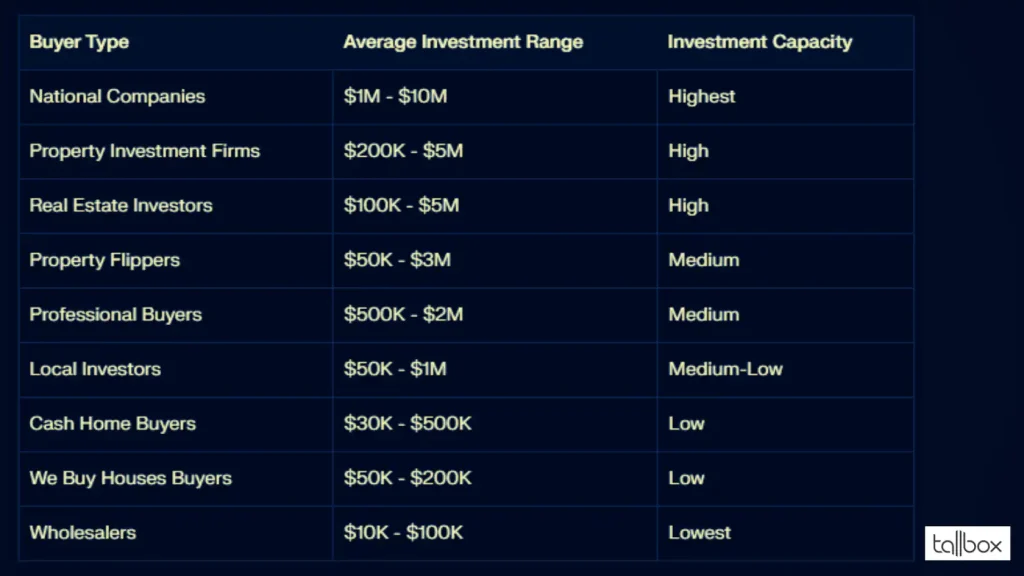
Different types of buyers, such as investors, flippers, wholesalers, family-run local investors, national companies, or downsized, are after cash transactions for homes, each with unique motives, expertise, and strategies.
Here’s an overview of the various buyer types, including their methods and approaches to property buying:
Professional Buyers
Definition: Individuals or entities that specialize in purchasing real estate for investment purposes. They typically have extensive experience in the industry and possess the resources to close deals quickly.
Professional buyers often focus on speed, are equipped with cash reserves, and may operate across multiple markets.
Comparison: Unlike first-time buyers or owner-occupants, professional buyers focus solely on investment returns, not on finding a primary residence.
Real Estate Investors
Definition: Buyers who purchase properties with the intention of either holding them for short or long term rental income or renovating them for resale (often called “fix and flip” or BRRRR).
Approach: Real estate investors use a variety of strategies, such as buying rental properties for passive income or purchasing undervalued homes for capital gains.
Comparison: Real estate investors focus more on long-term value appreciation and cash flow, whereas other buyers may look for shorter-term returns or specific kinds of property upgrades.

Property Flippers
Definition: These are investors who buy distressed or undervalued properties, renovate them, and sell them quickly for a profit.
Characteristics: Their strategy revolves around rapid renovations and reselling for quick profit, often focusing on cosmetic upgrades or major repairs.
Comparison: Property flippers fall under the broader category of real estate investors but focus specifically on a shorter investment cycle with significant improvements in property condition.
Wholesalers
Definition: Real estate wholesalers enter contracts to purchase properties at below-market prices and assign those contracts to other buyers for a profit.
Characteristics: They often target motivated sellers and aim to get properties under contract quickly, profiting from the spread between the contract price and their buyer’s price.
Comparison: Unlike property flippers, wholesalers usually do not take possession of the property or do extensive renovations. They profit by connecting motivated sellers to other investors.
Local Investors
Definition: Individual or small-group investors who focus on properties within their community or region.
Characteristics: They are familiar with local market conditions and can offer a personalized touch, often prioritizing investments that benefit their community.
Comparison: Local investors may provide better offers or quicker closings compared to out-of-town investors due to their local expertise and interest in enhancing their community.
Companies
Definition: Corporations that buy properties directly from sellers, usually for investment or resale purposes.
Examples: Companies like iBuyers (e.g., Opendoor, Zillow Offers, Offerpad) and national home-buying firms that provide quick cash offers.
Characteristics: They have standardized processes, and their primary goal is to make property buying and selling more efficient.
Comparison: Companies have more capital and standardized buying processes compared to individual investors or local buyers, enabling them to provide a consistent experience, but often with less flexibility in negotiations.
Cash Home Buyers
Definition: Buyers who purchase homes outright with cash, enabling a fast transaction without the need for mortgage approval.
Characteristics: These buyers are attractive to sellers seeking a quick and guaranteed sale, especially when dealing with distressed or problematic properties.
Contrast: Compared to traditional buyers, cash home buyers do not need financing, making the process much faster and less subject to lender-related delays or conditions.
“We Buy Houses” Buyers
Definition: Companies or investors that market their services using the “We Buy Any House” slogan, focusing on buying homes quickly, often at below-market prices.
Characteristics: These buyers typically target motivated sellers looking for convenience, offering cash deals and the option to sell “as-is” without repairs.
Comparison: “We Buy Houses” buyers often emphasize speed and convenience over price, whereas traditional buyers generally look for better value and prefer good-quality properties. Traditional buyers looking for fully renovated and move-in-ready homes, We Buy Homes firms don’t.
Property Investment Firms
Definition: Companies that buy, hold, or sell properties for profit, typically managing a diverse portfolio that includes residential, commercial, or rental properties.
Characteristics: These firms often acquire properties as part of a long-term investment strategy, holding some properties for rental income and flipping others for quick profit.
Comparison: Unlike individual investors, property investment firms typically have more resources and operate at a larger scale, purchasing multiple properties at once or focusing on high-value investment opportunities.
Cash home sales attract a wide variety of buyers, ranging from individual investors to large companies, each with their distinct motives. Some, like property flippers, aim for quick returns by renovating and selling. Others, like property investment firms, focus on holding properties for long-term gains. Local investors prioritize opportunities in their own communities, while companies and professional buyers offer standardized and expedited buying processes.
What do you need to know Before Proceeding with a Cash Sale?
The main trade-off to selling a house for cash is the lower sale price. Cash buyer transactions carry potential trade-offs, such as lower sale prices and buyers in 90% offer less than the market value to account for repairs and investment returns. Sellers should weigh the convenience against the potential loss in profit.
It is essential to verify the credibility of cash buyers to avoid scams. Consulting with real estate professionals or attorneys can safeguard the seller’s interests.
What Legal and Financial Implications there might be for cash sales?
Legal Implications
When selling property to a cash buyer, there are several legal and financial implications for both buyers and sellers.
Since cash sales do not require buyer financing, there’s no risk of the deal falling through due to loan approval issues. A transaction may proceed faster, potentially giving sellers less time to address certain legalities (e.g., title issues, liens, disclosures).
The seller must provide a clear title, free from disputes or liens. A title company typically conducts a title search, but unresolved issues could delay or prevent the sale. The seller must confirm that there are no hidden claims on the property.
Cash sales are sometimes perceived as more straightforward, sellers are still obligated by law to disclose any known material defects about the property. Failing to disclose significant issues (such as foundation problems or mold) could expose the seller to future legal disputes for fraud or misrepresentation.
In many cash sales, properties are sold “as-is,” meaning the seller is not required to make any repairs. Selling “as-is” doesn’t waive the obligation to disclose known defects, and the buyer might still negotiate repairs or ask for a reduction in price during inspections.
Real estate laws vary by jurisdiction, including required inspections, mandatory disclosures, or other regulations that sellers need to comply with. The seller should ensure that all local legal requirements are met to avoid penalties or potential lawsuits.
Financial Implications
Cash buyers often expect a discounted price due to the convenience and speed of the transaction. Sellers may need to be prepared for offers that are 20%-30% and even 40% below market value, especially when dealing with investors or “we buy houses” companies.
Since cash buyers often purchase homes “as-is,” the seller may save on repair costs. This also means accepting a lower offer, potentially affecting overall financial outcomes.
Depending on the seller’s circumstances, a cash sale might lead to capital gains tax if the property has appreciated in value. This could apply to properties that are not the seller’s primary residence (e.g., inherited homes or investment properties). Consulting a tax professional is advisable to fully understand the tax liabilities involved.
While the lack of contingencies can simplify the sale process, it also means the seller is less protected in case the buyer decides to back out. For instance, without an appraisal or financing contingency, the transaction proceeds directly, but if the seller misses potential issues, there’s no safeguard against losses or unexpected complications.
Cash sales involve fewer costs compared to financed deals since there are no lender fees or mortgage-related expenses. Sellers still need to be aware of closing costs, including title fees, escrow fees, attorney fees (if applicable), and property taxes, which may still be the seller’s responsibility up to the date of closing.
If there are outstanding liens on the property, they must be cleared before the cash sale can proceed. Sellers may need to use proceeds from the sale to satisfy existing liens, which could reduce the net amount received.
Cash sales are often faster, which is beneficial for sellers needing immediate liquidity. However, the speed may lead sellers to overlook important financial details, such as negotiating a higher price, understanding all fees, or taking time to resolve legal issues.
The accelerated timeline can be both an advantage and a challenge. Sellers must be prepared to move out quickly, and if they haven’t planned adequately, it could lead to rushed decisions or extra costs for temporary housing.
In a cash sale, the buyer might not require an appraisal, but without it, the seller may not know if the property could have sold for more. If an appraisal is waived, the transaction might be at a price significantly lower than the property’s true market value.
What is the Sale Process in Cash Purchase?
When selling a house for cash, the process differs significantly from traditional home sales. Below, we break down the key features, focusing on transaction speed, sale benefits, and requirements for a smooth and expedited experience.
Cash sales are known for their expedited process compared to traditional sales that require financing and more involved procedures. Buyers pay the sellers in one lump-sum cash for their property.
Transaction Speed: The entire sales process moves quickly, often taking just days or weeks, compared to months in traditional transactions.
Quick Closing: Cash sales benefit from the absence of a mortgage approval process, allowing closings to occur in as little as 7 to 14 days. This speed appeals to sellers who need to resolve financial concerns or relocate quickly.
Comparison with traditional sales: Unlike a traditional sale that can be delayed by underwriting and financing conditions, a quick closing eliminates these hurdles.
Immediate Offer: Cash buyers often provide an offer shortly after viewing or evaluating the property. Sellers can expect an offer within 24-48 hours, allowing for an immediate decision.
Contrast: With a traditional sale, offers may come after multiple showings and can take weeks or months.
Fast Track Sale: This is a streamlined approach that ensures minimal procedural delays, often bypassing standard practices like waiting on inspections or financing contingencies.
Comparison: Fast-track sales bypass several traditional steps, which is ideal for sellers wanting to close a sale with minimal complications.
Rapid Closing: Once an agreement is reached, cash buyers can close rapidly. This eliminates the usual waiting periods associated with underwriting, appraisals, and other financing contingencies.
Sale Features
Cash sales and All-cash offers often involve selling directly to the buyer in lump-sum payment, which eliminates the need for a real estate agent, which makes them commission-free. Sellers do not have to pay commission fees, which are typically 5-6% of the sale price.
Traditional home sales generally involve using a realtor and paying them fees, whereas cash sales can save the seller thousands of dollars by removing these costs down to a zero commission.
No Realtor: Sellers can sell directly to the buyer without involving a listing agent or real estate broker. Realtor-assisted sale is rare in these cases.
In a traditional sale, agents manage marketing, negotiations, and paperwork, but cash sales allow for direct communication and negotiation between buyer and seller or their lawyers.
As-Is Sale: Selling “as-is,” also called no-repair or unrenovated sale, means the seller will not make repairs or improvements before selling. Cash buyers often accept properties in their current condition, regardless of any needed work.
Traditional sales often require renovations or upgrades to attract buyers, whereas “as-is” sales let the seller avoid the cost and time involved in repairs.
Cash Offer: Cash buyers provide an offer without needing financing. This is one of the major advantages, as it reduces the risk of a deal falling through due to loan approval issues.
Contrast: Unlike buyers using a mortgage, cash buyers are not subject to lender conditions, which can cause delays or denials.
Requirements
Cash sales have fewer requirements compared to traditional sales, simplifying the process for both the seller and the buyer.
No Repairs: Sellers are not required to make any repairs before selling the property. Cash buyers typically assume responsibility for all necessary repairs after purchase.
Comparison: In traditional sales, buyers may request repairs before closing or include them as contingencies in the contract. Cash buyers, however, expect to handle repairs themselves.
No Inspection: Cash buyers may waive the inspection, which speeds up the process and provides more certainty for the seller. This eliminates the risk of renegotiation based on inspection results.
Contrast: In traditional sales, inspections are often a contingency that could lead to further negotiations or the buyer backing out.
No Appraisal: Cash buyers do not need an appraisal for mortgage approval, which saves time and avoids the risk of an appraisal coming in below the asking price.
Comparison: In traditional sales, an appraisal is usually required by the lender to verify the home’s value, which can delay the process or lead to renegotiations if the appraisal value is lower than the offer.
No Showing: Sellers are not required to stage or show the property multiple times to different prospective buyers. Cash sales often involve a single walkthrough by the cash buyer, saving time and effort.
Contrast: Traditional sales may require numerous open houses and showings, which can be time-consuming and inconvenient for the seller.
The sale process for cash buyers is streamlined to minimize effort, cost, and time for the seller. Features like quick closing, no commission, and an as-is sale make this method appealing for those seeking a hassle-free transaction. Requirements such as no repairs, no inspection, no appraisal, and no showings further simplify the sale. These aspects contrast sharply with traditional sales, which tend to involve more procedures, contingencies, and time-consuming processes.
The quick and straightforward nature of cash sales makes them particularly attractive to sellers who want a fast transaction and are willing to accept a slightly lower price for the convenience.
How to sell a house for cash without a realtor?
To sell a house for cash without a realtor, you can directly market your property to cash buyers or real estate investors, handling all aspects of the sale yourself. This involves advertising the property, negotiating terms, and overseeing the closing process without intermediary assistance.
For example, you could list your house on online platforms geared toward private sales, emphasizing attributes like “accepting cash offers” and “sold as-is” to attract cash purchasers. Networking at local real estate investment meetings can connect you with investors interested in buying properties directly from homeowners for cash transactions.
Do cash buyers need title search and escrow?
Yes, cash buyers need a title search and escrow services when purchasing a property. A title search ensures that the property’s title is clear of any liens or legal issues, and escrow services facilitate a secure transaction between the buyer and seller.
For example, a cash buyer may hire a title company to perform a title search to verify clear ownership of the property. They would also use an escrow account to hold the funds until the closing process is completed, safeguarding both parties during the sale.
How cash buying companies find sellers?
Cash buying companies find sellers by actively marketing to homeowners who are looking to sell their properties quickly. They employ strategies such as online advertising (facebook ads, instagram ads, google ads, tiktok videos), direct mail campaigns (We Buy Any House letters, Red or Yellow Envelopes and others), networking, and outreach to identify and connect with potential sellers.
For example, a company might target properties with foreclosure notices property and foreclosure status.
- Website and SEO: They maintain websites optimized for search engines, hoping homeowners searching for solutions to sell their houses quickly will find them.
- Bandit Signs: While sometimes considered unsightly, they place signs in high-traffic areas with messages like “We Buy Houses for Cash” and a phone number.
- Public Records: They monitor public records for foreclosures, probate cases, or properties with tax liens as the owners in these situations might be motivated to sell quickly.
- Networking and Referrals: Companies build relationships with real estate agents, attorneys, and other professionals who might come across homeowners looking for cash offers.
How to find out if you have to sell for cash?
Selling for cash is particularly beneficial if you need a quick, hassle-free transaction and are willing to accept a potentially lower offer in exchange for the convenience and certainty it provides.
For example, if you are a homeowner facing imminent foreclosure, selling for cash would provide immediate funds to resolve the debt and avoid foreclosure proceedings.
Conversely, if you have time and aim to maximize your profit, then exploring traditional sales avenues may be more suitable.
Identifying if you have to sell for cash depends on various factors and considerations.
-
Motivations for selling: Determine your reasons for selling assets, such as needing immediate cash, downsizing, or moving on to new ventures.
-
Risks and rewards: Consider the potential risks and rewards of selling assets. Risks may include receiving a lower value than expected, while rewards could include swift cash flow and reduced financial burdens.
-
Tax implications: Selling assets can have significant tax implications, such as capital gains tax. It is essential to consult with a tax professional to understand your situation better.
-
Market conditions: The best time to sell a business asset is when the market values it. If the asset’s value is not yet at a desirable level, it may be beneficial to hold onto it until the market recognizes its worth.
-
Difference between share sales and asset sales: Share sales involve selling the entire company’s shares, including all its assets and liabilities. On the other hand, asset sales involve selling specific assets of a business. Different tax implications and benefits apply to both methods.
-
Depreciation, chargeable gains, and tax compliance: When selling assets, consider factors such as depreciation, chargeable gains, and tax compliance. These aspects can significantly impact the final amount you receive from the sale.
What is a cash-only home sale?
A cash-only home sale refers to a real estate transaction where the buyer pays the entire purchase price in cash, without the need for a mortgage or financing. In this type of sale, the buyer has the entire amount available immediately, allowing for a faster and simpler closing process.
Benefits of buying a house with cash include being more attractive to sellers, avoiding mortgage payments and fees, lower closing costs, and the potential for a quicker closing process.
Owning a home outright can provide peace of mind and financial security. It is important to note that selling for cash may not be as common due to rising home prices and may not always be the best option for sellers or buyers in all situations.
Why selling a house for cash is better in some ways?
Selling a house for cash offers immediate financial relief during challenging times. Homeowners receive money straight into their accounts within days compared to traditional sales taking 30-90 days.
Cash buyers purchase properties in any condition – damaged roofs, faulty plumbing, outdated kitchens. The sale moves forward without inspections, appraisals, or bank approvals.
Divorcing couples gain quick separation through fast property liquidation and asset division. People facing foreclosure protect their credit scores through rapid cash sales before bank repossession. Medical emergencies require fast access to funds through direct property sales without waiting periods. Job relocations become smoother when homeowners convert their property to cash quickly without repair obligations.
What is a cash-only home sale?
A cash-only home sale involves a buyer purchasing a property without any financing. The transaction excludes mortgage lenders, relying entirely on the buyer’s available funds. Cash-only sales close faster, reducing paperwork and waiting time.
This type of sale appeals to sellers needing a quick solution, particularly when dealing with money problems. Properties in dilapidated condition often attract cash buyers because traditional lenders refuse financing. Cash buyers accept houses with issues like structural damage or legal problems, offering a convenient option for sellers. Cash-only sales reduce stress for homeowners needing immediate liquidity.
How to Buy a Cash-Only House
To buy a cash-only house, begin by checking your finances to ensure you possess the full purchase price in liquid funds. Identify cash-only properties by searching for listings labeled “cash buyers only” or “cash sale.”
Engage a real estate agent experienced in cash transactions to locate suitable homes. Perform due diligence by conducting inspections and title searches to verify the property’s condition and legal status. Prepare a cash offer by submitting a purchase agreement indicating payment without financing contingencies.
Use an escrow service or attorney to handle funds and closing documents securely.
Close the transaction quickly, as cash sales often proceed faster due to the absence of lender requirements. Examples include purchasing foreclosed properties, homes needing significant repairs, or auctioned houses requiring immediate cash payments.
What are the listing terms in cash-only houses?
The listing terms for cash-only houses stipulate that buyers must purchase the property outright using their own funds, without relying on traditional mortgages or loans.
This means the buyer must demonstrate proof of funds, usually through bank statements or a letter from a financial institution, verifying they possess the necessary capital to complete the transaction. Sellers often choose cash-only listings for properties requiring extensive repairs, facing foreclosure, or when a swift and straightforward sale is desired. While cash-only might seem restrictive, alternative financing options, such as hard money loans or private loans, can bridge the gap for buyers lacking immediate access to the full purchase price.
These loans, while typically carrying higher interest rates and shorter repayment terms, provide the quick access to capital needed to compete in cash-only markets.
Both buyers and sellers should carefully evaluate the implications of a cash-only transaction, considering factors such as potential price negotiations, closing timelines, and long-term financial goals to make informed decisions.
Do houses on acution are cash sales?
Houses sold at auction are not always cash-only transactions, but they often attract cash buyers. While some auction houses might accept financing, most buyers come prepared with cash to expedite the process and gain a competitive edge. Cash offers provide a level of certainty that’s appealing to sellers, particularly in an auction setting where speed and efficiency are paramount.
Cash buyers at auctions often include investors seeking quick deals or individuals looking to purchase properties “as-is,” potentially below market value
How to buy cash-only property without cash?
To buy a cash-only property without money, explore alternative financing options. Leverage home equity using a home equity loan, line of credit, bridging loan or cash-out refinance. Consider house hacking by residing in one unit of a multifamily home and renting out the others. Partner up with a co-borrower to pool resources and share responsibilities. Look into a rent-to-own home or try assuming an existing mortgage. Lastly, consider a hard-money loan for fixer-uppers. Each of these options enables investing in real estate with minimal to no money down.
Here is a list with their definitions:
Seller Financing: This involves the seller acting as the lender. Instead of getting a mortgage from a bank, you make payments directly to the seller. This can be a good option if you don’t qualify for traditional financing.
Partnerships: You can partner with someone who has the cash. In this arrangement, you might handle the property management or other aspects of the investment, while your partner provides the funds.
Home Equity Line of Credit (HELOC): If you already own a property with significant equity, you can take out a HELOC and use those funds to purchase the new property.
Lease Options: This allows you to lease a property with the option to buy it later. Part of your lease payments can go towards the purchase price.
Hard Money Loans: These are short-term loans from private lenders, often used by real estate investors. They typically have higher interest rates but can be a quick way to secure funding.
Crowdfunding: Some platforms allow you to pool money with other investors to buy properties. This can be a way to get involved in real estate without a large upfront investment
Red flags: Selling house for cash scams
When selling your house for cash, there are several red flags that indicate potential scams, and if you are in a hurry or are experiencing financial stress, it’s better to sell your home through a trusted real estate agency. Watch out for these warning signs to avoid falling victim to fraudulent schemes:
1. Unsolicited Offers
Receiving an unexpected offer, often through emails, phone calls, or door-to-door inquiries, can be a sign of a scam. Legitimate cash buyers usually work with sellers who actively list or market their properties.
2. Requests for Upfront Payments
Scammers may ask for upfront fees for services like processing, legal, or inspection costs. Reputable cash buyers do not require such fees before closing.
3. High-Pressure Tactics
If a buyer pushes for an extremely quick decision, using high-pressure tactics to make you sign immediately, it’s a red flag. Legitimate buyers will give you time to evaluate offers and think about your decision.
4. Lack of Verifiable Credentials
Legitimate cash buyers will have an online presence, licenses, reviews, or references that you can verify. If the buyer refuses to provide verifiable credentials or you find no information about them online, be cautious.
5. Suspicious Contract Terms
Contracts that are overly complex or use vague language can indicate a scam. Beware of contracts that let the buyer back out easily or claim undue rights to your property after a minimal deposit.
6. No Clear Proof of Funds
Legitimate cash buyers should provide proof of funds to show they can afford the property. If a buyer refuses to provide this proof, it’s a potential warning sign.
7. Requests for Title Transfer Before Payment
Scammers may try to convince you to transfer the title before receiving full payment. Never transfer your property title without confirming payment in full through a secure and verified method.
8. Unprofessional Behavior
Pay attention to communication. If the buyer communicates poorly, uses unprofessional language, or has inconsistent information, it might be a scam. Legitimate buyers usually handle transactions in a professional manner.
9. Excessively High Offers
Offers that are well above the market value can be an attempt to lure you into a scam. Verify the buyer’s credibility if an offer seems “too good to be true.”
By being aware of these red flags and doing your due diligence, you can protect yourself from cash buyer scams. Consult with a real estate attorney or trusted real estate agent to review any offers if you feel uncertain.
How to find if a cash-offer is legitimate?
To determine if a cash offer for your house is legitimate, follow these steps to conduct due diligence and ensure a safe transaction:
1. Verify Proof of Funds
Legitimate cash buyers can provide a bank statement or a letter from their bank showing they have the funds available for the purchase. Request proof of funds and confirm that the buyer has the cash necessary for the offer.
2. Check Online Presence and Reviews
Look up the cash buying company or individual online. Legitimate companies usually have a website, online reviews, and a digital presence on reputable platforms such as the Better Business Bureau (BBB). Verify their track record and see what past clients say about their experiences.
3. Research Credentials
Ask for the buyer’s business licenses or real estate credentials. Confirm their legitimacy by contacting relevant regulatory authorities or searching for licenses online. Professional buyers are often registered as real estate investors and have valid business credentials.
4. Confirm Their Business Address
A legitimate buyer should have a physical business address. Verify their address through an online search or visit the premises if possible. Be cautious if a buyer uses only a P.O. box or refuses to disclose a physical address.
5. Look for Written Offers
Ensure that any offer you receive is in writing. A legitimate cash offer is formalized in writing and often comes with contingencies or clear terms. Verbal offers are often a red flag, and reputable buyers will always provide documentation.
6. Avoid Upfront Payments
Legitimate cash buyers do not require sellers to pay for processing fees, inspections, or any other upfront costs. Be skeptical if the buyer asks for any kind of fee before completing the transaction. Title or escrow fees should typically be deducted from the proceeds at closing.
7. Review Contract with a Professional
Have a real estate attorney or trusted real estate agent review the contract terms. Contracts that are vague, complicated, or overly favorable to the buyer could be an indication of a scam. A professional can help identify any unusual terms or clauses.
8. Check Their Closing Process
Legitimate cash buyers use standard real estate procedures and should be willing to use a reputable title or escrow company to handle the closing. Verify the title company used in the process and confirm that they are real and accredited. A scammer may try to bypass third-party title companies.
9. Beware of Unrealistic Offers
An offer well above or below the market value could be a red flag. Conduct a market analysis or consult with a real estate professional to determine if the offer aligns with the current market. Scammers often use exaggerated offers to attract unsuspecting sellers.
How to get a cash quote for a house?
To get a cash quote for a house, follow these steps to obtain a reliable cash offer quickly:
1. Contact Cash Home Buying Companies
Reach out to companies that specialize in buying homes for cash. Examples include “We Buy Houses,” “HomeVestors,” Opendoor, and local cash investors.
Visit their website and fill out an online form with basic property information such as address, condition, and size.
2. Request Quotes from Multiple Buyers
Contact multiple cash buyers for comparison.
Provide the same information to each to receive multiple offers, ensuring you get the best deal.
3. Provide Property Information
Be ready to provide details about the house, such as:
- Number of bedrooms and bathrooms.
- Property condition (whether it needs repairs).
- Any special features that may add value.
Accurate information helps ensure the quote is realistic.
4. Get an Initial Estimate
Most companies provide an initial quote within 24-48 hours based on market analysis, property data, and similar sales.
This offer might be a range, reflecting the potential price based on the property’s condition.
5. Schedule an Inspection
Many cash buyers will need to visit the house for a property evaluation. The company may arrange for an agent to inspect the house and assess its condition in person.
The inspection is typically free, and the buyer uses it to finalize the offer.
6. Receive the Final Cash Offer
After the inspection, the buyer provides a final cash offer. This may consider the cost of repairs or changes needed to meet market standards.
The final offer is usually binding for a set period (e.g., 7 days).
7. Evaluate and Decide
Review the offer carefully. Consider any conditions attached, such as the closing timeline or any contingencies.
There is typically no obligation to accept the offer if it doesn’t meet your needs.
Tips for Getting the Best Cash Quote
Compare Multiple Quotes: Always compare offers from multiple cash buyers to ensure you are getting a competitive price.
Research the Buyer: Look for reviews and ensure the buyer is credible and trustworthy.
Know Your Market Value: Consult a local real estate agent to understand your property’s market value, so you have an idea of what to expect.
Examples of Companies
Opendoor and Offerpad provide cash offers through an online form, followed by a home visit to finalize the quote.
HomeVestors offers quotes to homeowners looking for quick sales, targeting properties in need of renovations.
What houses typically sell for cash?
Houses in less-than-perfect condition, requiring repairs or renovations, frequently attract cash buyers. Properties facing foreclosure, burdened with liens, or entangled in probate often become cash-only transactions due to their complex legal or financial situations.
Motivated sellers needing a fast and guaranteed sale, like those facing relocation or time constraints, sometimes opt for cash-only deals for a quicker closing process. Inherited properties, especially those requiring significant updates or posing financial burdens, frequently end up as cash-only sales as heirs seek swift resolutions.
Vacant or neglected properties, often deemed less desirable to traditional buyers, often become targets for cash buyers seeking investment opportunities or faster renovations.
Want to get 3D rendering for your next house project?