George is a seasoned interior designer and property marketing strategist with over 13 years of experience. He specializes in transforming properties into visually stunning spaces, helping clients recognize the potential and beauty in each property. With an impressive international client base of exciting projects throughout Europe and America.
Stone bathroom designs have been popular for many years, but they’ve seen a significant resurgence in recent times. The trend towards natural, spa-like bathrooms with stone elements really gained momentum in the early 2000s and has continued to evolve since then. But are they still popular in 2024?
Key Elements
- Growing interest in natural and organic materials in interior design, starting in the late 1990s and early 2000s.
- Increased focus on creating luxurious, spa-like bathrooms at home, which became more prominent in the mid-2000s.
- Advancements in stone cutting and fabrication technologies, making stone more accessible and versatile for use in bathrooms.
- Rise of the minimalist and modern design aesthetics in the 2010s, where natural stone fits well due to its clean lines and timeless appeal.
- Increased awareness of sustainability and eco-friendly design choices in the late 2010s and early 2020s, with natural stone being seen as a durable, long-lasting material.
Is stone good material for bathroom?
The popularity of stone in bathroom design has waned in recent years, as new materials and trends emerge. Although stone offers durability and a luxurious feel, many homeowners are now opting for more modern alternatives.

Bathrooms have seen a shift towards minimalist and functional designs, moving away from the more ornate and traditional aesthetics that stone often embodies. Design trends in 2024 show a preference for sleek lines, softer materials, and integrated lighting features, leaving stone, with its inherent heaviness and traditional appearance, looking a bit outdated.
Those considering a bathroom remodel are increasingly looking for materials that convey a sense of modernity and ease of maintenance. While stone will always have its place in design, it is no longer the go-to choice for contemporary bathroom spaces. This pivot towards modern bathroom trends indicates a significant departure from conventional stone aesthetics.
Current Trends in Bathroom Design
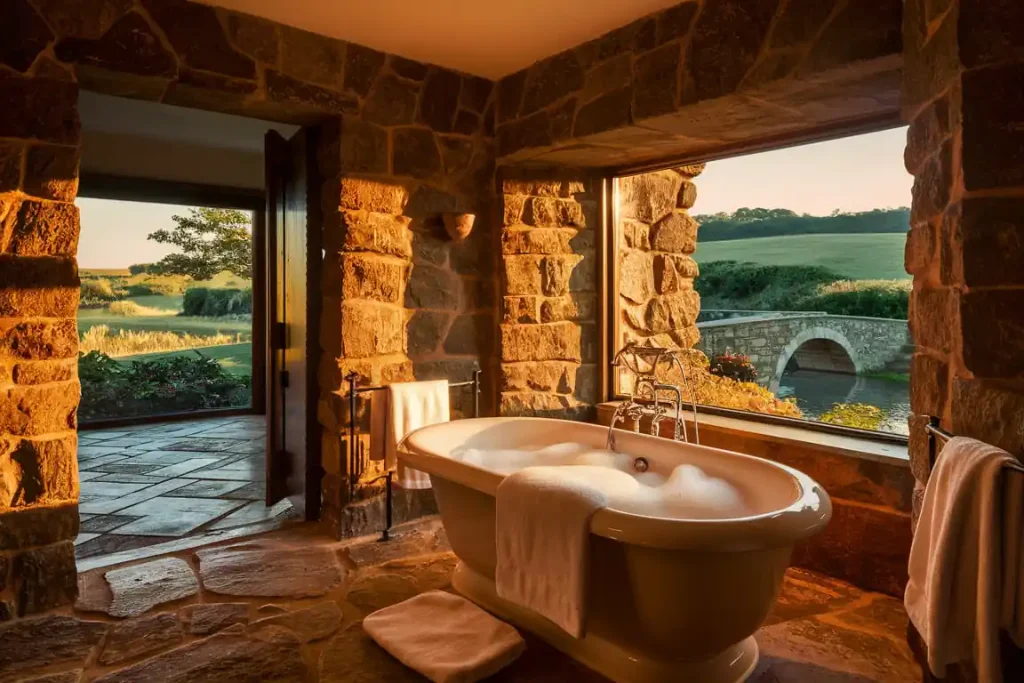
Stone in bathrooms is very popular mediterranean countries Italy, Greece, Spain, North America (especially in luxury homes and McMansions), Japan (onsen inspired designs), Middle East and Scandinavian and in their local architecture and design styles.
Modern bathrooms are embracing a mix of textures and materials, focusing on natural elements like stone to create warm, inviting spaces. The use of natural stone, particularly in finishes and textures, continues to be significant in contemporary bathroom design.
Natural stone plays a crucial role in modern bathroom design. Materials such as marble, granite, and slate are highly favored for their durability and aesthetic appeal. They provide a sense of luxury and timeless beauty.
Textured finishes are popular, adding depth and interest to bathroom surfaces. For example, a textured stone wall can create a focal point, contrasting with sleek porcelain fixtures.
Styles of houses where stone bathrooms are common
Modern and Contemporary: Clean lines and minimalist designs often incorporate natural stone for texture and visual interest.

Rustic and Farmhouse: Stone adds warmth and a natural element, complementing the overall aesthetic.

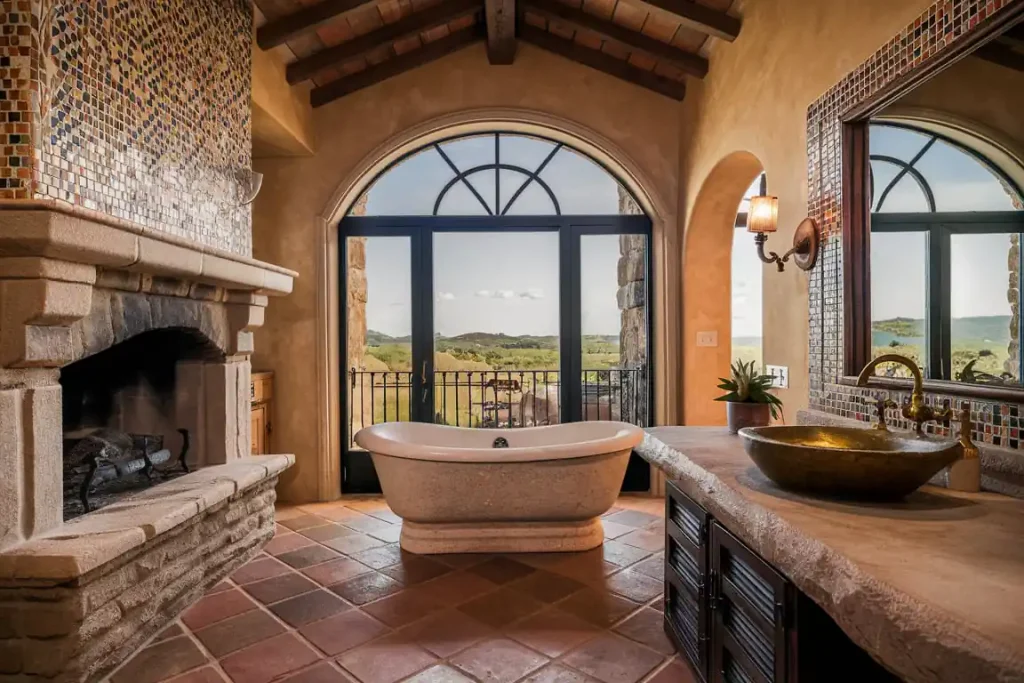
Mediterranean and Tuscan: These styles traditionally use stone extensively, including in bathrooms.

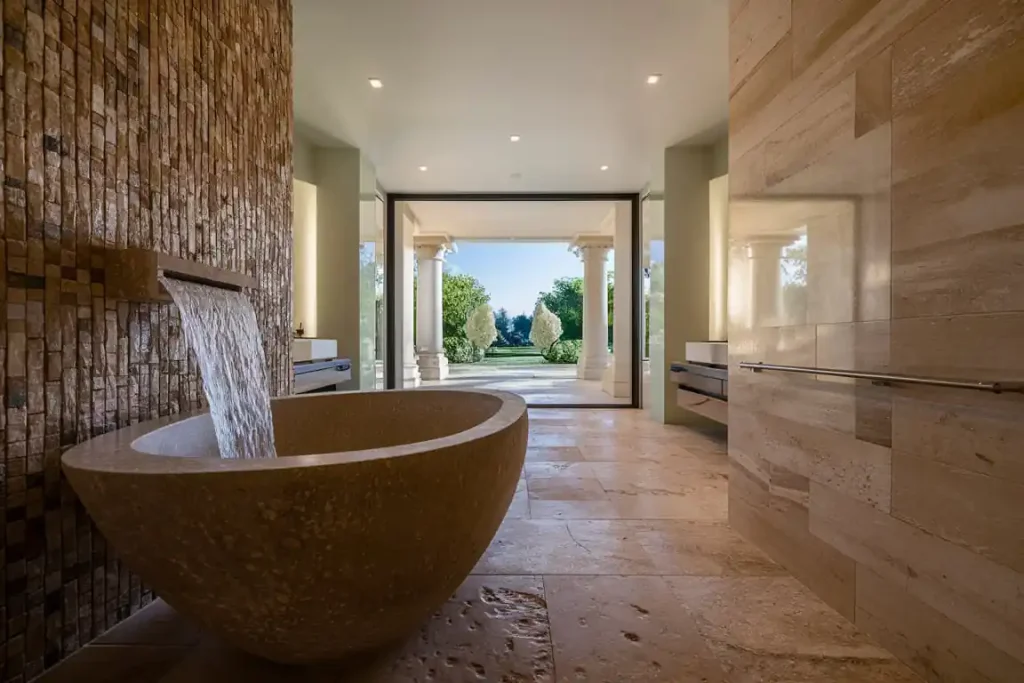
Luxury and High-end homes: Regardless of specific architectural style, stone is often used as a premium material in upscale residences.

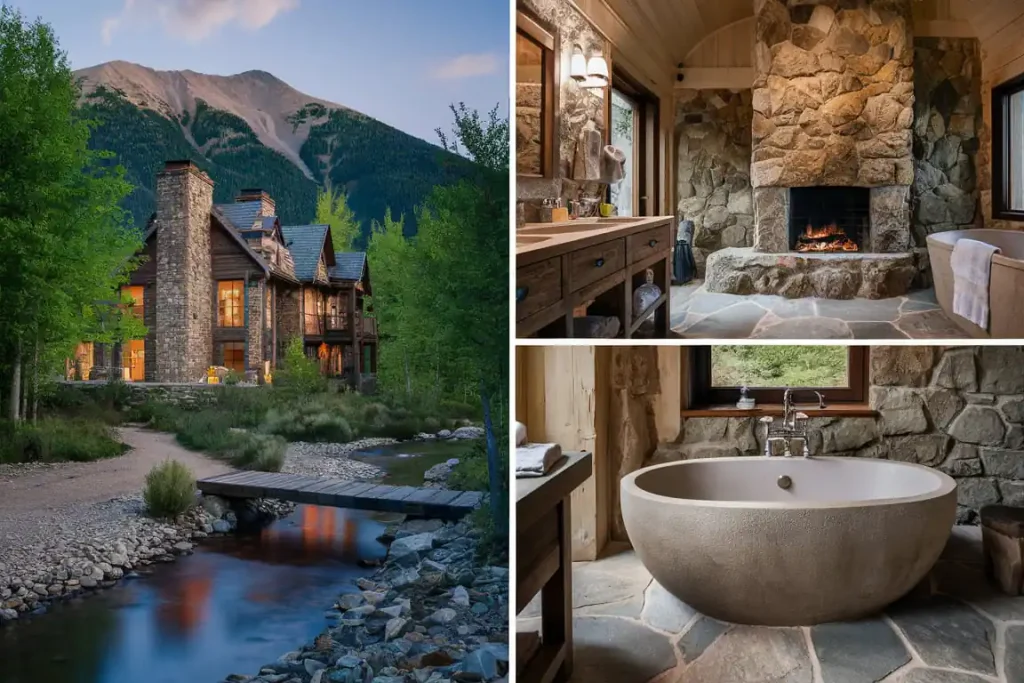
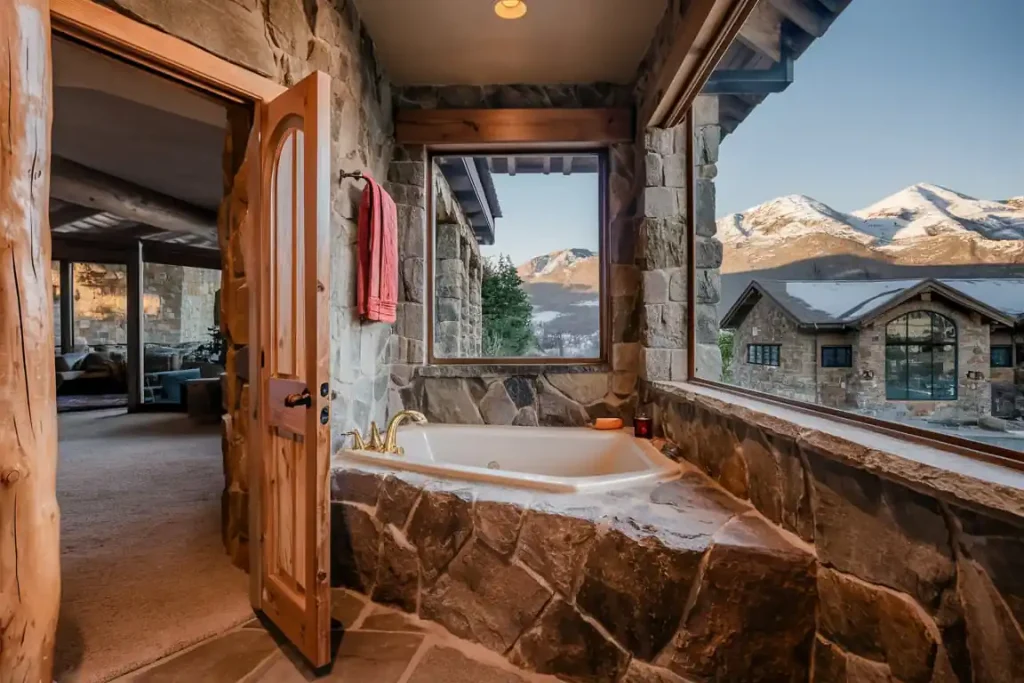
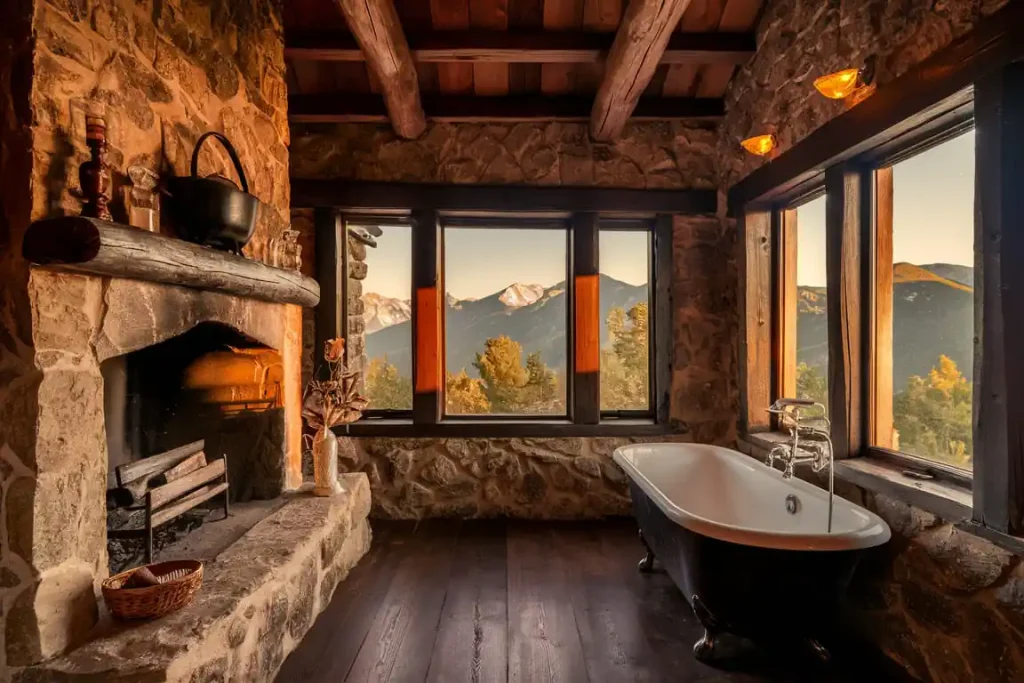
Mountain and Lodge-style homes: Stone bathrooms fit well with the natural surroundings and rugged aesthetic.

Eco-friendly and Sustainable homes: Natural stone is often chosen for its durability and timeless appeal.

Spa-inspired homes: Stone creates a serene, natural atmosphere reminiscent of high-end spas.

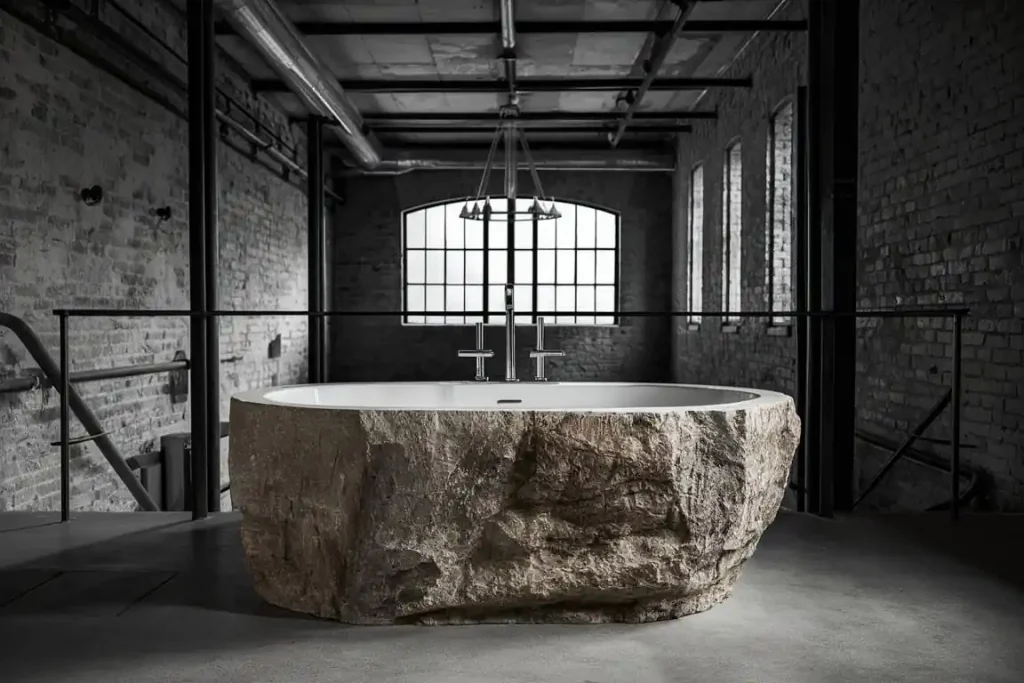
Industrial loft conversions: Stone can add warmth and texture to otherwise stark spaces.

Retreat houses in North America: These often aim to create a natural, serene environment, and stone bathrooms contribute to that aesthetic. They may incorporate local stone to connect with the surrounding landscape.

Manor houses: Traditional manor houses often feature stone elements throughout, including bathrooms. This can range from rustic, exposed stone walls to more refined, polished stone surfaces.

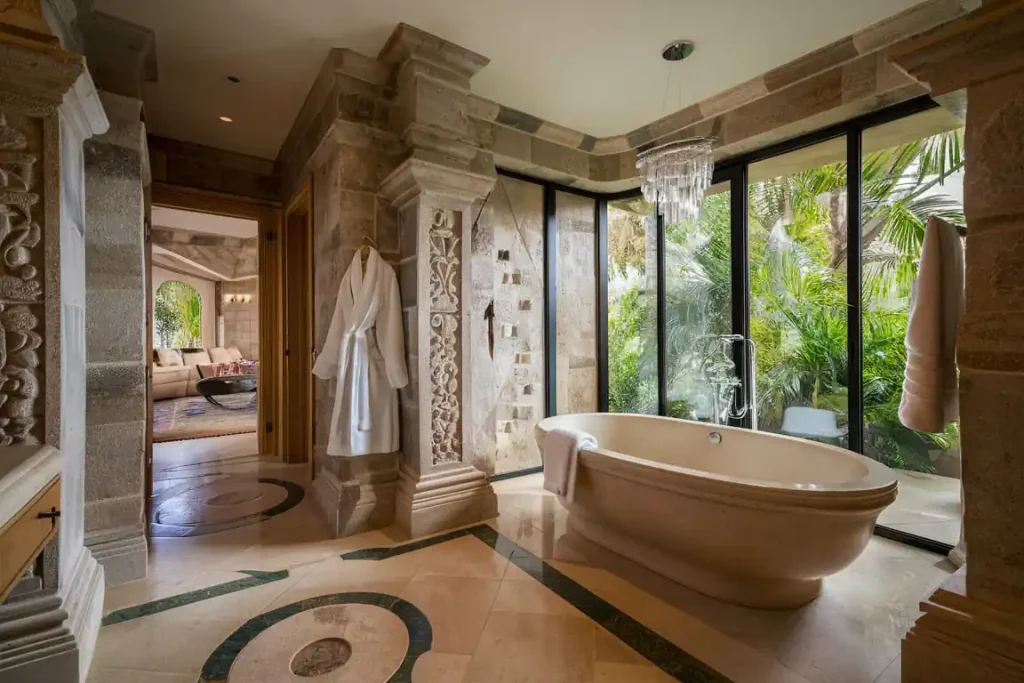
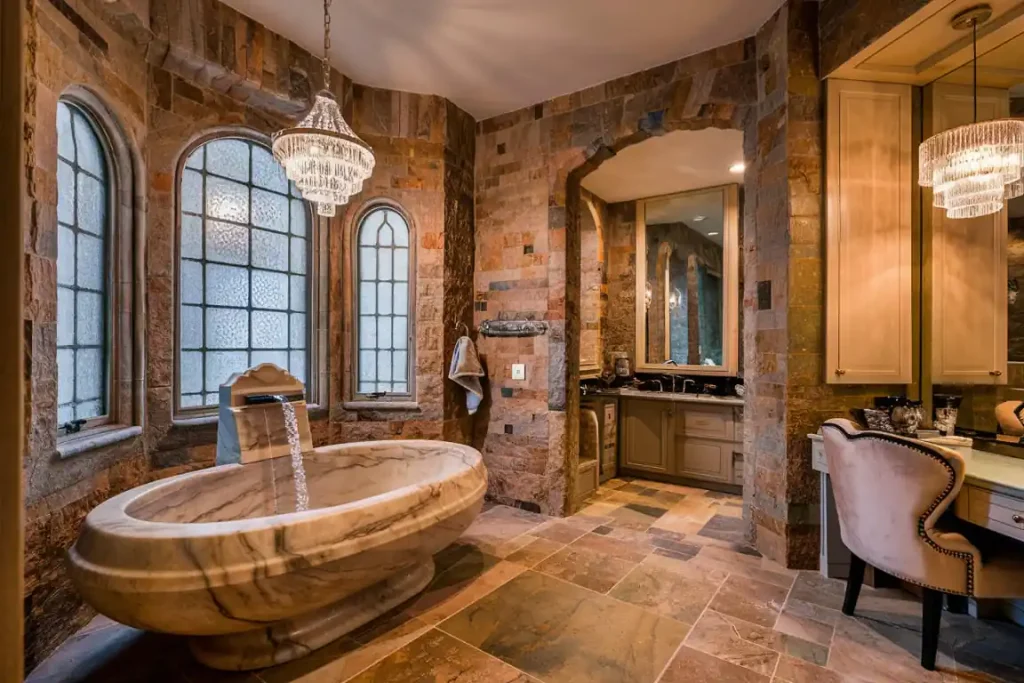
Mansions: In large, luxurious homes, stone bathrooms are frequently used as a statement of opulence and quality. They might feature rare or exotic stone types, intricate patterns, or large-scale applications like full stone walls or oversized bathtubs carved from a single block of stone.

Mountain cottages: You might see various stone applications, from slate floor tiles to river rock shower walls, or even sinks carved from local boulder. The use of stone in these bathrooms often aims to bring the outside in, creating a seamless transition between the natural mountain setting and the interior of the cottage.

Role of Natural Stone in Modern Bathrooms
Natural stone plays a crucial role in modern bathroom design. Materials such as marble, granite, and slate are highly favored for their durability and aesthetic appeal. They provide a sense of luxury and timeless beauty.
Textured finishes are popular, adding depth and interest to bathroom surfaces. For example, a textured stone wall can create a focal point, contrasting with sleek porcelain fixtures.
Warmth is another key trend, achieved by using organic materials alongside stone. Combining these elements can make a bathroom feel more cozy and less clinical.
Porcelain tiles that mimic natural stone are also trending, offering a similar look with easier maintenance. This balance of natural and engineered materials is part of the move towards practical, yet beautiful, natural interior design trends.
Stone Bathrooms offer Lasting Appeal

Stone bathrooms continue to capture attention due to their timeless materials and sophisticated aesthetics. Integrating stone into bathroom design offers more than just visual appeal; it also adds texture, dimension, durability, and character.
Texture and Dimension: Integrating Stone Surfaces

Stone surfaces add texture and unique visual dimension to a bathroom. The natural textures of stone, such as the roughness of slate or the smoothness of marble, create a vibrant and tactile environment. These features make any bathroom feel more connected to nature.
Using stone as a primary material in bathroom design can transform a simple space into an elegant haven. Stone surfaces like pebble floors, granite countertops, and marble walls bring a high-end, luxurious feel. They are not just beautiful but also durable, withstanding the moisture and wear common in bathrooms.
Character and Personality through Stone Choices
Different types of stone can imbue a bathroom with distinct character and personality. For example, limestone offers a soft, neutral appearance that can soothe, while travertine brings warmth with its earthy tones.
When selecting stone, homeowners can choose colors and patterns that reflect their personal style. A bathroom featuring white marble exudes a clean, timeless elegance, while a space with colorful stone tiles can be more vibrant and playful. Each stone type tells its own story, enhancing the room’s overall aesthetic.
Natural stone not only conveys a sophisticated look but also has long-lasting qualities that add value to the home. This combination of beauty, personality, and durability ensures that stone features remain a favored choice in bathroom design.
Design Elements in Stone Bathroom Aesthetics
In stone bathrooms, various design elements like fixtures, accents, tiles, and flooring play crucial roles. These elements create a cohesive, stylish, and functional space.
How to select Fixtures and Accents?

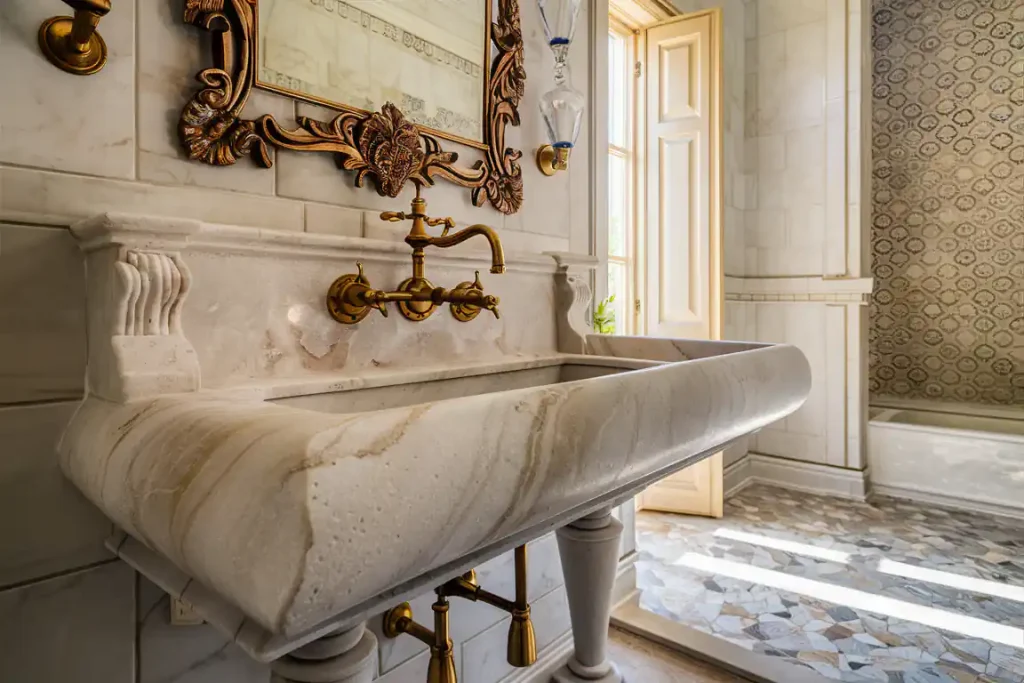
Wall-mounted vanities provide a modern look while creating more floor space. Sconces in matching metals can enhance the ambient lighting. For a harmonious look, ensure that the towel bars, soap dishes, and other minor fixtures match the primary metal choice. Wood accents, like wooden shelves, can add warmth and contrast to the stone.
Tile and Flooring Innovations: From Terrazzo to Chevron
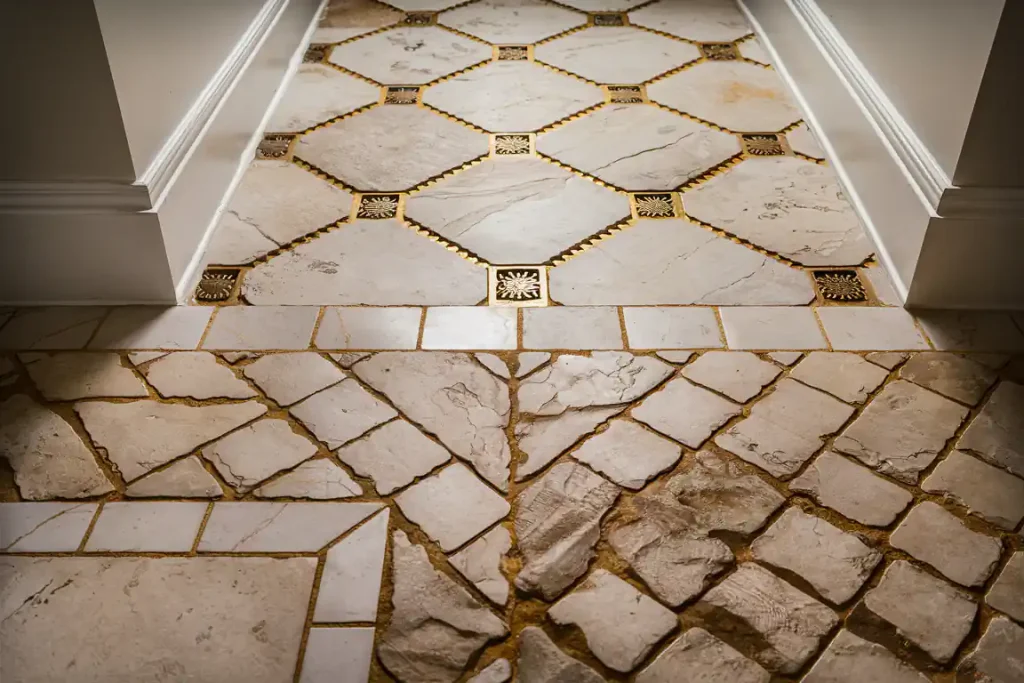
Innovative tile designs like Terrazzo tile, with its speckled pattern, bring texture and character. Subway tiles are a classic choice that pair well in showers and backsplashes. Chevron and basketweave patterns add a stylish touch to the flooring.
Materials like porcelain and ceramic are durable options that mimic natural stones. These materials are also easier to maintain. Using different shades or patterns in tiles can create visual interest, while a checkerboard tile pattern offers a timeless look.
The combination of these design elements can make a stone bathroom aesthetically pleasing and practical.
How to select stone bathroom floor tiles?
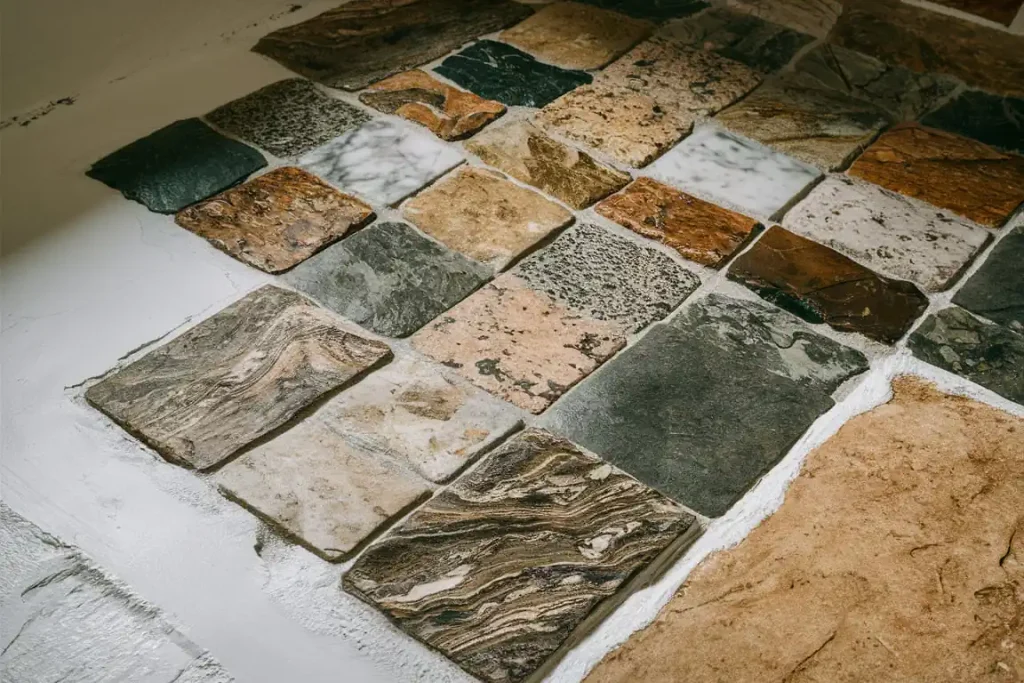
Selecting stone bathroom floor tiles involves considering several factors to ensure you choose the right option for your space. Consider the stone’s hardness (Mohs scale) and resistance to wear, especially for high-traffic areas.
Type of Stone:
- Marble: Luxurious look, but can be slippery and requires more maintenance
- Granite: Durable and water-resistant, wide range of colors
- Slate: Natural slip-resistance, rustic look
- Limestone: Soft, natural appearance, but requires sealing
- Travertine: Unique texture, but needs regular maintenance
- Quartzite: Durable and low-maintenance, resembles marble

Bathroom floors should have some texture to prevent slipping when wet. Honed or tumbled finishes often provide better traction than polished surfaces. Some stones require more frequent sealing and careful cleaning. Assess if you’re willing to commit to the necessary upkeep.
Decide on whether you want beveled edges, bull-nosed edges, or straight edges.
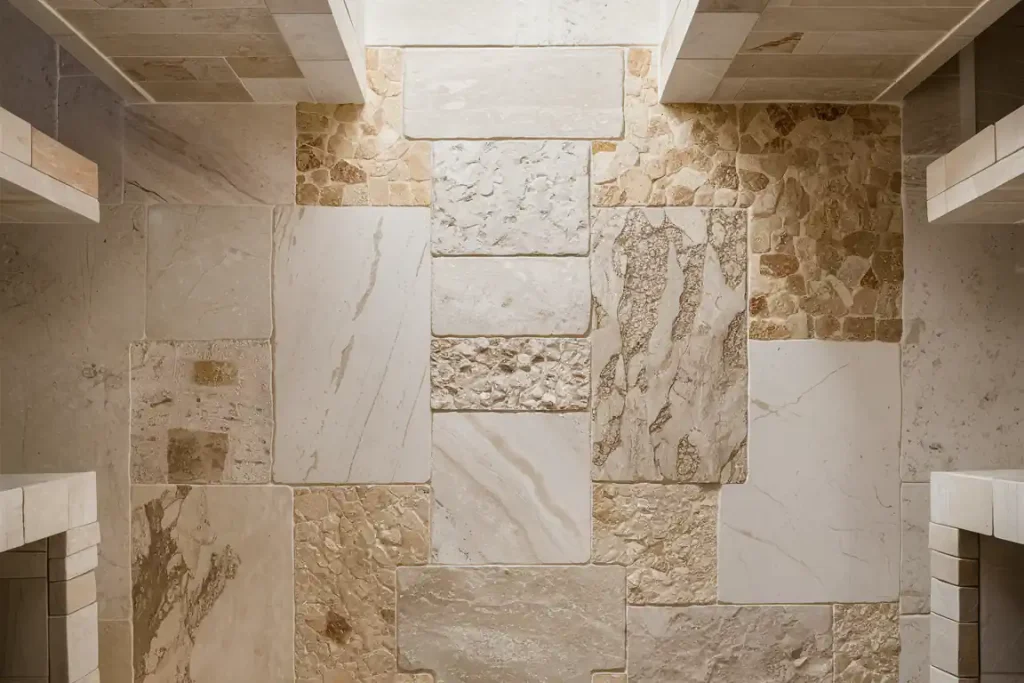
Choose colors that complement your overall bathroom design. Consider how the stone’s natural patterns will affect the room’s appearance. Larger tiles can make a small bathroom appear more spacious, while smaller tiles or mosaic patterns can add visual interest.

Less porous stones are better for wet areas as they’re less likely to stain or harbor bacteria. Stone can feel cold underfoot. Consider if you want to install underfloor heating.

Stone tiles vary widely in price. Determine your budget and explore options within that range. Some stones are harder to install than others. Factor in installation costs and complexity. Consider the thickness of the tiles, especially if you’re renovating and need to match existing floor heights.
Always view samples in your actual bathroom to see how they look under your lighting conditions. Most natural stones require sealing. Understand the sealing requirements for your chosen stone.
How to select stone bathroom floor pattern?

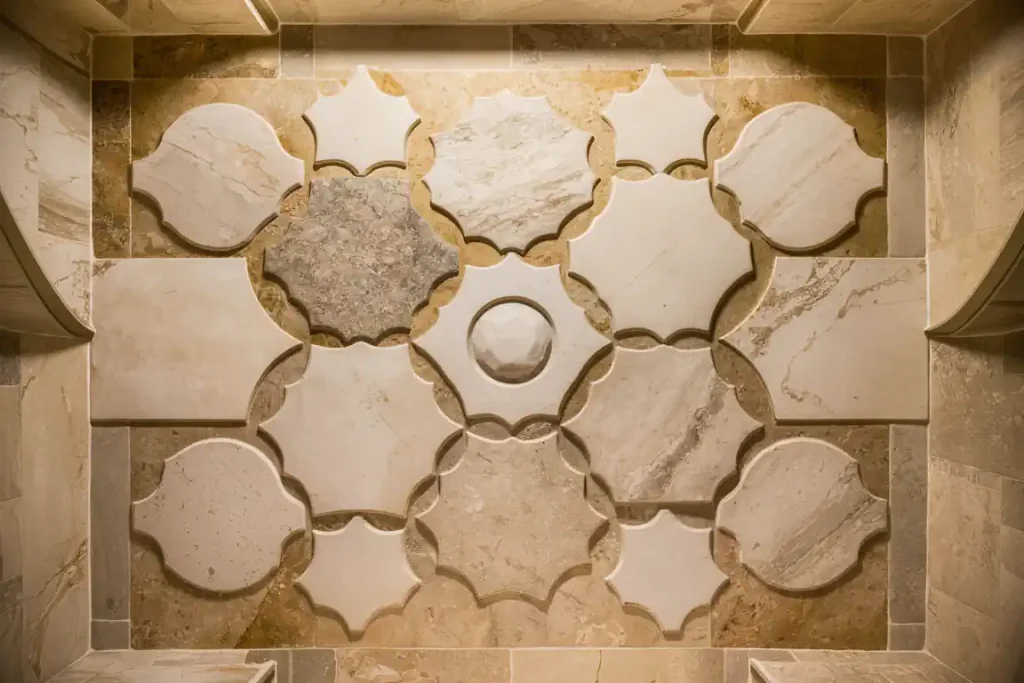
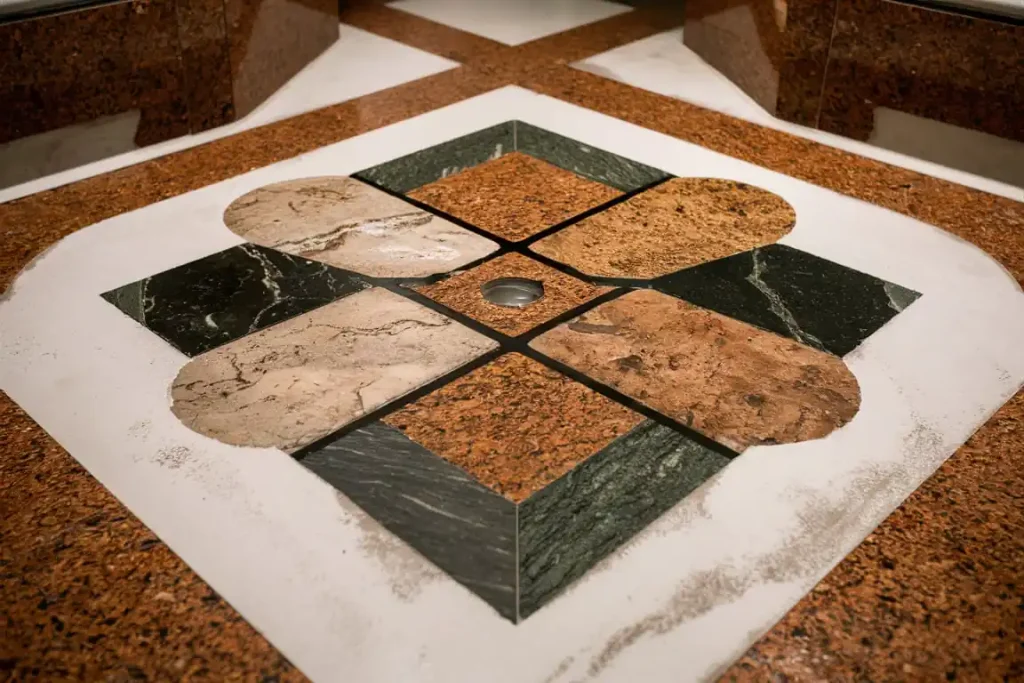
Selecting a stone bathroom floor pattern involves considering both aesthetic and practical factors. Bold patterns create a statement and for subtle sellect patterns that provide a more neutral backdrop.
- Larger patterns can make small rooms feel more spacious
- Diagonal patterns can widen narrow spaces
- Complex patterns may overwhelm small bathrooms
The style of the home determines the type of stone that will work best with the space:
- Traditional homes: Consider classic patterns like herringbone or basketweave
- Modern homes: Simple, large-format tiles or grid patterns often work well
- Rustic homes: Random/ashlar patterns or flagstone can complement the style

- More complex patterns may increase installation costs
- Some patterns result in more waste during cutting
- Use patterns to highlight specific areas (e.g., around a freestanding tub)
- Patterns can guide the eye and influence perception of room size
- Consider the main viewpoint when entering the room
Tile Size:
- Larger tiles often work well in larger spaces
- Smaller tiles allow for more intricate patterns

Continuity:
- Decide if you want the pattern to flow into other areas of the bathroom (e.g., shower)
Timelessness:
- Consider choosing a pattern that won’t quickly go out of style
Grout Color:
- The choice of grout color can dramatically affect the overall look of the pattern
Balance:
- If you have busy walls or fixtures, a simpler floor pattern might be best
Practical Considerations for Stone Bathrooms
When choosing stone materials for bathroom spaces, it’s important to think about their upkeep and layout. Stone bathrooms can be striking but may require more maintenance than other materials.
Maintenance and Durability of Stone Materials
Stone bathroom floors and countertops add a natural and elegant look. Natural stone like marble, granite, and slate are popular choices. Regular maintenance is needed to keep them looking good and lasting longer. Sweeping or vacuuming regularly helps prevent scratches.
In humid environments like bathrooms, stone can absorb moisture. Sealants are important to protect against water damage and stains. Using a mild, non-acidic cleaner can help prevent etching and keep the stone looking polished. Damage from acidic substances or harsh cleaners can degrade the stone.
Layouts and Space Planning in Stone Clad Bathrooms
Layouts and space planning for bathrooms with stone materials should consider the weight and size of the stone. Small bathrooms can benefit from lighter stone to avoid overwhelming the space. In larger bathrooms, darker or heavier stone can create a luxurious feel.

When planning a remodel or bathroom renovation, place stone elements in areas that enhance both aesthetics and function. Stone bathtubs or accent walls can serve as focal points without affecting overall wellness. Proper planning minimizes clutter and maximizes the space efficiently.
Ensuring proper drainage and ventilation are crucial to avoid moisture buildup and maintain the stone’s integrity. The placement of stone elements should facilitate easy cleaning and minimize water exposure to extend their durability.
Stone Bathroom Relevance Across Different Cultures

Stone bathrooms hold a special place in various cultures, blending local materials and styles. They draw inspiration from Europe’s timeless designs and different global trends.
European Influence on Stone Bathroom Design
European countries have a strong tradition of using stone in bathroom designs. In Italy, marble bathrooms are seen as a symbol of luxury. The Italian Renaissance period heavily featured marble, showcasing its durability and elegance. This trend continues, with stone bathrooms offering a chic and sophisticated look.
In France, limestone is a popular choice for its warm tones and natural feel. French country-style bathrooms often incorporate limestone flooring and wall tiles, creating a cozy and rustic atmosphere. Portuguese designs frequently use azulejos, ceramic tiles with intricate patterns, alongside stone elements.

Scandinavian design, known for its minimalist and functional approach, often features stone for its clean lines and natural beauty. Here, stone elements such as countertops and sinks are paired with light wood, creating a serene and modern bathroom space.

Using global inspirations in stone bathroom designs adds a personal touch. In Japan, stone elements are essential for creating Zen-like bathrooms. The use of natural stone and minimalist design principles help to create spaces that are both calming and aesthetically pleasing.
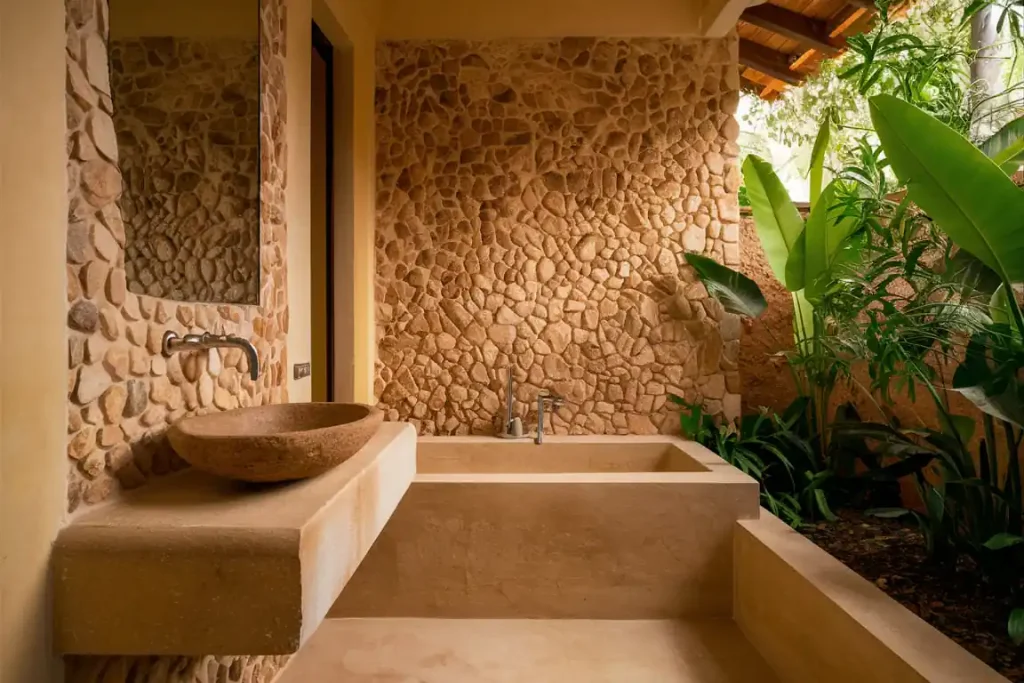
In tropical regions, like South East Asia, rough stone sinks and bathtubs provide a natural and tropical feel. These elements are often combined with greenery and bamboo to enhance the connection to nature.
Moroccan bathrooms are known for their vibrant tiles and stone features, creating colorful and intricate designs. The use of tadelakt, a traditional waterproof plaster, and mosaic tiles alongside stone elements results in unique and opulent spaces.
In India, bathrooms often incorporate sandstone for its colorful variations and texture. The stone is crafted into sinks, bathtubs, and flooring to create a warm and inviting atmosphere, reflecting India’s rich heritage and craftsmanship.