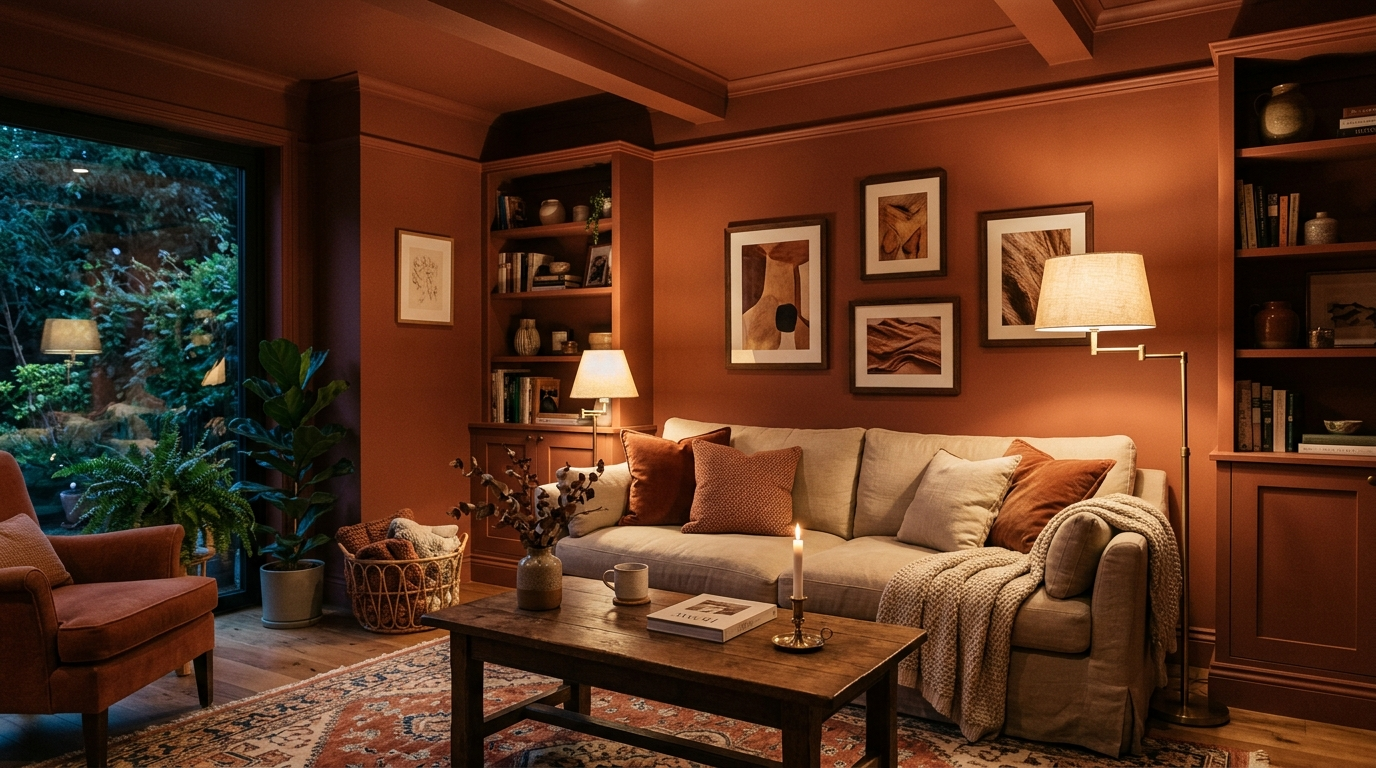
White ceilings are on the way out, and 2026 is treating the ceiling as a fifth wall worth painting. Homeowners are drenching it in colour, capping it with a darker shade, or finishing it in warm plaster. The demand is loud: searches for ceiling painters jumped almost 17,000 percent this year.
That surge comes from Yelp’s 2026 Summer Home Trends report, which compares what homeowners search and book against the year before, so it reflects real projects rather than idle scrolling. Colour drenching, painting the walls and ceiling the same shade, is climbing too, with mentions in property listings up 149 percent. Ceiling staining and wood-panel ceilings are rising alongside the paint, part of the same move to make the overhead plane do something. The plain white ceiling, long treated as a default, is the surface designers now most want to use.
Why are white ceilings falling out of favor in 2026?
A flat white ceiling was never a decision; it was the setting nobody changed. As walls turned warmer and rooms got more personal, that bright white plane started to feel like an unfinished afterthought, a cold cap on an otherwise cozy room. A space could have warm walls, layered textiles, and a rich rug, then hit a blank white lid that quietly undid the mood.
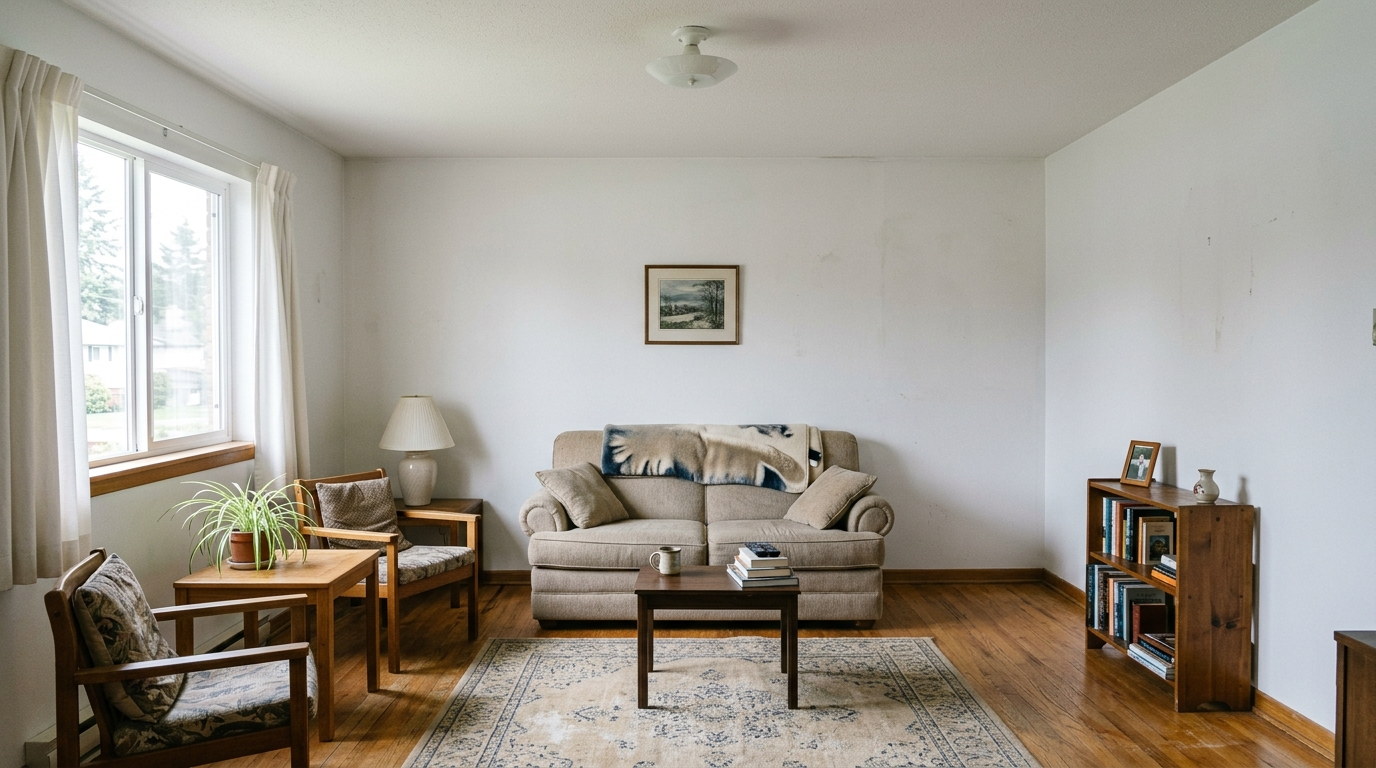
Painting the ceiling closes that gap. A colour overhead removes the hard line where wall meets ceiling, wraps the room, and turns the least-used surface into the one that sets the mood.
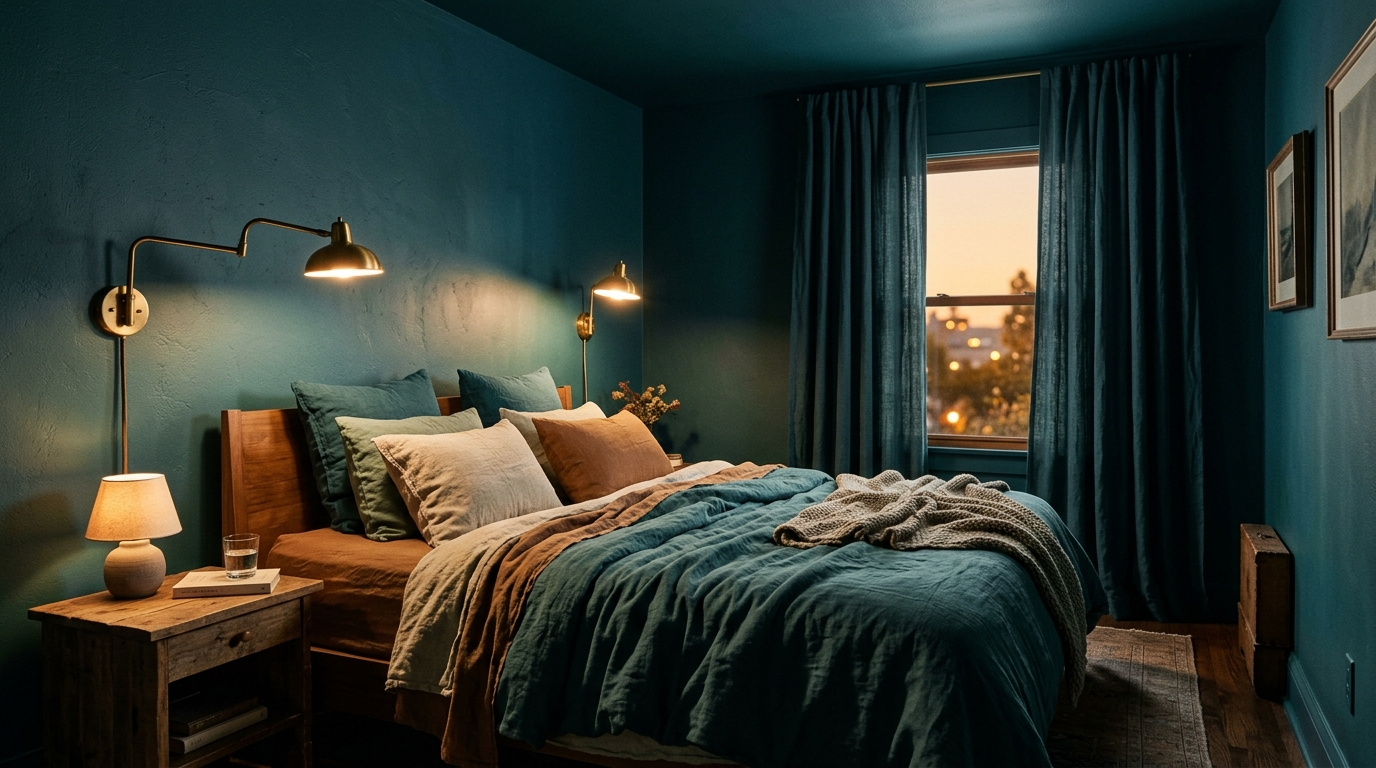
The four ways to paint a ceiling in 2026
Painting the fifth wall is not one technique but several, each with a different effect. The table below sorts the four approaches defining 2026.
Compiled from 2026 US and UK interior paint trend reports; colour capping is Benjamin Moore’s term.
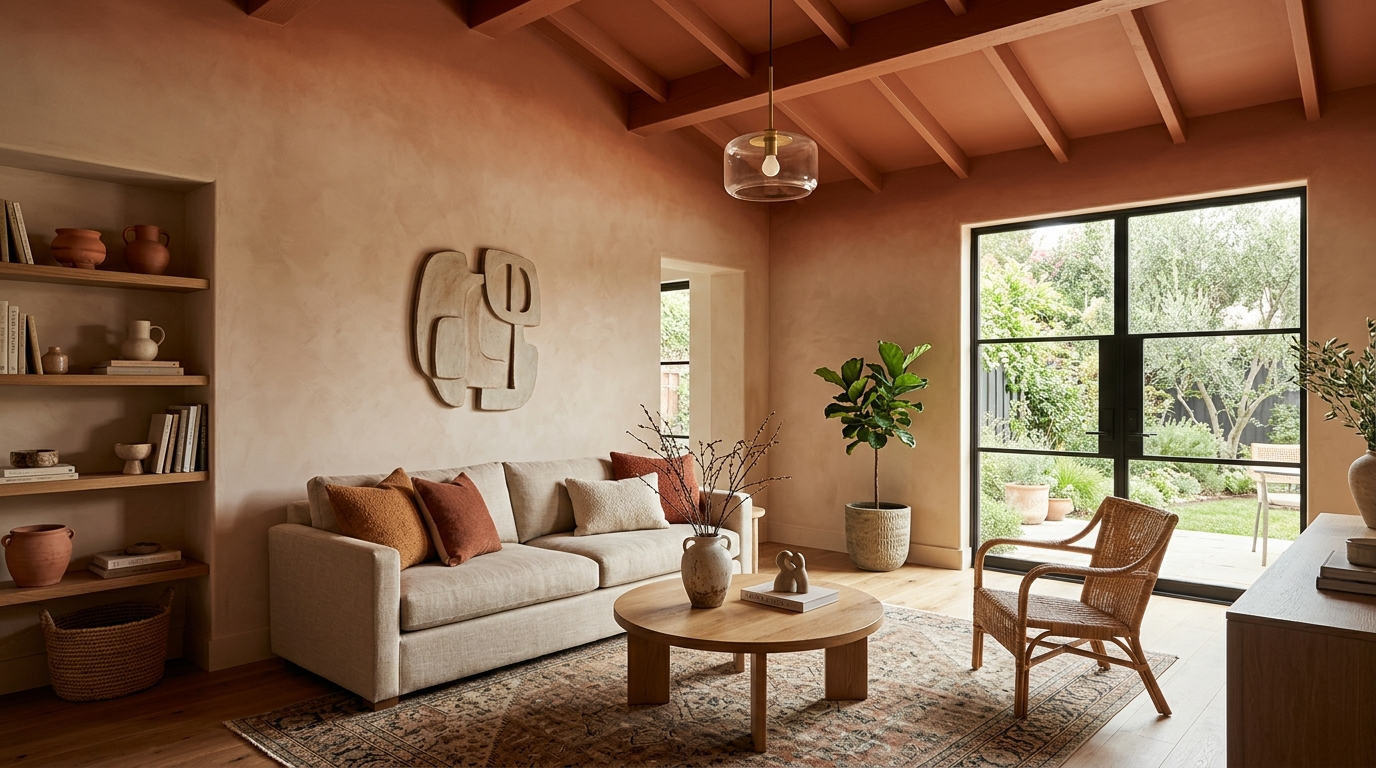
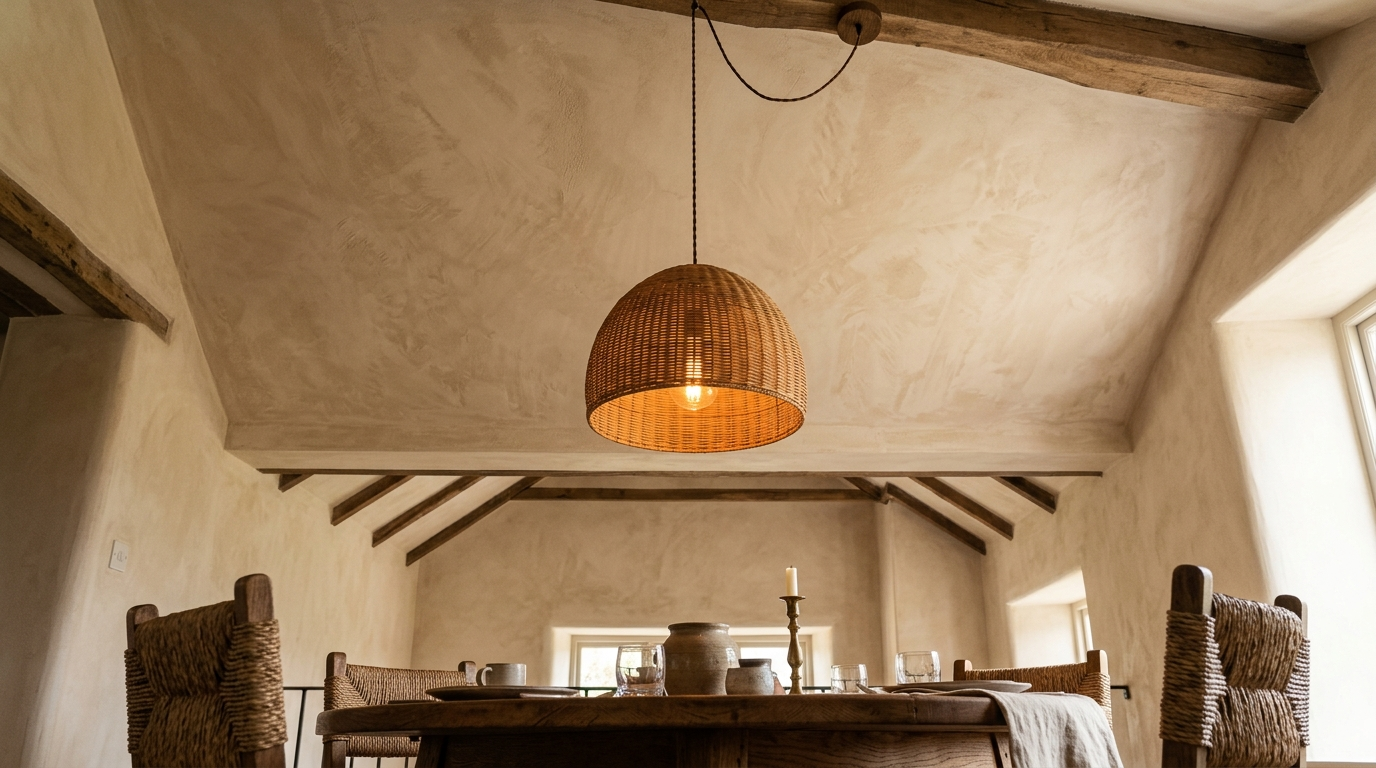
A limewash or plaster ceiling is the gentlest option, skipping colour altogether. It adds soft, chalky texture and warmth, the same finish behind the midiminimalism look, for anyone who wants character overhead without a bold hue.
Does a dark ceiling make a room feel smaller?
Height and light decide it. In a tall, bright room, a dark ceiling recedes and reads as dramatic; in a low or dim room, the same colour drops the ceiling visually and can feel heavy. The diagram below shows how the same paint reads in different rooms.
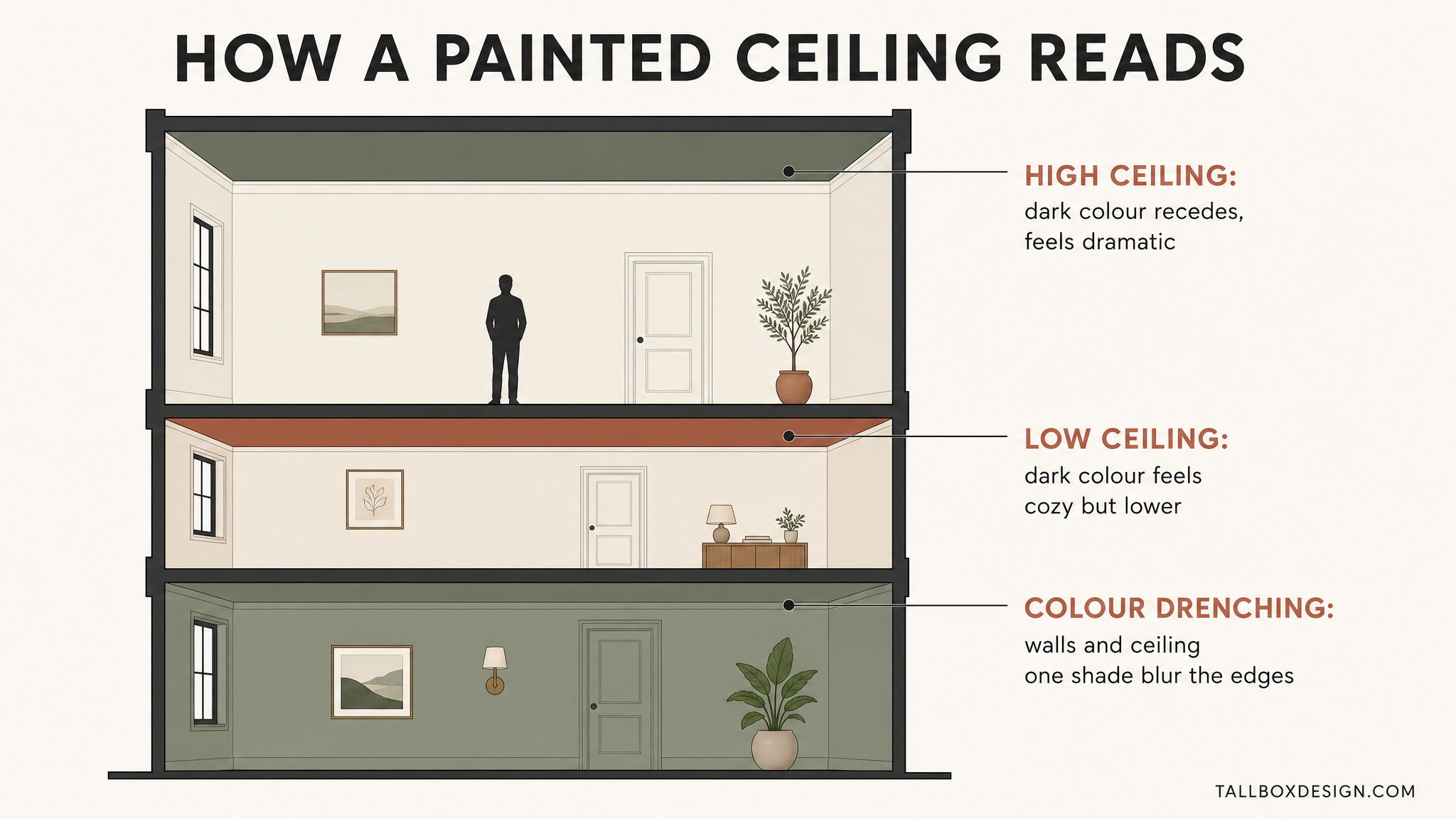
Colour drenching is the trick that sidesteps the worry. When walls and ceiling share one shade, the eye stops measuring where the room ends, so a small space can feel larger and more enveloping at the same time. It is why designers reach for drenching in small studies, bedrooms, and powder rooms, where one enveloping shade turns a tight box into a deliberate room.
Should you paint your ceiling?
Four checks decide whether the fifth wall works in your room. Run them before you open a can of paint.
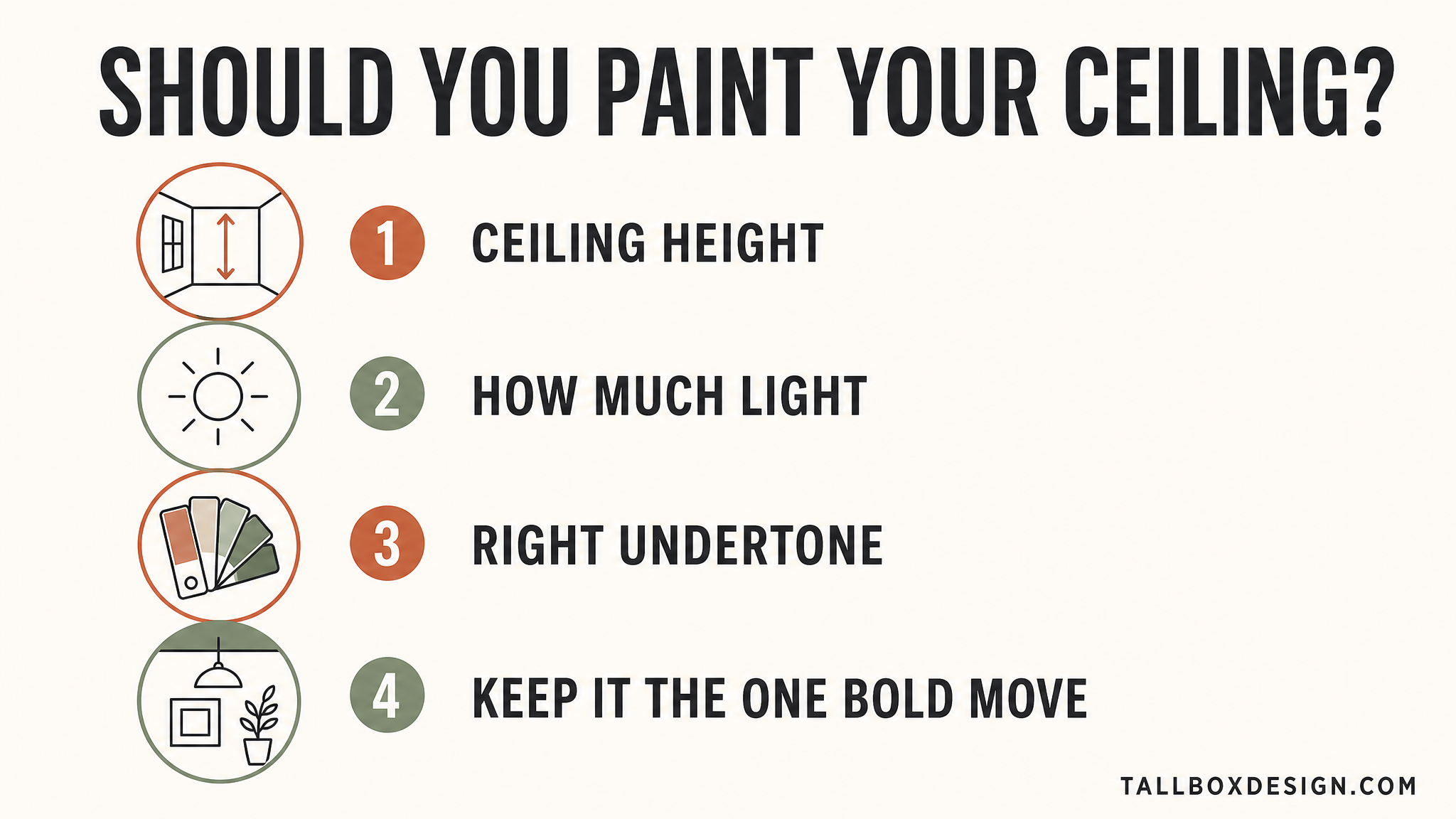
Height and light come first, undertone second, and restraint last. A painted ceiling should be the one bold move in the room, not competing with three others, and the warm earth tones leading 2026 are the safest place to start overhead.
How to paint a ceiling without shrinking the room
A few choices keep a painted ceiling feeling intentional rather than oppressive. These five moves do most of the work.
- 1Match the sheen to the light. A flat or matte finish hides imperfections and avoids glare overhead; save any sheen for small, bright rooms.
- 2Drench a small or cozy room. The same colour on walls and ceiling reads as intentional and makes a compact space feel bigger, not smaller.
- 3Cap, do not drench, when ceilings are low. A slightly deeper tone overhead adds depth without pressing the room down.
- 4Test the undertone against your light. A colour that looks warm on the chip can turn muddy or cold overhead, depending on the room.
- 5Keep it the only bold move. Let the ceiling star and hold the rest of the room quiet so it reads as design, not clutter.
Where visualization helps with a painted ceiling
The ceiling is the hardest surface to preview. You cannot hold a swatch overhead and know how a whole plane of colour will read once light bounces off it, and repainting a ceiling is the messiest fix in the house. It is also judged craning your neck rather than straight on, which is exactly when a colour fools the eye.
Seeing it first removes the gamble. A 3D interior visualization shows the finished ceiling against the room’s real light, which is exactly what changes how a colour reads from chip to overhead plane. On the one surface you do not want to paint twice, seeing it first is the whole point.
Painted ceiling questions, answered
QWhat is the fifth wall trend?
The “fifth wall” is the ceiling, treated as a surface to paint or finish rather than leave white. In 2026 it is being colour-drenched, colour-capped, or finished in warm plaster.
QDo dark ceilings make a room look smaller?
Not always. In a tall, well-lit room a dark ceiling reads as dramatic; in a low or dim room it can feel lower. Colour drenching the walls and ceiling together often makes a small room feel larger.
QWhat is colour drenching?
Colour drenching means painting the walls, ceiling, and often the trim in the same shade. It removes visible transitions and makes a room feel seamless and enveloping.
QWhat colour should I paint my ceiling?
Match it to the room’s light and the mood you want. Warm earth tones and deep moody shades lead 2026; test the undertone overhead before committing, since colour reads differently on a ceiling.
The takeaway
The fifth wall is 2026’s easiest way to change a room and its easiest to overdo. A painted ceiling can wrap a space in warmth or press down on it, and the difference comes down to height, light, and restraint. Get those three right and the fifth wall is the cheapest high-impact change in the house.
Drench a small room, cap a low one, and keep the ceiling the single bold move. Then see it before you commit, because a ceiling is the one surface you do not want to paint twice.