How to Select a Site to Build a Lake?
Key Factors That Affect Lake Placement
The location of a lake determines its ability to retain water, maintain structural integrity, and support an ecosystem.
Soil Type & Water Retention
Clay-rich soil naturally holds water, reducing the need for artificial waterproofing. Sandy or rocky soils drain too quickly, requiring the addition of bentonite clay or synthetic liners. A soil permeability test measures absorption rates to determine whether the site can sustain a lake.
Drainage & Water Table Considerations
A low-lying site retains water more efficiently, but excess runoff must be managed to prevent flooding. A high water table reduces excavation depth and allows natural filling, whereas a deep water table may require artificial sources such as wells or pumps. Poor drainage leads to erosion and bank destabilization, necessitating overflow channels or retention ponds.
Slope & Terrain Considerations
A 3:1 slope ratio stabilizes shorelines and prevents erosion. Steep banks require additional reinforcement using vegetation or riprap. A gradual transition in depth ensures shoreline stability while supporting aquatic habitats.
Learn the essential steps for building a lake, from selecting the right location and excavation to waterproofing, water retention, and long-term ecosystem sustainability.

George is a seasoned interior designer and property marketing strategist with over 13 years of experience. He specializes in transforming properties into visually stunning spaces, helping clients recognize the potential and beauty in each property. With an impressive international client base of exciting projects throughout Europe and America.
TALLBOX provides information for educational purposes only and does not offer financial advice; users should consult with qualified professionals before making any investment decisions. TALLBOX and George Nicola are not liable for any losses or damages incurred as a result of relying on the information provided.
How to Conduct a Land Feasibility Study for a Lake?
A feasibility study ensures that the chosen site can support a lake with minimal long-term maintenance. Once you have a go-ahead from your designer and architect and have a 3D rendering of the project, you are ready to start building your private lake.
Step 1: Perform a Soil Permeability Test
A test pit is dug and filled with water to assess the absorption rate. Rapid drainage indicates a need for waterproofing solutions such as clay additives or liners. Compaction may be required in clay-heavy soils to prevent seepage.
Step 2: Analyze Water Table Depth & Drainage Patterns
A shallow water table reduces excavation depth, allowing the lake to fill naturally. A deep water table requires alternative water sources, such as rainwater harvesting or groundwater pumping. Runoff must be directed through retention areas to prevent overflow and erosion.
Step 3: Check Environmental & Legal Considerations
Local zoning laws and environmental regulations may require permits for excavation and water retention structures. If the site is within a protected wetland area, additional assessments may be needed to mitigate ecological disruption. Proper stormwater management planning prevents flooding and protects surrounding land.
Talk to Assistant Chat
Excavation & Contouring – Structuring the Lake Basin
How to Excavate a Lake Properly
Equipment & Techniques for Lake Excavation
Excavation methods vary based on soil composition, water table depth, and project scale.
Best Heavy Equipment for Lake Construction
Excavators dig and shape depth levels, while bulldozers clear land and grade the shoreline. Compactors strengthen the lake bottom by reducing soil permeability.
Excavation Methods Based on Soil Type
Dry excavation is ideal for sites with a low water table, while wet excavation is used in areas with naturally high groundwater levels. The cut-and-fill method reshapes the landscape, balancing excavation depth with displaced soil to prevent excessive sediment accumulation.

Depth & Contour Planning for Long-Term Stability
A well-designed lake must balance depth and contouring to support water retention and aquatic life.
Depth Recommendations Based on Use Case
A recreational lake requires a depth of 6-10 feet for boating and swimming. Fish stocking lakes benefit from depths of 12-20 feet to maintain oxygen levels and prevent freezing. Reservoir lakes need deeper zones to minimize evaporation and ensure stable water levels.
Shaping the Lake Bottom for Sustainability
Gradual depth transitions reduce erosion and improve ecosystem sustainability. Deeper zones stabilize water temperature and oxygen distribution, preventing fish die-offs. Avoiding abrupt drop-offs enhances water circulation and sediment balance.
Erosion Prevention & Sediment Control in Lake Construction
Erosion weakens lake banks and contributes to sediment buildup, affecting water quality and maintenance costs.
Best Practices for Erosion Prevention
A 3:1 slope ratio stabilizes the shoreline, reducing the risk of collapse. Vegetation buffers act as natural erosion barriers by filtering runoff and reinforcing soil structure. Riprap and geotextile barriers protect banks from wave action and fluctuating water levels.
Sediment Management Strategies
Sediment traps at inlet points capture debris before it reaches the main lake body. Aeration systems maintain water circulation, preventing excessive sediment accumulation. Monitoring turbidity levels helps detect erosion-prone areas that require additional reinforcement.
Waterproofing & Water Retention – Preventing Leaks
A lake’s ability to retain water depends on effective waterproofing methods and sustainable management of water loss. Without proper sealing, seepage and evaporation can lead to declining water levels, requiring constant replenishment. Understanding the best waterproofing techniques ensures long-term stability and ecosystem balance.

How to Waterproof a Lake to Prevent Water Loss?
Do You Need a Lake Liner? Pros & Cons
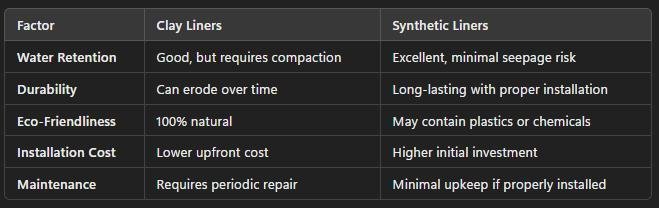
A lake liner is used to prevent seepage in soils with high permeability. The choice of liner depends on soil type, budget, and long-term maintenance requirements.
Clay Liners
Clay liners are a natural and cost-effective sealing method, particularly for sites with moderate permeability. They compact tightly to reduce seepage and integrate with the surrounding environment. However, erosion or drying can cause cracks, requiring periodic maintenance.
Key Benefits:
- Naturally occurring and environmentally friendly
- Cost-effective compared to synthetic options
- Effective when properly compacted
Potential Drawbacks:
- Requires maintenance to prevent cracks
- Less effective in sandy or rocky soil without reinforcement
Synthetic Liners
Synthetic liners, such as HDPE (high-density polyethylene) or EPDM (ethylene propylene diene monomer), provide a durable, impermeable barrier. They are ideal for sites where natural waterproofing is insufficient.
Key Benefits:
- Highly effective in preventing seepage
- Minimal maintenance compared to clay-based solutions
- Suitable for areas with high permeability
Potential Drawbacks:
- Higher initial installation cost
- Requires precise placement to avoid punctures or shifting
Bentonite Clay
Bentonite clay expands upon contact with water, forming a self-sealing barrier. It is mixed into the soil or applied as a dry layer. This method is often combined with compacted clay or synthetic liners for enhanced retention.
Key Benefits:
- Self-sealing when hydrated
- More adaptable than compacted clay alone
- Natural and environmentally friendly
Potential Drawbacks:
- Requires even distribution to prevent weak spots
- Less effective in highly porous soil without compaction
Managing Water Levels & Preventing Evaporation
How to Design a Lake for Long-Term Water Retention?
A well-designed lake minimizes water loss by reducing seepage and evaporation. Proper site preparation and retention strategies help maintain consistent water levels.
- Compacting the Soil Before Filling – Strengthens the lake bottom and banks to reduce underground seepage.
- Applying Natural Sealing Methods – Clay-based solutions enhance water retention in porous soil.
- Encouraging Vegetative Cover – Shoreline plants act as wind barriers, reducing evaporation.
How to Reduce Evaporation & Ensure Sustainable Water Supply?
Evaporation is a major cause of water loss, especially in warm climates and shallow lakes. Implementing evaporation control measures helps preserve long-term water levels.
- Floating Covers – Reduce direct sunlight exposure, lowering evaporation rates.
- Windbreaks & Trees – Planting trees around the perimeter slows wind speed, minimizing surface water loss.
- Water Circulation Systems – Aeration and continuous movement prevent excessive temperature fluctuations that accelerate evaporation.
A deeper lake design further reduces temperature-related evaporation, ensuring long-term water stability.
Filling the Lake – Water Source & Circulation
A sustainable water source and proper circulation system are essential for maintaining water levels and preserving ecological balance. A well-designed lake should utilize natural or managed water sources while ensuring continuous movement to prevent stagnation and quality degradation.

Choosing the Right Water Source for Your Lake
Groundwater vs. Rainwater – Which Is Better?
The choice of water source affects long-term water sustainability, lake maintenance, and ecological health.
Groundwater Sources
Groundwater provides a reliable, year-round water supply, particularly in areas with a high water table.
- Consistent replenishment reduces the risk of seasonal drying.
- Requires well drilling or underground pumping systems.
- Mineral content may affect water chemistry.
Rainwater Collection
Rainwater is an eco-friendly and cost-effective filling method, relying on natural precipitation and runoff.
- Sustainable and naturally replenished by rainfall cycles.
- Dependent on seasonal variation and regional climate.
- Requires runoff management to prevent excessive sedimentation.
A hybrid approach, incorporating both groundwater and rainwater collection, provides optimal water retention while maintaining ecological stability.
Can You Use a Well or Pump System?
Artificial water sources supplement natural filling methods in regions with inconsistent rainfall or low groundwater availability.
- Well Systems – Extract water from underground aquifers to maintain lake levels.
- Pumped Diversion Systems – Redirect water from nearby rivers or reservoirs.
- Gravity-Fed Systems – Utilize elevation differences to facilitate natural water flow.
Proper regulation of artificial water inputs prevents overfilling and ensures a balanced aquatic environment.
Best Practices for Redirecting Water into the Lake
Controlling inflow and outflow maintains stable water levels and prevents flooding or stagnation.
- Install controlled spillways to regulate excess runoff.
- Use sediment traps to filter debris from inflow channels.
- Ensure slow infiltration to prevent shoreline erosion.
Managing water input effectively minimizes the risk of water loss while preserving overall lake health.
We may earn a commission if you purchase products through our links.

Maintaining Healthy Water Circulation
The Role of Inlets & Outlets in Lake Health
Water circulation prevents stagnation, improves oxygenation, and supports aquatic ecosystems. Properly designed inlets and outlets ensure continuous movement and debris filtration.
- Inlets should distribute water evenly to avoid localized sedimentation.
- Outlets prevent overflow while maintaining water exchange.
- Graded entry points reduce erosion from high-velocity inflow.
Aeration Systems – Do You Need One?
Aeration enhances water quality by increasing dissolved oxygen levels and preventing stratification.
- Surface Aerators – Improve oxygen transfer in shallow lakes.
- Diffused Aeration Systems – Circulate oxygen at deeper depths, reducing bottom-layer stagnation.
- Fountain Aerators – Provide both oxygenation and aesthetic enhancement.
Aeration supports aquatic life, mitigates algal blooms, and improves overall water clarity.
Preventing Stagnation & Algae Growth in Lakes
Water stagnation leads to oxygen depletion, algal overgrowth, and declining water quality. Proactive circulation management reduces these risks.
- Encourage natural wind-driven mixing to maintain surface movement.
- Use artificial aeration to prevent thermal stratification.
- Introduce floating vegetation to absorb excess nutrients.
Proper water flow regulation ensures a balanced aquatic ecosystem while maintaining clear and healthy lake conditions.
Ecosystem Balance & Water Quality Management
A well-balanced lake ecosystem supports biodiversity, maintains water quality, and ensures long-term sustainability. Establishing the right combination of aquatic plants, fish species, and natural filtration systems prevents imbalances such as excessive algae growth or oxygen depletion.
Creating a Balanced Lake Ecosystem
What Fish Species Are Best for a Man-Made Lake?
Selecting the right fish species promotes ecological stability and helps control insect populations and algae growth.
Common Stocking Fish for Lakes
- Largemouth Bass – Controls smaller fish populations and prevents overcrowding.
- Bluegill & Sunfish – Provide a food source for predator species and help manage aquatic insects.
- Catfish – Maintain bottom-feeding balance and reduce organic waste accumulation.
- Tilapia – Control algae growth by feeding on aquatic vegetation.
A combination of predator and prey species maintains a self-sustaining aquatic food chain, reducing the need for artificial interventions.
The Role of Aquatic Plants in Water Quality
Aquatic vegetation enhances oxygenation, stabilizes shorelines, and filters excess nutrients.
- Floating Plants (Water Lilies, Duckweed) – Provide shade and reduce surface evaporation.
- Submerged Plants (Elodea, Coontail) – Oxygenate water and support fish habitats.
- Emergent Plants (Cattails, Reeds) – Prevent shoreline erosion and filter runoff.
Balancing plant diversity ensures efficient nutrient cycling and prevents the dominance of invasive species.
How to Attract Wildlife While Maintaining Balance
A properly managed lake attracts beneficial wildlife while preventing ecological disruptions.
- Provide shallow zones for wading birds and amphibians.
- Avoid excessive feeding to prevent unnatural population growth.
- Use native vegetation to encourage pollinators and aquatic insects.
Managing wildlife presence reduces ecosystem strain while maintaining natural biodiversity.
Maintaining Water Quality for a Healthy Lake
Common Water Contaminants & How to Remove Them
Water quality declines when excess nutrients, pollutants, or sediments accumulate. Proper filtration and nutrient control mitigate these risks.
- Phosphates & Nitrates – Introduce floating vegetation to absorb excess nutrients.
- Sediment Accumulation – Install sediment traps at inflow points.
- Bacteria & Organic Matter – Use aeration and natural microbial treatments.
Routine testing for pH, dissolved oxygen, and nutrient levels helps maintain a stable water chemistry.
Natural Filtration vs. Mechanical Filtration – Which Works Best?
Filtration prevents stagnation, improves clarity, and removes organic waste.
Natural Filtration Methods
- Vegetative Buffer Zones – Trap pollutants before they enter the water.
- Wetland Filtration Systems – Utilize natural microbial activity to break down contaminants.
- Benthic Plants – Absorb heavy metals and nutrients from the water column.
Mechanical Filtration Methods
- Skimmers & Surface Filters – Remove floating debris before it decomposes.
- Aeration Systems – Enhance oxygen levels and facilitate natural breakdown of waste.
- Biofilters – Use beneficial bacteria to convert ammonia and nitrates into harmless byproducts.
A hybrid approach, combining natural vegetation with mechanical filtration, provides the most effective long-term water quality management.
Managing pH Levels & Oxygen Content in the Lake
Fluctuations in pH and oxygen affect aquatic life and water clarity. Regular monitoring and corrective actions maintain ecological balance.
- pH Balance – Maintain a pH level between 6.5 and 8.5 to support fish and plant health.
- Oxygenation Strategies – Use aeration systems or introduce submerged plants to maintain sufficient dissolved oxygen.
- Temperature Regulation – Prevent overheating in shallow lakes by ensuring deep water areas for thermal refuge.
Consistently monitoring water chemistry prevents imbalances that could lead to ecosystem collapse.
Lake Maintenance & Long-Term Sustainability
Regular maintenance ensures a lake remains structurally stable, ecologically balanced, and free from excessive sedimentation or water quality issues. Implementing proactive care strategies minimizes long-term costs while preserving the lake’s health.
Seasonal Lake Care – What You Need to Know
Spring & Summer – Algae Control & Oxygenation
Rising temperatures increase biological activity, requiring active monitoring of water quality and aquatic life.
- Algae Growth Prevention – Maintain nutrient balance by reducing excess phosphorus and nitrogen. Introduce floating vegetation or biological treatments to minimize blooms.
- Oxygenation Management – Increase aeration during warm months to support fish populations and prevent stratification.
- Shoreline Vegetation Maintenance – Trim excessive growth to control invasive species and maintain natural filtration.
Consistent monitoring of dissolved oxygen levels and nutrient content helps maintain ecosystem balance.
Fall & Winter – Preventing Freezing & Water Quality Issues
Cooler temperatures slow biological processes, but winter conditions still require maintenance.
- Preventing Ice-Related Fish Kill – Maintain aeration in deeper sections to ensure adequate oxygen levels.
- Managing Leaf & Organic Debris – Remove accumulated debris before freezing to prevent excessive decomposition in spring.
- Water Level Adjustments – Lower water levels in regions prone to ice expansion to reduce pressure on lake banks.
Strategic preparation for seasonal transitions minimizes ecological disruptions and structural damage.
Long-Term Lake Monitoring & Water Testing
Routine testing ensures water chemistry remains within healthy parameters for aquatic life and water clarity.
- pH & Oxygen Monitoring – Maintain stable pH (6.5–8.5) and oxygen levels for fish and plant health.
- Sediment Accumulation Checks – Measure depth changes to prevent excessive buildup that can impact water retention.
- Biological Assessments – Monitor fish populations and plant diversity to detect imbalances early.
Regular assessments allow for early intervention, reducing costly repairs and ecosystem disruptions.
Preventing Common Lake Problems
How to Prevent Algae Blooms Naturally
Algae overgrowth occurs when excessive nutrients and stagnant water create ideal conditions for rapid expansion.
- Introduce Floating Plants – Species like duckweed and water lilies reduce light penetration, limiting algae growth.
- Maintain Balanced Fish Populations – Herbivorous fish such as tilapia help control algae by feeding on aquatic vegetation.
- Reduce Fertilizer Runoff – Prevent excess phosphorus and nitrogen from entering the lake through proper watershed management.
A combination of biological controls and nutrient management reduces dependency on chemical treatments.
Identifying & Treating Invasive Species in a Lake
Invasive plant and animal species can disrupt native ecosystems, leading to imbalances in water quality and aquatic life.
- Common Invasive Aquatic Plants – Hydrilla, Eurasian watermilfoil, and water hyacinth spread rapidly, outcompeting native vegetation.
- Problematic Fish Species – Non-native species like carp and snakehead fish disrupt food chains and increase sediment resuspension.
- Control Methods – Mechanical removal, biological controls (such as introducing predator species), and targeted herbicide treatments help manage infestations.
Early identification and intervention prevent long-term ecological damage.
Addressing Water Clarity Issues & Sediment Overload
Turbidity reduces water clarity, affecting aquatic life and lake aesthetics. Managing sediment and organic matter buildup restores water quality.
- Using Sediment Traps – Install barriers at inlets to catch suspended particles before they reach the main lake body.
- Dredging & Deepening Techniques – Remove accumulated silt and organic debris periodically to maintain depth and water retention capacity.
- Encouraging Beneficial Microbial Activity – Introduce bacterial treatments to break down excess organic matter naturally.
Maintaining water clarity improves overall lake health while reducing long-term maintenance costs.
Hiring a Professional vs. DIY Lake Construction
Building a lake involves extensive planning, excavation, and ecosystem management. Deciding between a professional contractor and a DIY approach depends on budget, technical expertise, and project scale.
Should You Build a Lake Yourself or Hire a Professional?
Pros & Cons of DIY Lake Construction
Constructing a lake independently can save money, but it requires careful planning and specialized equipment.
Advantages of DIY Construction
- Lower upfront costs compared to hiring a contractor.
- Full control over the design process and customization.
- Potential to integrate natural features using local resources.
Challenges of DIY Construction
- Requires excavation equipment and technical knowledge.
- Potential for costly mistakes in grading, waterproofing, or drainage.
- May require multiple permits and environmental assessments.
DIY projects are best suited for small ponds or lakes with naturally favorable conditions.
When to Hire an Expert for Lake Design & Engineering
Large-scale lakes or complex sites benefit from professional planning to ensure long-term stability and compliance with regulations.
- Professional land grading and excavation techniques improve water retention.
- Engineers design proper drainage and overflow management systems.
- Specialists handle soil analysis, waterproofing solutions, and regulatory approvals.
Hiring a contractor reduces the risk of structural issues and long-term maintenance challenges.
How Professionals Improve Long-Term Lake Sustainability
Experienced contractors optimize construction for efficiency, durability, and ecological balance.
- Site assessment ensures the best location for water retention and stability.
- Excavation and contouring techniques prevent erosion and shoreline collapse.
- Waterproofing strategies minimize seepage and evaporation losses.
Working with experts streamlines the construction process, ensuring the lake meets both functional and environmental standards.
Designing a Private Lake
A well-designed private lake enhances property value, supports recreation, and provides a sustainable aquatic ecosystem. Careful planning ensures proper excavation, waterproofing, water circulation, and ecological balance, resulting in a long-lasting and functional water body.
Key Considerations for Private Lake Design
Determining the Purpose of the Lake
The design of a private lake is shaped by its intended function, influencing depth, shoreline features, and water management systems.
- Recreational Lakes – Require deeper sections for boating, swimming, and fishing.
- Wildlife Habitat Lakes – Prioritize shallow, vegetated areas to support biodiversity.
- Irrigation & Water Storage Lakes – Feature controlled inflow and outflow systems to maintain stable levels.
Defining the lake’s purpose from the outset ensures efficient planning and long-term sustainability.
Selecting the Ideal Location for a Private Lake
A suitable site must support water retention, minimize excavation challenges, and integrate seamlessly into the surrounding landscape.
- Low-lying areas naturally collect and retain water, reducing excavation requirements.
- Clay-rich soils enhance waterproofing, limiting the need for artificial liners.
- Drainage control prevents excessive runoff, sedimentation, and erosion.
Soil testing, groundwater analysis, and hydrological assessments help determine the best location for optimal water retention.
Optimizing Lake Shape & Depth for Functionality
Lake shape influences water movement, shoreline stability, and aesthetic appeal.
- Irregular shorelines create natural coves and promote habitat diversity.
- Gradual slope transitions stabilize banks and prevent shoreline erosion.
- Deep zones reduce evaporation, regulate temperature, and support fish populations.
A well-balanced depth profile improves ecological resilience and enhances recreational usability.
Engineering & Construction of a Private Lake
Excavation Techniques for Optimal Contouring
Proper excavation ensures long-term structural integrity and efficient water retention.
- Cut-and-fill grading balances excavation depth with natural land contours.
- Shaping islands or peninsulas enhances visual appeal and habitat diversity.
- Sloped entry points improve accessibility and prevent shoreline erosion.
Carefully planned excavation optimizes both form and function in lake design.
Waterproofing & Water Retention Strategies
Effective waterproofing minimizes seepage, preserving stable water levels throughout seasonal fluctuations.
- Compacted clay naturally seals the lakebed in suitable soil conditions.
- Bentonite clay applications improve permeability in sandy or porous soils.
- Synthetic liners prevent water loss in high-drainage areas.
Combining natural and engineered waterproofing methods enhances long-term water retention.
Implementing Inflow & Outflow Systems
Controlled water movement prevents stagnation, flooding, and water loss.
- Inflow channels direct fresh water while filtering sediment and debris.
- Outflow spillways regulate water levels and prevent overflow.
- Gravity-fed or pump-assisted circulation systems support continuous exchange.
Properly managed hydrology maintains stable water levels and reduces maintenance needs.
A well-designed private lake integrates structural stability, ecological resilience, and recreational value. Careful planning of excavation, waterproofing, water circulation, and ecosystem management ensures a sustainable and functional water body for long-term enjoyment.