George is a seasoned interior designer and property marketing strategist with over 13 years of experience. He specializes in transforming properties into visually stunning spaces, helping clients recognize the potential and beauty in each property. With an impressive international client base of exciting projects throughout Europe and America.
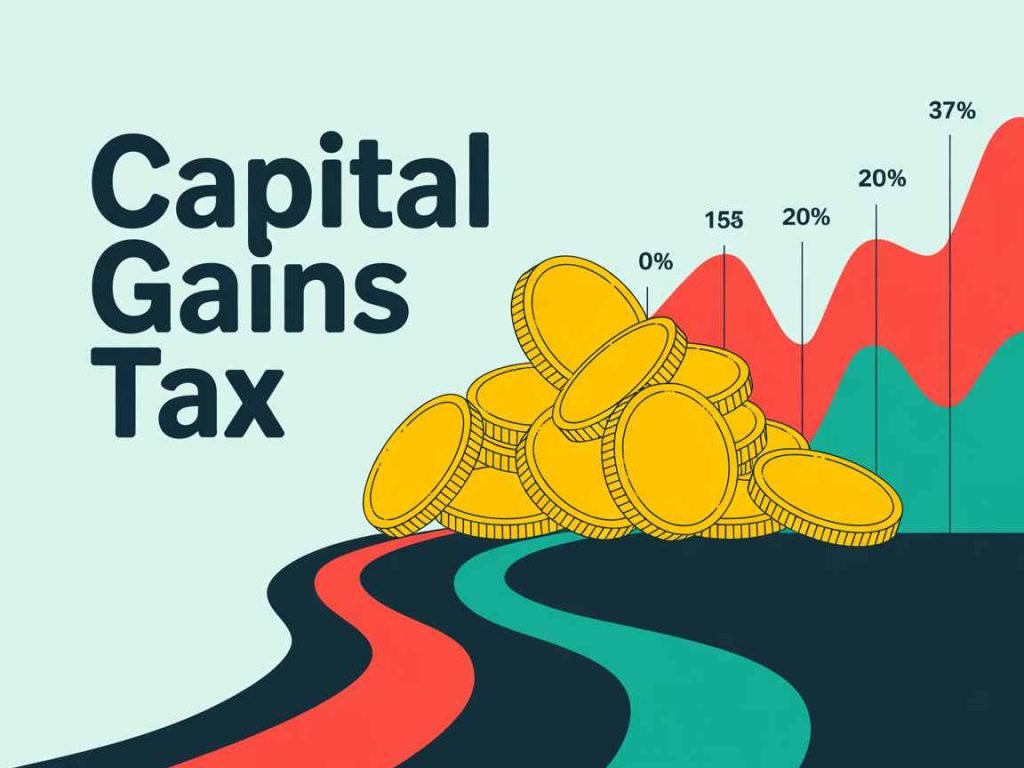
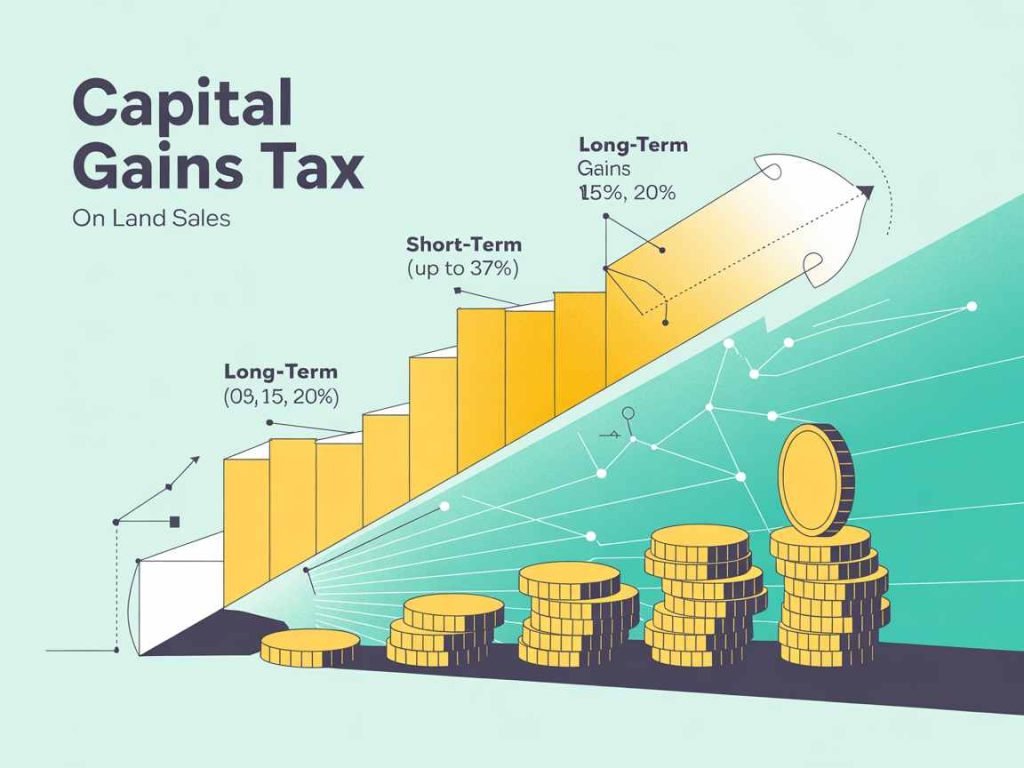
Capital gains tax represents a primary financial consideration in land sale transactions because it directly affects the seller’s net profit from the sale. Based on current 2025 tax regulations, profit from selling land is categorized as either short-term (held ≤1 year) or long-term (held >1 year) capital gains. This distinction significantly impacts the total tax owed: short-term gains face taxation at the seller’s higher ordinary income rate (potentially up to 37% per 2025 regulations), whereas long-term gains are taxed at lower rates specifically set for capital gains (0%, 15%, or 20%).
01
of 05
Capital Gains Tax Basics: Definition and Calculation
For 2025, the long-term capital gains tax brackets are structured as follows:
Single filers:
- 0% rate: income up to $48,350
- 15% rate: income $48,351–$533,400
- 20% rate: income above $533,400
Married filing jointly:
- 0% rate: income up to $96,700
- 15% rate: income $96,701–$600,050
- 20% rate: income above $600,050
These brackets create a planning opportunity, as timing your land sale in a year with lower overall income could place you in a lower tax bracket, reducing your capital gains tax rate.
Factors Influencing Capital Gains Tax
Want to get 3D rendering for your land project?
The holding period is perhaps the most influential factor in determining tax liability. I’ve observed that many landowners underestimate the substantial tax advantage of waiting beyond the one-year threshold to qualify for long-term capital gains rates.
The calculation methodology is equally important:
Capital Gain = Sale Price - Adjusted Basis - Selling ExpensesWhere the adjusted basis includes:
- Original purchase price
- Capital improvements (e.g., road construction, utilities installation)
- Acquisition costs (legal fees, surveys)
- Less depreciation (if applicable for business/rental property)
Meticulous record-keeping of all improvements is often overlooked but can significantly reduce tax liability by increasing your basis.
02
of 05
Tax Considerations and Planning Strategies
Tax Exemptions and Deductions
The primary residence exemption offers restricted applicability for land sellers because the $250,000/$500,000 capital gains exclusion primarily covers the dwelling, not typically vacant land sold independently.
The Section 121 exclusion allows up to $250,000 (single) or $500,000 (married) in capital gains to be excluded when selling a primary residence. This tax exclusion generally does not cover vacant land sales. Qualification for the exemption requires the land to be adjacent to the seller’s primary residence and considered part of that same property.
Conservation easements present a compelling alternative tax strategy. By placing a conservation easement on your land before selling, you potentially receive:
- A charitable deduction (up to 50% of AGI for most taxpayers, 100% for farmers/ranchers)
- Reduced estate tax liability
- Lower property taxes in many jurisdictions
Conservation easements are underutilized but increasingly valuable as environmental preservation gains political and social momentum.
Strategies to Minimize Capital Gains Tax
The 1031 Exchange provides a significant tax deferral opportunity for land investors, allowing the postponement of capital gains tax when proceeds are reinvested according to specific rules.
This provision allows you to defer capital gains taxes by reinvesting proceeds into “like-kind” property. Key requirements include:
- Using a qualified intermediary to handle proceeds
- Identifying replacement property within 45 days
- Completing the exchange within 180 days
- Ensuring the replacement property is of equal or greater value
Beyond tax deferral, 1031 exchanges offer strategic flexibility. Investors utilize them, for example, to consolidate holdings by trading several small parcels for one larger property, upgrade asset types by exchanging raw land for income-producing real estate, or relocate investments to different geographic markets.
The timing of a land sale significantly affects the resulting tax liability. Sellers with fluctuating annual income may reduce their tax burden by timing the land sale for a year when their overall income is lower, or when sufficient deductions or capital losses are available to offset the gain.
03
of 05
Reporting and Compliance
Tax Return Reporting Requirements
Based on current IRS regulations, reporting a land sale requires proper documentation on two key forms:
Form 8949 (Sales and Other Dispositions of Capital Assets) is where you’ll report the specific details of your land transaction. For each land parcel sold, you must include:
- Description of the property (legal description, parcel number, or address)
- Acquisition date and sale date (critical for determining short vs. long-term gains)
- Sale proceeds (as reported on Form 1099-S, if received)
- Cost basis (purchase price plus improvements)
- Adjustments for selling expenses or other factors
- Calculated gain or loss
The completed Form 8949 information then flows to Schedule D (Capital Gains and Losses), where the totals are summarized and your final capital gain or loss is calculated.
Reporting errors frequently arise when taxpayers incorrectly calculate or fail to adequately document their adjusted basis in the land. This difficulty often occurs because property owners may not consistently record capital improvements – such as costs for installing fences, adding drainage systems, clearing land, or making grading adjustments – over potentially long periods of ownership.
Record Keeping and Documentation
Maintaining detailed and organized records is essential for accurate tax compliance in land sales, providing the necessary evidence to calculate capital gains correctly and support figures reported to tax authorities.
Tax authorities (like the IRS in the US, recommending at least three years post-filing) set minimum record retention periods. However, keeping land transaction documentation indefinitely is advisable to address potential future tax inquiries or accurately establish cost basis for subsequent sales or inheritances.
Essential records include:
- Purchase and sale closing statements
- Receipts for all property improvements
- Records of depreciation taken (if applicable)
- Records of selling expenses (commissions, legal fees, etc.)
- Form 1099-S (Proceeds from Real Estate Transactions)
- Evidence of holding period (to qualify for long-term rates)
Digital record-keeping systems can simplify this documentation process. Their effectiveness relies on disciplined use, such as promptly digitizing receipts for improvements and performing regular, secure data backups
04
of 05
Broader Tax and Financial Context
Impact of Tax Laws and Changes
Landowners face critical tax changes as the Tax Cuts and Jobs Act expires on December 31, 2025, creating new financial challenges for property owners. The federal estate tax exemption will drop from $13.99 million per individual to $7 million (inflation-adjusted) in 2026.
Family farms and timber operations valued over this threshold will become subject to the 40% federal estate tax rate. Current proposals may eliminate the step-up in basis rule for inherited property. Today, this rule resets an asset’s cost basis to its fair market value at death. Without this protection, a farm purchased for $100,000 in 1980 and worth $2 million today would trigger capital gains tax on the entire $1.9 million appreciation when heirs sell.
The 2025 calendar year offers a closing window for strategic action. Landowners can leverage the $19,000 annual gift tax exclusion to transfer partial property interests to family members, potentially reducing estates below future taxable thresholds while maintaining operational control through limited liability company structures.
Financial Planning and Investment Considerations
Property ownership decisions should be viewed as components of comprehensive wealth management strategies, especially given the approaching 2025 tax changes that will significantly impact capital gains treatment, estate tax exemptions, and potential modifications to basis step-up rules.
Estate planning implications: Consider placing land into irrevocable trusts using 2025’s higher exemption amounts while retaining beneficial usage through carefully structured lease arrangements.
State tax considerations: Remember that 17 states and Washington D.C. impose their own estate/inheritance taxes, often with significantly lower thresholds than federal limits. Oregon ($1 million), Massachusetts ($2 million), and Minnesota ($3 million) have particularly low exemptions that can catch landowners by surprise.
Investment portfolio diversification: Land’s role in a balanced portfolio deserves reassessment. Though land has traditionally served as a hedge against inflation, today’s tax landscape could make liquid assets with minimal maintenance costs more advantageous, especially for elderly property owners.
Geographic optimization: Evaluate property tax burdens across state lines, as rates range from New Hampshire’s low 0.18% effective rate to New Jersey’s 2.49%, with dramatic differences in assessment methods, homestead exemptions, and special agricultural classifications potentially creating six-figure tax disparities for comparable properties. Some landowners may benefit from consolidating holdings in more tax-favorable jurisdictions.
From an investment perspective, the 2025 tax environment creates specific financial pressures through reduced estate tax exemptions while simultaneously offering strategic advantages through conservation easements and properly structured 1031 exchanges.
Conservation easements provide significant tax benefits through charitable deductions while preserving land from development, making them increasingly valuable as estate tax exemptions decrease and environmental concerns grow.
The 2023 IRS final regulations on syndicated conservation easements clarify legitimate transactions, enabling qualified landowners to potentially deduct up to 50% of their adjusted gross income against the fair market value of restricted property rights. 1031 exchanges remain powerful, though recent rulings have narrowed eligible “like-kind” property definitions.
Want to get 3D rendering for your land project?
05
of 05
Conclusion
Landowners planning to sell property in 2025 face specific tax challenges as established regulations evolve. Effective tax management now requires implementing both standard capital gains reduction methods and specialized strategies reflecting current IRS interpretations.
With Tax Cuts and Jobs Act provisions ending December 31, property owners should immediately evaluate their estate structures and complete wealth transfers before exemption amounts decrease substantially.
The potential elimination of stepped-up basis could impose significant capital gains taxes on inherited properties previously protected from such taxation.
Tax professionals, estate planning attorneys, and financial advisors working as an integrated team can identify applicable exemptions, optimize transaction timing, and structure sales to align with retirement and legacy objectives.
Professional tax guidance tailored to your specific property characteristics, acquisition history, and financial goals provides essential protection in this changing tax environment.