Property value is the market price of a home, shaped by things like how many people want to buy in the area, how safe the neighborhood is, and how well the home has been maintained. For example, homes near good schools or low-crime areas tend to be worth more.
Strong property values help homeowners build equity, keep neighborhoods financially healthy, and support city services through property taxes.
It’s important to understand depreciation—the steady loss of value over time. Homeowners need to protect their investment, investors need to predict long-term returns, and city planners need to manage stable community growth.
Unlike assets that gain value, homes usually lose about 1–1.2% of their value each year from wear and tear. However, rising land prices in popular areas can sometimes balance out these losses.
Table of Contents

George Nicola
George is a seasoned interior designer and property marketing strategist with over 13 years of experience. He specializes in transforming properties into visually stunning spaces, helping clients recognize the potential and beauty in each property. With an impressive international client base of exciting projects throughout Europe and America.
Factors Impacting Property Valuation

Many different factors cause home values to fall over time. These include the home’s physical condition, like keeping the roof sound and fixing plumbing problems before they worsen.
Location also plays a big role. Homes in safe neighborhoods, near good schools and public parks, usually hold value better than homes near flood zones or industrial areas with pollution.
A home’s design and technology features also matter. Open floor plans and smart home systems make properties more attractive to today’s buyers.
Market conditions shape value too. Rising interest rates and strong local job markets, like tech industry booms, affect how much competition there is for homes.
Knowing about these factors helps homeowners, investors, and real estate agents predict market changes, protect property value, and make better decisions in a changing housing market.
Primary Factors Directly Reducing House Value
Physical Condition and Maintenance Issues
Structural Damage
Structural damage can seriously lower a home’s value. Foundation problems, like visible cracks or sinking floors, can reduce property worth by 10–15%, according to a 2023 study by the American Society of Home Inspectors. Common causes include soil erosion from heavy rain, poor drainage systems that let water collect near the foundation, and building mistakes like shallow footings.
Damage to load-bearing walls also hurts value. Signs like bowed walls or sloping floors often come from water leaks, termite infestations, or unapproved renovations, all of which weaken the home’s structure and scare away buyers.
Roof problems are another big issue. Leaky or damaged roofs let moisture into the house, which can ruin attic insulation, rot wooden beams, and damage electrical systems. A worn-out roof with multiple patches or weak decking usually cuts a home’s value by 7–10%.
Neglected Repairs

Ignoring basic maintenance is one of the quickest ways to lose property value. Small problems, like leaky faucets, cracked driveways, or peeling paint, can grow into big issues such as structural damage, mold, or foundation trouble if left alone.
For example, a leaking roof that isn’t repaired can ruin insulation, cause major water damage, and cut a home’s value by up to 15%. The U.S. Department of Housing and Urban Development recommends using maintenance checklists to catch problems early.
Old electrical systems also lower value. Homes with aluminum wiring that increases fire risk, weak electrical service that can’t power modern appliances, or outdated knob-and-tube wiring often struggle to get insured or sold.
Plumbing problems are just as serious. Galvanized pipes that clog, lead solder that poisons water, and polybutylene pipes that burst easily create both functional problems and health risks, making homes harder to sell and reducing their market price.
Location-Based Detractors
Proximity to Undesirable Features
Homes near landfills, highways, or industrial plants often lose value because of “external obsolescence,” even if the homes are well-maintained. Landfills cause bad smells and pest problems, highways create constant traffic noise, and industrial areas expose homes to dirty air and soil pollution.
Noise from airports and train lines usually cuts property values by 5–10%. Pollution, like airborne chemicals or dirty groundwater, can cause even bigger value drops of 7–15%.
A University of California study found that living within two miles of a power plant lowers home prices by 4–7%, mainly because of health worries and the unattractive industrial setting. High-tension power lines also hurt value, creating visual blight and fears about electromagnetic exposure, reducing nearby home prices by 2–9%.
Cell phone towers have a similar effect, cutting property values by 2–20%, with larger price drops in upscale neighborhoods where appearance matters more.
Declining Neighborhood Trends
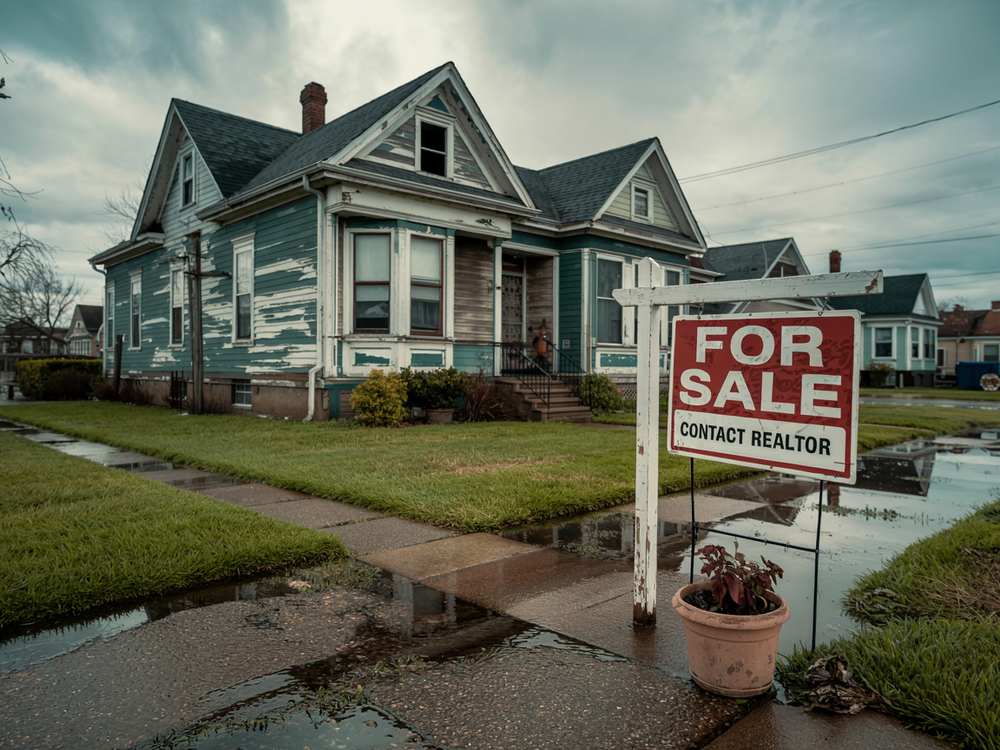
Neighborhood decline is a powerful and often permanent cause of falling home values. Rising crime, especially violent crimes and burglaries, is closely tied to lower prices. A 10% jump in crime usually causes about a 5% drop in home values.
School quality matters too. For example, when standardized test scores drop by 10 points, home prices in family-friendly neighborhoods can fall by 2–3%.
Economic troubles also hurt communities. The closing of major employers, empty shopping centers, and large factory layoffs make areas less attractive, leading people to sell early and scaring off buyers.
Worn-down homes nearby make the problem worse. Abandoned houses, graffiti, and constant building code violations lower neighborhood appeal. Each foreclosure within 250 feet of a house can cut that home’s value by about 1%.
Aesthetic and Functional Obsolescence
Outdated Design
Aesthetic obsolescence happens when a home’s style or outside condition no longer matches what buyers want. This is common in commercial real estate, where businesses prefer modern designs that match their brand. It also affects houses, where buyers now look for updated, fresh appearances.
Old-fashioned architectural styles, like fancy Victorian homes, now compete with popular minimalist designs that use open spaces and features like exposed beams.
A 2025 survey showed that 68% of buyers found older-looking homes “unappealing,” often causing price drops of 10–25%. Poor curb appeal—such as peeling paint, messy yards, and old roofs—makes homes look neglected and lowers their value. The National Association of Realtors found that homes with poor curb appeal sell for 7–10% less than similar well-kept ones.
Outdated interiors also hurt value. Features like popcorn ceilings and dark wood-paneled walls turn off buyers who want move-in-ready homes. In one 2024 case, replacing wood paneling with neutral drywall raised the home’s sale price by $45,000.
Poor Layout or Lack of Modern Amenities
Functional obsolescence happens when a home becomes less useful because of outdated features, bad layouts, or missing technology. Examples include old kitchens, cramped floor plans, and wiring that can’t support modern needs.
Unlike physical wear and tear, functional obsolescence means the home no longer fits what buyers want. Appraisers call it either curable, like remodeling a kitchen, or incurable, like having a small lot that can’t be changed.
Older homes with lots of small rooms often lose out to modern homes with open floor plans. For example, a 1950s house with a closed kitchen usually sells for 10–15% less than a similar house with an open layout.
Homes missing important features like double-pane windows, smart thermostats, or an extra bathroom often sell for less. A three-bedroom house with only one bathroom can lose up to 20% of its value because buyers expect multiple bathrooms for convenience.
Technology issues also lower value. Homes with old electrical systems that can’t handle EV chargers or without fiber-optic internet are less competitive, especially in cities.
Secondary Factors Influencing Perceived Value
Market and Economic Conditions
Local Housing Market Downturns
Local market trends can hurt a home’s value even if the house is in good shape. For example, when there are too many homes for sale and not enough buyers, sellers have to cut prices to compete. During the 2021–2022 housing correction in Phoenix, an oversupply of new homes caused median prices to drop by 12%, even though the city kept growing.
New developments often include energy-efficient designs, smart home technology, and flexible floor plans that make older houses less attractive.

In planned communities, newer sections may offer better parks, bigger community centers, and more walkable streets, causing home values in older sections to fall by 3–8%.
Neighborhoods near companies that shut down or areas going through fast demographic changes can also lose value, even when the rest of the city’s market is still rising.
Economic Instability Affecting Buyer Demand
Macroeconomic factors often outweigh property-specific features in shaping value trends. For example, interest rate changes directly impact buyer purchasing power; a 1% increase typically reduces affordability by about 10%. During the 2022–2024 mortgage rate spike, middle-tier markets saw 5–10% declines in home values despite no changes to physical condition.
Employment instability, such as large tech company layoffs or factory closures, further weakens demand by triggering workforce migration and creating selling pressure, often leading to 5–15% value reductions. Wage stagnation adds to affordability problems, especially in areas where home prices reach four to five times the median household income—well above the historical range of 2.5 to 3.5—making these markets more prone to corrections regardless of housing quality.
Environmental and External Risks
Natural Disaster Risks
Homes in flood zones often lose value because of high insurance costs, strict building rules, and buyer fears about future damage. For example, a study in Carteret County, North Carolina, found that homes inside flood zones sold for 7.3% less, or about $11,600 lower, than similar homes outside those areas. Buyers expect to pay for things like required flood insurance and frequent repairs, which adds to the discount.
By 2023, overvalued coastal properties in flood-risk areas reached $237 billion, with $50 billion of that in Florida, partly because of weak disclosure laws that hide risks from buyers.
Wildfire risk also lowers property values. In wildfire-prone areas, home prices dropped by 10–15%, mainly because insurance costs skyrocketed and fewer people wanted to buy. In California, homes near wildfire zones grew in value 4–6% slower each year from 2018 to 2022, according to CoreLogic.
Insurance companies are increasingly refusing to cover homes in these areas, pushing owners to use state-run options like the California FAIR Plan, where insurance costs can be 300% higher than in the regular market.
Pollution or Environmental Hazards Nearby
Poor air quality leads to both health risks and financial losses for homeowners. For instance, research from the National Bureau of Economic Research found that properties in areas violating EPA air standards sell for 3–5% less than similar homes in compliant regions.
Areas with extended nonattainment status for pollutants such as ground-level ozone and fine particulate matter often experience prolonged declines in property values. This erosion of value discourages investment and leads to deteriorating infrastructure and services over time.
Soil and groundwater contamination also causes lasting property devaluation. Sources like oil refineries, leaking underground gas tanks, and pesticide runoff from farms contribute to long-term environmental damage.
Properties located within a one-mile radius of Superfund sites typically lose 7–12% of their value, with negative perceptions often persisting even after official cleanup. Similarly, homes near brownfields—former industrial or commercial sites with known or suspected contamination—suffer 5–8% value reductions, depending on visibility and public concern.
Broader Contextual Influences
Legal and Regulatory Issues
Zoning Changes or Restrictions
Local governments derive their zoning authority from police powers granted under state constitutions, enabling them to regulate land use for public health, safety, and welfare, such as preventing industrial activity in residential neighborhoods. Zoning classifications—including residential, commercial, industrial, and agricultural—determine what activities are permitted, how densely properties can be developed, and what building specifications must be met.

For example, single-family residential zoning bars business operations within homes, while mixed-use zoning allows retail stores and apartments to coexist.
Zoning changes affect property values in four main ways.
First, usage restrictions, such as downzoning from multi-family to single-family development, limit a property’s potential and often reduce its value.
Second, compatibility conflicts occur when incompatible uses—such as a new waste facility near homes—lower nearby residential values by 10–25% because of increased noise, traffic, and aesthetic decline.
Third, regulatory takings happen when zoning amendments remove all economically viable uses, possibly qualifying owners for compensation under the Fifth Amendment.
Fourth, investment uncertainty arises when pending zoning changes cause instability in valuations. A 2025 study of the Minneapolis–St. Paul market found that properties in areas with pending rezoning petitions sold at 7–9% discounts as buyers sought to avoid regulatory risks.
Property Disputes or Liens
Liens—legal claims against a property for unpaid debts—make it harder to sell a home quickly and at a good price. For example, a tax lien from unpaid property taxes takes priority over all other claims and can lead to foreclosure if not paid off. Even a small tax lien can delay closing for weeks and add high legal costs, making the property less attractive to buyers. Mechanics’ liens, filed by contractors for unpaid renovation work, also create problems by clouding the title until payment or a court ruling clears them.
The uncertainty around liens often scares buyers away, stretches the time a home sits on the market, and forces sellers to accept lower prices.
Boundary disputes cause more issues. Encroachments—such as a neighbor’s fence or garage crossing a property line—usually require costly surveys, long negotiations, or even lawsuits to fix. Homes with active boundary disputes typically sell for 5–10% less because buyers fear losing part of the property or being forced to remove structures.
Title problems also hurt sales. Mistakes like poorly recorded deed transfers, missing heirs in probate cases, or fraudulent transactions create doubts about ownership and can block sales until the issues are cleared.
Social and Cultural Perceptions
Stigma from Past Events
Stigmatized properties—homes linked to events like murders, suicides, hauntings, or strong cultural beliefs—face serious challenges in the housing market. For example, homes connected to violent crimes often have trouble selling, even after repairs. Research shows that these properties usually sell for 5.6% to 20% less than similar homes without stigma, depending on how the community views the event.
Several things make buyers hesitate, including cultural beliefs about death, state laws that require sellers to share information about past events, and news coverage that keeps stories alive. For instance, courts in California have found that murders linked to a home can cause a 17% drop in its value. In Japan and some parts of the U.S., homes rumored to be haunted stay on the market longer and sell for less.
Criminal activity stigma also cuts home values. Homes used for drug production, gang activity, or violent crimes often lose 5–15% of their value, especially when the events are well-known in the media.
Death-related stigma, like murders and suicides, typically causes a 10–17% drop in value. Disclosure rules about these events vary by state: California requires sellers to disclose deaths, but Maryland does not.
Shifts in Demographic Preferences
The COVID-19 pandemic caused a major shift in what people want from housing, changing the balance between urban and suburban markets. For example, demand for homes with more space, private yards, and home offices grew rapidly. As remote work became common and priorities changed, suburban areas saw a huge increase in demand, pushing property values up across many U.S. cities.
From 2020 to 2025, suburban home prices grew about 3 percentage points faster per year than urban ones. Affluent millennials looking for space to raise families and baby boomers downsizing into quieter neighborhoods drove much of this change.
Some types of urban properties became harder to sell. Older apartments without balconies or yards, dense developments offering little privacy, and homes near entertainment areas with fewer visitors after the pandemic all lost value. On the other hand, suburban homes appreciated faster, especially those with bigger lots, flexible layouts for home offices, and easy access to parks or trails.
This shift is not just a short-term reaction to the pandemic. It marks a deeper change in what important demographic groups now value in a home.
Conclusion
Summary of Key Factors Reducing House Value
House value depreciation comes from many different factors working together. These include physical problems like cracked foundations, roof damage, and old heating systems, which create real and expected costs that lower a property’s value.
Location problems, such as being near flood zones or in declining neighborhoods, permanently limit property values no matter how much an owner upgrades the home. Functional issues like outdated kitchens, cramped floor plans, or missing features such as a second bathroom make homes less competitive in today’s market.
Economic factors also play a role. Rising interest rates and local job losses can drive down prices even for well-maintained homes. Legal and regulatory problems, like new zoning rules that limit building options or unresolved title disputes, add uncertainty that discourages buyers.
Social factors, such as a home’s association with crime or changing neighborhood demographics, can lower value in ways that repairs and renovations cannot easily fix.

Importance of Proactive Maintenance and Market Awareness
Protecting a home’s value takes both regular maintenance and smart attention to market trends. Homeowners can avoid major physical problems by using inspection checklists, fixing roofing and plumbing early, and replacing big systems like HVAC units before they fail.
Fixing functional issues means paying attention to what buyers want and making updates that matter most, like remodeling kitchens, modernizing bathrooms, and opening up floor plans.
Even though owners can’t control the economy, they can watch signs like rising mortgage rates, slowing job growth, and population changes to pick the best time to sell and avoid price drops.
While problems like crime or traffic can’t be fixed by homeowners, noticing early signs of neighborhood decline can help them sell before values fall too much.
Staying alert to legal issues, like zoning changes, boundary disputes, and title problems, also helps protect a home’s value.
By understanding all these factors, homeowners can create a full plan that combines good maintenance with smart financial and marketing moves.