Moving into a new home marks an exciting fresh start. But once the boxes are unpacked and the moving truck pulls away, the real work begins—transforming the space into a comfortable, personalized home.
Rushing leads to stress, but a thoughtful plan makes the process smoother and more rewarding. Think of the first 100 days as a grace period: a window to fix, upgrade, and decorate at your own pace.
Whether you’re settling into a city apartment or a quiet suburban home, this guide will help you tackle improvements with clarity and confidence.

George is a seasoned interior designer and property marketing strategist with over 13 years of experience. He specializes in transforming properties into visually stunning spaces, helping clients recognize the potential and beauty in each property. With an impressive international client base of exciting projects throughout Europe and America.
Day 1–10: Settling In and Assessing the Space

Take a moment to breathe. In the first few days, focus on essentials—unpack what you need, organize the kitchen, and set up your bedroom for rest. There’s no rush to do everything at once. Make a packing list!
Walk through each room and take notes: Is the lighting dim? Are there scuffed walls or outdated fixtures? These details will shape your improvement checklist.
Prioritize functionality and comfort—hang the shower curtain, plug in lamps, check smoke detectors.
Open every box, but don’t worry about perfect placement yet. You’re laying the groundwork for thoughtful upgrades ahead.
How to Use the 100 Days of Home Chaos Game?
The 100 Days of Home Chaos Generator transforms moving and home improvement into an interactive family game. By gamifying everyday tasks, it reduces stress and keeps your household productive, engaged, and laughing through the chaos.
Quick Start Guide
Basic Operation:
- Click “Generate 10 Hilarious Home Challenges” button
- Read your randomized family challenges
- Complete tasks and earn Family Chaos Coins (FCC)
- Generate new challenges anytime for fresh activities
🏠 100 Days of Home Chaos Generator 🎮
Turn your moving stress into family fun with ridiculous challenges!
Challenge Categories
Low-Effort (30-50 FCC): Quick wins like plant naming, weather reports Medium-Impact (55-80 FCC): Organization games, bathroom upgrades
High-Value (85-110 FCC): Major family activities like talent shows, secret room makeovers.
Implementation Strategy
Days 1-30: Focus on unpacking and safety challenges Days 31-60: Tackle organization and storage games Days 61-100: Execute decoration and comfort activities
Family Roles
Project Manager: Selects challenges and tracks completion Chief Inspector: Documents progress and quality Creative Director: Leads entertainment elements Budget Coordinator: Manages real spending in challenges
Hidden Features
The generator uses weighted randomization ensuring varied experiences. Challenges align with actual home improvement phases while incorporating stress reduction psychology through humor therapy. The gamification framework transforms moving stress into family bonding opportunities through collaborative competition.
Pro Tip: Many challenges include real budget elements (like the $20 Storage Wars challenge) that complement legitimate home improvement expenses while maintaining entertainment value.
Day 11–20: Prioritize Repairs and Safety
Now that the dust has settled, it’s time to focus on structural and safety concerns. Inspect plumbing, electrical outlets, and HVAC systems. Change air filters and locks, and tighten any loose cabinets or doors. This phase isn’t glamorous, but it lays the groundwork for everything to come. If you used long distance movers, take time to check that nothing was damaged during transit. Prioritize repairs over aesthetics—address anything broken or potentially hazardous first. Create a simple spreadsheet to track what needs fixing, who will handle it, and when.
Day 21–30: Paint, Patch, and Personalize
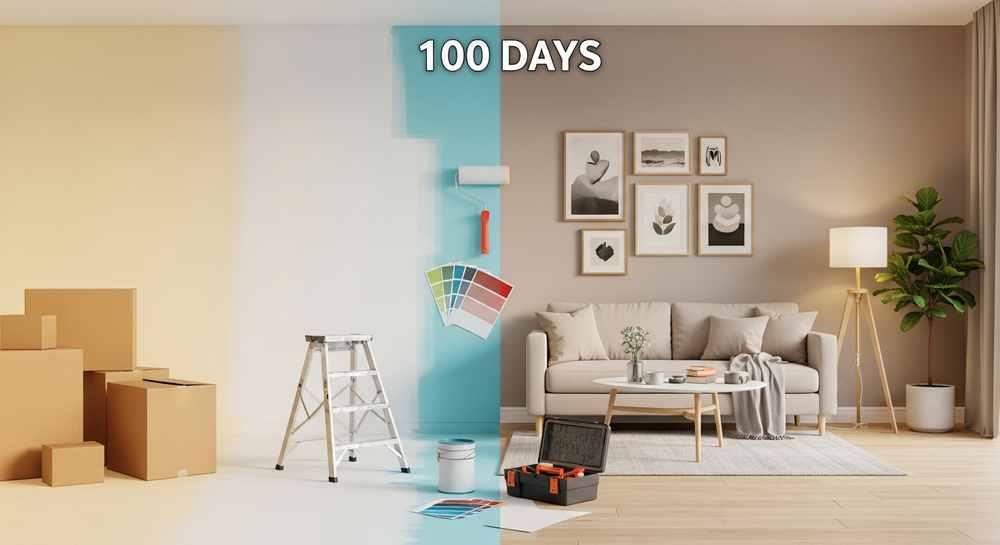
With safety taken care of, it’s time to make the space feel like yours in just 3 day (kitchen). Pick up paint swatches and test small areas. Start with one room—usually the bedroom or living room.
Choose colors that match your style and create comfort. Patch up nail holes, clean baseboards, and remove outdated wallpaper if needed.
Add curtain rods and replace worn blinds. The goal here is light transformation, not major overhauls. You’re creating visual freshness. Don’t worry about making everything perfect. Just start. One fresh wall can inspire your next move. Work during weekends or evenings to keep the pace stress-free.
Day 31–40: Tackle Storage and Organization
Now that the walls are refreshed and your style is emerging, it’s time to improve your space’s flow. Clutter builds fast without smart storage. Start with closets, pantries, and shelves—add hooks, dividers, and bins to give everything a proper place.
In high-traffic areas like the garage or entryway, install racks or shelving for tools, shoes, and gear. Consider multifunctional furniture, such as ottomans or coffee tables with storage. Efficient organization not only makes your home feel bigger—it brings daily peace of mind.
Day 41–50: Start Small with Decor Enhancements
Decor should feel natural, not overwhelming. Start with a few focal pieces—a bold mirror in the hallway, framed art in the living room, or cozy throw pillows on the couch. Add warmth and life with houseplants, and use texture and color to bring depth to the space.
There’s no need to buy everything at once. Thrift stores, online marketplaces, and local boutiques offer affordable, unique finds. If something doesn’t feel right, change it later. Good decor evolves with you—it shouldn’t lock you into one look.
Day 51–60: Upgrade Lighting for Mood and Function
Your bathroom should feel like a retreat, not just a utility space. Start with simple upgrades that make a big impact: replace worn-out towels with plush ones, swap an old showerhead for a high-pressure or water-saving model, and add soft-close toilet seats or new cabinet hardware for a subtle but satisfying refresh.
Consider re-caulking the tub, updating light fixtures, or installing peel-and-stick backsplash tiles for a low-cost facelift. Add warmth with a small rug, greenery, or scented candles. Focus on comfort, cleanliness, and a touch of personal style—because a well-loved bathroom can reset your whole day.
Day 71–80: Elevate the Kitchen Without a Remodel
You don’t need a full renovation to give your kitchen a fresh, elevated look. Start by updating small details: swap out old cabinet hardware, replace worn dish towels, or add a stylish rug for color and comfort underfoot.
Upgrade lighting with brighter, energy-efficient bulbs or install under-cabinet lights for better task visibility. Organize your countertops—use trays, jars, or baskets to create a clean, intentional look. Consider open shelving for everyday items or a peel-and-stick backsplash to introduce texture and personality.
Add a few thoughtful touches like a plant, new bar stools, or a decorative fruit bowl. These small changes can transform your kitchen into a more functional, inviting space—no remodel required.
100 days of moving!
Turning a house into a home doesn’t require overnight changes or constant hustle. With a thoughtful 100-day timeline, you can make steady, meaningful improvements that reflect your lifestyle and personality.
Each phase—whether it’s basic repairs, decor, or lighting—brings you closer to a space that feels both functional and personal.
By pacing yourself and working with intention, you avoid burnout and stay connected to the joy of the process. In the end, the true reward is settling into a home that feels fully yours—on your terms, and in your own time.