There is no single best stone for bathrooms—the right choice depends on location (shower vs. vanity vs. floor), moisture exposure, and maintenance tolerance. Quartzite and sealed granite excel in showers; quartz and granite perform best on vanities; slate provides superior floor grip; marble offers luxury but requires diligent care. The ideal low-maintenance stone option is engineered quartz, which never needs sealing as it is non-porous, and no special products are needed for cleaning; it resists stains, bacteria, and moisture naturally, and lasts decades with just basic cleaning.

George is a seasoned interior designer and property marketing strategist with over 13 years of experience. He specializes in transforming properties into visually stunning spaces, helping clients recognize the potential and beauty in each property. With an impressive international client base of exciting projects throughout Europe and America.
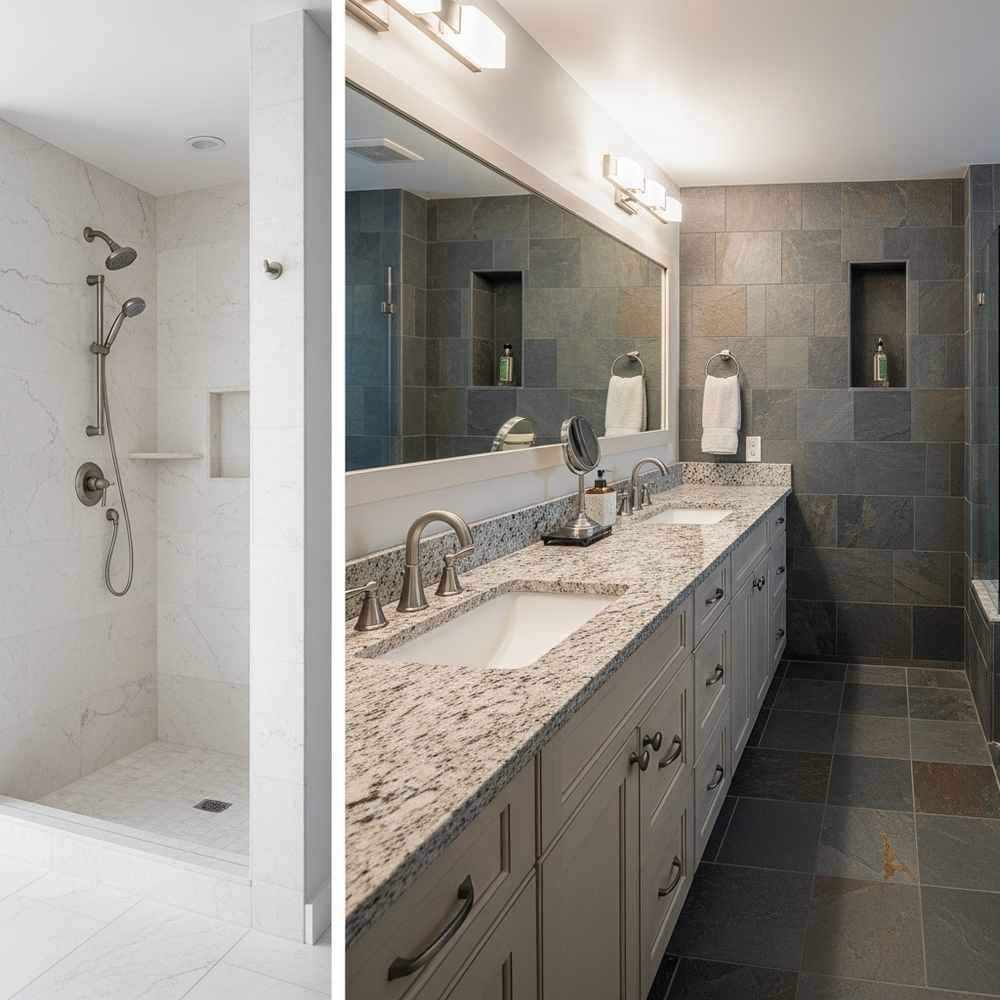
Match stone selection to bathroom zones: quartzite or dense granite for showers, quartz or granite for vanities, slate or textured granite for floors, and marble for accent walls where maintenance is manageable.

Breakdown of bathroom stones by different categories
This breakdown ranks bathroom stones from most luxurious to most practical, showing you exactly which stones offer prestige versus easy maintenance and how much each option actually costs. Use this quick reference to match your stone choice to what matters most—whether that’s impressing guests, minimizing upkeep, or staying within budget.
Most Classy/Luxurious
1. Marble (Calacatta/Statuario) – The ultimate luxury standard
- Timeless elegance, unique veining, natural translucency
- Associated with high-end hotels and luxury homes
- Price: $100-200+ per sq ft for premium varieties
2. Premium Quartzite (exotic varieties) – Modern luxury
- Marble-like beauty with superior performance
- Rare patterns command premium prices
- Price: $120-180+ per sq ft for exotic varieties
3. Onyx – Ultra-luxury accent material
- Dramatic translucency, backlit potential
- Extremely rare and exclusive
- Price: $150-300+ per sq ft
Easiest Maintenance
1. Engineered Quartz – Zero sealing, soap and water cleaning
2. Soapstone – Naturally non-porous, optional oiling
3. Dense Granite – Seal every 2-3 years, simple care
Least Classy/Most Basic
1. Basic Granite tiles – Builder-grade appearance
2. Standard Limestone – Can look institutional if poorly chosen
3. Basic Slate – Utilitarian appearance unless well-designed
Cheapest Options
1. Slate – $30-70 per sq ft installed
2. Basic Granite – $60-90 per sq ft installed
3. Standard Limestone/Travertine – $40-80 per sq ft installed
4. Engineered Quartz (basic patterns) – $50-80 per sq ft installed
Most Luxurious (Price + Prestige)
1. Rare Calacatta Marble – $150-300+ per sq ft
- Borghini, Viola, Gold varieties
- Extremely limited availability
2. Exotic Quartzite – $120-250+ per sq ft
- Blue Bahia, Fusion, Van Gogh varieties
- Unique patterns and colors
3. Book-matched Onyx slabs – $200-500+ per sq ft
- Backlit installations
- Ultra-exclusive applications
The Sweet Spots:
- Most Classy + Reasonable Maintenance: Standard Carrara Marble ($60-120/sq ft)
- Easiest + Still Elegant: Engineered Quartz with natural patterns ($70-120/sq ft)
- Best Value + Durability: Quality Granite ($80-120/sq ft)
- Luxury Performance Leader: Premium Quartzite ($90-150/sq ft)
Bottom Line: Marble wins on pure class but demands commitment. Engineered quartz wins on ease. Quartzite offers the best balance of luxury and practicality for most homeowners.
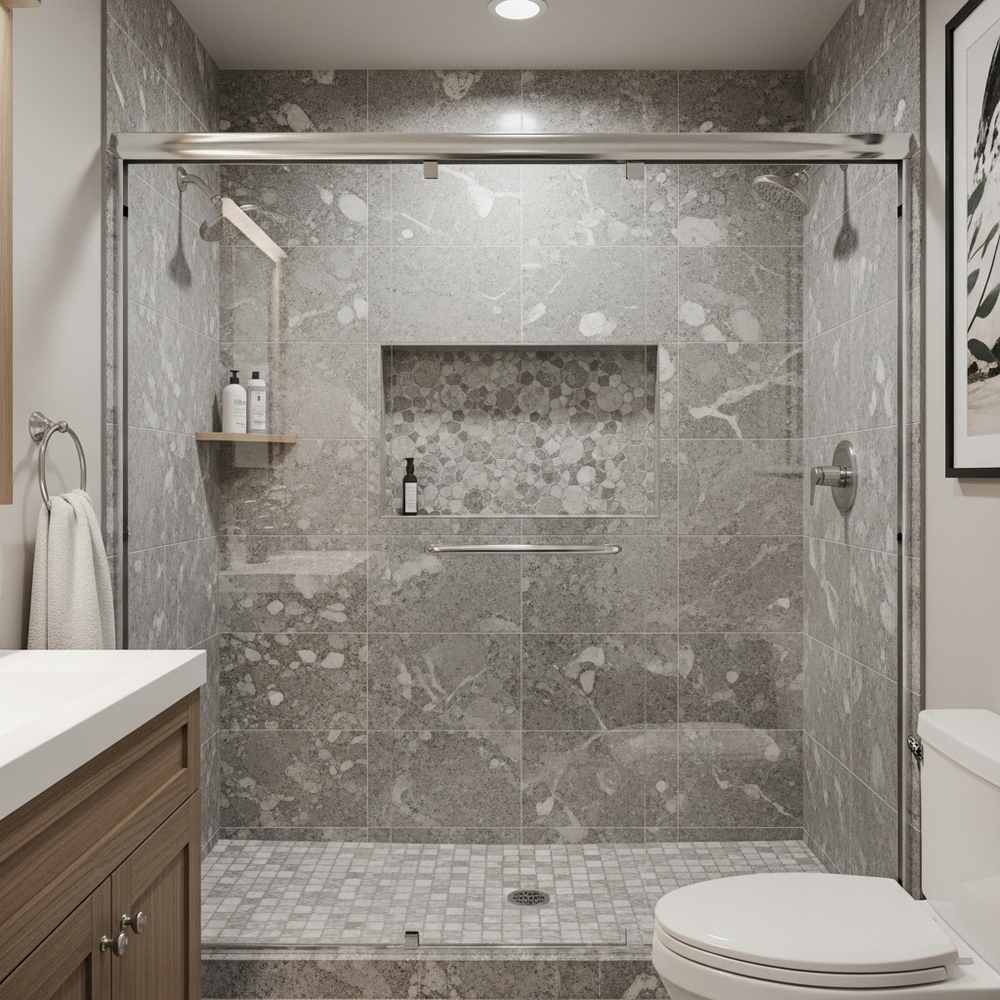
Shower Zones: High-Moisture Performance
Shower environments demand stones with low porosity and excellent sealing properties.
Quartzite leads in shower applications due to its dense metamorphic structure that resists water absorption when properly sealed.
Low-absorption granite varieties (porosity under 0.5%) perform exceptionally well, particularly when finished with honed surfaces that provide better grip underfoot.
If you want truly set-it-and-forget-it performance, engineered quartz is your answer. It looks like natural stone but performs like an engineered surface with virtually zero maintenance beyond regular cleaning.
Shower Zone Performance Rankings:
| Stone Type | Water Resistance | Slip Resistance | Maintenance |
|---|---|---|---|
| Quartzite (honed) | Excellent | Very Good | Moderate |
| Dense Granite (honed) | Excellent | Very Good | Moderate |
| Engineered Quartz | Excellent | Good | Low |
| Marble (honed) | Poor-Fair | Good | High |
Low-Maintenance Stone Options (Minimal Upkeep)
Engineered Quartz – This is your best bet:
- Never needs sealing (non-porous)
- Daily cleaning with soap and water
- No special products required
- Resists stains, bacteria, and moisture naturally
- Lasts decades with just basic cleaning
Dense, High-Quality Granite (specific varieties):
- Seal once every 2-3 years (not 6-12 months)
- Dense granites like Absolute Black, Baltic Brown barely absorb water
- Some premium granites can go 5+ years between sealing
- Daily cleaning with stone-safe cleaner
Soapstone – Often overlooked:
- Naturally non-porous (never needs sealing)
- Naturally antimicrobial and acid-resistant
- Just needs periodic oiling to maintain color (optional, not required)
- Gets better with age as it develops patina
Vanity Areas: Stain and Scratch Resistance
Vanity countertops face daily exposure to cosmetics, toiletries, and cleaning products. Engineered quartz provides superior stain resistance with zero porosity, while granite and quartzite offer natural beauty with excellent scratch resistance when properly sealed.
Floor Applications: Slip Resistance and Durability
Slate excels in floor applications, providing natural texture and slip resistance even when wet. Textured granite offers similar performance with more color options. Avoid polished marble or smooth stones on bathroom floors due to slip hazards.
Stone Types: Performance and Characteristics
Marble: Luxury with High Maintenance
Marble provides unmatched elegance but requires diligent maintenance—seal every 3-4 months in showers, use only pH-neutral cleaners, and accept that etching from acidic substances is inevitable.
Marble’s calcium carbonate composition creates both its beauty and vulnerability. Carrara, Calacatta, and Statuario varieties offer classic white backgrounds with gray veining, while colored marbles provide warmth in earth tones. The material’s natural translucency creates depth that changes with lighting, making each installation unique.
Best applications: Accent walls, vanity tops in powder rooms, luxury primary bathrooms with dedicated maintenance commitment.
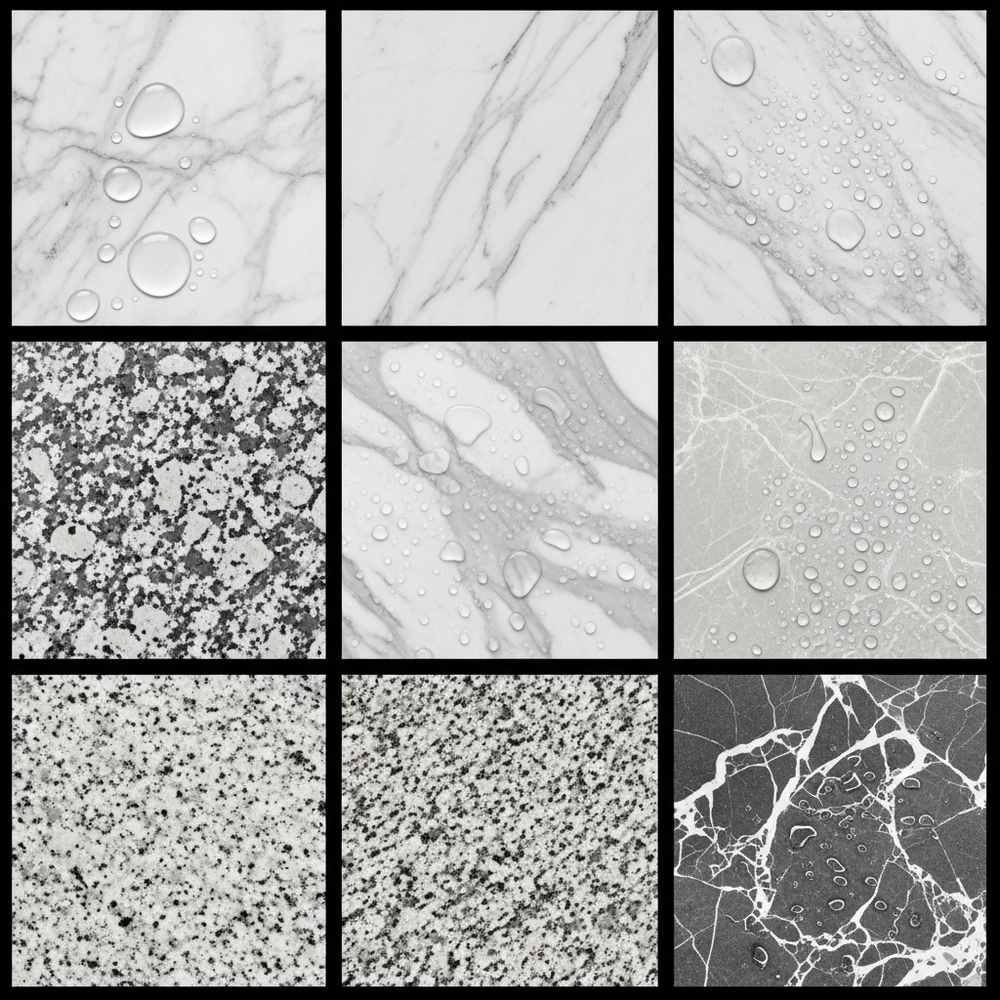
Granite: Proven Performance
Granite delivers reliable durability with moderate maintenance—seal every 6-12 months, clean with stone-safe products, and enjoy decades of performance with proper care.
This igneous rock varies significantly in porosity and performance. Dense varieties like Absolute Black and Baltic Brown require less frequent sealing, while lighter granites may need more attention. Granite’s heat resistance makes it ideal for bathrooms with heated styling tools.
Engineered Quartz: Low-Maintenance Alternative
Engineered quartz eliminates sealing requirements while providing consistent performance—clean with soap and water, avoid excessive heat, and expect predictable long-term durability.
Manufactured from 90-95% ground quartz with polymer resins, this non-porous surface resists stains, bacteria, and moisture without sealing. Modern patterns convincingly mimic natural stone while providing superior hygiene performance.
Quartzite: Performance Leader
Quartzite combines marble-like beauty with superior durability—harder than granite, naturally slip-resistant when honed, and requiring standard sealing every 6-12 months for optimal performance.
This metamorphic stone forms under extreme heat and pressure, creating exceptional hardness (7 on Mohs scale). White Princess, Super White, and Taj Mahal varieties offer marble aesthetics with granite-level durability.
Specialty Stones: Targeted Applications
Slate: Naturally textured surface provides excellent slip resistance for floors. Dense composition resists water and stains with minimal maintenance.
Limestone and Travertine: Warm, organic appearance suited for powder rooms or low-traffic areas. Higher porosity requires diligent sealing and maintenance.
Terrazzo: Recycled stone chips in polymer or cement matrix. Excellent durability when sealed, with unlimited color options for contemporary designs.
Soapstone: Naturally acid-resistant and non-porous, but soft (scratches easily). Darkens naturally over time, developing rich patina.
Onyx: Dramatic translucency and veining, but extremely high maintenance. Best reserved for accent applications with controlled lighting.
Key Performance Factors For Stone Types
Durability and Hardness
Stone hardness determines scratch resistance: quartzite (7 Mohs) > granite (6-7 Mohs) > marble (3-4 Mohs). Harder stones resist daily wear better but may be more difficult to repair if damaged.
Mohs Hardness Scale for Bathroom Stones:
| Stone Type | Mohs Rating | Scratch Resistance | Repair Difficulty |
|---|---|---|---|
| Quartzite | 7 | Excellent | Difficult |
| Granite | 6-7 | Very Good | Moderate |
| Engineered Quartz | 7 | Excellent | Difficult |
| Marble | 3-4 | Fair | Easy |
| Limestone | 3-4 | Fair | Easy |
| Slate | 5-6 | Good | Moderate |
Porosity and Water Absorption
Porosity determines staining susceptibility and sealing requirements. Low porosity (under 0.5%) stones like dense granite and quartzite resist water absorption. High porosity stones like marble and limestone require frequent sealing and careful maintenance.
Slip Resistance
Honed and textured finishes provide better slip resistance than polished surfaces, especially when wet. Slate naturally offers the best wet-surface grip for bathroom floors.
The coefficient of friction (COF) measures slip resistance:
- COF > 0.6: Excellent slip resistance (slate, textured granite)
- COF 0.4-0.6: Good slip resistance (honed marble, quartzite)
- COF < 0.4: Poor slip resistance (polished marble, smooth quartz)
Finishes: Honed vs. Polished vs. Textured
Honed Finish
Honed finishes provide better slip resistance and hide water spots, making them ideal for shower floors and high-traffic areas. They require the same sealing frequency as polished surfaces.
This matte finish removes the high gloss while maintaining smooth texture. Honed marble reduces slip hazards while preserving elegance, though it may show scratches more readily on softer stones.
Polished Finish
High-gloss polished surfaces showcase stone’s natural beauty and color depth but become slippery when wet. Best reserved for vanity tops, accent walls, and areas with minimal water exposure.
Textured and Specialty Finishes
Leathered/Antiqued: Subtle texture with natural grip, popular on granite for contemporary looks.
Bush-hammered: Mechanically textured surface for maximum slip resistance on floors.
Flamed: Heat-treated granite with natural texture, excellent for outdoor and wet applications.
Maintenance Requirements by Stone Type
Sealing Schedules
Bathroom sealing requires more frequent attention than kitchen applications: marble every 3-4 months in showers, granite and quartzite every 6-12 months, engineered quartz never needs sealing.
Bathroom Sealing Schedule by Location:
| Stone Type | Shower Areas | Vanity Tops | Floors |
|---|---|---|---|
| Marble | Every 3-4 months | Every 4-6 months | Every 6 months |
| Granite | Every 6 months | Every 12 months | Every 12 months |
| Quartzite | Every 6-12 months | Every 12 months | Every 12 months |
| Limestone/Travertine | Every 3-4 months | Every 4-6 months | Every 6 months |
| Slate | Every 12 months | Every 12 months | Every 12-18 months |
Daily Care Protocols
Use only pH-neutral stone cleaners for daily maintenance. Avoid vinegar, lemon juice, or generic bathroom cleaners that can etch calcium-based stones. Squeegee shower surfaces after use and immediately clean spills.
Professional Maintenance
Annual professional cleaning and polishing extends stone life, particularly for marble installations. Professional restoration can address minor etching and dulling that develops over time.
Budget and Cost Analysis
Material and Installation Costs
Expect installed costs of $50-200 per square foot: marble ($40-150), granite ($80-150), quartzite ($65-150), engineered quartz ($50-120). Premium varieties and complex installations command higher prices.
Bathroom Stone Cost Analysis (Installed Per Square Foot):
| Stone Type | Material Range | Labor Range | Total Range |
|---|---|---|---|
| Marble | $25-100 | $15-50 | $40-150 |
| Granite | $40-100 | $20-50 | $60-150 |
| Quartzite | $45-110 | $20-40 | $65-150 |
| Engineered Quartz | $30-80 | $20-40 | $50-120 |
| Slate | $15-40 | $15-30 | $30-70 |
Long-term Ownership Costs
Factor in maintenance costs: professional sealing ($3-5 per square foot annually), specialized cleaners ($50-100 annually), and potential restoration ($15-25 per square foot every 5-10 years for marble).
Return on Investment
Quality stone bathroom installations typically recoup 60-80% of investment at resale. Quartzite and granite show strongest market appeal, while marble commands premiums in luxury segments.
Professional Installation Requirements
Plumbing Integration with Stone Surfaces
Stone bathroom installations require careful coordination with plumbing systems to ensure both functionality and longevity. The weight of natural stone—particularly thick slabs of granite or quartzite—demands robust plumbing connections and proper structural support without compromising water flow or creating future leak points.
Key considerations for stone-plumbing integration:
- Undermount sink compatibility: Natural stone thickness affects mounting hardware and requires specialized clamps and supports designed for heavy materials
- Faucet placement: Stone fabrication must accommodate existing plumbing rough-in locations with precise drilling techniques to prevent cracking during installation
- Drain positioning: Heavy stone surfaces need reinforced drain assemblies and proper subflooring to handle weight distribution
- Water line access: Maintenance access becomes critical when stone surrounds shut-off valves and supply lines
This is the importance of sourcing a great plumbing supply. Quality pipes, fittings, and fixtures will not only lower your total maintenance costs, but they also guarantee reliable long-term use and protect your home’s plumbing integrity.
Key Takeaway: Reliable plumbing behind stone installations means fewer maintenance headaches and better long-term performance of your bathroom investment.
Electrical Considerations for Stone Bathrooms
Power and Lighting Integration
Electrical planning becomes crucial when installing stone surfaces, as modifications after stone installation are extremely difficult and expensive. Unlike drywall that allows post-construction changes, stone surfaces require precise electrical planning during the design phase.
Critical electrical considerations for stone bathrooms:
- Vanity lighting: Stone thickness affects electrical box positioning and requires longer mounting screws and specialized anchors
- GFCI outlet placement: Stone backsplashes need electrical cutouts planned during fabrication, not after installation
- Heated bathroom floors: Stone’s thermal mass works excellently with radiant heating but requires properly sized electrical circuits
- Mirror and medicine cabinet power: Stone walls need pre-planned electrical rough-in before stone installation
Lighting enhancements for stone:
- Under-cabinet LED strips: Stone overhangs can incorporate integrated lighting channels for dramatic effect
- Accent lighting: Translucent stones like marble and onyx benefit from backlighting that showcases natural veining patterns
Power requirements in modern bathrooms include heated towel bars, exhaust fans, and multiple lighting zones. That’s where electrical transformers come into play for larger installations or homes requiring voltage modifications for specialty bathroom equipment.
The key is coordinating electrical rough-in work before stone templating and installation to ensure all power needs are met without compromising the stone’s structural integrity.
Style and Design Considerations
Stone Bathroom Design Trends
Bold veining, earthy tones, and statement walls dominate 2025 to 2026 bathroom stone trends. Book-matched quartzite slabs and large-format installations create dramatic focal points.
Popular patterns: Dramatic Calacatta-style veining in quartzite, warm earth tones in limestone and travertine, geometric patterns in terrazzo installations.
Color and Pattern Coordination
Light stones (white/beige marble, light granite) brighten small bathrooms but show water spots more readily.
Dark stones (black granite, dark slate) hide water spots and soap residue but may make small spaces feel cramped.
Veined patterns add visual interest but require careful pattern matching in large installations.
Edge Profiles and Details
Simple edge profiles work best in bathrooms for easy cleaning. Avoid ornate edges that trap moisture and bacteria. Straight, beveled, or slightly rounded edges provide both aesthetics and functionality.
Q&A
What’s the best stone for shower walls and floors?
Quartzite and dense granite perform best in showers when honed for slip resistance and sealed every 6 months. Avoid marble unless you’re committed to intensive maintenance.
Shower environments demand low-porosity stones that resist water absorption. Honed finishes provide essential slip resistance while maintaining beauty.
Which stones resist stains and scratches on vanity tops?
Engineered quartz offers superior stain resistance with zero maintenance, while granite and quartzite provide excellent scratch resistance with moderate sealing requirements.
Vanity surfaces face daily exposure to cosmetics and toiletries. Non-porous engineered quartz eliminates staining concerns, while hard natural stones resist scratches better than marble.
How much maintenance does marble really require in bathrooms?
Marble requires sealing every 3-4 months in showers, immediate spill cleanup, pH-neutral cleaners only, and acceptance that minor etching from acidic products is inevitable.
Factor in $200-400 annually for professional maintenance and products. Consider marble only if you’re committed to diligent care or restricting it to low-exposure areas like accent walls.
How can I make stone bathroom floors safer?
Choose honed or textured finishes over polished surfaces, select naturally textured stones like slate, and ensure proper drainage to minimize standing water.
Surface texture matters more than stone type for slip resistance. Even marble can be relatively safe when honed, while polished granite becomes slippery when wet.
What’s the best stone for each budget level?
Budget ($30-70/sf): Slate floors, basic granite vanities. Mid-range ($70-120/sf): Standard granite, engineered quartz. Luxury ($120+/sf): Premium quartzite, marble accents.
Focus budget on high-impact areas first: vanity tops see daily use, while floor stone affects both safety and aesthetics.
How often should I seal bathroom stone surfaces?
Shower areas need sealing every 3-6 months, vanity tops every 6-12 months, floors every 12 months. Test with water drops—if they absorb within 15 minutes, it’s time to reseal.
Bathroom environments accelerate sealing breakdown due to constant moisture and temperature changes. More frequent sealing prevents long-term damage and staining.
Is terrazzo a good choice for modern bathrooms?
Modern epoxy-based terrazzo provides excellent durability and unlimited color options when properly sealed, making it ideal for contemporary bathroom designs seeking unique patterns.
Terrazzo combines recycled stone chips with polymer or cement matrix, creating durable surfaces with design flexibility unavailable in natural stone. Requires sealing like natural stone.
Should I choose stone slabs or stone tiles for my bathroom?
Stone slabs provide fewer grout lines (easier cleaning) and dramatic pattern continuity, while tiles offer lower cost and easier future repairs. Consider slabs for vanities, tiles for floors.
Large-format tiles (24″x24″ or larger) split the difference, providing slab-like appearance with tile practicality. Match choice to specific bathroom zones and maintenance preferences.
Best bathroom stone selection depends entirely on location and maintenance tolerance.
For shower areas: quartzite or low-absorption granite with honed finishes provide optimal water resistance and slip safety.
For vanity tops: engineered quartz eliminates maintenance while granite and quartzite offer natural beauty with moderate care.
For floors: slate naturally provides best slip resistance, while textured granite offers more color options.
For luxury features: marble delivers unmatched elegance if you commit to frequent sealing and pH-neutral cleaning.
Warm alternatives: limestone and travertine work well in powder rooms with diligent maintenance.
Contemporary option: terrazzo provides unlimited colors and excellent durability when properly sealed.
The key insight: there’s no universal “best” bathroom stone—success comes from matching stone characteristics (porosity, hardness, slip resistance) to specific bathroom zones and honest assessment of your maintenance commitment.