
The 2026 housing market has tipped toward buyers for the first time in years. Inventory is up about 20 percent from a year ago, supply has climbed to roughly 4.6 months, and about 36 percent of listings have cut their price. For sellers, that shift means presentation and pricing now decide whether a home sells or sits.
Mid-2026 market data from national real estate sources produced those figures. Months of supply is the key gauge: it estimates how long it would take to sell every listed home at the current pace, and a reading near five months signals a balanced market rather than a seller’s one. National list prices are down about 2.2 percent year over year, the clearest sign that leverage has moved. The shift is uneven by region: Sun Belt metros with heavy building swung toward buyers first, while supply-starved coastal markets stayed tighter, so a seller’s local numbers matter more than the national headline.
How balanced is the 2026 housing market?
Balanced does not mean frozen. Homes are still selling, and often quickly, but the market now rewards sellers who adjust to today’s affordability fastest rather than those who wait for last year’s price.
Buyers regained leverage for a simple reason. Mortgage rates settling in the mid-6 percent range capped what buyers can pay, while inventory rebuilt after years of shortage, so the same house now competes with more listings for a smaller pool of qualified buyers. Sellers lost the pricing power that came from scarcity.
Why is a home’s online listing the first showing?
A buyer’s first walkthrough happens on a screen, not a doorstep. Most buyers scroll past a listing in seconds, and homes without strong photography, drone shots, and a 3D walkthrough are quietly skipped before anyone books a visit.
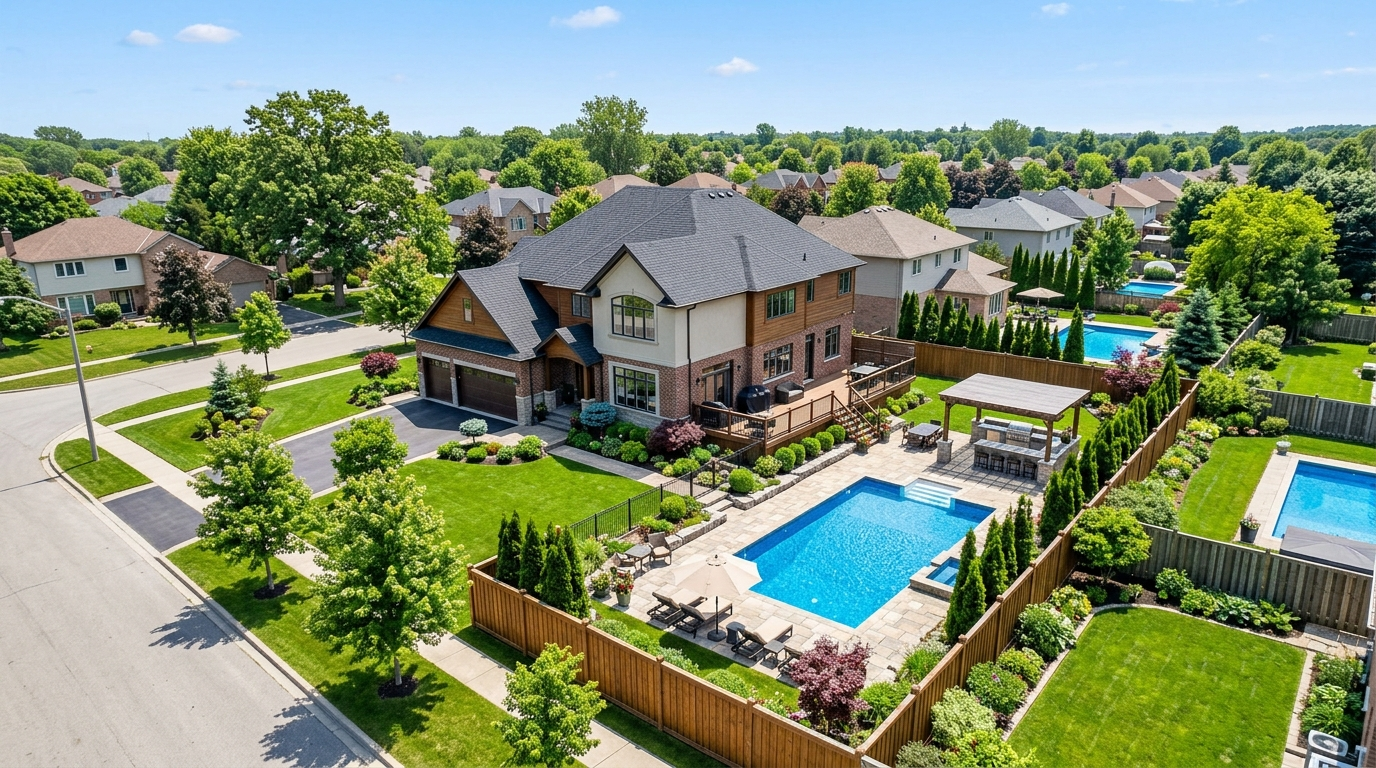
Presentation has become the filter. In a balanced market with more homes to choose from, a poorly shot listing does not just underperform; it never makes the shortlist, no matter how good the house is in person.
The math is unforgiving. A listing gets a few seconds and one thumbnail to earn a click, so a dim or cluttered lead photo means most buyers never open the gallery, and the house effectively never reaches the market at all.
What buyers expect from a 2026 home listing
Buyer expectations have quietly hardened into a checklist. A listing that misses these reads as neglected before anyone reads the description.
- Professional photography, bright and wide, not phone snapshots
- A drone or aerial shot that shows the lot and the street
- A 3D walkthrough or video tour they can scroll through at 11pm
- An accurate floor plan and a description that matches the photos
- A fast reply, since a day of silence sends them to the next listing
How to sell a home in a buyer’s market
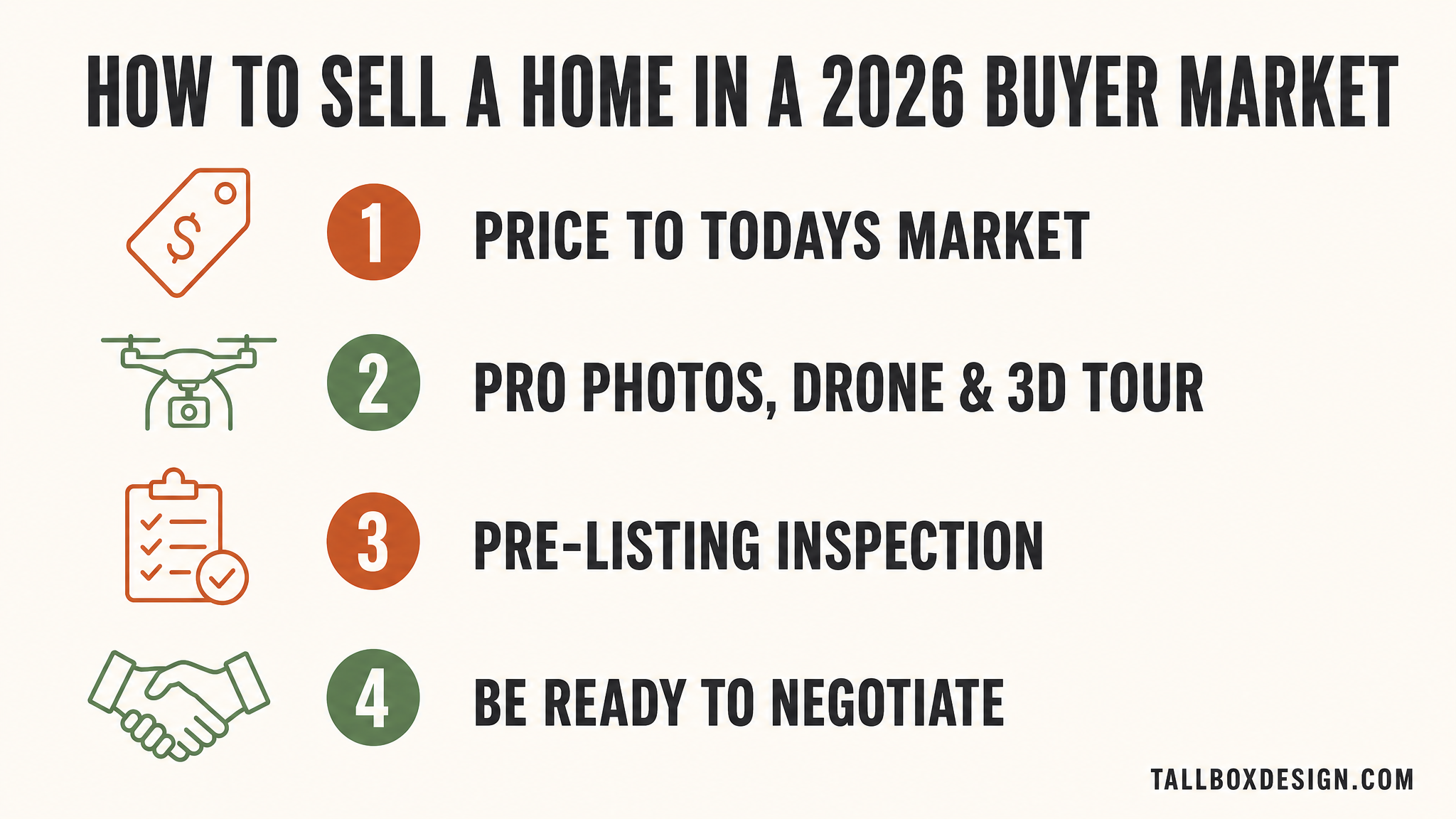
Selling well in 2026 is a sequence, not a single move. These five steps separate a home that closes from one that lingers on the market, and skipping one forces the others to work harder to make up for it.
- 1Price to today’s market. Study the last 30 days of comparable sales, not last year’s peak, and price at or just below where buyers are actually transacting.
- 2Invest in presentation. Professional photos, drone exteriors, and a 3D walkthrough are the baseline now, not the upgrade, and the spend is small against the sale price and routinely pays back in a faster, cleaner close.
- 3Order a pre-listing inspection. Finding issues before the buyer’s inspector does lets you repair, disclose, or price with confidence, keeps deals from collapsing late, and turns a clean report into a quiet selling point.
- 4Stay ready to negotiate. Expect requests on price, repairs, and closing costs, and set your limits before the first offer lands.
- 5For a new or unbuilt home, lead with a render. When there is nothing to photograph yet, a visualization is the listing.
Where 3D visualization fits a modern home listing
Not every listing has a house to photograph. New-construction and off-plan homes go to market as floor plans and finishes, and that is where 3D rendering does the work a camera cannot, showing the finished home a buyer is being asked to commit to.
Buyers now expect the same polish on resale listings. A 3D walkthrough of an existing home has moved from novelty to norm, part of the presentation logic in our guide to interior choices that help a home sell faster, and the same off-plan pressure driving the 2026 new-home market. A render or virtual tour also lets a distant buyer tour at midnight, widening the pool of people who can seriously consider the home.
Selling a home in 2026, answered
QIs 2026 a buyer’s or a seller’s market?
Mostly balanced, tilting toward buyers. With inventory up about 20 percent and supply near 4.6 months, buyers have regained the negotiating room sellers held through the pandemic years. It varies by metro, so the local months-of-supply figure is the number worth checking before you list.
QHow do I sell my house fast in a slower market?
Price to the last 30 days of comparable sales, invest in professional photos and a 3D tour, and clear inspection issues before listing. Presentation and price, not luck, move homes in 2026. Speed matters too: the first two weeks on the market draw the most attention, so the listing has to be right on day one.
QDo professional photos really matter?
Yes. The online listing is the first showing, and listings without high-quality photos, drone shots, and 3D walkthroughs are increasingly skipped before a buyer ever visits in person. Homes with strong media consistently draw more views and showings than comparable listings shot on a phone.
QShould I get a pre-listing inspection?
Often, yes. Finding and addressing issues before the buyer’s inspector does gives you control over repairs and pricing, and reduces the chance a deal falls apart late in escrow.
QHow much should I lower my price if the home is not selling?
Rather than a large panic cut, re-check the last 30 days of comparable sales and reprice to where similar homes are actually closing. A single move to the right number usually beats a series of small reductions that signal a stale listing.
The takeaway
The 2026 market rewards sellers who treat a listing like a product launch: priced to today, presented professionally, and free of surprises. Leverage has shifted, but a well-prepared home still sells.
Start with the number and the pictures, because both are set before the first showing. In a market this balanced, the home that looks and prices right is the one that moves, while the one waiting for last year’s price and relying on phone photos is the one that sits.