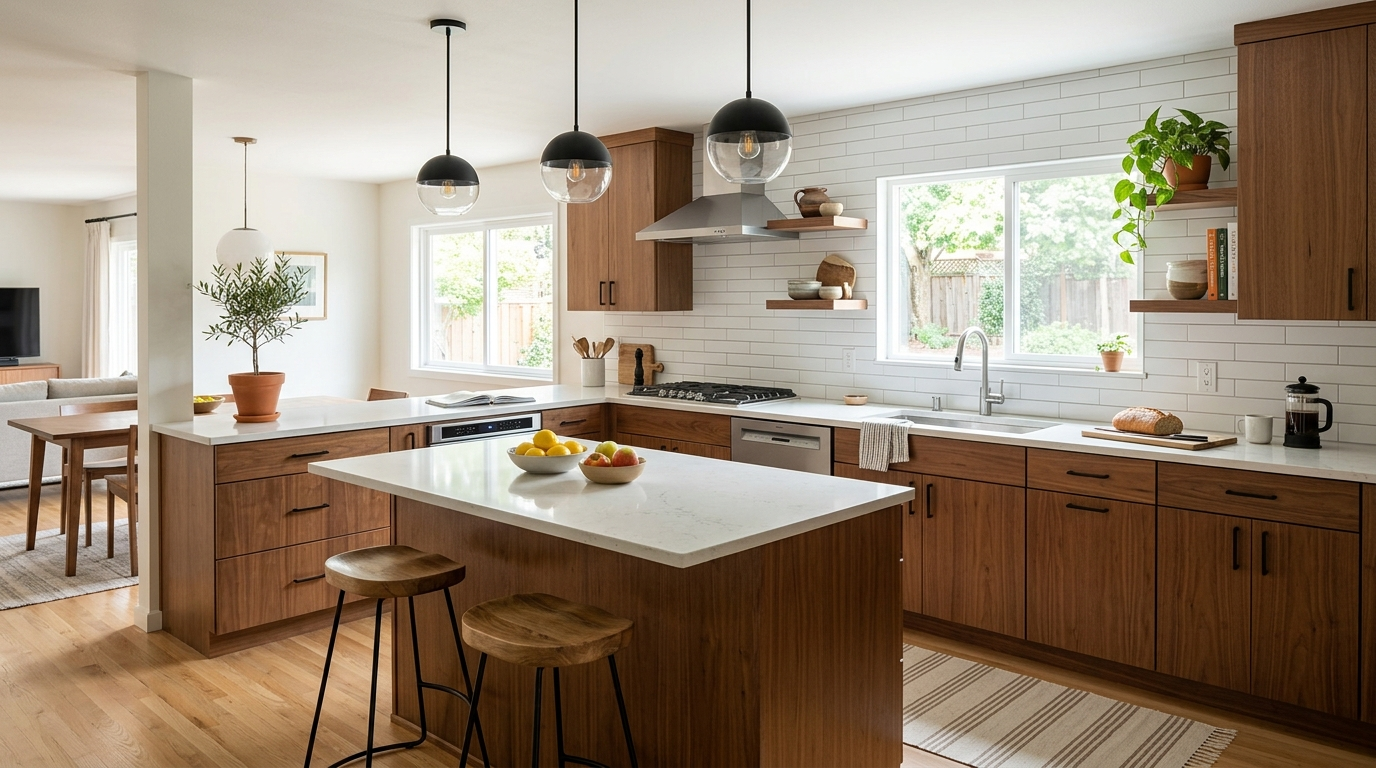
US homeowners are on track to spend a record $524 billion on remodeling in early 2026. Yet the typical project budget has shrunk to about $15,000, down from $20,000 a year earlier. More money is flowing into home improvement overall, even as each individual job gets smaller and more cautious.
Harvard’s Leading Indicator of Remodeling Activity produced the $524 billion figure, estimating national spending on improvements and repairs to owner-occupied homes. That gauge matters because it tracks money actually spent, not plans, and it is forecast to keep rising about 2.4 percent early in the year before easing to roughly 1.9 percent by the third quarter. Rising remodeling permits and steady home sales suggest demand will hold up through the year. The shrinking per-project budget, meanwhile, shows up in homeowner spending surveys.
Why is remodeling spending at a record while budgets shrink?
More households are renovating at once, which lifts the national total. Owners locked into low mortgage rates are staying put and improving the home they have, aging-in-place projects are rising, and a forever-home mindset has replaced the urge to trade up. When moving costs a new mortgage at a much higher rate, fixing the current house wins by default.
Caution shapes each of those projects. Higher material and labor costs, plus broad economic uncertainty, push people toward smaller, targeted work rather than gut renovations, so the average check falls even as the crowd writing checks grows. The result shows up in the numbers: the median planned budget slid to about $15,000 while the high end also eased, from roughly $85,000 to $80,000 among the biggest spenders.
What smaller remodeling budgets are buying
The projects filling that record total skew practical. Homeowners staying put are fixing what they use daily and preparing a home to last, not chasing a magazine gut renovation. The mix leans toward function and durability, with a few high-impact cosmetic wins layered on top.
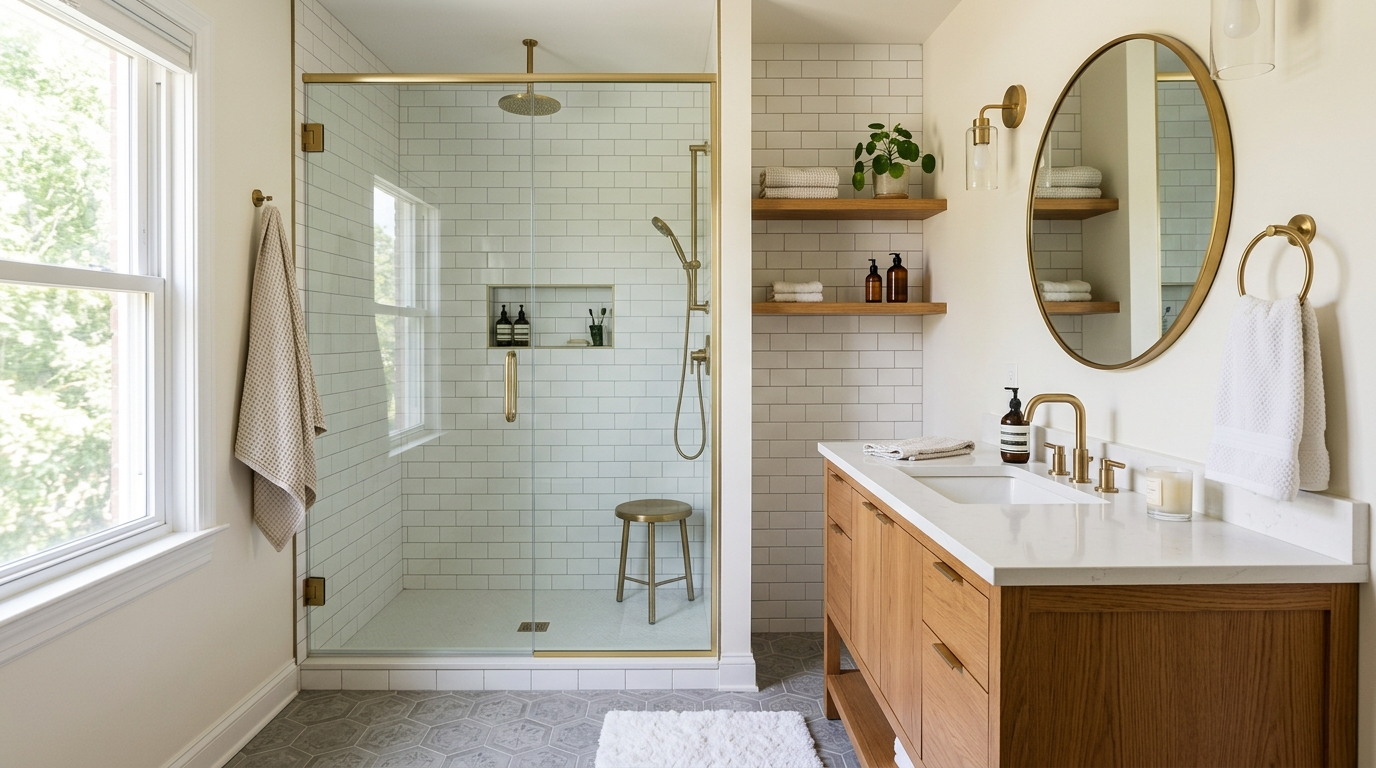
- Bathroom updates, the single most common project by volume
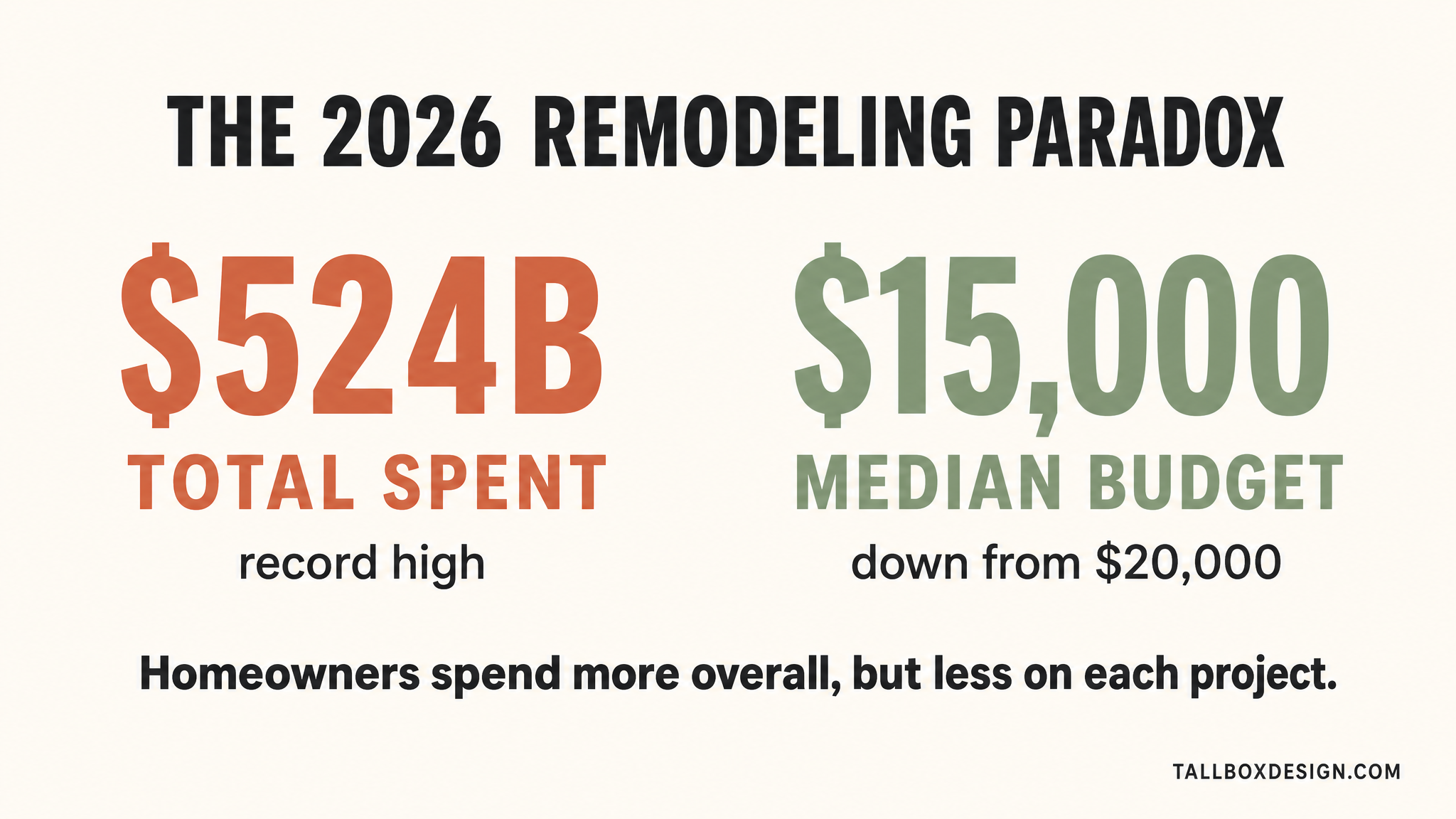
- Kitchen refreshes rather than full custom kitchen remodels, swapping finishes over layouts
- Aging-in-place changes like walk-in showers and wider doorways
- Energy and efficiency work, from insulation to replacement windows
- Single-room conversions, such as a home office or a game room
What a home remodel costs in 2026
Costs vary widely by room and by how deep the work goes. The ranges below are planning figures, not quotes, and they move with local labor and material prices. A bathroom that only needs fixtures and paint sits near the bottom of its range, while one that relocates plumbing sits near the top.
Compiled from published 2026 US remodeling and contractor cost guides; planning ranges, not quotes.
Where a smaller remodeling budget should go
A $15,000 budget rewards focus. These five moves stretch a smaller remodel the furthest, because spreading the same money thin across a whole house usually reads as half-finished, while concentrating it in one or two rooms reads as done.
- 1Fix the rooms you use most. Kitchens and bathrooms return the most value and daily use per dollar spent, and they are the two rooms buyers judge hardest if you sell later.
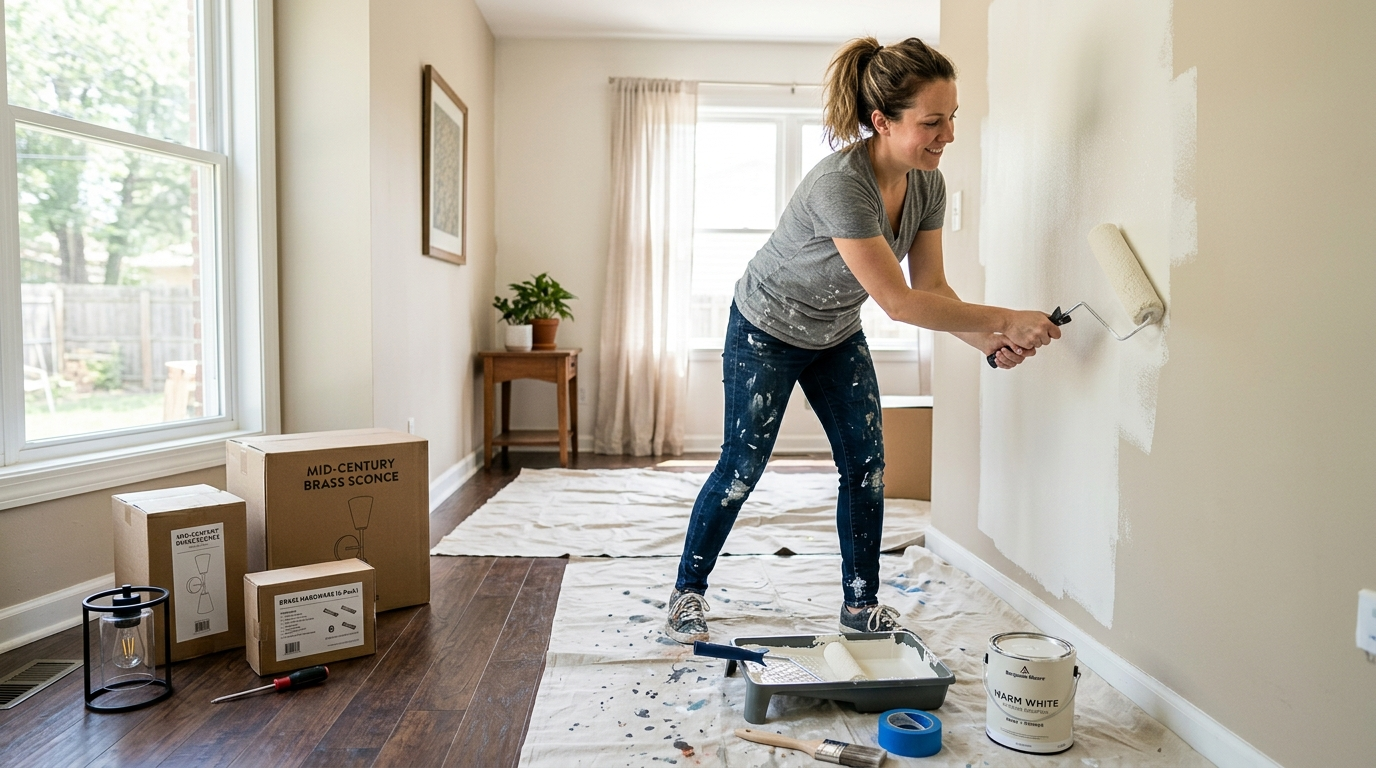
- 2Choose cosmetic over structural. New paint, hardware, lighting, and surfaces transform a room for a fraction of a layout change.
- 3Phase the work. Splitting a big project into stages keeps each check smaller, spreads the cost across pay periods instead of one large hit, and lets you adjust as prices move.
- 4Decide DIY versus pro honestly. Handle the low-risk finishes yourself and pay for plumbing, electrical, and anything that needs a permit, since botched permitted work costs far more to undo than it ever saved.
- 5Keep a contingency. Set aside 10 to 15 percent, because about 37 percent of renovators went over budget last year, and the overrun almost always comes from what the walls hide rather than a change of mind.

Why does a tight remodeling budget punish a wrong call?
A smaller budget has less room to absorb a mistake. A tile that clashes, cabinets that crowd the walkway, or a color that reads wrong under the room’s light can eat a big share of $15,000 and leave nothing left to fix it. Rework is the most expensive line in any remodel, and a tight budget simply cannot carry it.
Seeing the finished room before you buy is the cheapest insurance. A 3D interior visualization tests the layout, materials, and light while changes are still free, the same logic behind our look at what 3D rendering actually returns. It also settles disagreements before the deposit, since a rendered room is easier to agree on than a mood board. On a tight budget, getting it right the first time is the whole game.
2026 remodeling budgets, answered
QHow much does the average remodel cost in 2026?
The typical project budget is around $15,000, down from $20,000 a year earlier, though a kitchen can run $25,000 to $80,000 and a full-home remodel $200 to $400 per square foot. The right number depends on the room and how much you move plumbing, walls, or wiring.
QWhy is remodeling spending at a record if budgets are smaller?
More households are renovating at once, which lifts the national total to about $524 billion, while each owner spends more cautiously on smaller, targeted projects.
QWhat renovation gives the best return?
Kitchens and bathrooms remain the highest-value projects, and cosmetic updates like paint, lighting, and hardware deliver the most visible change per dollar. Curb-appeal fixes, from the front door to landscaping, also punch above their cost when it comes time to sell.
QHow much should I budget for surprises?
Set aside 10 to 15 percent as a contingency. About 37 percent of renovators exceeded their budget last year, usually on issues found mid-project.
QShould I remodel now or wait for costs to drop?
If the project fixes a daily problem or preserves the home, waiting rarely pays, since labor and material costs are not expected to fall in 2026. If the work is purely cosmetic and the budget is tight, phasing it is usually smarter than delaying it entirely.
The takeaway
The 2026 remodeling market is a record in total and a squeeze in the particulars: more owners improving in place, each spending less and expecting more from every dollar. Focus beats scope in a market like this, and the homeowner who plans tightly gets a finished room where the one who spreads the budget thin gets a house full of half-done projects.
Pick the rooms that matter, favor cosmetic wins, and see the result before you commit. A $15,000 remodel done right beats a $30,000 one done twice, and in a year when every dollar is watched, that discipline is the whole advantage.