Cold minimalism is losing its grip, and a warmer successor called midiminimalism is taking over 2026 interiors. It keeps the clean, calm bones of a minimalist room but adds character, texture, and personal objects back in. The appetite is real: requests for wallpapering jumped 450 percent this year.
That 450 percent figure comes from Yelp’s 2026 Summer Home Trends report, which compares what homeowners search and book on its platform against the year before. Yelp numbers matter here because they track people actively hiring pros and buying materials, not just saving inspiration. The report set early 2026 against the same period a year before, so the surges reflect real spending rather than idle curiosity. The same report named midiminimalism, sometimes spelled midimalism, a defining shift of the season.
What is midiminimalism?
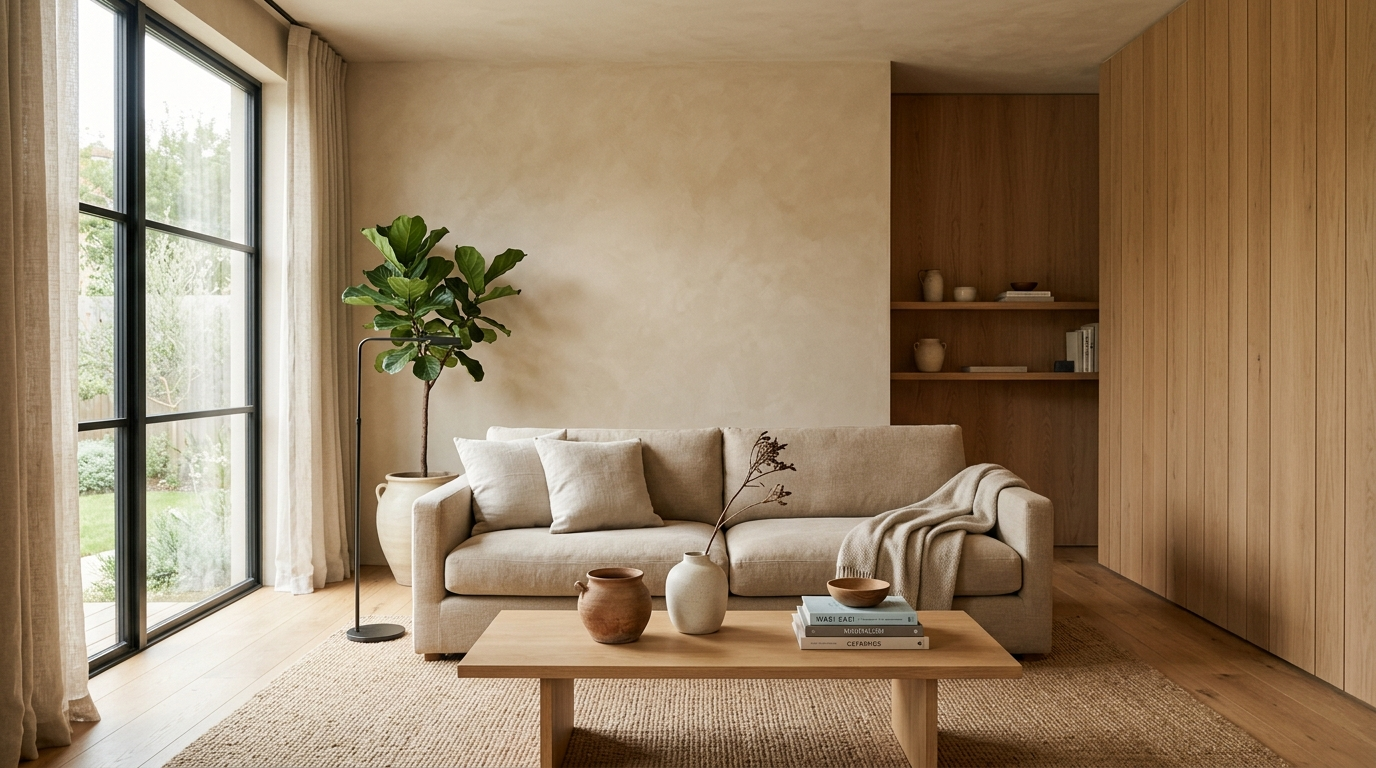
Midiminimalism is the middle ground between minimalism and maximalism. It keeps the uncluttered restraint of a minimalist room, then adds tasteful touches of character: warmth, texture, art, books, and objects that mean something. It sits a comfortable step back from the layered grandmacore look at the maximalist end. The name says it plainly: minimalism that stopped at the halfway mark instead of stripping the room bare.
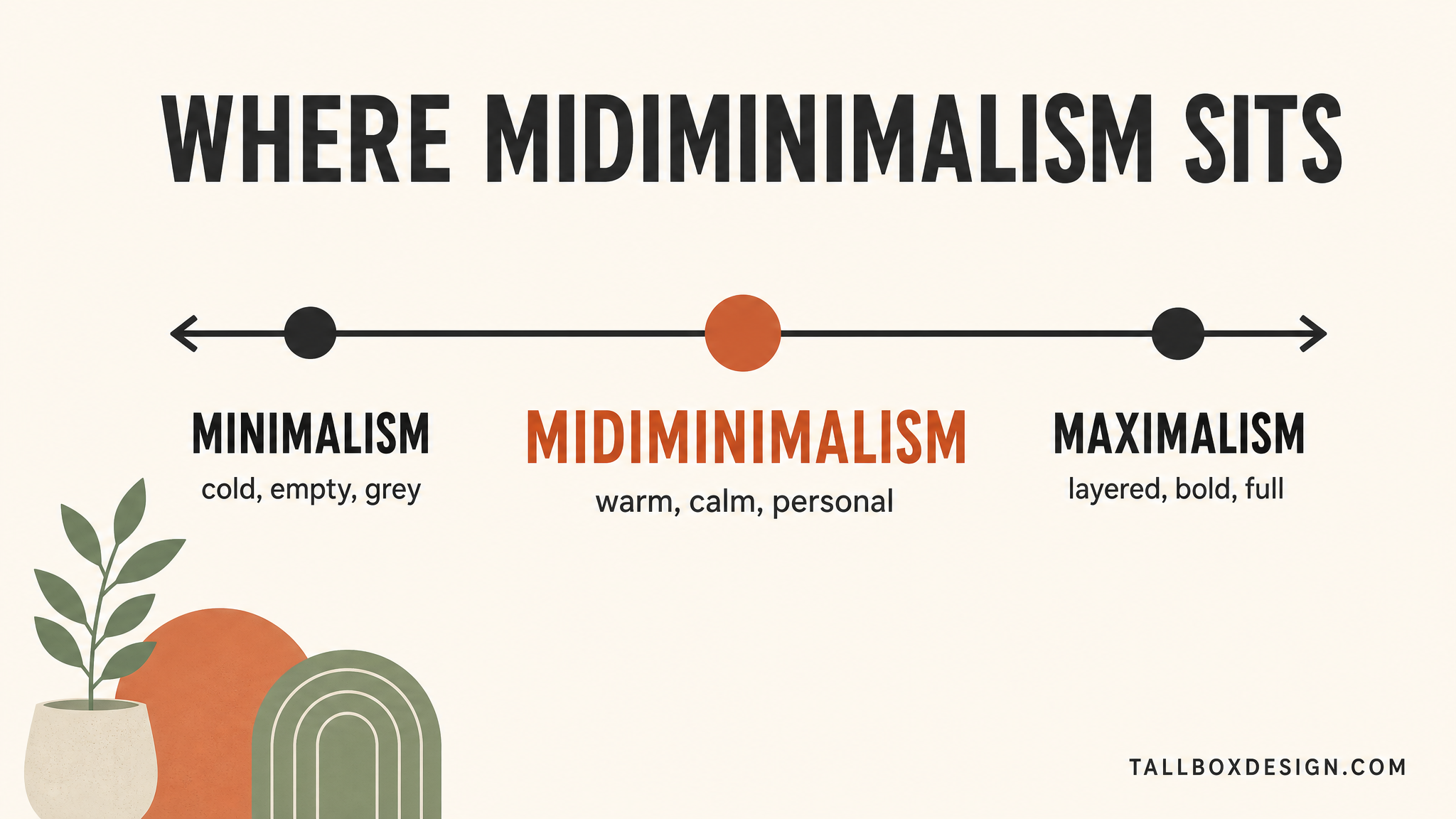
Calm without coldness is the goal. A midiminimalist room still breathes, but it reads as lived-in and personal rather than empty and generic. Think fewer objects than maximalism, but warmer surfaces and more soul than strict minimalism ever allowed.
Why is cold minimalism falling out of favor?
Grey, empty rooms started to feel more like showrooms than homes. After years of stripping everything back, homeowners are reacting against spaces that photograph well but feel cold to live in, and they want warmth without returning to clutter. The all-white, all-grey palette that defined the 2010s now reads as dated rather than clean.
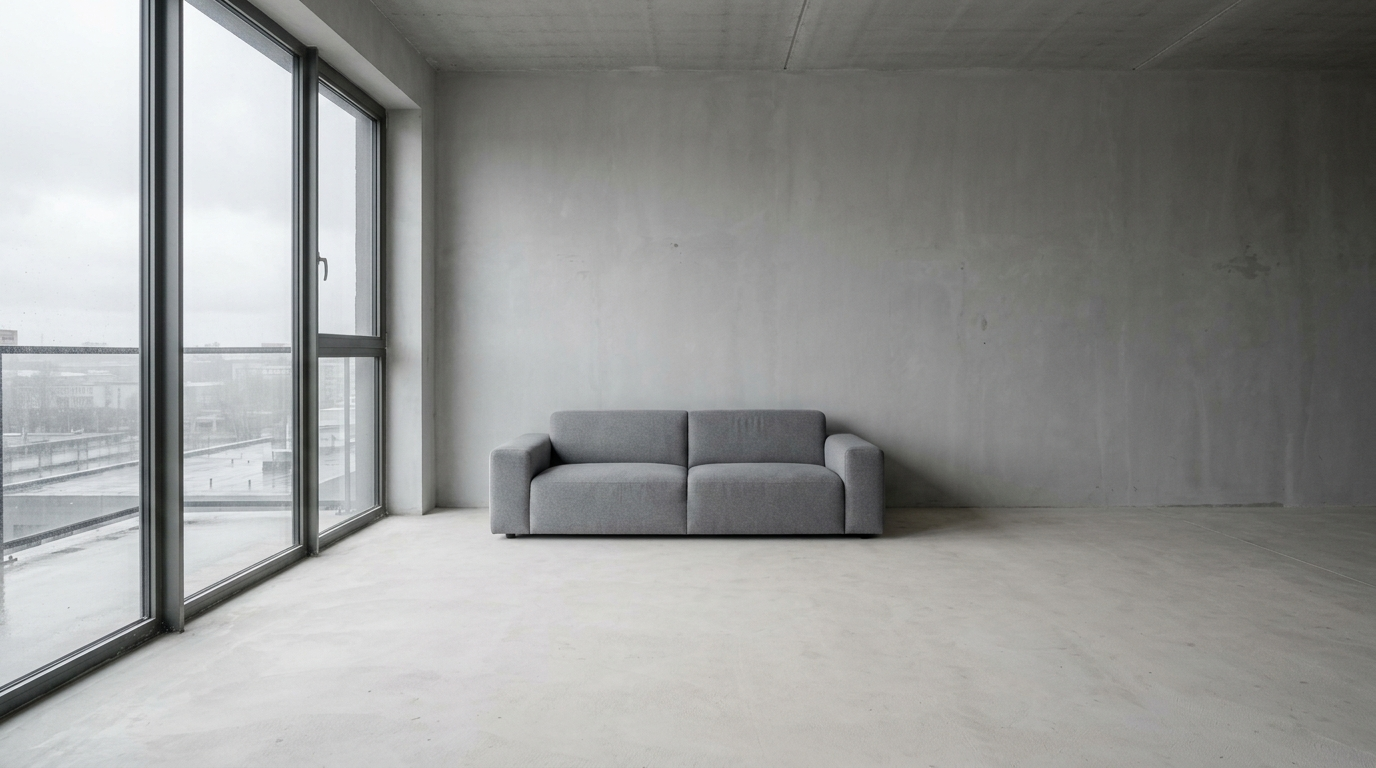
The direction is unmistakable. Homeowners are trading flat white walls and bare rooms for finishes with grain, depth, and a little imperfection.
The deeper driver is emotional. After years of spending more time at home, people want rooms that feel like theirs, warm and a little imperfect, rather than spaces that look like a rental listing. Midiminimalism offers that without asking anyone to fill every surface.
The materials that make a room midiminimalist
Midiminimalism has a recognizable material palette. Each element adds warmth or texture while keeping the room quiet.
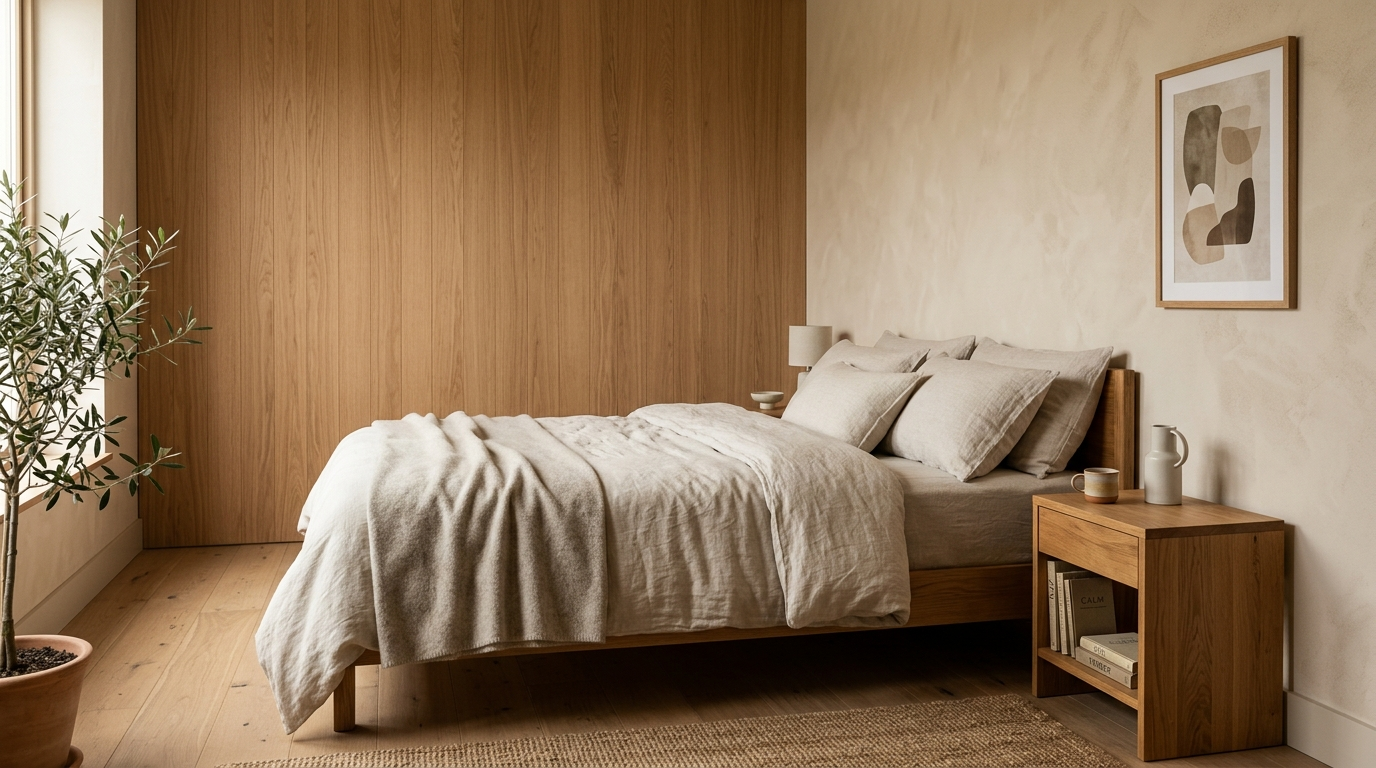
- Warm wood paneling and wood flooring, the anchor of the whole look
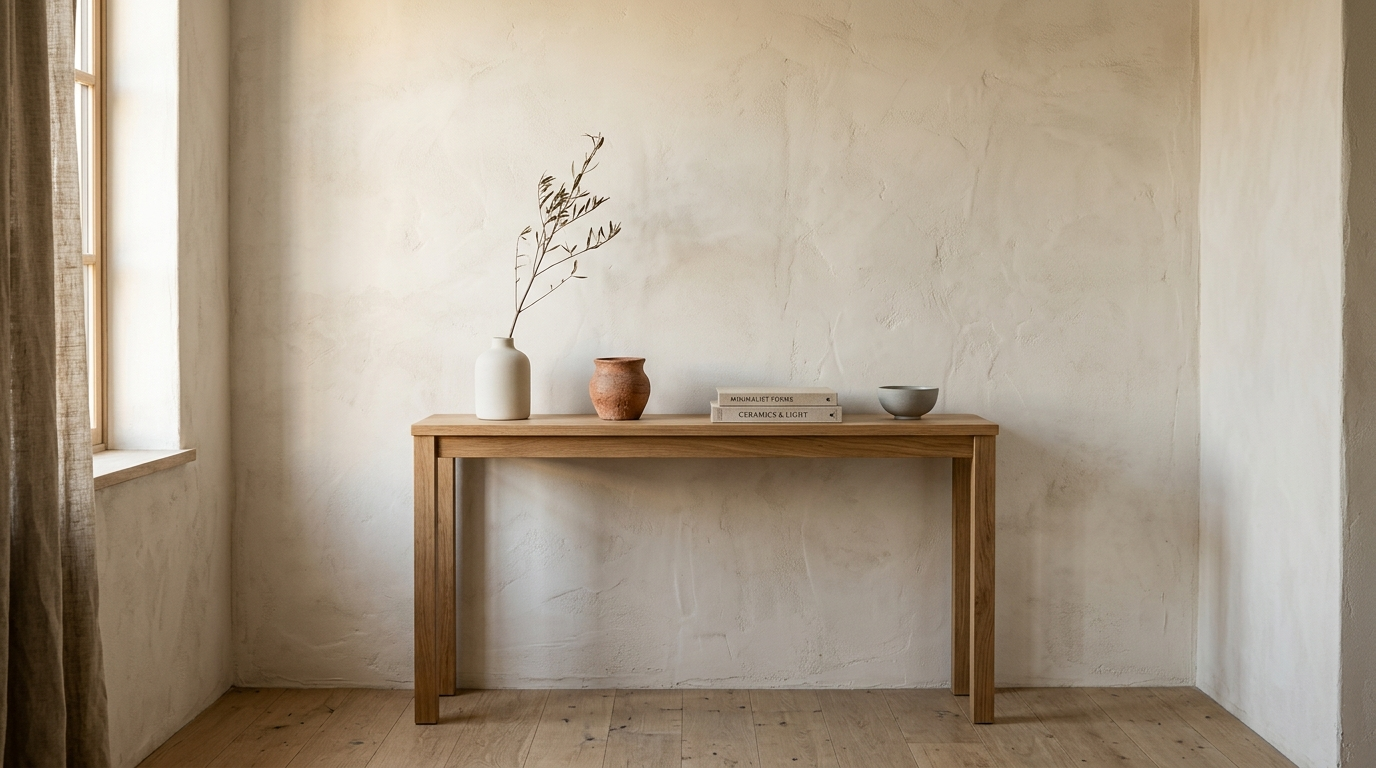
- Limewash paint and Venetian plaster for a soft, chalky, old-world finish
- Whimsical or textured wallpaper, usually on a single wall
- A softly painted ceiling in a warm earth tone instead of default white
- One statement door or a single bold hardware moment
- Books, art, and personal ceramics, arranged with breathing room around them
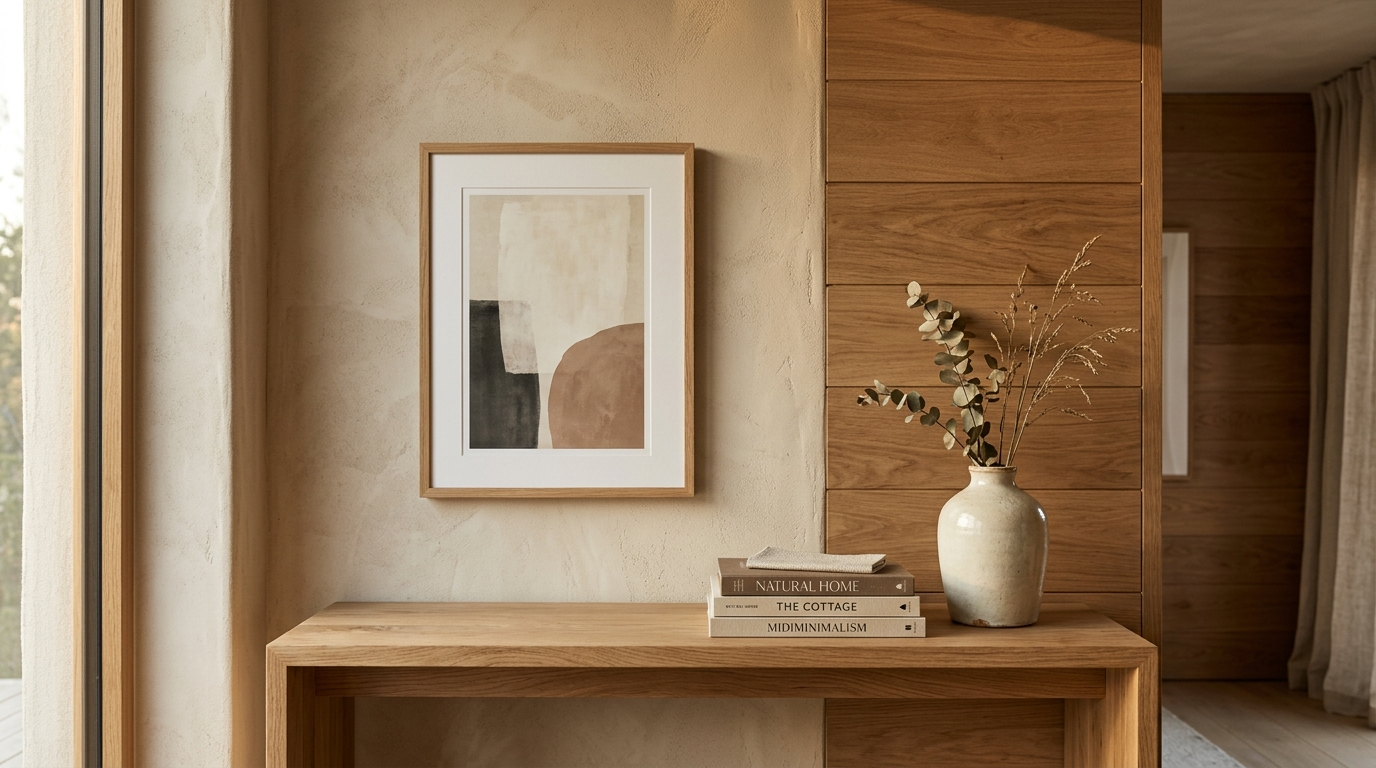
The midiminimalist palette is quiet by design. Wood, plaster, and linen register as texture rather than decoration, which is how midiminimalism adds warmth without adding visual noise or another shelf of things to dust. The trick is choosing two or three of them and letting the surfaces, not the objects, carry the personality of the room.
How to get midiminimalism right
Midiminimalism is easy to overshoot, and the order of the moves matters as much as the pieces themselves. These five steps keep a room on the warm side of the line without tipping it into clutter.
- 1Keep the clean bones. Start from a calm, uncluttered layout, then add warmth to it rather than starting from a full room.
- 2Add one warm material at a time. Wood, plaster, or wallpaper, and let each earn its place before you introduce the next.
- 3Layer texture, not stuff. Linen, wood grain, and plaster add depth without adding more objects to dust.
- 4Give personal objects breathing room. A few meaningful pieces with space around them read as curated, not cluttered.
- 5Allow one bold moment. A painted ceiling or a statement door is plenty; two of them start to compete.
Where visualization helps a midiminimalist room
Midiminimalism lives or dies on restraint, and restraint is hard to judge from swatches on a table. One warm layer too many, and the calm turns busy; one too few, and the room stays cold. The balance point is narrow, and it moves with the size of the room and the light it gets.
Seeing the balance before you commit is the fix. A 3D interior visualization tests the plaster, the wood, and the single bold wall against the room’s real light, which shifts how every warm tone reads. It is far cheaper to move a plaster shade or pull a wallpaper on screen than to repaint a finished room, and the render shows exactly where one more layer would tip calm into busy. On a look defined by knowing when to stop, seeing it first is the difference between calm and cluttered.
Midiminimalism questions, answered
QWhat is midiminimalism?
Midiminimalism is a warm middle ground between minimalism and maximalism. It keeps the calm, uncluttered feel of a minimalist room but adds character through texture, warm materials, and personal objects.
QHow is midiminimalism different from minimalism?
Traditional minimalism strips a room to bare essentials and often reads cold. Midiminimalism keeps the restraint but adds warmth through material and texture, so the space feels lived-in and personal rather than empty. The layout stays calm; the surfaces get their character back.
QWhat colors and materials suit midiminimalism?
Warm neutrals and earth tones, natural wood, limewash and plaster finishes, and soft textiles like linen. The palette stays quiet while the textures do the work, so the room reads as calm even though every surface has something to say.
QIs midiminimalism the same as warm minimalism?
Effectively yes. Warm minimalism and midiminimalism, also spelled midimalism, describe the same 2026 shift toward minimalist spaces that feel warm and personal rather than stark.
QDoes midiminimalism work in a small space?
Yes, and it may suit small rooms best. Because it keeps the uncluttered layout of minimalism, a compact space stays open, while the warm materials stop it from feeling stark or cramped.
The takeaway
Midiminimalism is minimalism that finally warmed up: the calm layout, plus the wood, plaster, and personal objects that make a room feel like someone lives there. The skill is restraint, adding just enough character to lose the coldness without losing the calm.
Start from clean bones, add one warm layer at a time, and stop while the room still breathes. Midiminimalism rewards the edit more than the addition, and the hardest, most valuable move is knowing when the room is done.