Tariffs sit inside the price of every new American home, and two layers of the 2026 tariff stack reset this summer. The 10 percent surcharge on nearly all imports expires July 24, and duties on Canadian lumber are set to fall about ten points in August.
Builders surveyed for the NAHB/Wells Fargo Housing Market Index in early 2025 put the added cost of recent tariff actions at $9,200 per new single-family home. NAHB ties that figure to import exposure: a typical new house contains $174,155 of building materials, and $12,713 of that bill arrives as imports.
What the 2026 tariff stack adds to a new home
A tariff never appears on a closing statement, but it reaches the buyer through the materials list. Framing lumber, structural steel, copper wire, and imported fixtures each carry their own duty layer, and builders fold the total into the asking price.
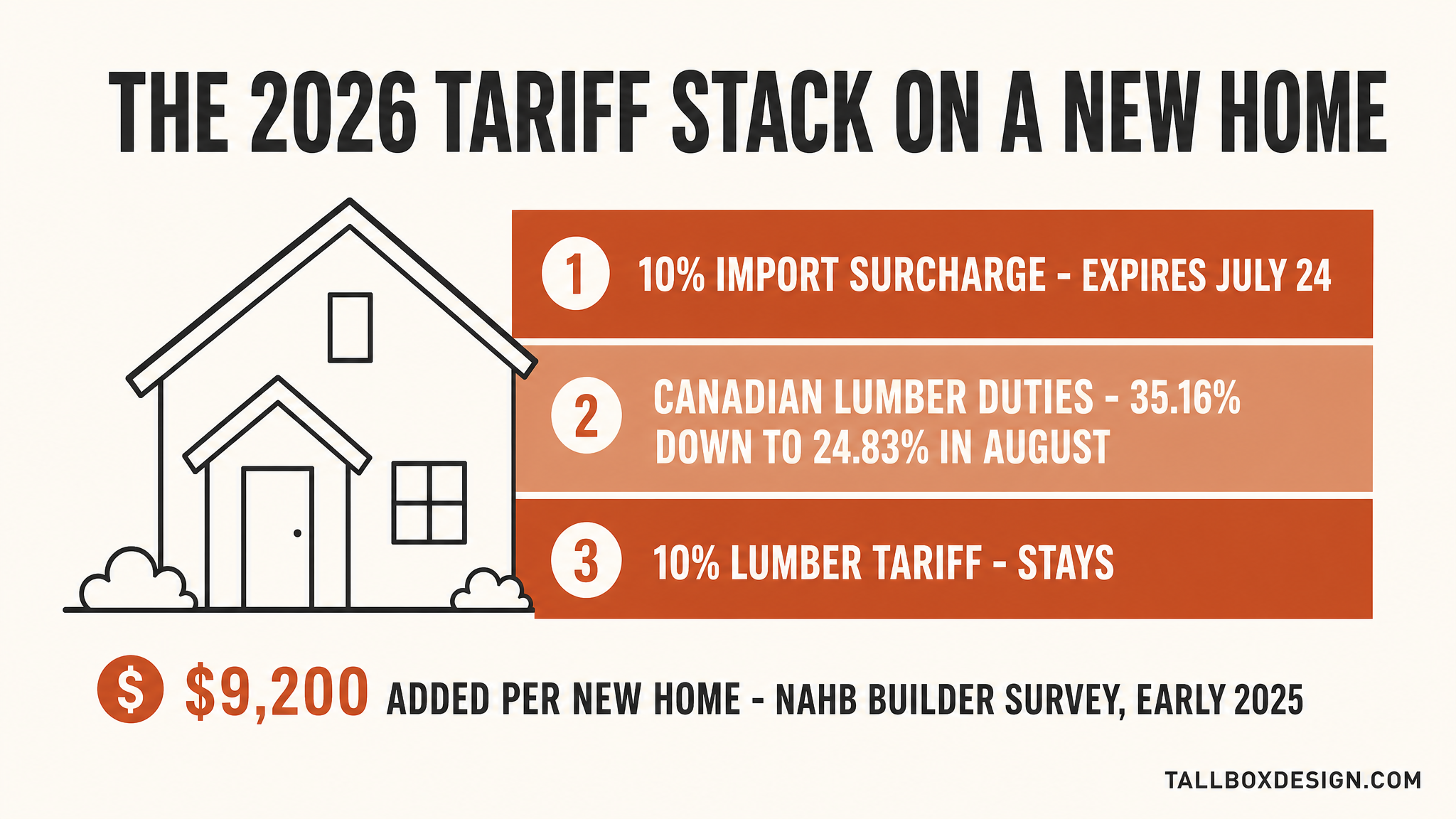
Each tariff layer moves on its own clock. The import surcharge runs on a statutory deadline, the Canadian duties on an annual recalculation, and the lumber tariff on a national-security order. A build budget signed this month can meet three different rate environments before drywall goes up.
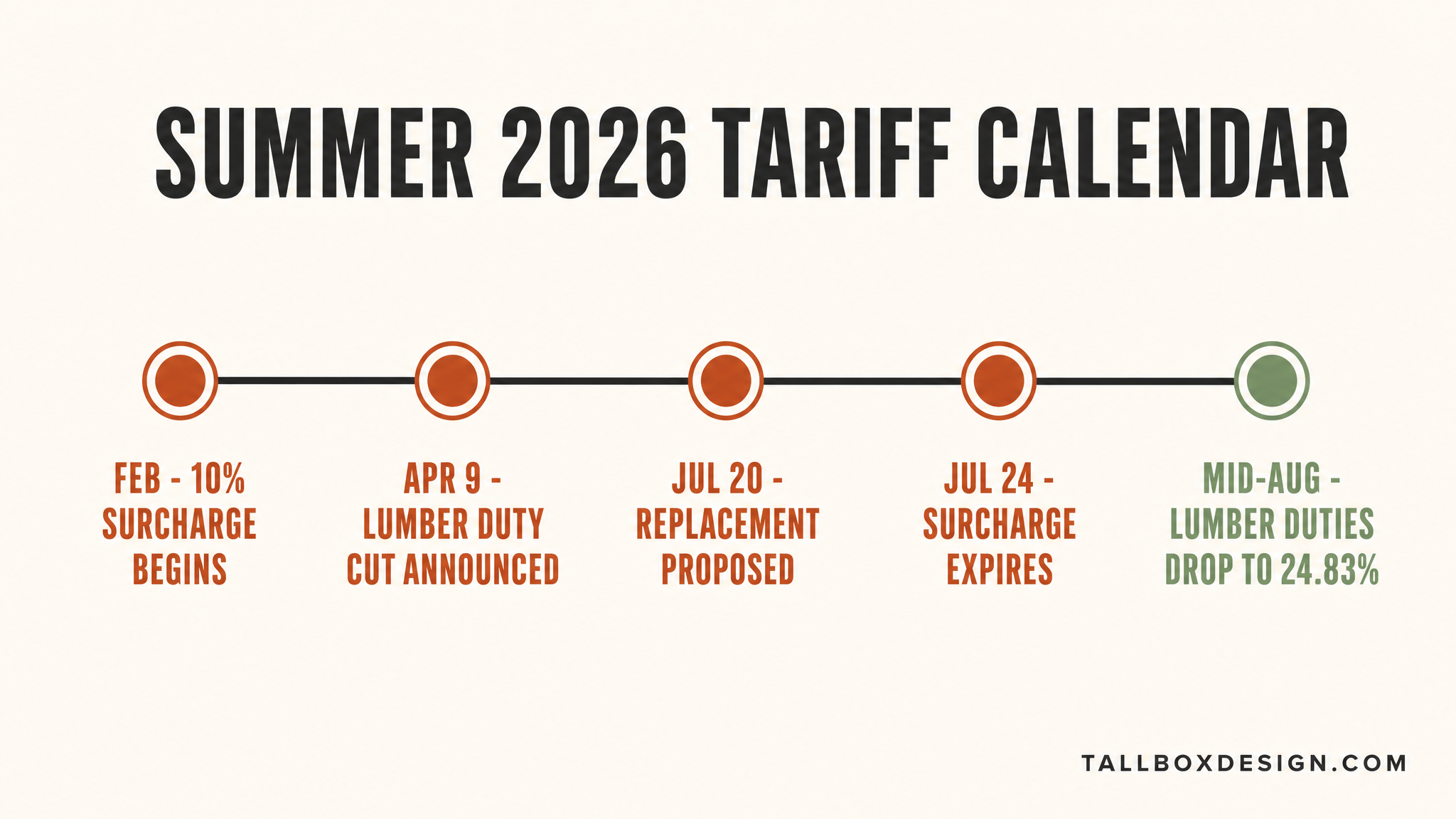
The summer 2026 tariff calendar for building materials
Five dates govern what building materials cost to import this year. All five are public, which makes the calendar more useful to a planning household than any forecast.
- 1February 2026. A 10 percent surcharge lands on nearly all US imports under Section 122, a trade law that caps import surcharges at 150 days.
- 2April 9 to 13, 2026. The Commerce Department publishes preliminary results of its seventh Canadian softwood review: combined duties recalculated at 24.83 percent, down from 35.16.
- 3July 20, 2026. Target date for USTR to complete a proposed replacement: 12.5 percent duties on imports from 46 countries. Proposed, not enacted.
- 4July 24, 2026. The Section 122 surcharge expires at 12:01 am Eastern. The 150-day clock runs out, and only Congress could extend it.
- 5Mid-August 2026. The lower Canadian lumber duties take effect once the review is finalized, roughly 120 days after the April announcement.
Why are Canadian lumber duties falling while lumber prices stay high?
Canadian lumber duties are falling because of accounting, not politics. The Commerce Department recalculates antidumping and countervailing rates against actual sales data every year, and the seventh review cut the antidumping half from 20.56 to 10.66 percent.
A separate 10 percent national-security tariff on softwood lumber, in place since October 2025, is untouched by the Commerce review. Canadian lumber therefore drops from roughly 45 percent in total border costs to roughly 35, a real cut that still leaves a third of the price at the border.
Source: US Commerce Department seventh administrative review, preliminary results (April 2026), via NAHB; USTR proposal coverage, July 2026. Preliminary figures for planning context, not customs advice.
The scheduled duty cut has not yet reached the lumber yard. Madison’s Lumber Price Index sat 5.1 percent above last year in the week of July 3, its highest level since August 2025, with import costs and tighter supply pushing it higher.
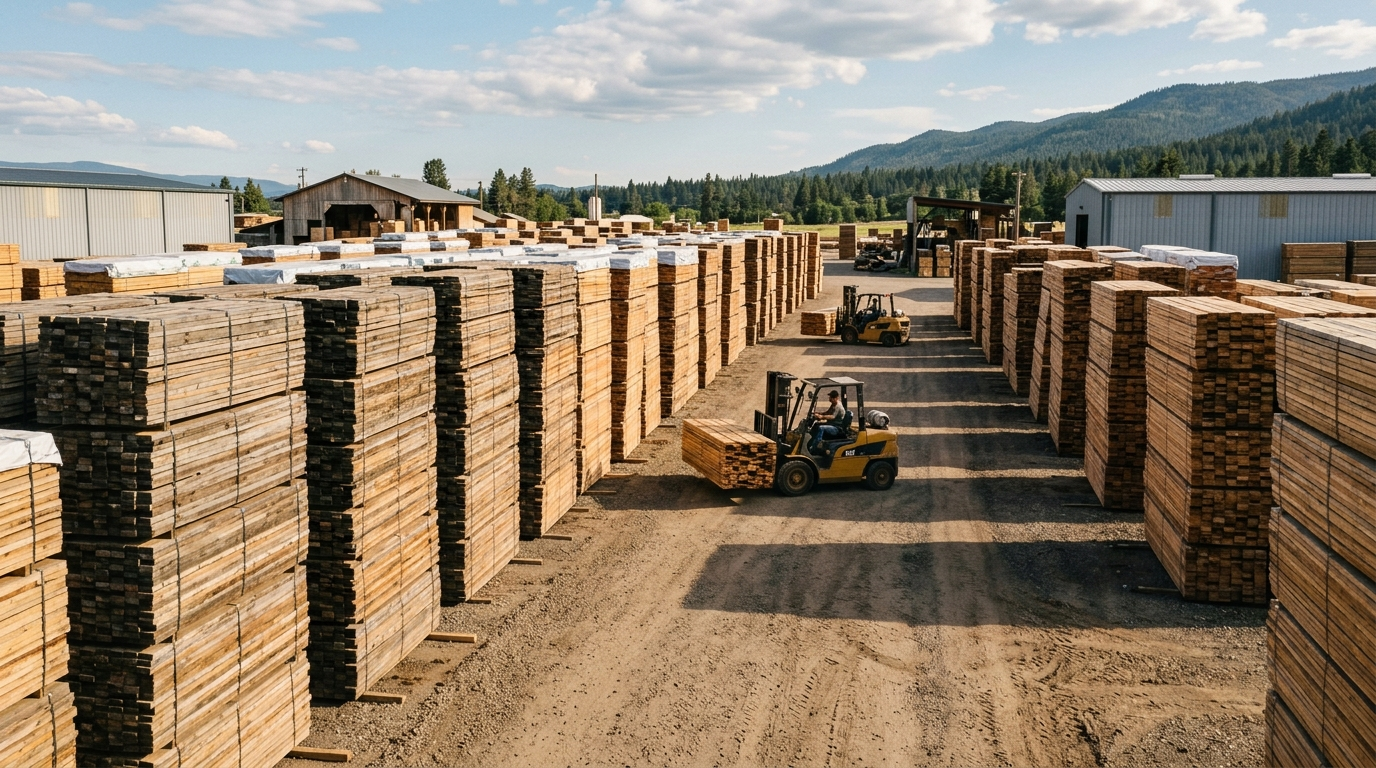
How to plan a build budget around tariff swings
A household planning a build cannot control trade policy, but it can control how the contract meets it. Four moves keep a 2026 budget honest, whether the project is a full house, a kitchen, or a backyard ADU.
- ✓Budget a range, not a number. Price the materials list at today’s costs and carry a contingency line, because at least two duty rates on that list change within weeks.
- ✓Read the escalation clause. A fixed-price contract keeps tariff risk with the builder; an escalation clause passes materials increases to you. Know which one you are signing before July 24.
- ✓Time large orders against the calendar, not headlines. The five dates above are public. A lumber package ordered in mid-August can price differently than one ordered in mid-July.
- ✓Lock the design before the order list. The most expensive material decision is the one made twice: a late layout change re-buys framing at whatever the new rate is. Our clients pre-test layout choices with 3D architectural visuals before committing an order.
Tariff costs collide with a soft housing market. Builders are discounting finished homes and offering incentives, a dynamic we mapped in the new-home glut report. A buyer can hold both facts at once: materials cost more to import, and finished inventory is negotiable.
Tariff questions homebuyers and builders ask
Four questions dominate homebuyer and builder conversations in July 2026, and each answer turns on a dated rate change, not an opinion.
QWill new homes get cheaper after July 24?
No, not automatically. The expiring surcharge is one of three tariff layers, a proposed 12.5 percent duty on 46 countries could replace it within days, and builders reprice slowly. The August lumber-duty cut is the more direct relief for framing costs.
QHow much do tariffs add to the cost of a new house?
Builders surveyed for the NAHB/Wells Fargo index in early 2025 estimated $9,200 per new single-family home. The tariff exposure sits in the $12,713 of imported materials inside a typical $174,155 materials bill, per NAHB.
QDo the falling Canadian lumber duties remove lumber tariffs?
No. The Commerce review lowers antidumping and countervailing duties to 24.83 percent, while the separate 10 percent Section 232 lumber tariff stays. Canadian lumber still carries roughly 35 percent in total border costs after the cut.
QShould I wait until August to order lumber?
Waiting pays only if the final review lands on schedule and yards pass the cut through. Madison’s index was still climbing into July, so a signed fixed-price contract today can beat a hoped-for discount next month.
The takeaway on 2026 lumber tariffs
The 2026 tariff story for homebuyers is a stack, not a headline: a surcharge expiring July 24, a proposed replacement behind it, and a ten-point lumber-duty cut landing in August. Each layer pulls a build budget in a different direction.
Price the materials list, read the escalation clause, and lock the design before the order goes in. A dated calendar beats a guess.