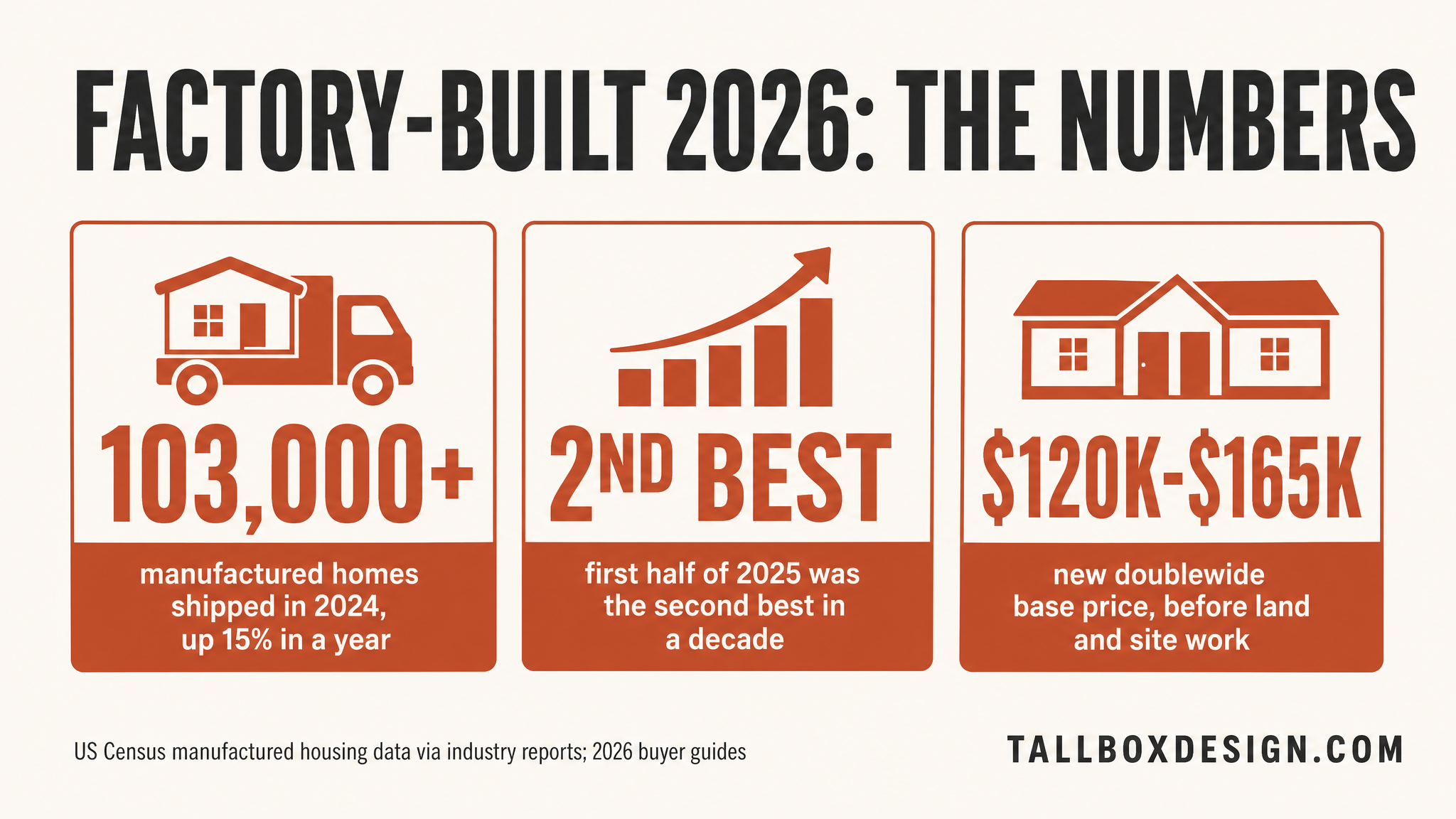
American factories shipped more than 103,000 new manufactured homes in 2024, up over 15 percent, and 2025 kept climbing while site-built construction stalled. Factory-built housing is turning into the affordability play of the decade.
The 103,000-home figure comes from the federal manufactured housing survey that the industry and the St. Louis Fed both track. First-half 2025 added 53,800 more homes, up 5 percent and the second-highest first half of the past decade, behind only 2022.
Manufactured, modular, or site-built: what the labels mean
Factory-built is an umbrella label for two different products. A manufactured home is built entirely in a factory on a permanent chassis under the federal HUD code. A modular home is built as factory modules to the same local building code as any site-built house, then set on a permanent foundation.
Base prices compiled from published 2026 US buyer guides; land, foundation, transport, and site work are additional. Site-built figure reflects national sale medians. Planning ranges, not quotes.
A factory-built home’s code label matters more than its factory origin. A modular house is legally the same house as its site-built neighbor once the modules are set. A manufactured home lives under its own federal standard, which shapes where the home can go and how it is titled.
Why are factory-built homes surging?
Factory-built homes are surging because the affordability math tipped in the factory’s favor. With site-built sale medians above $400,000, a $120,000 to $165,000 doublewide base price before land and site work reads less like a compromise and more like the only first rung left on the housing ladder.
Texas led every state in the first half of 2025 with roughly 9,300 new manufactured homes. The South and Southwest absorbed most of the new supply, and the Midwest jumped 17 percent on Michigan’s growth.
The old mobile-home stigma is fading with the shipment numbers. NPR reported in March that more cities and counties are turning to factory-built homes for affordable housing, treating the production line as a solution rather than a shortcut.
How a modular home gets built
A modular build runs on two clocks at once. The factory frames, wires, plumbs, and finishes the modules indoors while the site crew clears, grades, and pours the foundation, so neither schedule waits on the other.
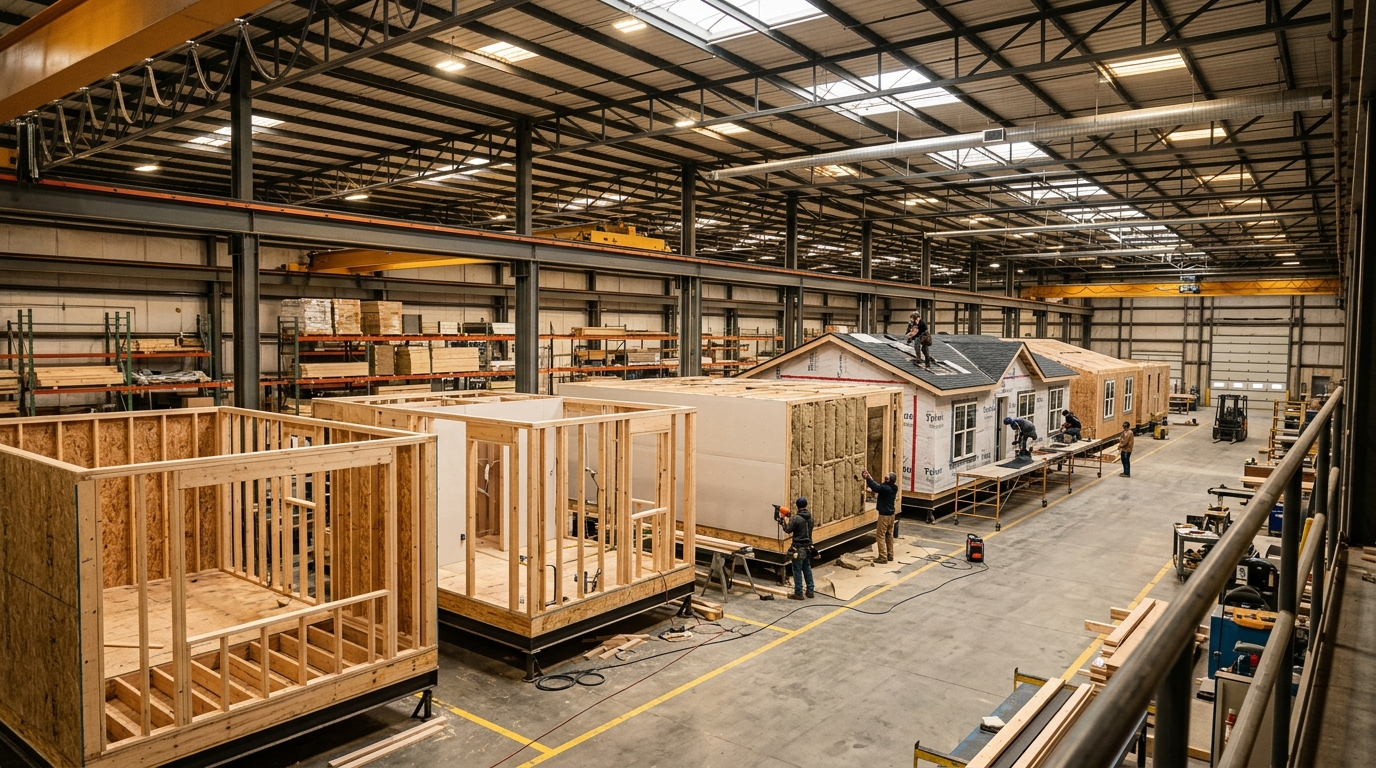
Quality control is the quiet advantage of the factory floor. Every module passes fixed inspection stations where jigs hold the framing square and materials stay dry indoors. Approved inspectors sign off inside the plant, so defects surface before a module is wrapped for the road.
Module transport is its own engineering job. Each module rides a flatbed under a weatherproof wrap, oversize loads travel surveyed routes with escort vehicles, and the delivery plan is locked before the factory cuts the first stud.
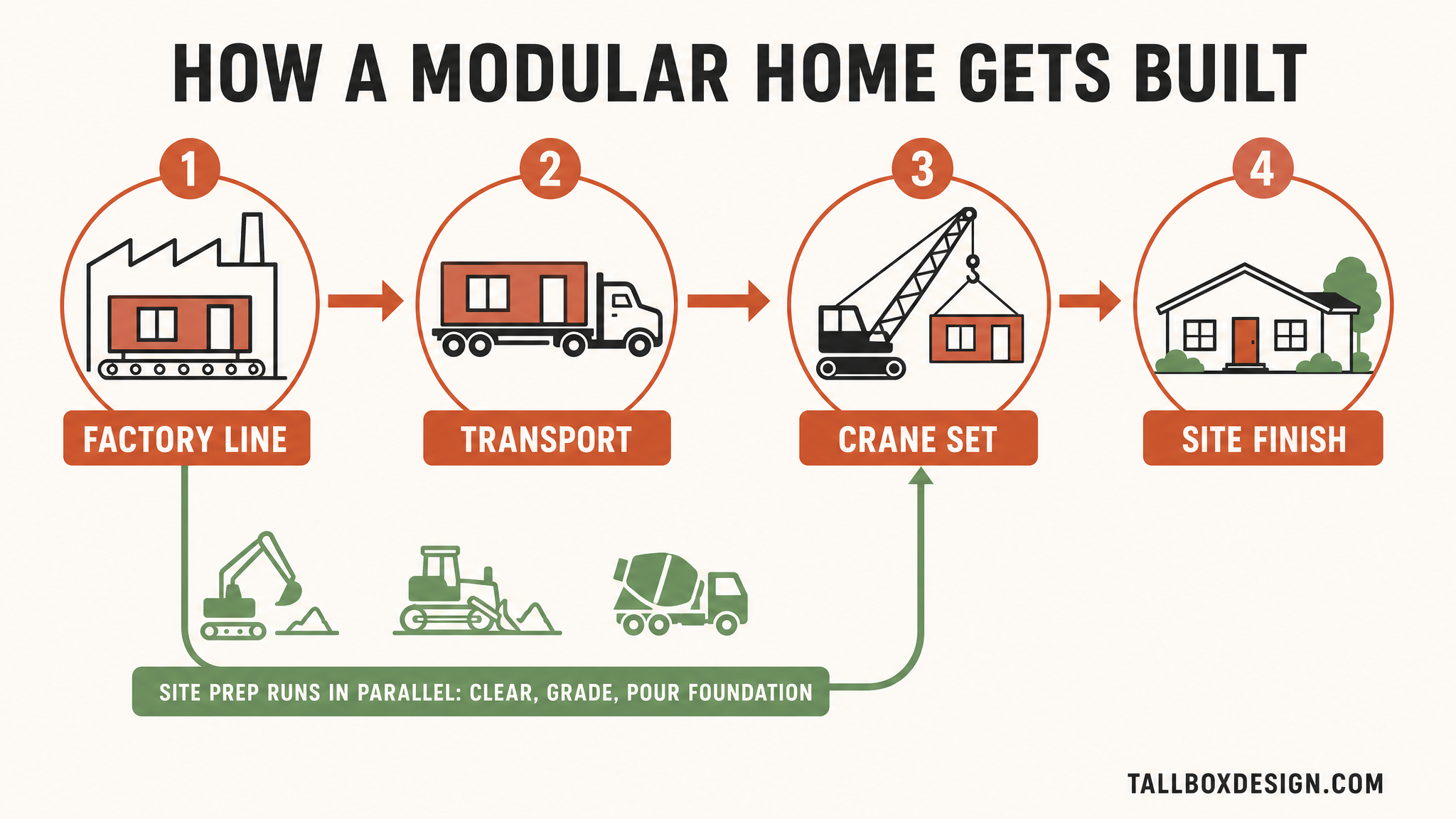
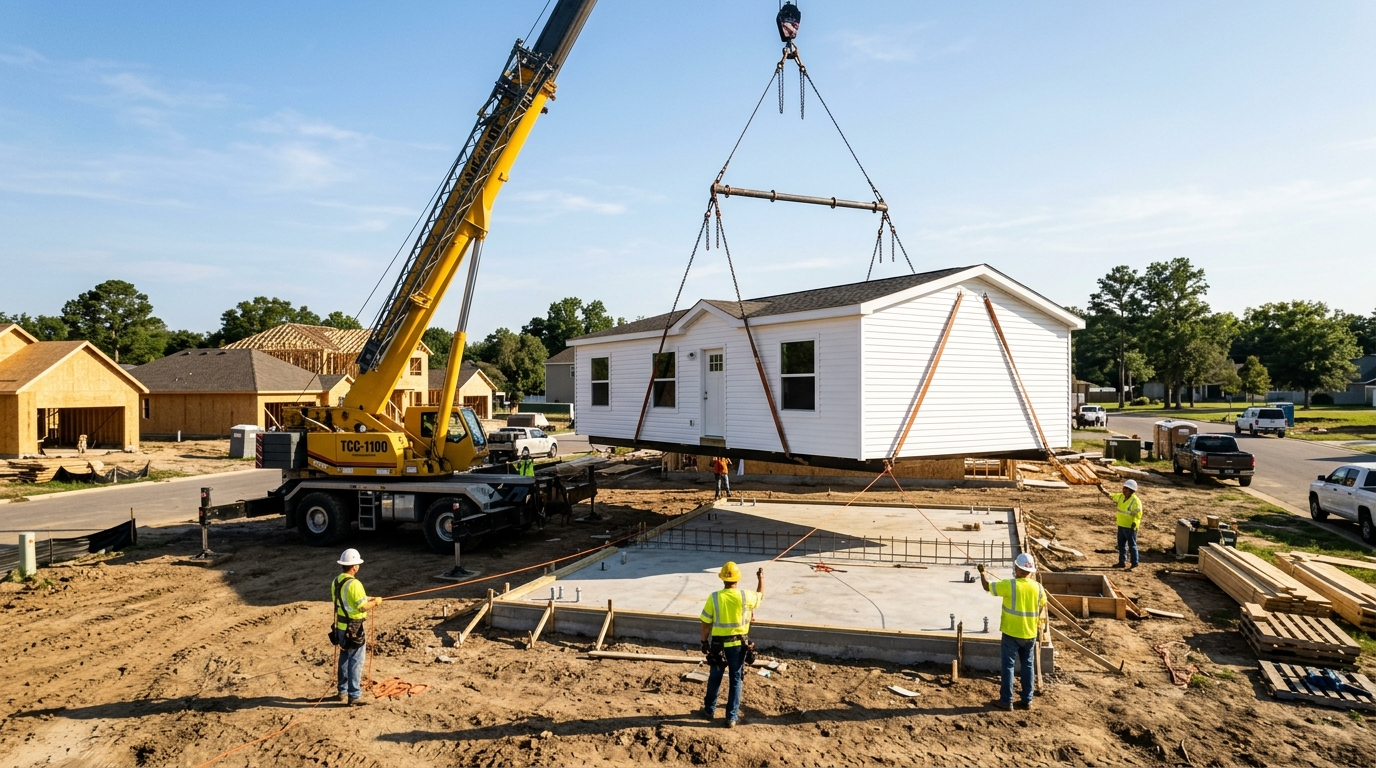
Crane day compresses months of framing into hours: trucks deliver the modules, a crane sets them on the foundation, and crews weather-seal the joints. Site finishing (utility hookups, stairs, porches, final trim) closes the gap between a stack of boxes and a house.
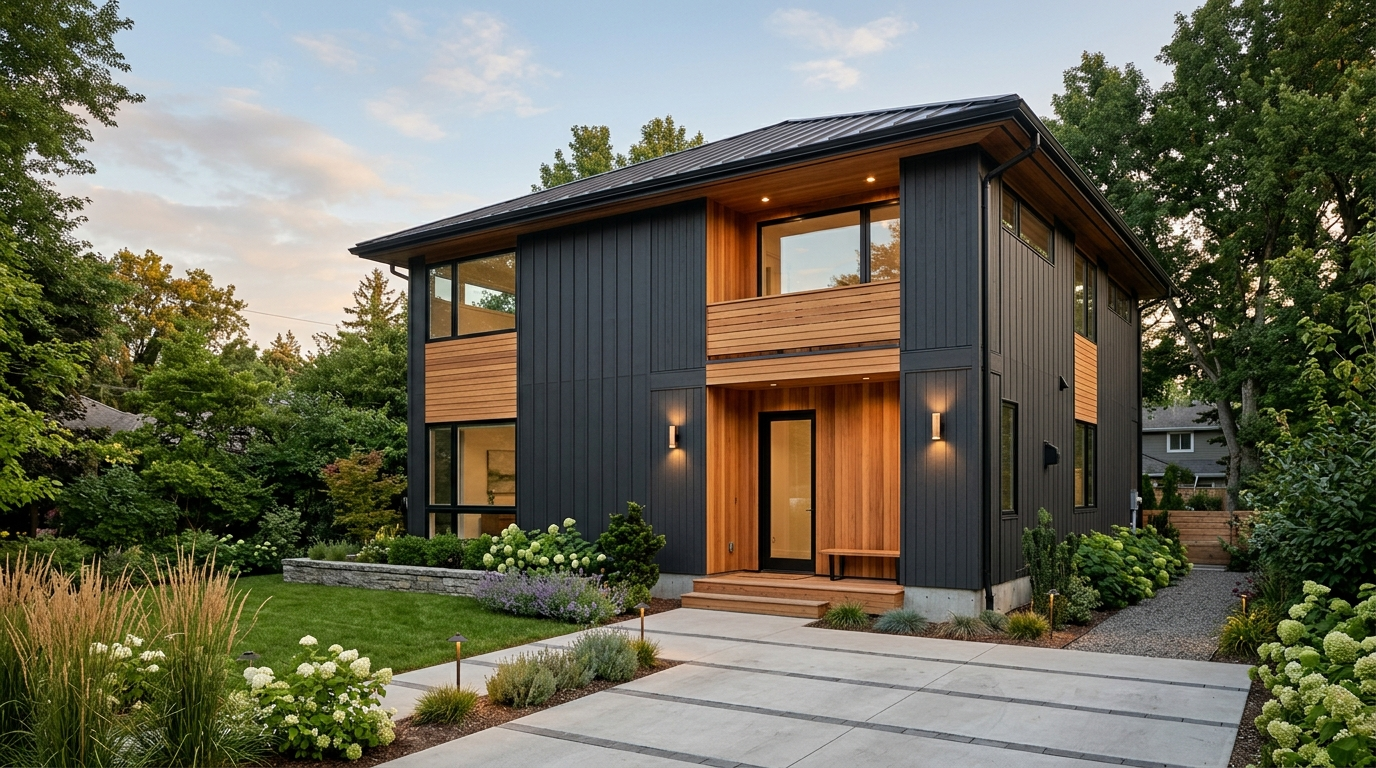
A factory-built buyer commits before the house exists, the same leap that build-to-order buyers make on site-built homes. Plants and dealers bridge that gap with model tours, floor plans, and architectural renders of the finished setting, because the product on the line does not photograph like a home yet.
What to check before you buy a factory-built home
Factory-built diligence differs from a resale inspection. The house arrives with a paper trail from the plant, so the risk shifts to everything around it: the code label, the lot, the delivery route, and the local rules. Five checks cover most of the surprises.
- ✓Confirm the code label. A HUD-code manufactured home and an IRC-code modular home are different legal products, and the label drives where each can be placed and how it is titled.
- ✓Settle the land question first. Owning the lot and leasing a community space are different economics, and the choice shapes the home’s long-term cost more than the sticker price does.
- ✓Walk the delivery route. Modules travel by truck and arrive by crane, so tight roads, low wires, and steep lots can add cost or rule a site out entirely.
- ✓Read the local zoning before you order. Jurisdictions either welcome factory-built housing or restrict it by type, so the county’s rules decide the shortlist before any catalog does.
- ✓Vet the plant, not just the dealer. The factory’s build quality and warranty carry the house, so ask which plant builds the model and what its warranty covers.
Zoning rules vary more than any other item on that checklist, shifting by state, by county, and sometimes by street. A HUD-code home may be limited to designated districts while a modular home generally passes anywhere site-built housing does, because zoning boards read the code label first.
Factory-built home questions buyers ask
QIs a manufactured home the same as a mobile home?
Yes, in lineage: manufactured home is the legal term for factory homes built after the federal HUD code took effect in June 1976. Homes built before that date are mobile homes; everything after meets a national construction standard.
QAre modular homes cheaper than site-built houses?
Yes, usually at the base price: published 2026 guides put modular homes at $160,000 to $320,000-plus before land and site work, under site-built medians above $400,000. Land, foundation, and finishes can narrow the gap.
QDo factory-built homes hold their value?
The land under a factory-built home decides most of its value. A modular home on an owned lot behaves like any house in its market, while a home on a leased community space carries the lease’s economics. The building method matters less than what sits under it.
QHow fast does a modular home go up?
A modular home goes up faster than the calendar suggests, because the factory and the site work at the same time. The modules take shape indoors while the foundation cures, and crane day sets the whole shell in hours rather than weeks of framing.
The takeaway on factory-built homes
Factory-built housing shipped over 103,000 homes in 2024 and kept climbing through 2025, while site-built medians sat above $400,000. The production line has become the housing ladder’s first rung.
Sort the code label, the land, and the delivery route before the catalog. A factory can build the house; only the lot decides what it becomes.