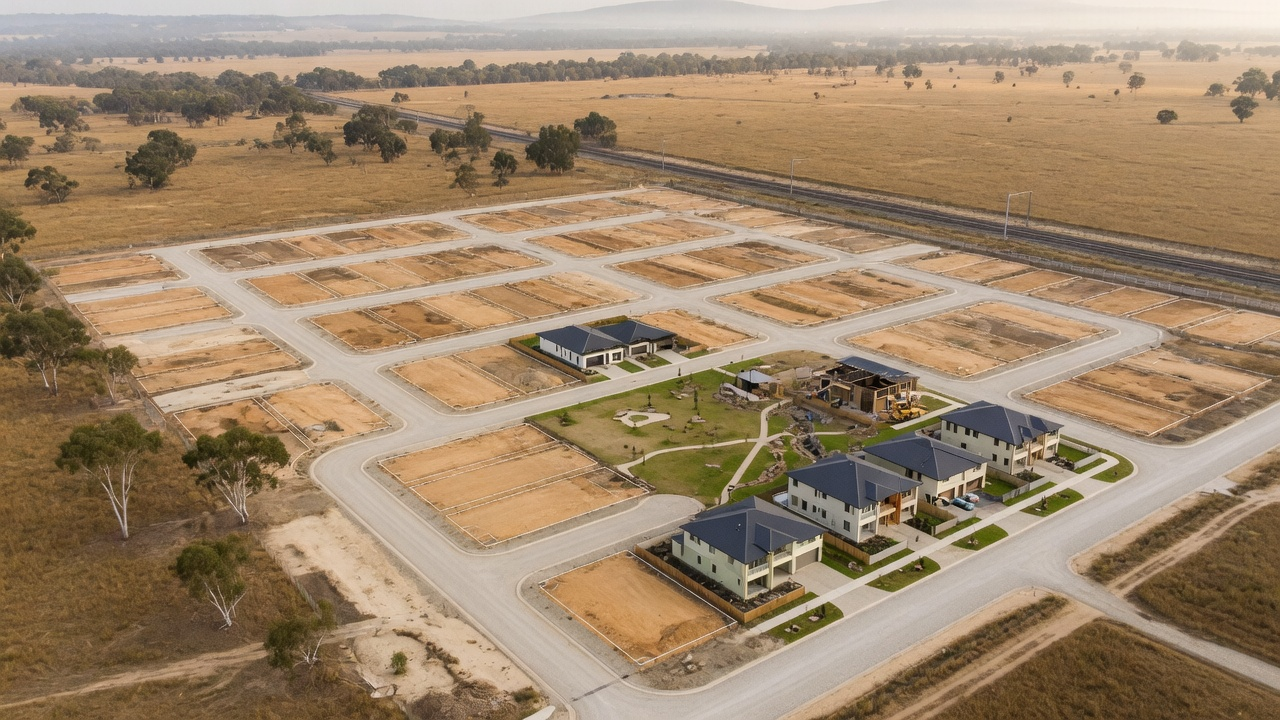
South Australia’s Playford Alive programme is reserving at least 400 blocks for eligible first-home buyers. When a buyer chooses a future lot before every street, service and neighbouring home exists, a house render is only part of the information needed to read the neighbourhood.
The June announcement and newer programme updates describe funding, staged releases and buyer-priority rules. They also show why site-context imagery matters: it can explain what is visibly planned around a home without pretending to confirm price, eligibility, construction timing or future value.
The buyer decision: treat the house image, lot plan, release information and official eligibility record as different documents. Each answers a different question.
What do the current Playford Alive records actually say?
The public record has three layers. The South Australian government announced a $50 million infrastructure package in June. The federal agreement sets milestones for first-buyer sales and homes. The current programme page explains how releases and reservations operate for people considering a block now.
| Record | What it establishes | What an image should clarify |
|---|---|---|
| SA housing announcement, 2 June | $50 million toward enabling infrastructure and a target of 400 homes by the end of 2027. | Where future roads, services and open space sit in relation to the lots. |
| Federal funding agreement | 400 first-buyer sales by 31 December 2027, with homes reserved for first buyers for at least three months after completion. | The difference between a future lot, enabling works and a completed home. |
| Current Playford Alive programme page | A minimum 400 first-buyer blocks, staged releases, a 90-day exclusive period and current price information that is subject to change. | Which release, block and surrounding context a buyer is actually assessing. |
Sources: South Australia Department for Housing and Urban Development; 100,000 Homes for First Home Buyers Agreement, Appendix 6B; Playford Alive First Home Buyer Program. Current programme details can change.
Why should a buyer date every lot-size and price figure?
The June government announcement described future allotments from 140 to about 450 square metres. The current Playford Alive programme page describes a minimum 400 first-buyer blocks from 205 to about 560 square metres, with prices from AUD$225,000 that were stated as correct in June and subject to change.
Those figures should not be blended into a single promise. A policy announcement describes a programme at one point in time, while a sales page describes the blocks and conditions available through its current release.
The useful comparison is not which number sounds better. It is whether the date, release and physical lot shown in the image match the record a buyer is reading.
Why is a first-buyer release different from a finished neighbourhood?
A land release gives a buyer a decision before the place is fully built. The programme’s reservation period and staged-release language describe access to a block, not a completed streetscape, a finished service network or the exact appearance of every adjoining home.
That distinction is practical. A hero render can make one façade feel tangible, while the buyer still needs to understand where the street arrives, what sits beyond the lot and which works remain on the programme.
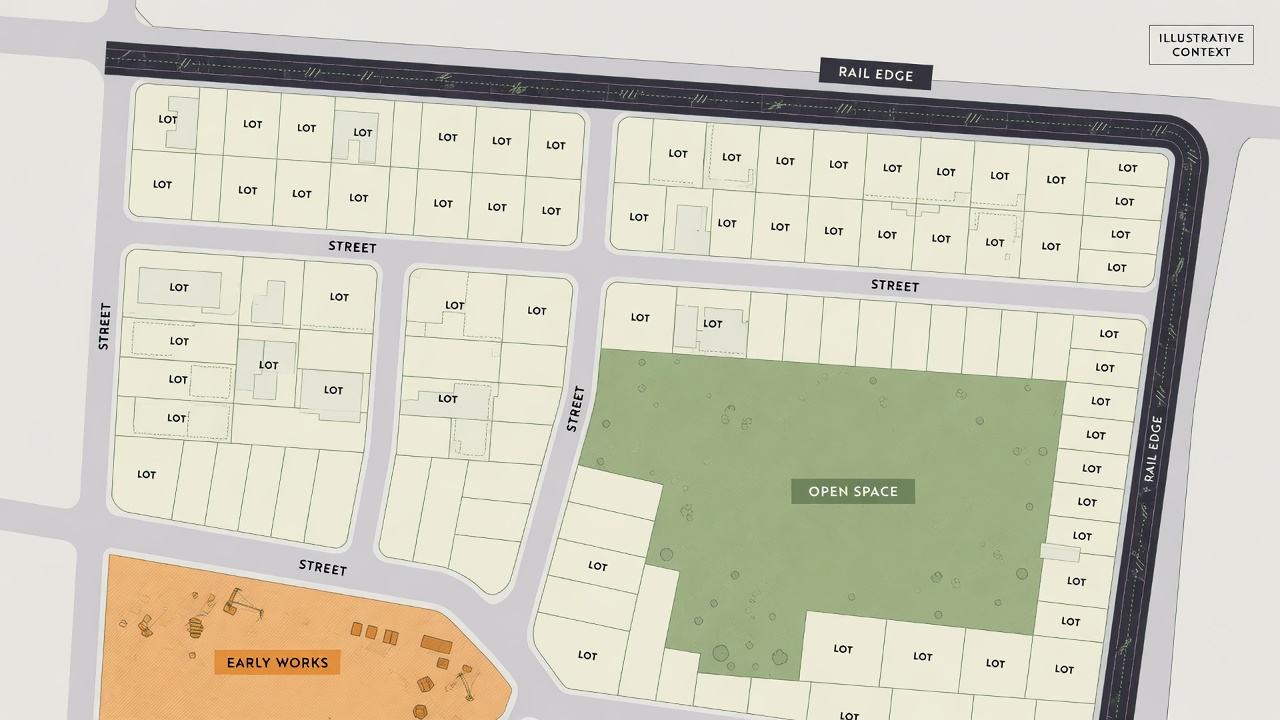
Which five relationships should a future-neighbourhood image show?
- Lot to street: driveway position, frontage and the street edge shape everyday arrival.
- Lot to open space: a pocket park, drainage corridor or shared green edge should be located, not used as generic scenery.
- Lot to services: enabling infrastructure means the road, water, sewer and power works that make future lots usable.
- Lot to surrounding movement: rail, collector roads and pedestrian routes are part of the site context even when the house image crops them out.
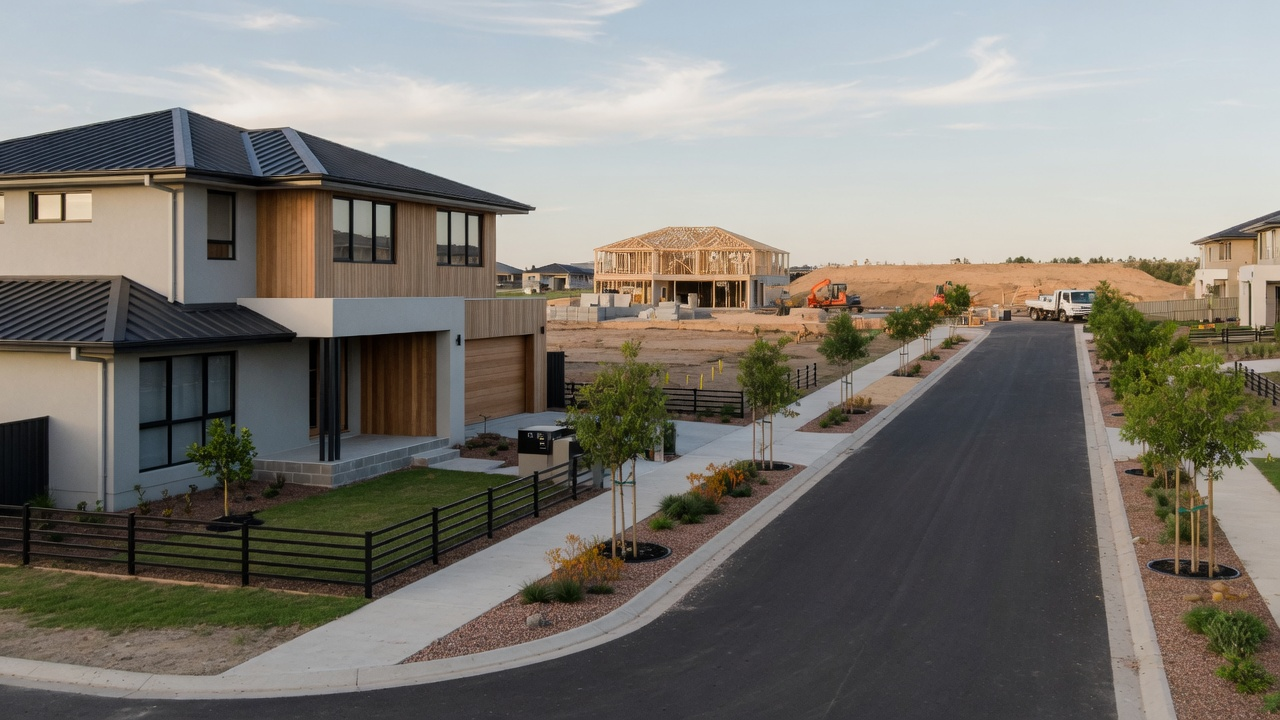
- Home to construction stage: the image should distinguish a completed house from a planned street or future neighbouring parcel.
Tallbox’s visualization boundary: architectural imagery can make these relationships legible. It cannot replace a current contract, price list, eligibility check, planning approval or construction update.
How does site context prevent the wrong comparison?
Two compact homes can look similar in an isolated render and still sit in meaningfully different contexts. One may face a pocket park, another a collector road. One may have an established footpath and services, another may be shown beside future works. The home image alone cannot carry those distinctions.
A useful visual sequence moves from the broader plan to the individual lot and then to eye level. The plan identifies the relationship. The lot view explains orientation and frontage. The street view gives a reader a grounded sense of arrival. Each view should label whether its streets, landscape and neighbouring homes are existing, under construction or illustrative.
Why is this a communication problem, not only a planning problem?
Planning records establish the formal route for a project. Buyer-facing material does another job: it helps a person picture daily life before that place exists.
The risk comes when the second job is made to look like the first. A polished image can feel more definite than it is, especially when the surrounding streetscape is still a proposal or a construction sequence.
Clear labels make the distinction usable. A caption can say that a view is illustrative, a diagram can separate planned and existing elements, and a nearby link can take the reader to the current release. Those choices do not reduce the appeal of an architectural image. They make the image more credible because its limits are legible too.
What should a buyer check beside the image?
The most useful next step is to match the picture to the current release. Ask which block is being offered, which roads and services are complete, which elements remain planned and which programme conditions apply to that sale.
The same discipline helps with other early-stage property decisions. Tallbox’s guides to difficult small lots, factory-built housing and site context in home listings all return to the same point: the rendering works best when it shows the condition a reader must actually assess.
What should the selling material say in plain text?
The image should not do all the work. Beside it, the selling material can state the release name, block identifier, date of the plan, whether roads or services are shown as existing or future, and where a buyer can find current conditions. That is more useful than a broad claim that the neighbourhood is connected, affordable or complete.
For a future-neighbourhood project, precision protects both the buyer and the image. It gives the render a clear job: describe the spatial relationships that a floor plan or price card cannot communicate at a glance. It also leaves the terms of sale with the source that owns them.
The takeaway
Playford Alive’s first-buyer programme turns a future site plan into part of the buyer’s decision. A good image should make the lot’s visible context easier to understand, then leave price, eligibility, delivery and legal terms to the current official and sales documents.