How does short-term rental potential affect home-buying decisions?
Buying a home is a significant financial decision that requires thorough planning and consideration. One factor that is often overlooked is the potential for short-term rental opportunities. Whether you’re purchasing a primary residence, an investment property, or a vacation home, evaluating the viability of short-term rentals can significantly impact your long-term financial success.
The primary benefit of considering short-term rental potential when buying a home is enhanced financial return, especially if the property is in a high-demand location, generating substantial rental income. A secondary advantage involves assessing market demand, local rental regulations, management responsibilities, and personal lifestyle compatibility to ensure the rental strategy aligns with your long-term goals. Evaluating these factors helps you determine the property’s overall suitability and profitability as an investment.

George is a seasoned interior designer and property marketing strategist with over 13 years of experience. He specializes in transforming properties into visually stunning spaces, helping clients recognize the potential and beauty in each property. With an impressive international client base of exciting projects throughout Europe and America.
What are Short-Term Rentals?
Short-term rentals (STRs) are furnished properties rented out on a temporary basis, typically ranging from a few days, typically less than 30 days to several weeks, primarily facilitated through online platforms like Airbnb or VRBO.
They attract travelers, tourists, business professionals, and remote workers seeking flexible, home-like accommodations. Short-term rentals thrive in popular tourist destinations, city centers, coastal areas, and locations near business hubs or event venues, allowing property owners to generate income by charging nightly rates that are often significantly higher than traditional long-term leases.
Before making a purchase, it’s essential to understand what is short-term rental and how it fits into your homeownership or investment strategy.
3 Challenges of Short-Term Rentals
01
of 3
Local Regulations and Restrictions
Many cities have implemented strict regulations on short-term rentals to balance tourism and local housing needs. Some areas require homeowners to obtain licenses, pay additional taxes, or limit the number of rental days per year. Researching local laws is crucial before investing in a property intended for STR use.
02
of 3
Inconsistent Rental Income
Unlike long-term rentals, which offer a steady income stream, STRs are subject to market fluctuations. Factors such as seasonality, economic downturns, and competition can impact occupancy rates and revenue potential. Understanding the differences between long-term vs. short-term rentals can help in making an informed decision.
03
of 3
Increased Maintenance and Management Costs
Short-term rentals require frequent cleaning, maintenance, and guest management, which can be time-consuming and costly. Hiring a property management company can alleviate some of these challenges but typically incurs fees ranging from 25% to 40% of the rental income, thereby reducing overall profit margins. Property owners should anticipate maintenance expenses, which can average around 1.5% of the property’s annual rental income.
Financial Benefits of Short-Term Rentals
01
of 3
Extra Income Stream
Owning a home that allows short-term rentals can provide an additional source of income, helping to offset mortgage payments, property taxes, and maintenance costs. In high-demand areas, homeowners can earn significantly more through STRs compared to traditional long-term rentals.
Short-term rentals (STRs) can generate 2-3 times the monthly income of long-term rentals. Compared to stock investments, which average annual returns of 8-12%, STRs offer higher cash flow but require active management
02
of 3
Flexible Usage
Unlike long-term rental properties, STRs offer greater flexibility. Homeowners can choose to rent their property when they’re not using it, making it an ideal option for those who travel frequently or own vacation homes.
03
of 3
Higher ROI in Certain Cities
Short-term rentals can yield a higher return on investment (ROI) in cities with a strong tourism industry or business travel demand. Cities such as Calgary have seen a rise in STR popularity, making Real estate experts can help you find a property with rental opportunities in a lucrative market like Calgary for investors seeking rental income.
10 Key Factors to Evaluate Before Purchasing a Home for Short-Term Rentals
STRs offer the potential for higher returns but require active management and come with higher risks. Stocks provide a more passive investment avenue with risks tied to market dynamics. Aligning investment choices with your risk tolerance and available time is crucial for achieving financial goals.
Risk Tolerance
Short-Term Rentals (STRs): Investing in STRs involves navigating property management challenges, regulatory changes, and variable occupancy rates, leading to a higher risk profile.
Stocks: Stock investments are subject to market volatility, economic shifts, and company-specific risks, requiring investors to assess their comfort with potential fluctuations.
Time Commitment
Short-Term Rentals: Managing STRs demands significant time for tasks like guest communication, property maintenance, and marketing.
Stocks: Stock investments typically require less day-to-day involvement, though ongoing research and portfolio monitoring are essential.
01
of 10
Location Matters
The success of a short-term rental largely depends on location. Properties near tourist attractions, business districts, or universities tend to perform better. Additionally, proximity to public transportation, restaurants, and entertainment hubs can increase desirability.
02
of 10
Market Demand and Competition
Conducting market research on STR demand in your desired location is essential. Look at existing rental listings to analyze pricing trends, occupancy rates, and guest reviews. Understanding market trends can help you determine whether STRs in your area are sustainable.
03
of 10
Local Regulations and Zoning Laws
Investigate municipal ordinances and zoning laws governing short-term rentals in the area. Some cities have restrictions or require specific permits for STR operations.
04
of 10
Financing and Budgeting
Determine your budget, including the down payment, mortgage options, and additional costs such as insurance and property taxes. Ensure the investment aligns with your financial goals.
05
of 10
Guest Experience and Amenities
Focus on providing an exceptional guest experience by offering quality rental amenities, clear communication, and prompt responses to inquiries. Positive reviews can significantly impact future bookings.
06
of 10
Property Management Strategy
Decide whether you’ll manage the property personally or hire a property management company. Consider the time commitment and costs associated with each option.
07
of 10
Initial and Ongoing Expenses
Account for startup costs like furnishing and marketing, as well as ongoing expenses such as maintenance, utilities, and cleaning services.
08
of 10
Insurance Requirements
Obtain specialized insurance coverage tailored for short-term rentals to protect against potential damages or liability claims.
09
of 10
Competitive Analysis
Research similar properties in the area to understand pricing, occupancy rates, and guest reviews. This analysis can inform your pricing strategy and highlight areas for improvement.
10
of 10
Legal and Tax Obligations
Understand the legal responsibilities, including necessary permits, licenses, and tax obligations associated with operating a short-term rental. Consulting with a real estate attorney or tax professional can prevent potential legal issues.
Conclusion
Short-term rental opportunities should be an essential consideration before purchasing a home, whether for personal use or investment purposes. The potential for additional income, flexibility, and higher ROI makes STRs an attractive option, but they also come with regulatory and management challenges. By carefully evaluating location, market demand, and legal implications, homeowners can make informed decisions and maximize the benefits of their investment.
Investing in a home with short-term rental potential can be a strategic move, provided you have a well-researched plan in place. Whether you are a first-time homebuyer or a seasoned investor, keeping STR opportunities in mind will help you make a smarter purchase decision.
Cost Factors and Pricing to convert a home to STR (2025)
Converting a property into a short-term rental (STR) in 2025 involves a range of costs, operational challenges, and market risks. Below is an integrated analysis of the financial, regulatory, and strategic factors impacting STR success.
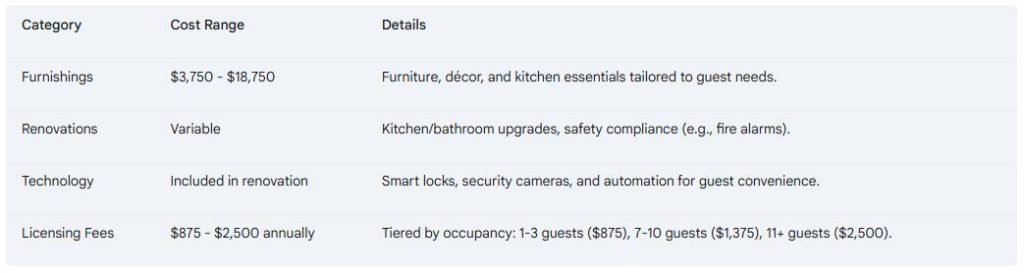
Note: Licensing fees increased by approximately 22% compared to 2024, reflecting broader regulatory trends. Large properties catering to groups face the highest fees.
Operational Expenses
Running an STR incurs significantly higher costs compared to long-term rentals:
- Cleaning Services: 100–100– 300 per turnover; frequency depends on guest stays.
- Maintenance Costs: 15–25% higher than traditional rentals due to wear-and-tear from frequent guest turnover.
- Utilities: 30–50% higher than residential usage due to increased water/electricity consumption by guests.
- Property Management Fees: 20–30% of rental income if outsourced.
Example Annual Turnover Costs:
For a typical STR with frequent bookings (~40 turnovers/year), cleaning expenses alone can total around 4,000–4,000– 12,000 annually.
Tax & Regulatory Considerations
Short-term rentals are subject to specific tax rules and regulations that require careful planning:
Material Participation Requirement: Owners must actively participate for at least 100+ hours/year to deduct losses against W-2 income.
Depreciation:
- Residential STRs may use a 27.5-year schedule.
- Commercial STRs require a slower depreciation rate of 39 years but can benefit from accelerated depreciation using cost segregation studies.
Local Compliance: Many jurisdictions require permits and impose transient occupancy taxes (TOT).
Revenue Potential
Average Daily Rates (ADR) and Occupancy:
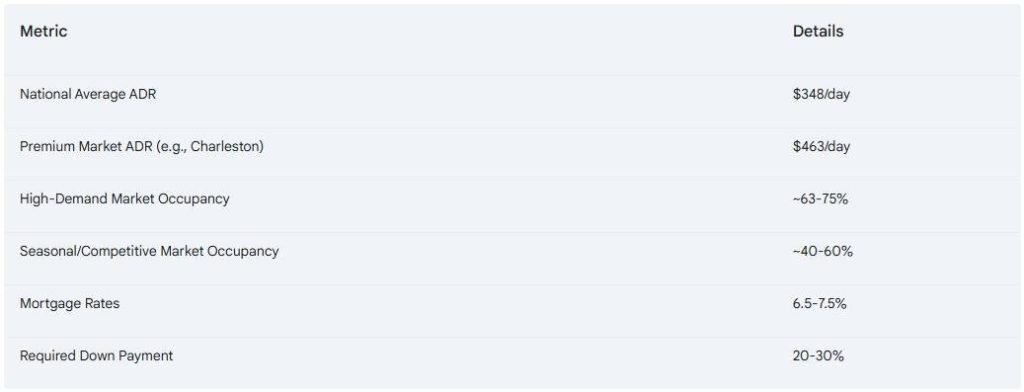
The national ADR for STRs is approximately $348/day
Occupancy rates vary widely:
- High-demand markets: ~63–75%.
- Seasonal or competitive markets: ~40–60%.
Financing Challenges:
Mortgage rates are elevated at approximately 6.5–7.5%, requiring down payments of 20–30%, which increases upfront capital requirements.
Market-Specific Risks
Short-term rental profitability is highly dependent on market conditions: ~72% of U.S. cities have implemented restrictions on STR operations.
Seasonal Occupancy Swings
Demand varies significantly by location and time of year (e.g., beach towns in summer).
Competitive Saturation
Oversupply in popular markets can reduce ADR and occupancy rates.
Converting a property into an STR in 2025 involves substantial financial outlays but offers strong revenue potential in high-demand locations. However, the feasibility depends on navigating elevated operational costs, stricter regulations, and market dynamics.
Prospective investors should focus on:
- Upfront budgeting for startup and ongoing expenses.
- Compliance with local laws to avoid penalties or forced closures.
- Selecting locations with sustainable demand and limited regulatory barriers.