Wellness-first bathroom design is a holistic approach to residential interiors that emphasizes physical health, mental well-being, and therapeutic function. It integrates wellness technologies, natural elements, and proven environmental strategies to create bathroom spaces that serve as personal health sanctuaries.
This approach centers on three therapeutic modalities:
Chromotherapy lighting, which uses specific light wavelengths to influence mood and circadian rhythms
Hydrotherapy features, which deliver pressurized water for muscle therapy and stress relief
Natural materials, which improve air quality and support psychological wellness through biophilic design
Modern wellness-focused bathrooms go beyond aesthetics by incorporating health-oriented technologies and sustainable materials. These elements transform the bathroom into a multi-functional wellness space that supports daily well-being and aligns with growing demand for health-conscious home design.

George is a seasoned interior designer and property marketing strategist with over 13 years of experience. He specializes in transforming properties into visually stunning spaces, helping clients recognize the potential and beauty in each property. With an impressive international client base of exciting projects throughout Europe and America.
1. Hydrotherapy
What it is: Hydrotherapy uses water jets, steam, or specialized tubs to relax muscles, reduce pain, and support recovery.
Health benefits: Massage jets improve circulation, reduce stress and tension, and aid rehabilitation. Air spa systems release microbubbles that gently stimulate the skin.
Common features: Walk-in showers, deep soaking tubs, and customizable water streams offer spa-level benefits in residential settings.
2. Chromotherapy Lighting
What it is: Chromotherapy uses colored LED lighting to influence mood and support relaxation. These systems can cycle through colors or display a single hue to create specific atmospheres.
Health benefits: Blue encourages calmness, red boosts energy, green refreshes, yellow uplifts, and purple soothes the mind. Chromotherapy enhances bathing by providing a spa-like ambiance at home.
Implementation: These systems can be integrated into showers or bathtubs using submerged or strip LEDs. They are typically controlled via remote or app for user-defined settings.
3. Natural Materials
What it is: Using materials like stone, wood, and eco-friendly textures creates a tactile, calming environment.
Design impact: These materials add warmth and a connection to nature, supporting mindfulness and visual serenity.
Practical value: Many natural materials are durable and low-maintenance, making them suitable for daily use.
Industry surveys show that up to 90% of designers expect bathrooms to evolve into wellness sanctuaries, with health-focused features leading renovations.
Recommendations:
Layered lighting: Combine ambient, task, and chromotherapy lighting for adaptable use.
Smart features: Install water-efficient showers and customizable controls to enhance comfort and sustainability.
Clutter-free design: Use integrated storage and calming color palettes to maintain open, tranquil spaces.
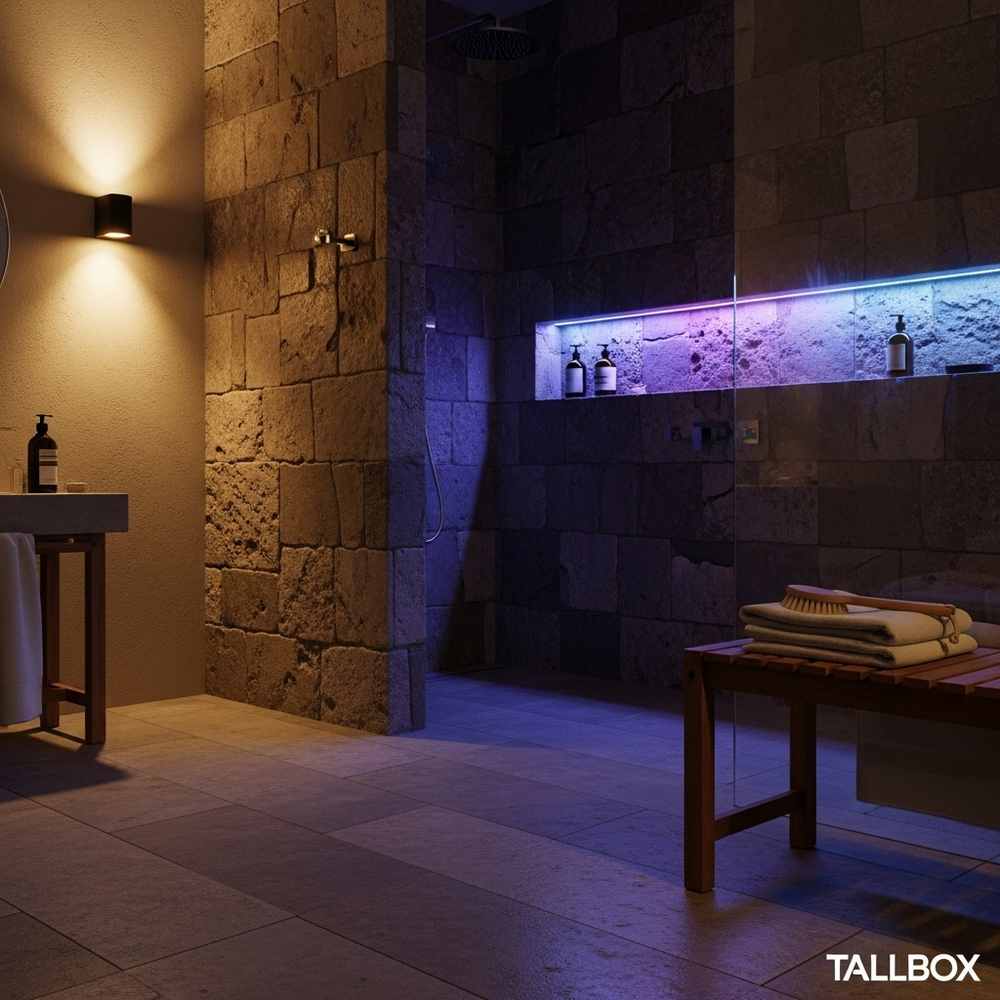
Designing Wellness-First Bathroom
Homeowners are prioritizing well-being throughout their living spaces, especially in bathrooms. Once utilitarian, bathrooms now serve as sanctuaries for daily renewal, blending function with restorative comfort. Designers face a new challenge: redefining the bathroom as a wellness-centered space that supports physical and emotional health.
Wellness-first bathroom design takes cues from luxury spas and holistic retreats, using practical strategies suitable for any modern home. Features like chromotherapy lighting, hydrotherapy, and natural materials contribute to a calming, health-focused environment.
how to create a bathroom for well-being?
Creating a wellness-focused bathroom requires a holistic approach that supports both physical and emotional health through sensory balance and intentional design. Key features include chromotherapy lighting, hydrotherapy elements, and natural materials—all contributing to a calming, restorative environment.
A multi-sensory approach enhances well-being through thoughtful integration of lighting, sound, temperature, scent, and texture. Chromotherapy uses adjustable LED lighting to influence mood and promote relaxation. Hydrotherapy, delivered through soaking tubs, rainfall showers, or massage jets, supports circulation, muscle recovery, and stress relief.
Natural materials—such as stone, wood, and eco-conscious surfaces—add tactile comfort and foster a connection to nature. These elements reduce sensory strain and align with biophilic design principles that support mindfulness.
Wellness design also focuses on layout and materials that reinforce daily rituals and intentional living. This includes soft textures, warm lighting, simplified forms, and zoned layouts that accommodate both functional activities and quiet reflection. Integrated storage, accessible features, and minimal visual clutter further support ease of use and mental clarity.
By combining sensory design with restorative features, wellness-oriented bathrooms become spaces for daily renewal and emotional reset.
Hydrotherapy
Hydrotherapy integrates water-based treatments that have long been recognized for their therapeutic effects on physical and mental health. In wellness-focused bathroom design, hydrotherapy showers incorporate scientifically supported features to enhance relaxation, muscle recovery, and overall well-being
Physiological benefits of hydrotherapy include
Improved circulation: Warm water and targeted massage jets stimulate blood flow, increasing oxygen delivery to muscles and promoting tissue repair. Studies have shown that hydro-massage can reduce muscle soreness and accelerate recovery after exercise.
Muscle relaxation and pain relief: Variable water pressure and temperature modulate nerve signals, reducing muscle spasms and joint stiffness, which can alleviate chronic pain symptoms. Hydrotherapy is frequently used in physical therapy to manage conditions such as arthritis and fibromyalgia.
Stress reduction: Exposure to warm water and steam activates the parasympathetic nervous system, decreasing cortisol levels and lowering heart rate. This physiological response supports mental relaxation and reduces anxiety.
Enhanced skin health: Steam functions promote pore dilation, facilitating toxin release and improved skin hydration.
Typical hydrotherapy showers feature multiple spray zones for comprehensive body coverage, with adjustable water pressure and temperature settings allowing personalized therapy targeted to specific muscle groups. Programmable routines provide controlled cycles tailored to enhance either calming or energizing effects.
Walk-in steam showers with built-in seating offer ergonomic support during sessions and are favored in master bathrooms for their combination of comfort and luxury. The use of frameless glass enclosures preserves a clean aesthetic while housing advanced technology discreetly.
Modern systems often combine hydrotherapy with aromatherapy—the use of essential oils to further stimulate the olfactory system and enhance mood—and chromotherapy lighting, which employs specific light wavelengths to influence hormonal responses and emotional states.
Collectively, these features transform the shower into a multi-sensory wellness experience. Scientific research supports the integration of hydrotherapy in home design as not only luxuriously restorative but also demonstrably beneficial for physiological recovery, mental health, and skin wellbeing.
Chromotherapy
Chromotherapy, or color therapy, uses colored light to influence psychological and physiological states. In wellness-focused bathrooms, it is delivered through integrated LED systems that let users adjust lighting to support relaxation, focus, or revitalization. This practice draws from historical healing traditions and recent studies on how color affects the nervous system
Color influences mood and cognition by interacting with the autonomic nervous system. Cool hues like blue and green reduce heart rate and lower stress by promoting parasympathetic activity. Blue light increases alpha brain wave activity, associated with calm alertness. Warm tones such as amber and red stimulate the sympathetic nervous system, increasing alertness and heart rate. Violet light supports melatonin production and may assist with pre-sleep routines through its calming effect.
Chromotherapy is often built into bathtubs, showers, mirror surrounds, and ceiling lighting. Advanced systems offer dynamic, time-sensitive lighting that adjusts automatically or through app-based and voice controls, integrating seamlessly into wellness routines.
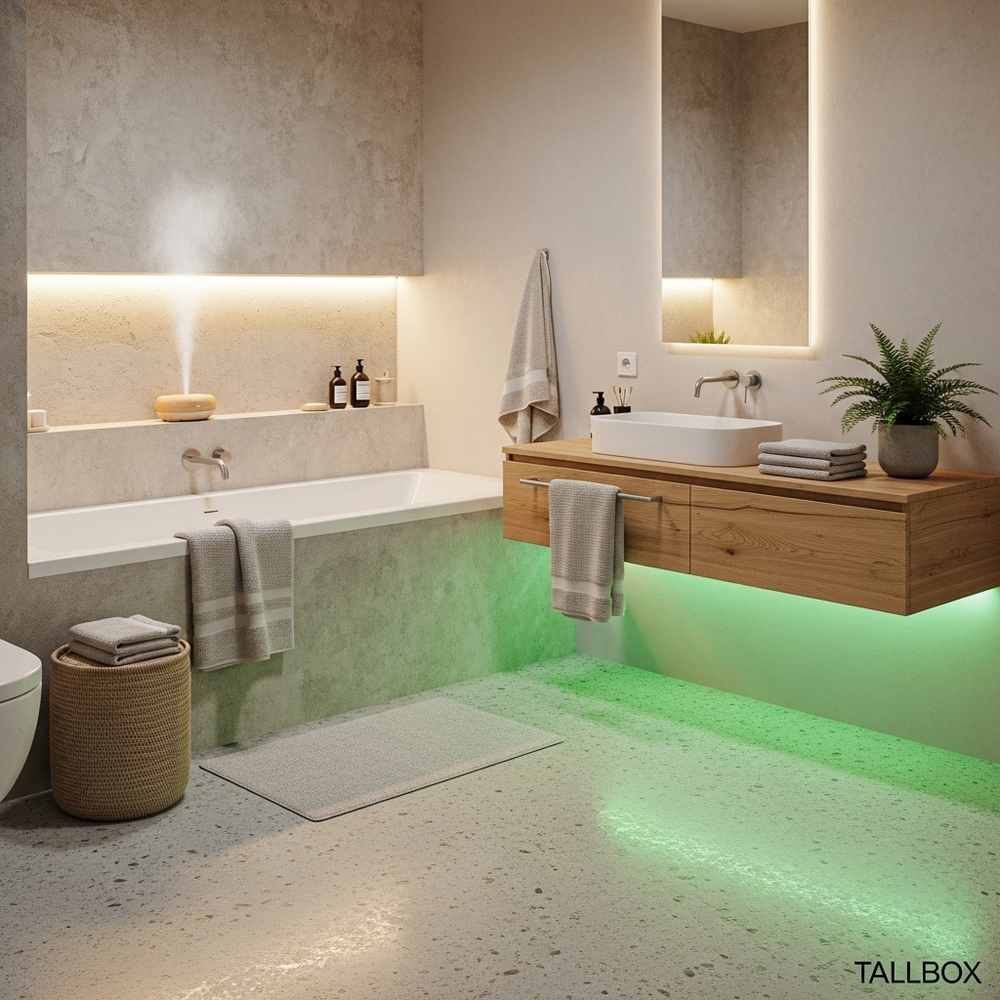
While chromotherapy’s clinical applications remain under investigation, its role in residential design is supported by research in lighting science and environmental psychology. These fields recognize ambient light as a factor in regulating circadian rhythms, sleep, and emotional health. In bathrooms, chromotherapy functions as both a wellness tool and a personalized sensory element.
While chromotherapy’s clinical applications remain under investigation, its role in residential design is supported by research in lighting science and environmental psychology. These fields recognize ambient light as a factor in regulating circadian rhythms, sleep, and emotional health. In bathrooms, chromotherapy functions as both a wellness tool and a personalized sensory element.
Aromatherapy: Scent in Wellness Design
Aromatherapy uses essential oils to affect mood and physiological responses. In bathrooms, it operates as a design element based on olfactory science, which links scent to the limbic system—the part of the brain involved in emotion and memory.
Studies show specific oils influence emotional states and cognitive function. Lavender reduces cortisol levels and promotes relaxation. Eucalyptus enhances respiratory clarity and alertness. Sandalwood improves sleep quality and induces calm.
Implementation varies across wellness bathrooms:
- Integrated diffusers in showerheads or steam systems release scent during bathing.
- Under-counter aroma cabinets store a variety of oils for easy access and customization.
- Scented towel warmers and linen drawers release subtle fragrances as they heat.
Personalization is central to aromatherapy’s effectiveness. Allowing users to select scents based on mood or need increases emotional engagement and supports daily self-care routines. Combined with chromotherapy and hydrotherapy, aromatherapy helps create a multi-sensory environment that promotes relaxation, focus, and mental clarity.
Its inclusion in bathroom design is supported by findings in neuroscience, environmental psychology, and integrative health, positioning scent as a meaningful and scientifically grounded tool for enhancing well-being.
Natural Materials and Organic Palettes
Material selection is central to creating a calming, restorative bathroom. Designers increasingly move away from synthetic finishes and reflective surfaces in favor of tactile, organic materials that reduce visual clutter and promote sensory comfort. This approach aligns with biophilic design, which emphasizes natural materials, textures, and colors to support human well-being.
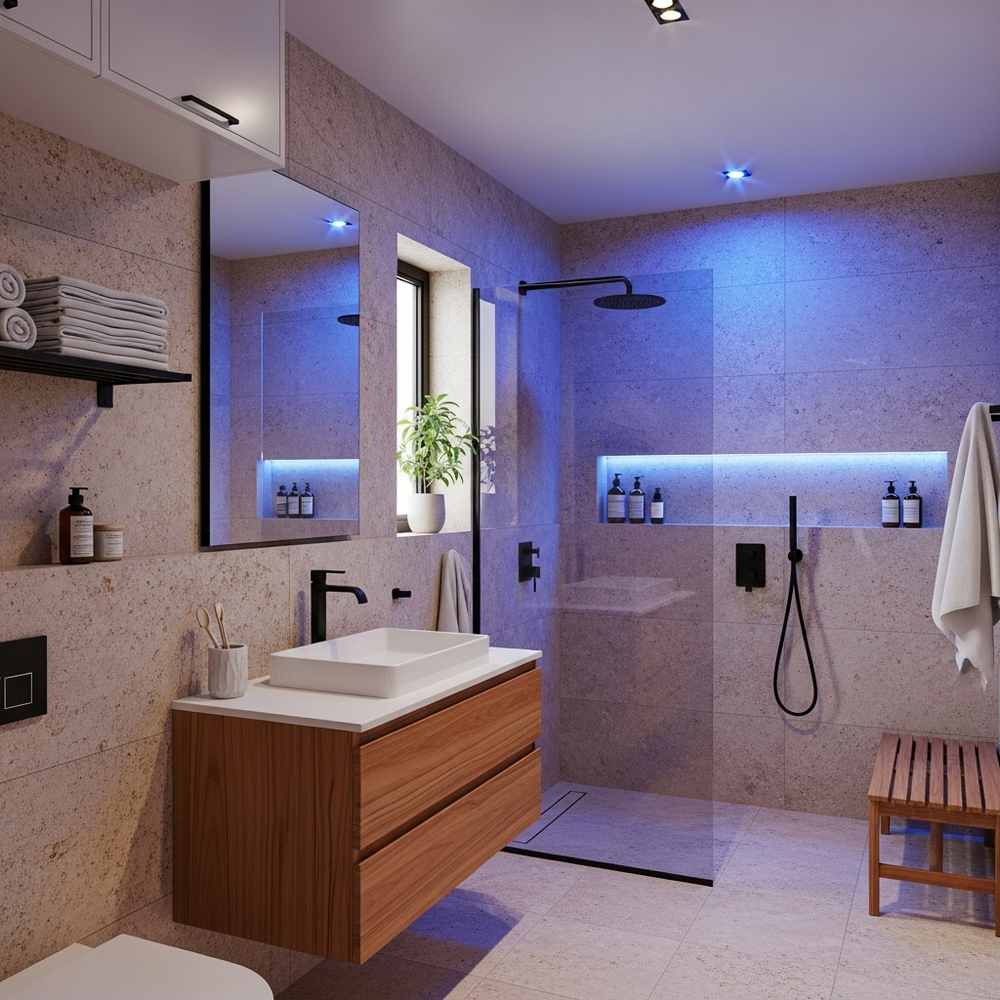
Common materials include:
Textured stone—travertine, limestone, and slate—adds depth, warmth, and an earthy aesthetic. These surfaces offer tactile variety and visual grounding.
Natural wood—such as teak, cedar, and walnut—brings warmth and organic softness to vanities, cabinetry, and accents. These species are durable and often aromatic.
Matte finishes on fixtures and tiles minimize glare, offering a more soothing visual experience than glossy surfaces.
Raw concrete and plaster contribute to minimalist, grounded aesthetics while offering subtle texture and lasting durability.
Color palettes reinforce the effect of natural materials. Earth tones, soft neutrals, and muted pastels promote relaxation and mental clarity. Studies in environmental psychology show that these hues, when paired with natural textures, reduce stress and enhance cognitive comfort.
Additional elements, like greenery and woven textiles (towels, rugs), introduce more tactile and biophilic layers. These features contribute to a multi-sensory atmosphere that supports calm and reduces cognitive fatigue.
Using natural materials and organic color schemes is both an aesthetic and functional strategy. Grounded in research on human responses to nature, this approach enhances physical comfort and psychological restoration through deliberate design choices.
Acoustic Design: Sound as a Wellness Element
Sound plays a vital yet often overlooked role in wellness-oriented interior design. In bathrooms, acoustic strategies can directly affect relaxation, emotional balance, and sensory regulation. While reducing disruptive noise is essential, wellness bathrooms increasingly incorporate intentional soundscapes to support mental well-being.
Acoustic design serves two main purposes:
- Noise reduction through insulation, materials, and construction methods
- Auditory enrichment through sounds that support circadian rhythms, mood regulation, and stress relief
Common architectural features include acoustically treated walls, soft-close cabinetry, and sound-absorbent flooring. These reduce echo and block intrusive noise, establishing a calm auditory baseline for daily routines.
To introduce beneficial sound, designers use integrated technologies:
- Bluetooth-enabled speakers, placed in mirrors, vanities, or ceilings, stream music, ambient nature sounds, or guided meditation audio
- White noise generators, concealed in cabinetry or built-ins, help mask environmental distractions and support pre-sleep or relaxation routines
- App-controlled ambient systems, which allow users to customize soundscapes by time of day or mood
Research in auditory neuroscience and cognitive psychology shows that natural soundscapes—running water, rustling leaves, bird calls—lower stress and improve focus. In contrast, harsh or unpredictable noise raises cortisol levels and contributes to cognitive fatigue. These findings underscore the health benefits of intentional acoustic design.
The goal is not silence but a curated sonic environment that complements scent, lighting, and texture. Whether nature-based, music-infused, or meditative, a sound-conscious approach enhances the bathroom’s role as a multisensory, restorative space.
Temperature and Touch: Comfort Through Climate Control
Thermal comfort is a major pillar of wellness design. Heated floors, towel warmers, and ambient radiant panels are all features that contribute to both comfort and luxury.
- Touchless faucets and toilets support hygiene.
- Thermostatic controls allow for precise water temperature.
- Warm lighting offsets naturally cool materials like stone or tile.
Together, these features reduce physical discomfort and create a gentle sensory environment that supports peace of mind.
Universal Design With Wellness in Mind
Wellness-first bathrooms align naturally with universal design principles. As architects and designers plan for aging in place or multigenerational living, accessibility becomes an essential focus.
Key features include:
Walk-in showers with flush thresholds
- Grab bars designed as integrated aesthetic elements
- Built-in seating in shower or bath areas
- Lever-style handles for improved grip and ease of use
These elements enhance physical safety while reflecting thoughtful design that prioritizes comfort, dignity, and long-term usability.
Key Zones in a Spa-Inspired Bathroom
A wellness-oriented bathroom should feel intuitive and effortless. One way to achieve this is by organizing the space into clear zones that support different modes of use.
Ritual Zone
This includes vanities and grooming areas. Thoughtful lighting, clutter-free surfaces, and integrated storage help support a focused, calming start and end to the day.
Restoration Zone
Where bathing and showering take place. Include lighting controls, aromatherapy, and seating to encourage longer, more mindful use of water features.
Recovery Zone
An optional addition in larger spaces, this zone can include a yoga mat, stretching corner, or lounge-style seating. Paired with calming music and ambient lighting, it becomes a unique differentiator in high-end homes.
By clearly defining these zones, the bathroom becomes more than a space; it becomes an experience.
Storage That Supports Serenity
Visual clutter disrupts calm. To maintain a sense of order and relaxation, designers should prioritize storage that keeps essentials concealed yet accessible.
Recommended features include:
- Hidden shower niches for toiletries
- Vanity drawers with built-in organizers for grooming tools
- Overhead cabinets for towels and aromatherapy items
- Discreet compartments for remotes, speakers, or charging devices
Built-in storage enhances both appearance and function, reinforcing the bathroom’s role as a restorative space. When items like extra towels or skincare products are stored behind soft-close doors, they contribute to a sense of intentionality and calm.
Why It Matters: Wellness as a Lasting Design Value
The spa-inspired bathroom reflects a broader shift in how people approach personal space, self-care, and livability. Prioritizing wellness in design supports comfort, longevity, and quality of life—not just aesthetics.
Wellness features are no longer limited to luxury homes. With thoughtful planning, even compact bathrooms can offer a restorative, high-performing environment. Strategic design choices make wellness accessible across various budgets and floor plans.
The Role of Bathroom Remodeling
For homeowners looking to bring wellness into existing spaces, bathroom remodeling offers a powerful opportunity to align old architecture with new priorities. Retrofitting bathrooms with hydrotherapy features, improved lighting, and better ventilation can transform dated layouts into holistic retreats.
Design professionals who understand the nuances of wellness-first design will continue to shape homes that not only reflect taste and style, but also actively support health and happiness.
Designing for Restoration
At its best, bathroom design isn’t just about materials or layout. It’s about how people feel when they enter the space. Does it soothe them after a long day? Does it prepare them for what’s ahead? Wellness-first bathrooms meet those needs by blending advanced features with intentional design.
Architects and interior designers are in a unique position to champion these changes. By weaving spa-like elements into the modern home — whether through a new build or bathroom remodeling project — they help shape environments where well-being can truly flourish.
Author bio: Davis Glassberg is the Product Manager at Bath Concepts, which transforms bathrooms into spa-like, dream retreats. Glassberg is in charge of training and developing innovative new products for the bath industry. Glassberg has been actively involved in acrylic bathroom remodeling for over three decades. During that period, he has designed over 40,000 bathrooms and trained more than 10,000 design consultants across the U.S.