When preparing a house for sale, every decision hinges on two critical factors: return on investment (ROI) and buyer appeal. The walls, being the largest surface area in any room, play a monumental role in a buyer’s first impression. The choice between a fresh coat of paint and stylish wallpaper can dramatically influence how quickly a home sells and for how much.
Let’s break down which wall treatment makes the most financial sense and best captures the modern buyer’s heart.

By George Nicola (Expert Stager)
Table of Contents
Quick Comparison Table: Paint vs. Wallpaper
| Feature | Repainting (Neutral Colors) | Wallpaper |
|---|---|---|
| Return on Investment (ROI) | Excellent (Often over 100%) | Variable & Risky |
| Average Material Cost | Low ($50 - $100 per room) | Moderate to High ($150 - $500+ per room) |
| Average Install Time | Fast (1-2 days for a standard room) | Slower (2-3 days for precision & drying) |
| General Buyer Preference | Overwhelmingly Positive | Niche & Taste-Specific |
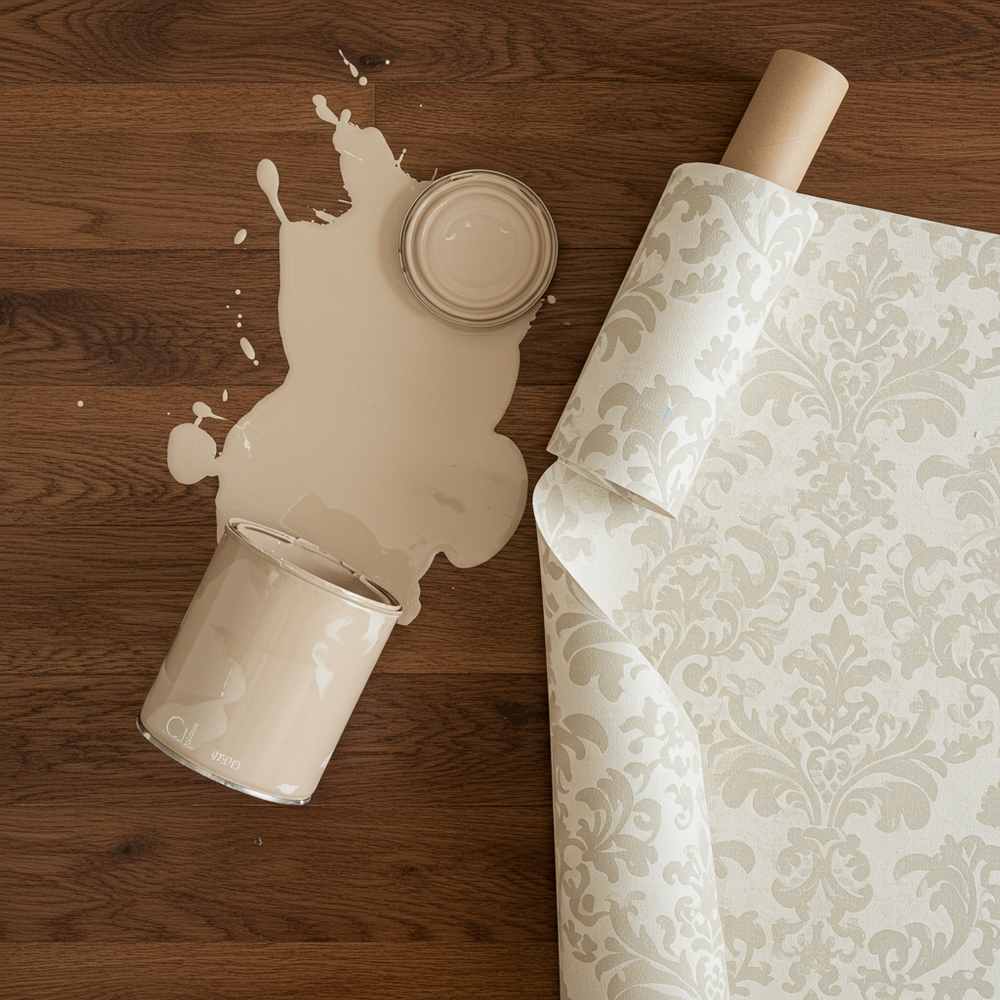
The Pros and Cons of Each Option
A fresh coat of paint is one of the most frequently recommended pre-sale updates for a reason. It’s a powerhouse of ROI.
Pros:
- Mass Appeal: Neutral paint colors are a universal win. They create a clean, bright, and spacious feel that allows buyers to easily envision their own furniture and lives in the space.
- High ROI: It’s one of the cheapest ways to make a home look new. The low cost and high impact deliver a significant return, with many studies showing an ROI of over 100%.
- Speed: A professional crew can repaint an entire home interior in under a week, making it a perfect choice for sellers on a tight timeline.
- Easy Staging: Neutral walls are the perfect backdrop for staging, allowing furniture and decor to pop without competing for attention.
Cons:
- Less “Wow” Factor: A beige or greige wall is beautiful but rarely a memorable design feature.
- Durability: Depending on the finish, paint can be prone to scuffs and marks, especially during open houses.
Wallpaper has seen a resurgence in high-end design, but its role in a home sale is more complex.
Pros:
- Luxury & Personality: In the right context, a high-quality, stylish wallpaper can make a room feel custom, luxurious, and memorable.
- Durability: Modern wallpapers are often highly durable and washable, a feature that can be a selling point.
- Trend-Forward: A contemporary geometric or textural wallpaper can signal that the home is modern and updated.
Cons:
- Highly Subjective: The biggest drawback is taste. What one buyer sees as a stunning feature, another sees as a weekend-destroying removal project. This risk is often too great when trying to appeal to a broad market.
- Cost: Wallpaper and professional installation are significantly more expensive than paint.
- Reduces Perceived Space: Busy patterns can make a room feel smaller and more cluttered.
What Home Buyers Actually Want?
- Greige (a mix of grey and beige)
- Soft, warm whites
- Muted sage greens
- Earthy terracotta accents
Read also: Repainting the exterior before sale?
Buyers want a “blank canvas.” They’ve been scrolling through Pinterest and Instagram and want to imprint their own style on their new home. A neutral wall says “potential,” while a bold wallpaper can scream “project.”
Use one of these colors and you will be on the right path:
- Greige (a mix of grey and beige)
- Soft, warm whites
- Muted sage greens
- Earthy terracotta accents
When Repainting Makes the Most Sense?
For over 95% of home sellers, repainting is the correct financial and strategic decision. Choose this path if:
- You want to appeal to the widest possible pool of buyers.
- Your primary goal is to maximize your return on investment.
- You are on a tight budget or timeline.
- Your home needs a consistent, cohesive look from room to room.
- You are covering up dated colors or existing wallpaper.
Verdict: Painting is the safest, most effective way to prepare your walls for a successful sale.
Hiring a Painting Company for Your Sale
Once you’ve decided that repainting is the right path, the next choice is between DIY and hiring a professional. While DIY can save on labor costs, for a home sale, the quality and speed of a professional painting company often deliver a far superior return on investment. A flawless paint job signals to buyers that a home is well-cared-for, whereas a sloppy DIY job can suggest neglect and hidden problems.
Why a Pro Painter Pays for Itself?
- Speed and Efficiency: A professional crew can paint the entire interior of a home in a few days—a task that might take a homeowner several weeks. In the time-sensitive process of selling a house, this speed is invaluable for getting your property on the market faster.
- Guaranteed Quality Finish: Professionals have the experience and equipment to produce sharp, clean lines, even coats, and a consistent finish. They are experts at the crucial prep work—sanding, patching holes, and caulking gaps—that is the foundation of a durable and attractive result. This polished look is immediately apparent to prospective buyers.
- The Right Tools and Materials: Professional painters know which type of paint and finish (e.g., eggshell, satin) is best suited for different rooms to maximize durability and visual appeal for showings. They also handle all the purchasing and have the necessary tools, from high-quality rollers to sprayers for a perfectly smooth ceiling.
What to Look for in a Painting Contractor?
Not all painting companies are created equal. To protect your investment and ensure a high-quality outcome, look for these key credentials:
- License and Insurance: This is non-negotiable. A licensed contractor is accountable for their work, and liability insurance protects you and your property from any accidents or damage that may occur during the project.
- Detailed Written Estimates: Do not accept a verbal quote. A professional estimate should be itemized, clearly outlining the cost of labor and materials, the specific paint brands and colors to be used, the scope of prep work included, and a projected timeline. Get at least three bids to compare.
- Verifiable References and Portfolio: Ask for references from recent clients, preferably other home sellers. Check online reviews on sites like Google or HomeAdvisor. A reputable company will be proud to show you a portfolio of their completed projects so you can assess the quality of their work firsthand.
By investing in a professional painter, you are not just buying a service; you are investing in a faster sale and a higher closing price. It’s one of the most reliable ways to ensure your home makes a stellar first impression.
When Wallpaper Might Win?
There are a few niche scenarios where wallpaper could be a strategic advantage:
- The High-End Luxury Market: In multi-million dollar homes, buyers often expect bespoke, designer touches. A sophisticated wallpaper in a dining room or master bedroom can meet this expectation.
- The Strategic Accent Wall: A single, tastefully wallpapered accent wall—perhaps in a powder room or behind the primary bed—can add a “wow” factor without overwhelming the space. Using removable “peel-and-stick” wallpaper is a savvy way to add this flair with less risk.
- Hiding Wall Imperfections: A thick, textured wallpaper can be more effective at hiding flawed or uneven plaster than a simple coat of paint.
Your Decision Checklist: Paint or Wallpaper?
Ask yourself these questions to make the final call:
-
My timeline is:
(A) Short and I need to sell quickly.
(B) Flexible, I have time for detailed projects. -
My budget is:
(A) Focused on maximum ROI and low cost.
(B) Large enough for luxury touches. -
My target buyer is likely looking for:
(A) A clean, move-in-ready blank canvas.
(B) A unique, high-design home. -
The room in question is:
(A) A main living area, bedroom, or hallway.
(B) A small, contained space like a powder room or office nook.
If you answered mostly (A), paint is your definitive answer. If you had a few (B) answers and are selling in a luxury market, a strategic and carefully chosen wallpaper accent could be considered.
Your Wall Choice into a Winning Pre-Sale Strategy
Choosing your wall treatment is a critical step, but it’s just one piece of the puzzle. A freshly painted neutral wall sets the stage, but it needs to be supported by a fully decluttered, clean, and well-presented home to truly capture buyer interest and maximize your sale price.
To ensure your home is fully prepared to impress, this decision should be part of a comprehensive pre-sale plan. For a complete guide on what to do next, from decluttering to curb appeal, see our Selling a House: The Ultimate Pre-Sale Staging Checklist.