Creating a professional home gym requires balancing safety, functionality, and aesthetics through strategic spatial planning. The foundation involves optimizing equipment layout with proper clearances—maintaining 6 feet behind cardio machines and 3-4 feet between stations for safe movement. Successful designs integrate biophilic elements like natural light and plants to enhance motivation, while layered smart lighting systems adapt to different workout intensities.
Quality equipment paired with durable rubber flooring creates the performance base, complemented by energizing color palettes following design principles. Seamless technology integration, sleek storage solutions, and textural depth through mixed materials elevate the space beyond basic functionality.
Strategic mirror placement and inspirational decor personalize the environment, while acoustic optimization ensures an immersive experience. The key is creating distinct zones that flow naturally while maintaining professional standards that inspire consistent use and support fitness goals.
Want to get 3D rendering for your interior design project?

George is a seasoned interior designer and property marketing strategist with over 13 years of experience. He specializes in transforming properties into visually stunning spaces, helping clients recognize the potential and beauty in each property. With an impressive international client base of exciting projects throughout Europe and America.
George Nicola shares:
Creating a professional-quality home gym requires strategic planning that balances functionality, safety, and aesthetics. Modern home fitness spaces must accommodate diverse workout styles while maximizing limited square footage.
The key lies in understanding spatial relationships, equipment placement, and design principles that promote both performance and motivation. This comprehensive guide outlines ten essential steps that transform ordinary rooms into inspiring fitness sanctuaries that rival commercial facilities.
TALLBOX provides information for educational purposes only and does not offer financial or law advice; users should consult with qualified professionals before making any investment decisions. TALLBOX and George Nicola are not liable for any losses or damages incurred as a result of relying on the information provided.
Optimize Layout for Safety and Flow

Professional gym design begins with meticulous spatial planning that prioritizes user safety and movement efficiency. Equipment placement follows strict clearance protocols: treadmills require 6 feet of rear clearance for emergency dismounts and natural stride extensions, while lateral spacing demands 24 inches per side to prevent wall collisions. Strength training areas need 36-inch perimeters around power racks for Olympic lifts, with 4-foot front-to-back working zones accommodating barbell movements.
Create distinct functional zones using the 60-30-10 space allocation rule: 60% for primary activities (cardio or strength), 30% for secondary functions (flexibility or functional training), and 10% for storage and circulation. Traffic flow patterns should follow intuitive pathways, with high-use equipment positioned near entrances and recovery areas placed in quieter corners.
Digital floor planning tools like Planner 5D enable virtual testing of layouts before committing to permanent installations.
Equipment orientation significantly impacts motivation and performance. Position cardio machines facing inspiring views—large windows, feature walls, or motivational artwork—to combat workout monotony.
For basement gyms lacking natural views, create focal points using textured accent walls or digital displays showcasing scenic landscapes.
In compact spaces, consider vertical equipment storage and wall-mounted systems that preserve open floor areas for bodyweight exercises.
Incorporate Biophilic Design for Motivation

Biophilic design elements tap into humanity’s innate connection with nature, reducing stress hormones by up to 17% while enhancing workout motivation. Low-maintenance plants like pothos, snake plants, or ZZ plants thrive in artificial lighting while improving air quality through natural filtration. Preserved moss walls offer dramatic visual impact without requiring irrigation systems or ongoing maintenance.
Maximize natural light exposure through strategic window placement, skylights, or glass doors that create seamless indoor-outdoor connections. Natural light exposure regulates circadian rhythms, boosting energy levels during morning workouts while supporting evening recovery sessions. Control harsh glare using adjustable blinds or UV-filtering films that protect equipment from sun damage while maintaining brightness levels.
Natural materials create warmth and sophistication that elevates the workout experience. Reclaimed wood accent walls, bamboo storage systems, and stone water features introduce organic textures that soften industrial equipment aesthetics. These elements work particularly well in yoga or meditation zones where tranquility is paramount. Tabletop water features provide calming ambient sounds that mask household noise and create spa-like atmospheres.
Upgrade Lighting with a Dynamic System
Professional lighting design uses layered strategies for different workout intensities and times. Ambient lighting provides general illumination, task lighting focuses on specific activities like weightlifting, and accent lighting boosts motivation with LEDs or decorative fixtures.
Smart systems with adjustable color temperatures support performance and recovery—cool white for intensity, warm tones for cooldowns. Dimmable and voice-activated controls allow seamless, hands-free adjustments.
Well-placed lighting prevents shadows and blind spots, especially near mirrors and equipment. Track lighting adapts to layout changes, while recessed fixtures offer safety and clean aesthetics.
Invest in Durable, Stylish Equipment and Flooring
Equipment selection balances performance, aesthetics, and longevity to create cohesive professional environments. Commercial-grade cardio machines from brands like Life Fitness or Technogym offer superior durability and sophisticated designs that complement upscale interiors. Strength equipment with consistent finishes—matte black, brushed steel, or wood accents—creates visual harmony while projecting quality and attention to detail.
Flooring serves as the foundation for both safety and style. Rubber tiles provide superior shock absorption for high-impact activities while resisting moisture and maintaining easy cleaning protocols. Interlocking systems allow future reconfiguration as needs evolve. Premium options include wood-grain vinyl that mimics hardwood aesthetics while delivering performance characteristics essential for fitness applications.
Avoid materials that compromise safety or durability. Traditional hardwood floors create slip hazards when wet and suffer damage from dropped weights. Ceramic tiles become treacherously slippery and provide inadequate shock absorption for jumping movements. Investment in appropriate flooring systems prevents injuries while protecting the structural integrity of underlying floors in multi-story homes.
Color Palette
Color psychology significantly influences workout motivation and performance outcomes. Energizing hues like soft greens promote focus and endurance, while bold accent walls in navy or red stimulate intensity during strength training sessions. The 60-30-10 color distribution rule creates balanced compositions: 60% neutral base colors, 30% secondary tones through equipment or furnishings, and 10% accent colors via artwork or accessories.
Test paint samples under actual gym lighting conditions, as artificial illumination can dramatically alter color perception. LED lights with high Color Rendering Index (CRI) ratings above 90 ensure accurate color representation throughout the day. Consider how colors will appear during different workout times, particularly if natural light varies significantly between morning and evening sessions.
Zone-specific color strategies optimize psychological responses to different activities. Calming neutrals like soft grays or sage greens work well in yoga and stretching areas, promoting relaxation and mindfulness. High-energy zones benefit from more stimulating palettes that maintain engagement during challenging workouts. Avoid overly bright or neon colors that can become visually fatiguing during extended exercise sessions.
Home Gym Machines
Many fitness experts believe that all in one fitness machine is better than standard single-use gear. All in one machines provide a variety of exercises, making them more versatile.
Modern home fitness equipment has evolved to address space constraints while maintaining professional functionality. All-in-one machines provide comprehensive workout capabilities within minimal footprints, making them essential for smaller home gym layouts. These systems integrate multiple exercise modalities—strength training, cardio, and functional movement—into single units that replace traditional equipment arrays.
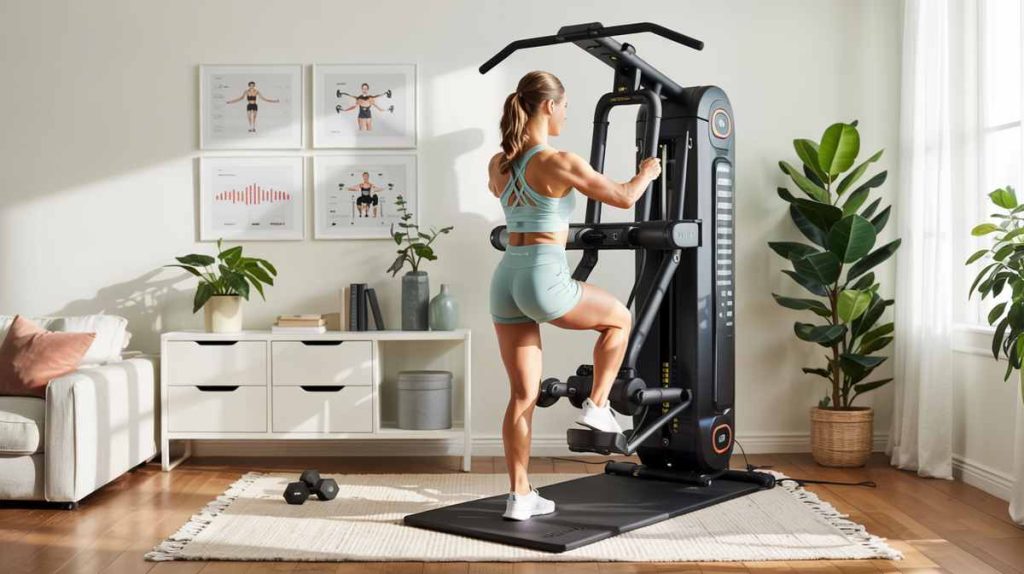
Advanced resistance technology and AI-driven programming enable personalized workouts across all fitness levels, from beginner-friendly tutorials to advanced strength protocols. Adaptive systems adjust difficulty in real-time, ensuring continuous progression without requiring additional equipment purchases. Smart tracking capabilities monitor performance metrics, preventing plateaus through data-driven program adjustments.
Multi-user functionality accommodates households with varying fitness goals through individual profile settings. Adjustable pulley systems and cable configurations provide targeted muscle activation while maintaining space efficiency. The integration of smart technology with traditional resistance training creates seamless workout experiences that rival commercial gym environments.
For professional home gym design, compact all-in-one solutions maximize functionality per square foot while delivering commercial-grade performance standards essential for serious fitness enthusiasts.
Add Textural Depth for Visual Appeal
Layered textures create sophisticated environments that stimulate multiple senses while maintaining professional aesthetics. Combine smooth surfaces like polished metal equipment with organic textures such as natural wood accents or woven fabric elements. Plush area rugs define stretching zones while providing cushioning for floor exercises.
Material variety prevents sterile institutional appearances common in basic gym setups. Leather-wrapped weights or handles add luxury touches that enhance the workout experience. Wood-paneled accent walls introduce warmth while providing acoustic benefits that reduce echo and outside noise intrusion.
Pattern integration requires restraint to avoid visual distraction during workouts. Limit patterns to one or two subtle designs—geometric exercise mats or textured wallpaper accent walls—that complement rather than compete with equipment aesthetics. Excessive pattern mixing can create visual chaos that detracts from focus and concentration during training sessions.
Decor and Mirrors
Motivational elements personalize spaces while maintaining professional quality standards. Replace generic prints with meaningful artwork that reflects personal fitness goals—race photography, achievement displays, or custom graphics featuring personal mantras. Achievement walls showcasing medals, certificates, or progress photos provide tangible reminders of accomplished goals.
Full-length mirrors serve essential safety functions by enabling form monitoring while creating illusions of expanded space in compact areas. Wall-mounted mirrors eliminate safety hazards associated with leaning mirrors that can shift or fall. Strategic mirror placement amplifies natural light while providing multiple viewing angles for comprehensive form assessment.
Minimize decorative accessories to prevent visual clutter that can distract from workouts. Select 2-3 high-impact pieces like sculptural water bottles, sleek storage containers, or premium towel holders that serve functional purposes while enhancing aesthetics. Quality over quantity principles ensure each element contributes meaningfully to the overall design composition.
Improve Acoustics
Acoustic optimization creates immersive environments that support focus while minimizing household disruption. Sound-absorbing materials like rubber flooring, acoustic panels, or heavy curtains reduce echo and external noise intrusion. Strategic placement of soft furnishings helps dampen sound transmission without compromising the clean aesthetics essential to professional gym environments.
Test acoustic performance during actual workouts to identify problem areas requiring additional treatment.
Heavy bass from cardio machines or weight dropping can transmit through structural elements to adjacent rooms. Sound isolation techniques including specialized flooring underlayments or wall treatments may be necessary in shared living spaces or multi-story homes.
Endnote
Modern home gym design blends safety, function, and aesthetics to create spaces that encourage regular use. Designers focus on user needs, efficient layouts, and materials that support both performance and style. Following key steps helps homeowners build gyms that match commercial quality while reflecting personal preferences. Thoughtful design boosts workout frequency, performance, and overall wellness by turning exercise into a welcomed daily habit