What is the right 3D scanner for architectural, construction, or surveying purposes?
To select the right 3D scanner for architectural, construction, or surveying purposes, professionals need to evaluate the scanner’s capabilities and suitability for specific applications. For instance, the Riegl VZ-400i is a high-end solution tailored for large-scale infrastructure projects, offering a scan rate of up to 1.2 million points per second and a maximum range of 70 meters. Conversely, the iMapper Racer 3 is an entry-level device suitable for smaller projects, providing ease of use and affordability.
When choosing a 3D scanner, consider the project’s scale and required accuracy. For large-scale projects, opt for scanners like the Riegl VZ-400i, which deliver high accuracy and extensive range. For smaller or less complex projects, entry-level scanners such as the iMapper Racer 3 are sufficient, offering a balance between cost and functionality.
This guide provides a comprehensive list of the top architectural and construction scanners for 2025, detailing their price points, features, ease of use, target users, and overall value. From entry-level devices like the iMapper Racer 3 to high-end solutions such as the Riegl VZ-400i, each scanner is evaluated based on its capabilities and suitability for specific applications. The guide also compares these devices side-by-side to help you make an informed decision.

George is a seasoned interior designer and property marketing strategist with over 13 years of experience. He specializes in transforming properties into visually stunning spaces, helping clients recognize the potential and beauty in each property. With an impressive international client base of exciting projects throughout Europe and America.
Which 3D scanner is best for both indoor and outdoor projects?
3D scanners and point cloud cameras have become indispensable tools for capturing accurate spatial data for architecture, construction, and surveying. These devices enable professionals to create detailed digital models of buildings, infrastructure, and landscapes, streamlining workflows and improving project outcomes. Whether you’re an architect designing a new space, a contractor managing renovations, or a surveyor documenting large-scale infrastructure, selecting the right 3D scanner is critical to achieving your goals efficiently.
After analyzing the strengths and weaknesses of each device, we identified three standout options tailored to different needs:
: The iMapper Racer 3 is ideal for small-scale projects like floor plans and room scans, offering excellent value at a budget-friendly price.
: The FJD Trion S1 strikes a balance between cost and performance with its SLAM-based real-time scanning capabilities, making it perfect for both indoor and outdoor applications.
: The FARO Focus Premium delivers unmatched accuracy and range for large-scale industrial or infrastructure projects.
The FJD Trion S1 emerges as the top contender due to its versatility, competitive pricing, and ability to handle diverse architectural and construction tasks efficiently. Whether you’re working on small interior designs or expansive outdoor projects, this guide will help you find the right tool to elevate your work.
1. FJD Trion S1

The FJD Trion S1 is a versatile and powerful 3D LiDAR scanner designed for professionals in construction, forestry, and underground mapping. It offers high-speed scanning capabilities, capturing 320,000 points per second with an accuracy of 0.8-2 cm and a range of up to 120 meters.
This portable device features 16 sensors and advanced SLAM technology, enabling real-time processing and visualization of point cloud data on mobile devices. The Trion S1 excels in both indoor and outdoor environments, providing quick large-scale scans of 100 m² in just 2 minutes.
Key features of the FJD Trion S1 include:
- Lightweight and portable design
- Dual batteries with 4-hour runtime
- Intuitive mobile app interface
- Minimal setup required
- Real-time colorization of point clouds
Ease of Use: Intuitive real-time visualization via mobile apps; minimal setup required.
Who Should Use: Professionals in construction, forestry, and underground mapping who need quick, large-scale scans.
Is It Worth It? Yes, for users needing a versatile scanner with SLAM capabilities at a mid-tier price.
At a price point of approximately $22,999, the FJD Trion S1 offers a compelling mid-tier option for professionals seeking a versatile SLAM-capable scanner. Its ability to quickly capture and process detailed 3D models, floor plans, and BIM data makes it a valuable tool for various industries requiring accurate spatial mapping.
2. FARO Focus Premium

The FARO Focus Premium is a high-precision 3D laser scanner designed for large-scale surveying and engineering projects. It offers exceptional accuracy of ±2 mm and an impressive range of up to 350 meters, making it ideal for capturing detailed scans of expansive areas or structures.
Price Point: ~€40,200
Features:
- Accuracy: ±2 mm.
- Range: Up to 350 meters.
- Captures up to 2 million points per second.
- Built-in protection against dirt, dust, and extreme weather conditions.
- Integration with FARO Sphere cloud for real-time data processing.
- Ease of Use: User-friendly interface with fast setup; supports hybrid reality capture for efficiency.
Who Should Use: Surveyors and engineers working on large-scale infrastructure or industrial projects.
Is It Worth It? Yes, if precision and range are critical for your projects.
3. Leica BLK360

Price Point: ~$27,300
Features:
- Accuracy: ±4 mm at 10 meters.
- Range: Up to 60 meters.
- Compact and lightweight (1 kg).
- Full-dome scans in under 3 minutes with HDR imaging.
Ease of Use: Simple one-button operation; integrates seamlessly with Autodesk ReCap Pro for real-time data processing.
Who Should Use: Architects and interior designers needing portable scanners for small-to-medium projects.
Is It Worth It? Yes, for professionals prioritizing portability and ease of use over long-range capabilities.
4. Trimble X7

Price Point: ~$41,800
Features:
- Accuracy: ±2 mm.
- Range: Up to 80 meters.
- Automated calibration and self-leveling.
- Compact design with Trimble Perspective software for intuitive workflows.
Ease of Use: Advanced automation makes it beginner-friendly while maintaining professional-grade accuracy.
Who Should Use: Surveyors and contractors requiring high precision in structural assessments or building surveys.
Is It Worth It? Yes, if automated workflows and precision are priorities.
5. GeoSLAM ZEB Horizon

Price Point: ~$30,000
Features:
- Accuracy: ±1–3 cm.
- Range: Up to 100 meters.
- SLAM-based handheld scanner; no GPS required.
- Processes data on-site via GeoSLAM Hub software.
Ease of Use: Lightweight and easy to deploy; ideal for rapid mapping in challenging environments.
Who Should Use: Professionals needing mobile scanning for indoor/outdoor environments like warehouses or mines.
Is It Worth It? Yes, for those prioritizing mobility and SLAM technology over ultra-high precision.
6. Riegl VZ-400i

Price Point: ~$125,000
Features:
- Accuracy: ±5 mm at long ranges (up to 800 meters).
- High-speed data acquisition (500k measurements/sec).
- Advanced geo-referencing and real-time processing capabilities.
Ease of Use: Professional-grade system requiring expertise; not beginner-friendly but highly efficient for large-scale projects.
Who Should Use: Large-scale surveying firms working on city modeling or infrastructure projects.
Is It Worth It? Only for enterprises requiring extreme range and precision.
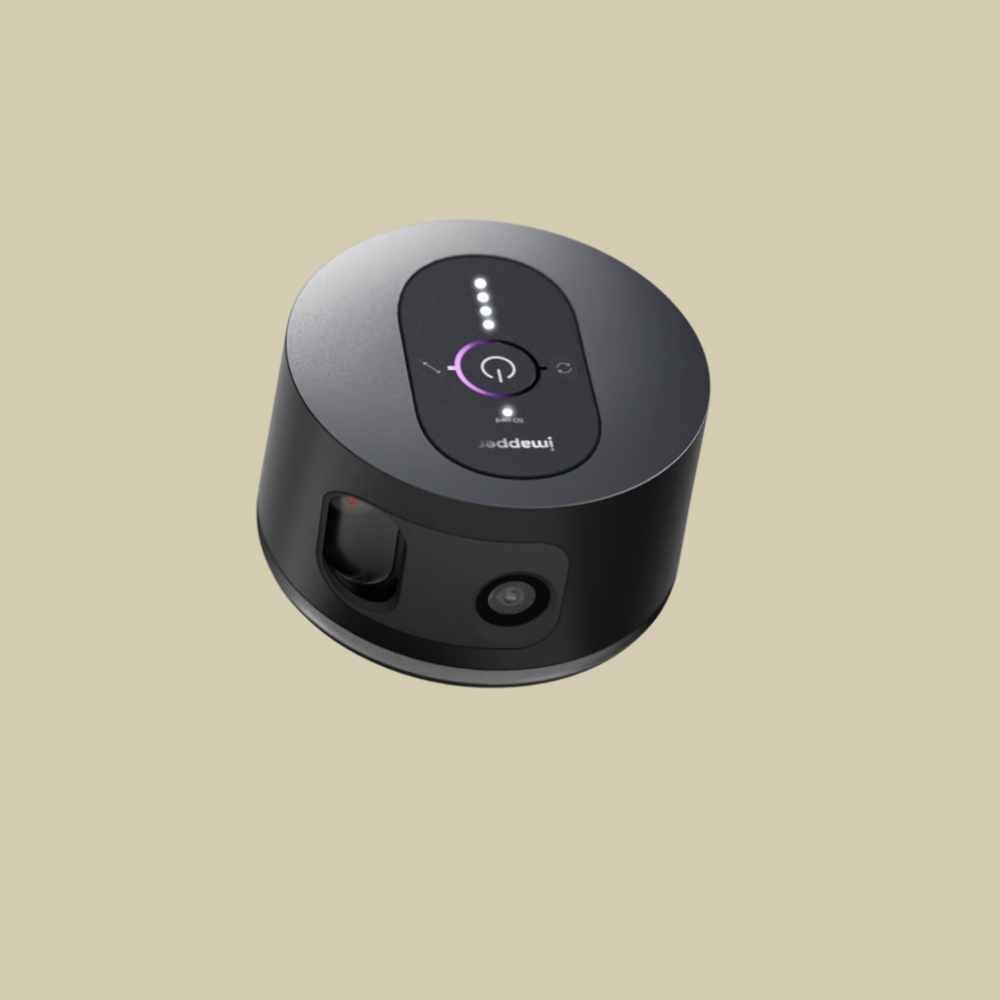
Price Point: €2,399 (~$2,600)
Features:
- Accuracy: ±1 mm.
- Range: Up to 30 meters indoors.
- Scanning modes include DENSE (high detail) and FAST SURVEY (quick scans).
- Exports data to CAD software like AutoCAD and Revit.
Ease of Use: Beginner-friendly with minimal setup; portable design ideal for quick room scans or floor plans.
Who Should Use: Real estate agents, interior designers, or architects needing cost-effective room scanning solutions.
Is It Worth It? Yes, for small-scale projects where affordability is key.
Top Contender
The best choice depends on the use case:
- For affordability and ease of use in small-scale projects: iMapper Racer 3
- For versatility in large-scale indoor/outdoor mapping: FJD Trion S1
- For high-end precision and range in industrial applications: FARO Focus Premium
Overall, the FJD Trion S1 offers the best balance between price, features, and versatility across diverse applications in architecture and construction industries.