Could US tariffs drive house prices even higher?
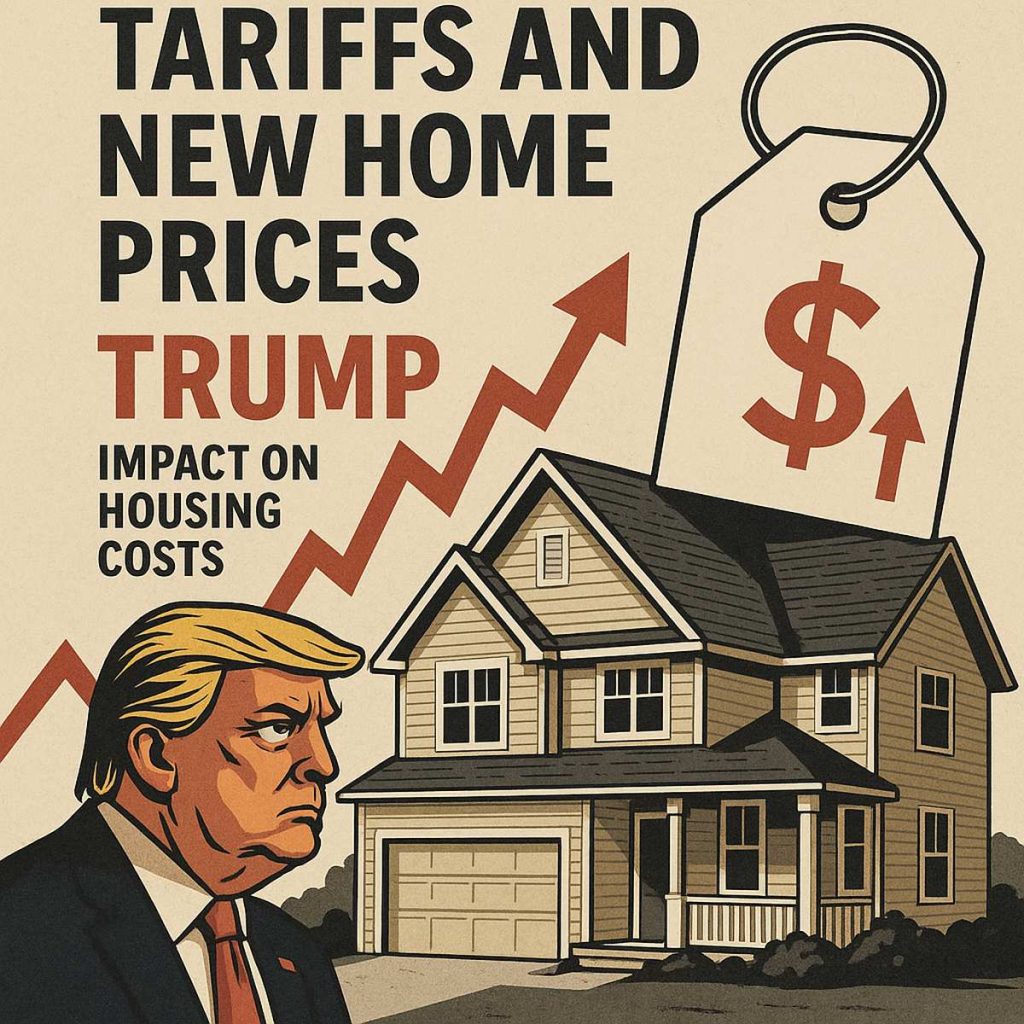
Yes, there’s a strong argument that US tariffs can and likely do contribute to driving house prices higher. By raising the fundamental cost of building or improving homes, tariffs add upward pressure to an already complex housing market, likely contributing to higher prices overall.
Here’s the logic why higher tariffs equals higher house prices.
- Increased Construction Costs: Tariffs on imported materials like steel, aluminum, lumber, and many other components used in building directly increase the costs for homebuilders.
- Higher New Home Prices: Builders often pass these increased material costs onto buyers in the form of higher prices for newly constructed homes.
- Impact on Existing Homes: When new homes become more expensive, it can increase demand (and therefore prices) for existing homes as they become comparatively more attractive. It also tightens overall supply if builders slow down construction due to higher costs or uncertainty.
- Renovation Costs: Tariffs also increase the cost of materials for home renovations and repairs, which can factor into the overall value and cost considerations in the market.
- Inflationary Pressure: Broad tariffs can contribute to overall inflation, potentially influencing interest rates and further impacting housing affordability and pricing dynamics.

George is a seasoned interior designer and property marketing strategist with over 13 years of experience. He specializes in transforming properties into visually stunning spaces, helping clients recognize the potential and beauty in each property. With an impressive international client base of exciting projects throughout Europe and America.
Disclaimer: This blog post is for informational purposes only and uses synthesized information based on existing events as of time of writing. Market conditions and policy impacts can change rapidly.
The connection between international trade policy and the price tag on a typical American home might not seem immediately obvious.
Tariffs – taxes on imported goods – implemented and proposed under Donald Trump have significant implications for the housing market. By increasing the cost of essential building materials, these tariffs can ripple through the construction industry, ultimately affecting new home prices, affordability, and potentially the value of existing homes.
Let’s break down how.
What is the idea of Donald Trump with Setting the Stage with Higher Tariffs?
Based on Donald Trump’s statements and policy actions, the “idea” or strategic rationale behind advocating for higher tariffs generally revolves around several key objectives:
- Protecting American Industries and Jobs: This is often the most prominent justification. The core idea is that higher tariffs make imported goods more expensive, thereby encouraging American consumers and businesses to buy domestically produced goods instead. This, in theory, supports US manufacturers, protects them from foreign competition (especially from countries perceived to have lower labor costs or unfair subsidies), and helps retain or create jobs within the US.
- Reducing Trade Deficits: Trump has frequently framed trade deficits (where the US imports more than it exports) as a sign of economic weakness or unfair trade practices by other countries. Tariffs are seen as a tool to reduce these deficits by discouraging imports.
- Gaining Negotiating Leverage: Tariffs are often used as a bargaining chip in international trade negotiations. By imposing or threatening tariffs, the aim is to pressure other countries (particularly China) to change their trade practices, lower their own tariffs, grant better access to US goods, or address issues like intellectual property theft.
- National Security: For certain tariffs, like those previously imposed on steel and aluminum, national security was cited as a justification. The argument was that a strong domestic production capacity for these materials is vital for national defense.
- Reshoring Production: Encouraging companies to move manufacturing operations back to the United States from overseas is another related goal, aiming to strengthen the domestic industrial base.
In essence, “setting the stage with higher tariffs” from Trump’s perspective is about using trade barriers as a tool to reshape global trade dynamics in favor of US domestic production, employment, and negotiating power, even if it means higher costs for consumers or potential retaliatory tariffs from other nations in the short term.
How do tariffs, past and potential, translate into changes in US housing prices?
Tariffs aim to protect domestic industries by making imported goods more expensive. During the 2017-2021 Trump administration, tariffs were placed on key imports like steel, aluminum, and Canadian softwood lumber – all crucial materials for building homes. Furthermore, broader tariffs were applied to many goods imported from China. Discussions around potential future tariffs, including a possible 10% universal tariff or steeper levies on Chinese goods, raise questions about continued or even escalated impacts on construction costs.
Tariffs and Building Material Costs
The most immediate effect of these tariffs is on the price builders pay for materials sourced internationally or competing with imports.
Steel and Aluminum: The Foundation Feels the Pinch
Steel and aluminum are essential materials in construction, utilized in a wide range of applications, including structural beams, framing, roofing, HVAC ductwork, and appliances. The tariffs imposed in 2018, which included a 25% tariff on steel and a 10% tariff on aluminum, led to a direct increase in the cost of importing these metals.
Even domestically produced steel and aluminum often experienced price hikes, as local manufacturers faced reduced competition from lower-priced imports. As a result, the costs of fundamental components used in new homes and commercial buildings rose. Studies have shown that these tariffs played a significant role in the escalation of construction costs during the period they were in effect.
Lumber Costs: Driving Up Framing Expenses
Softwood lumber, a crucial material for framing homes, represents a significant cost factor. The imposition of tariffs on Canadian lumber, a major supplier to the US market, has been a persistent issue. The duties introduced during the Trump administration, and subsequently adjusted, substantially increased lumber costs. At their peak, these tariffs, coupled with pandemic-related supply chain disruptions, led to a sharp surge in lumber prices, resulting in thousands of dollars being added to the cost of constructing a new home. Some estimates indicated that tariffs on Canadian lumber alone could increase the average new home price by nearly $10,000. Potential future tariffs may further exacerbate this price volatility.
Tariffs on Various Housing Components
The impact of tariffs extends beyond raw materials. Tariffs imposed on Chinese goods have affected a diverse range of products used in homes, including lighting fixtures, plumbing components, flooring, cabinets, countertops, and appliances. Although the individual effects may be difficult to quantify, the cumulative impact of these tariffs adds another layer of expense to completing a home, affecting both new constructions and renovations. Proposed universal tariffs would substantially broaden this impact.
From Materials to Mortgages: How Tariffs Influence House Prices
Higher material costs inevitably flow through the construction process and impact the final price tag for homebuyers.
The Increasing Expense of New Construction
When builders encounter higher costs for materials such as lumber, steel, and appliances, they have two options: absorb the expense, which reduces their profit margins, or transfer the cost to the buyer. In a market characterized by strong demand, a significant portion of the cost is typically passed on to the buyer. Various analyses, notably those conducted by the National Association of Home Builders, have estimated that the tariffs imposed between 2017 and 2021 resulted in an increase of approximately $9,000 to $10,000 in the price of an average new single-family home. Proposed future tariffs are expected to drive costs even higher, potentially adding tens of thousands of dollars, depending on the final rates and scope of the tariffs.

Broader Market Implications
Although tariffs primarily affect the prices of new homes, they also have a ripple effect on the wider market. As new homes become pricier, buyers may turn to existing homes, potentially increasing their prices. Moreover, if higher construction costs and uncertainty cause builders to reduce their output, the overall housing supply will decrease, leading to upward pressure on prices for all homes in areas experiencing shortages.
Affordability Under Pressure
The rising cost of homes, partially fueled by tariffs, has a direct impact on affordability. As construction costs increase, the number of affordable homes that can be built decreases, particularly in the entry-level segment. When paired with other factors such as rising interest rates, which can be indirectly influenced by inflation potentially linked to tariffs, the challenge for first-time homebuyers becomes even more daunting. The cumulative effect of tariffs is to make homeownership less accessible to many American families.
The Potential Impact of Future Tariffs

The discussion around potential future tariffs adds another layer of uncertainty.
Proposed Tariffs and Projected Costs
Proposed tariffs, such as a 10% universal baseline tariff or higher specific tariffs, like 60% on Chinese goods, are likely to exacerbate the previously observed effects. CoreLogic has estimated that such tariffs could lead to an annual increase in construction costs of 4-6%. This implies that the previously seen increase of $9,000 to $10,000 per home could rise substantially, potentially reaching $25,000 or more in high-cost markets, thereby further eroding affordability.
Economic Uncertainty and the Housing Market (Inflation, Rates)
Broad tariffs can fuel general inflation by increasing the cost of imported goods across the economy. Ongoing inflation can, in turn, impact the Federal Reserve’s interest rate decisions. Although some analyses indicate that tariffs might initially lead to lower mortgage rates due to a ‘flight to safety’ in bonds, sustained inflation could ultimately result in higher mortgage rates for an extended period. The intricate relationship between tariffs, inflation, and interest rates introduces considerable uncertainty for prospective homebuyers and the overall direction of the housing market.
Economic Uncertainty and the Housing Market (Inflation, Rates)
Proposed tariffs, such as a 10% universal baseline tariff or higher specific tariffs, like 60% on Chinese goods, are likely to exacerbate the previously observed effects. CoreLogic has estimated that such tariffs could lead to an annual increase in construction costs of 4-6%. This implies that the previously seen increase of $9,000 to $10,000 per home could rise substantially, potentially reaching $25,000 or more in high-cost markets, thereby further eroding affordability.
What Does It Mean for Homeowners and Buyers?
Tariffs represent a direct cost pressure on building materials, leading to higher new home prices and contributing to housing affordability challenges. Evidence from the 2017-2021 period shows a clear link between tariffs on materials like lumber and steel and increased construction costs, translating to thousands of dollars added to the price of a new home.
Proposed future tariffs threaten to exacerbate these pressures, potentially making new homes even more expensive and further tightening the overall housing supply if builders scale back activity. While the exact impact depends on the specifics of future policy and broader economic conditions, both past experience and future projections indicate that tariffs are a significant factor contributing to the rising cost of housing in the United States, impacting homeowners, builders, and aspiring buyers alike.