As the 21st Century ROAD to Housing Act became federal law in July 2026, U.S. homebuyers and sellers face a new rulebook on investor purchases, small mortgages, and factory-built homes, not an instant drop in prices. The median existing-home price still sat at a record $440,600 in June while sales slipped 2.4% month over month.
CNBC reported on July 11, 2026 that the bipartisan package cleared Congress on June 23 and took effect after President Trump neither signed nor vetoed it in the required window. The law targets supply, financing access, and large institutional buyers. Economists in that coverage still warn relief arrives gradually, not overnight.
What the ROAD to Housing Act actually changes
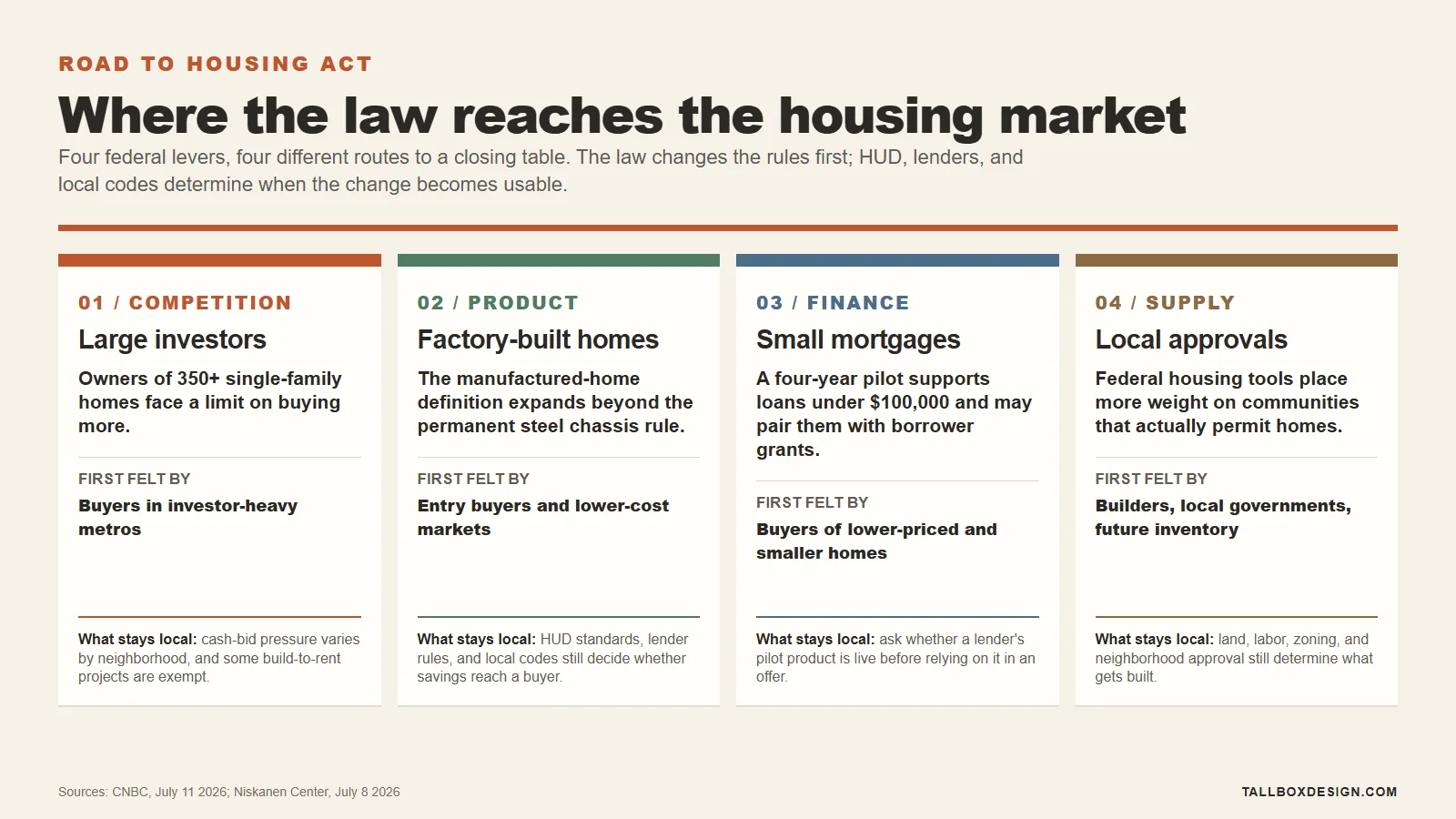
The 21st Century ROAD to Housing Act bundles dozens of federal housing measures into one statute. For a buyer or seller, four levers matter most: large-scale single-family buyers, factory-built cost rules, loans under $100,000, and federal pressure on local housing approvals.
Source: CNBC summary of the 21st Century ROAD to Housing Act (July 11, 2026); Niskanen Center analysis of supply provisions (July 8, 2026). Implementation details still run through HUD, lenders, and states.
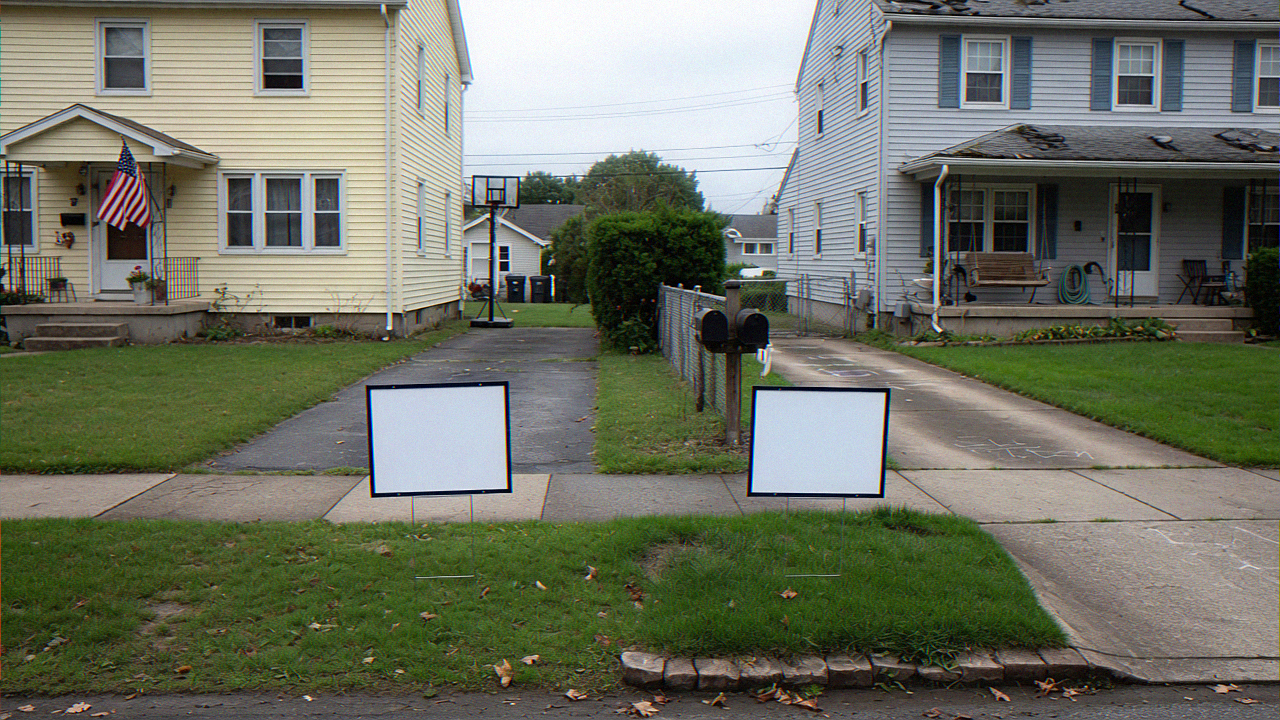
The 350-home investor cap: who competes for the listing
Large institutional investors that already own at least 350 single-family homes face a new federal limit on buying more of them. CNBC’s July 11, 2026 explainer notes exceptions for certain build-to-rent and renovate-to-rent projects, plus programs that help renters build credit toward ownership.
For a household buyer, the practical question is local competition at the offer table. In metros where large portfolios have been active, fewer all-cash institutional bids can leave more room for mortgage buyers. Economists in the same coverage still stress that institutional share is modest in many markets, so the cap is a constraint, not a market reset.
Factory-built homes: the chassis rule buyers will feel later
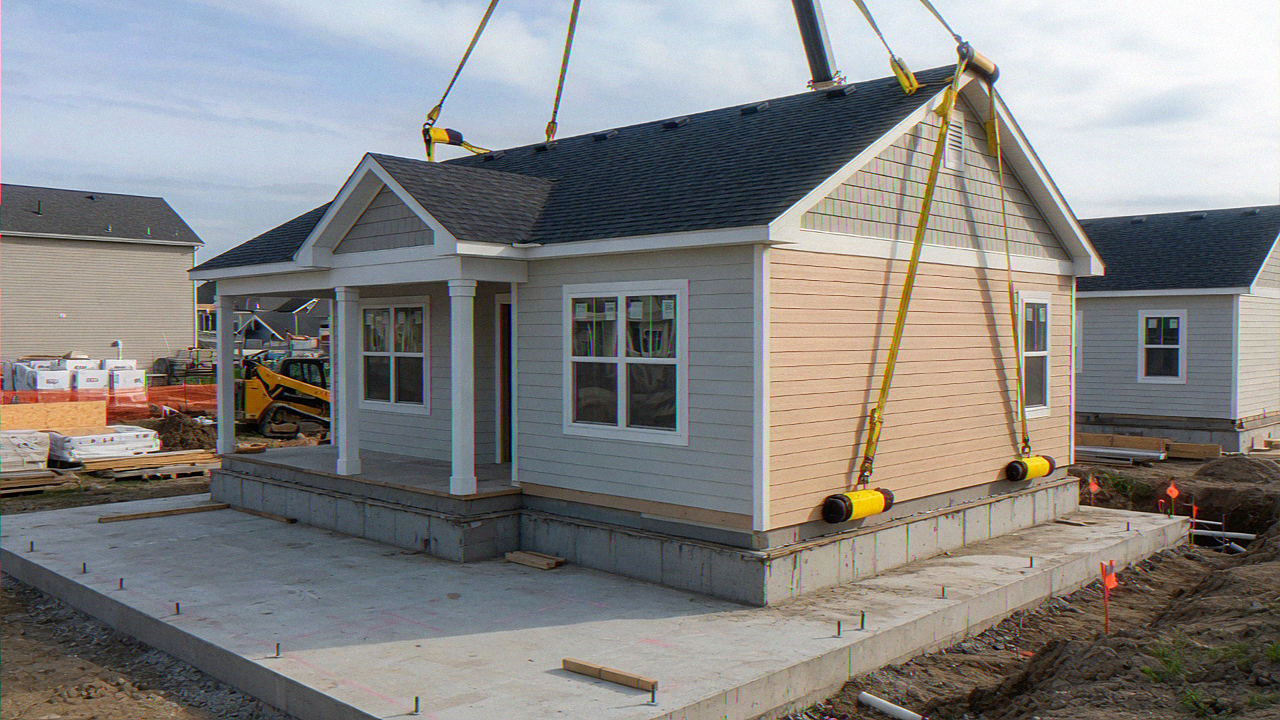
Manufactured housing is one of the cheapest unsubsidized ownership paths in the United States. The ROAD package expands the federal manufactured-home definition so units can qualify without a permanent steel chassis once required mainly for towing.
The Niskanen Center’s July 8, 2026 analysis estimates removing the chassis can cut roughly $5,000 to $10,000 per home and make two-story factory designs more practical. That savings only shows up after HUD standards, lenders, and local codes catch up. Our field guide on factory-built and prefab homes in 2026 already tracks why shipments and code lines matter more than brochure labels.
The under-$100,000 mortgage pilot
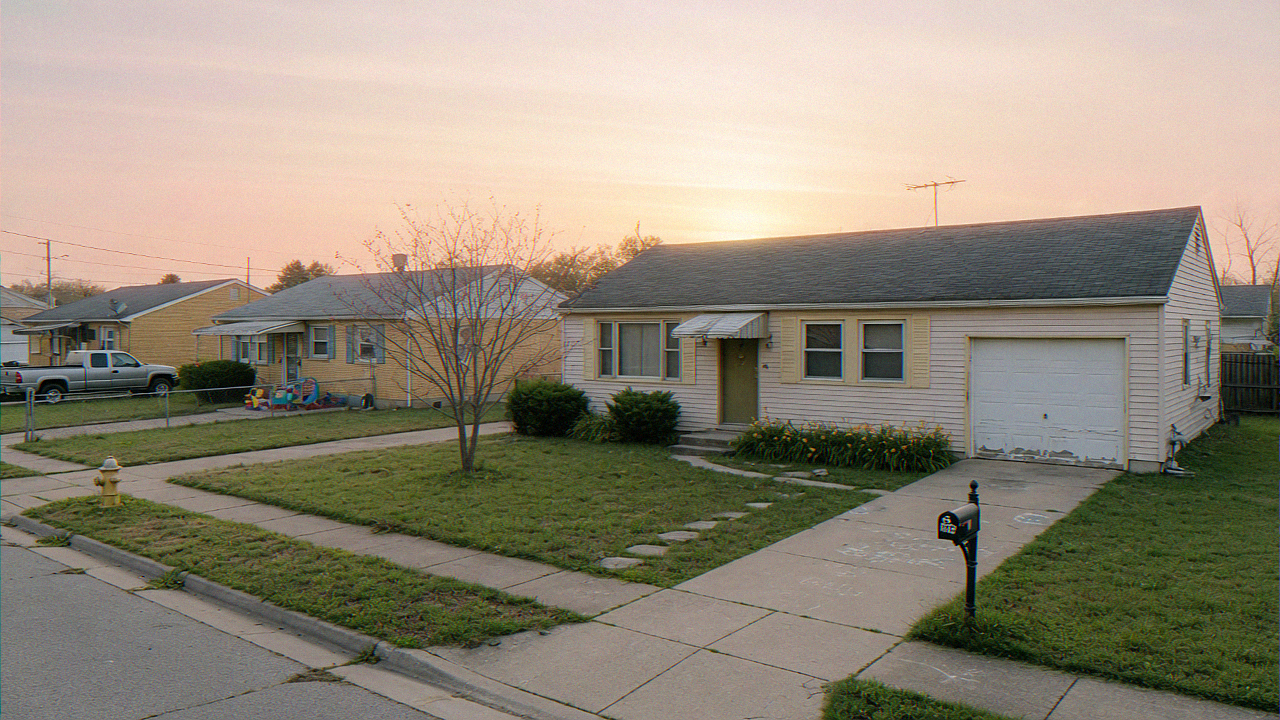
Many lenders avoid small-balance mortgages because fixed compliance costs eat the margin. The ROAD Act creates a four-year pilot aimed at loans under $100,000, including support that helps lenders originate them and grants that can help borrowers with down payments and closing costs, according to CNBC’s consumer summary.
That path matters most where homes still price under six figures: parts of the Midwest and South, older stock, and some manufactured placements. It does not create $90,000 houses in expensive coastal metros. Ask a local lender whether pilot products are live before treating the headline as a pre-approval.
What the ROAD Act will not fix this quarter
National Association of REALTORS® data for June 2026 still shows a record $440,600 median existing-home price, a 2.4% monthly drop in sales to a 4.09 million annualized pace, and 4.6 months of inventory. Freddie Mac’s average 30-year fixed rate in June sat near 6.49%. Those are the numbers a buyer or seller walks into this week.
Cotality’s Selma Hepp told CNBC the bill hits real cost drivers while warning against immediate relief. UrbanDigs co-founder John Walkup made the same point: local costs, labor, land, zoning, and community opposition still decide how many homes get built. Federal incentives help at the margin; they do not pour foundations alone.
Sellers facing delistings and price cuts should read the law as a multi-year supply story, not a reason to hold for last year’s peak. Our update on sellers pulling homes off the market and the playbook for selling in a balanced 2026 market still govern listing tactics this summer.
What buyers and sellers should do now
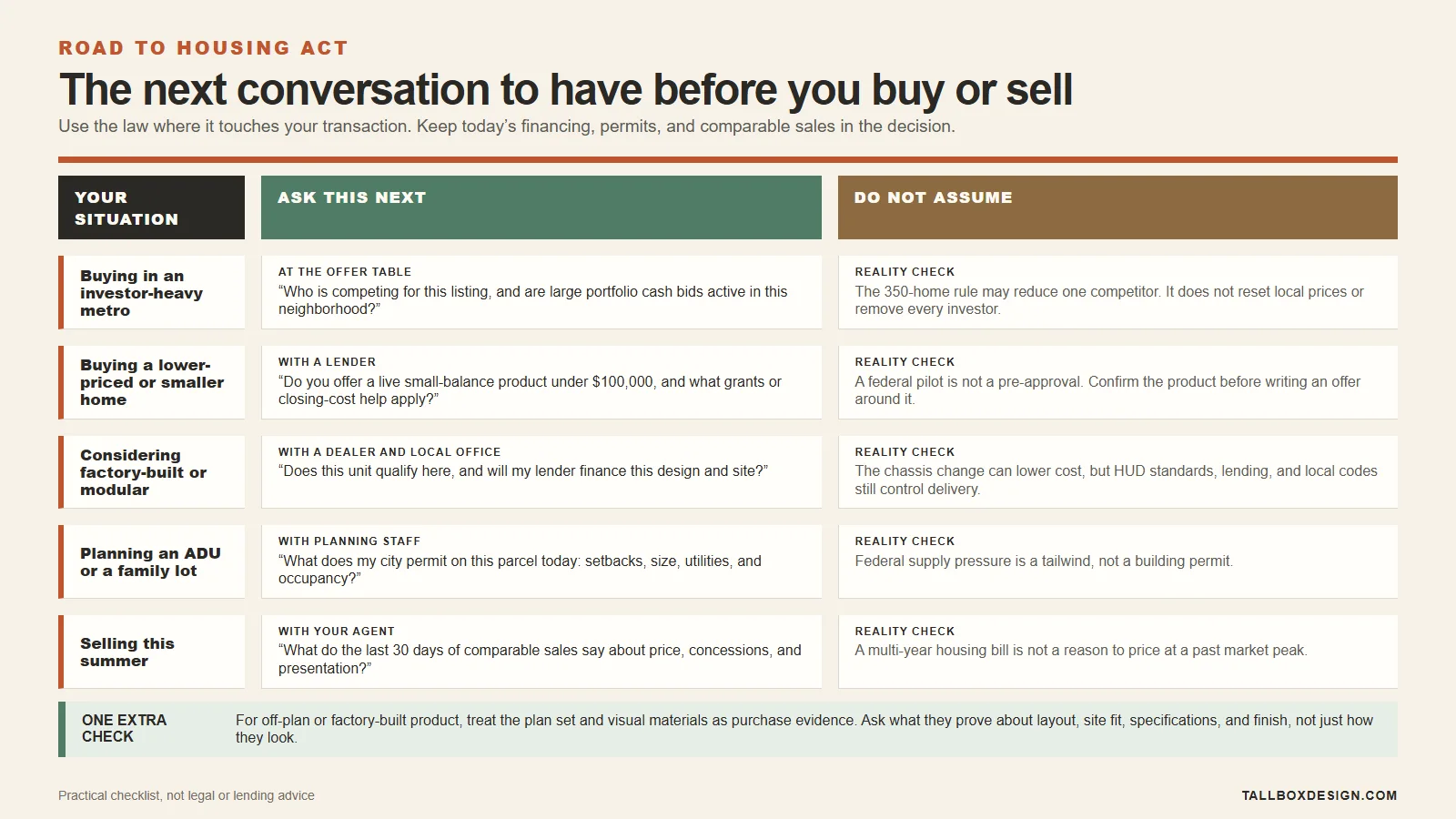
- ✓Buyers in investor-heavy metros: track whether competing cash bids from large portfolios thin out; still underwrite payment at mid-6% rates, not at a hoped-for cut.
- ✓Entry buyers: ask lenders about small-balance products under $100,000 and about financing for factory-built or modular homes once local rules update.
- ✓Lot owners and multigenerational households: backyard housing still turns on state and city ADU rules; federal supply pressure is a tailwind, not a building permit. See 2026 ADU laws and build cost.
- ✓Sellers: price to the last 30 days of comps and present the home hard. A multi-year federal supply bill is not a reason to list at 2022 peak.
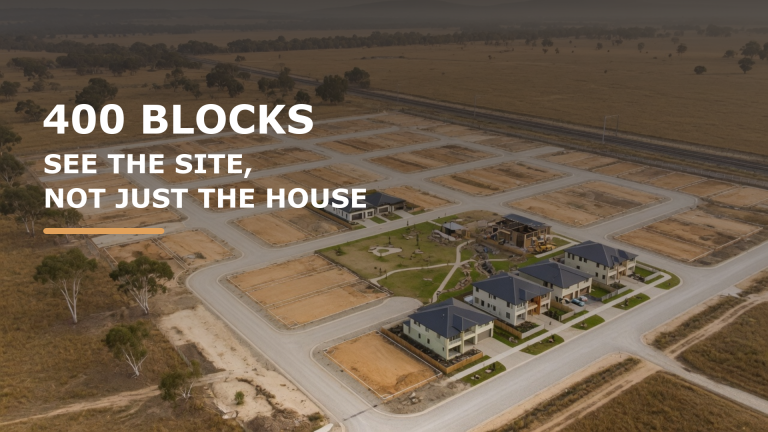
- ✓Anyone buying off-plan or factory product: the house may still exist first as a plan set and a set of images. Treat those visuals as part of the purchase decision, not decoration.
ROAD to Housing Act FAQs
QIs the ROAD to Housing Act law right now?
Yes. CNBC reported on July 11, 2026 that the 21st Century ROAD to Housing Act became law after the White House neither signed nor vetoed the bill in the constitutional window following Congress’s June 23 passage.
QWill home prices fall because of the ROAD Act?
Not on a fixed schedule. The law aims to ease supply and financing constraints over time. NAR still recorded a $440,600 June median price, and housing economists warn that permitting and construction lag any federal rule change.
QDoes the investor cap ban all investors?
No. The reported threshold applies to large institutional owners of at least 350 single-family homes, with exceptions for some rental and renter-to-owner programs. Small landlords and most individual investors sit outside that federal bar.
QCan I get a mortgage under $100,000 tomorrow?
Not automatically. The pilot needs lender and program implementation. Ask a local mortgage originator whether small-balance products and any borrower grants under the pilot are available in your market before you write an offer that depends on them.
The takeaway
The ROAD to Housing Act is real law with real levers: investor scale, factory-built rules, small mortgages, and federal incentives for communities that permit homes. Those levers change the multi-year supply and financing map more than next month’s closing table.
Buyers and sellers still operate inside a record-price, mid-6% rate market. Use the new rules where they touch your loan, your competition, or the product type you buy, and keep pricing and presentation honest to today’s comps.