Picture of George Nicola
George Nicola

George is a seasoned interior designer and property marketing strategist with over 13 years of experience. He specializes in transforming properties into visually stunning spaces, helping clients recognize the potential and beauty in each property. With an impressive international client base of exciting projects throughout Europe and America.

Table of Contents

Organic Modern Style blends sleek minimalism with nature-inspired elements. It creates spaces that feel both sophisticated and cozy. This design approach mixes clean lines and simple shapes with warm, earthy touches. As with any style, it has modern and more traditional expressions, both visualizing with different details.

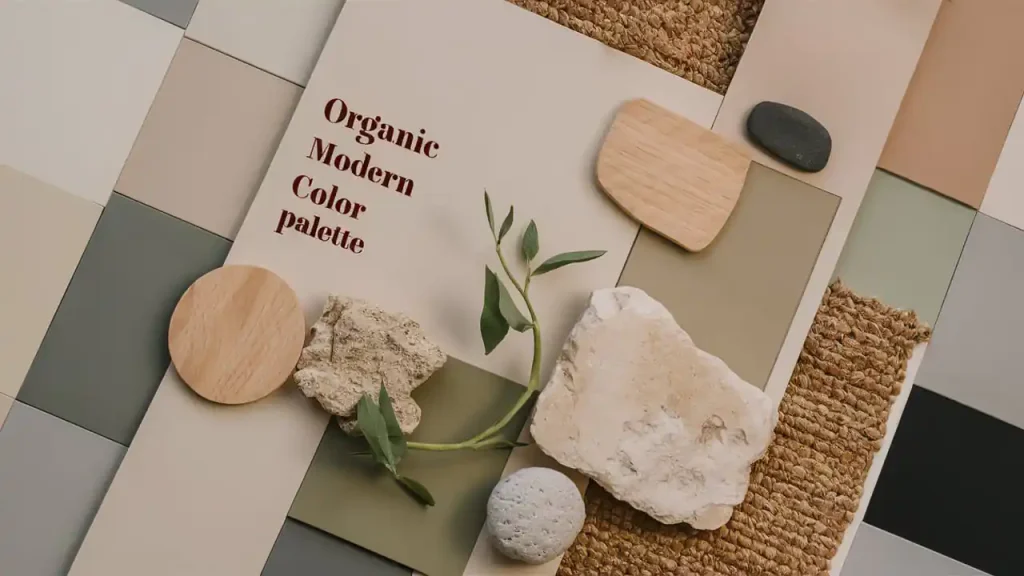
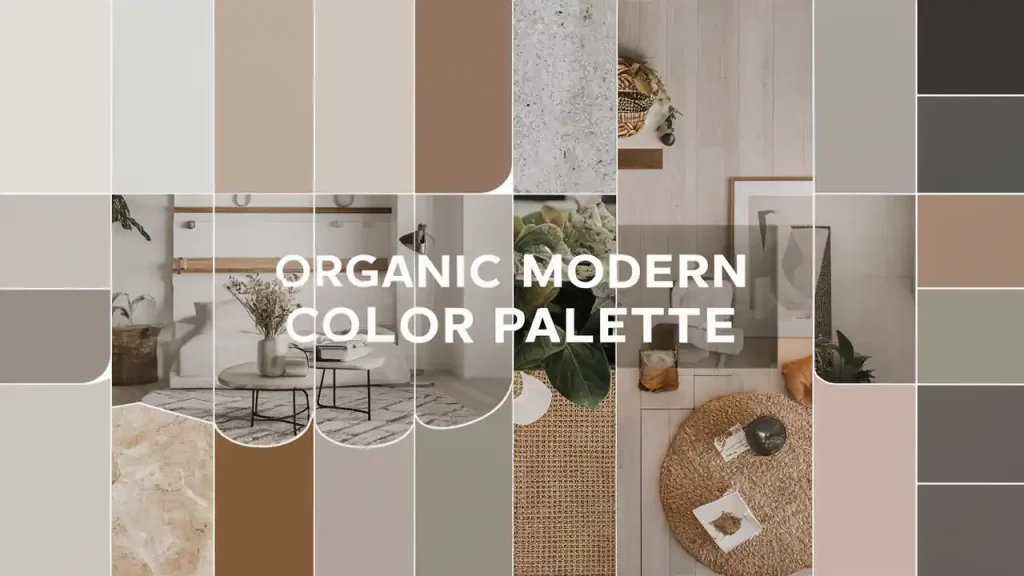
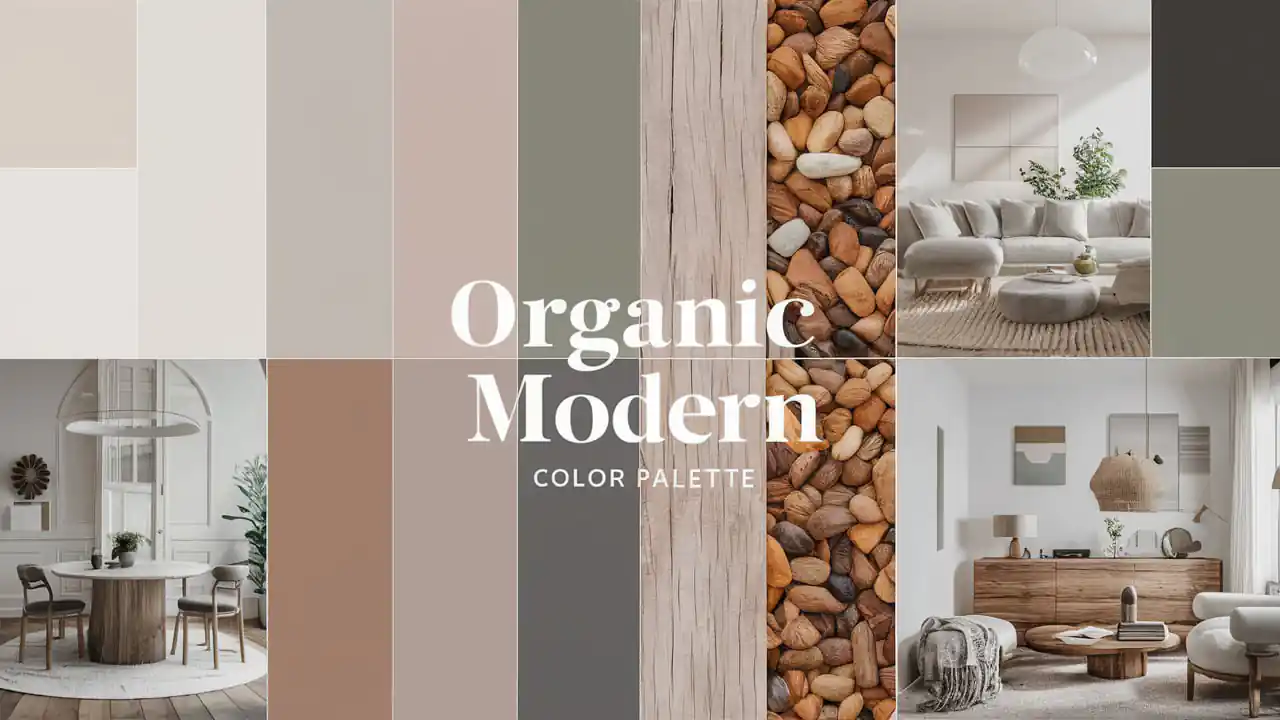
A composition of earthy materials, leaves, and swatches of neutral colors titled "Organic Modern Color Palette" encapsulates the essence of Organic Modern Style.

The perfect modern Organic Modern Style means:

  • Minimalist furniture with simple, streamlined forms
  • Open floor plans and large windows to maximize natural light
  • Use of contemporary materials like glass, steel, and polished concrete
  • Neutral color palettes with occasional pops of muted, natural hues
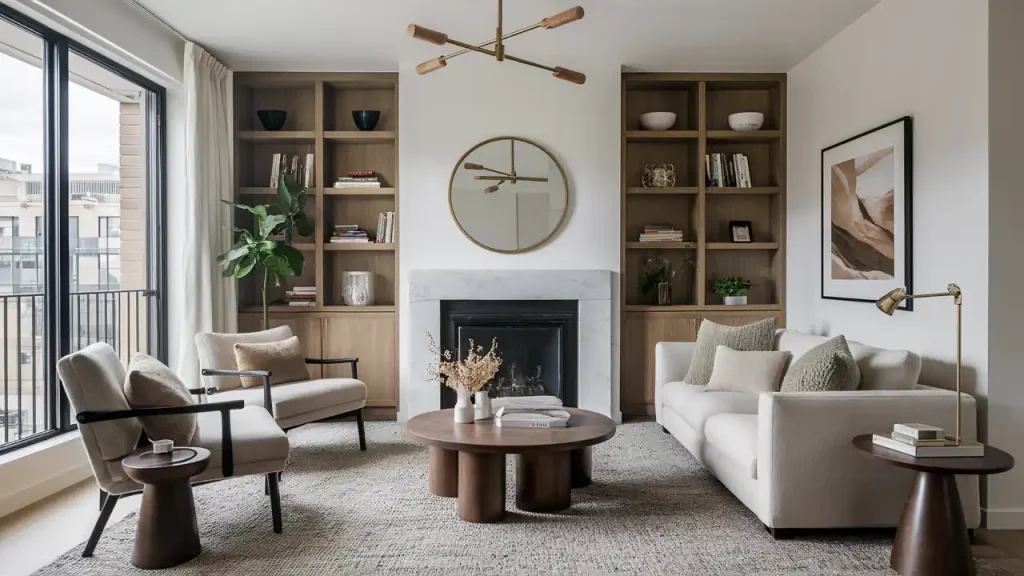
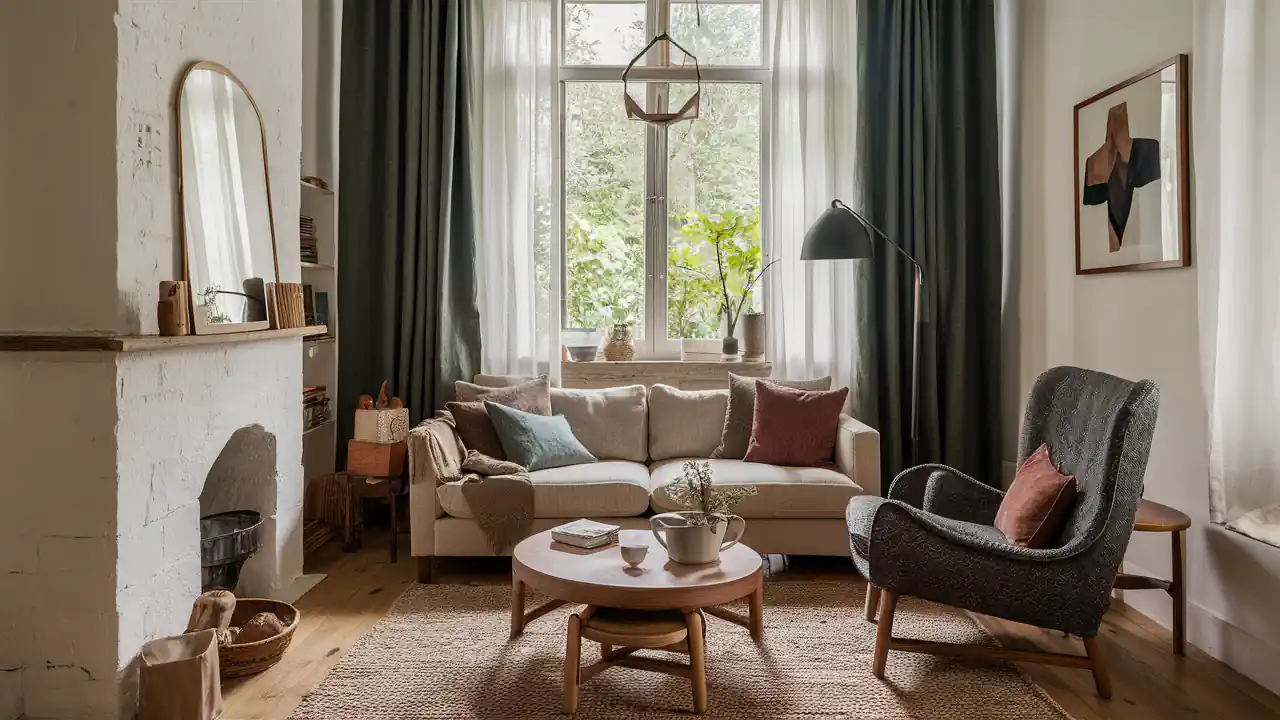
Modern living room with a fireplace, round mirror, sofa, armchairs, wooden shelves, coffee tables, large windows, and an Organic Modern Interior Design that seamlessly blends natural elements with contemporary aesthetics.

The ideal traditional or nature-inspired organic style includes:

  • Natural materials such as wood, stone, and woven textiles
  • Organic shapes and curved forms in furniture and decor
  • Indoor plants and botanical motifs
  • Handcrafted or artisanal accessories
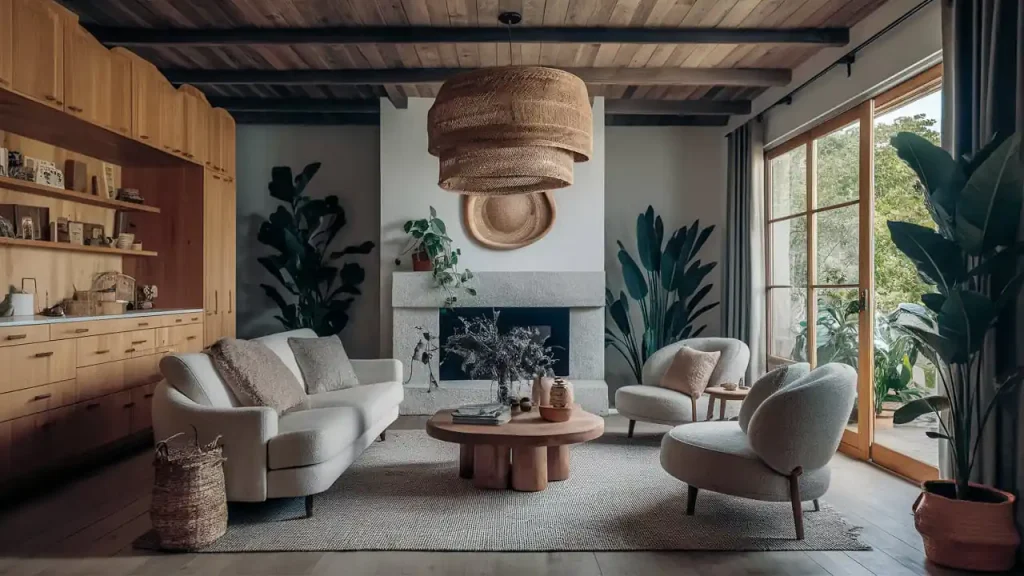
Cozy living room with neutral tones, rustic wooden furniture, large plants, stone fireplace, circular mirror, and a touch of organic modern style.

George Nicola, TALLBOX: Our TALLBOX team creates projects where the Organic Modern Style combines modern design with natural materials, curved shapes, and a focus on comfort. It uses a neutral color palette with pops of muted earth tones. The style often includes wood, stone, and plants to bring the outdoors inside.

Rooms in this style have open layouts and lots of natural light. Furniture pieces are usually simple but made with high-quality natural materials. Organic Modern homes feel calm and welcoming, with a mix of textures that add visual interest.

Key Takeaways

  • Organic Modern Style mixes minimalist design with natural elements and textures
  • This style uses neutral colors, simple shapes, and high-quality natural materials
  • Spaces feature open layouts, lots of light, and a focus on comfort and coziness

How to Define Organic Modern Style?

Organic Modern style blends sleek minimalism with warm natural elements. It takes cues from Scandinavian design, mid-century modern, and bohemian aesthetics.

This style embraces clean lines and simple forms. At the same time, it incorporates organic materials and shapes inspired by nature.

Key features of Organic Modern include:

  • Neutral color palettes
  • Natural textures like wood, stone, and jute
  • Curved and flowing shapes
  • Plenty of plants and greenery
  • A mix of modern and handcrafted pieces
A cozy living room featuring Organic Modern Style with a large woven light fixture, wooden ceiling, white sofas, round coffee table, and large plants.

Furniture often has streamlined silhouettes but uses materials like wood or rattan. Decor items may include woven baskets, ceramic vases, or wool textiles.

The overall look is calm, uncluttered, and connected to nature. Spaces feel light, airy, and relaxed.

Organic Modern aims to create a peaceful environment. It does this by balancing sleek design with cozy, natural touches.

Cozy living room with beige sofas, wooden coffee table, large plants, woven pendant light, and natural light streaming through windows—an inviting organic modern style haven.

What are the colors Organic Modern Style?

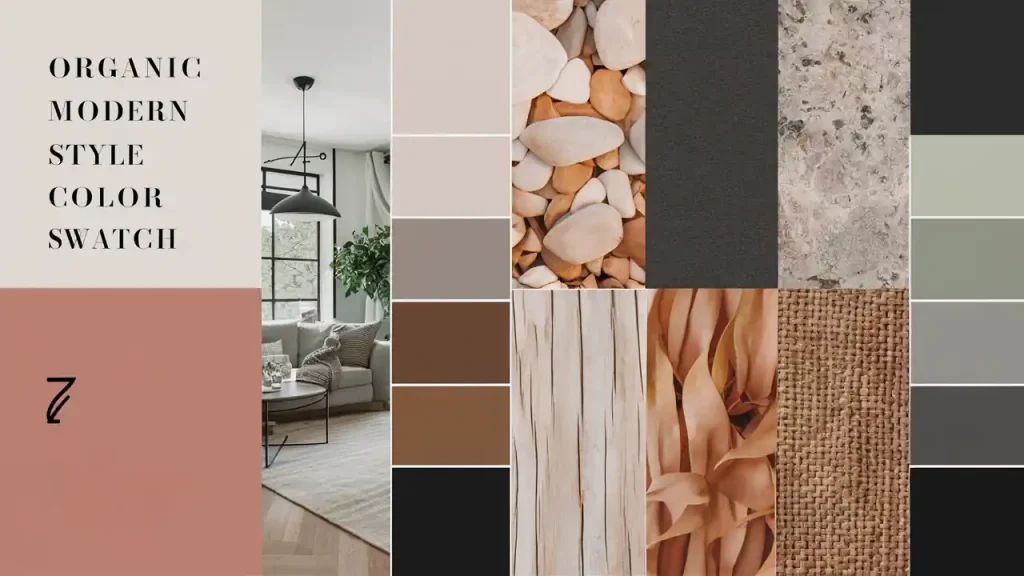
In the Organic Modern style, colors and textures work together to create a harmonious, nature-inspired environment that feels both contemporary and timeless. The base colors provide a clean, neutral foundation, while the earthy accents add warmth and connection to nature. The contrasting colors offer definition and sophistication, and the textures bring depth and tactile interest to the space.

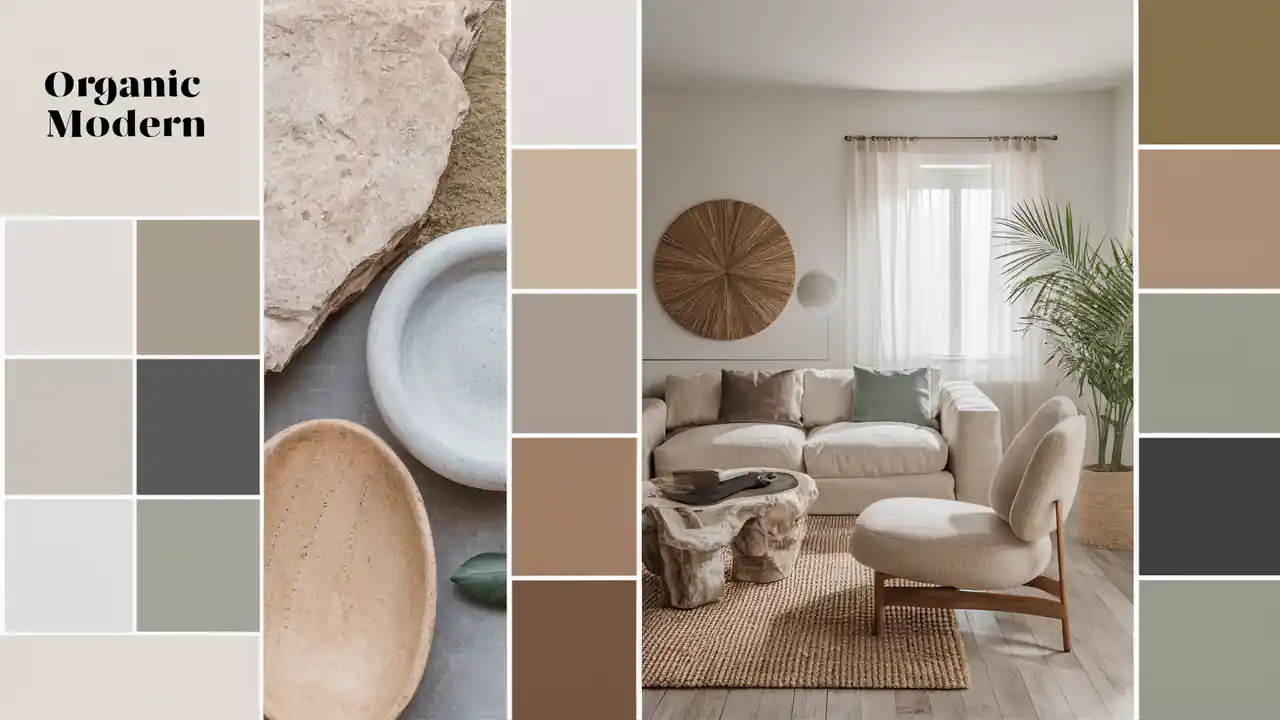
Collage of interior design elements and textures titled "Organic Modern Style," showcasing earthy tones and natural materials.

Base Colors:

  • Soft whites (ivory, cream): Purity, cleanliness, and openness

Role: Create a sense of spaciousness and light, providing a neutral backdrop for other elements

  • Light beiges: Meaning: Warmth, comfort, and naturalness

Role: Add warmth to the space without overpowering, complementing natural materials

  • Pale grays: Sophistication, calmness, and modernity

Role: Provide a cool, contemporary feel while maintaining a neutral base

  • Deep Black: Elegance, depth, and grounding

Role: Used sparingly to add definition and contrast, anchoring the lighter elements

Collage with living room, pebbles, wood textures, and earthy tones labeled "Organic Modern Style.

Earthy Accent Colors:

  • Soft browns: Earth, stability, and comfort

Role: Connect the design to nature, often reflecting wood tones

  • Warm taupes: Sophistication, balance, and versatility

Role: Bridge the gap between cool and warm tones, adding depth without heaviness

  • Subtle sage greens: Nature, growth, and tranquility

Role: Bring the outdoors in, adding a fresh, calming element to the palette

Organic Modern Interior Design color swatch showing hues with natural textures, including pebbles, wood, fabric, and room interior.

Contrasting Colors:

  • Charcoal gray: Sophistication, mystery, and strength 

Role: Provide depth and contrast without the starkness of pure black

  • Matte black: Power, elegance, and definition 

Role: Used for accents to create visual interest and define spaces

A display of an Organic Modern Style color palette with various textures, stones, and wooden elements on a woven mat.

Texture Samples:

  • Light wood grain: Warmth, nature, and organic beauty

Role: Add visual interest and tactile warmth to the space

  • Natural stone: Strength, permanence, and earthiness

Role: Introduce varied textures and patterns, connecting to the natural world

  • Woven textile: Comfort, craftsmanship, and tactile interest

Role: Soften the space and add layers of texture

A collage showcasing an Organic Modern Style color palette with neutral tones and images of stylish, modern home interiors.

This color palette and texture combination aims to create a serene, balanced environment that feels both modern and organic, reflecting the core principles of the Organic Modern design style: a blend of minimalist aesthetics with natural elements and materials.

Historical Context of Organic Modern Style

Organic modern style has roots in early 20th century design movements. It combines elements from modernism, minimalism, and nature-inspired aesthetics. This style evolved over decades as designers sought to blend clean lines with organic forms and materials.

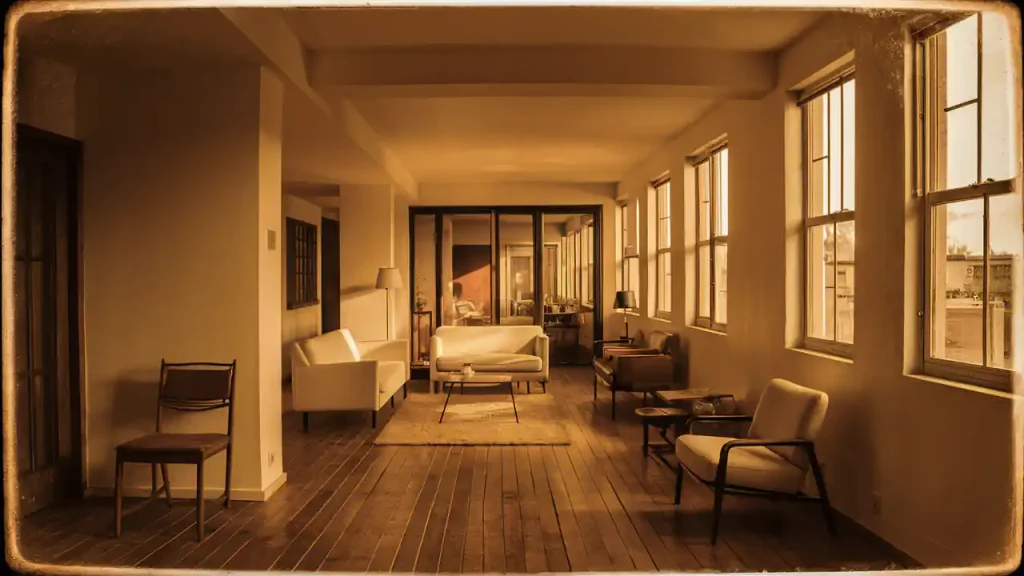
A sepia-toned image of an Organic Modern living room with large windows, sofas, and wooden floors.

The organic modern style grew from ideas of architects like Frank Lloyd Wright. In the early 1900s, Wright created the Prairie School. This style used natural materials and horizontal lines to blend with the landscape. Another key figure was Alvar Aalto. He mixed curved wood forms with modern design in the 1930s.

A vintage-style room with wooden floors, white furniture, large windows, and a mirrored wall in the background seamlessly blends elements of Organic Modern style into its interior design.

The Bauhaus school also shaped organic modernism. Founded in 1919, it taught simplified forms and useful design. Charles and Ray Eames made big strides in the 1940s. They created curved plywood furniture that was both modern and organic.

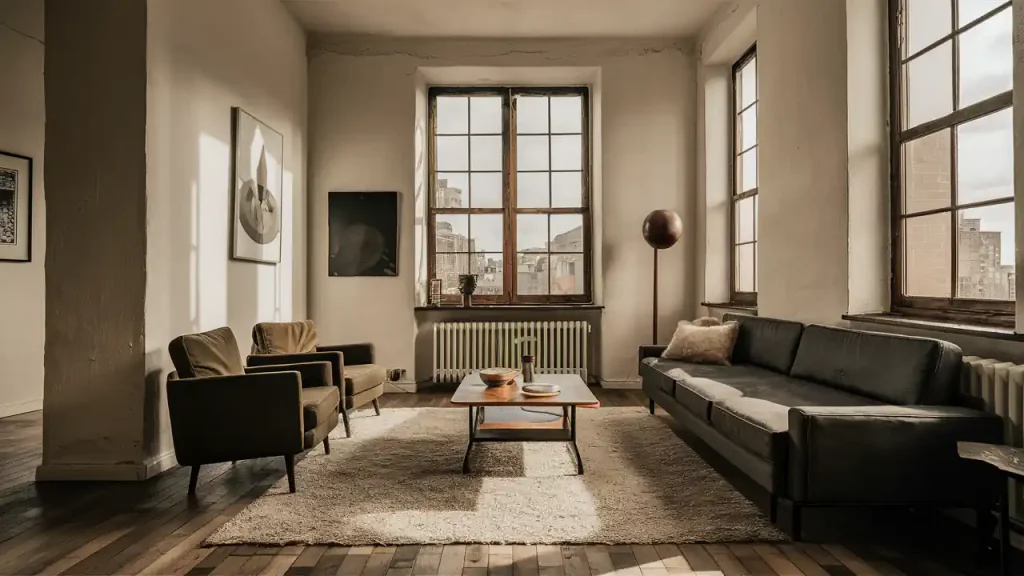
Cozy living room in Organic Modern Style with large windows, a gray sofa, two armchairs, a coffee table, and wall art on a light-colored rug.

Evolution Through the 20th Century

In the 1950s and 60s, the Mid-Century Modern movement took off. It mixed sleek forms with natural materials like wood and leather. Designers like Eero Saarinen made curvy chairs that looked organic but used modern materials.

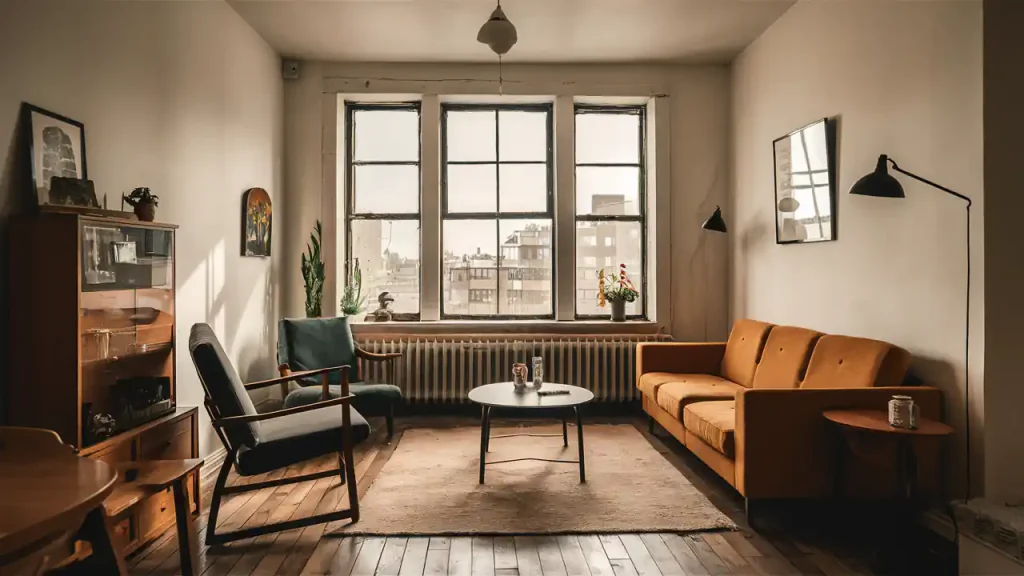
Cozy living room with large windows, a mustard sofa, armchairs, coffee table, and warm sunlight streaming in. The organic modern style seamlessly blends natural elements with contemporary interior design for a tranquil retreat.

The 1970s saw a push for more eco-friendly design. This led to more use of raw, natural materials in modern spaces. By the 1980s and 90s, organic modern style became more refined. It kept clean lines but added warm textures and earthy colors.

Today’s organic modern style mixes these past ideas. It uses natural and man-made materials. The goal is to create spaces that feel both current and connected to nature.

A cozy, minimalist living room bathed in warm sunlight features modern furniture and large windows, embodying Organic Modern Interior Design principles.

Notable Designers and Architects

Frank Lloyd Wright stands out as a pioneer of organic modern style. His designs blend seamlessly with nature, using flowing lines and open spaces. Wright’s famous Fallingwater house in Pennsylvania is a prime example of this approach.

Alvar Aalto, a Finnish architect, brought organic forms to furniture design. His curved wood pieces and organic shapes in buildings showcase his unique style. The Paimio Sanatorium is one of Aalto’s most notable works.

Zaha Hadid pushed the boundaries of organic modern design with her fluid, curving structures. The Heydar Aliyev Center in Azerbaijan displays her signature style of sweeping lines and unconventional shapes.

Jørn Utzon, the Danish architect behind the Sydney Opera House, created a building that seems to grow from its harbor setting. Its shell-like forms blend with the surrounding water and sky.

Antoni Gaudí, though predating the modern movement, heavily influenced organic design. His structures in Barcelona, like Casa Milà and Park Güell, feature natural forms and fluid lines that inspire today’s organic modern architects.

Key Characteristics of Organic Modern Style

Organic modern style blends natural elements with sleek design. It creates warm, inviting spaces that feel fresh and timeless. This look combines simple shapes, earthy materials, and a calm color palette.

Natural Materials in Organic Interiors

Organic modern style blends natural elements with sleek design. It creates warm, inviting spaces that feel fresh and timeless. This look combines simple shapes, earthy materials, and a calm color palette.

Wood, stone, and leather are key in organic modern spaces. These materials add texture and warmth. Wood furniture often has smooth, curved shapes. Stone countertops or tile floors bring in natural patterns. Leather sofas or chairs add a soft, organic touch.

What woods are most common and rare in organic style?

Woods are often used for flooring, furniture, and architectural elements. They may be left with a natural finish to showcase their grain and color.

Common Woods: Oak, Walnut, Maple, Birch, Ash

Rarer or More Unique Woods: Teak, Bamboo (technically a grass, but used like wood), Reclaimed woods (various species), Exotic hardwoods (used sparingly): Zebrawood and Ebony

Woven baskets, clay pots, and jute rugs are common accents. These items highlight handmade craftsmanship. Plants play a big role too. Large potted trees, hanging vines, or small succulents bring life to rooms.

Natural fabrics like linen, cotton, and wool are used for curtains and upholstery. These materials feel cozy and look relaxed. They also age well over time, gaining character.

What fabrics and textile are most common and rare in organic style?

Fabrics are typically used for upholstery, curtains, rugs, and decorative elements like throw pillows and blankets. They often feature neutral colors or subtle, natural-inspired patterns. The combination of these materials helps create a layered, textured look that is key to the Organic Modern aesthetic.

Fabrics in Organic Modern Style:

Common Fabrics: Linen, Cotton, Wool, Hemp and Canvas

Rarer or More Unique Fabrics: Bouclé, Organic silk, Recycled fabrics, Jute or sisal and Cork fabric

Neutral Color Palettes

Organic modern style uses calm, muted colors. Whites, beiges, and grays form the base. These light shades make rooms feel open and airy. They also let natural materials stand out.

Earthy tones add depth to the neutral base. Soft browns, warm taupes, and subtle greens are common. These colors tie in with wood tones and plants. They create a soothing, nature-inspired feel.

Pops of black or charcoal gray add contrast. These darker shades help define spaces and ground the look. They’re often used for light fixtures, window frames, or small accents.

Clean Lines and Forms

Furniture in organic modern style has simple shapes. Sofas, chairs, and tables often have straight lines or gentle curves. This keeps the look uncluttered and calm.

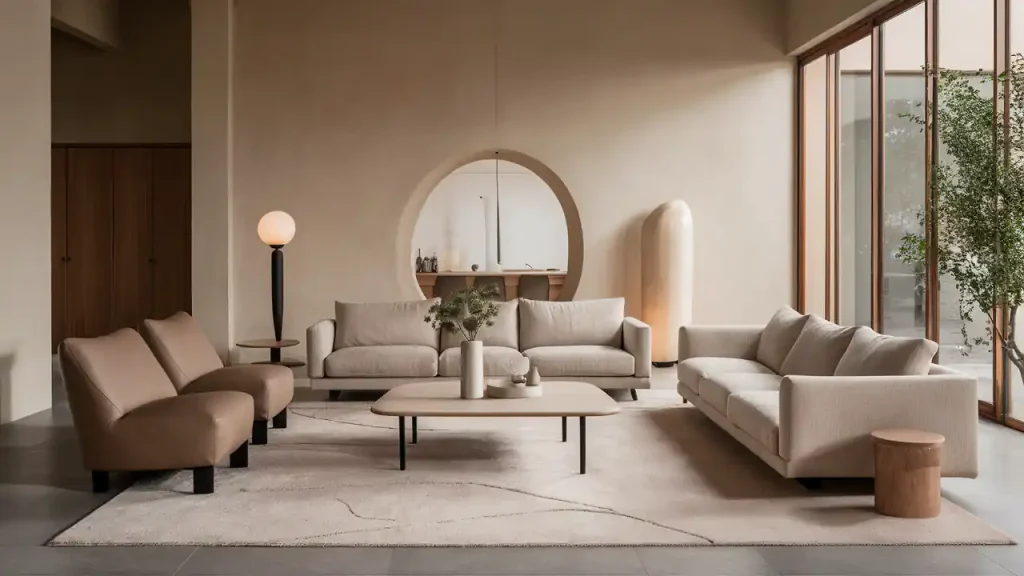
Minimalist living room with neutral-toned sofas, a coffee table, and accent lighting paired with a round mirror on the wall. The interior design embraces an Organic Modern Style, blending natural materials with contemporary elements.

Built-in elements like shelves or cabinets are sleek and minimal. They blend into walls, creating a seamless look. This helps rooms feel spacious and organized.

Modern home office with wooden shelves, a built-in desk, ergonomic chair, and curved ceiling design in an Organic Modern Style. Natural light fills the space.

Decor items are chosen carefully. A few sculptural pieces or art prints add interest without clutter. Mirrors with simple frames can make spaces feel bigger and brighter.

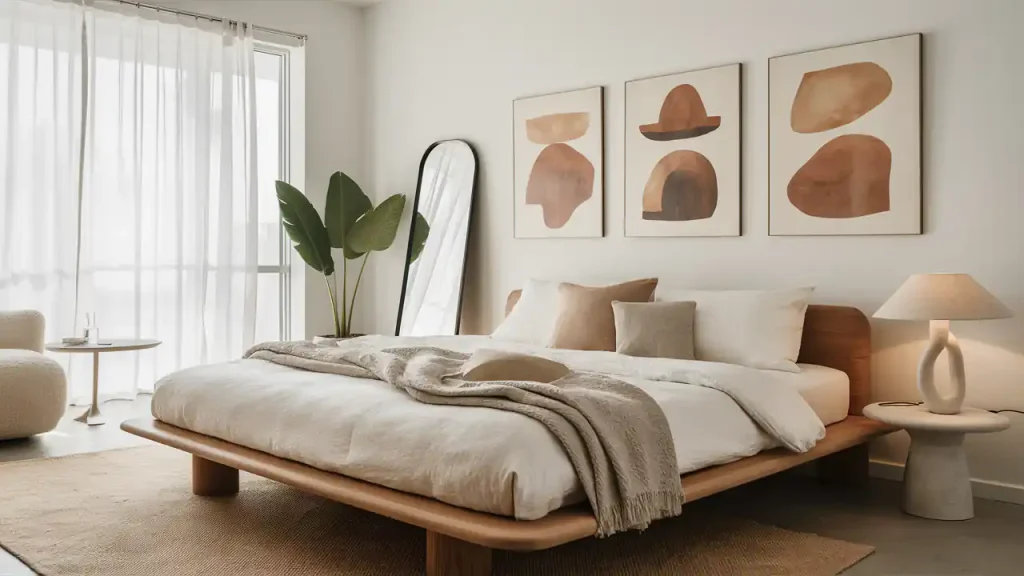
Minimalist bedroom with a wooden bed, white bedding, abstract wall art, floor mirror, potted plant, and soft lighting. The organic modern design of the space creates a serene and elegant atmosphere.

Influence of Nature on Design

Organic modern style brings the outdoors in. Large windows let in lots of natural light. They also frame views of gardens or landscapes. This connects indoor spaces to nature.

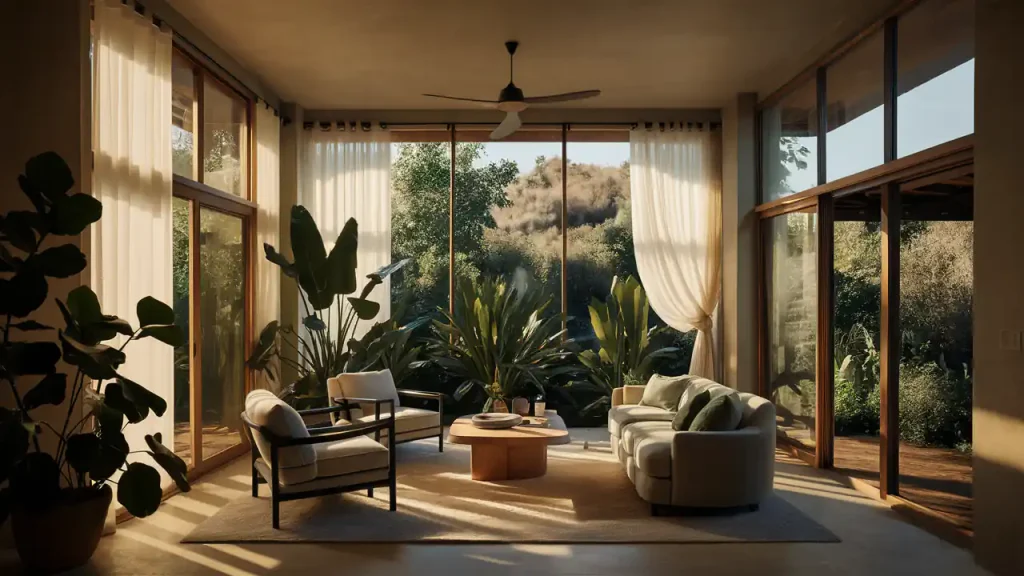
Sunlit modern living room with large windows, indoor plants, white curtains, and cozy seating. The organic modern style seamlessly blends natural elements with contemporary design for a harmonious interior.

Room layouts often flow freely. Open floor plans mimic the feeling of being in nature. Spaces are arranged to feel balanced and harmonious.

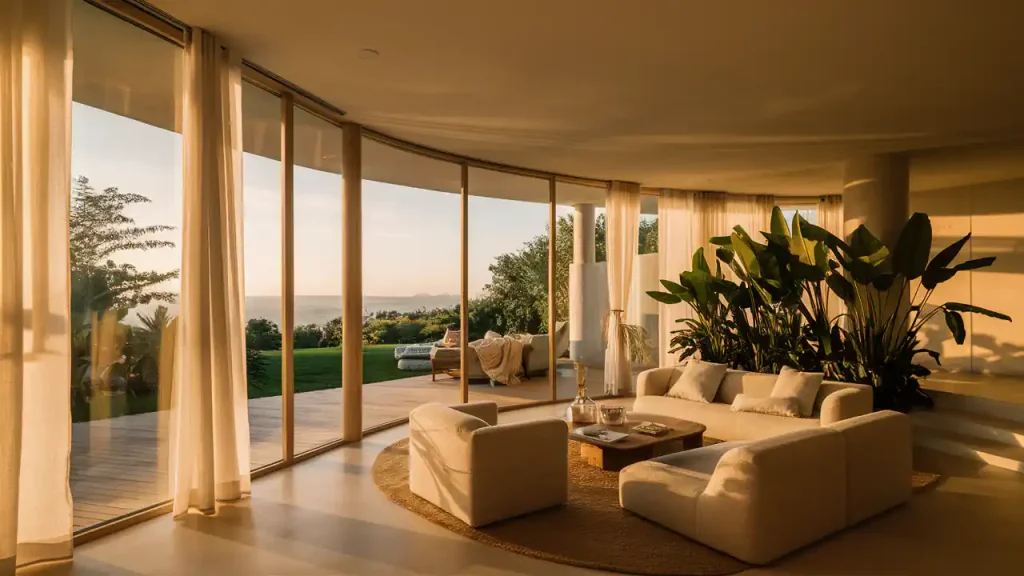
A spacious living room in Organic Modern Style features white furniture, large windows, lush plants, and a view of a garden and ocean at sunset.

Natural shapes inspire design choices. A curved sofa might echo rolling hills. A round coffee table could remind you of a smooth river stone. These subtle nods to nature create a calm, organic feel throughout the home.

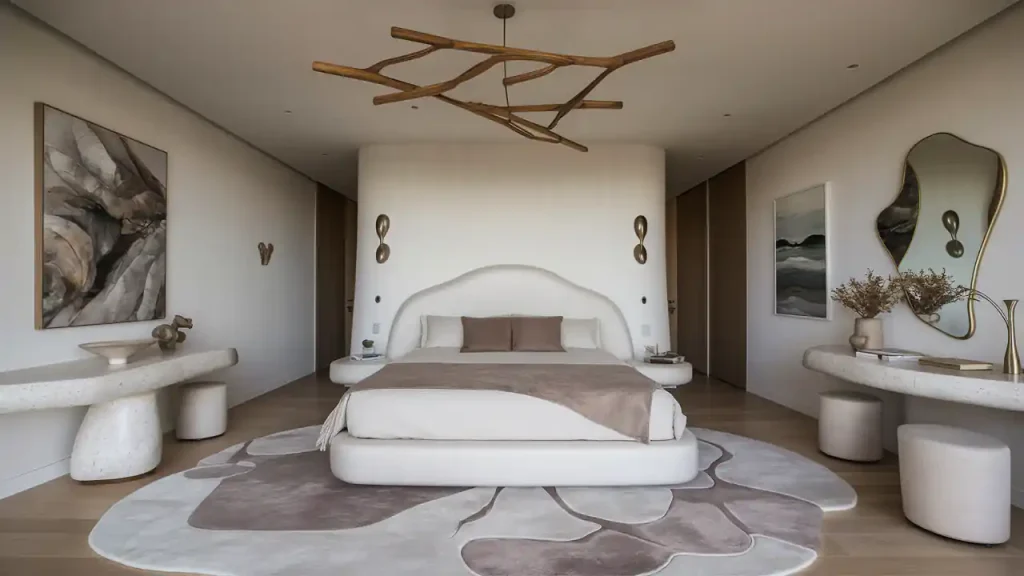
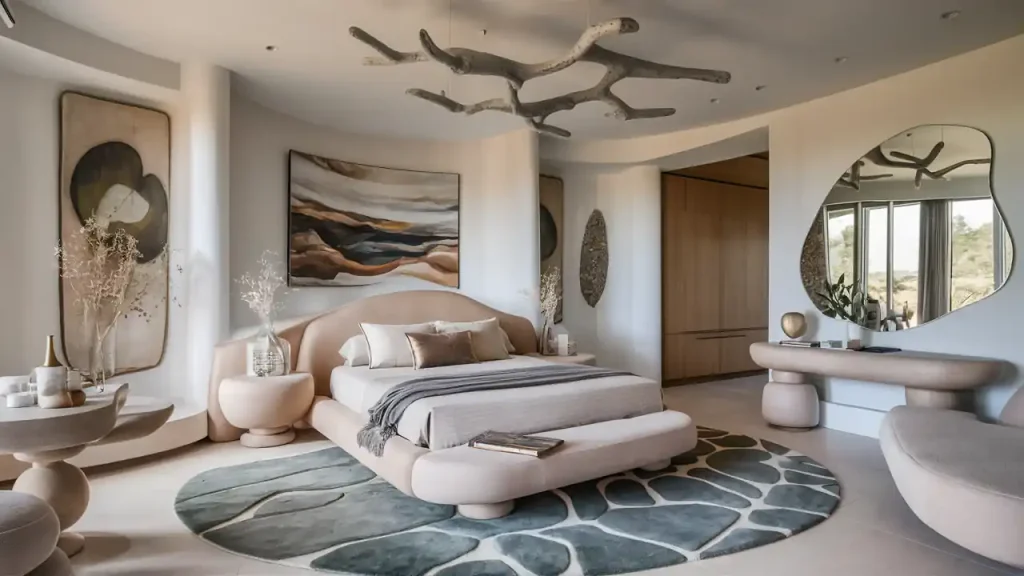
Minimalistic bedroom with neutral tones, featuring a unique rug, large bed, abstract ceiling fixture, and modern artwork. This space embodies Organic Modern Design with its clean lines and natural materials, creating a serene and stylish retreat.

Architectural Elements of Organic Modern Homes

Organic modern homes blend natural elements with sleek design. They create spaces that feel open and connected to nature. These homes use materials and layouts that bring the outdoors inside.

Open Floor Plans

Open floor plans are a key part of organic modern homes. They remove walls between living areas to create one big space. This makes rooms feel bigger and brighter. It also helps people move easily from one area to another.

Open layouts often combine the kitchen, dining room, and living room. This setup is great for entertaining and family time. It lets in more natural light and improves air flow.

Furniture and decor help define different zones in the open space. Area rugs, lighting, and strategic placement of items can create separate areas without walls.

Integration with Surroundings

Organic modern homes try to blend in with nature. They use the land’s shape to guide the home’s design. This might mean building around trees or following the curve of a hillside.

Large windows and glass doors are common. They frame views of the outdoors and let in lots of light. Some homes have indoor gardens or living walls to bring plants inside.

Outside spaces like patios and decks are important too. They extend living areas into nature. Many homes use local materials like stone or wood to match the surroundings.

Usage of Glass and Wood

Glass and wood are star materials in organic modern homes. Big windows and glass walls make spaces feel open and airy. They blur the line between inside and outside.

Wood adds warmth and natural texture. It’s used for floors, ceilings, and accent walls. Exposed wooden beams are popular. They add character and a connection to nature.

Designers often mix different types of wood. This creates visual interest. Light woods like ash or maple keep spaces bright. Darker woods like walnut add richness and depth.

Implementing Organic Modern Style

Organic modern style blends natural elements with clean lines and minimalism. It creates warm, inviting spaces that feel both contemporary and connected to nature. Here’s how to bring this style into your home.

Modern bedroom with beige furniture, a large abstract art piece, unique ceiling fixture, and a patterned rug covering the floor, all showcasing an Organic Modern Design.

Room-by-Room Guide

In the living room, choose a neutral sofa with simple lines. Add texture with wool throws and jute rugs. Place a live-edge wood coffee table as a focal point. Hang abstract nature-inspired art on white walls.

For the bedroom, opt for a platform bed with a wooden headboard. Use linen bedding in earthy tones. Add warmth with woven baskets and a sheepskin rug. Keep decor minimal with a few ceramic vases holding dried grasses.

In the kitchen, install sleek cabinets in light wood tones. Choose countertops in natural stone or concrete. Display wooden cutting boards and handmade pottery. Use open shelving to showcase simple dinnerware and glass jars filled with pantry staples.

Sustainable Practices

Choose furniture made from sustainably sourced wood or reclaimed materials. Look for pieces crafted by local artisans to reduce transportation emissions. Select organic fabrics like cotton, linen, and hemp for textiles.

Opt for energy-efficient LED lighting in simple designs. Install a smart thermostat to reduce energy usage. Use low-VOC paints and finishes to improve indoor air quality.

Bring nature indoors with potted plants and herbs. They purify the air and add life to spaces. Consider a small indoor garden or living wall for a bold statement.

Maintaining Coherence

Stick to a neutral color palette of whites, beiges, and earth tones. Add depth with varying shades and textures. Use black as an accent color for contrast.

Choose furniture with similar lines and proportions. Mix materials like wood, stone, and metal, but keep finishes consistent. For example, pair matte black metal with matte ceramics.

Declutter regularly to maintain a minimalist feel. Display only a few carefully chosen objects. Group items in odd numbers for visual interest. Keep surfaces mostly clear to let natural materials shine.

Comparing Organic Modern with Other Styles

Organic Modern style blends elements from several design approaches. It shares some similarities with Scandinavian minimalism, favoring clean lines and simple forms. But Organic Modern adds warmth through natural materials and textures.

Minimalist living room with mid-century modern furniture, large windows, houseplants, and a neutral color palette exuding Organic Modern Style.

Mid-century modern also influences Organic Modern design. Both styles use sleek furniture and open spaces. Organic Modern, though, leans more heavily on nature-inspired touches like wood grains and plants.

A mid-century modern dining room with wooden furniture, a large potted plant, and geometric wall art, epitomizing the Organic Modern style in interior design.

Bohemian style contributes to Organic Modern’s relaxed vibe. While not as eclectic as true Boho, Organic Modern incorporates some handcrafted items and global accents.

Traditional design contrasts sharply with Organic Modern. Traditional uses ornate details and formal layouts. Organic Modern opts for simplicity and casual arrangements.

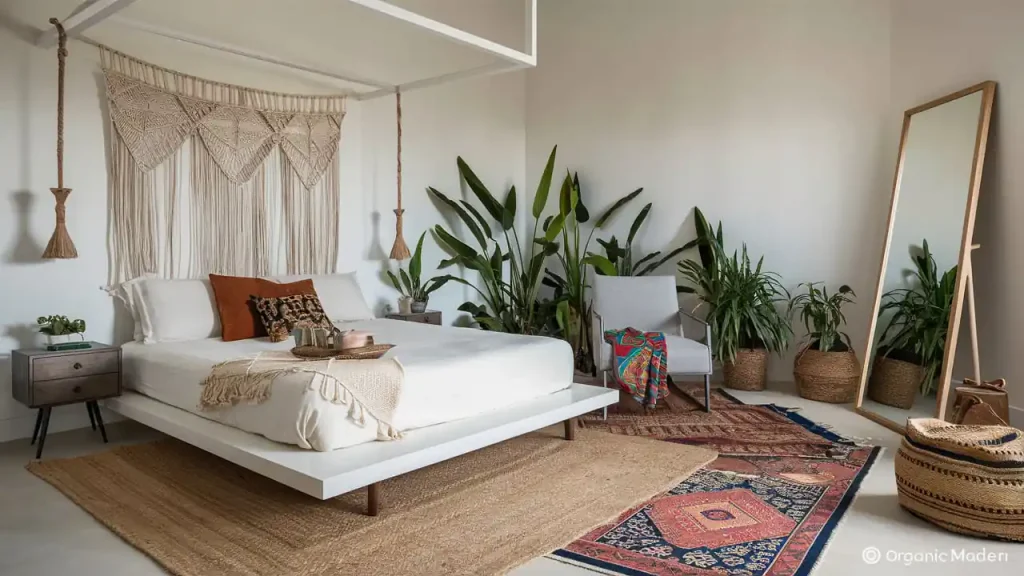
A serene bedroom with a white bed, macramé wall hanging, various potted plants, a chair, and colorful rugs. The space exudes an organic modern style, effortlessly blending natural elements with contemporary design for a calm and inviting atmosphere.

Key differences between styles:

  • Organic Modern: Natural materials, neutral colors, simple shapes
  • Scandinavian: Light woods, white walls, functional designs
  • Mid-century: Bold colors, graphic patterns, space-age forms
  • Bohemian: Bright hues, mixed patterns, collected objects
  • Traditional: Rich fabrics, antique furniture, symmetrical layouts

Organic Modern creates calm, inviting spaces. It balances the coolness of modern design with organic warmth. This mix sets it apart from other popular interior styles.

Can organic style have black and white decors?

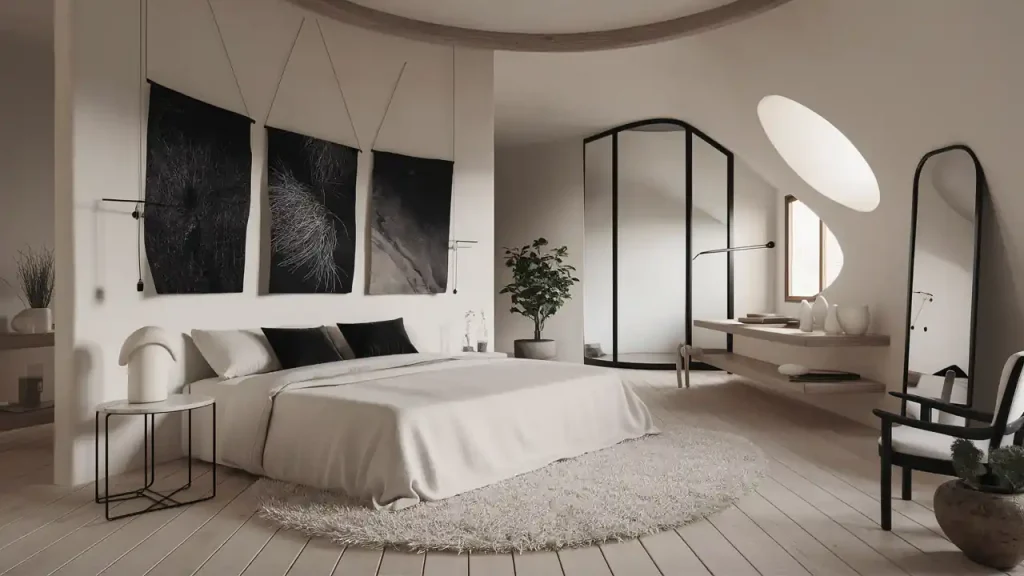
Ensure the room has plenty of natural light to create a bright, airy feel. The overall design should balance the stark black and white palette with organic shapes and natural textures, maintaining the calm and harmonious atmosphere typical of Organic Modern style

Minimalist bedroom with a platform bed, circular rug, tall plants, abstract wall art, and a curved window bathed in natural light embodies an organic modern style.

Why the organic style has such a good bed aesthetic?

The Organic Modern style indeed has a particularly appealing bed aesthetic. This is due to several key factors that align well with bedroom design principles. The style is known also as “decorated in neutrals” which in a bedroom context means the comfort and a sense of relaxation are elevated, which is perfect for bedroom spaces.

The style often incorporates soft, natural fabrics, plush bedding, and an overall cozy aesthetic that invites relaxation.

The style’s focus on natural elements and materials creates a serene, calming environment ideal for sleep. This might include wooden bed frames, natural fiber bedding, and the incorporation of plants, all of which contribute to a peaceful bedroom atmosphere.

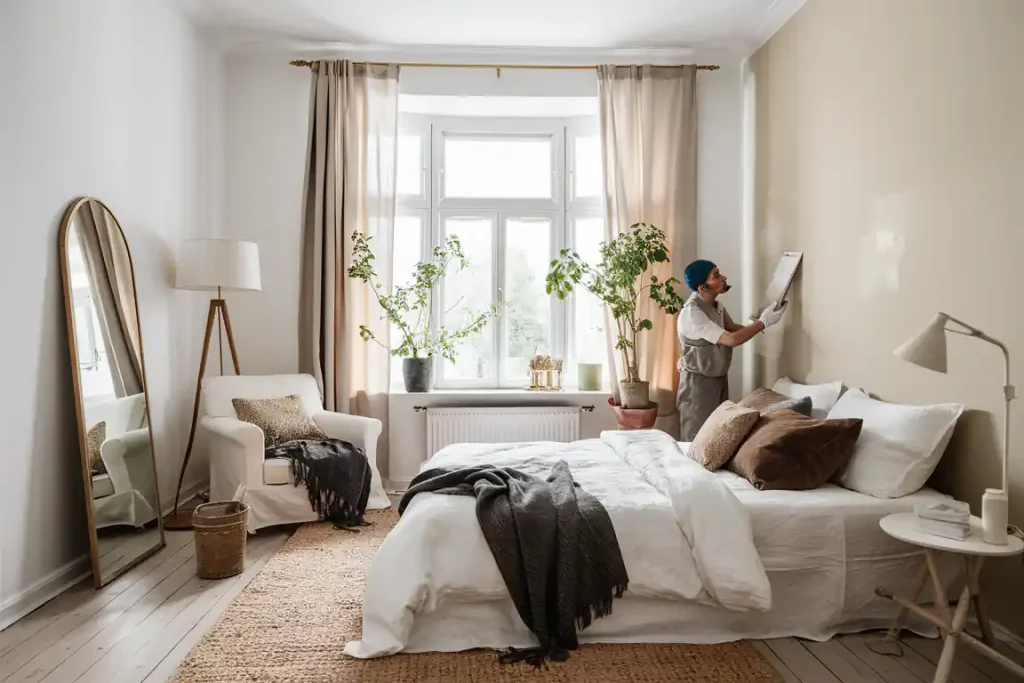
Person hanging a picture in an organic modern bedroom with a large window, plants, a bed, an armchair, and a full-length mirror.

Organic Modern beds often feature clean, simple lines that create a sense of order and calm. This minimalist approach reduces visual clutter, which can be particularly beneficial in a space dedicated to rest and relaxation.

The style typically uses neutral, earthy color palettes that are inherently soothing and conducive to sleep. These colors create a tranquil backdrop that doesn’t overstimulate the senses.

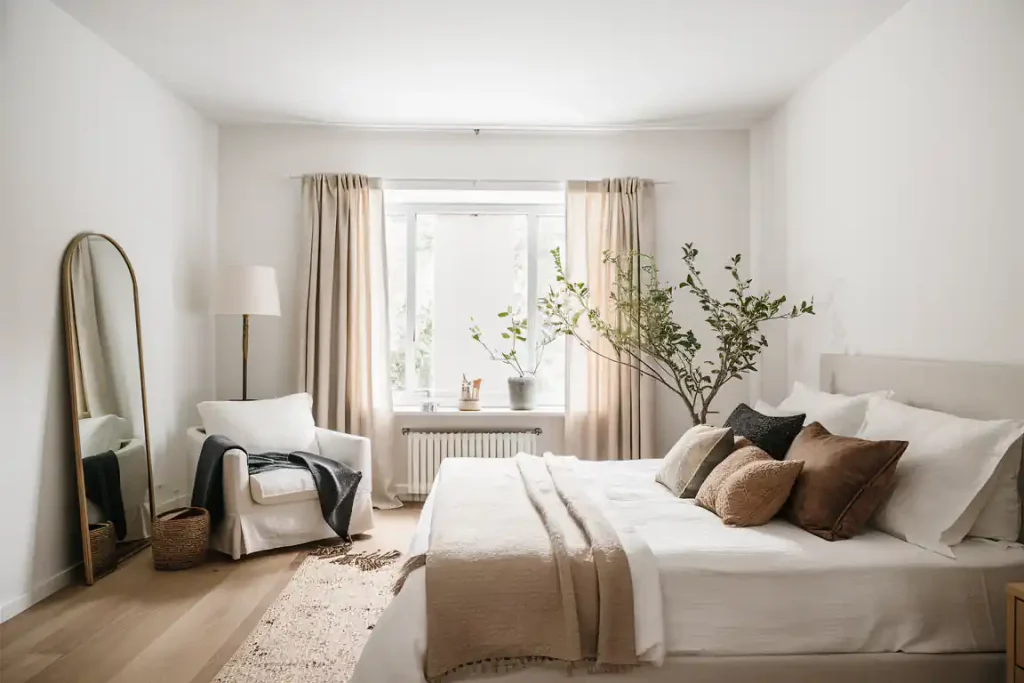
A cozy, Organic Modern Bedroom with a bed, pillows, a chair, mirror, plants, and a large window with beige curtains. The neutral color scheme enhances the organic design, creating a serene and inviting atmosphere.

While maintaining simplicity, Organic Modern style incorporates various textures through bedding, throws, and pillows. This adds visual and tactile interest without creating busyness, enhancing the cozy feel of the bed.

Organic Modern often features a balance of symmetry and asymmetry, which can make a bed setup feel both orderly and naturally relaxed. This might be achieved through the arrangement of pillows or the placement of decorative elements.

The style emphasizes quality, natural materials, which translates well to bedding. High-quality, natural fiber sheets and duvets not only look good but also contribute to comfort and better sleep.

Organic Modern bed aesthetics are highly adaptable. They can lean more minimalist or more plush depending on personal preference, while still maintaining the core principles of the style.

Modern bedroom with an Organic Modern Style, featuring a white theme, large bed, cozy armchair, stylish wall decor, and sheer curtains allowing natural light.

The combination of modern and natural elements creates a timeless look that doesn’t quickly go out of style, making it a good long-term choice for bedroom design.

The style often incorporates soft, diffused lighting that complements the bed area, creating a warm and inviting atmosphere conducive to relaxation and sleep.

Can organic style have all white decors?

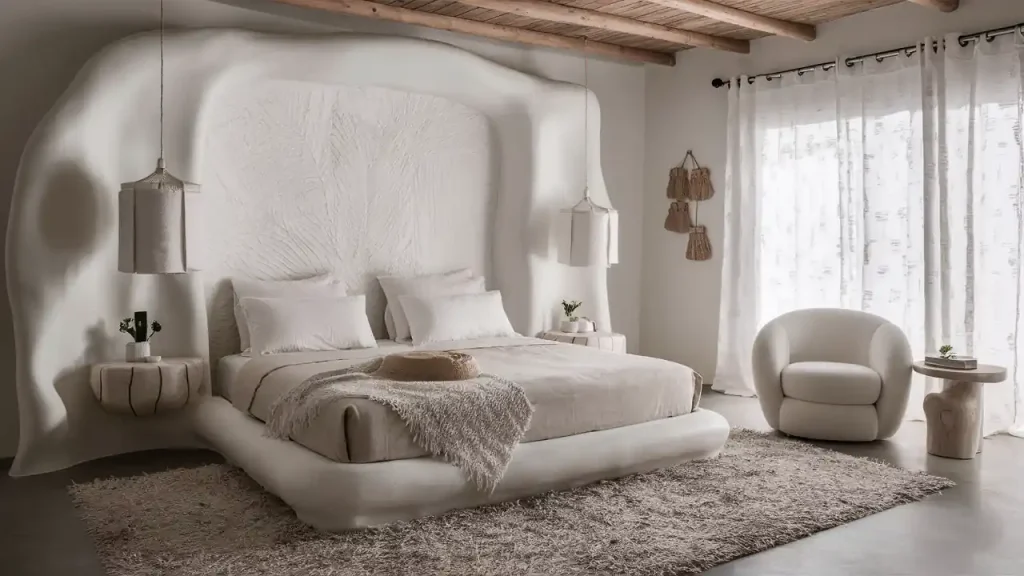
Minimalist bedroom with a white bed, textured headboard, pendant lights, cozy armchair, and natural light from sheer curtains embodies an Organic Modern Style.

Absolutely! Organic Modern style can certainly incorporate an all-white or predominantly white color scheme. This approach can create a serene, light-filled space that emphasizes the style’s connection to nature and its minimalist aspects. In an all-white Organic Modern design, texture and subtle variations in tone become even more important to create visual interest and maintain the style’s warm, inviting feel.

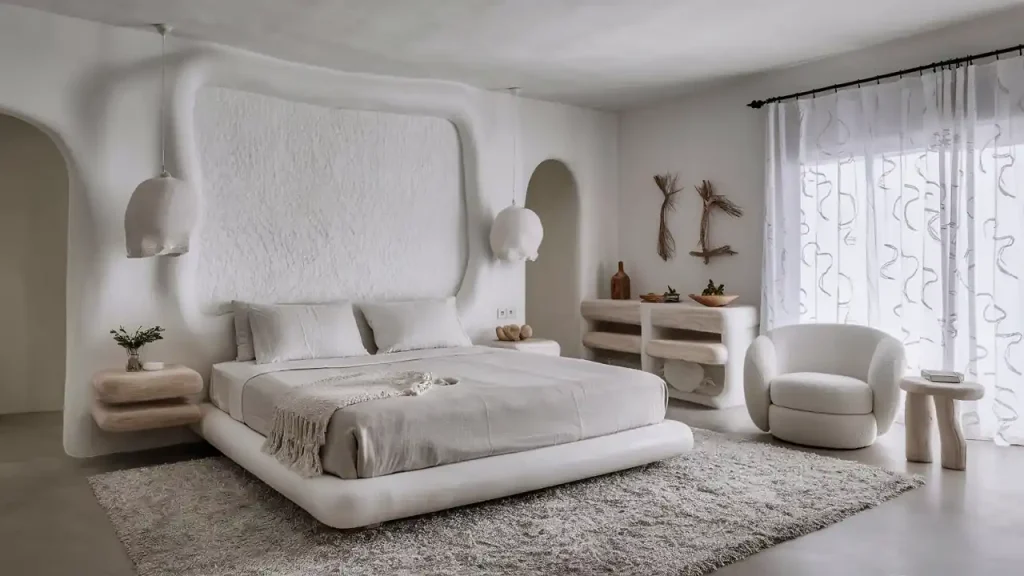
Minimalistic bedroom with a white bed, modern furniture in organic modern style, arched doorways, and a textured wall behind the bed.

The all-white palette is represented through various shades of white and off-white, creating depth and interest while maintaining the monochromatic theme. This approach to Organic Modern style creates a serene, light-filled space that emphasizes the style’s connection to nature and its minimalist aspects.

In a real space, the visual interest would come from the interplay of textures, subtle variations in white tones, and the way light interacts with different surfaces. The organic modern elements are evident in the curved forms, natural materials (represented by the wooden elements), and the inclusion of plants.

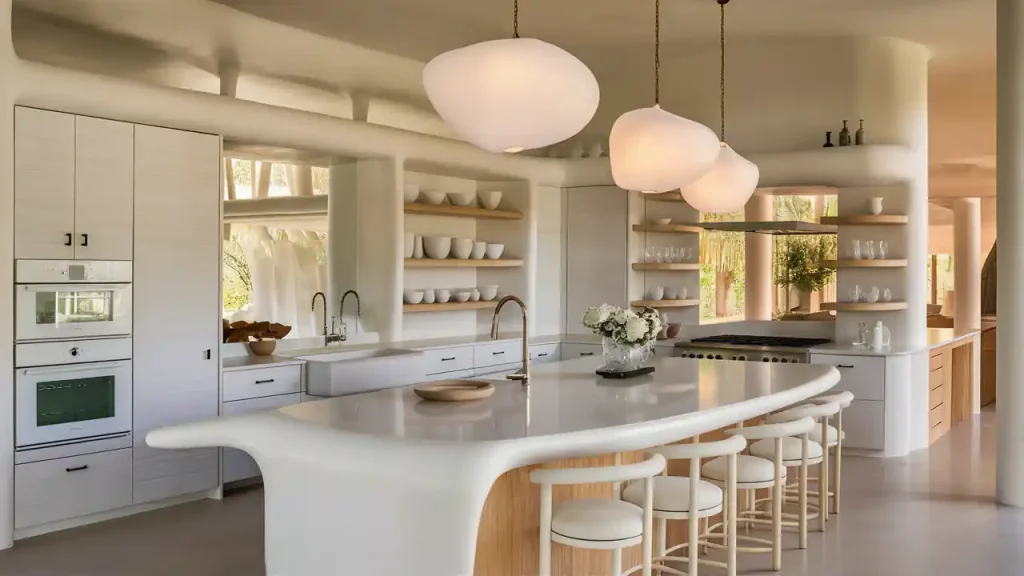
Modern kitchen with curved white countertops, pendant lights, white cabinets, open shelves with dishes, and island seating, embodying an organic modern style.

This all-white approach to Organic Modern style can create a very calm, clean, and serene atmosphere while still maintaining the warmth and connection to nature that are hallmarks of the style.