For 2025, stair railing design is dominated by minimalist metal aesthetics, emphasizing sleek, understated elegance and clean lines.
The era of ornate, fussy stair railings is over. In 2025, it’s all about sleek, understated elegance. Minimalism reigns supreme, and your stair railing is the perfect place to make a powerful, modern statement. Think clean lines, durable materials, and a touch of smart tech. Curious to see how you can achieve this cutting-edge look? Let’s explore the must-know stair railing trends for this year that are defining contemporary design.
George is a seasoned interior designer and property marketing strategist with over 13 years of experience. He specializes in transforming properties into visually stunning spaces, helping clients recognize the potential and beauty in each property. With an impressive international client base of exciting projects throughout Europe and America.
When building or renovating a home, your staircase is an opportunity to make a statement. Rather than sticking with outdated styles, consider modernizing your staircase design. Styles like mahogany or fully enclosed staircases may not align with current trends, making it worthwhile to explore fresh railing ideas for 2025.
Stair railings have transcended their purely functional role to become significant design statements, reflecting personal style and modern aesthetic values. In 2025, the message is clear: embrace the sleek, minimalist appeal of metal, prioritize outdoor durability, and explore the potential of hybrid styles that blend various materials and influences.
1. Minimalist Metal Railing Designs
Slim metal railings are at the forefront of this movement made out of aluminum mostly, capturing significant interest as homeowners prioritize clean lines and unobtrusive designs that maximize open space and light.
Here is the corrected version of the sentence:
In 2025, minimalist metal railing systems are estimated to cost $40 to $250 per linear foot for materials like aluminum, stainless steel, or cable. Professional installation adds labor costs ranging from $60 to $100 per hour, or $300 to $1,000 per project, plus $2 to $6 per square foot for finishing. Therefore, a basic system’s total installed cost ranges from $150 to $300 per linear foot, while high-end designs can reach up to $1,000. Factors such as design complexity, material finish, and installation location can influence the final price.
How to pull it off: To achieve this minimalist look, opt for materials like steel or aluminum with slender profiles and minimal ornamentation, focusing on simple geometric shapes. For installation, consider hidden mounting brackets to further reduce visual clutter and maintain the sleek, uninterrupted lines of the railing system..
A person walks towards a spiral staircase in a 2025-inspired, modern minimalist interior with potted plants, reflecting the latest trends in kitchen remodels.
Outdated trends in railings:
Ornate scrollwork: Ornate scrollwork, once a hallmark of traditional elegance, is now considered outdated in modern railing design, with its intricate patterns and curves clashing against the prevailing preference for clean, minimalist lines.
Here is the corrected version of the sentence:
Ornate scrollwork railing systems in the USA range in material cost from $70 to $100 per linear foot for basic wrought iron to over $900 for custom artistic designs. Installation adds $70 to $150 per hour for professional labor, with total installed costs ranging from $135 to $200 for basic ornamental systems to $350 or more per linear foot for high-end custom work. Additional decorative elements like balusters, spindles, and post caps, along with design complexity and local labor rates, significantly impact the final overall price.
A man ascends an ornate spiral staircase, its intricate railings and decorative columns echoing the elegance of the past.
Outdated trends in railings:
High-shine chrome: High-shine chrome, previously favored for its gleaming appearance, has fallen out of favor in contemporary railing aesthetics, replaced by matte and brushed finishes that offer a more subtle and sophisticated look. The reflective nature of high-shine chrome can also appear visually busy and less practical compared to matte finishes, which are better at concealing fingerprints and wear in high-traffic areas.
2. Frameless Glass Staircase Designs
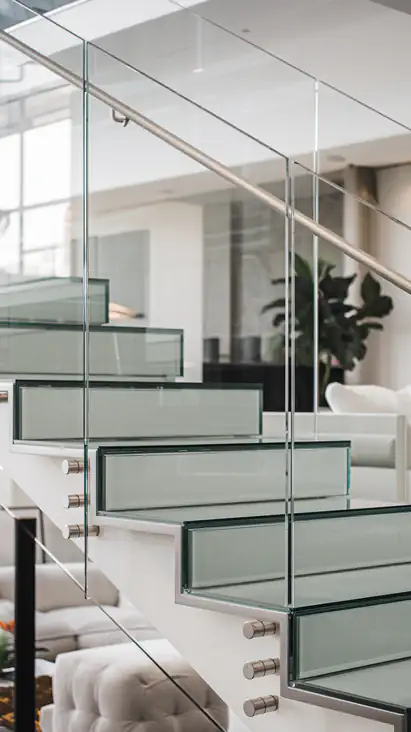
Frameless glass balustrades further amplify this minimalist approach, offering an almost invisible barrier that emphasizes uninterrupted views and a modern, airy feel.
How to pull it off:: To effectively use frameless glass, ensure precise installation and consider the thickness of the glass panels for safety and structural integrity, often requiring professional expertise. Maximize the impact by pairing glass balustrades with minimalist metal posts or concealed fixings, allowing the glass to be the primary visual element and enhance the sense of openness.
A modern glass staircase with metal accents seamlessly integrates into the contemporary interior.
Outdated trends in railings:
Untreated wood railings: Untreated wood railings are no longer a preferred choice due to their vulnerability to weathering and decay, demanding significant ongoing maintenance to prevent rot, warping, and insect infestation, making them impractical for modern, low-maintenance lifestyles. Homeowners increasingly prioritize durable, weather-resistant materials for both interior and exterior railings.
A person in a "TALLLBOX" shirt strolls through a bright hallway with wooden stairs and railing.
More outdated trends in railings:
Painted finishes: Painted finishes on railings are considered outdated primarily due to their susceptibility to chipping, peeling, and fading, requiring frequent repainting to maintain a presentable appearance, which is a significant drawback compared to more robust and long-lasting finish options like powder coating or anodizing. This high-maintenance aspect clashes with the current trend towards durable and low-upkeep materials, making painted finishes less desirable for both practical and aesthetic longevity.
3. Matte black finishes
Completing the minimalist metal look, matte black finishes have surged in popularity, replacing high-shine chrome with their sophisticated, low-glare surface that adds a touch of contemporary refinement while effectively concealing fingerprints and wear.
How to pull it off: When incorporating matte black finishes, choose powder-coated metal for durability and a consistent, even texture across all railing components, ensuring longevity and resistance to scratches. Strategically use matte black against lighter backgrounds like white walls or natural wood stairs to create a striking contrast that highlights the minimalist design and adds a touch of modern drama.
Modern staircase with metal railings and white walls complements the mid-century ceiling light fixture. Small plants decorate the steps, seamlessly connected to the rest of the interior.
Outdated:
Pure rustic farmhouse styles: Pure rustic farmhouse styles, characterized by heavy, distressed wood and overtly “country” aesthetics, are losing favor in contemporary design as homeowners lean towards more refined and versatile styles that blend better with modern interiors and exteriors. Often associated with a rustic farmhouse look, most new house designs move away from this specific, sometimes overly themed, design approach.
Man wearing a "TALLBOX" shirt walking towards a wooden staircase in a rustic home interior, contemplating light remodels that blend charm with contemporary elements.
More outdated trends in railings:
Single-material designs: Single-material railing designs, while simple, are becoming less common as homeowners and designers embrace the visual interest and functional benefits of mixed materials, recognizing that combining elements like metal and wood or concrete and glass can create more dynamic and personalized spaces. The trend is shifting towards hybrid designs that offer a richer aesthetic and allow for material choices to be driven by specific performance needs, like durability and weather resistance, rather than being limited to a single material palette.
4. Stairs with Smart Integration
Smart integration railing design for 2025 represents a growing movement in stairway design that goes beyond basic functionality, incorporating technology and adaptable features to enhance user experience and spatial adaptability. This emerging trend reflects a desire for railings that are not just structural elements but also contribute to safety, convenience, and the overall intelligence of the modern home.
LED-lit handrails
LED-lit handrails are an emerging trend driven by the desire for both enhanced safety and sophisticated ambiance, providing subtle and energy-efficient illumination that improves visibility on stairs, especially in low-light conditions. The growing interest in adjacent design concepts like “stair lighting” indicates a rising demand for integrated lighting solutions within railing systems, suggesting a future where handrails become functional light sources.
How to pull it off: To successfully integrate LED lighting, select handrails with concealed channels designed to house LED strips, ensuring a seamless and unobtrusive look while protecting the wiring from the elements and daily wear. For optimal impact and functionality, choose warm white or cool white LED lights depending on your desired ambiance and consider incorporating dimming options or motion sensors to further enhance energy efficiency and user experience.
A person ascends wooden stairs, clad in a white shirt with "TALLBOX" emblazoned on the back.
Modular systems
Modular railing systems are gaining traction due to their inherent flexibility and ease of customization, allowing homeowners and contractors to efficiently assemble and adapt railing configurations to various stair layouts and design preferences. Handrail kits for stairs solve a practical need for streamlined and readily available railing solutions, highlighting the appeal of modular systems that simplify installation and offer adaptable design possibilities.
How to pull it off: To maximize the benefits of modular systems, prioritize selecting kits with readily available components and clear, step-by-step installation instructions, ensuring a smooth and potentially DIY-friendly assembly process. When planning your railing project, leverage the inherent flexibility of modular designs to customize layouts, adapt to unique stair configurations, and easily incorporate different infill panels or post styles to achieve your desired aesthetic and functional requirements. For most basic system it will cost you from $500-$1,500 and premium systems can go up to $12,500. Contractors charge between $60-$100 per hour for installation, with the average project taking 5-10 hours to complete.
A man in a "TallBox" shirt strolls towards a modern staircase with wooden steps and a black railing.
5. Stairs with Bold Accents
Black-and-brass contrasts
Black-and-brass contrasts are gaining popularity in railing design as a way to introduce bold yet sophisticated color accents, with the combination of matte black metal and warm brass details offering a striking visual appeal that elevates the overall aesthetic. This pairing provides a touch of luxury and visual interest, moving away from purely monochromatic schemes and adding a layer of depth and personality to staircases.
How to pull it off: To effectively execute black-and-brass contrasts, strategically apply brass as accent elements, such as handrail brackets, post caps, or thin inlay strips within a predominantly black railing structure, preventing the brass from overwhelming the design. Ensure the brass finish is brushed or satin rather than high-shine to maintain a sophisticated and contemporary feel, complementing the matte black and avoiding an overly ornate or traditional aesthetic. The total cost for a black and brass contrast staircase, including materials and installation, typically ranges from $300-$700 per linear foot.
A man ascends a modern staircase featuring black steps and a lustrous gold railing, embodying the latest design trends within this sleek interior space.
6. Simplified Traditional Styles
Brushed nickel accents
To achieve a Shaker-inspired aesthetic, prioritize simple, clean lines in your wood railing design, opting for unornamented profiles and avoiding decorative carvings or excessive detailing that would detract from the understated elegance. Select hardwoods like maple or cherry with a clear or lightly stained finish to showcase the natural beauty of the wood and maintain the Shaker style’s emphasis on functionality and honest materials.
How to pull it off: To successfully incorporate brushed nickel accents into simplified traditional railings, use them as subtle highlights against a backdrop of wood or matte metal, focusing on functional hardware like brackets and end caps to add a touch of modern refinement without disrupting the overall understated style. Ensure the brushed nickel finish is consistent across all chosen hardware pieces and complements the other materials in the railing system, contributing to a cohesive and subtly elevated traditional aesthetic. The total cost for a complete brushed nickel staircase installation typically ranges from $250-$600 per linear foot, depending on the complexity of design and quality of materials chosen.
A wooden staircase with sleek nickel railings turns at a landing within a modern, well-lit interior space.
Shaker-inspired wood rails
To achieve a Shaker-inspired aesthetic, prioritize simple, clean lines in your wood railing design, opting for unornamented profiles and avoiding decorative carvings or excessive detailing that would detract from the understated elegance. Select hardwoods like maple or cherry with a clear or lightly stained finish to showcase the natural beauty of the wood and maintain the Shaker style’s emphasis on functionality and honest materials.
How to pull it off: To truly embody Shaker style in wood railings, prioritize functionality and craftsmanship by using high-quality hardwoods and employing traditional joinery methods that showcase the material’s integrity and ensure lasting durability. Keep the design minimal by avoiding decorative elements and focusing on clean, straight lines and a smooth, hand-finished surface, allowing the natural warmth and simplicity of the wood to define the aesthetic. For a standard straight staircase with Shaker styling, expect total costs between $1,500-$4,000, though custom designs can reach higher prices.
A modern staircase, accented by sleek shaker style details and spindles, in a bright open space.
The Shaker style is representative of evolving stair railing design trends, which highlight a shift towards minimalist, functional, and sophisticated aesthetics. Creative Metal Design railings offer an elegant visual appeal but also deliver durability and ease of maintenance, making them an ideal choice for homeowners seeking both style and substance.
The Cost of Designing Custom Railings in 2025
For a 10-foot custom railing in 2025, you can expect to pay anywhere from $500 to $2,500 or more. The 20-foot section can reach up to $5,000, and a 30-foot section will have a price of up to $7,500; from this price, materials would cost 5 to 15% of the total. The cost will heavily depend on your choice of material, design complexity, and any additional custom features. For example, a simple custom wood or wrought iron railing for 10 feet might be closer to the lower end, while a complex, artistic design in stainless steel or glass could easily reach the higher end of that range, or even exceed it.
Wood railings range from $20 to $60 per linear foot installed, while aluminum costs $150 to $240. Stainless steel is priced between $215 and $285, with wrought iron ranging from $65 to $135. Glass railings cost between $100 and $600, whereas cable options vary from $60 to $500.
For custom designs, expect to pay $240 or more per linear foot for basic to premium options. Additional costs for components, such as custom balusters, range from $260 to $2,500 each. Professional installation can incur labor charges of $70 to $150 per hour.
The Cost of Metal Stair Railings in 2025
Metal stair railings in the USA for 2025 range in installed material cost per linear foot from $45 to $55 for galvanized steel to $60 to $500 for cable railings, with aluminum, stainless steel, and wrought iron falling in between. Installation labor adds $15 to $35 per linear foot, resulting in typical project costs from $100 to $1,000 for a 10-foot section, influenced by material choice, design complexity (basic, ornamental, decorative), and additional components like balusters and hardware. The national average cost for metal stair railing installation is around $2,600, but projects can vary widely from $1,600 to $4,600 depending on these factors.
2025 pricing chart for materials and installation of linear foot projects, featuring aluminum and steel options.
Custom Staircase Installation
Installing a custom staircase begins with precise measurements and planning to ensure accurate fabrication off-site. Once built, the installation involves preparing the site, which may include framing adjustments to accommodate the staircase. The staircase is then carefully fitted and secured, often requiring specialized tools and expertise due to its custom nature. Finishing touches like railing installation and surface treatments complete the process.
Victorian-era intricate patterns, characterized by elaborate scrollwork, heavy ornamentation, and overly complex designs, should be avoided in contemporary railing projects as they clash with the modern preference for minimalist and streamlined aesthetics. These patterns can appear visually busy and dated, detracting from the clean lines and open spaces favored in current design trends, and often feel too fussy or formal for today’s homes. The basic Victorian design would cost $110-$300 per linear foot, and premium Victorian designs with ornate details cost $250-$500 per linear foot or more.
A person ascends a carpeted Victorian style staircase with elegant wooden railings, reflecting past trends.
Polished brass
Polished brass, once a prevalent choice for stairway railings, particularly before the 2000s, has largely fallen out of favor in contemporary design. While still utilized in luxury projects and those embracing classical aesthetics, its high-shine, sometimes garish appearance is now considered outdated for many modern homes. This is largely due to a preference for the sophisticated subtlety offered by brushed or matte metal finishes, which better complement current design trends. Polished brass is notoriously high-maintenance, readily showing fingerprints and requiring frequent polishing to maintain its gleam. This lack of practicality, combined with its perceived aesthetic drawbacks, has led to its replacement by more understated and durable alternatives like brushed nickel or matte black in modern railing applications. The total cost for a complete brass staircase installation typically ranges from $200-$500 per linear foot, depending on design complexity and finish quality.
A person ascends a spiral staircase with intricate shiny brass railings.
Rich and Dark Woods
Mahogany and cherry woods, once favored for their rich, dark tones in traditional interiors, are now less in demand for railings as contemporary styles lean towards lighter, more neutral wood species or a departure from dark woods altogether. These darker woods can feel heavy and less versatile in modern spaces, which often prioritize brighter, airier aesthetics and materials that offer a wider range of design flexibility. The total cost per linear foot for a mahogany staircase, including materials and labor, typically ranges from $200-$350.
A wooden mahogany staircase in a large open space dining hall.
Closed Staircases
Closed staircases, characterized by solid walls underneath and alongside the stairs, are becoming outdated as open staircases with visible railings are increasingly preferred for their ability to enhance natural light flow and create a more spacious feel in homes. The trend towards open-concept living and minimalist design favors open staircases that visually expand the space and allow railings to become design features, rather than concealing the staircase structure. Building a closed staircase typically costs $100 to $250 per step which makes $120-$300 per linear foot.
Fully enclosed staircase with white walls and wooden handrails on both sides.
Wrought Iron Railings
Despite its historical prevalence, the dominance of wrought iron in railings is an outdated trend. Homeowners are moving away from the ornate and sometimes heavy look of wrought iron in favor of lighter, sleeker metals like aluminum and steel, and minimalist designs that better suit contemporary architectural trends. Additionally for galvanized or decorative styles raise the total to $2,600–$4,600 for the same length, a hefty price.
A staircase with ornate black metal railing, reflecting the Stair Railing Design trends from the past.
In 2025, homeowners planning stair railing projects in the USA can anticipate a range of costs for a standard 10 to 20-foot railing project, total expenses can fluctuate dramatically, from $300 to $1,600 for wood to a substantial $2,000 to $10,000 for glass balustrades.
Prices are influenced by material choices, labor expenses, and regional pricing variations. Installed costs per linear foot vary significantly depending on the material: metal railings, encompassing steel and iron, generally range from $50 to $150, while aluminum offers a slightly more affordable option at $40 to $100 per linear foot.
Glass balustrades represent the higher end of the spectrum, costing between $200 and $500 per linear foot, whereas wood railings provide a more budget-friendly choice, typically priced from $30 to $80 per linear foot. Wrought iron railings, known for their decorative appeal, fall in the range of $75 to $200 per linear foot.
Several key factors contribute to the overall cost of stair railing installation. Material complexity is a primary driver: basic metal railings, such as powder-coated steel, start at approximately $50 to $80 per linear foot; however, custom designs, including ornamental wrought iron or curved glass, can escalate costs to $100 to $200 or more per linear foot. The integration of smart technologies, like LED lighting or motion sensors, can add an additional $200 to $500 or more to the project.
Labor rates also play a significant role, with installation labor varying between $30 and $75 per hour, depending on the region, with higher rates typically observed in coastal urban centers. Removing existing railings will incur further costs, generally estimated between $200 and $500 for demolition.
Design style adds another layer of cost consideration: floating staircases often command a 15% to 30% premium due to the increased structural engineering required, and spiral stair railings can add a substantial $1,000 to $3,000 or more due to the complexities of curved fabrication.
Are Iron Balusters Still in Style?
Yes, iron balusters can still be stylish in 2025, but ornate, traditional styles are outdated. Modern iron balusters, characterized by their sleek, minimalist designs and matte black finishes, align perfectly with current trends.
Clean lines and simple geometric shapes are key to keeping iron balusters contemporary. Avoid scrollwork and overly decorative elements, opting instead for understated elegance. Hybrid designs that combine iron with wood or glass offer a balanced and modern aesthetic. Ultimately, for a 2025 look, choose simple iron balusters that complement the minimalist and contemporary design trends.
What Does the Future Hold?
As we look ahead to 2025, the evolving stair railing design trends highlight a shift toward minimalist, functional, and sophisticated aesthetics. Clean lines and simple geometric shapes are key to keeping iron balusters contemporary.
Avoid scrollwork and overly decorative elements, opting instead for understated elegance. Hybrid designs that combine iron with wood or glass offer a balanced and modern aesthetic. Ultimately, for a 2025 look, choose simple iron balusters that complement the minimalist and contemporary design trends.
This website uses cookies to improve your experience. We'll assume you're ok with this, but you can opt-out if you wish.Accept
Privacy & Cookies Policy
Privacy Overview
This website uses cookies to improve your experience while you navigate through the website. Out of these cookies, the cookies that are categorized as necessary are stored on your browser as they are as essential for the working of basic functionalities of the website. We also use third-party cookies that help us analyze and understand how you use this website. These cookies will be stored in your browser only with your consent. You also have the option to opt-out of these cookies. But opting out of some of these cookies may have an effect on your browsing experience.
Necessary cookies are absolutely essential for the website to function properly. This category only includes cookies that ensures basic functionalities and security features of the website. These cookies do not store any personal information.