Can homeowners start flipping houses successfully?
As a homeowner, you already have practical insights into property ownership. You understand maintenance costs, mortgage payments, and neighborhood dynamics. This experience offers a strong foundation when entering real estate flipping—a strategy that involves purchasing, renovating, and selling properties for profit.
Transitioning from homeowner to successful property flipper requires specialized knowledge. Flipping presents new challenges, such as identifying undervalued properties, estimating renovation costs, managing contractors, and selling in unpredictable markets. Without proper education, these obstacles can lead to costly mistakes and reduced profits.
This guide highlights essential books for homeowners looking to apply their existing property knowledge to a profitable flipping business. It also explains how to use credit cards strategically to manage project expenses—transforming everyday spending into rewards that support your investment goals.

George is a seasoned interior designer and property marketing strategist with over 13 years of experience. He specializes in transforming properties into visually stunning spaces, helping clients recognize the potential and beauty in each property. With an impressive international client base of exciting projects throughout Europe and America.
Disclosure: Some of the links below are affiliate links. This means that, at zero cost to you, we will earn an affiliate commission if you click through the link and finalize a purchase.
The information, configurations, and suggestions provided above are offered solely for educational purposes.
By acting on any of these instructions you acknowledge and agree that:
The information provided in this guide is for educational and informational purposes only and does not constitute financial, legal, or investment advice.
Real estate flipping involves risk, and results may vary based on market conditions, experience, and individual circumstances. Always consult with qualified professionals—such as licensed contractors, real estate agents, attorneys, and financial advisors—before making investment decisions.
The credit card strategies discussed should be used responsibly and in accordance with your financial situation and credit profile. Neither the author nor publisher is liable for any losses or damages arising from the use of this information.
TL;DR
Books are valuable resources for aspiring house flippers because they present complete, structured systems for the entire flipping process, unlike fragmented online content.
Written by experienced investors, they share lessons that help readers avoid common mistakes, such as underestimating renovation costs or overpaying for properties.
Many also offer detailed strategies for securing creative financing beyond traditional mortgages. Reading before investing builds a solid knowledge base grounded in the experiences of investors who have successfully worked through different market cycles.
Why Books Are Essential for Learning to Flip?
According to TALLBOX, new investors can succeed in flipping their first house by combining their existing homeowner skills with low-risk strategies and proper education.
In an era dominated by YouTube videos and social media “real estate gurus,” books may seem outdated. Yet they remain the most comprehensive and structured learning tools for aspiring property flippers—and for good reason.
Books offer a step-by-step approach that covers the entire flipping process. Unlike scattered online tutorials, well-written guides present complete systems—from finding and financing a property to renovation and resale. This structure helps prevent costly oversights that can jeopardize profits.
Investment books written by experienced investors provide hard-earned lessons from real-world deals. These insights help new flippers avoid critical mistakes, such as underestimating renovation costs, overpaying for properties, or misjudging market conditions—all of which can quickly wipe out potential profits.
Real estate books focused explain creative financing strategies often overlooked in mainstream content. While traditional mortgages are familiar to most homeowners, flipping typically requires alternative funding sources. The right titles explore specific options, including hard money loans, private lenders, joint ventures, and seller financing—making it possible to start even with limited capital.
Reading before investing builds a solid foundation based on decades of experience from professionals who have weathered multiple market cycles. The book recommendations below reflect that collective knowledge and are ideal starting points for anyone serious about flipping successfully.
Investing in real estate is not easy, but it becomes more accessible when one understands key principles such as market analysis, property valuation, renovation cost estimation, contractor management, creative financing, and exit strategies. Success relies on setting accurate budgets, finding undervalued properties, and avoiding upgrades that don’t add resale value. Books provide structured guidance on these topics, helping homeowners build a strong foundation before committing real capital to a flip.
Top Books for Homeowners Learning to Buy and Flip
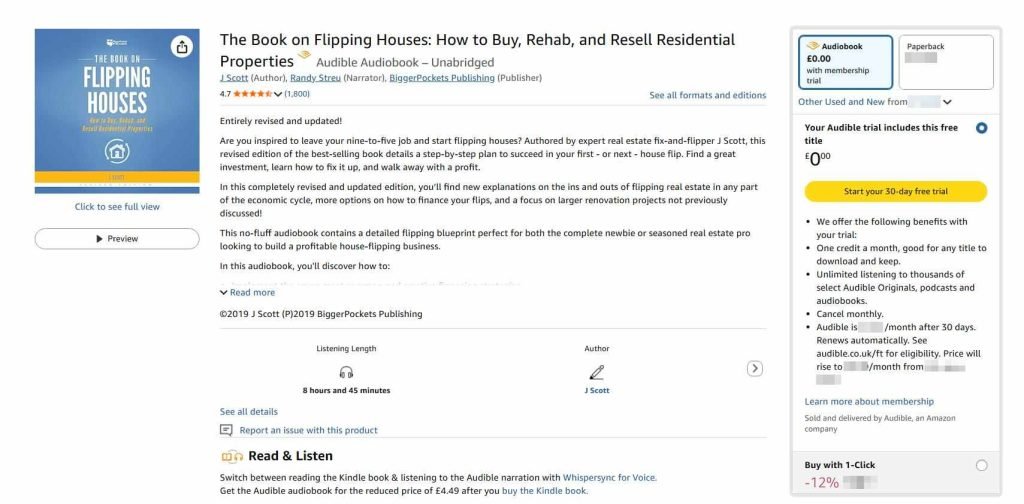
The Book on Flipping Houses by J Scott
J Scott’s comprehensive guide published by BiggerPockets is a leading resource for those serious about flipping properties. Regularly updated to reflect current market conditions, it breaks the process into clear, manageable steps that beginners can confidently follow.
Key Features and Focus:
This book offers a complete blueprint for flipping success, covering each stage—from market analysis and property acquisition to renovation management and profitable resale. Scott goes beyond explaining what to do by providing detailed, actionable systems for every phase of the flipping process.
Its strength lies in a practical, hands-on approach. Readers gain access to useful tools, including forms, checklists, and calculators that can be applied immediately. One standout feature is Scott’s “70% Rule” for property valuation, which helps investors quickly calculate a property’s maximum purchase price while factoring in renovation costs and target profit margins.
Why It’s Great for Homeowners:
Scott’s methodical approach to property evaluation builds on the skills homeowners already have from maintaining and assessing their own properties. The section on deal sourcing is especially valuable, offering strategies beyond the MLS—such as working with wholesalers, exploring tax sales, and using direct marketing.
The renovation planning chapters help homeowners scale their knowledge of basic maintenance into full renovation projects. Scott breaks project management into clear, repeatable systems, making it easier to coordinate contractors and maintain quality—both essential for flipping profitably.
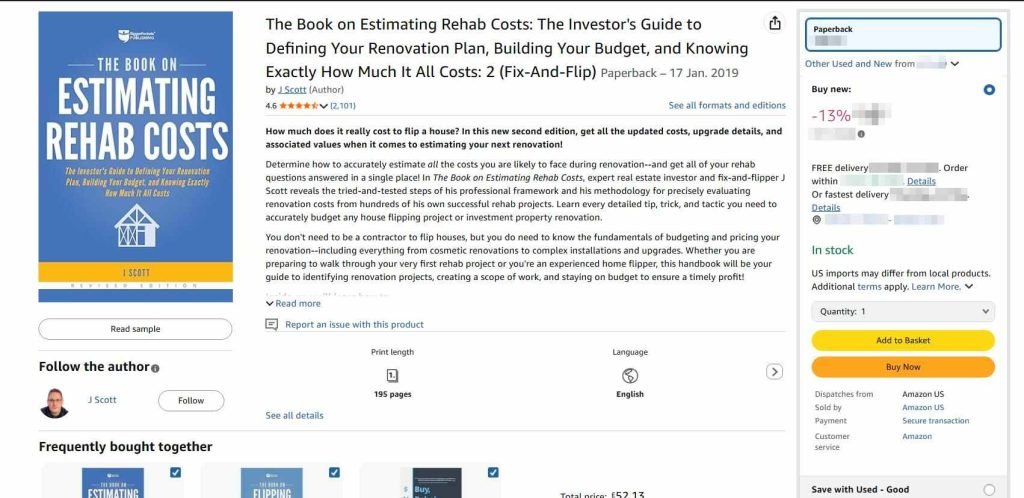
The Book on Estimating Rehab Costs by J Scott
This companion to Scott’s flipping guide, published by BiggerPockets, focuses this time on one of the most challenging aspects of house flipping: accurately budgeting for renovations. For homeowners with experience in home improvement, it offers a clear framework for scaling that knowledge to professional-level renovation projects.
Key Features and Focus:
Scott’s methodology revolves around a 25-component breakdown of residential properties, from foundation to landscaping. For each component, he outlines common renovation scenarios with detailed cost estimates, helping readers develop accurate budgets for any property condition.
The book’s strength lies in its systematic approach to cost estimation, teaching readers how to evaluate properties room by room, system by system. Scott provides formulas for calculating material quantities, labor costs, and contingency reserves, ensuring comprehensive budgets that prevent mid-project surprises.
Why It’s Great for Homeowners:
As a homeowner, you’ve likely faced unexpected costs during home improvement projects. This book helps turn that experience into a professional-level estimation system designed to prevent budget overruns. Its detailed breakdown of renovation costs by quality level allows you to make informed decisions about where to invest for the best return.
It also tackles a common challenge for first-time flippers: choosing the right quality level of renovation for the neighborhood. Scott explains how to match your renovation scope to local market standards, helping you avoid both under- and over-improving—a key factor in protecting profit margins.
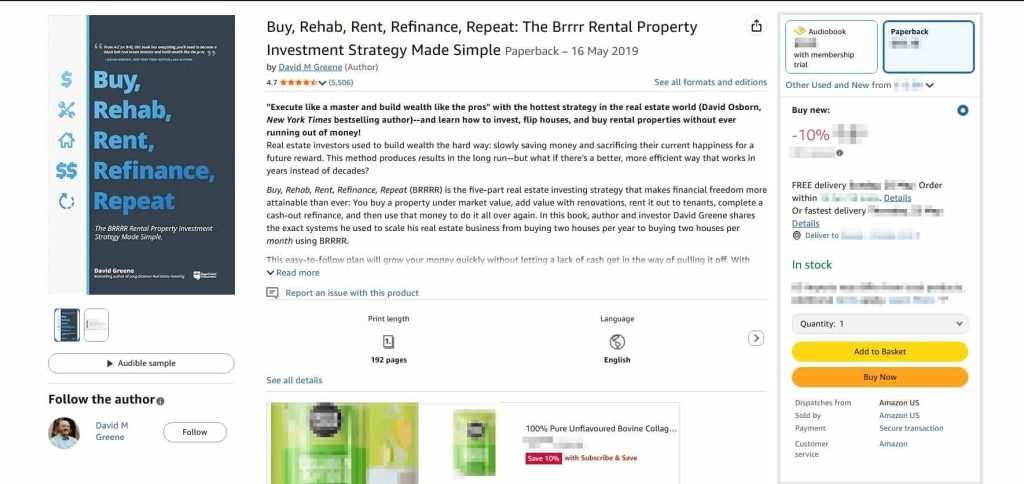
Buy, Rehab, Rent, Refinance, Repeat (BRRRR) by David Greene
While not solely focused on flipping, Greene’s BRRRR method offers practical strategies for acquiring undervalued properties and completing cost-effective renovations—skills that directly apply to flipping. His guidance on identifying value-add potential and managing rehab efficiently makes this book a valuable resource for any property investor.
Key Features and Focus:
Greene’s book presents a step-by-step approach to real estate investing, focused on building long-term wealth through strategic property acquisition and improvement. The “rehab” section specifically teaches readers how to identify undervalued properties and execute renovations that maximize return on investment.
The book stands out for its in-depth guidance on property valuation, helping investors recognize profit potential others might overlook. Greene also introduces effective methods for finding off-market deals—an essential skill for succeeding in today’s highly competitive real estate environment.
Why It’s Great for Homeowners:
Greene offers practical guidance on evaluating properties based on potential rather than current condition—an approach homeowners will find familiar from their own renovation experiences. His strategies help you look past cosmetic flaws to spot properties with strong underlying value.
The book also introduces the concept of “forced appreciation,” or increasing a property’s value through targeted upgrades—a core principle in successful flipping. Greene’s advice on prioritizing renovations for maximum return helps homeowners shift from personal upgrades to investment-focused improvements.
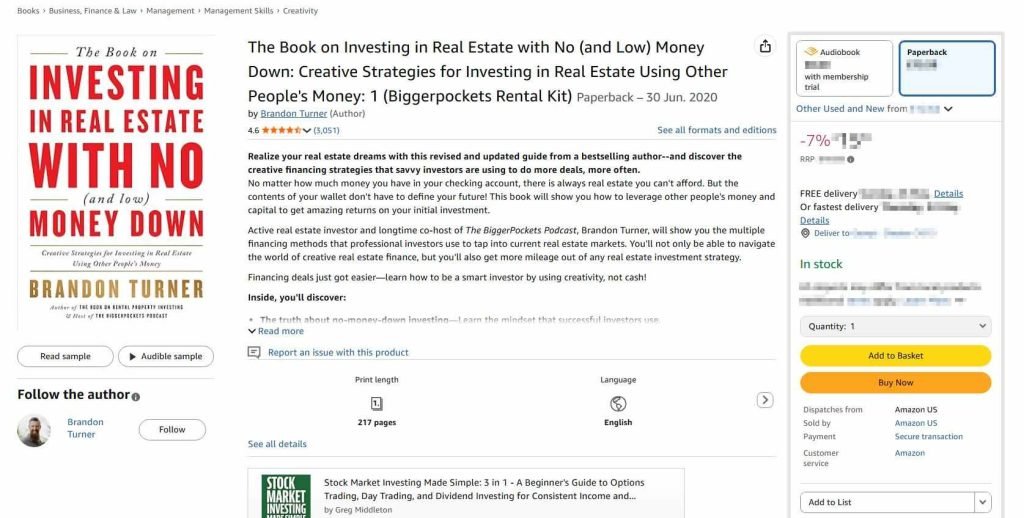
The Book on Investing in Real Estate with No (and Low) Money Down by Brandon Turner
For homeowners looking to leverage their existing assets rather than significant cash reserves, Turner’s guide to creative financing provides strategies for entering the flipping market with minimal upfront investment. This approach is particularly valuable for homeowners who may have equity but limited liquid capital.
Key Features and Focus:
Turner’s book outlines ways to finance real estate deals without large cash reserves. It covers methods such as partnering with investors and using home equity lines of credit (HELOCs) to overcome common funding barriers. The book offers detailed explanations of seller financing, lease options, and private money, using real-world examples to show the pros and cons of each method.
Why It’s Great for Homeowners:
Homeowners often have access to a key financing tool: home equity. Turner explains how to use the equity in a primary residence to fund flipping projects, turning an existing property into a source of capital.
The book discusses how to use credit for real estate investing and links this strategy to later content on covering flipping expenses with credit cards. Turner’s approach shows homeowners how debt can support wealth-building when used intentionally.
Flip and Grow Rich by Armando Montelongo
Montelongo’s guide combines motivational content with practical flipping strategies. Drawing from his experience on the television show Flip This House, he presents a high-energy approach to real estate investing that appeals to action-oriented readers.
Key Features and Focus:
Montelongo’s book emphasizes both the mindset needed for successful flipping and the tactical steps involved. It covers deal sourcing, renovation planning, and exit strategies, all aimed at building momentum through consistent action.
It offers clear guidance on marketing strategies for finding deals and selling renovated properties. Montelongo explains how to build a steady pipeline of potential projects and generate demand—key skills for growing a flipping business.
Why It’s Great for Homeowners:
For homeowners hesitant to begin flipping, Montelongo offers motivation to move from planning to action. His focus on starting small and building confidence through experience appeals to those wary of larger investments.
The book covers practical steps for shifting from homeowner to investor, including how to manage time while working a full-time job. Montelongo outlines a realistic path from occasional flips to running a full-scale investment business.
Using Credit Cards to Support Your Flipping Journey
Real estate flipping includes costs beyond the property purchase, such as materials, contractor fees, permits, marketing, and holding expenses. Using credit cards strategically can help manage these expenses and offer benefits that improve overall profitability.
Why Credit Cards Matter for Flippers?
Credit cards support a flipping business by helping manage cash flow through short-term financing before a property sells. They also offer rewards, cash back, or points that reduce project costs, and often include purchase protections and extended warranties useful for buying appliances and materials.
These benefits align with key concepts in the books discussed. Brandon Turner emphasizes the smart use of available credit in low-money-down investing, while J Scott stresses the importance of tracking rehab costs—something credit cards simplify with itemized statements.
Best Credit Cards for Flipping
First-time investors with credit challenges should consider secured cards like Discover it Secured or Capital One Quicksilver Secured before graduating to Chase Freedom Unlimited or Lowe’s Advantage Card for renovation expenses and building stronger credit profiles.
Chase Freedom Unlimited®
This card offers 1.5% cash back on all purchases, with elevated rewards in certain categories: 5% on travel purchased through Chase Ultimate Rewards, 3% on dining at restaurants (including takeout), and 3% on drugstore purchases. New cardholders can earn a $200 bonus after spending $500 within the first three months. The card has no annual fee and offers a 0% intro APR for 15 months on purchases (then a variable APR of 20.49%-29.24%).
The Freedom Unlimited card is valuable for flippers because of its versatility. It offers 1.5% cash back on all purchases, making it useful for varied expenses such as contractor payments, permits, and marketing. Its 0% APR period provides interest-free financing for materials and services during short-term flips, acting as a temporary no-cost loan.

Flippers who travel to out-of-town properties can benefit from the 5% cash back on travel, which helps reduce transportation costs. The 3% back on dining is useful for meetings with contractors, agents, or buyers. With no annual fee, the card remains cost-effective even during breaks between projects.
Lowe's Advantage Card
The Lowe’s card gives a 5% discount on eligible in-store purchases and has no annual fee. It also includes special financing, such as 6 months of interest-free payments on purchases of $299 or more.
For renovation-focused flippers, materials can make up 30–40% of rehab costs. The Lowe’s card’s 5% discount applies at checkout, immediately improving cash flow and boosting profit margins on these large expenses.
The card supports J Scott’s rehab estimation methods by offering savings on key items like flooring, paint, and appliances. It also complements David Greene’s value-add strategies by reducing the cost of targeted upgrades.

Special financing options align with Brandon Turner’s low-money-down approach, offering interest-free periods on large purchases—especially useful for high-cost projects like kitchens and bathrooms.
Discover it® Cash Back
This card offers 5% cash back on rotating quarterly categories (up to $1,500 per quarter, then 1%) and 1% on all other purchases. Discover matches all cash back earned in the first year. It has no annual fee and includes a 0% introductory APR on purchases for 15 months, followed by a variable APR of 17.24% to 28.24%.
The Discover it® Cash Back card often includes home improvement stores as a rotating category, offering strong rewards during renovation periods. Other relevant categories, like gas stations and wholesale clubs, also support flippers who travel or buy materials in bulk.
The first-year cash back match doubles earned rewards, potentially delivering up to 10% back on category spending. This bonus is especially useful for new flippers following Armando Montelongo’s strategy of starting small, boosting returns during the early stages of the business.

The card’s 0% APR period supports J Scott’s structured flipping method by giving investors 15 months to complete renovations and sell without paying interest on material purchases. For longer projects or slower markets, this helps lower holding costs.
Tips for Using Credit Cards Responsibly in Your Flipping Business
To use credit cards effectively and reduce risk, experienced flippers follow these key practices:
Use 0% APR offers wisely: Schedule large material purchases during promotional periods and set a plan to pay the balance before interest starts.
Track expenses by project: Categorize spending by property and renovation type to create accurate records for future cost estimates.
Keep business and personal expenses separate: Use dedicated cards for flipping to simplify bookkeeping and tax filing.
Pay off balances after each sale: Clear credit card debt as soon as a property sells to avoid accumulating interest-bearing balances.
Choose rewards that match your strategy: Select cards based on whether cash back, points, or store discounts offer the most value for your flipping model.
When combined with the strategies from the recommended books, these credit practices help maximize profits and reduce out-of-pocket spending.
Tips for Applying Book Lessons to Your First Flip
Making the shift from homeowner to property flipper involves applying insights from books to real-world situations. Below are practical ways to use the strategies from each recommended book.
Start with a modest project

Begin with a small project, as recommended in J Scott’s The Book on Flipping Houses. Focus on properties that need mostly cosmetic updates instead of major structural work. This reduces risk and helps you build experience. Scott’s guidance on property evaluation helps you find homes with solid structures where surface improvements can generate strong returns.
Create a detailed renovation budget
Use the 25-category framework from The Book on Estimating Rehab Costs to build a detailed renovation budget. Walk through each property methodically, noting required updates in every category. This process helps avoid budget surprises that often challenge first-time flippers. Focus on high-cost items like roofing, HVAC, plumbing, and electrical, as these can quickly reduce profits if not accounted for.
Consider creative financing options
Explore creative financing methods from Brandon Turner’s The Book on Investing in Real Estate with No (and Low) Money Down. Homeowners can use a home equity line of credit (HELOC) to fund their first flip by leveraging equity in their primary residence. You can also consider private loans from friends, family, or local investors in exchange for a fixed return.
Implement the strategic renovation principles
Apply renovation strategies from David Greene’s BRRRR method by focusing on areas that boost perceived value, such as kitchens, bathrooms, flooring, and curb appeal. This approach helps direct your budget toward features that attract buyers instead of making unnecessary updates throughout the property.
Adopt the action-oriented mindset
Follow the action-focused mindset from Armando Montelongo’s Flip and Grow Rich. Set clear goals and timelines for your first project. Montelongo stresses the importance of momentum to move past analysis paralysis. While research is valuable, progress often comes from taking action and learning through experience.
Leverage credit strategies
Use credit strategies to manage project expenses efficiently. Schedule major material purchases during 0% APR promotional periods. Choose cards based on spending categories—for example, use the Lowe’s card for materials, Chase Freedom Unlimited for contractor payments, and Discover it Cash Back when home improvement is a featured category.
Document everything
Document every part of your first project to create a reference for future flips. Record videos explaining what you’re doing, why you’re doing it, and what the outcome was. Track actual costs against estimates, time spent on each task, and contractor performance. This turns your first flip into a valuable learning experience that improves accuracy and profitability.
Once the project is complete, review which tasks you didn’t enjoy or perform well. These can be delegated to a contractor, assistant, or business partner on future projects, allowing you to focus on the work you enjoy and move efficiently into your next flip.
Conclusion: Best Practices in Real Estate Investing
For homeowners entering the world of real estate flipping, a strong foundation of education is essential. The books in this guide cover every stage of the process—from acquiring and renovating properties to financing and selling them.
J Scott’s The Book on Flipping Houses and The Book on Estimating Rehab Costs offer step-by-step systems for planning and budgeting. David Greene’s BRRRR method shows how to focus renovations for maximum value. Brandon Turner’s guide to no- and low-money-down investing explains creative financing strategies. Armando Montelongo’s Flip and Grow Rich combines motivation with actionable advice for getting started.
Adding credit card strategies enhances this foundation. The Chase Freedom Unlimited offers flexible cash back and 0% APR for general expenses. The Lowe’s Advantage Card gives instant savings on materials, and the Discover it Cash Back provides rotating category bonuses that often match flipping needs.
Start with the book that best fits your situation. Apply its lessons to a manageable first project, and use credit wisely to control costs and earn rewards. Each flip becomes a learning experience that improves your process and sharpens your strategy.
With the right knowledge and tools—and the equity or experience you already have as a homeowner—you can build a profitable path in real estate flipping. While challenges exist, the structured guidance from these resources helps reduce risk and increase your potential for long-term success.