
Quick answer: An AI voice agent can reconnect an inactive estate-agency buyer record with a seller’s home before the public Rightmove listing exists. The match becomes actionable only when the agency can evidence contact permission, current buyer preferences, seller-approved property facts, the seller’s exposure instructions and a human-reviewed viewing record.
On 14 July 2026, PropertyWire reported the launch of Viewery.ai, a voice platform designed to re-contact buyers held in estate-agency customer relationship management systems (CRMs). Viewery describes a sequence in which the software refreshes preferences, matches a buyer with an upcoming instruction and proposes a viewing before portal publication.
The launch creates a new interval in the selling process. Unlike a portal enquiry, a pre-portal match starts with an old buyer record and a property instruction that may not yet have public particulars. The useful question is not whether the voice sounds human. It is whether five records support the introduction.
Pre-portal buyer matching sits between an old record and a public listing
A pre-portal buyer match happens after an agency reactivates an inactive CRM record but before the seller’s property appears on a major portal. The sequence contains seven stages: dormant record, permission check, voice conversation, refreshed profile, property match, human review and viewing request.
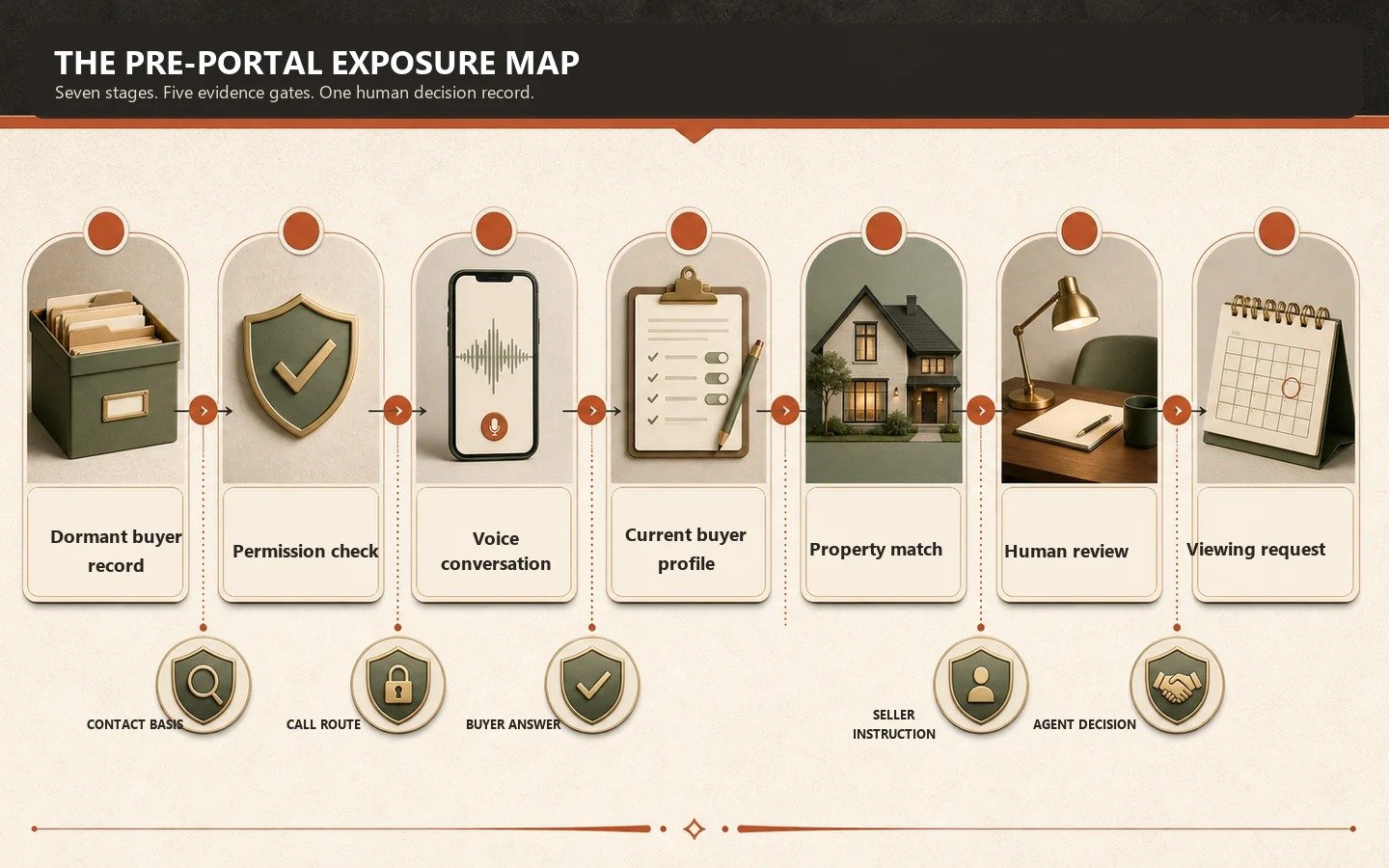
The sequence matters because each stage proves a different fact. A stored phone number proves that the agency retained a contact detail. It does not prove current permission, a current moving plan or interest in a particular home.
The voice conversation can update bedroom count, budget, location and timing. A software-proposed match can then compare those answers with an upcoming instruction. The instructed agent still needs to confirm the property facts, the seller’s marketing direction and whether the requested slot exists.
For example, a buyer registered two years ago may now need a south-facing garden and a shorter rail commute. A match based on the old record would misstate current fit; a match based on the buyer’s corrected answers creates a reviewable basis for the agent. That refreshed profile leads directly to the permission question behind the call.
What must be true before the AI voice call starts?
The agency needs a recorded basis for the contact method, the message and the recipient before an AI voice call starts. The Privacy and Electronic Communications Regulations (PECR) distinguish live marketing calls from automated calls that play recorded matter, and the required permission differs between those routes.
The Information Commissioner’s Office has published an example in which an AI-produced three-to-five-second greeting counted as recorded matter for that deployment. The ICO example required specific consent for the automated call. It does not establish how Viewery or every AI voice system is configured.
The agency’s file therefore needs to answer four questions: who initiated the call, whether any recorded or generated speech played, what permission supported that route and how the recipient can object. The public material reviewed for this article does not disclose the classification of a live Viewery deployment.

A valid number is not the same record as valid contact permission. That boundary protects both the buyer’s communication choice and the seller’s confidence that an early viewing came through a controlled agency process. Once the call is supportable, the profile itself becomes the next evidence layer.
Which buyer-profile details need a fresh answer?
A current buyer profile records the buyer’s own present requirements and separates them from old notes or software inference. Viewery gives examples beyond price and bedrooms, including ceiling height, kitchen layout, garden orientation, school catchment and commute.

Profiling means using personal information to build or infer a preference profile. ICO guidance requires direct-marketing data to remain fair, lawful, transparent, accurate and no more extensive than necessary. A buyer must be able to understand the profile and object to direct marketing.
Viewery’s privacy notice says its service can process agency, calendar and CRM data, call recordings or transcripts, engagement data and property preferences. The notice states that an agency acts as controller for outbound communications while Viewery acts as processor. Those are the vendor’s published policy statements, not proof of each agency’s configuration.
For example, a buyer can correct "needs a catchment" to "prefers a 35-minute rail commute" during the conversation. The correction changes both the profile and the match logic. A complete record preserves the old value, the new answer, the time of correction and the route for objection or human contact.
Who decides when the home reaches Rightmove?
The seller decides the exposure strategy through the agency instruction, while the agent controls the particulars, viewing log and offer record. The Property Ombudsman’s March 2026 code requires member agents in England, Wales and Northern Ireland to obtain the seller’s permission to market and the seller’s approval of property particulars.
Private-first exposure is therefore a marketing choice, not an automatic advantage. A seller may value a controlled test with known buyers, whereas another seller may prefer immediate public competition. The file needs to state which route the seller authorised, when portal publication begins and whether early viewers receive the same approved material.
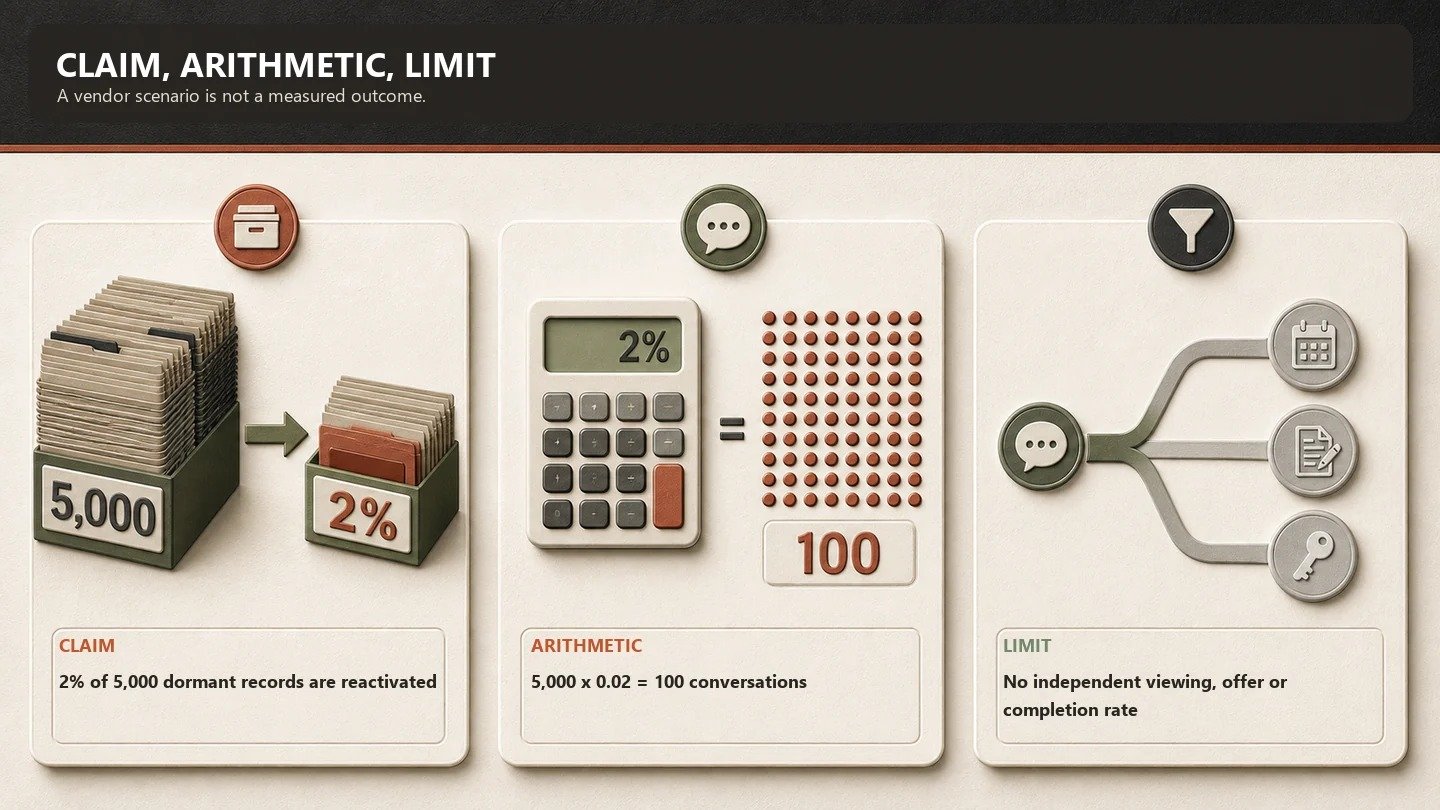
Viewery illustrates scale with a scenario in which reactivating 2% of 5,000 records produces 100 conversations. The arithmetic is correct: 5,000 multiplied by 0.02 equals 100. No independent evidence reviewed for this article establishes that 2% as an achieved reactivation rate, or that the conversations become viewings, offers or completions.
An AI match therefore measures preference overlap, not buyer readiness. Financial position, chain status and offer terms still need separate evaluation. Sellers comparing private-first and public marketing can use Tallbox’s guide to selling a home in a buyer’s market to frame that exposure decision.
What should a buyer verify during the call?
A buyer can verify six facts during an AI voice call: the caller’s identity, the agency name, the purpose of contact, whether AI or recorded speech is involved, how to correct the buyer profile and how to object or reach a person. Each answer belongs in the agency record.
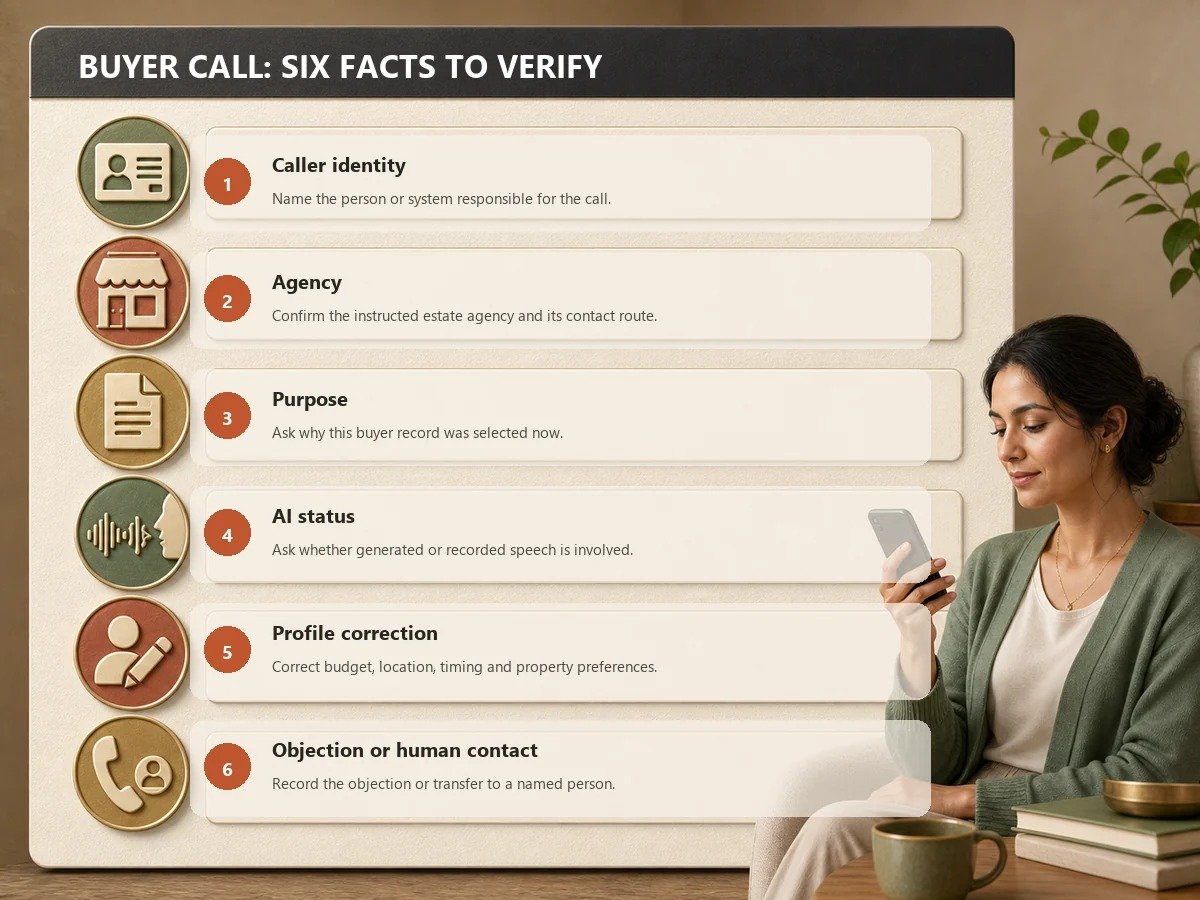
The property description needs its own check. The buyer can ask whether the home is already instructed, whether the seller approved the facts being discussed and which details remain provisional. An early viewing request does not convert provisional information into approved particulars.
Interest does not equal financial qualification, and a viewing request does not equal an offer. A buyer using AI-ranked results on public portals can apply the same evidence ladder in the AI home-search buyer checklist. The difference is timing: the voice-agent match occurs before the public listing creates a visible comparison set.
When must a human take over?
A human agent needs to take over when a buyer corrects a material preference, objects to contact or profiling, asks a property question the system cannot verify, conflicts with the seller’s exposure instructions or requests a slot whose status is uncertain.

The handoff record connects the buyer’s current preferences with the seller-approved particulars, calendar status and exposure instruction. The agent can then accept the proposed viewing, correct the match or stop the contact. AI-written property copy creates a separate verification problem, covered in Tallbox’s review of AI listing descriptions.
The five-record test is practical: contact permission, current buyer profile, approved property facts, seller exposure instruction and human viewing decision. AI may surface the conversation before Rightmove. The instructed estate agent still owns the decision record that turns a software match into a defensible viewing.
Sources
- PropertyWire launch report, 14 July 2026
- Viewery product description
- ICO telephone marketing guidance
- The Property Ombudsman Residential Estate Agents Code, March 2026
- GOV.UK guidance on selling a home and estate agents