
Project Big Pine has advanced from a February land-sale authorization to active site planning in Bowie County. Nearby residents are asking about noise, water and power. The homeowner test is whether TexAmericas Center records measure what reaches the property line, not whether the campus sounds large.
A February 2026 TexAmericas Center agenda authorized a Potentia Development land-sale contract for approximately 490 acres, with a 280-acre minimum. April project announcements then described a broader 500-acre platform, a projected $3.5 billion investment and about 120 permanent jobs at full buildout.
Project Big Pine advances land control before operating plans are complete
Project Big Pine is an infrastructure-ready development platform intended to attract data centers, AI infrastructure and other power-intensive users. That distinction matters because final buildings, equipment yards and operating loads can change as tenants and phases are defined.
The announced concept includes behind-the-meter prime power, battery storage, a nearby 345-kV transmission line, natural gas, regional water access and high-capacity fiber. Project announcements identify TexAmericas Center as the single local permitting authority, making its records the relevant source for local approval questions.
The approval-stage sequence has three statuses. The land-sale authorization is a completed public action, surveys and utility coordination describe active planning, and tenant-specific buildings, operating equipment and permit conditions remain open. Homeowners need those stages separated because an authorized land transaction does not prove a final operating design.
The current Project Big Pine record therefore separates into three evidence classes: confirmed land action, projected full-buildout outcomes and site-level details not shown in the cited materials.
The public record confirms land and power planning, not neighborhood effects
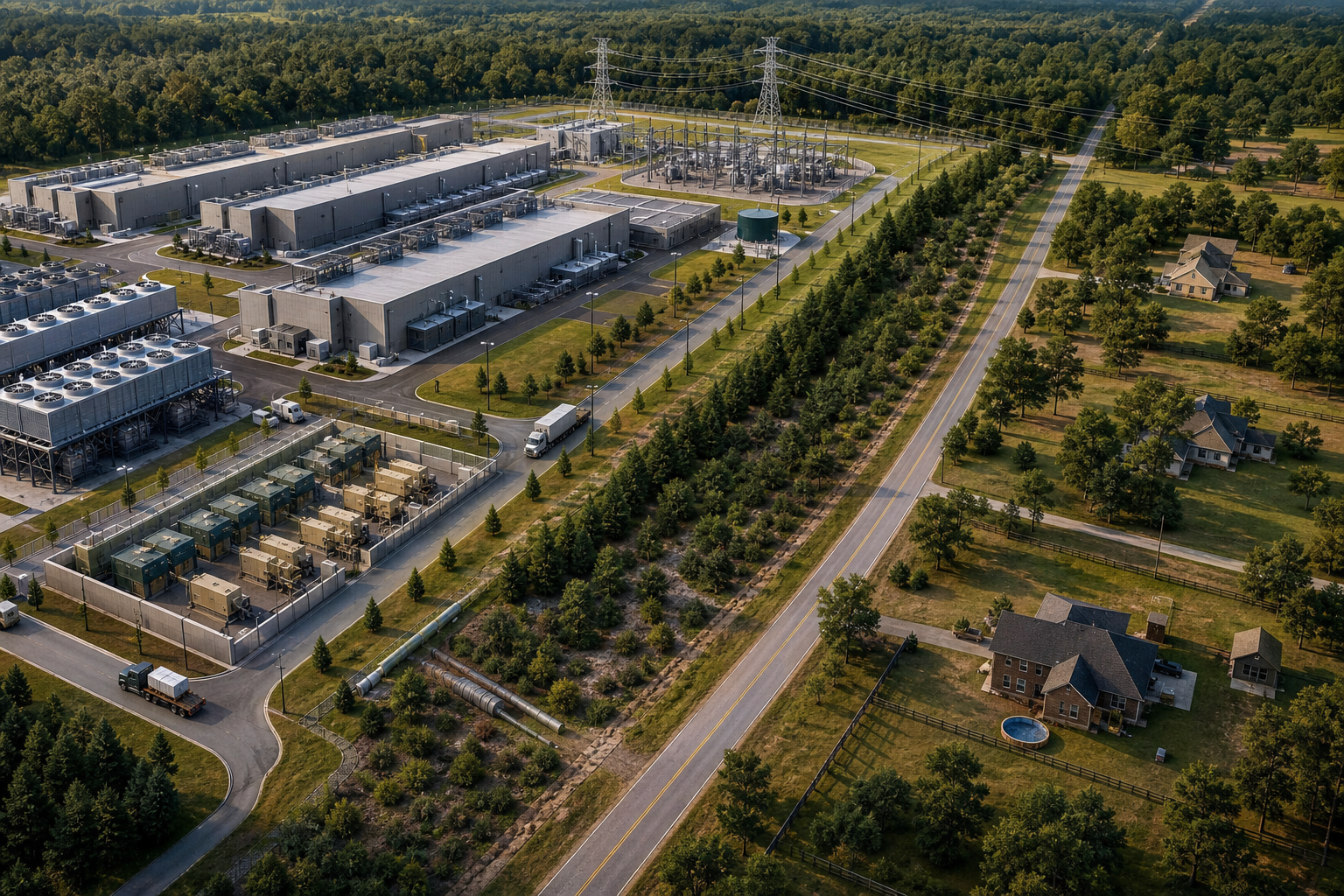
The Project Big Pine public record confirms active land and infrastructure planning at campus scale. Property-line evidence measures how cooling fans, generator testing, night lighting, haul routes and utility systems interact with the nearest homes.
Tallbox’s analysis of infrastructure evidence at nearby homes applies the same boundary to a cell-tower proposal. An infrastructure label cannot replace sightline, operating and parcel records when the home is the decision object.
Which records answer homeowner questions about the Project Big Pine data center?
Acoustic studies, cooling-demand estimates, generator schedules, site plans, photometric plans, traffic plans, interconnection records and permit conditions answer homeowner questions about the Project Big Pine data center. The table distinguishes a measurable answer from broad reassurance before a hearing, records request or home purchase.
This decision framework synthesizes extension, municipal and real-estate guidance for Project Big Pine and similar data-center proposals. The table requests evidence and does not calculate a project score.
A records request preserves a verifiable answer when it asks for current documents rather than a yes-or-no assurance. The following three steps preserve the evidence trail and make responses easier to compare across revisions.
- 1Name the record and phase. Request the latest acoustic study, cooling narrative or site plan, including appendices, revision date and the phase or tenant it covers.
- 2Ask where the answer is measured. Identify the nearest residential receptor, property-line light point, peak-day water condition or named construction route instead of accepting a campus average.
- 3Request the condition that survives approval. Match the promised limit to its reporting interval, independent verifier, complaint route and remedy when a measurement misses the limit.
Document dates reveal whether a public record describes the current tenant and equipment layout. For Project Big Pine, a superseded plan can answer an earlier project phase while leaving current residential exposure unresolved.
Which Project Big Pine operating details remain unverified?
Project Big Pine has a confirmed land-sale authorization and an announced infrastructure strategy. Investment, job and energization figures remain projections. The cited public materials accessed July 20, 2026 do not show residential acoustic modeling, peak water demand, generator operation, dimensioned setbacks or monitoring conditions.
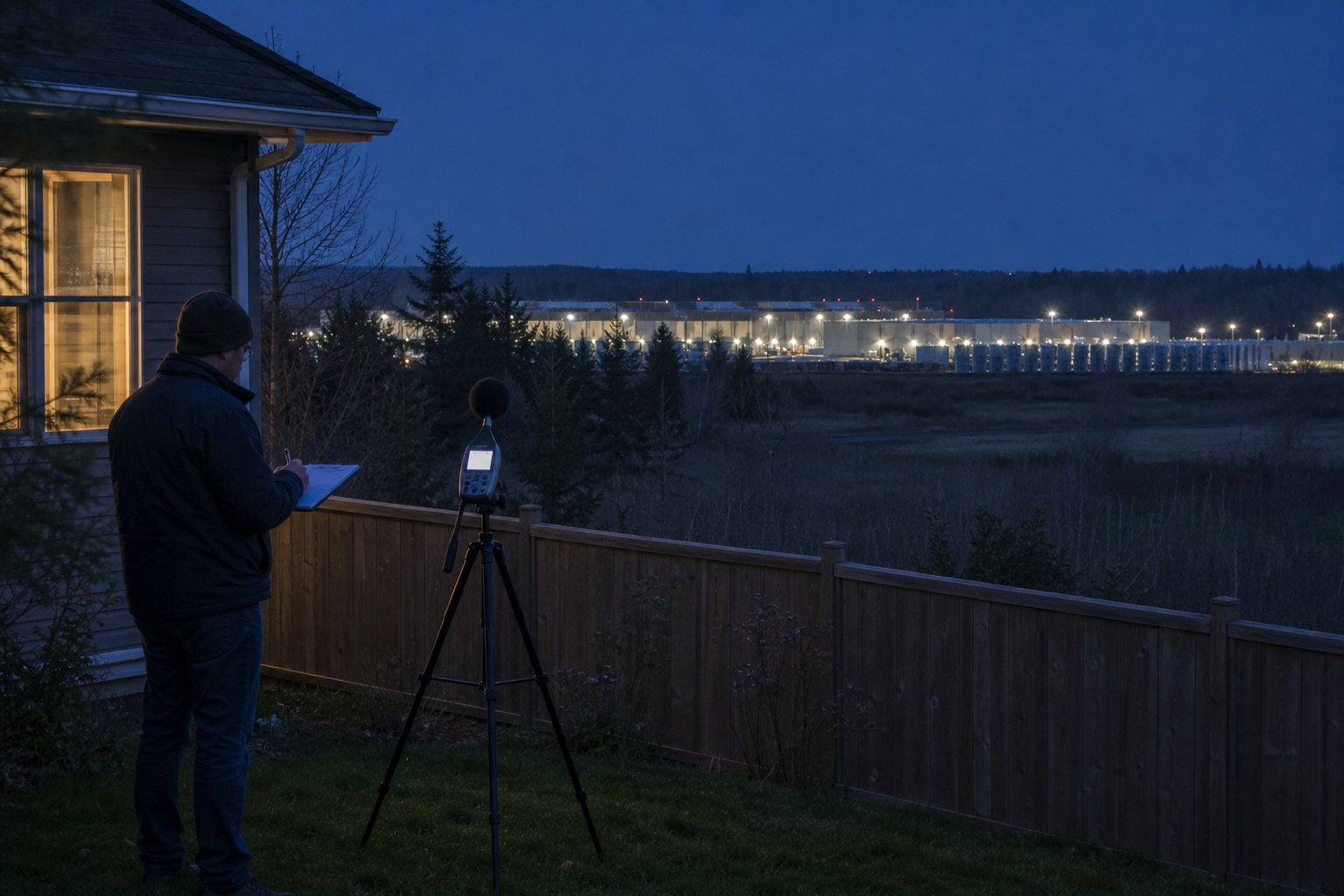
A buyer evaluating a nearby parcel can combine TexAmericas Center records with county GIS, permit files and repeated site visits. Tallbox’s AI home-search buyer checklist explains why a listing answer still needs verification against the parcel and public record.
Can a nearby homeowner predict the effect on property value?
No single percentage predicts Project Big Pine’s effect on a nearby home. A parcel-level assessment needs the home’s view, sound exposure, traffic changes and comparable sales; the cited public record does not supply those inputs.
Broader factors that lower property value belong in an appraisal discussion, not a project headline. Project Big Pine still needs parcel-level view, sound, traffic and comparable-sales evidence before a homeowner can estimate a market effect.
How do approval conditions enforce data-center promises?
Data-center approval conditions remain enforceable after a public meeting only when each condition names a limit, measurement point, reporting interval, verifier and remedy. Noise, lighting, water use, generator testing and construction traffic require that enforcement chain before residents can rely on each promised operating limit.
An enforceable noise condition, for example, identifies the residential receptor, measurement method, operating scenario and response deadline. A voluntary target with no reporting schedule leaves the homeowner unable to compare actual operation with the approval record.
What should homeowners request before judging Project Big Pine?
Before judging Project Big Pine, homeowners should request the acoustic model, cooling-demand estimate, site plan, photometric plan, traffic plan and monitoring conditions. The project’s land action and projected scale justify scrutiny, but acreage and investment projections do not answer property-line questions or establish operating facts.
Sources and citations
- TexAmericas Center. Board agenda, February 24, 2026. Accessed July 20, 2026.
- Texarkana Today. Project Big Pine: 500-Acre Data Center Campus Planned for Texarkana Region. April 28, 2026.
- KSLA. TexAmericas Center moving forward with potential data center site. April 28, 2026.
- Realtor.com. Texarkana Homeowners Protest New 500-Acre Data Center. July 20, 2026.
- Penn State Extension. Data Centers: A Guide to Common Questions. Accessed July 20, 2026.
- Pennsylvania Municipal League. 13 Questions to Ask When Considering a Data Center Proposal. February 24, 2026.