
Eighty-two percent of US real estate agents now use AI to write listing descriptions, and the words have stopped separating one home from the next. A seller’s listing competes somewhere else in 2026: in the photos, the data, and the tools wrapped around it.
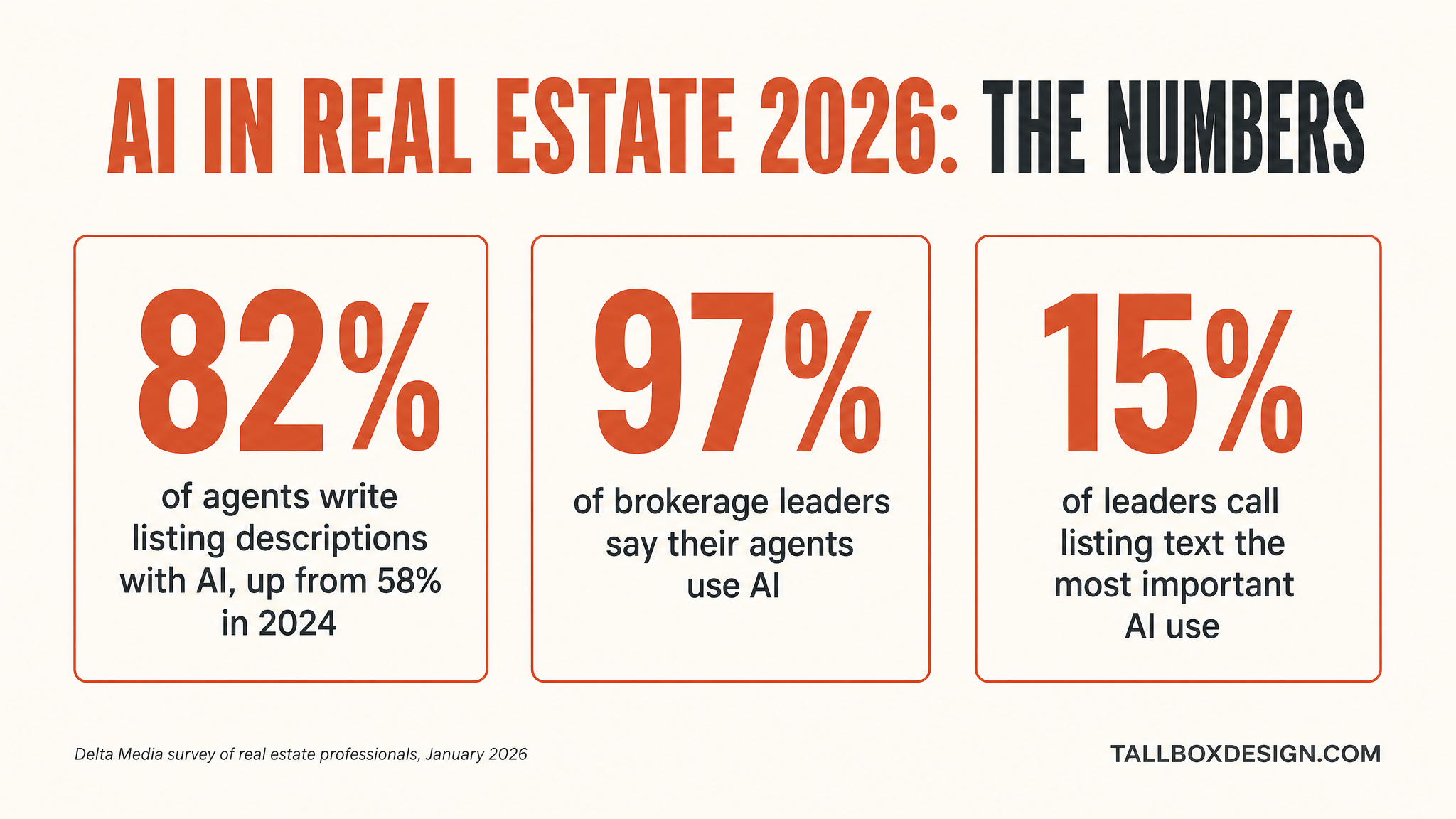
The 82 percent figure comes from a Delta Media survey of real estate professionals reported in January 2026, up from 58 percent in 2024. Delta Media builds brokerage technology, which puts the firm in position to watch adoption across thousands of agents.
What the AI adoption numbers say about real estate listings
AI writing swept the listing desk faster than any tool before it. The same January survey found brokerage leaders reporting near-universal agent use, and a telling gap between what agents use AI for and what their brokers think the writing is worth.
AI drafting spread fast because the workflow is short. An agent types the property facts into a writing tool, the tool returns a finished paragraph in seconds, and the agent trims the draft before the listing posts. Work that once took an evening now fits between showings.
Why did listing descriptions stop differentiating homes?
Listing descriptions converged because most of them now come from the same writing tools. When 8 in 10 agents feed the same property facts (beds, baths, square footage, granite, natural light) into similar models, the output lands in the same register: fluent, warm, and interchangeable.
Brokerage leaders saw the ceiling early. Only 15 percent called listing descriptions AI’s most important use in the January survey, against 26 percent for marketing content. A tool everyone holds stops being an advantage for anyone; the description became a box to fill correctly, not a place to win.
Buyers discounted the listing text years before agents automated it. A listing opens on its photo carousel, and the text gets a skim after the pictures have already made the shortlist decision. When AI leveled the words, buyers lost less than the agents who used to write them.
Compass, Zillow, and the platform race past words
Compass announced its Home Platform on July 2, an AI system spanning listings, marketing, market analysis, and client tracking. The platform rolls out this summer across the company’s owned brands (@properties, Coldwell Banker Realty, Corcoran, Sotheby’s International Realty), with franchises to follow in 2027.
Zillow runs the buyer side of the same race, drawing coverage June 29 for a homebuying hub that organizes the purchase into four milestones (budget, search, offer, closing) around its BuyAbility affordability tool. The hub keeps a slot for the buyer’s agent and lender.
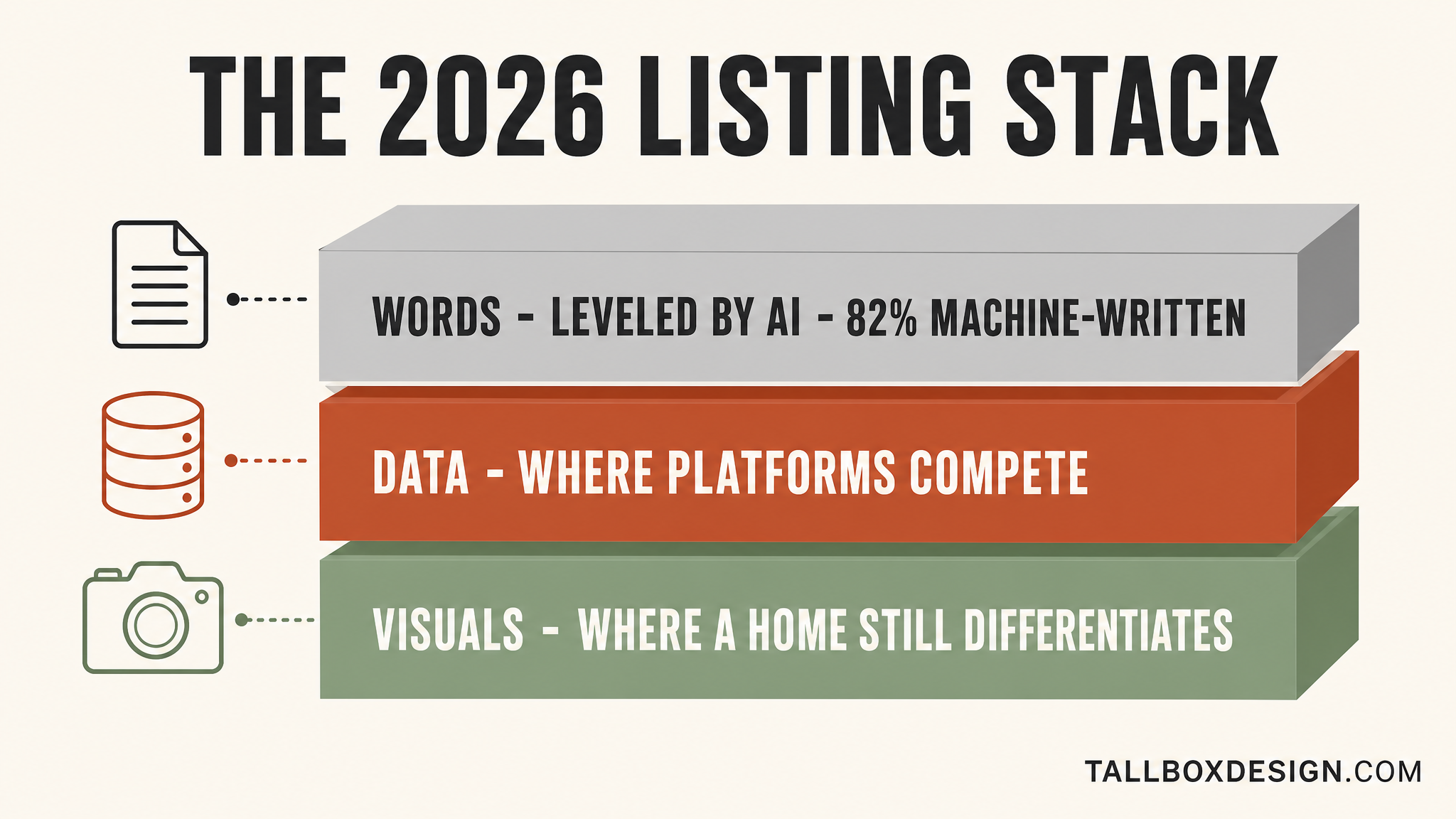
Portals and brokerages are racing to own the data around the listing, because the words inside it are free now. The data layer, not the description, is where a platform can still pull ahead.
How to make a listing stand out in the 82 percent era
To make a listing stand out in the 82 percent era, put the budget into layers AI cannot level: photo order, light, floor plans, and motion. A seller cannot out-write the market when the market shares a writer. Those visual layers stay scarce because a model cannot generate them from property facts.
Framework based on the Delta Media January 2026 adoption survey and the Compass and Zillow platform launches covered in late June and early July 2026.

A listing shoot still runs on logistics no model shares. The photographer waits for dusk on the exterior, stages and lights each room, and delivers the set in an order that puts the strongest frame first. A floor plan scan rounds out the carousel for buyers who navigate by layout.
Sellers in a slow market feel the visual gap first. Buyers hold the leverage in 2026, as we mapped in our guide to selling in a buyers market, and a listing that leads with weak photos turns that leverage into a price cut.
New construction pushes the visual layer furthest: an unbuilt home has no photos at all, so builders sell from renders. The same architectural visuals that market a tower off-plan now show up in ordinary listings as dusk conversions and virtual floor plans.

Portal pages put the carousel first by design. The description sits below the fold on a typical portal listing, while price, beds, and square footage appear beside the photos as at-a-glance labels. A buyer can shortlist a home without reaching a complete sentence.
AI listing questions sellers ask
QDo buyers still read listing descriptions?
Yes, but after the photos. The description confirms details a buyer already suspects from the carousel (lot size, systems, HOA), so accuracy and completeness matter more than prose style.
QShould I let my agent write my listing with AI?
Yes, with a fact check. AI drafting is the industry norm (82 percent of agents in the January 2026 Delta Media survey), and the risk is not robotic prose but wrong details. Read the draft against your home’s facts before it posts.
QWhat do buyers look at first in a home listing?
The photo carousel leads, with price and location beside it. The first three photos carry the shortlist decision, which is why photo order and a strong dusk or hero exterior earn more than any paragraph.
QWill AI replace listing agents?
No. This summer’s platform launches from Compass and Zillow wrap AI around the agent rather than removing one: pricing judgment, negotiation, and local knowledge stay human, while the writing and the paperwork automate.
The takeaway on AI-written listings
AI drafts listing descriptions for 82 percent of agents, and brokerage leaders already treat the text as table stakes, per the January 2026 numbers. The summer platform launches from Compass and Zillow show where the race went: data around the listing, not words inside it.
A seller’s edge lives in the layer still made one home at a time. Spend on the visuals; proofread the prose.