The American Institute of Architects handed its 2026 Housing Award to a slate of projects that look nothing like a luxury spread. The winners are overwhelmingly affordable apartments, supportive housing, and cohousing, chosen for how they build community rather than how much they cost. Read together, they map where American residential design is actually heading.
The AIA is the profession’s main body, and its Housing Award is the discipline’s own verdict on the best home design of the year, announced this June in San Diego. The jury honors work that brings beauty, safety, sustainability, and comfort together in one project. That framing is why the 2026 list leans so hard toward homes built for people the market has priced out. More than a hundred projects took home 2026 AIA awards across ten categories, and the Housing Award is the slice that shows how architects think the country should live.
Which projects won the 2026 AIA Housing Award?
The winners span the country and the full housing spectrum, from a homeless navigation center in Palm Springs to a cohousing community in Montana. Almost none is a market-rate luxury project, which is the first thing to notice about the list. Eight stand out for how clearly they signal the direction.
Source: American Institute of Architects, 2026 Housing Award, announced June 2026. Selected winners.
What the winners share
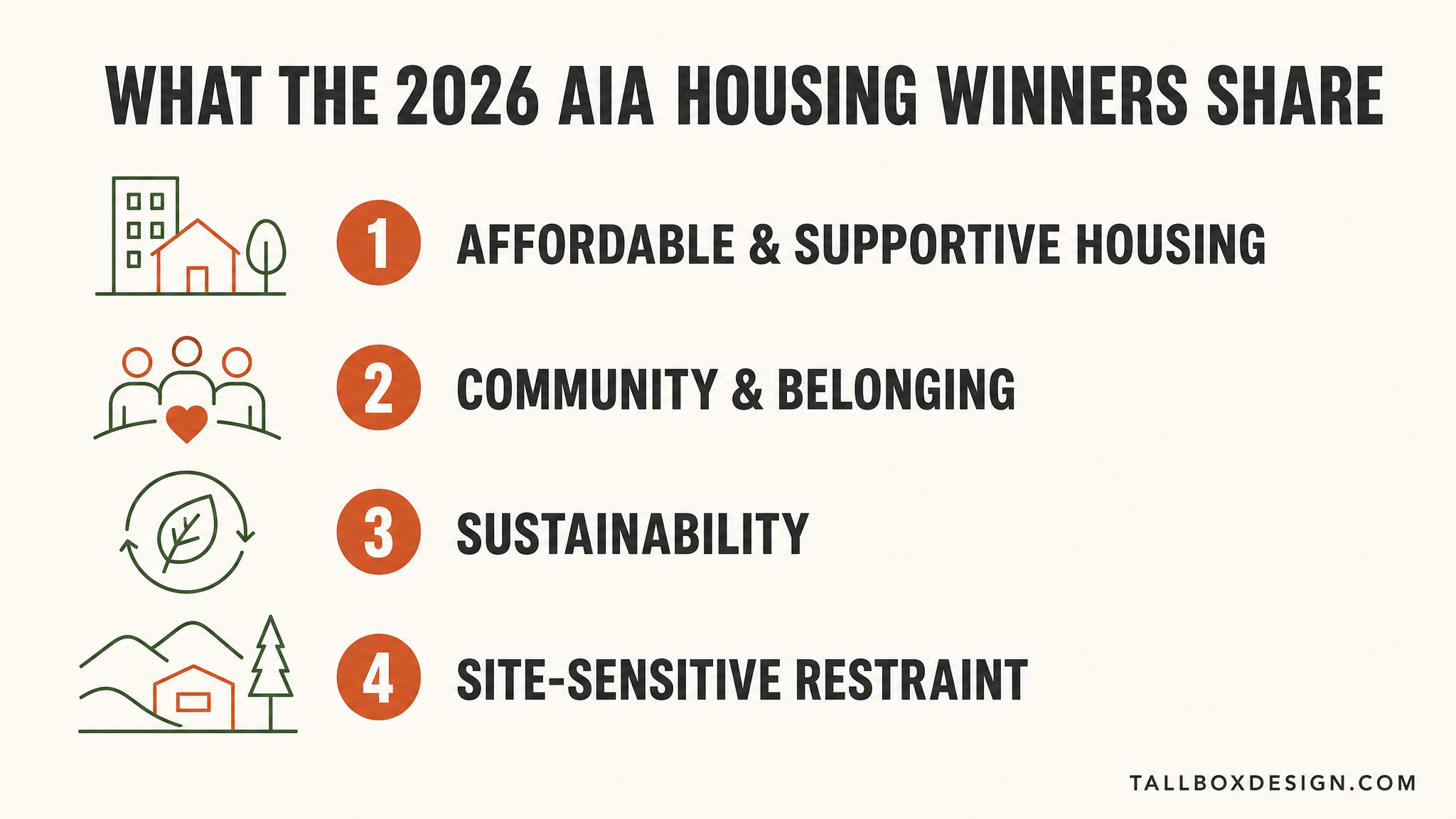
A few threads run through nearly every winner. The 2026 jury rewarded housing that does social work over housing that shows off, and the list reads almost as a manifesto for where the profession wants residential design to go.
- Affordable and supportive housing dominates, from a homeless navigation center to deeply affordable apartments
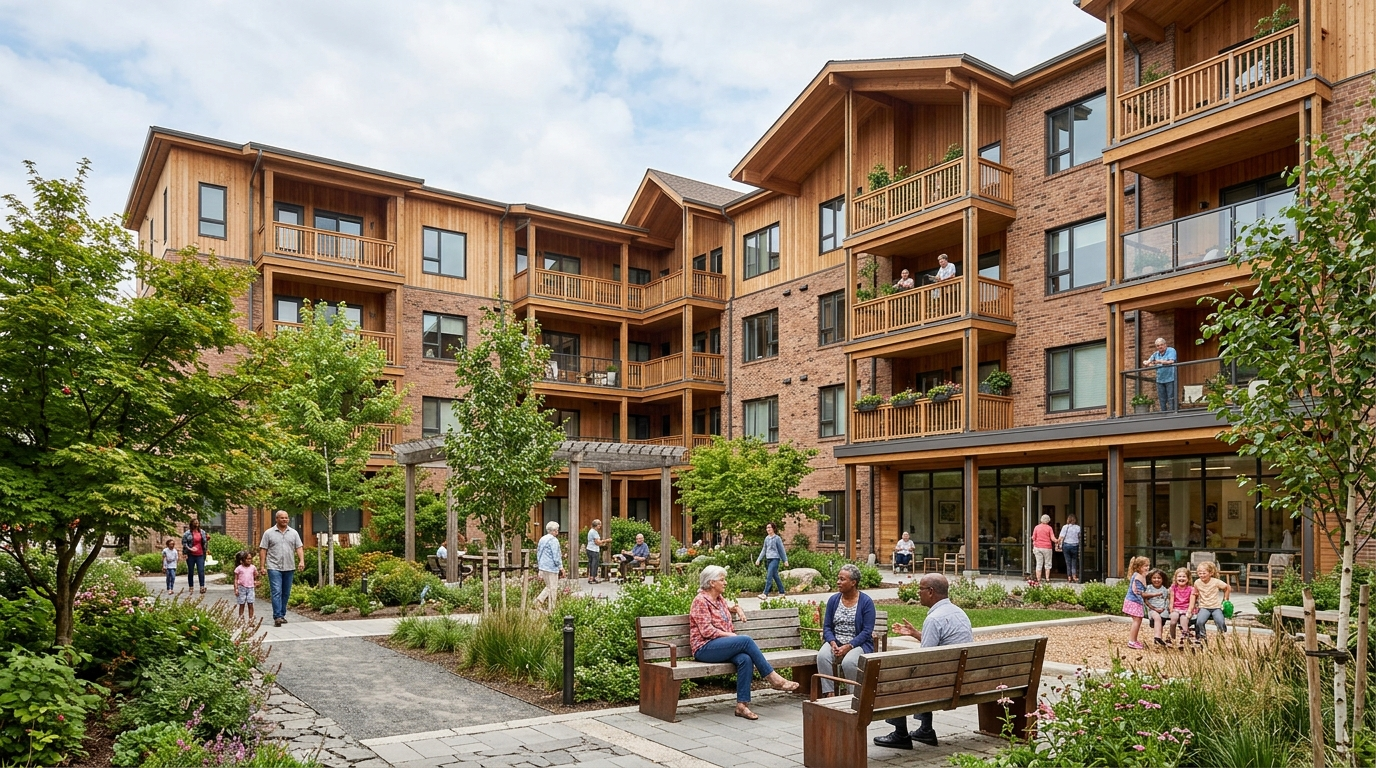
- Community and belonging as a stated design goal, built through shared courtyards, porches, and gathering space
- Sustainability and lower-carbon construction, including mass timber and high-performance envelopes
- Restraint over spectacle, with the single-family winners judged on siting and craft rather than size
- A restorative thread, led by Albina One’s role in rebuilding a Portland community that was displaced decades ago
Albina One anchors the list
Albina One in Portland is the project critics keep returning to. LEVER Architecture designed it as the first building in the Albina Vision Community Investment Plan, an effort to rebuild a Black neighborhood that public works displaced decades ago. Much of the district was cleared in the twentieth century for a hospital, a highway, and a sports arena, scattering the families who had built it, and Albina One begins to reverse that on the same ground.
Deep affordability paired with a repair of past harm is exactly the register the 2026 jury rewarded. A single mid-rise in Portland has come to stand for the whole year in housing, precisely because it treats design as a tool for putting a community back together.
The single-family winners win on restraint, not size
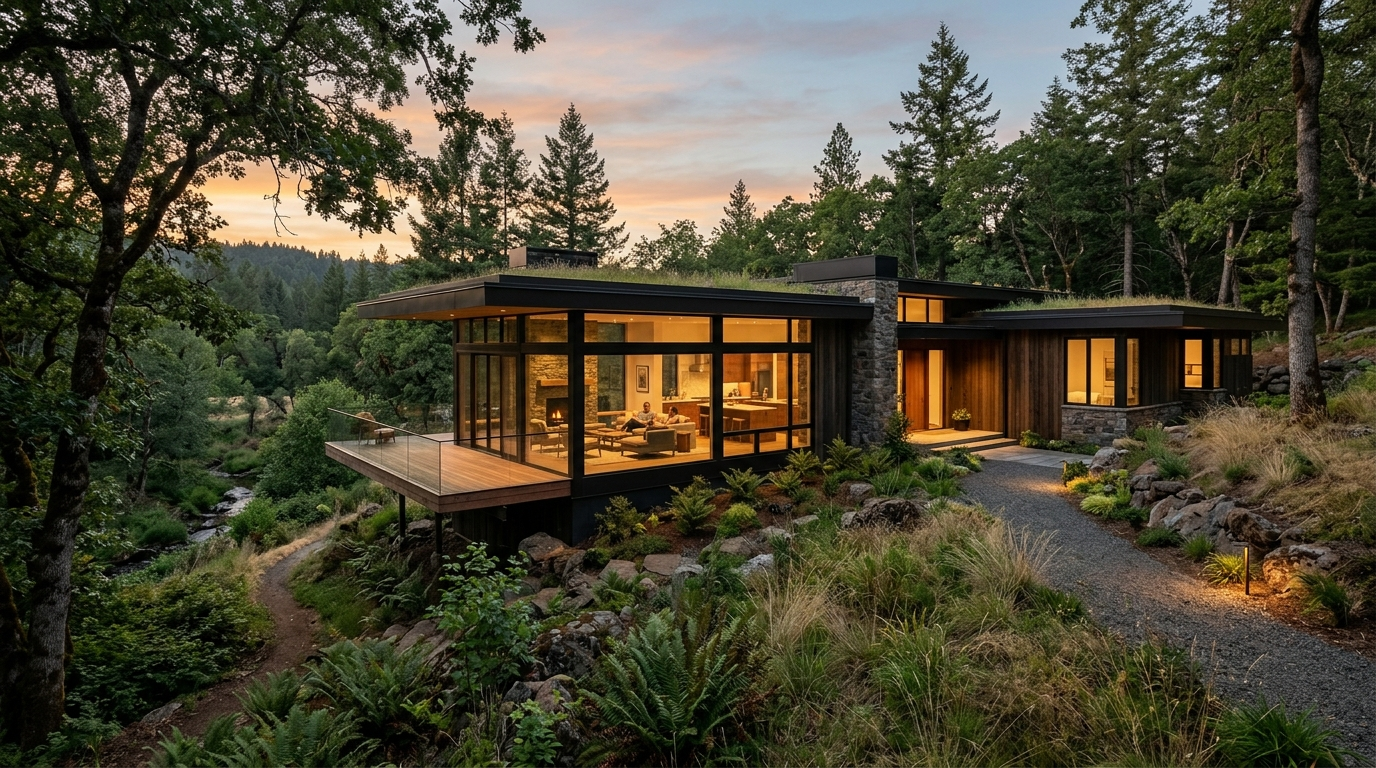
Even the detached houses on the list reject the trophy-home formula. Pine Flat in California and OFFbeat in Austin were honored for how they sit in the landscape and how carefully they are built, not for square footage. Pine Flat tucks a low, fire-resilient house into a Sierra site, while OFFbeat threads a compact home through the trees of a tight Austin lot. Both treat the land as the client the house has to answer to.
Restraint is the point. The award treats a modest, well-sited house as a higher achievement than a large one, a signal worth noting for anyone planning a high-quality custom home in 2026, where the jury clearly prizes how a house meets its land over how much of it there is.
How these projects earn buy-in before they exist
An affordable or supportive housing project has to win over neighbors, funders, and a city long before a foundation is poured. Community meetings, zoning boards, and tax-credit applications all turn on whether people can picture the result. Much of that persuasion happens through images of a building that does not yet exist.
Architectural visualization does that quiet work: it shows a community the porches, courtyards, and daylight a plan promises, so the belonging these winners are praised for can be seen before it is built. A rendering also gives a skeptical neighbor or a funding board something concrete to approve, and a convincing one can turn a room of worried residents into supporters, often the difference between a project that breaks ground and one that stalls. The same off-plan logic drives the 2026 new-home market, where a house often sells from a render.
AIA Housing Award questions, answered
QWhat is the AIA Housing Award?
The AIA Housing Award is an annual honor from the American Institute of Architects recognizing the best residential design in the US, across single-family, multifamily, and affordable or supportive housing. It is one of the profession’s most-watched residential honors, judged by practicing architects.
QWho won the 2026 AIA Housing Award?
Winners include Albina One in Portland, Bozeman Cohousing in Montana, Isla Intersections supportive housing in Los Angeles, and the single-family homes Pine Flat and OFFbeat, among others across the country. The full slate runs to dozens of projects, but these capture the 2026 direction.
QWhat do the 2026 winners have in common?
Most are affordable, supportive, or community-focused housing, and even the single-family winners are prized for site-sensitive restraint rather than size. Sustainability and shared outdoor space recur throughout, from mass-timber structure to courtyards built for gathering.
QWhy does the award favor affordable housing?
The jury rewards design that pairs beauty with social value, so projects that deliver dignity and community on tight budgets tend to stand out from higher-priced work.
QWhen were the 2026 AIA awards announced?
The AIA announced its 2026 award winners in June 2026 at a ceremony in San Diego, honoring more than 100 projects across ten categories, the Housing Award among them.
The takeaway
The 2026 AIA Housing Award reads as a statement of values: the best home design this year is affordable, communal, and restrained, not large. For anyone building or buying, it signals that thoughtful siting and shared space are what the profession now rewards. None of the winners tries to be the biggest house on the block; each tries to be the most useful building on its site.
Design that earns approval before it exists depends on how well it can be shown. That makes the picture of a project, as much as its plan, part of how good housing gets built, and the 2026 winners prove the point at the top of the field.