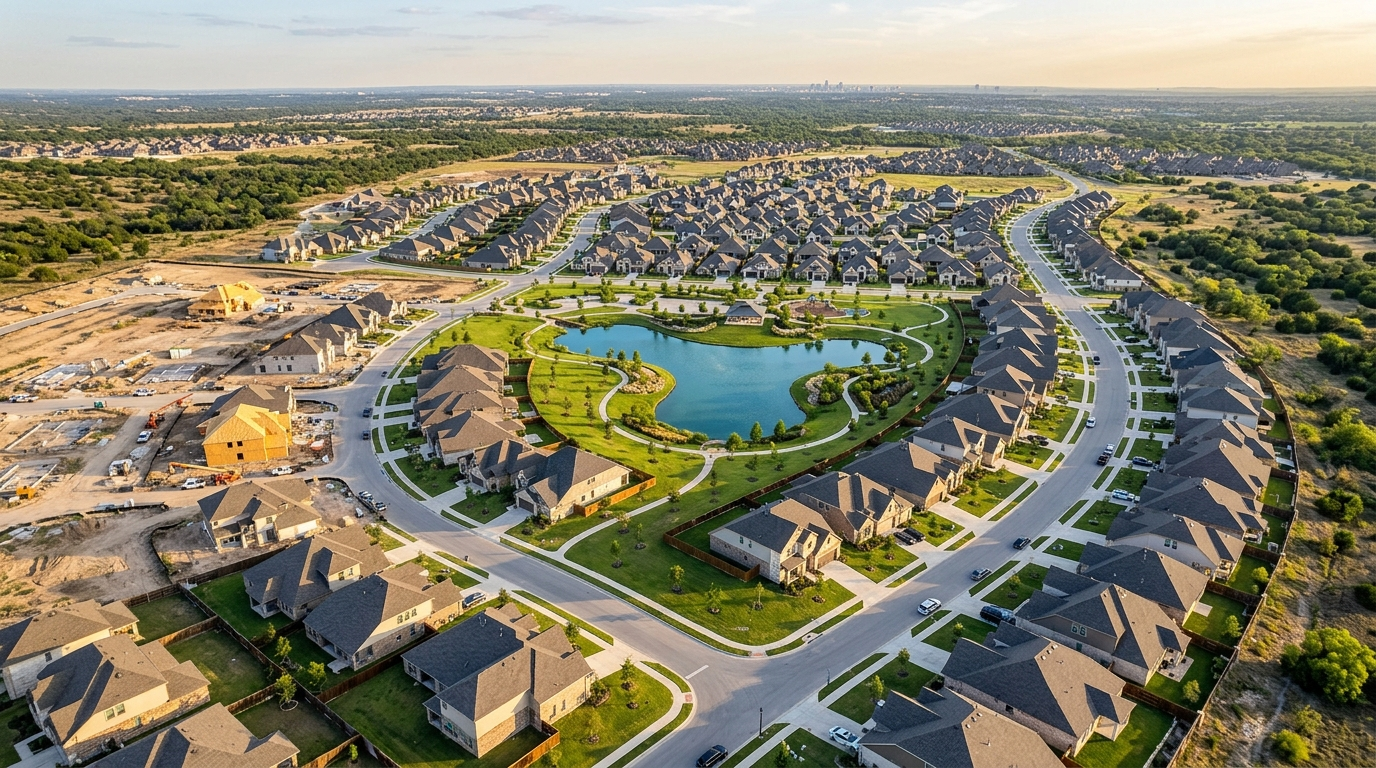
Princeton, Texas grew 30.6 percent in a single year, the fastest of any city in the country, and it is no outlier. The places adding people fastest in 2026 are exurbs, the small towns on the far edge of big metros, most of them ringing Dallas and Houston. Nearly all are built on new master-planned communities rather than existing neighborhoods.
The Census Bureau’s Vintage 2024 population estimates produced those rankings, measuring year-over-year population change for every US city. Census counts matter here because they track where people actually move and register, not where they browse listings, so they show demand turning into rooftops. Princeton alone roughly doubled since 2020, from about 17,000 residents to 37,000, and local officials expect it to approach 100,000 within five years.
Exurban growth is a genuine shift, not a blip. For the first time in decades the country’s growth is concentrating on the extreme outer edge of metros rather than in their cores, a move demographers have started calling the great exurban surge.
Where are Americans moving fastest?
The fastest-growing cities share a profile: a modest population, an outer-ring location, and a wall of new construction. Most sit between 20,000 and 65,000 residents and orbit a major Texas metro. None is a household name, which is the point: the country’s fastest growth is happening on land that was pasture a decade ago, in places most people outside Texas have never heard of.
Source: US Census Bureau Vintage 2024 population estimates (July 2024 to July 2025 change). Populations rounded.
Why is the country’s growth landing in Texas?
Texas pairs cheap, buildable land on the metro fringe with a steady inflow of jobs and residents from higher-cost states. That combination lets a town two counties out from Dallas add more people in a year than an established suburb does in a decade. No state income tax and a permissive approach to permitting keep both land and construction cheaper than in the coastal metros people are leaving.
Master-planned communities are the engine. Builders such as Taylor Morrison, Toll Brothers, and Highland Homes buy large tracts and deliver homes, schools, parks, and retail on a schedule, which is how a single town absorbs thousands of residents a year. Celina issued more than 15,000 single-family permits between 2010 and mid-2024, a pace that turns a rural crossroads into a city of 60,000 in a handful of years.
Why do buyers choose the exurbs?
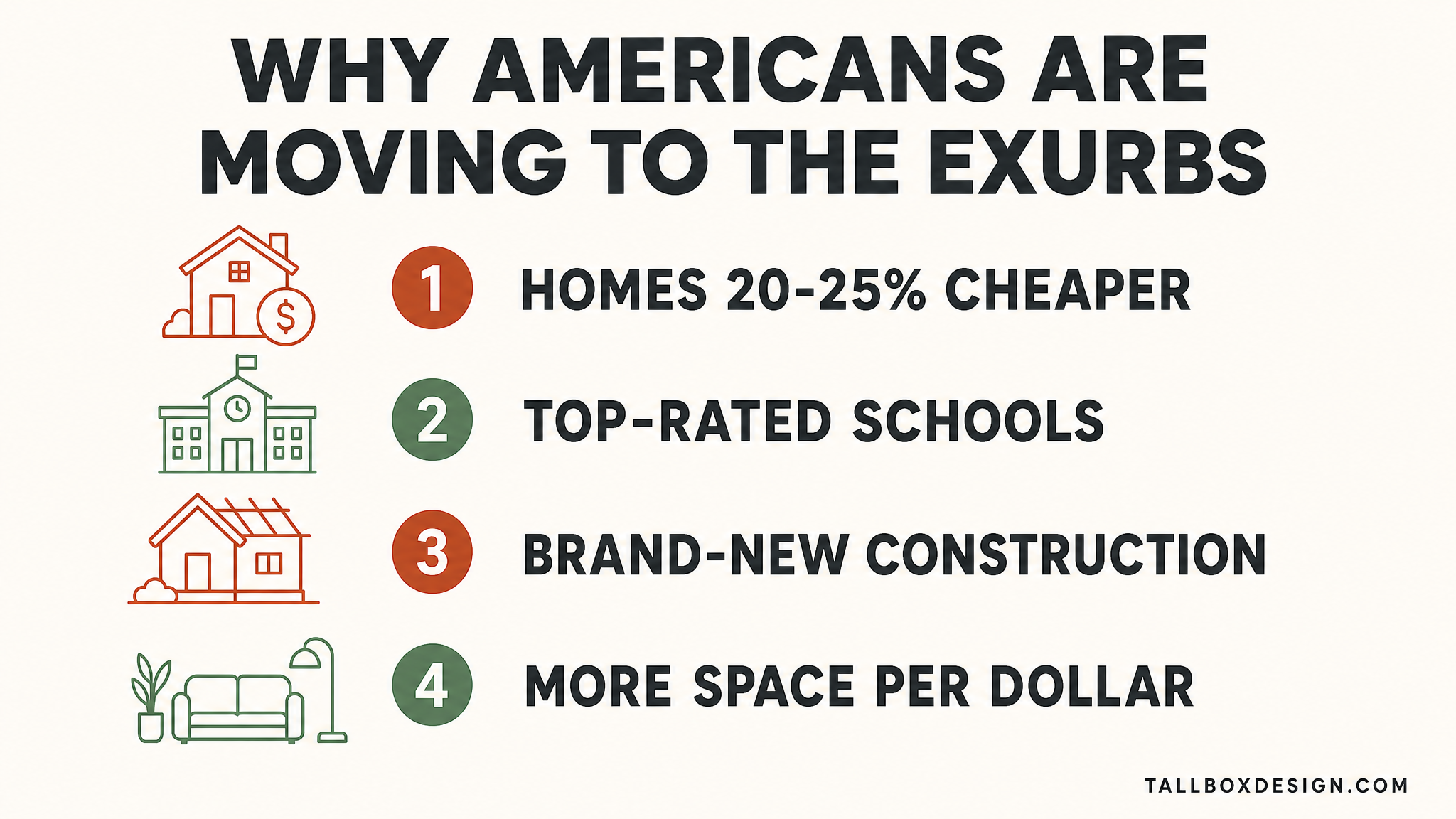
Buyers move to the exurbs for a stack of reasons a close-in suburb cannot match. Affordability leads, but it is the combination that pulls whole families to the edge of the map. Each reason alone is ordinary; stacked together, they are enough to move a household 40 minutes out.
- Lower prices: exurban homes commonly run 20 to 25 percent cheaper than comparable homes closer to the core
- Highly rated school districts, the top draw for young families
- Brand-new construction instead of aging housing stock
- More square footage and yard for the money
- The lock-in effect: owners staying put on low mortgage rates rarely list, so buyers turn to new builds
The homes are sold before they exist
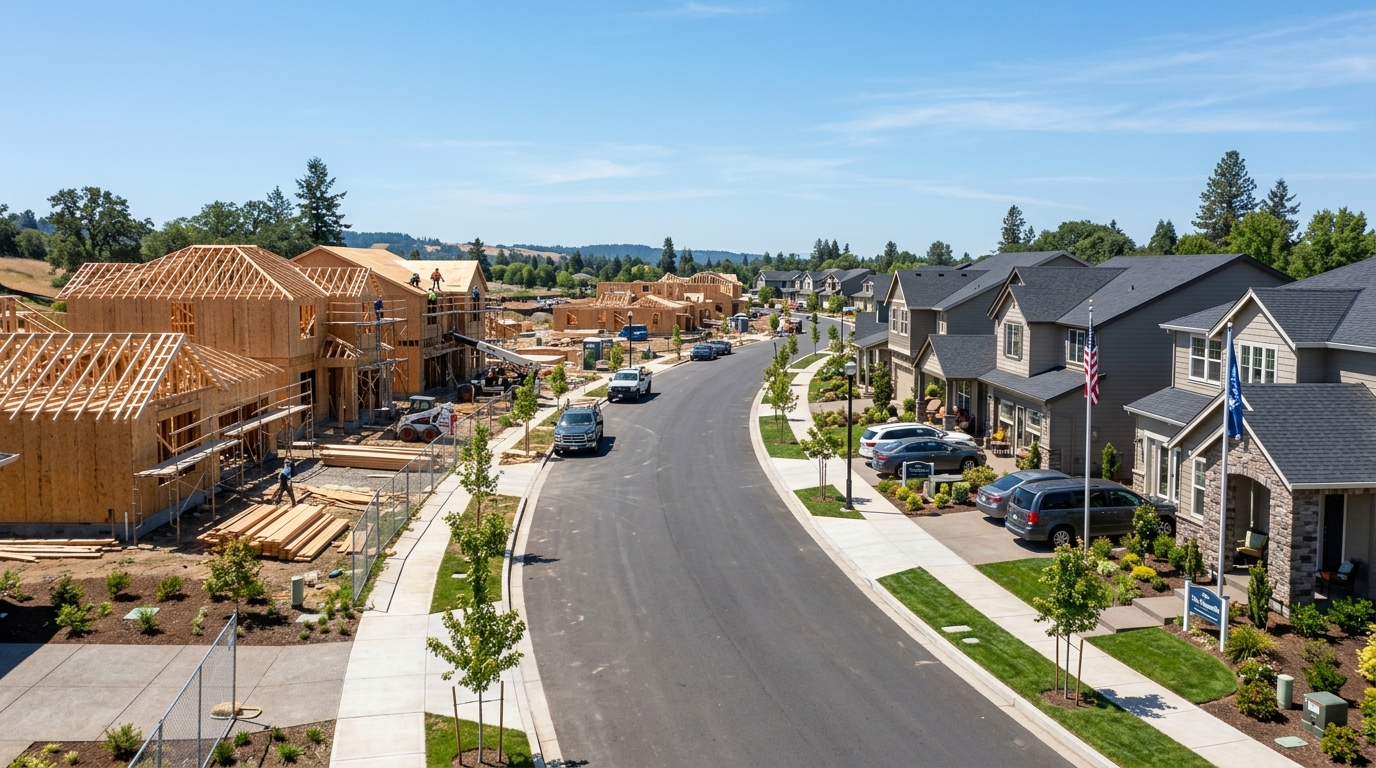
A master-planned exurb is a strange place to buy, because much of it has not been built yet. Buyers pick a lot, a floor plan, and finishes for a house that is still a framed shell or an empty pad, on a street that may be bare dirt. Whole phases sell from a sales-center map and a set of images before the first slab is poured.
Visualization does the selling there. Builders and agents lean on 3D rendering to show a finished home, a streetscape, or an amenity that exists only on paper, the same off-plan dynamic covered in our look at the 2026 new-home market. A rendered model lets a family commit to a home a year before the keys exist.
A rendering carries the whole decision at that stage: the exact elevation the buyer picked, the finish level in the kitchen, the view from the back porch, and the streetscape the community has promised but not poured. For a house that is still a permit and a pad, a convincing image is most of the proof a buyer gets before the deposit clears.
The trade-offs of buying at the edge
The exurbs carry costs the growth charts do not show. Weigh these before committing to a lot in a community that is still filling in.
- ✓A longer commute, with fuel and time that can eat into the price savings
- ✓A build timeline of months, sometimes more than a year, before move-in
- ✓HOA rules and fees that govern most master-planned communities
- ✓Resale pressure while the builder keeps releasing new phases nearby
- ✓Infrastructure, from roads to schools, still catching up to the population
Exurb questions, answered
QWhat is an exurb?
An exurb is a community beyond the traditional suburbs, on the outer edge of a metro’s commuting range, usually built around new master-planned developments rather than older neighborhoods. The name blends extra and suburb, and the trade it offers is a longer drive for more house and land.
QWhich US cities are growing fastest in 2026?
Small Texas exurbs lead. Princeton grew 30.6 percent in a year, followed by Fulshear at 26.9 percent and Celina at 24.6 percent, all orbiting Dallas-Fort Worth or Houston. Fast-growing exurbs in Arizona and Utah sit lower on the same Census list, but Texas holds most of the top spots.
QWhy are exurban homes so much cheaper?
Land on a metro’s edge costs less, and builders deliver it at scale through master-planned communities, so exurban homes commonly run 20 to 25 percent below comparable homes closer to the core. Buying early in a community’s build-out, before the amenities open, usually costs less still.
QIs buying new construction in an exurb a good idea?
It can be, but weigh the longer commute, the build timeline, the HOA rules, and how resale holds up while the community keeps adding new supply nearby. The best outcomes tend to go to buyers who commit early in a phase and hold long enough for the amenities and the resale market to mature.
QHow long does a new exurb home take to build?
Most production builders quote several months to just over a year from contract to move-in, depending on the phase, the floor plan, and supply chains. That lag is why families commit off a rendering long before the house is framed.
The takeaway
The 2026 growth map points to the edges: fast, affordable, master-planned exurbs where the house often sells before it is built. That makes the picture a buyer sees, the render, a deciding factor almost as much as the price.
Check the commute, the build timeline, and the resale math before committing to a lot. A boomtown rewards buyers who look past the model home to the streets still on paper.